Category: Top News

  • View: Education and Training as a Tool to Attract Customers and Enhance Presence on Google

    View: Education and Training as a Tool to Attract Customers and Enhance Presence on Google

    IBL News | New York

    Organizations are increasingly using education and training-based content as a tool to attract customers.

    As the effectiveness of traditional online marketing continues to decline, education-powered marketing is gaining ground.

    It not only builds trust with customers by providing them an intellectual betterment, but it also fuels existing content and marketing strategies.

    Google’s craving for renewed and original content gets answered with new education and training related lessons, lectures, and resources.

    This valuable knowledge posted online can be enhanced with certificates. Innovative organizations are understanding the importance of providing some sort of certification.

    This is a list of some of the companies that apply education-based marketing:


    • Hubspot

    • Adobe

    • Nvidia

    • IBM

    • Salesforce

    • Databricks

    • Hootsuite (Hootsuite Academy)

    • Slack

    • Autodesk

    • AWS

    • Mint

    • Microsoft

  • A Paradigm Shift Among Students Towards Online Degrees: 73% Will Consider Enrolling

    A Paradigm Shift Among Students Towards Online Degrees: 73% Will Consider Enrolling

    IBL News | New York

    Prospective students are more likely to consider online graduate and undergraduate programs due to the COVID-19 pandemic.

    This is the main result from a survey conducted from June 30 through July 22, 2020, by 2U of over 1,754 prospective students.

    Key survey findings include: 73% of respondents said the COVID-19 pandemic has made them much more likely to consider online programs, and 20% of respondents said that absent COVID-19, they would not have considered an online program.

    “The results of this survey show a clear share shift toward online higher education among prospective degree students; as more and more of these students affirmatively choose online degrees, universities with experience delivering intentionally designed, high-quality online programs with great student outcomes will stand out to this growing universe of learners,” said 2U Co-Founder and CEO, Christopher “Chip” Paucek.

    Prior to the coronavirus, only 16% of students across U.S. undergraduate and graduate programs were enrolled in exclusively distance-learning degrees, according to the latest federal data on distance education.

    2U currently powers over 70 online graduate and undergraduate degree programs across 26 disciplines.

  • Simon Nelson, Original CEO of FutureLearn, Leaves His Company

    Simon Nelson, Original CEO of FutureLearn, Leaves His Company

    IBL News | New York

    FutureLearn, the fourth largest MOOC platform (after Coursera, edX, and Udacity), started its search for a new CEO to replace Simon Nelson, who announced this month his resignation, effective at the end of 2020.

    The departure of Simon Nelson–CEO since FutureLearn’s initiation by the UK Open University in 2012– takes place a year after the Australian Seek Group acquired 50% of Future Learn educational portal for $64.6 million (£50 million).

    Simon Nelson and the proprietors–Seek Group and Open University–didn’t provide further details of what motivated the resignation.

    “I’ve decided now is the right time to move on from FutureLearn after eight years building the company, from the kernel of an idea to a world-leading online learning platform, with over 13m registered learners, partnerships with many of the world’s leading educational institutions, companies and governments and a £100m valuation in 2019,” stated Nelson.


  • 2U Reported Second Quarter Loss of $66 M; Stock Improved 83% This Year

    2U Reported Second Quarter Loss of $66 M; Stock Improved 83% This Year

    IBL News | New York

    2U (Nasdaq: TWOU) came out yesterday with a reported loss of $66.2 million and revenues of $182.7 million in its second quarter ended June 30. Loss per share was 34 cents, better than Zacks’ analysts expected of 44 cents.

    The stock went up 1.36% yesterday until $43.87. Since the beginning of the year, shares increased 83% versus the S&P 500’s gain of 0.9%. The rise of the stock was 20% in the last 12 month.

    The Lanham, Maryland-based OPM provider presented a different picture of its quarter earnings. It highlighted its revenue increase of 35% to $182.7 million compared to the second quarter of 2019. It added: “Graduate program segment revenue increased 14% to $115.7 million and Alternative Credential Segment revenue increased 97% to $67.0 million, including $36.6 million in revenue from Trilogy, acquired in May 2019.”

    “In these complex and challenging times, the importance of 2U’s mission and the value we deliver for our partners and their students has never been more clear,” Co-Founder and CEO, Christopher “Chip” Paucek said. “As universities accelerate their digital transformations and more students affirmatively choose to pursue an education online, we believe our strong relationships with leading universities and the unmatched scale and quality of our portfolio of offerings position us well for future growth.”

    “We are driving significant improvement in key profitability and cash flow metrics while maintaining quality, enhancing operational efficiency, and executing on growth opportunities,” said Chief Financial Officer, Paul Lalljie. “We delivered a significant improvement in free cash flow in the second quarter and expect to achieve EBITDA profitability next quarter and for the full year. We also increased our financial flexibility with our recent convertible senior notes offering and revolving line of credit.”

  • Udacity PR Campaign Claims a Revenue Increase of 260% in the First Half of 2020

    Udacity PR Campaign Claims a Revenue Increase of 260% in the First Half of 2020

    IBL News | New York

    Udacity claimed in a press release on Tuesday that it had an increase of 260% in revenue within the first half of 2020, although there was no supporting evidence presented.

    “This growth is the result of a sharp increase in demand from businesses, government agencies, and learners looking to accelerate digital transformation and develop skills in technologies,” Udacity explained.

    The Mountain View, California-based learning company mentioned recent deals with the U.S. Air Force’s BESPIN and Egypt’s Information Technology Industry Development Agency to train 100,000 people.

    Udacity continued developing content for brands such as AWS Amazon, Microsoft, Intel, and Alteryx. The AWS scholarship garnered more than 30,000 pre-registrations.

    Other new initiatives launched in the first half of 2020 include Udacity’s first executive program, AI for Business Leaders (developed in cooperation with the BMW Group), the AI for Healthcare Nanodegree program, and two new Nanodegree programs designed to train Product Managers.

  • Georgia Tech’s OMSCS Program Surpasses a Milestone: 10,000 Students Enrolled

    Georgia Tech’s OMSCS Program Surpasses a Milestone: 10,000 Students Enrolled

    IBL News | New York

    Georgia Tech’s OMSCS program–the reference degree in online education– will surpass an enrollment of 10,000 people in the Fall, Zvi Galil, creator of the program and former Dean told IBL News this week.

    The Online Master of Science in Computer Science (OMSCS), a degree program at the College of Computing (CoC), Georgia Institute of Technology called from its creation in 2013 for “a fundamental, revolutionary shift from the prevailing paradigm of higher education, in which a brand is bolstered by exclusion and high tuition fees,” explained Zvi Galil in an article posted on Communications of the ACM, the magazine of the ACM (Association of Computing Machinery).

    With a tuition of $7,000 for the full degree, the degree was launched with 380 students in January 2014. By the Spring 2019 term, OMSCS offered a total of 30 courses in four specializations to 8,662 students.

    Its growth has been remarkable, inspiring similar programs at other universities—more than 40 MOOC-based M.S. degree programs, being more affordable than their on-campus counterparts have been launched recently by more than 30 universities. Georgia Tech has launched two additional online master’s degrees as well.

    In the Spring 2020 term, 9,597 students enrolled in OMSCS, almost 1,500 graduated in this academic year. Applications have surpassed 26,000 to date.

    In December 2019 the conference “Reimagine Education” presented OMSCS with the Gold Award for the best distributed/online program for nurturing 21st-century skills.


  • New International Students Barred for Any F-1 or M-1 Visa for Online Programs

    New International Students Barred for Any F-1 or M-1 Visa for Online Programs

    IBL News | New York

    Immigration and Customs Enforcement (ICE) said on a new guidance document that international students won’t obtain an F-1 or M-1 visa to enroll in online programs in the U.S.

    “New or initial nonimmigrant students who intend to pursue a full course of study that will be conducted completely online will likely not be able to obtain an F-1 or M-1 visa to study in the United States,” stated ICE on its latest document released July 24.

    However, students can remain in the United States if they are already engaged in a fully online program as they do not need a new visa.

    The new guidance from U.S. immigration officials confirms the validity of the approach adopted by Harvard University and the University of Southern California (USC) when advised newly admitted international students who require F-1 visa sponsorship not to come to the U.S.

    According to immigration experts quoted by Inside of Higher Ed, it is still not clear whether international students may obtain visas for hybrid programs consisting of a mix of in-person and online courses.

  • A Tool to Create Personalized Learning Pathways from ClassCentral.com

    A Tool to Create Personalized Learning Pathways from ClassCentral.com

    IBL News | New York

    Class Central, the leading directory for MOOCs, released a useful tool that allows learners to self-catalog courses and web resources of interest, creating learning paths.

    “Whether a list of courses or a mixture of articles, tutorials, videos, and books, users can add anything with just a link,” explained Scott Robertson, from Class Central in a blog post.

    The user starts using the tool by adding a URL, organizing sections, and curating all kinds of degrees.

    Some profiles from Class Central team members provide an idea of the possibilities around @dhawal, @ruima, @pat, and @suparn.

  • Apple Renews Its Free Coding Training Program in Swift and Xcode

    Apple Renews Its Free Coding Training Program in Swift and Xcode

    IBL News | New York

    Apple started this month to offer a free, redesigned online training program to educators who teach both app development languages Swift and Xcode.

    The new Develop curriculum, geared toward high school and higher education students, includes four books, available in Apple Books: “Develop in Swift Explorations,” “Develop in Swift AP CS Principles,” “Develop in Swift Fundamentals,” and “Develop in Swift Data Collections.” The LMS used is Canvas from Instructure.

    For learners grades 4 through 8, Apple’s “Everyone Can Code” curriculum uses puzzles and games to teach the building blocks of coding in Swift – the open-source programming language designed by Apple. The company added a set of remote learning resources including  “A Quick Start to Code” with 10 coding challenges on iPad or Mac.

    Also, the Learning from Home website, launched this spring, offers resources such as on-demand videos and virtual conferences on remote learning, and options to schedule free one-on-one virtual coaching sessions, hosted by educators at Apple. New videos are being added as part of the Apple Education Learning Series.

    Apple announced its intention is to supplement the need for computer science instructors in the U.S., due to a teacher shortage.

    The Computer Science Teachers Association claims that fewer than 50% of all American high schools are able to get into the computer science courses.

    In addition, the courses are also being offered to parents interested in becoming homeschool teachers.

    “Apple has worked alongside educators for 40 years, and we’re especially proud to see how Develop in Swift and Everyone Can Code have been instrumental in helping teachers and students make an impact in their communities,” said Susan Prescott, Apple’s vice president of Markets, Apps and Services.


  • Harvard and USC Tell First-Year International Students to Stay Home

    Harvard and USC Tell First-Year International Students to Stay Home

    IBL News | New York

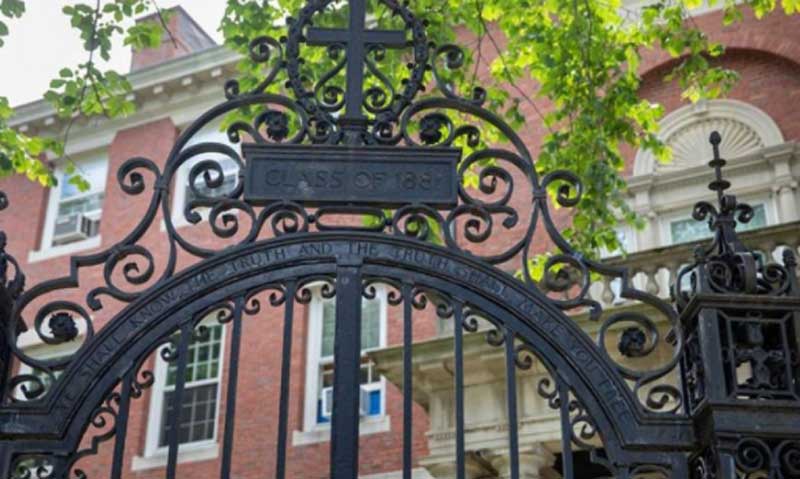
    Harvard University and the University of Southern California (USC) advised newly admitted international students who require F-1 visa sponsorship not to come to the U.S. mostly due to the “unpredictability” of the Trump administration.

    Rakesh Khurana, Danoff Dean of Harvard College, wrote in a letter: “At present, any incoming student who received a Form I-20 to begin their studies this fall will be unable to enter the U.S. in F-1 status as course instruction is fully remote.”

    As we reported, last week, the Trump Administration lifted the travel ban to European and UK students who already had study F-1 and M-1 visas. However, students awaiting interviews at U.S. Embassies and Consulates and researchers and teachers with J-1 visas were not included in the U.S. exemptions.

    Harvard University disclosed that it is “working closely with members of the Massachusetts congressional delegation to extend the online exemption to newly admitted students”, although “we don’t anticipate any change to the policy in time for the fall semester.”

    The fact that classes could be delivered through a hybrid model that includes some in-person instruction as a way to obtain an F-1 visa doesn’t convince Harvard officials, “given the unpredictability of current government policies and the uncertainty of the COVID-19 crisis,” said Rakesh Khurana.

    The institution advised students to take courses remotely from home, or, alternatively, defer the start of the classes on-campus.

    USC recommended all undergraduates to take their courses online and reconsider living on or close to campus this semester. “We are building vibrant platforms, including a new student portal that will serve as a virtual quad and promote social engagement,” wrote Charles F. Zukoski, Provost and Senior Vice President for Academic Affairs at USC. “We also will be providing a host of experiences for our entering first-year and transfer students from across the world, so that they feel part of our community, and can seamlessly transition in person as soon as possible.”

    Dealing with confusion about international students’ status, the U.S. Immigration and Customs Enforcement (ICE) issued a FAQ document, noting that “due to the fluid nature of this COVID-19 situation, the answers in this document may be subject to change.”