Category: Top News

  • Ideas to Boost Your Course Completion Rate

    Ideas to Boost Your Course Completion Rate

    Mikel Amigot | IBL News

    Completion rates of free massive online courses have traditionally been low, at an average of 5%. This is mostly because these online classes are not offering an appealing benefit in career advancement and do not include tutoring to follow up with learners.

    In addition, requiring students to make an upfront payment, often with a minimal fee, show their commitment to the class. It is like in brick-and-mortar colleges: those who pay their own tuition are more likely to continue.

    As an instructional designer, a good technique to increase engagement is to place a survey at the beginning of the course asking students how they will apply their new knowledge and what their expectations are.

    It is also very helpful to feature the materials available for certain course intervals and include synchronous sessions and live office hours. Whatsapp, Slack, Twitter, Facebook or even Google Hangouts are efficient tools for a face-to-face conference.

    This can be combined with group projects and peer assessments ––Open edX includes those two functionalities.

    Naturally, discussion forums and problem submissions must be managed. Having at least one teaching assistant who interacts with students via forums, Piazza-style boards or email will end up motivating learners.

    Chatbot agents and AI-Teaching AssistantsGeorgia Tech-style, which are able to personalize experiences are also an option.

    Economic incentives, such as AWS’ or IBM’s cloud free-credit for young entrepreneurs, are smart approaches.

    Imposing deadlines for course completion tends to work well but it could also discourage enrollment. A solution can be to keep parts of the course open without registration. (This possibility –available on Open edX, too– is beneficial for SEO purposes, since Google and other search crawlers can index your public courses.)

    Finally, consider adaptive learning. AI-driven adaptive or personalized courses are becoming a reality. Behavioral Sciences and predictive analytics help learners succeed. New learning ecosystems are being designed with this requirement.

     

  • Open edX Posts Videos of All Talks from Their Recent Conference

    Open edX Posts Videos of All Talks from Their Recent Conference

    IBL News | New York

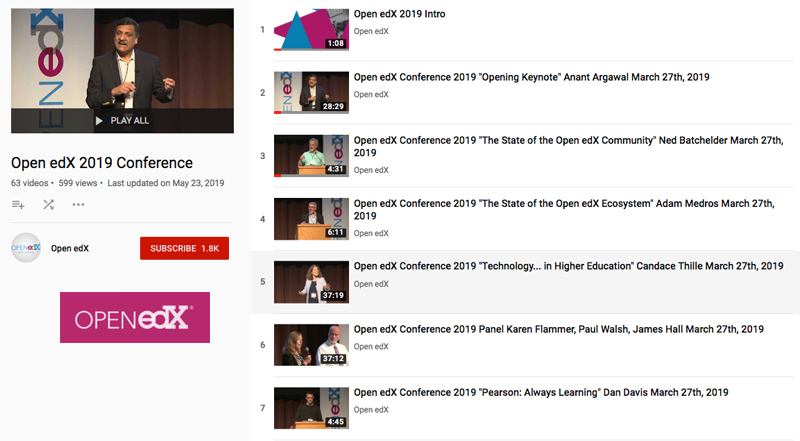
    The edX team has posted videos of all talks pertaining to the 2019 Open edX Conference in San Diego on its YouTube channel. [Watch the playlist below].

    There are 63 total videos discussing software engineering, instructional design, learning initiatives, and discoveries. Most of the scheduled speakers are featured in these videos.

    The theme of the conference revolved around collaborative learning, and how Open edX enables technologists, educators and learners to collaborate, innovate, and move the state of teaching and learning forward.  

    Today there are over 2,400 instances using this software, with more than 25,000 courses and 45 million learners in 70 countries.

  • AI Education: Penn State Will Use a Virtual Assistant in Academic Advising

    AI Education: Penn State Will Use a Virtual Assistant in Academic Advising

    IBL News | New York

    Penn State World Campus has partnered with Google Cloud and the subcontractor Quantiphi to build an AI-based virtual assistant to help academic advisers answer e-mails. It will be ready for the start of Penn State’s spring 2020 semester in January, the institution reported.

    “The goal is to automate processes that are time-consuming for the academic advisers, allowing students to get answers more quickly and freeing up the advisers to work closely with students on other matters,” said Renata Engel, Vice Provost for online education at Penn State.

    This AI agent will screen e-mails for certain keywords and phrases, and then automatically pull relevant information for the advisers to send to students. For example, it will be trained to assist advisers when students inquire how to change their major, change their Penn State campus, re-enroll in the university or defer their semester enrollment date –explained Dawn Coder, director of academic advising and student disability services for World Campus.

    Coder [in the video picture above] said her staff of 48 full-time advisers collectively spends more than 5,000 hours a year assisting students with these common requests. In 2018-19, their staff advised more than 11,000 undergraduates, a 55 percent increase in the number of students over the past five years.


  • Coursera Matches Its Global Skills Index Research With Courses and Specialists

    Coursera Matches Its Global Skills Index Research With Courses and Specialists

    IBL News | New York

    A report from Coursera has found that two-thirds of the world’s population is falling behind in critical skills, including 90% of developing economies.  Meanwhile, the World Economic Forum has pointed to a “growing skills instability” and estimates that the core skills required to perform most roles will change by 42% by 2022.

    One of the main conclusions of both organizations is that due to the rapid advance of automation and AI, the skills required to do most jobs are evolving quickly, and therefore businesses and governments must upskill their workforces and populations.

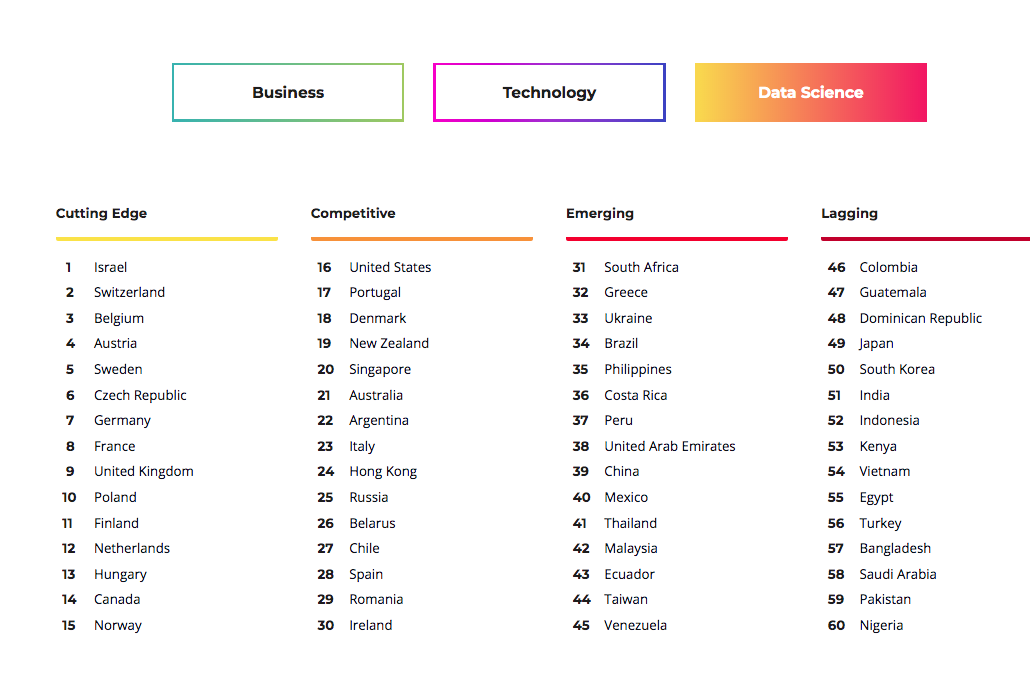
    With 38 million learners, over 3,000 courses, and one of the largest skill databases, Coursera has come up with a Global Skills Index. Its first edition ranks 60 countries and 10 industries across Business, Technology, and Data Science.

    Developing a commercial application, Coursera has matched its index with courses on its catalog and specialized skills experts.

    “For example, the top skills for Engineering include Leadership, Agile Management, and Machine Learning, so we recommend the following courses: Foundations of Everyday LeadershipDigital Product Management: Modern Fundamentals, and Neural Networks and Deep Learning,” writes a content strategists in the company blog.

    Global Skills Index


  • Degreed Raises an Additional $75M to Expand Its Career Development Business

    Degreed Raises an Additional $75M to Expand Its Career Development Business

    IBL News | New York

    Degreed, a San Francisco-based start-up aimed to help employees develop their skills, has raised an additional $35 million in an equity round and $40 million in debt financing.

    Owl Ventures, Jump Capital, Signal Peak Ventures, GSV Accelerate, and Alliance Bernstein have subscribed the equity and Alliance Bernstein Growth Stage Capital, the debt.

    Last March Degreed raised $78.2 million. In June Degreed acquired Pathgather, one of its biggest competitors.

    Degreed’s SaaS app asks users about the specific skills they’re looking to develop and serves up access to courses, videos, books, podcasts, articles, and other resources. It provides analytics and feedback as employees progress.

    “This additional capital will allow us to further execute on the roadmap we laid out at the beginning of the year. We are doubling down on our skills product and the data science and machine learning capabilities to support it,” said Degreed CEO Chris McCarthy.

    Career development, coaching, and “upskilling” market is estimated to be worth $190 billion today and can surpass $300 billion by 2025, according to Global Market Insights.


  • Teachers, Administrators or Students? What Sector Should Data Focus On?

    Teachers, Administrators or Students? What Sector Should Data Focus On?

    Zoe Mackay | IBL News

    “Data” is the buzzword we hear in every field and in every tech conference. Especially in online education, data is everything. A panel at the IMS Global Learning Consortium offered valuable insight into the steps we need to take in order to make data work for teachers and students. The panel was moderated by Mike Sharkey, and featured Steve Liffick, Sean DeMonner, Dwayne Alton, Joel Hames and Phil Miller.

    There is disagreement on what sectors of the education community should be focused on first when it comes to data. Is it the teachers, administrators, students? While Miller says the focus needs to be on administrators, as they are the key stakeholder for making faculty and students successful, Alton stresses that with the transition to digital learning, “the teachers are challenged to know [at what level] their students are” and require data support.

    Within academia, there are many levels that necessitate varying types of support, said Johnston. Specifically, with students, there needs to be a focus on the efficacy of allowing access to data and how it changes student relationships with the instructor.

    Hames, who focuses on younger academic populations, finds parents to be a key element of the community that supports and fosters growth with their children, where data has a role to play. “Turning the data into something that guides and supports, redirects and creates those small changes in behavior and actions that can produce the positive outcomes that we expect.

    The core principle we talk about at Microsoft,” says Liffick, “is data dignity. We hope to provide an incentive, through a little bit of extra insight, that helps the people who are the educators, educate.” There may never be enough data for everyone that wants it, but those in the community who are trying to make the data work for educators and students, as Liffick claims, must never forget their role.

    To watch the full panel discussion, please click on the video below.


  • View: Are the Golden Years of Education Entrepreneurship Gone?

    View: Are the Golden Years of Education Entrepreneurship Gone?

    Mikel Amigot | IBL News

    The push to launch start-ups is certainly over. In 2013, nearly 768 education companies were founded. Today that number has dropped below 125.

    Within 18 months, from late 2011, we saw the launch of MOOC platforms Coursera, edX, Udacity and FutureLearn. In addition, in 2012, three more lifelong learning organizations were founded: Degreed, Minerva and Flatiron School.

    After many tweaks, those companies finally found successful revenue models.

    Looking today, something strange is happening. Creativity and entrepreneurial spirit haven’t decreased. But monetization is tougher, and investors do not have the patience they showed a decade ago.

    Colleges and universities have mostly behaved as anti-innovation engines, mainly because of traditionalists within the faculty and administrators’ exclusive concern with revenue generation. Large corporations have concentrated on their core businesses, paying little attention to new forms of training and education. Non-profits and philanthropist-driven organizations have played it safe, too, promoting partnerships with traditional universities.

    There is much to fix and new times will arrive. Higher ed institutions and businesses need to think differently in order to adequately respond to the new demands of lifelong learners.

  • Facebook Teams Up With Community Colleges to Offer Certificate Programs on Digital Marketing

    Facebook Teams Up With Community Colleges to Offer Certificate Programs on Digital Marketing

    IBL News | New York

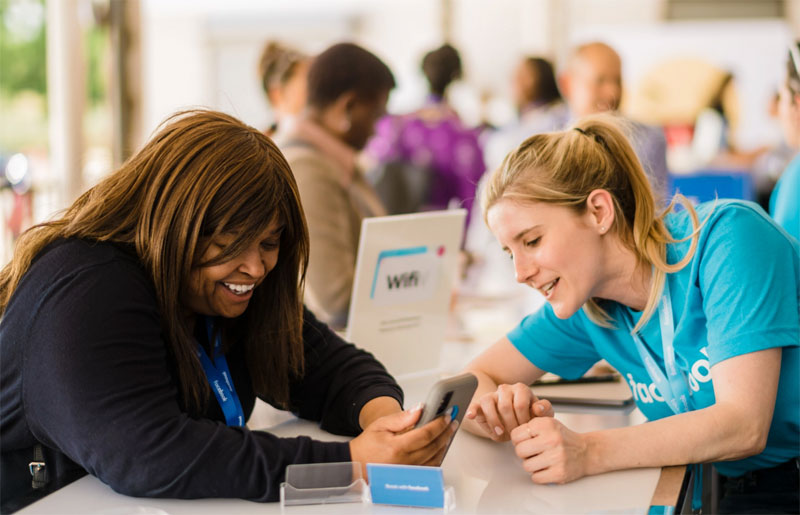
    Harold Washington College of Chicago has teamed up with Facebook to offer a 24-week digital marketing certificate program for students seeking technical skills employers want.

    The program, starting this July 29, costs $1,500. It’s comprised of six, four-week courses, and includes credits from Facebook to build ad campaigns for free on its platform.

    “We’ve created 22 new, free courses on topics like ‘How Instagram Can Help Your Business’ and ‘Facebook Ads and Your Business Goals.’ The new curriculum features 40% video content and 80 new lessons, each condensed to five minutes or less to maximize efficiency. These lessons will be available at facebook.com/blueprint at the end of the month in English, and in 33 additional languages by the end of the year,” Facebook explained.

    This community college, one of the seven City Colleges of Chicago, participated in the initiative after finding 3,000 marketing openings in Chicago.

    In addition to Facebook, other major tech employers such as AWS and Google are working with institutions to offer technical training to learners.

    Another one of Facebook’s digital marketing certificate partners, Des Moines Area Community College (DMACC), has enrolled 84 people in its program since last October, EducationDive reports.

    Facebook provided scholarships to partially cover the cost of attendance, which is $299.

  • “Coursera’s Business Challenge Is Getting Predictably High Revenue Growth,” Says Its CEO

    “Coursera’s Business Challenge Is Getting Predictably High Revenue Growth,” Says Its CEO

    John G. Paul | IBL News, New York

    Coursera has $180 million in the bank after the last round of funding of $103 million in April, company’s CEO Jeff Maggioncalda revealed during a candid interview with a manager from the European start-up accelerator The Family in Paris. [Watch the video below].

    However, this pile of cash is not giving Jeff Maggioncalda much tranquility, given his admitted challenge based on making sure that Coursera’s existing profitable business and financial model works by generating increasingly high margins. “I’m perpetually thinking about how do we get predictably high revenue growth for the next three or five years,” disclosed Coursera’s CEO, who has been in this position for the past year.

    “You want to demonstrate that, as you become bigger, you will become more profitable. If you don’t generate predictably high revenue growth, it is going to be difficult to attract a lot of investment,” he said. (Coursera’s IPO is currently one of the most expected operations in the edtech industry).

    Another interesting revelation from that interview (watch it below) is that designing educational programs for governments is providing “one of the biggest growth rates of Coursera for Business”. “We work with Singapore, Egypt, India, Abu Dhabi. Our biggest deal is with Abu Dhabi; they hired us to train and skill up 60,000 government officials,” Jeff Maggioncalda explained. “Country after country, governments realize that education is the only hope.”

    Regarding the controversial issue of completion rates, Jeff Maggioncalda provided interesting data. Completion is 10% for people who don’t pay for courses, and 40% or 50% for learners who pay. For online degrees it’s 90%. “The completion rates are much higher depending on the value of the credential you get when you finish your learning”. 

    • Class Central: Coursera’s Monetization Journey: From 0 to $100+ Million in Revenue

  • View: A MOOC Platform Catalog is No-Marketing. Leveraging Institutional Networks Is Key

    View: A MOOC Platform Catalog is No-Marketing. Leveraging Institutional Networks Is Key

    Mikel Amigot | IBL News

    An effective marketing plan will drive enrollment, engage with learners and increase word of mouth awareness.

    We start defining our target audience: who are the type of students who would be interested, what is the course about, and why should learners enroll in the course –what new skills and knowledge will they gain, and how will they benefit and help advance their career. In addition, we need to determine what is the key differentiator of the course: is it the institution, the instructor, the topic?

    We all agree on this approach. We also agree that promoting the course description page (or About page) will require an SEO, Twitter / Facebook / LinkedIn social campaign and maybe some paid Adwords.

    But this isn’t enough. A well-crafted plan needs to activate the college’s existing institutional web properties, faculty networks, PR department media capabilities, blog spaces, newsletters, and landing pages. The outreach of the organization, either is a university or a large company, is simply impressive.

    A client of ours forgot or was unable to activate, this little detail, and the enrollment fell short. This department thought that the failure was due to the lack of presence on a catalog of a big MOOC platform like Coursera o edX.

    Institutions tend to believe before joining a consortium that a MOOC platform is a magic bullet for marketing. When they launch their first course or program, they discover that enrollments are surprisingly low. What happens? Well, first, they put too much faith on those platform advertising pitches, and, second, they don’t activate their institutional networks.

    Truth be told, Coursera and edX do advise about the importance of undertaking an integrated marketing approach between the institution and MOOC platform, with the university’s web assets as the most important. In the end, Google is always your best ally. A centralized catalog has a limited impact.