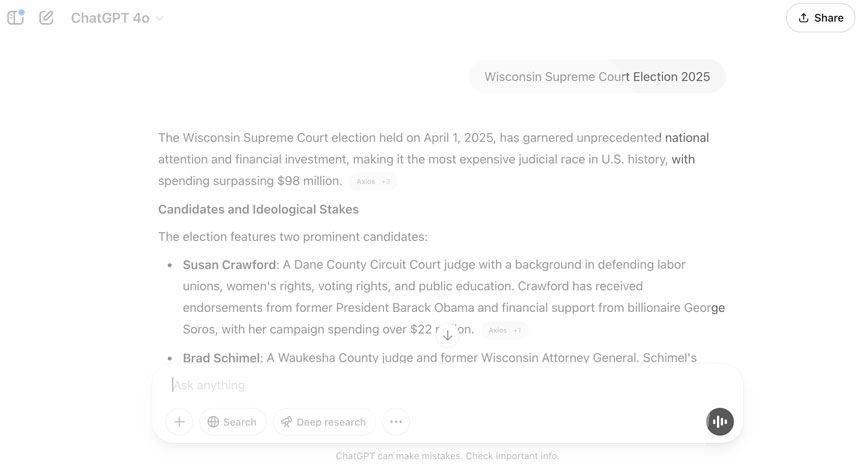
What is the number two chatbot in terms of traffic in the world?
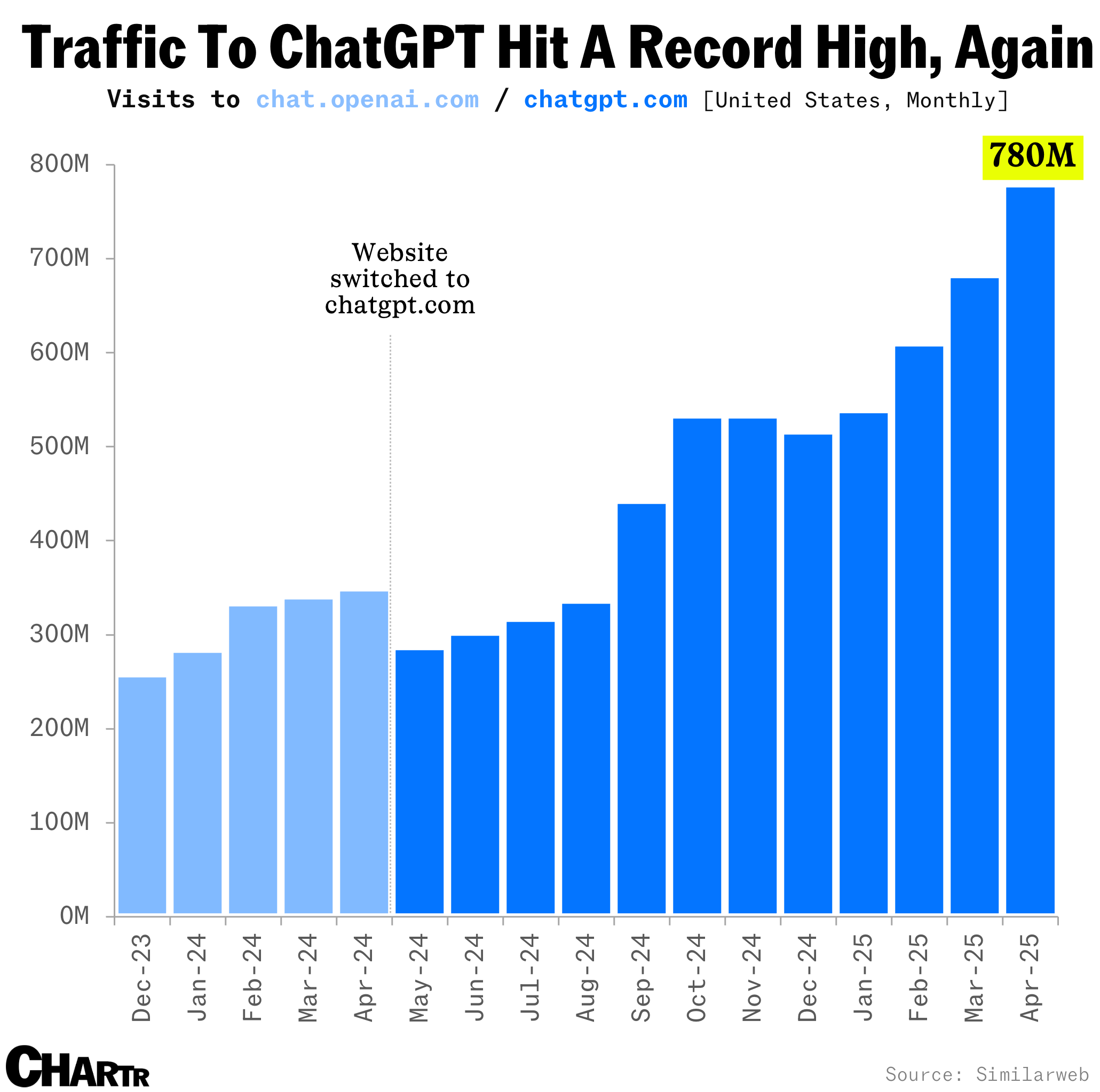
There is fierce competition among players. However, they all pale compared to ChatGPT, which surged to 500 million weekly active users in late March.
Google’s Gemini web traffic increased to 10.9 million average daily visits in March, up 7.4% month-over-month.
At the same time, the number of Microsoft OpenAI-powered Copilot users increased to 2.4 million, up 2.1 percent from February.
In March, Anthropic’s Claude reached an average of 3.3 million daily visits, xAI’s Grok averaged 16.5 million, and Chinese DeepSeek received 16.5 million visits that month.
In terms of apps, the consultant Sensor Tower highlighted the case of the Claude app, which saw a 21% week-over-week increase in weekly active users during the week of February 24, when Anthropic released its latest model, Claude 3.7 Sonnet.
Also, Google’s Gemini 2.0 Flash saw its app’s weekly active users grow by 42%. Google brought a “canvas” feature to Gemini that lets users preview the output of coding projects.
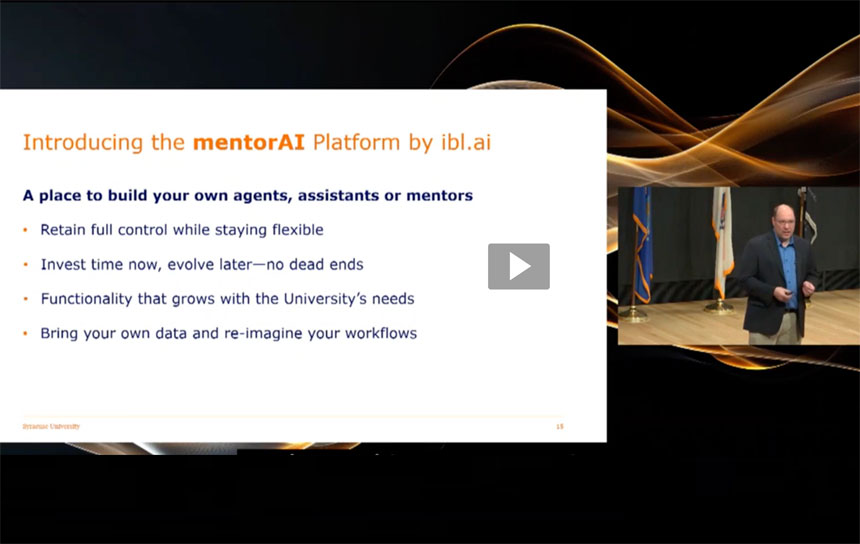
Syracuse University, this month, during the forum “AI at Work,” presented its AI platform developed in collaboration with ibl.ai, the parent company of this news service.
At the center is MentorAI, a platform run entirely inside Syracuse’s cloud tenancies.
Andrew Joncas, Leader, Architect, and Technology Evangelist, at Syracuse University, explained, “Creating an AI tutor no longer requires prompt-engineering expertise. Instructors upload a syllabus, slide deck, or even an MP4 lecture; Mentor AI generates an agent that can answer student questions, surface key points, or embed directly in Blackboard.”
Syracuse University owns data and code and pays by the API call rather than per-seat license; therefore, there’s no premium license, and administrators can mix and match models — from OpenAI GPT-4o to Google Gemini or open-source Llama. This approach also allows the university to adopt newer models as they mature.
The same event highlighted the Blackboard AI Design Assistant, where AI suggests quiz items, assignments, and rubrics, as Michael Morrison stressed, the instructor remains in charge.
Anthropic last week launched Claude Opus 4 and Claude Sonnet 4, which offer advanced features in coding, reasoning, and AI agents.
“Claude Opus 4 is the world’s best coding model, with sustained performance on complex, long-running tasks and agent workflows. Claude Sonnet 4 is a significant upgrade to Claude Sonnet 3.7, delivering superior coding and reasoning while responding more precisely to your instructions,” advertised the company.
Both models can use tools like web search and demonstrate improved memory capabilities.
In addition, the company announced that Claude Code was generally available. It supports background tasks via GitHub Actions and native integrations with VS Code and JetBrains, displaying edits directly in users’ files for pair programming.
Anthropic, a start-up founded by ex-OpenAI researchers, released four new capabilities on the Anthropic API, enabling developers to build more powerful code execution tools, the MCP connector, Files API, and the ability to cache prompts for up to one hour.
Claude Opus 4 powers known frontier agent products like Cursor, Replit, Block, Rakuten, and Cognition.
Anthropic’s Claude 4 models arrived as the company looks to substantially grow revenue. Reportedly, the organization aims to reach $2.2 billion in earnings this year.
— Julian Goldie SEO (@JulianGoldieSEO) May 24, 2025
Still manually searching for flights and leads?
Claude 4 just changed everything.
I just turned Claude Sonnet 4 into a browser-controlling AI super agent that finds flights, scrapes LinkedIn for leads, and navigates websites automatically.
The Trump administration’s threat to block Harvard University from enrolling international students highlighted the risk other American universities face.
NYU, Johns Hopkins, Columbia, and Carnegie Mellon have even larger international student shares than Harvard.
This metric, which once reflected their financial strength and international prestige, now looks like a vulnerability.
For universities, a decline in international students could have serious financial consequences, disrupting classrooms, research, and the next generation of workers in the United States.
Currently, these are the schools with the most international students, according to a graphic released by The New York Times:
School
Students
Pct. International
Illinois Tech
6,571
51%
Carnegie Mellon
14,517
44%
Stevens Tech
7,461
42%
Northeastern
29,738
40%
New School
8,725
40%
Columbia
28,756
40%
Johns Hopkins
16,830
39%
N.Y.U.
49,847
37%
Clark
3,830
34%
Rochester
10,109
33%
Caltech
2,463
32%
Chicago
16,499
31%
Boston U.
29,104
30%
M.I.T.
11,706
30%
Harvard
20,807
28%
U.S.C.
41,648
28%
WashU
14,282
28%
Penn
23,948
27%
Brandeis
4,873
27%
Rice
7,972
26%
Cornell
25,334
26%
Duke
16,557
25%
Stanford
17,212
24%
Saint Louis
12,904
24%
Princeton
8,849
24%
Yale
14,854
24%
Northwestern
19,451
24%
Illinois
47,118
23%
Ga. Tech
25,178
23%
U.T. Dallas
25,108
23%
N.J.I.T.
10,388
23%
Mt. Holyoke
2,206
22%
Dartmouth
6,678
21%
Georgetown
15,453
20%
U.M.B.C.
11,523
20%
Brown
10,832
19%
Case Western
11,143
19%
Grinnell
1,707
19%
Emory
13,565
18%
U.C.S.D.
40,716
18%
Washington
43,118
18%
Bentley
4,690
17%
Fran. & Marshall
1,902
17%
Berkeley
41,572
17%
Denison
2,391
17%
G.W.
18,049
17%
Michigan
48,167
17%
U.C. Irvine
35,511
16%
Tufts
11,953
16%
U.C. Davis
38,184
15%
The share of international students studying at these colleges has been growing for the past two decades as rising incomes in countries like China and India have produced more families looking to educate their children in America.
In addition, public research universities have turned to international students, as they pay the full tuition price.
Higher education is a major American export. Over 1.1 million international students contributed about $43 billion to the U.S. economy during the 2023-24 academic year, most of it on tuition and housing, according to nonprofit NAFSA.
Experts say the higher tuition paid by international students helps subsidize lower costs for U.S. students.
Harvard University on Friday sued the Trump administration over its ban on enrolling foreign students, calling it unconstitutional retaliation.
On Thursday, the Department of Homeland Security said it would block international students from attending the nation’s oldest university.
In a lawsuit filed in federal court in Boston, Harvard said the government’s action violates the First Amendment of the US Constitution and will have an “immediate and devastating effect for Harvard and more than 7,000 visa holders”.
The Ivy League institution enrolls almost 6,800 foreign students at its campus in Cambridge, Massachusetts. Most are graduate students, and they come from more than 100 countries.
The Department of Homeland Security gave Harvard 72 hours to turn over all documents on all international students’ disciplinary records and paper, audio, or video records on protest activity over the past five years to have the “opportunity” to have its eligibility to enroll foreign students reinstated.
The Hong Kong University of Science and Technology extended an open invitation to Harvard international students and those accepted in response to the action against Harvard.
The administration’s action and Harvard’s response signified a dramatic escalation of the battle between the administration and Harvard.
Meanwhile, a federal judge—Boston judge Allison D. Burroughs—halted temporarily Trump’s administration’s effort to bar international students at Harvard, issuing a temporary restraining order against the federal edict. The judge agreed that Harvard had shown that its implementation would cause “immediate and irreparable injury” to the university.
The move froze the Trump administration’s attempts against Harvard.
Google CEO Sundar Pichai and his executives presented at the company’s I/O 2025 event new ways to bring users the web intermediated through a series of AI agents, reviewing the concept of Search, based on bringing people from the web for any given search query.
“We believe AI will be the most powerful engine for discovery that the web has ever seen,” said Google’s VP of Search, Liz Reid, onstage at I/O.
Essentially, the company suggests that the future of the web, and the company, involves AI agents fetching information from the web and presenting it to users in whatever way they’d like.
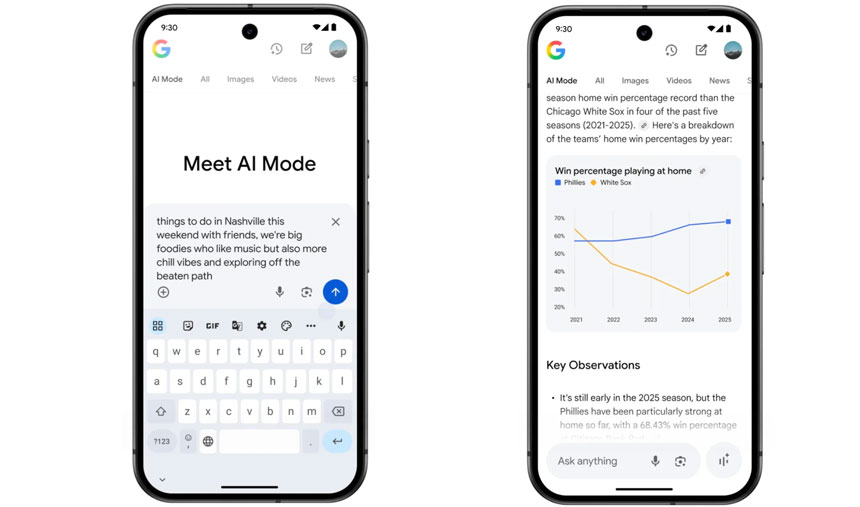
At the I/O 2025, the largest announcement was that Google now offers AI mode to every Search user in the U.S.
Users will be able to converse with an AI agent that will visit web pages, do summaries, and help them shop.
Google also announced on Tuesday that the SDK for Gemini models will now natively support Anthropic’s MCP, an increasingly popular standard for connecting agents to data sources across the internet.
On Wednesday, Google detailed its plans to bring ads to AI Mode, which lets Google Search users ask a question and get an AI-generated response, with the ability to go deeper through follow-up questions and links to websites.
Perplexity and several of Google’s rivals have experimented with ads in their AI products.
Microsoft CEO Satya Nadella unveiled the company’s biggest product moves, including Copilot and Azure updates, developer tools, and more, during this week’s Build conference in Seattle.
“We’ve entered the era of AI agents. Thanks to groundbreaking advancements in reasoning and memory, AI models are now more capable and efficient, and we’re seeing how AI systems can help us all solve problems in new ways,” said Satya Nadella.
As an example, the company mentioned that 15 million developers are already using GitHub Copilot, streamlining the way they code, check, deploy, and troubleshoot.
Hundreds of thousands of customers are using Microsoft 365 Copilot to help research, brainstorm and develop solutions, and more than 230,000 organizations — including 90% of the Fortune 500 — have already used Copilot Studio to build AI agents and automations.
The Multi-Agent Orchestration, or how multiple specialized AI agents work together to accelerate work, was one of the notorious announcements.
Today, at Build we showed you how we are building the open agentic web. It is reshaping every layer of the stack, and our goal is to help every dev build apps and agents that empower people and orgs everywhere. Here are 5 big things we announced today:
One example was an onboarding process handled by several agents: one managed human resources paperwork, another set up IT accounts, and a third scheduled training sessions. Each agent handled its part and reported back, with the system summarizing the results for the user.
In sales, one agent pulled CRM data, another drafted a proposal, and a third scheduled follow-ups in Outlook.
Microsoft announced that it is moving toward an open, connected agent ecosystem, with Model Context Protocol (MCP), a protocol that lets agents securely access data and services across platforms, and NLWeb, a system that helps websites become accessible to AI agents via natural language.
The goal is to create an environment where agents can collaborate and interact freely across the web and different apps, no matter who built them or where they run.
Also, the company presented its Agent Store, a platform where users can access and deploy various AI agents, including those built by Microsoft and third-party developers, within the Microsoft 365 Copilot and other Microsoft services. These agents are designed to perform specific tasks, such as summarizing documents, generating code, or managing meetings, and can be customized for individual needs or business requirements.
Thanks for joining us at Build, @sama! Enjoyed our conversation about SWE agents and how the role of developers is evolving. pic.twitter.com/piUVxNqTht
Great to have Jensen at Build to talk about our partnership and how we are building and scaling the largest AI supercomputer in the world on Azure. pic.twitter.com/hNgXJkVfJL
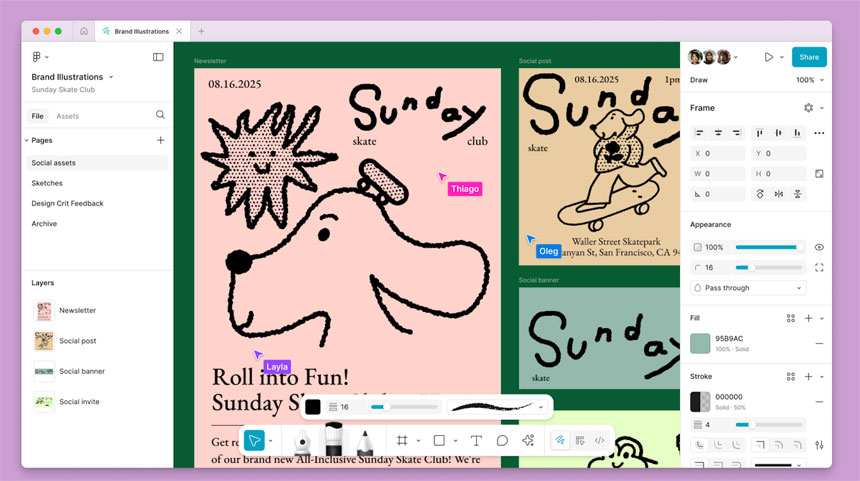
Figma, a design company, announced multiple AI features this month, during its Config annual conference. These include an AI creator for powering website and app prototypes, a way to create assets in bulk, a new drawing tool, and a blog post generator.
With this launch, the company is trying to compete with Canva, Adobe, WordPress, Squarespace, Wix, Replit, Lovable, and Hostinger, among other firms.
However, the company denies directly competing with these creative tools by saying that it is in the business of building digital products, with a third of the company’s users being developers.
Figma also announced a new plan, a content seat, starting at $8 monthly. This plan will give users access to Figma Buzz, Slides, FigJam, and Sites CMS.
Google Gemini’s Gemma open models reached a milestone of 150 million downloads this month.
Omar Sanseviero, a developer relations engineer at Google DeepMind, also revealed that developers have created more than 70,000 variants of Gemma on the AI dev platform Hugging Face.
This collection of lightweight models, built from the same research and technology that powers Gemini 2.0, was launched in February 2024 to compete with another open model like Meta’s Llama. In late April, it exceeded 1.2 billion downloads.
The latest Gemma releases are multimodal, enabling users to work with images and text in 100 languages. Versions are also fine-tuned for particular applications, like drug discovery.
Gemma and Llama have non-standard licensing terms, which some developers say they might be risky for commercial use of the models.
Gemma just passed 150 million downloads and over 70k variants on Hugging Face🚀🚀🚀
What would you like to see in the next Gemma versions?



 The Trump administration’s threat to block Harvard University from enrolling international students highlighted the risk other American universities face.