Category: Top News

  • Elon Musk-Led Investor Group Makes $97.4 Billion Offer to Buy OpenAI

    Elon Musk-Led Investor Group Makes $97.4 Billion Offer to Buy OpenAI

    IBL News | New York

    A group of investors led by Elon Musk made an unsolicited offer of $97.4 billion to buy the nonprofit that controls OpenAI in an audacious attack against Sam Altman and his plans to convert his company to a for-profit company and spend up to $500 billion on AI infrastructure through a joint venture called Stargate.

    The consortium of investors, which included Vy Capital and xAI, Musk’s AI company (which could merge with OpenAI), submitted this bid for all the nonprofit’s assets to OpenAI’s Board of Directors yesterday.

    “It’s time for OpenAI to return to the open-source, safety-focused force for good it once was,” Musk said in a statement by his lawyer, Marc Toberoff.

    OpenAI’s Board of Directors, closely allied with Sam Altman, rejected and mocked Musk’s bid. “No, thank you, but we will buy Twitter for $9.74 billion if you want,” Mr. Altman said on X.

    In a Slack message to employees, he wrote, “Our structure ensures that no individual can take control of OpenAI. These are tactics to try and weaken us because we are making great progress.”

    Altman and Musk co-founded OpenAI in 2015 as a non-profit charity. In 2019, after Musk left the company and Altman became chief executive, OpenAI created a for-profit subsidiary that has served as a vehicle for it to raise money from Microsoft and other investors.

    Now, Altman is willing to turn the subsidiary into a traditional company and spin out the nonprofit, which would own equity in the new for-profit.

    Musk has filed a series of legal complaints accusing OpenAI of betraying its original nonprofit mission by creating a for-profit arm and colluding with its largest investor, Microsoft, to dominate the development of AI.

    The day President Trump was inaugurated, Altman announced a plan called Stargate to invest up to $500 billion over the next four years in U.S. data centers.

    Currently, OpenAI is locked in negotiations with Microsoft and other stakeholders over how much equity they should receive in the new company.

  • OpenAI Debuted a $14 Million Super Bowl 60-Second Ad

    OpenAI Debuted a $14 Million Super Bowl 60-Second Ad

    IBL News | New York

    OpenAI spent $14 million on a Super Bowl 60-second ad broadcasted in the first half placement yesterday. Around 130 million people might have watched it.


    The spot, developed under new CMO Kate Rouch, positioned AI alongside humanity’s most significant innovations. However, it avoided mentioning AGI or superintelligence, OpenAI’s core missions.

    It traced humanity’s technological evolution through an animated narrative, transforming dots into iconic images of progress — from early tools like fire and the wheel to modern breakthroughs like DNA sequencing and space exploration.

    The commercial culminated with modern AI applications, showing ChatGPT handling everyday tasks like drafting business plans and language tutoring.

    OpenAI’s text-to-video AI Sora was used during conception to prototype ideas and explore different camera treatments, but the final animation was created entirely by human artists.

    This Wednesday at noon ET, the OpenAI Forum, created for the public to share ideas, will have an open streamed talk and roundtable discussion, OpenAI’s Super Bowl Ad: Introducing the Intelligence Age, featuring OpenAI’s Chief Marketing Officer Kate Rouch and Accenture Song/droga5 CEO David Droga.

  • SoftBank Can Surpass Microsoft as OpenAI’s Top Backer

    SoftBank Can Surpass Microsoft as OpenAI’s Top Backer

    IBL News | New York

    SoftBank can soon surpass Microsoft as OpenAI’s top backer.

    The Japanese multinational investment holding company is close to finalizing a $40 billion investment in OpenAI at a $300 billion post-money valuation, CNBC reported.

    The VC company plans to syndicate $10 billion of the amount.

    Part of the funding is expected to be used on OpenAI’s commitment to Stargate, the joint venture between SoftBank, OpenAI, and Oracle, announced by President Donald Trump in January.

    The generative AI market is predicted to top $1 trillion in revenue within a decade.

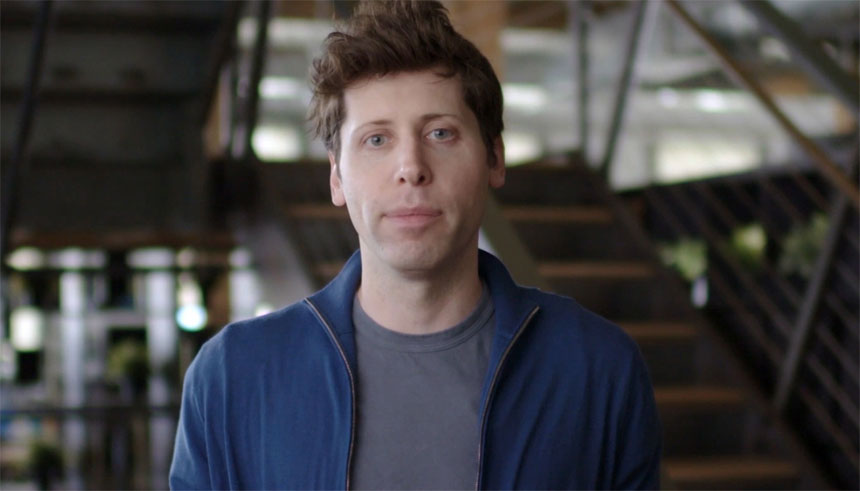
    OpenAI’s CEO Sam Altman [in the picture above] contributed $1 million to Trump’s inauguration, attended the event alongside other tech CEOs, and has publicly signaled his admiration for the president.

    OpenAI’s new funding comes after Chinese rival DeepSeek’s breakthrough R1 model rolled out in the U.S., a powerful model trained at a fraction of the cost of American competitors.

    Altman described DeepSeek’s R1 as “impressive” and wrote on X that “we will obviously deliver much better models, and also, it’s legit invigorating to have a new competitor!”

  • A Chinese Company Launches a Fully Open-Source Video Generator

    A Chinese Company Launches a Fully Open-Source Video Generator

    IBL News | New York

    Beijing-based HPC-AI Technology, Inc., the developer of the popular open-source project Colossal-AI, launched Open-Sora’s video generation platform in December.

    The repository of this open-source alternative to OpenAI’s Sora is available on GitHub.

    The Chinese start-up behind the initiative claims that video is generated at 50% of the cost.

    “Open-Sora not only democratizes access to advanced video generation techniques but also offers a streamlined and user-friendly platform that simplifies the complexities of video generation,” said the company.

    HPC-AI Technology, Inc. featured a gallery of examples.

  • Workday Fires 1,750 Employees and Plans to Hire AI Talent

    Workday Fires 1,750 Employees and Plans to Hire AI Talent

    IBL News | New York

    Enterprise HR, finance, and learning platform Workday Workday joined Microsoft, Meta, Amazon, and other companies this week to announce layoffs.

    The Silicon Valley-based company laid off 1,750 employees on Wednesday, 8.5% of its current workforce.

    Workday CEO Carl Eschenbach told employees in a blog post that the company needs a new approach in the current market and does plan to hire AI talent.

    “Affected employees in the U.S. will be offered a minimum of 12 weeks of pay, with additional weeks based on tenure. In addition, they will be offered additional vesting of restricted stock unit grants, career services, benefits support, and immigration support. Outside the U.S., affected employees will be offered packages based on local standards, which will be aligned with U.S. packages, where possible,” Eschenbach explained.

    In the age of AI, other companies have recently announced layoffs.

    • Identity management company Okta laid off 180 employees on Tuesday.

    • Robotaxi company Cruise also slashed 50% of its workforce on Tuesday.

    • Amazon has also recently cut some of its roles in its sustainability department.

  • OpenAI Introduced the ‘ChatGPT Gov’ Initiative, Offering Agencies’ Access to Its Frontier Models

    OpenAI Introduced the ‘ChatGPT Gov’ Initiative, Offering Agencies’ Access to Its Frontier Models

    IBL News | New York

    OpenAI introduced its ChatGPT Gov program, a new tailored version of ChatGPT similar to its Enterprise offer, designed to provide U.S. government agencies with an additional way to access the company’s frontier models.

    “We believe the U.S. government’s adoption of AI can boost efficiency and productivity and is crucial for maintaining and enhancing America’s global leadership in this technology,” said the company in a blog post.

    Government agencies can deploy ChatGPT Gov in their own Microsoft Azure commercial cloud or Azure Government cloud on top of Microsoft Azure’s OpenAI.

    ChatGPT Gov includes the GPT-4o flagship model, Custom GPTs that employees can build and share, and an administrative console for CIOs and IT teams to manage users, groups, Custom GPTs, and single sign-on (SSO).

    OpenAI claimed that since 2024, over 90,000 users across 3,500 federal, state, and local government agencies are using ChatGPT daily. Among those agencies, it mentioned

    Since 2024, more than 90,000 users across more than 3,500 US federal, state, and local government agencies have sent over 18 million messages on ChatGPT to support their day-to-day work, including:

  • Stanford University Introduces an LLM that Writes Wikipedia-Like Reports

    Stanford University Introduces an LLM that Writes Wikipedia-Like Reports

    IBL News | New York

    Stanford University released Co-STORM this month, a research prototype LLM that writes Wikipedia-like articles from scratch based on Internet searches.

    According to the institution, experienced Wikipedia editors have found it helpful in their pre-writing stage.

    STORM — Synthesis of Topic Outline through Retrieval and Multi-perspective Question Asking — has been tried by over 70,000 people on its live preview page.

    Available on GitHub, the model breaks down generating long articles with citations into two steps: a pre-writing stage when it collects references and generates an outline, and a writing stage when the system generates a full-length article with citations.


    STORM simulates a conversation between a Wikipedia writer and a topic expert grounded in Internet sources to enable the language model to update its understanding of the topic and ask follow-up questions.

  • OpenAI Launches Its Next Agent Named ‘Deep Research’

    OpenAI Launches Its Next Agent Named ‘Deep Research’

    IBL News | New York

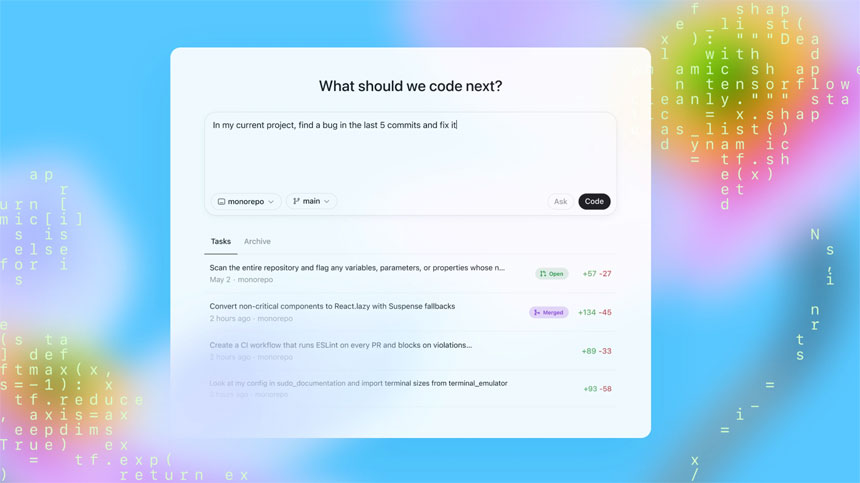
    On Sunday, OpenAI launched Deep Research in ChatGPT, a new agentic capability that conducts multi-step research on the Internet for complex tasks.

    After a prompt, OpenAI’s next agent finds, analyzes, and synthesizes hundreds of online sources to create a comprehensive report at the level of a research analyst. The user can attach files or spreadsheets to add context to his question. Once it starts running, a sidebar appears with a summary of the steps taken and sources used.

    It’s powered by a version of the upcoming OpenAI o3 model optimized for web browsing and data analysis. It leverages reasoning to search, interpret, and analyze massive amounts of online text, images, and PDFs.

    “The ability to synthesize knowledge is a prerequisite for creating new knowledge. For this reason, deep research marks a significant step toward our broader goal of developing AGI, which we have long envisioned as capable of producing novel scientific research,” said the company.

    Deep Research has been built for people who do intensive knowledge work in areas like finance, science, policy, and engineering and need thorough, precise, and reliable research.

    It can be equally helpful for discerning shoppers looking for hyper-personalized recommendations on purchases that require careful research, like cars, appliances, and furniture.

    Every output is fully documented, with precise citations and a summary of its thinking, making it easy to reference and verify the information. It is particularly effective at finding niche, non-intuitive information that would require browsing numerous websites.

    Deep research may take 5 to 30 minutes to complete, taking the time needed to dive deep into the web.

    “Deep Research’s ability to conduct extensive exploration and cite each claim is the difference between a quick summary and a well-documented, verified answer usable as a work product,” said OpenAI.

    OpenAI said it’s making deep research available to ChatGPT Pro users today, limited to 100 queries per month, with support for Plus and Team users coming next, followed by Enterprise.

    deep research composer
    deep research sidebar

    Google announced a similar AI feature with the same name less than two months ago.

  • OpenAI Released o3-mini, Its Latest Reasoning Model

    OpenAI Released o3-mini, Its Latest Reasoning Model

    IBL News | New York

    OpenAI on Friday released o3-mini, its latest reasoning model, battling the perception that it’s losing the AI race to Chinese companies like DeepSeek while it prepares for a significant funding round.

    The new o3-mini, featured by OpenAI as “powerful and affordable,” is fine-tuned for coding, math, and science.

    Reasoning models throughly fact-check themselves before issuing out results, although taking a little longer.

    O3-mini is available to all ChatGPT users. However, users who pay for ChatGPT Plus and Team plans get a higher rate limit of 150 daily queries.

    ChatGPT Pro subscribers get unlimited access, and ChatGPT Enterprise and ChatGPT Edu customers will be activated this week.

    Free users can click or tap the new “Reason” button in the chat bar or have ChatGPT “re-generate” an answer.

    Also, o3-mini is available via OpenAI’s API for selecting developers.

    o3-mini is priced at $0.55 per million cached input tokens and $4.40 per million output tokens, where a million tokens equate to roughly 750,000 words. That’s 63% cheaper than o1-mini and competitive with DeepSeek’s R1 reasoning model pricing.

    DeepSeek charges $0.14 per million cached input tokens and $2.19 per million output tokens for R1 access through its API.

    O3-mini is not OpenAI’s most powerful model to date, nor does it leapfrog DeepSeek’s R1 reasoning model in every benchmark, according to TechCrunch.

  • Coursera Named a New CEO: Former Executive from Amazon, Greg Hart

    Coursera Named a New CEO: Former Executive from Amazon, Greg Hart

    IBL News | New York

    In a surprising move, online learning platform Coursera (NYSE: COUR) announced this week that its veteran CEO, Jeff Maggioncalda, will retire on February 3, and former executive from Amazon, Greg Hart, 55, will take his place, also serving as a member of the Board of the company. Maggioncalda joined Coursera as CEO in June 2017.

    Hart, 55 years old, worked at Amazon for 23 years, leading the launch of Alexa and scaling Prime Video globally. He also worked at real estate brokerage Compass as chief product officer. He holds a Bachelor of Arts degree from Williams College and is an inventor or co-inventor on 71 US patents.

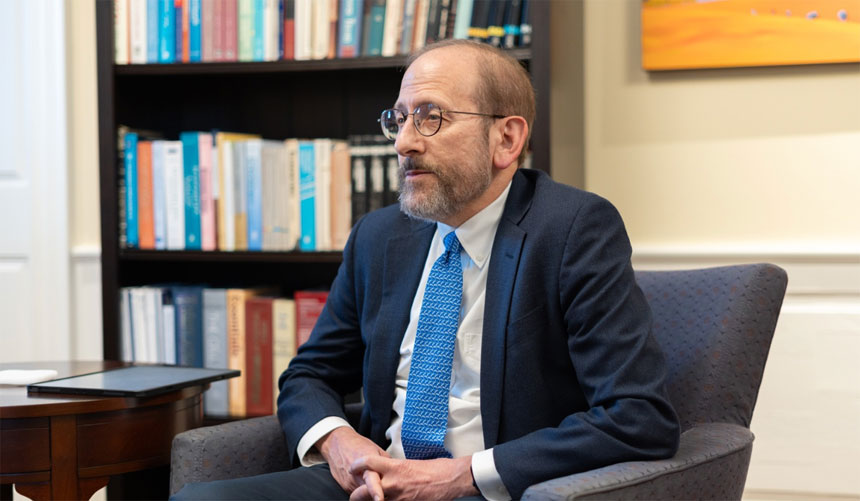
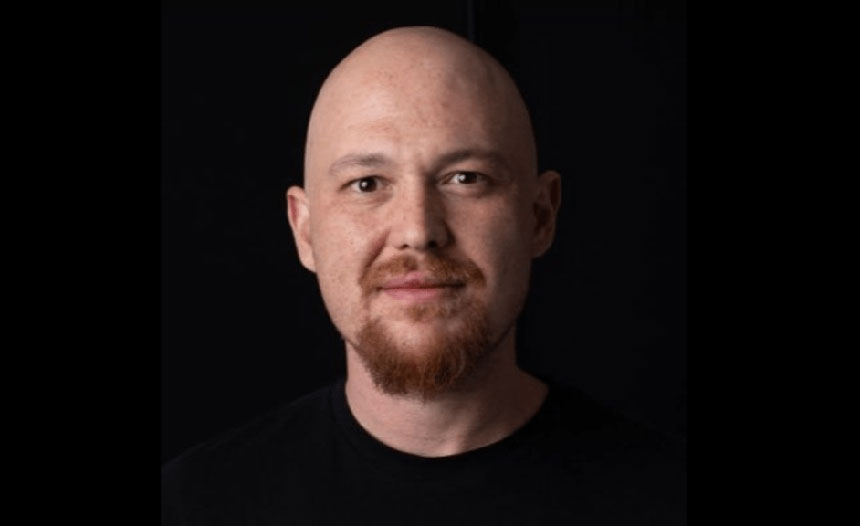
    This executive [in the picture above] will receive an initial base salary of $590,000 and will be in the company’s bonus pool. His compensation will also include specific restricted stock units and stock options. Hart will also serve as a member of the Coursera board.

    Coursera’s Board of Directors said that Greg Hart is the right leader “to deliver the next chapter of growth.”

    Yesterday, the shares of Coursera fell 11.6% after the company reported underwhelming fourth-quarter results, with revenue and EBITDA dropping short of Wall Street’s estimates.

    Analyst Jabin Bastian from StockStory explained this plunge, saying that investors found Coursera’s record unconvincing regarding growth and strategy. “Growth has been weak in recent quarters, yet management offered no clear guidance for 2025,” he stated.