Category: Top News

  • Microsoft’s Copilot in Teams Chat Summarizes Key Information and Writes Follow-Up Emails

    Microsoft’s Copilot in Teams Chat Summarizes Key Information and Writes Follow-Up Emails

    IBL News | New York

    Microsoft announced that, beyond its initial version of March, new capabilities on its Copilot for Teams Phone (both VoIP and PSTN calls) and Teams Chat.

    Users can get real-time written summarization and insights on phone and chat conversations, with draft notes and highlighted key points, such as names, dates, numbers, and tasks.

    An example of the Microsoft 365 Copilot on Teams points out how this tool summarizes a customer’s talk as he speaks, capturing his relevant questions and feedback while it suggests the next steps and writes a follow-up email.
    .

  • Amazon Plans AI-Generated Customer Review Highlights on Products

    Amazon Plans AI-Generated Customer Review Highlights on Products

    IBL News | New York

    Amazon this week announced it will use generative AI to provide a short paragraph of text right on the product detail page. It will help customers better understand what customers say and feel about a product without reading dozens of individual reviews.

    The e-commerce giant started customer reviews in 1995, allowing users the opportunity to voice their honest opinions on products — the good, the bad, and everything in between.
    In 2019, Amazon enabled customers who purchased an item on Amazon to provide feedback by leaving a quick star rating without having to write a full-text review. In 2022, 125 million customers contributed nearly 1.5 billion reviews and ratings to Amazon stores.

    Customer reviews have become synonymous with online shopping today.

    The AI-generated review feature is available to a subset of mobile shoppers in the U.S. across a broad selection of products, as shown below.

    A smart phone with an Amazon product review on the screen.


    A smart phone with an Amazon product review on the screen.


    A smart phone with an Amazon product review on the screen.

    Amazon also uses machine learning models to detect and eliminate fake reviews that intentionally mislead customers. This analyzes thousands of data points to detect risk, including relations to other accounts, sign-in activity, review history, and other indications of unusual behavior, as well as expert investigators that use sophisticated fraud-detection tools to analyze and prevent fake reviews from ever appearing in the Amazon store.

    In 2021, the company blocked 200 million fake reviews. It has also tried to crack down on the sources of fake reviews for years via lawsuits and other actions, including suing sellers who bought fake reviews. Last year, it sued the admins from 10,000 Facebook groups who were engaged in fake review brokering.

    Amazon addresses the concern around fake reviews today, saying it will only summarize those reviews from verified purchases.
    .

  • Nvidia Announced Its Support to a Hugging Face Generative AI Service

    Nvidia Announced Its Support to a Hugging Face Generative AI Service

    IBL News | New York

    NVIDIA, yesterday, announced it will support with its AI supercomputer DGX Cloud a new Hugging Face service called Training Cluster as a Service.

    This service, set to roll out “in the coming months,” simplifies the creation of new and custom generative AI models for the enterprise.

    DGX Cloud includes access to a cloud instance with eight Nvidia H100 or A100 GPUs and 640GB of GPU memory, as well as Nvidia’s AI Enterprise software to develop AI apps and large language models and consultations with Nvidia experts.

    Companies could subscribe to DGX Cloud on their own at a price starting at $36,999 per instance for a month. But Training Cluster as a Service integrates DGX Cloud infrastructure with Hugging Face’s platform of a repository for all things related to AI models (over 250,000 models and 50,000 data sets.)

    Our collaboration will bring Nvidia’s most advanced AI supercomputing to Hugging Face to enable companies to take their AI destiny into their own hands with open source to help the open-source community easily access the software and speed they need to contribute to what’s coming next,” Hugging Face co-founder and CEO Clément Delangue said.

    Hugging Face’s partnership with Nvidia comes as this AI startup is looking to raise funds at a $4 billion valuation.

    Meanwhile, Nvidia is pushing into cloud services for training and running AI models as the demand for such services grows. In March, the company launched AI Foundations, a collection of components that developers can use to build custom generative AI models for particular use cases.
    .

  • SAP Invested in Generative AI startups Anthropic, Cohere, and Aleph Alpha

    SAP Invested in Generative AI startups Anthropic, Cohere, and Aleph Alpha

    IBL News | New York

    The German giant SAP announced that it invested, through its venture capital firm Sapphire Ventures, in three major AI startups: Anthropic, Cohere, and Aleph Alpha.

    The terms of the direct investment weren’t detailed, although SAP disclosed that it built on its $1 billion-plus commitment to back new AI firms.

    SAP also highlighted several internal efforts around Generative AI, including a digital assistant for customer experience.

    “SAP is committed to creating an enterprise AI ecosystem for the future that complements our world-class business applications suite and helps our customers unlock their full potential,” SAP’s Chief Strategy Officer, Sebastian Steinhaeuser, said in a press release.

    Anthropic’s Claude system processes text within the context of natural conversations. Cohere provides a generative text platform that can be deployed on virtual private clouds or on-site where data resides.

    Aleph Alpha — which was already an SAP Partner — creates and hosts multimodal, multilanguage models focused on interoperability, data privacy, and security.
    .

  • Facebook Will Launch AI Chatbots With Different Personalities

    Facebook Will Launch AI Chatbots With Different Personalities

    IBL News | New York

    Meta plans to launch a range of AI chatbots that exhibit different personalities and offer recommendations on Facebook in September.

    An example is a character that emulates Abraham Lincoln. Facebook, which seeks to retain and attract users in its battle with social media upstart TikTok, sees these characters as a fun product for people to play with.

    On top of boosting engagement, Facebook’s chatbots can collect vast amounts of data on users’ interests to attract advertisers. Currently, most of Meta’s $117bn a year in revenues comes from advertising.

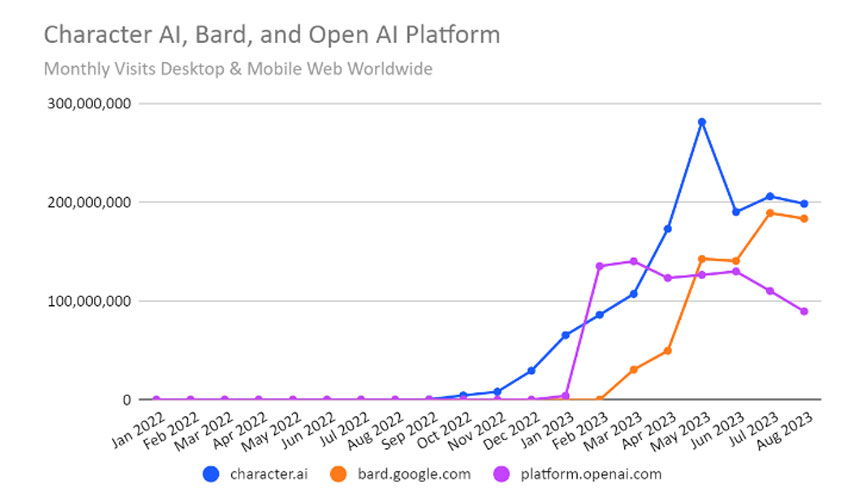
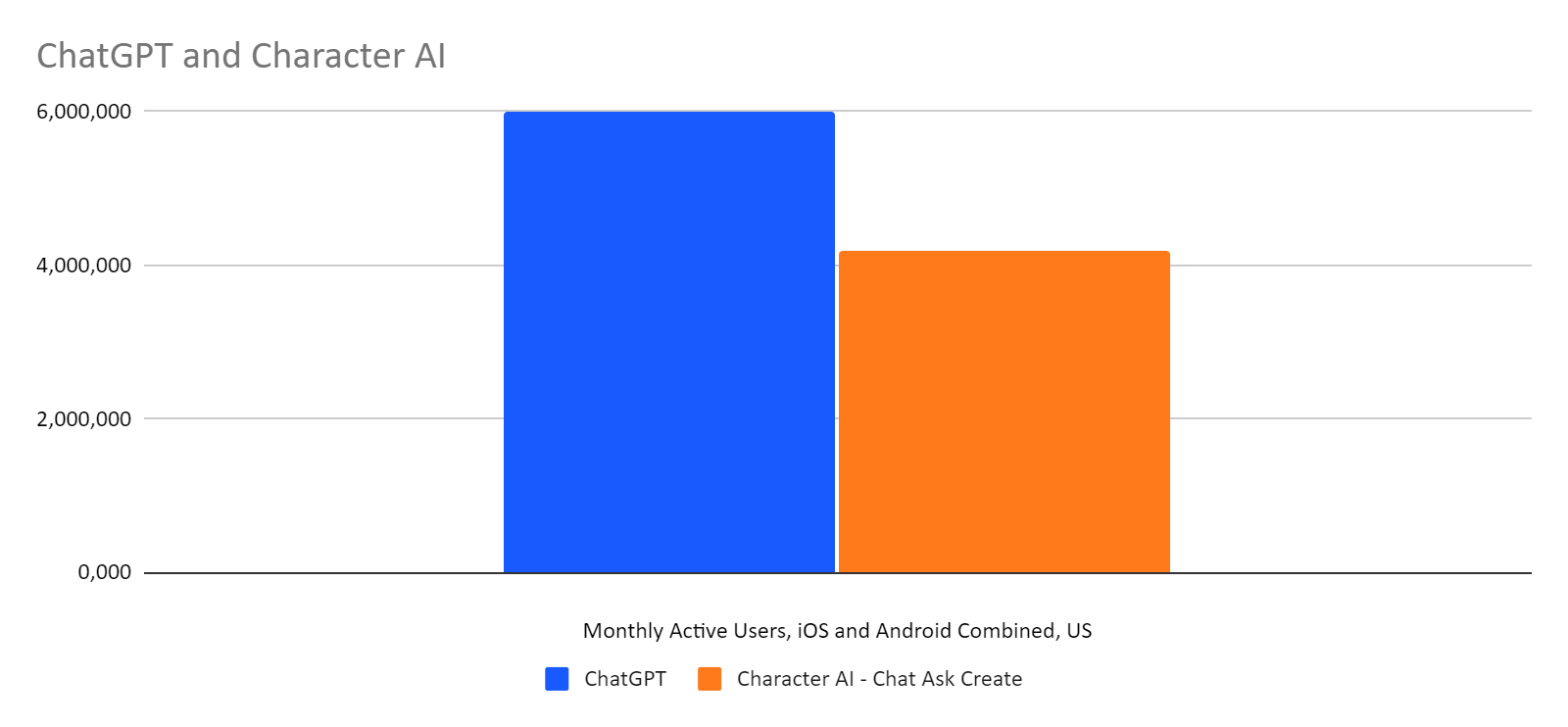
    Rival companies, such as Andreessen Horowitz-backed start-up Character.ai, have already launched chatbots that feature personalities who generate conversation in the style of individuals, such as Elon Musk and the Nintendo character Mario.

    During an earnings call this month, Zuckerberg told analysts that the company is also building AI agents that can help businesses with customer service and productivity assistants for staff.

    Meta has been investing in generative AI, technology that can create text, images, and code. This month, it released a commercial version of a large language model that could power its chatbots, called Llama 2.
    .

  • NASA and IBM Teamed Up to Build an AI, Open Source Model for Earth Observations

    NASA and IBM Teamed Up to Build an AI, Open Source Model for Earth Observations

    IBL News | New York

    NASA, IBM, and Hugging Face teamed up to create an AI open-source geospatial foundation model for earth observations.

    The project will serve as the basis for innovations in addressing critical environmental challenges since the tool can track deforestation, predict crop yields, and rack greenhouse gas emissions.

    It uses large-scale satellite and remote sensing data, including the Harmonized Landsat and Sentinel-2 (HLS) data, and is accessible to open science users, startups, and enterprises on multi-cloud AI platforms like Watsonx.

    “By combining IBM’s foundation model efforts aimed at creating flexible, reusable AI systems with NASA’s repository of Earth-satellite data, and making it available on the leading open-source AI platform, Hugging Face, we can leverage the power of collaboration to implement faster and more impactful solutions that will improve our planet,” Sriram Raghavan, VP of IBM Research AI, said in a press release.

    NASA estimates that its Earth science missions will generate around a quarter million terabytes of data in 2024 alone.
    .

  • AWS Announced Autonomous AI Agents that Add Key Functionality to Foundation Models

    AWS Announced Autonomous AI Agents that Add Key Functionality to Foundation Models

    IBL News | New York

    Amazon’s AWS cloud provider is showing this month to large customers its service Agents for the Amazon Bedrock foundation model, which lets businesses create chatbots that execute tasks and give more personalized answers drawing from their proprietary data.

    For example, an airline can build a virtual agent that books a flight for a traveler, for instance, based on a customer’s price, destination, and seating requests.

    Another example takes place in the healthcare industry: software vendors can build apps that transcribe and analyze clinical notes after a patient visit. This service is offered now under the name of AWS HeathScribe.

    “Our mission is to make every company an AI company,” said AWS’ Vice President Swami Sivasubramanian during a large AWS event in Manhattan last month.

    Amazon Bedrock is the company’s answer to services announced by Google’s and Microsoft’s cloud AI offering.

    Amazon Bedrock’s API service allows developers to build applications without the need to manage AI infrastructure at all. Because they run on an AWS-managed infrastructure, the models can be scaled on services like EC2 and Lambda and provide low-latency endpoints to enable real-time integration into workflows.

    The two Amazon Bedrock Titan foundation models, Titan Text and Titan Embeddings are pre-trained on large datasets.

    According to Amazon, thousands of customers are now using Amazon Bedrock for various generative AI applications, such as self-service, customer care, text creation, and post-call analysis.
    .

  • ChatGPT Will Feature Prompt Examples and Suggest Replies to Users

    ChatGPT Will Feature Prompt Examples and Suggest Replies to Users

    IBL News | New York

    OpenAI plans to roll out a bunch of updates on ChatGPT this week.

    The chatbot will feature prompt examples at the beginning of a new conversation and will suggest replies to continue the engagement.

    For paid users in the Plus category, ChatGPT will remember the GPT-4 selected model without defaulting back to GPT-3.5.

    Also. for users in the same Plus category, the new Code Interpreter feature will be available, resulting in ChatGPT analyzing data and generating insights across multiple files.

    Finally, OpenAI has implemented keyboard shortcuts: ⌘ (Ctrl) + Shift + C to copy code block and ⌘ (Ctrl) + / to see the complete list.

    On the other hand, OpenAI has launched a web crawler called GPTBot to improve its AI models.

    Users have the possibility to prevent GPTBot from accessing their website’s content and/or allowing certain pages and disallowing others, as explained, as explained on an OpenAI blog post.
    .

    Update August 10, 2023: OpenAI announced that it’s expanding Custom instructions to all users, including those on the free tier of the service.

    These custom instructions allow users to add various preferences and requirements that they want the AI chatbot to consider when responding, so they don’t have to rewrite the same instruction prompts every time they interact with the chatbot.

    For example, a teacher using ChatGPT to create a lesson plan would no longer have to constantly repeat that they teach 3rd grade to receive an appropriately customized response.

  • Zoom Will Use Users’ Data to Train Its AI Models

    Zoom Will Use Users’ Data to Train Its AI Models

    IBL News | New York

    According to recently updated terms of service, Zoom can now train its AI models using users data on product usage.

    The latest update to the video platform’s terms of service, effective as of July 27, on its print, seems to establish Zoom’s right to utilize some aspects of customer data for training and tuning its AI, or machine-learning models. It does not provide an opt-out option.

    These new terms reveal Zoom’s own AI strategy, according to experts.

    Zoom’s terms literally state: “You consent to Zoom’s access, use, collection, creation, modification, distribution, processing, sharing, maintenance, and storage of Service Generated Data for any purpose, to the extent and in the manner permitted under applicable Law, including for the purpose of … machine learning or artificial intelligence (including for the purposes of training and tuning of algorithms and models).”

    “Your content is used solely to improve the performance and accuracy of these AI services,” Zoom wrote in a blog post.

    The update comes amid growing public debate on the extent to which AI services should be trained on individuals’ data. Chatbots such as ChatGPT, Google’s Bard, and Microsoft’s Bing, along with image-generation tools like Midjourney and Stable Diffusion, are trained on swaths of internet text or images.

    Across the generative AI sector, lawsuits have popped up in recent months from authors or artists who say they see their own work reflected in AI tools’ outputs.

    In June, Zoom introduced two new generative AI features, such as a meeting summary tool and a tool for composing chat messages, on a free trial basis for customers. When a user does enable these features and therefore gives his content, Zoom has them sign a consent form allowing Zoom to train its AI models.
    .


  • Coursera Issues a Prompt Engineering Class While It Prepares Its AI Toolset

    Coursera Issues a Prompt Engineering Class While It Prepares Its AI Toolset

    IBL News | New York

    Coursera launched several new short-form content, content, courses, and credentials in the last weeks, covering generative AI. This offer includes two timely courses:

    Coursera also shared that it continues developing new generative AI-powered tools and features which are targeted to launch later this year. Among them:

    • Coursera Virtual Coach. It will answer questions, share personalized feedback, and provide quick video lecture summaries and resources, such as a recommended Clip. It will also communicate in different languages and for any education level.

    • Machine Learning Powered Translations. Course readings, lecture video subtitles, quizzes, assessments, peer review instructions, and discussion prompts across 2,000+ courses will be translated from English into Spanish, Arabic, Brazilian Portuguese, French, German, Indonesian, and Thai.
    • AI-Assisted Course Builder. This tool will auto-generate course content, such as course structure, readings, assignments, and glossaries. Authors will be able to integrate their privately-authored content.