Category: Top News

  • American Universities Continue to Lead Globally by Academic Field, According the QS Rankings

    American Universities Continue to Lead Globally by Academic Field, According the QS Rankings

    IBL News | Washington, D.C.

    American universities continue to lead globally, with 228 ranked institutions — nearly double the next competitor — and the most number-one spots across academic disciplines worldwide, according to the QS World University Rankings by Subject 2026, released this week during the 2026 Global Skills Week in Washington, DC.

    Another remarkable statistic is that just 9 countries account for roughly half of all ranked universities worldwide.

    The top 10 by number of ranked institutions are:

    1. 🇺🇸 United States — 228

    2. 🇨🇳 China — 158

    3. 🇬🇧 United Kingdom — 114

    4. 🇮🇳 India — 99

    5. 🇫🇷 France — 93

    6. 🇩🇪 Germany — 72

    7. 🇮🇹 Italy — 61

    8. 🇪🇸 Spain — 54

    9. 🇯🇵 Japan — 53

    10. 🇰🇷 South Korea — 47

    The most dramatic story in the data is China’s trajectory. In just four years (2022-2026), China went from 90 to 158 ranked institutions, a 75% increase. Other fast risers are:

    • 🇰🇷 South Korea: 30 → 47 (+57%)

    • 🇵🇰 Pakistan: 15 → 35 (+133%)

    • 🇹🇷 Turkey: 15 → 28 (+87%)

    • 🇮🇩 Indonesia: 12 → 26 (+117%)

    • 🇸🇦 Saudi Arabia: 10 → 23 (+130%)

    Notably, India has flatlined at 99 institutions since 2022, growing in number but not adding new ranked programs.

    China alone contributed 34 new subject entries in 2026, with particular focus on Medicine (8), Chemistry (6), Economics (6), Computer Science (4), and Physics (4). India added 20, concentrated in Chemistry (5), Medicine (4), and Computer Science (4).

    Both countries are making deliberate bets on STEM, and it’s showing in the rankings.

    Through its World Future Skills Index, which weights both quality and quantity, QS formalized that the top 10 countries for “Academic Readiness” were:

    1. 🇬🇧 United Kingdom — 100
    2. 🇩🇰 Denmark — 99.6
    3. 🇳🇱 Netherlands — 99.3
    4. 🇦🇺 Australia — 98.9
    5. 🇩🇪 Germany — 98.6
    6. 🇭🇰 Hong Kong — 98.2
    7. 🇺🇸 United States — 97.8
    8. 🇨🇦 Canada — 97.4
    9. 🇮🇹 Italy — 97.1
    10. 🇨🇭 Switzerland — 96.7

    Universities investing in AI programs have been climbing these rankings faster than traditional ones, signaling that the AI capability and institutional competitiveness game is now in the rankings.

    QS is increasingly weighting “employer reputation” and “research citations” — both metrics where AI-focused universities are surging.

    Per institutions, MIT dominates across 12 STEM subjects, including computer science, engineering, and data science. MIT has been ranked #1 overall for 14 consecutive years.

    • Oxford — two departments are top in their subjects globally.
    • FIU — hospitality ranked #3, politics top 15 among US public universities
    • CU Boulder — ranked top 100 nationally in 25+ subjects, including computer science, engineering, business, law, and medicine
    • University of Hawaii Mānoa — 14 programs recognized globally

    In the ranking, data science & AI is now a standalone ranked subject — for the first time, QS treats it as a full discipline, not a subcategory of CS. This is significant because universities investing in AI programs now receive direct rewards in rankings.

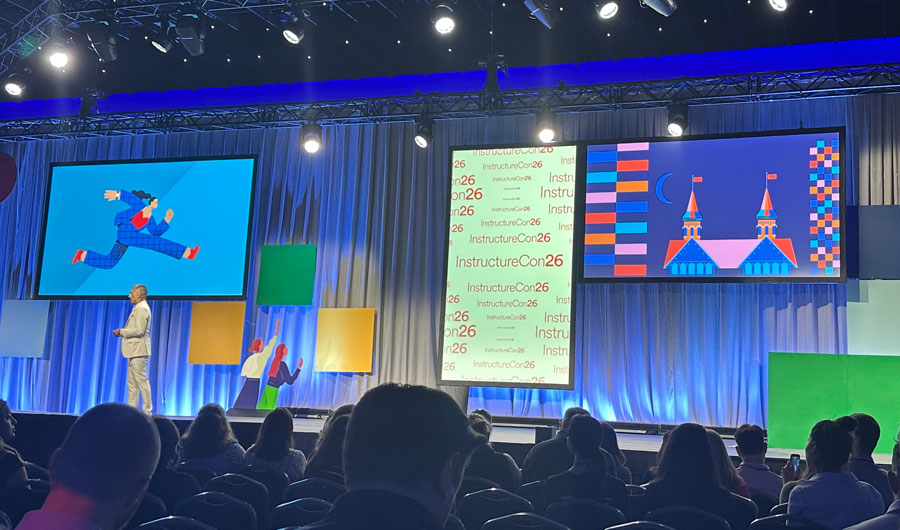
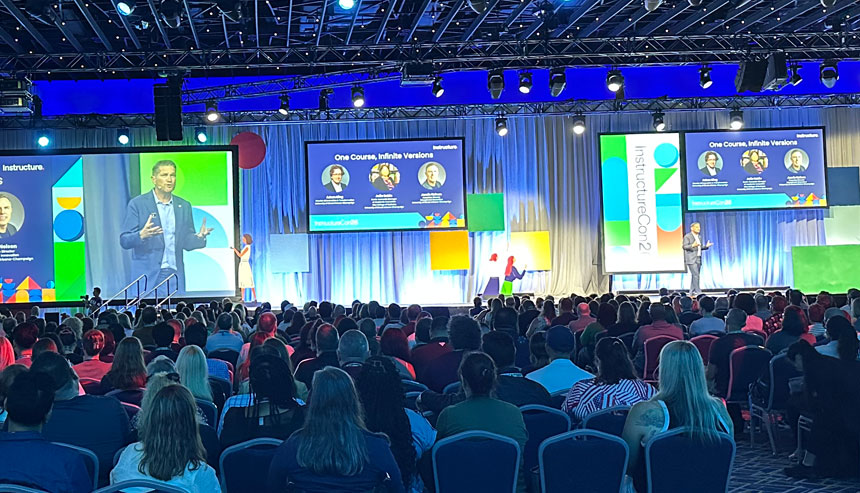
    The ranking and its conclusions were presented by Leigh Kamolins, Vice President, Evaluation and Insights at QS Quacquarelli Symonds, and Jacques de Champchesnel, Head of Consulting, QS Quacquarelli Symonds, during the 2026 Global Skills Conference [in the picture above].

    The session title was “How the Higher Education Sector is Rising to the Skills Challenge: The QS World University Rankings by Subject.” [Slides]

    They both highlighted the US paradox: With over 200 institutions but a median score of less than 50, America has extraordinary peaks — MIT, Stanford, Harvard — but a very long tail of weaker programs that drag the average down. The US ranks 34th in median quality.

    On AI readiness and who’s actually training the AI workforce, QS assessed countries on subjects that directly feed the AI and digital economy: Computer Science, Data Science, Engineering & Technology, Electrical Engineering, Mathematics, Statistics, Linguistics, Psychology, Business, Communication, Library Management, and Art & Design.

    “The pattern is unmistakable: Hong Kong, the Netherlands, Denmark, and Australia consistently outperform the US in AI-related academic quality. The US ranks near the bottom of the top 10 in every single AI/digital category — 43 in Computer Science, 49 in Engineering, 47 in Electrical Engineering,” said the authors to IBL News.

    The top 10 countries were:

    Computer Science:
    Hong Kong 70 → Netherlands 60 → Denmark 58 → Australia 54 → Switzerland 53 → Canada 51 → UK 50 → Italy 44 → US 43 → Germany 42

    Data Science:
    Hong Kong 70 → Denmark 59 → Switzerland 57 → Netherlands 56 → Australia 56 → Belgium 56 → UK 52 → Germany 42 → US 43

    Engineering & Technology:
    Hong Kong 74 → Denmark 66 → Netherlands 66 → Belgium 63 → Australia 59 → Canada 59 → UK 56 → Italy 54 → Switzerland 52 → Germany 50 → US 49

    Electrical Engineering:
    Hong Kong 73 → Netherlands 69 → Denmark 67 → Switzerland 67 → Australia 62 → Belgium 57 → Canada 55 → UK 54 → Italy 50 → Germany 48 → US 47

    Leigh Kamolins and Jacques de Champchesnel highlighted the AI research explosion, as the number of AI publications in Computer Science grew from 100,000 in 2013 to 242,740 in 2023.

    “Universities that aren’t investing in AI research infrastructure are falling behind in real-time.”

    As key takeaways, these two QS researchers insisted on seven points:

    1. Quantity ≠ Quality. The US has the most ranked universities in the world, but ranks 34th in median quality. As mentioned, having 228 programs means nothing if most of them underperform.

    2. The real AI education leaders aren’t who you’d expect. Hong Kong, the Netherlands, and Denmark consistently outrank the U.S. in AI and digital subjects. Small, focused systems beat sprawling ones.

    3. China is the fastest-growing force in global education. From 90 to 158 ranked institutions in 4 years, with a strategic focus on STEM. India has stalled.

    4. Research impact is the differentiator. Countries that score highest in AI subjects aren’t just publishing more — they’re being cited more. Quality of research, not volume, is what separates the elite.

    5. The UK is the world’s most balanced education system. #1 on the Future Skills Index for Academic Readiness — combining 114 institutions with consistently high quality across subjects.

    6. AI publications have grown 143% in a decade, with 2023 seeing the biggest single-year jump (+20.8%) — driven by the generative AI boom.

    7. Higher education is an economic policy. QS’s framing is explicit: countries that invest in AI-, digital-, and sustainability-focused academic programs are positioning themselves for long-term economic competitiveness. Universities are no longer optional infrastructure — they’re strategic national assets.

    “How the Higher Education Sector Is Rising to the Skills Challenge (PDF Presentation Slides)


  • Melania Trump Showed Her Interest in Having More Children Educated by AI-Powered Humanoids

    Melania Trump Showed Her Interest in Having More Children Educated by AI-Powered Humanoids

    IBL News | New York

    Melania Trump, the first lady, appeared yesterday at the White House alongside Figure 3, an AI-powered humanoid, showing her interest in having more children educated by robots.

    Both Mrs. Trump and the robot extolled the virtues of further integrating robots into children’s educational and social lives.

    As first lady, Melania Trump is currently promoting opportunities for foster children, arguing for the eradication of online bullying, and often traveling to military bases in support of soldiers and their families.

    Now, Mrs. Trump is also into robots, and his involvement with a humanoid robot in education policy was a first.

    Figure AI, the California – based robotics company that makes these humanoids, said that these robots can fetch towels, carry groceries, and serve champagne.

    In the history of modern first-lady initiatives, which have included building a national book festival (Laura Bush), reshuffling the food pyramid (Michelle Obama), and advocating for free community college (Jill Biden).

    Both clad in shades of white, the first lady and the visiting robot walked into a gathering of first spouses from around the world, including Sara Netanyahu of Israel, Olena Zelenska of Ukraine, and Brigitte Macron of France.

  • Perplexity Announces “Personal Computer”, an AI System Similar to OpenClaw

    Perplexity Announces “Personal Computer”, an AI System Similar to OpenClaw

    IBL News | New York

    Perplexity announced this month “Personal Computer,” an agentic software that turns a dedicated device, such as a Mac mini, with full local access to files and apps into a controlled AI system similar to OpenClaw.

    The company said that “Personal Computer” is more secure than OpenClaw because it includes a built-in audit trail and requires all actions to be confirmed by the user.

    This AI operating system, which will initially be available only on Mac, takes objectives while a traditional operating system takes instructions.

    A few weeks ago, the company released Perplexity Computer, a cloud-based AI agent. This agent now presents enhanced security controls, compliance features, and single sign-on support. It can run from a mobile phone, not just a PC or Mac.

  • Colleges and Universities Turn to AI to Accelerate Admissions Processes

    Colleges and Universities Turn to AI to Accelerate Admissions Processes

    IBL News | New York

    Amid funding pressures in higher education, colleges and universities’ admissions offices are turning to AI to accelerate their workloads, by reading essays and reviewing transcripts.

    Experts say that 50% of colleges were using AI in their admissions review process.

    One of the most prominent cases concerns Virginia Tech, a large public university with more than 30,000 undergraduates and an acceptance rate of about 55%.

    Applicants are required to write four short essays. The AI system can scan about 250,000 essays in under an hour, compared with a human reader who averages about two minutes per essay.

    “Based on last year’s application pool, we’re saving at least 8,000 hours,” said to Bloomberg Juan Espinoza, vice provost for enrollment management at Virginia Tech.

    “This year, both a single reader and AI will give scores for each essay question, and if there’s a discrepancy, an additional human reader will also give a score,” he added.

    At the University of North Carolina at Chapel Hill, AI is used for initial screening before essays are reviewed by admissions officers. The technology scores student writing based on word choice, sentence structure, vocabulary, grammar, punctuation, and length.

  • OpenAI’s and Anthropic’s CEOs Compete Over Contracts In a Deeply Personal Fight

    OpenAI’s and Anthropic’s CEOs Compete Over Contracts In a Deeply Personal Fight

    IBL News | New York

    OpenAI and Anthropic, with headquarters two miles apart in San Francisco, are ferociously competing over Pentagon contracts in a deeply personal fight, The New York Times analyzed.

    OpenAI has created the fastest-growing consumer app in tech history, with over 900 million people using its ChatGPT and nine million paying businesses. Its revenue is expected to top $25 billion this year while it holds more than $100 billion in the bank.

    But in a few months, Anthropic, OpenAI’s smaller rival, has added thousands of big businesses as customers, more than doubling its expected revenue this year to $19 billion, up from $9 billion last year.

    Anthropic’s smartphone app soared to the No. 1 spot in Apple’s App Store downloads after OpenAI jumped in with its own Pentagon deal. Days later, the War Secretary labeled Anthropic a “supply chain risk,” a declaration that prevents its technology from being used in any defense contract work.

    Now, Anthropic is facing new adversaries in President Trump and officials in his administration.
    “Well, I fired Anthropic,” Donald J. Trump said in an interview last week. “Anthropic is in trouble,” he added.

    However, Anthropic aims to I.P.O. before OpenAI does this year, seeking an early advantage with investors.

    Other companies, like Google, Microsoft, Meta, and a wide range of start-ups around the world, are also vying for AI leadership.

    Anthropic’s CEO, Dr. Dario Amodei, was vice president of research at OpenAI, but he had concerns over safety and thought Sam Altman was moving fast to commercialize the technology. He quit and took a group of OpenAI researchers with him to create Anthropic, a for-profit company that vows to meet certain standards for social impact and accountability.

    Now, they both dislike each other, and their beliefs about how AI should be developed have direct implications for the companies’ businesses.


  • Microsoft Unveils Copilot Health, a Free AI Tool That Can Access Medical Data

    Microsoft Unveils Copilot Health, a Free AI Tool That Can Access Medical Data

    IBL News | New York

    Microsoft unveiled Copilot Health, a free AI health tool in the Copilot app that can access medical records and health data (with the user’s consent) and provide personalized advice about conditions or symptoms, informed by the user’s disease history, test results, medications, doctors’ visit notes, and biometric data recorded by wearable devices, such as Apple Watch and Fitbit.

    The company said that this service could especially benefit those managing chronic medical conditions.

    Imported data is encrypted and firewalled from the rest of the app to address privacy concerns.

    It plugs into information from more than 50,000 U.S. hospitals and provider organizations, including lab results from those institutions or through Function Health.

    Data is pulled by vendor HealthEx, which adheres to the federal initiative known as TEFCA, a nationwide framework for accessing health records. The data is then streamed into Copilot Health. Microsoft said users can manage and delete their information.

    “Data privacy something that Microsoft is uniquely placed to do with our scale, with our regulatory experience, with the kind of trust and confidence that people have in our security and the history that we have as a mature, stable player,” Microsoft AI Chief Executive Mustafa Suleyman said.

    For users who don’t plug in their personal data, the AI concierge doctor tool can provide more generalized answers.

    Eventually, Microsoft plans to charge users for the feature.

    Healthcare is becoming more competitive in the AI world, with Microsoft trailing competitors such as OpenAI’s ChatGPT and Google’s Gemini.

    Microsoft has been building its AI health capabilities, trying to achieve “medical superintelligence,” an AI capable of providing high-quality insights across medical disciplines.

  • The Trump Administration Releases a National Legislative Framework for AI 

    The Trump Administration Releases a National Legislative Framework for AI 

    IBL News | New York

    President Trump unveiled an AI legislative framework yesterday, following its goal of “winning the AI race” for economic competitiveness and national security. This federal AI framework also seeks to prevent states from enacting AI legislation.

    It explicitly calls on Congress to preempt state laws, create age-gating requirements, streamline permitting to enable data centers to generate power on-site, combat AI-enabled scams, address AI-related national security concerns, and ensure that Americans’ creativity continues to propel the country.

    By preempting state AI laws, the new legislation would centralize power in Washington once the framework becomes law and the President signs it.

    The White House admits that some Americans feel uncertain about how this transformative technology will affect issues they care about, like their children’s well-being or their monthly electricity bill.”

    It also said that it is proposing guardrails to ensure that AI can pursue truth and accuracy without limitation.

    “The Administration wants American workers to participate in and reap the rewards of AI-driven growth, encouraging Congress to further workforce development and skills training programs, expanding opportunities across sectors, and creating new jobs in an AI-powered economy.”

    This light-touch regulatory approach is championed by “accelerationists,” such as the White House AI czar and venture capitalist David Sacks.

    Notably, New York’s RAISE Act and California’s SB-53 seek to ensure that large AI companies have specific safety protocols in place and adhere to them.

    Many in the AI industry are celebrating this Trump administration’s direction because it gives them broader liberties to innovate without the threat of regulation.

  • OpenAI Launches ‘Signals’, a Data Portal to Show How AI Is Being Used Across the Economy

    OpenAI Launches ‘Signals’, a Data Portal to Show How AI Is Being Used Across the Economy

    IBL News | New York

    OpenAI launched a data portal designed to show governments, employers, and workers how generative AI is being used across the global economy.

    This portal, OpenAI Signals, emerges amid rising concern about how AI is changing jobs, productivity, and skill requirements, and about how institutions respond to those shifts.

    Signals draws on data from more than 800 million OpenAI users, one million business customers, and four million developers using its API, including activity related to ChatGPT.

    Chris Lehane, Chief Global Affairs Officer at OpenAI, said the company wants to ground policy discussions and inform workforce policy, training, and access.

    “The goal is to democratize AI so today’s workers can fully access the technology’s tools, shape how it’s used on the job, and share in its economic benefits,” he explained.

    Lehane also acknowledged disruption ahead, “At the same time, we’re clear-eyed about the disruption ahead. Work will change, and some jobs will be lost. Preparing workers for that reality isn’t optional; it’s essential.”

    “We’ve seen what happens when America waits too long to support American workers through technological change,” Lehane wrote. “With AI, we can’t afford to repeat that mistake. Acting early is how we ensure more Americans can use these tools and share in the gains.”

    OpenAI is also working with the US Department of Labor on its upcoming AI Workforce Hub, aiming to inform workforce training and AI literacy initiatives.

    OpenAI is discussing potential future legislation with policymakers that could encourage AI labs to share similar data. The company plans to convene experts and stakeholders in March to discuss how workers can be better supported in an AI-driven economy.

  • Some CEOs Are Delivering Bleak Warnings About the Disruption, Fueling the Anti-AI Movement

    Some CEOs Are Delivering Bleak Warnings About the Disruption, Fueling the Anti-AI Movement

    IBL News | New York

    OpenAI’s Sam Altman and Palantir’s Alex Karp both delivered bleak warnings about the disruption AI could bring, fueling the AI-fear narrative.

    Specifically, Altman said AI is unpopular, but it will be treated like a utility someday, one that people will pay for.

    Meanwhile, Palantir’s Karp warned on CNBC of AI’s extreme societal disruption, a negative impact on “the economic and therefore political power of highly educated, often female voters, who vote mostly Democrat,” while boosting the relative position of vocationally trained, working-class people (often men).

    Karp framed the disruption as necessary for national security, linking AI to military superiority and to preserving U.S. power in a global tech race.

    Anthropic CEO Dario Amodei has warned that AI could wipe out huge swaths of white-collar jobs. He argued that the responsible path forward is to build the most powerful AI with strong guardrails before less careful competitors do. Anthropic raised $30 billion in February at a $380 billion valuation.

    Privately, several AI CEOs told Axios they’re nervous an anti-AI wave could hit hard enough to power a “ban AI” movement heading into 2028.

    “They’re scaring the bejeezus out of the public,” White House AI czar David Sacks said on the “All-In Podcast,” referring to a slew of recent comments from AI CEOs.

    Anyway, AI is getting scarier and more unpopular as the technology improves and elections approach.

    Only 26% of voters view AI positively, making it even less popular than ICE, according to an NBC News poll of 1,000 voters.

  • Meta, Amazon, and Oracle Plan Mass Layoffs as They Pour Billions Into AI Development

    Meta, Amazon, and Oracle Plan Mass Layoffs as They Pour Billions Into AI Development

    IBL News | New York 

    Meta, Amazon, and Oracle are collectively planning tens of thousands of layoffs in 2026 as they leverage AI-driven efficiency gains, betting that remaining employees, boosted by AI tools, will offset productivity losses.

    Meta is cutting 20% of its workforce (~15,000 jobs) despite doubling its AI spend to $135 billion, Amazon is planning 14,000 additional cuts via AI efficiency measures, and Oracle is eliminating 10% of its staff while raising $50 billion for AI data center infrastructure.

    No date has been set for the cuts, and the magnitude has not been finalized.

    If Meta settles on the 20% figure, the layoffs will be the company’s most ​significant since a restructuring in late 2022 and early 2023. It employed nearly 79,000 people as ​of December 31, according to its latest filing.

    Over the last year, CEO Mark Zuckerberg has been pushing Meta to ​compete more forcefully in generative AI. The company has offered huge pay packages, some worth hundreds of millions of dollars over ​four years, to court top AI researchers to a new superintelligence team.

    The company has said it plans to invest $600 billion in building data centers by 2028. ⁠Earlier this week, it acquired Moltbook, a social networking platform built for AI agents.

    In December 2025, Meta acquired AI agent startup Manus for over $2 billion to accelerate its AI innovation, specifically to enhance autonomous, multi-step task automation.