Category: Top News

  • OpenAI is Reportedly Delaying Its IPO Until 2027

    OpenAI is Reportedly Delaying Its IPO Until 2027

    IBL News | New York

    OpenAI may delay its planned 2026 IPO (initial public offering) until next year, according to the New York Times,

    The San Francisco-based AI company is weighing whether to go public this year or hold off until 2027, as it aims to reach a $1 trillion valuation, up from the company’s last private valuation of $730 billion.

    OpenAI confidentially filed its S-1 paperwork with the SEC on June 8.

    Traders on the prediction market platform Kalshi think an OpenAI initial public offering will be announced by March 1, 2027.

    Previously, OpenAI was widely expected to go public in 2026, the same year as Anthropic’s.

    Also, at the beginning of June, OpenAI’s chief rival Anthropic confidentially filed for an IPO. Traders on Kalshi think there’s a 70% chance that Anthropic will officially announce a public market debut by December.

    The New York Times said SpaceX’s public market debut — the first of what was expected to be several mega-cap IPOs this year — has made OpenAI’s advisors more cautious.

    OpenAI has worried that Elon Musk’s company’s initial rally and subsequent fall signal that retail investors may have less interest in buying.

    But a cascade of recent developments has caused OpenAI’s executives to shift away from their most aggressive aspirations. Top of mind is what has happened to Elon Musk’s SpaceX after its I.P.O. this month. It was the largest ever, raising more than $85 billion and reaching a valuation of

    At its debut, SpaceX reached a valuation of $1.77 trillion, but since then the stock has been on a downward slide, with shares slumping to $153 at the end of Thursday’s trading day after reaching a high of $202 last week.

    Moreover, investors question now whether AI companies will live up to their sky-high promises.

    OpenAI reported roughly $13 billion in revenue in 2025, one of the people said, a number the company hopes to triple this year. OpenAI said this year that it was generating $2 billion in monthly revenue and has more than 2 million business customers.

    OpenAI, run by Sam Altman [in the picture above], is currently spending heavily on marketing and recruiting high-profile engineering talent from companies like Meta and Google. It is exploring other revenue streams, including dabbling in placing ads within ChatGPT and striking e-commerce deals with companies like Shopify and Stripe that would allow users to buy things from online stores within ChatGPT.

  • Spotify Will Launch a User Tool for Generating Audiobooks

    Spotify Will Launch a User Tool for Generating Audiobooks

    IBL News | New York

    This June, Spotify will introduce an ElevenLabs-powered AI tool for self-publishing audiobooks on an invite-only basis, in beta, within the Spotify for Authors platform.

    Authors will be allowed to redistribute their AI-generated audiobooks anywhere.

    The AI-powered audiobook generation won’t bind authors to an exclusive contract, meaning they are free to publish their generated audiobooks anywhere.

    To date, authors have been allowed to submit digitally narrated audiobooks to ElevenLabs, Spotify, and Google Play Books.

    To date, Spotify has clocked over 1 million Audiobook+ subscriptions and a catalog of 700,000 titles.

    This year, it also started a program for authors to sell physical books in the U.S. and the U.K.

    Spotify is expected to generate $100 million in annualized recurring revenue.

    Spotify is also expanding its “Spotify for Authors” platform to support 10 more languages, including French, Canadian French, German, Dutch, Latin American Spanish, Swedish, Finnish, Icelandic, Danish, and Norwegian.

    ElevenLabs released its own self-publishing platform for authors in 2025.

  • OpenAI Issues ‘GPT-5.5-Cyber’, with Capabilities Similar to Mythos and Fable 5

    OpenAI Issues ‘GPT-5.5-Cyber’, with Capabilities Similar to Mythos and Fable 5

    IBL News | New York

    OpenAI launched the full version of GPT-5.5-Cyber this week, a model designed to hunt down and patch software vulnerabilities, with capabilities similar to those of Anthropic’s Mythos and Fable 5. However, OpenAI’s cyber model never drew a ban.

    Researchers say the same vulnerability-hunting runs in GPT-5.5, Claude Opus, and other models.

    At the time of release, Anthropic said its capabilities were too dangerous to ship. It also spent the month fighting the White House.

    Meanwhile, OpenAI, well-connected in Washington, D.C., has said nothing during the launch. Moreover, it hired a co-author of Trump’s AI plan last week.

    We’re expanding Daybreak to help democratize patching vulnerable software at machine speed.

    To discover and generate patches for critical vulnerabilities⁠ in major browsers, network infrastructure, and operating systems such as FreeBSD and the Linux kernel, OpenAI has released:

    • An update to the Codex Security plugin.
    • GPT‑5.5‑Cyber, a model that sets a performance on CyberGym of 85.6% compared with 81.8% for GPT‑5.5. [See graphic above]
    • Daybreak Cyber Partner Program.
    • Patch the Planet⁠: an initiative founded with Trail of Bits in collaboration with HackerOne, Calif researchers, and maintainers to help widely used open-source projects move from findings to fixes.

    Frontier AI models have been increasingly accelerating the discovery of vulnerabilities. Now, defenders are overwhelmed with the number of vulnerabilities found. Patching vulnerabilities is a bottleneck now.

    Models can navigate large codebases, reason through attack paths, validate hypotheses, and surface security issues that might otherwise stay hidden. Defenders absolutely need access to these capabilities and tools to fix what models can find now before attackers do.

    Beyond vulnerability reports, the key is to validate the issue, understand its impact, develop and test a patch, coordinate disclosure, and help teams deploy the fix.

    OpenAI revealed that since it launched the Codex Security cloud in research preview in March, it has scanned over 30 million commits across more than 30,000 codebases; human reviewers have manually marked more than 70,000 findings as fixed, and over 500,000 findings have been automatically determined to be fixed.

  • Google Released Its Latest Open Model, Gemma 4 12B, Multimodal and Working Locally

    Google Released Its Latest Open Model, Gemma 4 12B, Multimodal and Working Locally

    IBL News | New York

    Google’s DeepMind has released its latest open model, agentic, a multimodal Gemma 4 12B, for local use on a laptop. The model can generate rich visual insights and fully functional webpages.

    With advanced coding capabilities, it can execute scripts on the fly for tasks such as data analysis. It can rewrite text through voice commands.

    Google AI Edge Gallery, the company’s local AI showcase app, available on macOS, allows users to explore Gemma.

    The giant company said that “the new MacOS desktop version runs 100% on-device across the entire feature set, ensuring a powerful, fully offline experience.”


  • “Not Many Jobs Will Go Away, and AI’s Impact Will Be on Skills,” Says Expert on a WBG Event

    “Not Many Jobs Will Go Away, and AI’s Impact Will Be on Skills,” Says Expert on a WBG Event

    IBL News | Madrid, Spain

    “Not many jobs will go away; AI’s impact will be on skills, but not on jobs,” said Matt Sigelman, President of The Burning Glass Institute, when delivering his latest labor market data research on how AI is restructuring work. “The changes in the software industry illustrate what’s to come.”

    Sigelman was prominently featured in the run-up to the 10th World Bank Group Global Education Conference: “Building Skills for Tomorrow’s Jobs”, which took place in Spain, from June 17–19, 2026.

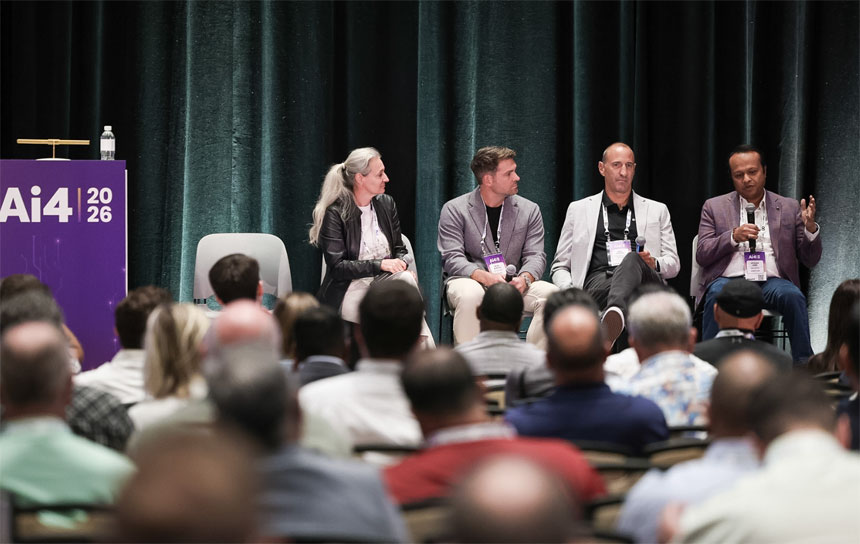
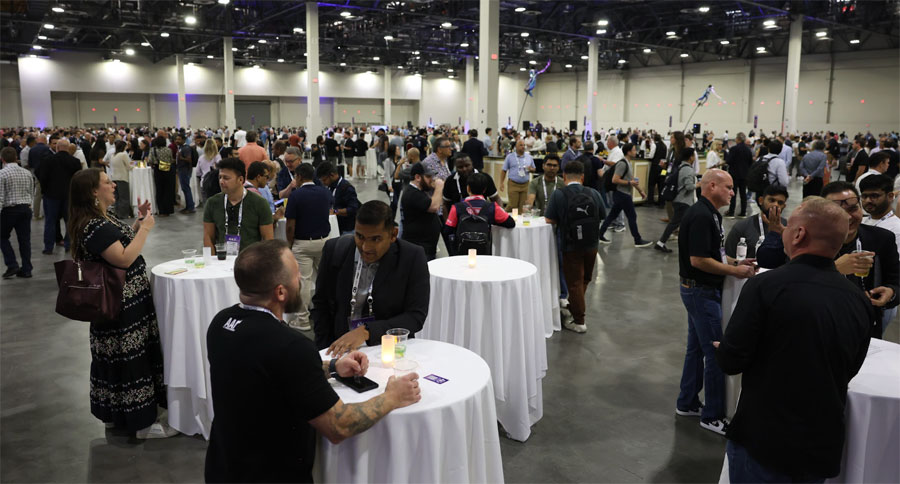
    Over 400 leaders from higher education, industry, technology, and public policy attended three days of panels, fireside chats, and a dedicated AI Day at this conference, organized by The World Bank Group (WBG) and hosted across IE University’s campuses in Madrid and Segovia.

    In a parallel event, lifelong educator Paul LeBlanc, former President of SNHU and currently a Visiting Scholar and Special Advisor at the Harvard University Graduate School of Education (HGSE), presented his upcoming book, “Reclaiming Purpose: The University in the AI World,” which will be launched on July 23.

    LeBlanc said that “now there is a unique opportunity to get back to the university’s original mission.” He explained, “We are going to have precision learning, a highly precise model against an all-fit model.”

    • “Universities are the answer to the world’s problems, as they have the mission to make the world better.”
    • “We will move from the knowledge economy to the care economy.”
    • “No one is built with the AI speed.”
    • “Universities need to structure their data for creating a holistic student profile in this AI age. Now data is seated in silos. First, we need data together.”

    The Building Skills for Tomorrow’s Jobs” conference landed on a forceful message: the challenge of the AI era is skills, not jobs. The data show little evidence of mass employment displacement, but dramatic changes in what happens inside jobs.

    Drawing on a dataset of 65 million US career histories and billions of job postings, the Burning Glass Institute found that approximately 30% of the skills required for an average job have changed over the past decade. Competencies that once remained relevant for a decade or more can now become obsolete within a few years of graduation.

    “Only about 13% of credentials lead to meaningful wage gain,” stated Matt Sigelman, President of The Burning Glass Institute. “We need a nutrition label on credentials, so employers know what skills a worker has and what qualifies them for a particular job.”

    Participants interviewed by IBL News agreed that AI handles entry-level tasks well, which creates a temptation for employers to eliminate junior positions. They shared Sigelman’s calling to governments to work with industry to define credential standards tied to real economic outcomes — not enrollment numbers.

    Beyond the job market, the conference program touched upon at least seven key themes, according to IBL News’ analysis:

    1. AI and Automation — How AI is redefining job roles, skill requirements, and entry points across industries, not just technology.

    2. Generative AI in Education — How LLMs and digital platforms are transforming teaching, assessment, and institutional operations.

    3. Future Skills — Consensus that creativity, collaboration, adaptability, and digital fluency are now baseline requirements. Technical knowledge alone has a shorter shelf life than ever.

    4. Lifelong Learning — The degree-then-career model is dead. Continuous upskilling and reskilling are a necessity, especially for informal workers, care workers, and employees in shrinking sectors.

    5. Work-Integrated Education — Real-world job exposure, co-curricular activities, and experiential learning embedded in degree programs, not as optional extras.

    6. University–Industry Partnerships — The biggest actionable theme. Multiple panels argued that curricula must be co-designed with employers and updated in near real time, rather than on 5-year review cycles.

    7. Job Clustering — Emerging career pathways based on evolving skill requirements, moving beyond traditional job titles to transferable skill profiles.

    According to The World Bank, remarkable examples during the conference were:

    Spain: Santander Open Academy now offers hundreds of free AI and cybersecurity courses, reaching millions of learners in a single year — faster than any traditional curriculum process.

    Argentina: World Bank Group is supporting a university–mining company partnership project to create 10,000+ direct jobs and 50,000 indirect jobs by 2033.

    Malaysia: IFC is investing in Asia Pacific University of Technology and Innovation (APU) to scale tech and innovation programs across Southeast Asia.

    Philippines: The government is incorporating Google Career Certificates and AWS certifications into the national qualifications framework, as the BPO industry pivots to cloud and AI.

    Industry certifications: AWS, Microsoft, Google, Cisco, and Salesforce credentials were highlighted as signals of real productivity, often more current than academic degrees.

    IBM: Cited by the Burning Glass Institute as a company that made a concerted effort to remove degree requirements — reinstating them in some cases, but measuring and analyzing where skills-based hiring was working and where it wasn’t.

    Among the panelists, leaders from IE University and Camilo Jose Cela University reflected on how economic, technological, and geopolitical forces are simultaneously reshaping education, employability, and entrepreneurship. They highlighted the profound implications of AI and digitalization, particularly at a time when 1.2 billion young people in developing countries are expected to enter the workforce in the next 10–15 years.

    Manuel Muñiz, Rector, IE University:
    “Periods of profound economic, technological, and geopolitical transformation place extraordinary demands on societies and institutions. The responsibility of universities is not simply to respond to change, but to help people understand it, navigate it, and ultimately shape it.”

    Juan José Güemes Barrios, VP of Strategy and President of the Center for Entrepreneurship & Innovation, IE University:
    “AI is not replacing human talent; it is redefining its value. As machines take over routine tasks, uniquely human capabilities — judgment, creativity, and an entrepreneurial mindset — become the real competitive advantage. Our responsibility, as educational institutions, is to prepare people not for the jobs that exist today, but for the opportunities we are not yet able to imagine.”

    Nieves Segovia, President, SEK Education Group:
    “Universities must evolve from teaching-centered institutions into connection nodes within broader ecosystems of learning, innovation, and social development — bridging the academic world, the business sector, social organizations, media, and public administrations.” “Beyond transmitting knowledge, higher education institutions are called to facilitate connections, build trust, and contribute to collective responses to the great challenges of our time.”


    No formal signed commitments emerged or were published, but participants implied consensus on the idea that
    universities are becoming platforms, not just campuses. The conversation pointed toward institutions acting as ecosystem orchestrators — connecting academic, corporate, governmental, and civil society actors.

  • Chinese Model GLM 5.2, Priced at a Tenth of Claude Code and Claude Max Tiers, Shakes the AI World

    Chinese Model GLM 5.2, Priced at a Tenth of Claude Code and Claude Max Tiers, Shakes the AI World

    IBL News | New York

    Beijing-based AI pioneer Zhipu AI released GLM-5.2 this week, a low-cost, powerful, open-source LLM featuring a massive 1-million-token context window that aims to attract users from US rivals dissatisfied with high prices and Washington’s abrupt order to suspend top American models overseas. Its stock rocketed in the Hong Kong market.

    The launch underscored how Chinese players are seeking to capture users who are seeking alternatives to top models from Western leaders.

    Zhipu’s announcement came shortly after San Francisco-based Anthropic abruptly suspended access to its flagship models Fable-5 and Mythos-5 to all foreign nationals, following a federal export-control directive issued on national-security grounds.

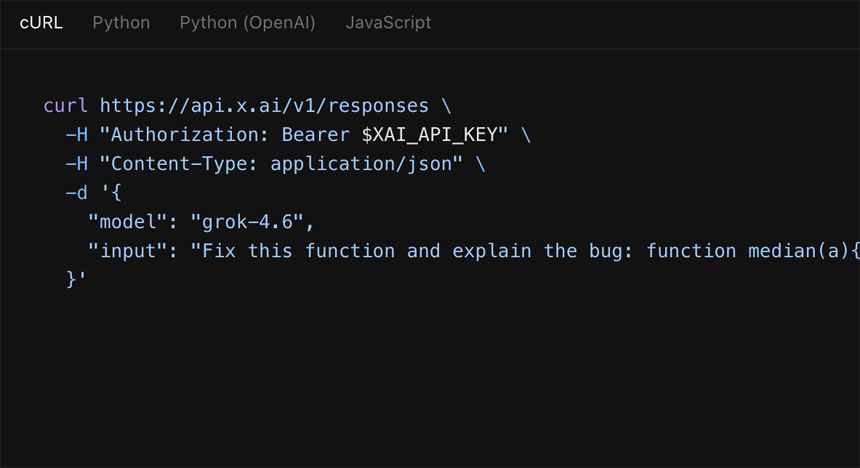
    GLM-5.2 will be available to all users of Zhipu’s new GLM Coding Plan subscription, which is priced at just a tenth of Anthropic’s premium Claude Code and Claude Max tiers. The GLM-5.2 application programming interface (API) went live this week, while the model itself has been open-sourced under the permissive MIT license.

    GLM-5.2 features native integrations with more than 20 popular agent tools, including developer mainstays Claude Code, Cline, and Cursor.

    To run the GLM-5.2, a 1.51TB AI model running on any laptop, Unsloth Studio just made it a lot less impossible, shrinking it by 84%. This way, it runs locally on a 256GB Mac

    Unsloth fixed the quantization of the large GLM-5.2 model, dropping the 2-bit version, reducing the size to 238GB, and retaining ~82% accuracy.

    To run it locally, users will need:

      • A 256GB Mac (M3/M4 Ultra) for single-box setup
      • Or a 24GB GPU plus 256GB RAM with memory offloading
      • Tools: llama.cpp, LM Studio, or Unsloth Studio

    These offline coding agents and long-context tasks previously required a cloud API. Now, with Unsloth’s solution, no usage fees, no rate limits, and no data leaving anyone’s machine.

  • ETS, Khan Academy, and TED Will Launch ‘Khan TED Institute’, Which Will Offer Degrees Under $10K

    ETS, Khan Academy, and TED Will Launch ‘Khan TED Institute’, Which Will Offer Degrees Under $10K

    IBL News | New York

    The nonprofit organizations ETS, Khan Academy, and TED are planning to launch the Khan TED Institute, which plans to offer degrees for under $10,000. The learning and career pathways will be developed in partnership with leading companies, including Google, Microsoft, Accenture, Bain & Company, McKinsey, and Replit.

    The inaugural program will be organized around three pillars:

    • Core knowledge in mathematics, statistics, economics, computer science, science, history, and writing.
    • Applied AI skills, including AI‑assisted app development, financial modeling, building AI agents, and team‑based deployment projects.
    • Communication and leadership,  developed through structured collaboration, peer tutoring, dialogue sessions, and public speaking.

    In this partnership, Khan Academy participates with its learning platform, TED with its curated community of thinkers and transformative ideas, and ETS’s trusted expertise in measuring skills.

    Applications are expected to open in 10 to 16 months.

    “The Khan TED Institute is an extension of our vision to higher education, creating new paths that help more people find meaningful ways to contribute to the world around them,” said Sal Khan, founder and CEO of Khan Academy.

    Amit Sevak, CEO of ETS, explained, “This collaboration helps open new pathways into the AI economy where skill‑based measurement becomes the critical link between learning and livelihood.”

    Logan McClure Davda, CEO of TED: “At a time when learning is changing quickly, we now need new ways to help people engage with ideas, develop judgment, and apply what they learn. The Khan TED Institute is an effort to expand what education can look like in the age of AI.”


  • Spotify Introduces a Google NotebookLM – Style Desktop App

    Spotify Introduces a Google NotebookLM – Style Desktop App

    IBL News | New York

    Spotify will introduce, in the coming weeks, as a research preview, a Google NotebookLM – style stand-alone desktop app, named “Studio by Spotify Labs,”  designed to explore a topic and, by following personal context, create a podcast about it.

    Announced during its 2026 Investor Day, this podcast-generation tool has an agent that can browse the web and fetch personal information to create a personal and private podcast.

    The tool can create a daily briefing or a podcast based on the user’s email, calendar, and documents.

    All these AI-generated podcasts are saved in the user’s Spotify Library for personal consumption and are not available publicly.

    Since Google’s NotebookLM was released, the format for creating podcasts to explore a topic or get daily briefings has been adopted by companies like Adobe and ElevenLabs, as well as apps like Hero and Huxe.

    Also, Claude Code or Codex has debuted a command-line tool for users of coding tools to create personal podcasts and save them to their Spotify library.

    The company said, “Studio by Spotify Labs understands your Spotify taste across music, podcasts, and audiobooks, while also drawing on world knowledge to help you find the audio you want faster. With your permission, it can take action on your behalf: researching topics, using a web browser, organizing information, and helping complete tasks. It can also connect to the tools you use every day, like your calendar, inbox, and notes.”

  • AEO Emerge to Reframe SEO Techniques as the New Way People Find Products in the AI Age

    AEO Emerge to Reframe SEO Techniques as the New Way People Find Products in the AI Age

    IBL News | New York

    When search has turned on generative AI, the SEO practice is still relevant?

    Experts express a resounding yes. Creating valuable, non-commodity content and maintaining a clear technical structure continues to be critical in the goal of converting a user into a subscriber, requesting commercial info, or making a purchase.

    Techniques such as AEO (answer engine optimization) and GEO (generative engine optimization) are now part of any SEO setup to improve a website’s visibility in both generative AI search experiences and Google Search.

    In this regard, Google has posted a best-practices guide for reframing SEO and optimizing any website for succeeding in AI Overviews and AI Mode searches. This means more opportunities for any website to appear beyond web page links.

    According to the company, these AI features are still rooted in Google’s core Search and Qualify systems, which rely on Retrieval-augmented generation (RAG) and Query fan-out — a set of concurrent, related queries generated by the model to request more information and fetch additional relevant search results to address the user’s query.

    Creating unique, valuable, good content requires, according to Google:

    • “Providing a unique point of view that stands out. Don’t just recycle what others on the internet have already said, or could easily be produced by a generative AI model.
    • Creating non-commodity content that’s helpful and reliable for people. Avoid content that can be generated by anyone and typically adds little unique expert insight for readers.
    • Write and organize well-written, easy-to-follow content into paragraphs and sections, with headings that provide a clear structure for navigation.
    • Add high-quality images and videos: Many people appreciate finding them when they search online. As with Google Search overall, our generative AI search features can bring in relevant images and videos. “If you’re already following our image SEO best practices and video SEO documentation, you’re already optimizing for generative AI search,” says Google.
    • Focus on what your users want, and avoid overdoing it.
    • Using AI in content creation must meet Google’s Search Essentials and spam policies. Otherwise, it will trigger Google’s content abuse spam policy.
    • A core principle is to focus on what visitors would enjoy, find helpful, useful, and satisfying, by building and maintaining a clear technical structure.
    • Technical clarity ensures users’ content is ready for discovery and indexing, and all existing technical SEO best practices remain worthwhile.”

    Some topics circulating on the internet around generative AI and Google Search are unnecessary, Google says, such as LLMS.txt files and other “special” machine-readable markup files; breaking up content into tiny pieces for AI to better understand it; rewriting content just for AI systems; adding inauthentic “mentions”; and overfocusing on structured data.

    Overall, prioritizing effective SEO strategies over “AEO/GEO hacks” is a mistake.

    • Google Search Central blog

    • Hubspot AEO tool

  • OpenAI Will Provide Maltese Citizens with a Year of Free ChatGPT Plus Usage

    OpenAI Will Provide Maltese Citizens with a Year of Free ChatGPT Plus Usage

    IBL News | New York

    OpenAI announced it reached the first national-level cooperation with any Government in the world. It happened with Malta, a small European country with a population of 550,000.

    Starting in May, Maltese citizens who complete an AI literacy course will obtain one year of free usage of ChatGPT Plus (with a monthly fee of $20),

    This course, developed by the University of Malta, covers the basic principles of AI, along with methods for responsible use in family and work scenarios.

    ChatGPT currently has more than 900 million weekly active users.

    George Osborne, head of OpenAI for Countries, said, “Intelligence is becoming a national public utility. Malta has taken the lead, and we hope other countries will follow.”

    The Maltese experiment might determine whether “the state pays for all citizens’ AI use” is a replicable public service innovation or an expensive marketing campaign.

    Trying to make AI a daily, basic tool, OpenAI’s strategy seems, in this case, to be based on acquiring future customers in batches first through government channels.

    The company is currently promoting cooperation in the education system in Estonia and Greece, and these countries are the most likely to follow in the first wave.