Category: Platforms | Tech

  • An Influential Hedge Fund Pushes Instructure’s Canvas LMS to Sell Its Business

    An Influential Hedge Fund Pushes Instructure’s Canvas LMS to Sell Its Business

    Mikel Amigot | IBL News

    What’s next for Instructure (INST)?

    That’s the question that comes to investors’ minds, especially after the third quarter performance report, which represented an earnings surprise of 42.11%.

    Since the beginning of the year, Instructure shares have added about 15.8% versus the S&P 500’s gain of 20.6%, while the estimated revision trend for the company is mixed.

    In this context, New York-based Sachem Head, which has been buying Instructure’s shares over time, announced yesterday that it wants Instructure to pursue a full sale processReuters disclosed. Now, the notorious hedge fund plans to push the Salt Lake City-based company in this direction.

    The activist fund, that invests $3.2 billion on behalf of clients, recently called on Whitbread PLC to sell its Costa Coffee business before it was spun off to Coca-Cola Co. It also pushed Eagle Materials Inc to split its core businesses, before the company’s board agreed to spin off its heavy materials and light materials businesses into two publicly traded entities.

    On the news of Sachem Head’s stake, Instructure’s stock prices jumped as much as 6% this week, ending at $46.52.

    With a market capitalization of $1.8 billion, Instructure’s Canvas is the market leader in the LMS segment –and according to its own data continues to add customers.

    However, its employee development platform Bridge is not working that well, failing to generate considerable market share, analysts think –and that’d be the reason why Instructure has underperformed the market so far this year.

    In this regard, Instructure’s CEO Dan Goldsmith didn’t reject the idea of a sale or spinoff of Bridge, which launched in 2015.  “Nothing is off the table,” he told investors on the mentioned Q3 2019 earnings call on October 28. “But the focus for us is really making Bridge successful, making Bridge financially beneficial and accretive and healthy and then continuing to grow over time.”

    Dan Goldsmith promised to provide more details at an analyst day on Dec. 3.


  • The EdX Organization Adopts a More Commercial Structure Appointing a New Co-CEO

    The EdX Organization Adopts a More Commercial Structure Appointing a New Co-CEO

    Mikel Amigot | New York

    The edX nonprofit organization, created by MIT and Harvard University, decided to adopt a more business and less academic-focused structure with two running CEOs.

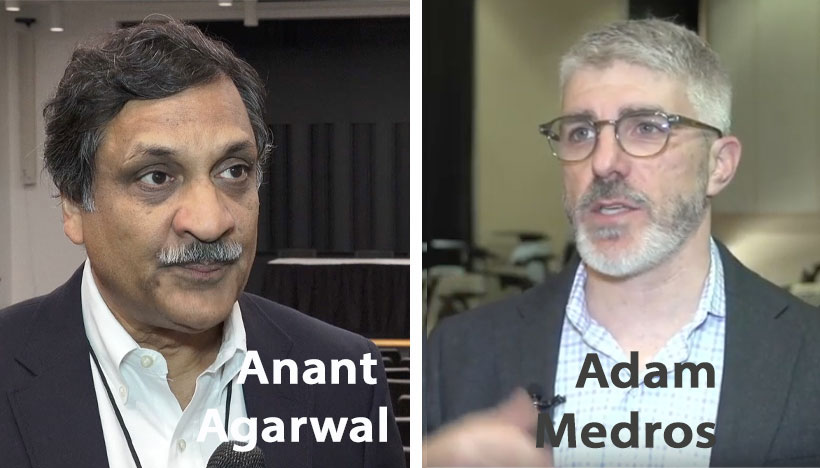
    According to the unexpected announcement made yesterday, Adam Medros, currently the COO and President, has been promoted to co-CEO, joining Anant Agarwal in this position.

    In a way, the move follows Coursera’s aggressive commercial direction when it replaced Rick Levin, former President at Yale, for Jeff Maggioncalca as CEO. Maggioncalca was mainly hired to find a successful business model and IPO-ing the company.

    Adam Medros, a business manager who moved from TripAdvisor to edX two years ago, with no previous experience in higher education, “will partner with Agarwal to drive the company’s continued growth and innovation, in service of its non-profit mission to increase access to high-quality education for everyone, everywhere,” edX said.

    Anant Agarwal, an MIT professor who has been teaching for 31 years said, “Adam’s dedication to the edX mission and his partnership have been invaluable to me in my role as Founder and CEO of edX and I look forward to further deepening our collaboration.”

    The official announcement highlighted the new business orientation that the learning organization is adopting, “Agarwal and Medros will continue to work with the edX partner network, made up of the majority of top-ranked universities in the world and industry-leading companies, to deliver stackable learning experiences that help learners and employers alike address the future of work.”

    In the last months, Adam Medros –who he stayed in TripAdvisor for 13 years– has been working in new business strategies to make edX a financially sustainable organization.

    He provided his views in an interview with IBL News recorded in March.


  • Introduction to Java Programming Course Reaches 500K Enrollees

    Introduction to Java Programming Course Reaches 500K Enrollees

    IBL News | New York

    The Introduction to Java Programming free course on edX.org is about the set a milestone by reaching an enrollment of 500,000 people, IBL News learned. Today, in the course, there are over 497,000 enrolled from 210 countries. The course is developed in English and Spanish.

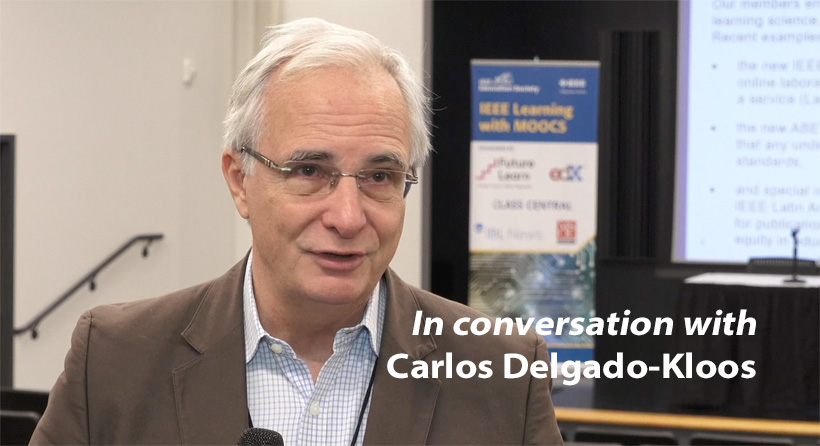
    In conversation with IBL, Carlos Delgado-Kloos, Lead Professor in the class and VP of Digital Education at the University of Carlos III of Madrid, explained that he achieved that impact by implementing instructors’ team-work practices, using of LTI tools and adding pedagogical tips, among other techniques.

    “Cloud computing is a ripe technology and MOOCs are the consequence,” he stated.

    Carlos Delgado-Kloos, who was recently recognized with the Open Education Consortium award, elaborates on how MOOCs can empower learners in developing countries [see the interview below].


  • Over 1,000 Students Will Graduate from Georgia Tech’s Online Master in Computer Science

    Over 1,000 Students Will Graduate from Georgia Tech’s Online Master in Computer Science

    IBL News | New York

    The recognizable OMSCS (Online Master of Science in Computer Science) from Georgia Tech continues its successful march.

    “Right now we have over 9,000 students and so far over 2,400 graduated; over 1,000 graduating this year,” Zvi Galil, creator of the Master and former John P. Imlay, Jr. Dean of Computing and Professor told IBL News. “This number might reach 1,500 this academic year and might reach 2,000 in a year or two.”

    OMSCS continues to be the largest master’s program in computer science in the nation.

    Launched in January 2014 with 380 students, it meant to achieve from the beginning, “a revolutionary shift from the prevailing paradigm of higher education, in which a brand is bolstered by exclusion and high tuition fees,” Galil said. [In the picture above]

    As it was conceived, the OMSCS keeps on tuition affordable – less than $7,000 for the full degree, payable by course, rather than $40,000 for a public on-campus program, or $70,000 or more in a private university.

    OMSCS’ growth has been phenomenal, and its success has inspired similar programs at other universities. By 2019 spring term it offered a total of 30 courses in 4 specializations to 8,662 students.

    Georgia Tech offers undergraduates the choice to enroll in an online version of an introductory computing courseIntroduction to Computing with Python on edX.


    Resource:

  • Schoology Acquired by PowerSchool – A New Giant with 65 Million Users

    Schoology Acquired by PowerSchool – A New Giant with 65 Million Users

    IBL News | New York

    PowerSchool, an ed-tech provider on K-12, announced yesterday an agreement to acquire Schoology, a leading learning management system used by 60.000 schools and 20 million students, with a 17% percent market share. The financial terms of the deal were not disclosed.

    This acquisition, if approved, will result in a dominant company among K-12 schools and districts, which will leave behind competitors such as Google Classroom, Canvas, and Moodle.

    PowerSchool, roughly used by 45 million learners, has acquired eight companies since 2015. Schoology would be PowerSchool’s second purchase of a learning management system (LMS) after it acquired Haiku Learning in 2016.

     “Teachers have shared that they need more time and tools to provide individual learning paths for every student,” said Hardeep Gulati, CEO of PowerSchool.

    “With the scale and investment we will get being part of PowerSchool, we can further advance what is possible in education, and take Schoology to a whole new level,” said Schoology CEO and Co-Founder, Jeremy Friedman.


  • EdX Cancels Its Annual Partners Conference Scheduled in Hong Kong Due to Safety Concerns

    EdX Cancels Its Annual Partners Conference Scheduled in Hong Kong Due to Safety Concerns

    IBL News | New York

    The annual edX Global Forum partners conference, that scheduled this year in Hong Kong for November 11-13, was canceled due to “safety concerns related to local circumstances”, organizers say.

    The anti-government protests that have rocked Hong Kong for months show no sign of dying down and given this situation edX prioritized the safety of attendants. “We want to keep people safe,” an edX representative said to IBL News.

    The edX organization and The Hong Kong Polytechnic University (PolyU), who was the host of the event, mutually made the decision.

    The 2019 Global Forum won’t take place in any other place. Instead, the MOOC platform is planning to celebrate a Town Hall-style event with its CEO, Anant Agarwal, along with other virtual events.

    Finally, the edX organization announced that the 2020 Global Forum will take place in the Fall at Columbia University in New York City.

  • Docebo Learning Platform’s Stock Dropped 28% after Raising C$75 Million on its IPO

    Docebo Learning Platform’s Stock Dropped 28% after Raising C$75 Million on its IPO

    IBL News | New York

    The cloud-based LMS company Docebo didn’t show promising performance on its first trading days on the Toronto Stock Exchange.

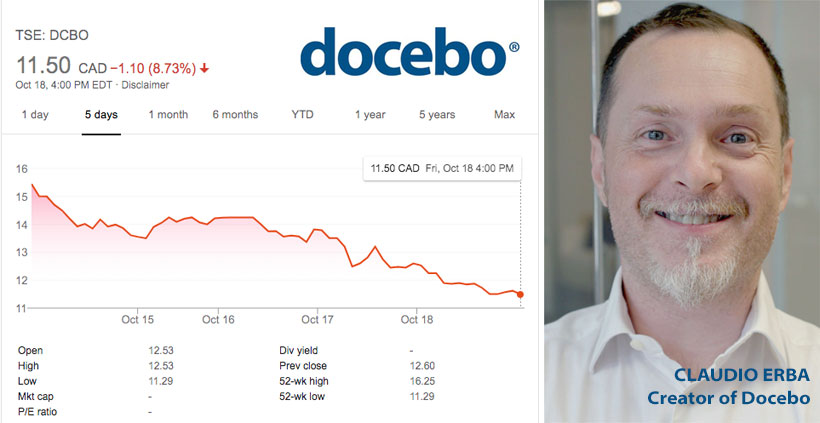
    The stock, listed under the ticker symbol “DCBO”, started trading at C$16.00 (Canadian Dollars) on October 8 and closed at C$11.50 on Friday 18, losing over 28% of its value. [Update: on Monday 21, the stock gained 13% until C$ 13.04].

    An imperfect balance sheet with weak fundamentals discouraged investors, according to some analysts.

    Toronto-headquartered Docebo had raised high hopes after it successfully closed its IPO at a price of C$16, obtaining C$75 million.

    A total of 4,687,500 common shares were sold, with Canaccord Genuity Corp. and TD Securities as the lead underwriters. Docebo’s pre-IPO backers included Intercap Equity, and Canadian enterprise software equity firm Klass Capital.

    “Completing this IPO is a significant milestone for Docebo and a testament to the talent and dedication of our team and support from our global base of customers,” said during the offering, CEO Claudio Erba, an Italian computer consultant who founded the company on March 2005 in Florence, Italy. “With the proceeds raised, we will continue to strengthen our market position and look to continue our track record of innovation in the enterprise learning industry.”

    Written in PHP, Docebo (Latin for “I will teach”) is focused on providing a SaaS learning platform to train workforces, partners, and customers worldwide. It claims to have a customer base of more than 1,600 companies in 68 countries.


    Claudio Erba, CEO, Docebo at Learning Technologies 2019 from Learning News.

  • Udacity Issues Three Programs to Prepare Developers in C+++, Blockchain and Data Streaming Technologies

    Udacity Issues Three Programs to Prepare Developers in C+++, Blockchain and Data Streaming Technologies

    IBL News | New York

    Udacity is starting this Monday two Nanodegree Programs for developers: Blockchain Developer and C++.

    These programs cost $999 each and take four months to complete, at 10 hours/week.

    “Being fully decentralized and free from censorship, Blockchain has become an adaptable business tool across industries,”
    said Neha Garg, product manager at Google.

    “We have seen massive growth in public knowledge of crypto-currency and business in the last few years, and because of that, there has been an explosion in career options in the blockchain field,” she added.

    In addition to developers, some of the most demanded jobs related to Blockchain are quality engineers, technical project managers, and community managers.

    Regarding the new version of the C++ Nanodegree Program, the creators of the course highlight that this programming language is used to code self-driving cars, robots, servers, media platforms, video games, and other artificial intelligence software systems. It is one of the top five most important computer languages and one for which employers pay a yearly average salary of $95,000.

    The program teaches real-world tools and best practices, including Bjarne Stroustrup’s C++ Core Guidelines, the Microsoft Visual Studio Code development environment, and several testing frameworks.

    Throughout the course, students will build a portfolio of projects that they will be able to showcase to hiring managers and recruiters, including a Chatbot.


    UPDATE
    : On October 22nd, Udacity introduced the newest addition to its School of Data Science: the Data Streaming Nanodegree program.

    This program, starting on November 12, prepares learners to develop systems and applications capable of interpreting data immediately by using tools like Apache Spark, Kafka, Apache Streaming, and Kafka Streaming.

    The Data Streaming Nanodegree takes two months to complete and costs $718.


  • MIT to Examine Engagement Practices with Gifts and Grants After Epstein’s Donations

    MIT to Examine Engagement Practices with Gifts and Grants After Epstein’s Donations

    IBL News | New York

    MIT’s Chair of Faculty, Rick Danheiser, and Provost, Martin Schmidt, announced this week, the creation of two committees to examine any of the institute’s external engagements with gifts, grants, and collaborations.

    The committees will also set new guidelines for the relationship with funding sources, MIT News reported.

    Their work continues a process begun last month with the launch of outside fact-finding, by Boston-based law firm Goodwin Procter, on MIT’s engagements with sex trafficker Jeffrey Epstein.

    The first of the two new committees, to be chaired by Tavneet Suri, an associate professor of applied economics at the MIT Sloan School of Management, will include faculty members, such as:

    • Daron Acemoglu: Institute Professor, Department of Economics
    • W. Craig Carter: POSCO Professor of Materials Science and Engineering
    • Arup Chakraborty: Robert T. Haslam Professor of Chemical Engineering, Physics, Chemistry, and Biological Engineering
    • Fotini Christia: Professor of Political Science
    • Robert Desimone: Doris and Don Berkey Professor of Neuroscience, Department of Brain and Cognitive Sciences; Director, McGovern Institute for Brain Research
    • Amy Glasmeier: Professor of Economic Geography and Regional Planning, Department of Urban Studies and Planning
    • Paula Hammond: David H. Koch Professor; Head, Department of Chemical Engineering
    • Daniel Hastings: Cecil and Ida Green Professor; Head, Department of Aeronautics and Astronautics
    • Diana Henderson: Professor of Literature
    • J. Chappell Lawson: Associate Professor of Political Science
    • Jacqueline Lees: Virginia and D.K. Ludwig Professor; Associate Head, Department of Biology; Associate Director, Koch Institute for Integrative Cancer Research
    • Tamar Schapiro: Associate Professor of Philosophy
    • Susan Silbey: Leon and Anne Goldberg Professor of Humanities, Sociology, and Anthropology; Professor of Behavioral and Policy Sciences, MIT Sloan School
    • Yogesh Surendranath: Paul M. Cook Associate Professor of Chemistry
    • Bruce Tidor: Professor of Biological Engineering and Computer Science
    • Robert van der Hilst: Schlumberger Professor; Head, Department of Earth, Atmospheric, and Planetary Sciences
    • Bilge Yildiz: Professor of Nuclear Science and Engineering and Materials Science and Engineering

    The second new committee will be chaired by Peter Fisher, professor of physics and head of the Department of Physics, and will include members from across MIT.

    Regarding the Epstein’s donations cover-up, MIT President L. Rafael Reif completed last week his forum participation with faculty, alumni, alumni and staff. The last of these public discussions was with postdocs and research from MIT Lincoln Laboratory.

    [In the picture, Peter Fisher, left, and Tavneet Suri, right. Image: Mimi Phan and Donna Coveney, MIT News]

  • Canvas Integrates into Its LMS a Tool to Show Evidence of Students’ Achievements

    Canvas Integrates into Its LMS a Tool to Show Evidence of Students’ Achievements

    IBL News | Chicago

    Canvas LMS, the flagship product of Instructure (NYSE: INST), announced this week, during the 2019 Educause conference, Portfolium’s integration into its learning platform.

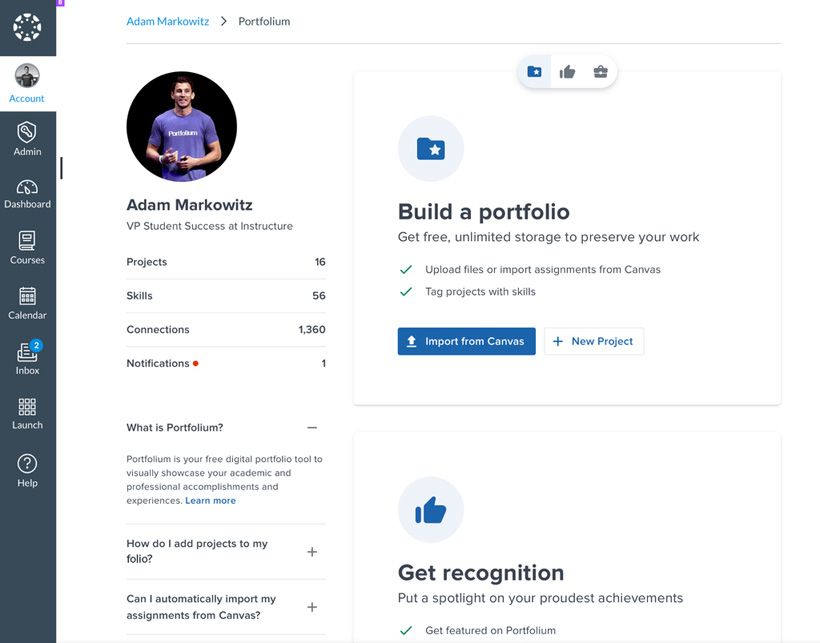
    The Portfolio tool, acquired earlier in the year by Instructure, allows students to showcase their badges, achievements, projects, competencies and skills, serving as an expanded resume.

    Canvas LMS’ clients will access Portfolium at no extra cost, as the company’s staff told IBL News.

    “Too often, students do not recognize or even fully appreciate the skills and competencies they’re acquiring along their academic paths,” Adam Markowitz, General Manager of Instructure Portfolium, explained to IBL News. “This skills awareness gap is being solved by our integration.”

    In addition to Portfolium’, Ryan Lufkin, Senior Director of Global Education Product Marketing, highlighted Instructure’s partnership with Badgr to automatically issue digital credentials at set milestones.

    Canvas LMS is used by 30 million people, according to the company. Last year, it surpassed Blackboard as a leading organization in the paid learning management system market.

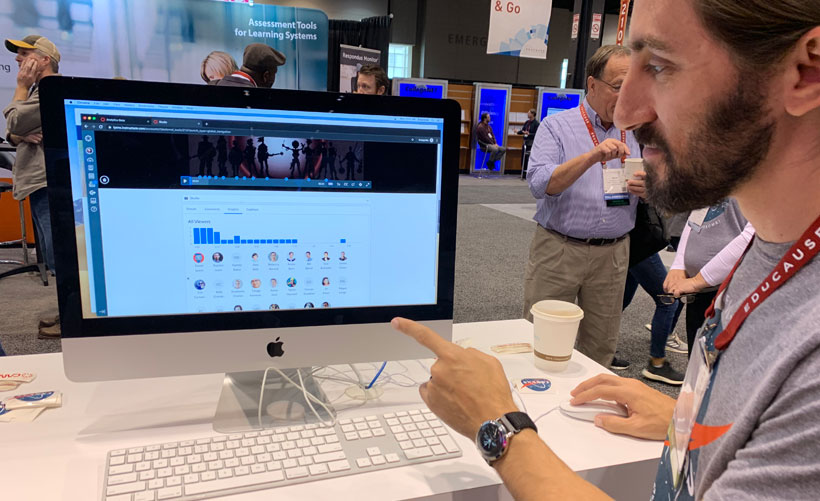
    [A Portfolium snapshot below. David Lyons, Sr. Solutions Engineer at Instructure, at Educause, in the picture above]