Category: Platforms | Tech

  • What’s Ahead? Unbundled Degrees, Micro-Bachelors, and Stackable, Employer-Endorsed Credentials

    What’s Ahead? Unbundled Degrees, Micro-Bachelors, and Stackable, Employer-Endorsed Credentials

    IBL News | New York

    Where online learning will be in three to five years? How it will be scaled?

    In an article at Evollution.com, Holly Zanville, Strategy Director for the Future of Learning and Work at the Lumina Foundation, provided a glimpse of how edX.org is building the structure of tomorrow’s learning system.

    Nina Huntemann, edX’s Senior Director of Academics and Research at edX, offered her thoughts on upward trends. This is a summary:

    • Students will move among programs and learning blocks within an institution and among universities.
    • Degrees will be broken into smaller components of competencies and skills. This will better meet industry needs and will result in smaller and more affordable credentials.
    • More hybrid paths –those that couple in-person, classroom learning with online instruction– will emerge. The challenge to move noncredit courses and micro-credentials into credit pathways.
    • A new class of instructors —learning engineers— will emerge. They will use the latest technologies, develop new instructional paths, help faculty members teach in new ways, and work closely with employers.
    • It will be a more performance-based admission system.
    • Institutions will continue to be unable to serve the growing number of applicants to programs in specialty areas such as data, programming and health.

    Recently, the Indianapolis-based Lumina Foundation gave a grant of $900,000 to nonprofit edX Inc to create a new credentialing system. Among those credentials, edX is developing a series of micro-bachelors programs for undergraduate college education.
     

  • Coursera Will Pay the Tuition Cost for Degree Programs to their Full-Time Employees

    Coursera Will Pay the Tuition Cost for Degree Programs to their Full-Time Employees

    IBL News | New York

    Coursera’s full-time employees who are accepted into degree and MasterTrack programs on the platform will not pay their tuition.

    This benefit will allow them to earn credentials and better understand Coursera’s product.

    Stephanie Hale, Coursera’s head of brand and creative, said, “This is beyond generous and a beautiful reflection of Coursera standing by its mission and putting the betterment of all people first.”

    Programs that Courserians –as the company calls employees– can apply to are the following:

    In September, LinkedIn named Coursera one of the 50 hottest companies to work.


  • 99% of MIT Undergrads Have Taken an MITx Class – Impressive Numbers After Two Decades

    99% of MIT Undergrads Have Taken an MITx Class – Impressive Numbers After Two Decades

    Mikel Amigot | IBL News


    In May 2012, Susan Hockfield, former president at MIT, made a statement that turned into a belief at the institution: “Online education is not an enemy of residential education but rather an inspiring and liberating ally.”

    The idea caught fire, and MIT increased its commitment to online education.

    The same year, MIT teamed up with Harvard University to launch edX, the free open-source platform for digital learning. It also increased the number of online classes.

    Today, MIT’s OpenCourseWare website hosts 2,450 classes and receives 2 million monthly visitors, while edX contains 90 MIT courses.

    MITx, the online learning unit of the institution, reports an average number of people who register for an MITx MOOC every day of 3,307. So far 176 MOOCs have been produced.

    More interestingly, 99% of MIT undergrads have taken a class that uses MITx tools. Also, 15% of undergrads took an MITx MOOC before being admitted.

    The most popular MITx class on edX.org, Introduction to Computer Science using Python has achieved a total of 1.3 million enrollments to date.

    This number shows that the impact is global. In fact, 75% of learners live outside the U.S. In total, 3.8 million unique learners from 200 countries have earned 195,000 certificates. Only 1,805 learners earned MicroMasters credentials, and 76 went on to complete MIT master’s degrees on campus.

    In 1999, President Charles Vest asked a faculty committee how to best use the Internet to further MIT’s mission. He got risky advice: put all of MIT’s course materials online for free.

    MIT’s Open Learning initiative has served amazingly well both its students and learners around the world. It is one of the breakthroughs in education in the last two decades.

  • Udacity Will Fund 100,000 Scholarships As Part of the Pledge to America’s Workers

    Udacity Will Fund 100,000 Scholarships As Part of the Pledge to America’s Workers

    IBL News | New York

    Udacity announced yesterday its Pledge to America’s Workers job training initiative. Over the next five years, Udacity will fund 100,000 tech and analytics scholarships on its learning platform.

    With this move, Udacity is joining more than 350 companies and organizations, including Google, Apple, and IBM in signing the White House’s Pledge to America’s workers –a project undertaken by the Trump administration.

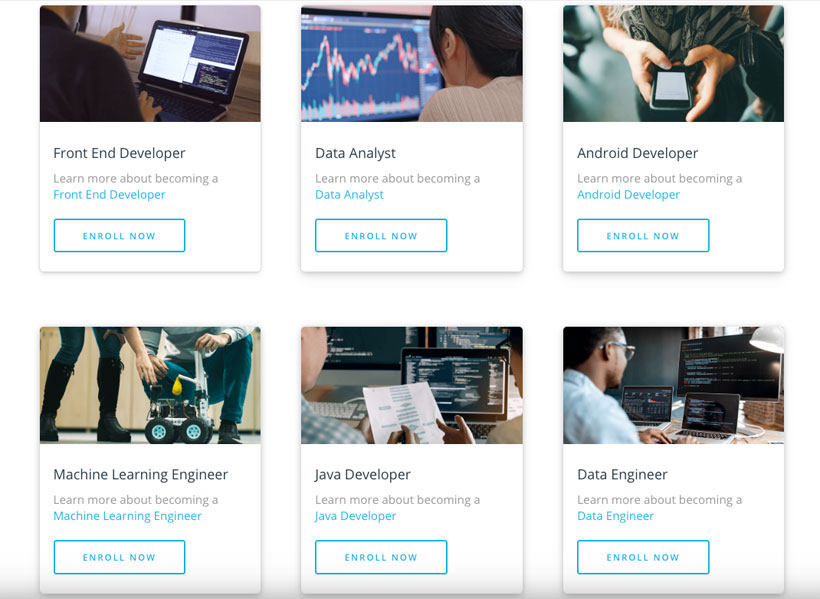
    “Udacity’s scholarships will equip America’s workers with the skills they need to succeed in high-paying, future-proof careers in fields such as front-end web development, mobile app development, and data analytics,” said Udacity’s new CEO, Gabe Dalporto.

    The program will initially revolve around front-end web development, mobile app development, machine learning, and data analytics. (See image below)

    The recipients of scholarships will be, according to Udacity, “low-income individuals looking to learn the in-demand skills needed to land higher-paying jobs and advance their careers.”

    Applications will open in early 2020, although the company offered the possibility of pre-registering now through a website.

  • Coursera’s Latest Low-Priced Online Master’s: A Russian Degree on Data Science

    Coursera’s Latest Low-Priced Online Master’s: A Russian Degree on Data Science

    IBL News | New York

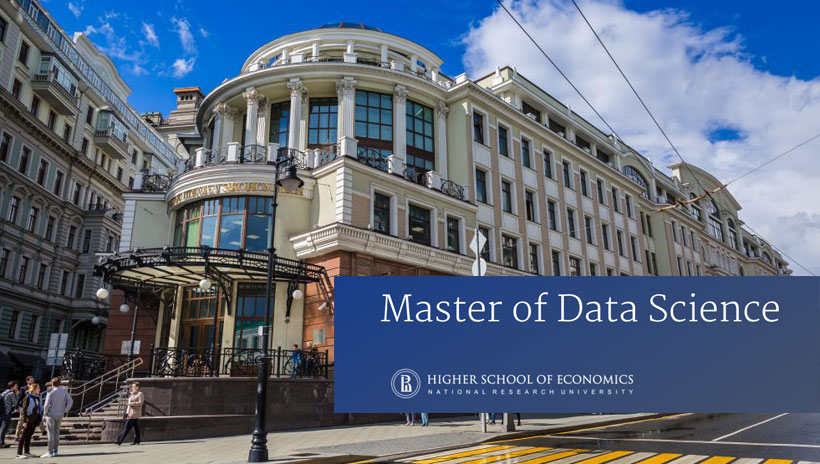
    Yesterday, Coursera announced a new low-priced Master’s degree in Data Science. It will be developed fully online, in English by a Russian school, HSE University, and will cost the equivalent to $8,250 to $16,500, depending on grant eligibility.

    The 18-24 months Master’s, open to students from any country, will consist of 21 courses, with 120 ECTS credits in total. The first cohort will begin in February 2020. As admission requirements, students must have a bachelor’s degree and pass an online exam on mathematics.

    On the other hand, Coursera’s CEO, Jeff Magggioncalda, said on Fortune India that the company is seeking to more than double the numbers of its learners in the next 2-3 years up: from the existing 44 million to 100 million.

    Magggioncalda also disclosed that Coursera’s biggest source of revenue is Coursera for Business, which is growing at a rate of 100% per year. Degrees from universities are the smallest source, “but are growing faster than anything else.” “In three years, they will all probably be equal.”


  • A Practical Course on edX to Learn How to Deploy an IBM Watson-Based Chatbot

    A Practical Course on edX to Learn How to Deploy an IBM Watson-Based Chatbot

    Mikel Amigot | IBL News (New York)


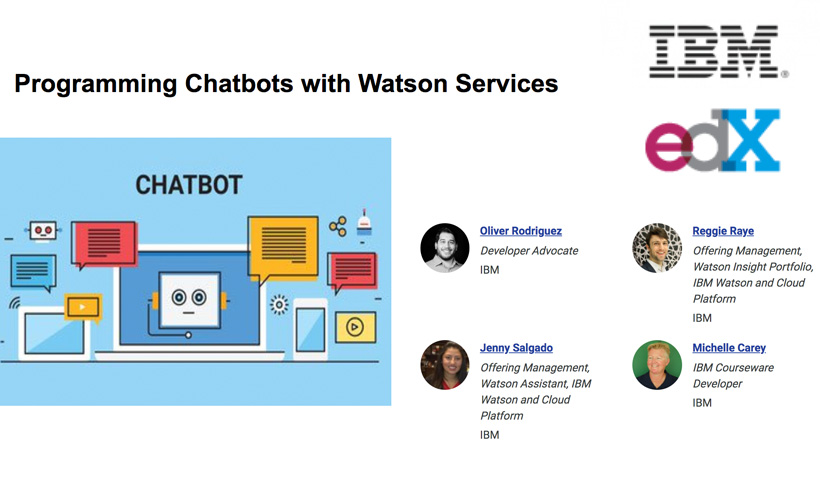
    IBM launched yesterday on edX.org a free course to learn how to create a turbocharged chatbot with Watson Services.

    The online class  (3 weeks, 2-4 hours per week) teaches the intricacies of Watson Discovery, allowing to surface answers and patterns from large unstructured data sets.

    Designed for intermediate learners, this practical course, Programming Chatbots with Watson Services, requires learners to have previous basic knowledge of object-oriented programming, as well as command line, Node.js, and IBM Watson Assistant.

    In addition, “if you have a large repository, the contents of which could answer customer questions, you’ve got the makings of a great FAQ chatbot, said the instructors of the course – four IBM’s developers and cloud experts.

    The AI-powered chatbot application, that interacts in natural language, is the result of ingesting data that can be queried to extract sentiment, concept, entities, and taxonomy by using Watson Discovery.

    WordPress and edX Plugins

    AI-based agents or chatbots are expanding in all the industries including education. Gartner predicts that by 2020, 85% of businesses will have their own chatbot.

    In digital education, many questions on the discussions, especially the repetitive ones that pop up in every class, can be answered by a chatbot. Inquiries and follow-up requirements within the course can be solved by this type of automatic help desks.

    These IBM agents are now created for the overall course catalog, rather than the use of a Teaching Assistant (TA) for individual courses and pedagogical answers.

    • Today, IBM is considering developing a Watson-based extension or plugin to integrate with edX.org and Open edX sites, sources told toIBL News.
    • In September, IBM issued a plugin for WordPress, that uses Watson’s Assistant on the cloud. This plugin helps to quickly deploy a chatbot on WordPress-based sites.
  • Google Classroom, One of the World’s Top LMS: 40M Users In Five Years

    Google Classroom, One of the World’s Top LMS: 40M Users In Five Years

    IBL News | New York

    Google Classroom celebrates its fifth anniversary this Fall announcing that it has grown up to 40 million users in 230+ countries.

    In addition, it includes over 60 apps and integrations as a result of partnerships with some of the top EdTech companies.

    “Five years ago, we learned that although teachers loved using G Suite’s collaborative tools, they found some of the features complicated to use,” said Kara Levy, Engineering Manager at G Suite for Education.“Classroom enabled teachers to easily create, organize and distribute assignments all with the click of a button.”

    Last September, Google’s LMS introduced a new feature called “Classwork page”. It means that all classes now have a Classwork page which helps to organize assignments and questions by grouping them into customizable modules and units.

    Earlier this year, the giant introduced rubrics, a tool currently in beta that helps students understand how their assignments will be evaluated, while also giving educators a standardized way to grade. This feature works alongside other feedback tools to help teachers personalize instruction.

    Other new developments include an anti-plagiarism; the ability to sync grades between a Student Information System (SIS) and Classroom; and Gradebook, which allows teachers to see a holistic view of their students’ grades across assignments.

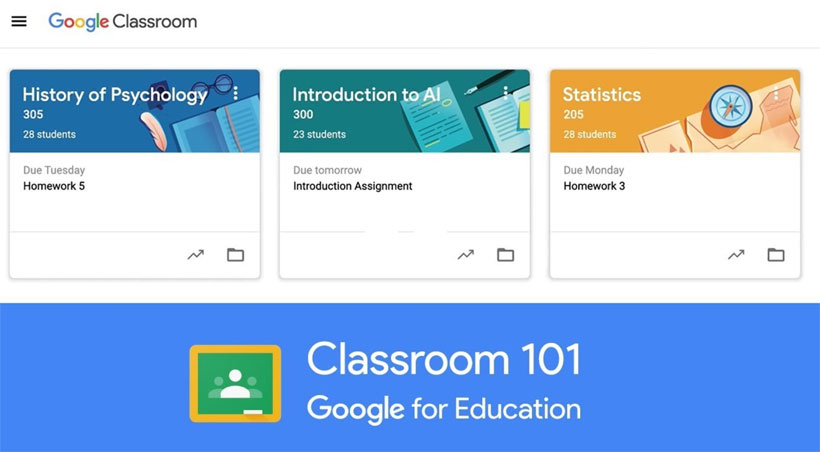
    In summary, Google’s LMS allows teachers to set up classes and add students, create and organize content on the Classwork page, and give feedback with the grading tool. [See the video below]


    Google Classroom Resources:


  • 2U Announces a Deal with RIT to Deliver an Online Master’s Degree in Architecture

    2U Announces a Deal with RIT to Deliver an Online Master’s Degree in Architecture

    IBL News | New York

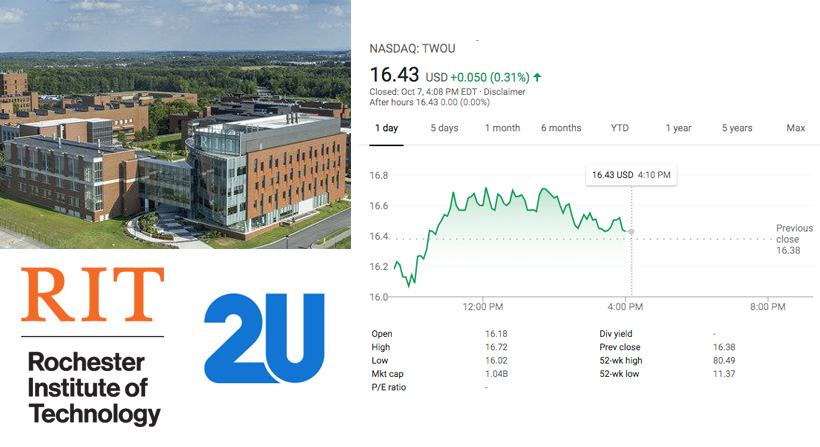
    Less than thirty days from the third quarter of earnings calls, 2U (NASDAQ: TWOU) announced yesterday a new partnership with Rochester Institute of Technology (RIT) to deliver an online Master of Architecture degree. The program is 2U’s first architecture offering and represents a new vertical for the company.

    With the firm’s stock price currently trading around $16.43, 2U has been unable to gain investors’ trust and recover most of the two-thirds of the value that evaporated after the earnings call on July 30th.  The Lanham, Maryland–based company now has a market capitalization of $1.04 billion – it reached $4.7 billion a year ago, with the stock traded at $80.49.

    The deal reported on Monday with RIT didn’t impact 2U’s stock price. Top stories and financial alerts continued to bounce around investors’ class-action lawsuits alleging misleading statements made between February and July.

    RIT Architecture Online is scheduled to be launched in September 2020. Rochester Institute of Technology faculty will deliver the curriculum through a combination of asynchronous and live classes on 2U’s online platform.

    “We are very delighted to begin this significant and important collaboration with 2U,” said Dennis A. Andrejko, Head of RIT’s Department of Architecture. “Partnering with 2U can certainly allow us to add momentum in advancing our sustainability and resiliency agenda, while inextricably linking this to the opportunities, power, and value of design inquiry and architecture.”

    On behalf of 2U, Andrew Hermalyn, President of Global Partnerships, indicated: “Working together, we will take the best of the RIT architecture program online and into the digital era, and prepare the next generation of leaders in the field to address the most pressing sustainability and design challenges.”

    Update: 2U Inc. had a rough trading day on Tuesday, October 8th, as the stock price dropped 5.26%, to close at $15,57. As a result of the decline, 2U Inc. now has a market cap of $985.81 million.


  • Coursera for Campus Is Not an Alternative LMS to Blackboard, Canvas and Moodle, Says Maggioncalda

    Coursera for Campus Is Not an Alternative LMS to Blackboard, Canvas and Moodle, Says Maggioncalda

    Mikel Amigot | IBL News


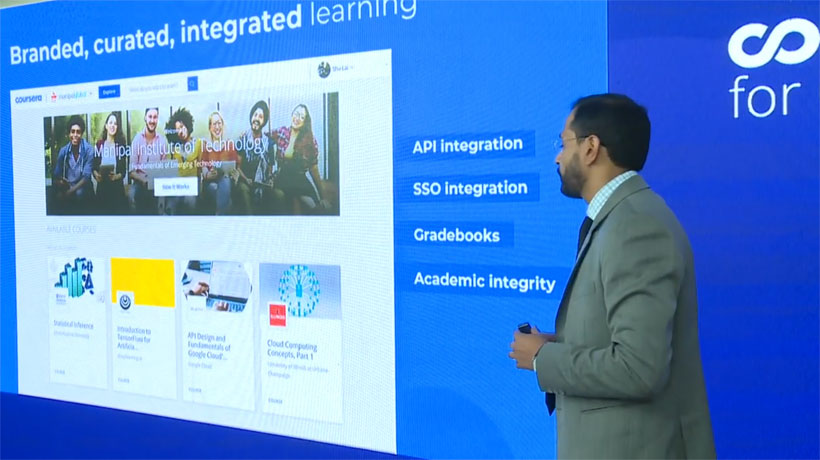
    “Coursera for Campus is not a full-featured LMS,”
    said Jeff Maggioncalda, CEO of Coursera, during the announcement event in India, on October 3rd. “We expect many universities to stay on their LMSs.”  

    According to the company, Coursera for Campus’ LMS is designed to supplement the existing Canvas, Blackboard and Moodle systems.

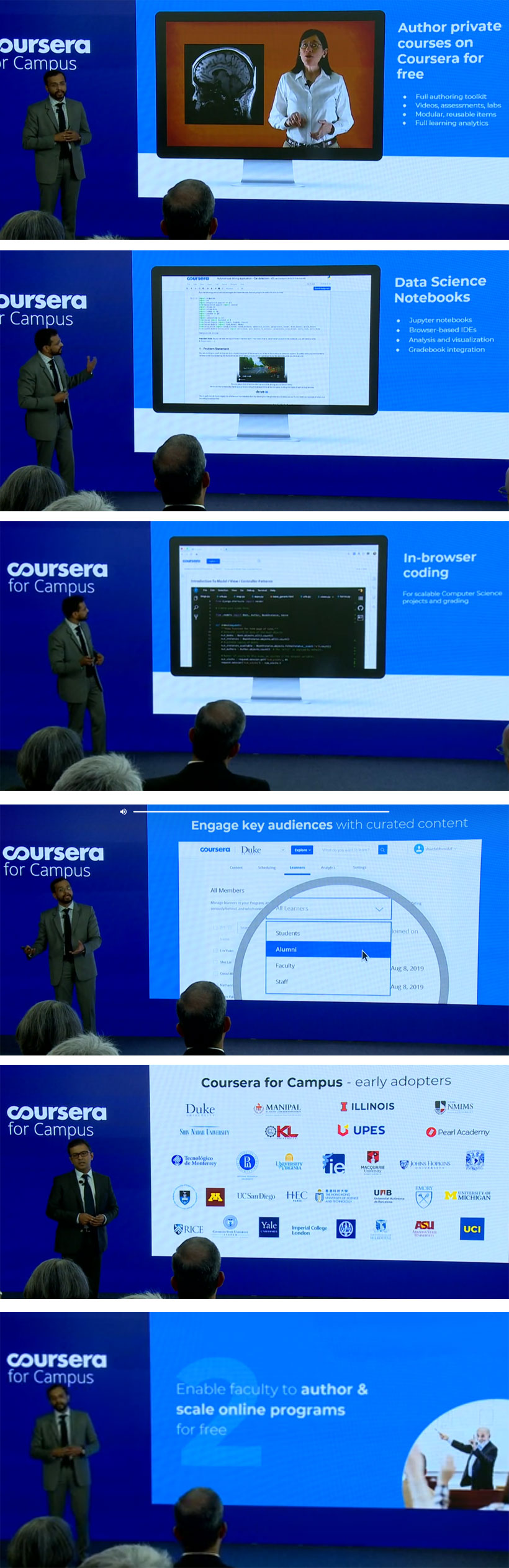
    Its main utility refers to authoring content for private audiences such as residential students, alumni, faculty members, and staff.

    The SSO (Single Sign-On) and APIs are apparently intended to facilitate further integrations. The collection of distinctive features include analytics, live-hands on labs, in-browser coding, plagiarism detection, Jupyter Notebooks and gradebook integration.

    Jeff Maggioncalda insisted on the message of collaboration and not being an alternative LMS.

    So far 20 partner universities, including Duke and Illinois, have piloted Coursera for Campus, and 10 additional universities are using an early version of it.

    Last week, when Coursera for Business was advertised, representatives of the company highlighted that this new LMS was designed to deliver online courses and interactive lessons better than most LMSs.

    “We’re talking about a potential major disruption to the LMS market,” Leah Belsky, Coursera’s Vice President of Enterprise said on EdSurge. “We don’t have all the features of an LMS but what we do have is all the tools to create cutting-edge interactive learning experiences.”

    Michael Feldstein, a known consultant and author at the eLiterate blog, doubted that universities will replace their learning management systems with Coursera’s. “MOOC platforms are interesting and have some innovative features, but they are neither mature for their original purpose nor tuned for the broad range of usage that a campus LMS must serve,” Michael Feldstein wrote.

    The edX Consortium had always offered to its affiliated members a private, yet unbranded, authoring platform called Edge.

    Michael Feldstein’s Blog Post: The MOOC-Courseware Convergence


  • Google Expands Its IT Support Certificate Program to 100 Community Colleges

    Google Expands Its IT Support Certificate Program to 100 Community Colleges

    IBL News | New York

    Google announced on Thursday plans to offer, through a $3.5 million grant, its IT Support Professional Certificate program to 100 community colleges by the end of 2020 in eight new states, including Arizona, Florida, Kentucky, Louisiana, Minnesota, New Mexico, Virginia and West Virginia. Those states come in addition to schools in Illinois, Michigan, New York, Ohio, Texas, Colorado, and Wisconsin, which have offered the program since earlier this year.

    The online program consists of six modules, costing $49 each. It takes an average of six months to complete and is designed to prepare learners without a degree or tech experience for an entry-level job in IT support –which has a median salary of $53,000.

    Launched at Coursera in January 2018, the program is part of the Grow with Google initiative.

    More than 95,000 learners enrolled in these classes and thousands of people have found jobs because of them in large companies such as Wal-Mart, Ricoh, GE Digital and Google.

    Leah Belsky, Senior Vice President of Enterprise at Coursera, wrote a blog post analyzing the first year’s impact of the program.

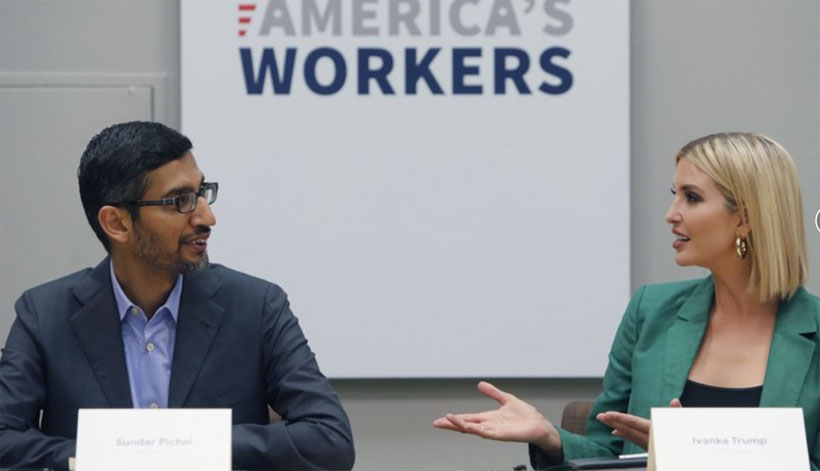
    Speaking at an event on October 3rd in Dallas, Texas, Google CEO, Sundar Pichai, said the company’s goal is to “make sure that the opportunities created by technology are truly available to everyone.”

    Along with Pichai, President Trump’s senior advisor and daughter, Ivanka Trump, was on hand to discuss the importance of retaining workers in the U.S. During the event, Pichai signed a pledge to the White House to help retain workers in the American tech industry.


    IBL News, Sept 22: Google and CompTIA Create a Dual Credential for Learners Seeking for Entry-Level Jobs in IT
    IBL News, June 15: Coursera’s Google IT Support Certificate Program Gets a Good Response