Category: Views

  • ChatGPT Passes an MBA Exam at UPenn’s Wharton

    ChatGPT Passes an MBA Exam at UPenn’s Wharton

    IBL News | New York

    ChatGPT — the popular AI tool able to write letters, song lyrics, research papers, recipes, therapy sessions, poems, essays, outlines, and even software code — has passed an MBA exam at the University of Pennsylvania’s Wharton School of Business.

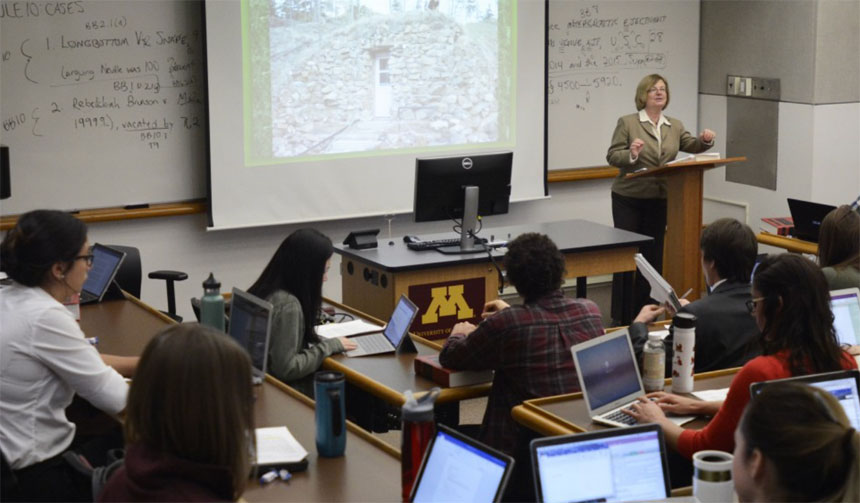
    In the last few days, Professor Christian Terwiesch documented in a research paper how ChatGPT performed on the final exam of a typical MBA core course, Operations Management.

    The AI chatbot, still in its infancy, he wrote, “does an amazing job at basic operations management and process analysis questions including those that are based on case studies.”

    “It would have received a B to B- grade on the exam.”

    Microsoft, which is mulling a $10 billion investment in OpenAI, the venture behind ChatGPT, has announced it will build the program into Microsoft Word.

    ChatGPT, which learned how to write by examining millions of pieces of writing on the Internet, now appears as a threat to the knowledge and information work–based U.S. economy. Lawyers, copywriters, and screenwriters, among other jobs, can be affected, according to Professor Christian Terwiesch.

    Experts also worry about the problem of misinformation as people might use ChatGPT to flood social media with phony articles that sound professional or bury Congress with “grassroots” letters that sound authentic.

    With tens of millions of users — the exact number has not been disclosed — ChatGPT, which doesn’t need to know structure or syntax or vocabulary or grammar, or even spelling, has been banned at the Seattle and New York City school systems.

    This weekend, an article in The Atlantic stated “Chat GPT would destabilize white-collar work.”

    The magazine said that it will cause a mass job loss among college-educated workers in the next five years, as this AI technology will be able to perform tasks that were previously thought to require a high level of education and skill.

    AI experts on whether you should be “terrified” of ChatGPT

  • Augmenting GTP-3 with Additional Information Prompts New Coding Businesses

    Augmenting GTP-3 with Additional Information Prompts New Coding Businesses

    IBL News | New York

    Customer support Q&A AI chatbots based on ChatGPT are becoming an unexpectedly profitable business for developers.

    The GTP models have picked up a lot of general knowledge in training but personalized chatbots often need to ingest and use a large library of more specific information taken from Wikipedia or other sources, as OpenAI explains in a notebook in GitHub.

    The company that has created ChatGPT is providing docs for fine-tuning these new virtual agents, along with a myriad of bloggers like machine learning engineer Peter Foy.

    These custom bots are being offered as a service. They can offer multiple applications, such as investment research (crypto, IPO, earning calls…) assistants, legal or medical Q&A bots that answer users’ questions, along with a code documentation bot that provides answers to developer questions.

    Experts quote Sam Altman, OpenAI’s CEO, when he said that there will likely only be a few companies that have the budget to build and manage Large Language Models (LLMs) like GPT-3, but there will be many “layer two” service companies in the business of fine-training these models in domain-specific industries.

    “The fundamental interface will be natural language models,” he said. “They will be commoditized” and “economical impact will be huge.”


  • ChatGPT and Its Consequences on Work and Life Are the Talk of the Business Leaders in Davos This Year

    ChatGPT and Its Consequences on Work and Life Are the Talk of the Business Leaders in Davos This Year

    IBL News | New York

    Human-like text and code generator ChatGPT and language models AI are the talk of this year’s World Economic Forum in Davos, Switzerland.

    World leaders reunited in Davos are shocked at how fast OpenAI’s ChatGPT and image generators like Stable Diffusion and Dall-E have matured and become mainstream.

    On panels and in side conversations, leaders are discussing the potential consequences of these technologies on businesses, daily lives, and jobs. Some are excited about the possibilities, some are fearful, while most are busy typing queries into ChatGPT.

    This level of user adoption has never been seen before in the history of the internet.

    Experts say that AI has captured the public imagination in a way that no technology has since the arrival of the iPhone in 2007.

    Optimists see a world in which AI gives superpowers to knowledge workers and speeds up the time needed to achieve breakthroughs in health and sustainability.

    For example, investor Jim Breyer has invested in a dozen companies that aim to use AI in a range of healthcare applications, including early detection of prostate and breast cancers, according to Axios.

    Concerns range from the fear of a flood of AI-generated misinformation to the biases baked into systems that have been trained on real-world data filled with stereotypes and dominated by rich countries.

    Access Now executive director Brett Solomon told Axios he worries this new crop of AI technologies will be another weapon used against human rights activists, journalists, and others.

    Another significant concern is what AI will mean for jobs. Experts agree that these shifts are inevitable and governments should help train workers for a reshaped world.

    On the regulatory side, the EU is already working on an AI Act, which aims to be the first broad legislation governing such technology.


    –––––

    Additional headlines for this story suggested by Chat GPT:

    “ChatGPT and AI-Language Models Take Center Stage at World Economic Forum in Davos, Sparking Discussion on Potential Consequences for Business and Daily Life”

    “ChatGPT and AI-Language Models Spark Debate on Impact on Work and Life at World Economic Forum in Davos”

    Would you summarize the whole text with the main bullet points?

    • ChatGPT and AI language models are the main topic of discussion at the World Economic Forum in Davos.
    • World leaders are shocked by the rapid maturity and mainstream adoption of these technologies.
    • They are discussing the potential consequences of these technologies on businesses, daily lives, and jobs.
    • User adoption of ChatGPT and AI language models is higher than any other technology in the history of the internet.
    • Optimists see the potential for AI to give “superpowers” to knowledge workers and speed up breakthroughs in health and sustainability.
    • Concerns include the potential for AI-generated misinformation, biases in systems trained on real-world data, and the impact on jobs.
    • The EU is already working on an AI Act to regulate these technologies.

    Chat GPT please summarize the story in three bullet points:

    • World leaders at the World Economic Forum in Davos are discussing the impact of ChatGPT and AI language models on businesses, daily lives, and jobs.
    • High user adoption of these technologies and concerns about misinformation, biases and impact on jobs are being raised.
    • The EU is working on an AI Act to regulate these technologies.

    Would you create two multiple-choice questions out of the given text?

    1. What is the main topic of discussion at the World Economic Forum in Davos? a) Climate change b) ChatGPT and AI language models c) International trade agreements
    2. What are some concerns raised about ChatGPT and AI language models? a) High user adoption b) The potential for AI-generated misinformation and biases in systems c) The impact on jobs and human rights activists a & b

    Please re-write the entire text completely without losing its sense

    The World Economic Forum in Davos, Switzerland, is currently abuzz with discussions about the effects of ChatGPT and AI language models on industries, everyday life, and employment opportunities. Attendees are reportedly surprised by the swift development and widespread use of these technologies.

    Conversations are taking place about the potential consequences of these technologies on businesses and daily lives, with some attendees excited about the possibilities, some fearful, and others experimenting with ChatGPT. The adoption rate for these technologies is said to be unprecedented in the history of the internet.

    While some view AI as a means of increasing efficiency and driving breakthroughs in health and sustainability, others express concerns about the proliferation of AI-generated misinformation and the biases inherent in systems trained on real-world data. There is also concern about the impact of AI on jobs. The EU is already working on legislation, known as the AI Act, to regulate these technologies.

    Please generate three different tweets about the story

    1. “The World Economic Forum in Davos is discussing the impact of ChatGPT and AI language models on businesses, daily lives, and jobs. Are you prepared for the future of AI? #WEF #ChatGPT #AILanguageModels”
    2. “Experts are raising concerns about the potential for AI-generated misinformation and biases in systems at the World Economic Forum in Davos. How do we ensure ethical use of AI? #WEF #AIMisinformation #EthicalAI”
    3. “The EU is taking proactive steps to regulate ChatGPT and AI language models. What kind of regulations do we need to ensure responsible use of AI? #EUAIact #ChatGPT #AILanguageModels”


  • Microsoft Starts Offering Access to Azure OpenAI [Video]

    Microsoft Starts Offering Access to Azure OpenAI [Video]

    IBL News | New York

    Microsoft announced the availability of Azure OpenAI Service, as its ongoing partnership with OpenAI, for the company’s managed customers and partners working with accounts teams.

    However, the service is offered with “limited access” to the ability to modify content filters. In addition, any potential user has to apply and submit a registration form for approval.

    The Redmond, Washington-based software giant explained that it wants to foster “transparent human-computer interaction.”

    Access to the Azure OpenAI Service is subject to Microsoft’s sole discretion based on eligibility criteria and a vetting process.

    Azure OpenAI Service includes GPT-3.5, Codex, and DALL-E 2. Customers will be able to access ChatGPT—a fine-tuned version of GPT-3.5 that has been trained and runs inference on Azure AI infrastructure—through Azure OpenAI Service “soon.”

    Microsoft mentioned that firms like Moveworks, Al Jazeera Digital, and KPMG are already applying Azure OpenAI Services for customer support, customization, and gaining insights from data using search, data extraction, and classification.

    Vaibhav Nivargi, Chief Technology Officer and Founder at Moveworks, mentioned applications such as search capabilities, analytics, and data visualization offerings. “At Moveworks, it enables us to solve several novel use cases, such as identifying gaps in our customer’s internal knowledge bases and automatically drafting new knowledge articles based on those gaps. This saves IT and HR teams a significant amount of time and improves employee self-service.”

    Al Jazeera Digital is using Azure OpenAI Service for summarization and translation, selection of topics, AI tagging, content extraction, and style guide rule application, according to Jason McCartney, Vice President of Engineering at Al Jazeera.

    Brett Weaver, Partner and Tax ESG Leader at KPMG, is applying Azure OpenAI Service to find the data relationships to predict tax payments and tax type, “making it much easier to validate the accuracy and categorize payments by country and tax type.”

    Microsoft said that it is using it to power its own products, including GitHub Copilot, an AI pair programmer that helps developers write better code, Power BI, which leverages GPT-3-powered natural language to automatically generate formulae and expressions, and the recently-announced Microsoft Designer, which helps creators build content with natural language prompts.

  • Microsoft Will Make OpenAI’s Language Models Available on Its Azure Cloud Services

    Microsoft Will Make OpenAI’s Language Models Available on Its Azure Cloud Services

    IBL News | New York

    Still in talks to invest as much as $10 billion in OpenAI, Microsoft will broadly offer its Azure cloud service customers access to the GPT-3.5 language model, DALL-E 2 for generating images from text prompts, and “soon” ChatGPT.

    This way, the Redmond, Washington-based software giant continues building on its existing relationship with OpenAI thanks to a $1 billion investment in 2019.

    ChatGPT, the owner of the viral AI bot ChatGPT, confirmed the news without adding more details, stating in a blog post yesterday: “We’ve learned a lot from the ChatGPT research preview and have been making important updates based on user feedback. ChatGPT will be coming to our API and Microsoft’s Azure OpenAI Service soon.”

    OpenAI service has been available to a limited set of Azure’s customers since it was unveiled in 2021. That enables Azure customers to use the OpenAI products in their own applications running in the cloud.

    Microsoft is currently using OpenAI’s Codex to add automation to its GitHub unit’s Copilot programming tool.

    In addition, the company wants to implement OpenAI technology in its Bing search engine, Office productivity applications, Teams chat programs, and security software.

    Microsoft is looking to get an inside edge on the most popular and advanced AI systems in order to boost its own products in competition with Google, Amazon, and Meta Platforms Inc.

    The potential investment by Microsoft could value OpenAI at about $29 billion. Both companies have declined to comment on the talks to date.

    OpenAI’s ChatGPT has lit up the internet since its launch in November 2022. It gathered its first million users in less than a week. New York City schools have banned their students from accessing ChatGPT.

    Now OpenAI is working on a successor GPT-4.

    Co-founded by Elon Musk and VC investor Sam Altman makes money by charging developers to license its technology.

  • Language Models – Based Tools Will Radically Change Education

    Language Models – Based Tools Will Radically Change Education

    IBL News | New York

    Microsoft supported ChatGPT, which uses a neural network to generate responses from data sources from the Internet and the AI-generated art tool DALL-E had many educators wondering about the future of learning.

    The dominant conviction is that with AI for the masses, education is about to radically change, as an article in Getting Smart publication states.

    Essentially, this technology allows educators to design efficient and personalized learning systems while students learn with more tailored and effective instruction based on their individual needs.

    From existing underlying data, AI/ML (Artificial Intelligence/Machine Learning) machines take huge amounts of data and predict relevant responses and they can build on previous responses as they learn from their interactions with the user.

    The result is a more natural and helpful conversation, which is vastly different from the existing chatbots used currently online on many help desks.

    The potential of this technology will result in highly personalized, adaptive learning programs for the masses with 1:1 tutoring support provided by sophisticated AI tutors and coaches; improved assessment and rubrics with continued questions; social-emotional and mental health virtual counselors; better teaching and decision-making methods; lesson plans and learning modules automatically created with entering texts, videos, and media sources — as the new Nolej and Edthena platforms, built on ChatGPT, are showing.

  • ChatGPT-4, the Fined Tuned Version of ChatGPT-3, Might Prompt a Major Shift

    ChatGPT-4, the Fined Tuned Version of ChatGPT-3, Might Prompt a Major Shift

    IBL News | New York

    The expectation is mounting up around OpenAI’s ChatGPT-4, which is scheduled for 2023, although there is no official confirmation on either the launch or beta testing of it.

    GPT-4 stands for Generative Pre-trained Transformer 4. It’s basically an artificial intelligence system that can create human-like text.

    While the current ChatGPT-3 has 175 billion parameters, ChatGPT-4 might have 1 trillion, or even more, according to some reports. Similarly, it will be capable of text answering, content generation, language translation, and text summarization, just like the current ChatGPT-3.

    The increase of parameters — a measure of the complexity of the neural machine to do useful things — should enable ChatGPT-4 to produce more accurate responses at a much faster rate. This AI-powered technology might prompt a major shift in the economy, some experts claim.

    It’s been 29 months since OpenAI launched GPT-2, its large-language model, which demonstrated the power of transformers-based neural networks. GPT-2 impressed experts with the quality of its natural text generation. Its successor GPT-3, released in 2020, was a bigger, more complex model, that delivered even more powerful results, not only with texts but with audio, images, and movies.

    In 1998, Yann LeCun’s breakthrough neural network, LeNet, sported 60,000 parameters.

    Twenty years later, OpenAI’s first version of GPT had 110 million parameters. GPT-2 has 1.75 billion, and GPT-3, now two years old, has 175 billion.

    Another consequence of GPT-4 would be on the price front. The cost of generated text has been declining rapidly. Today, it’s half a cent for about 700 words of output.

    Another angle of the rapid advance of this new wave of chatbots is the impact on Google’s search business. The New York Times signaled that the release of ChatGPT led Google’s management to declare a “code red.”

    The Times said that existing ChatGPT made its case to be the industry’s next big disrupter as it can serve up information in clear, simple sentences rather than just a list of Internet links.

    “It can explain concepts in ways people can easily understand. It can even generate ideas from scratch, including business strategies, Christmas gift suggestions, blog topics, and vacation plans.”

    See the examples below of ChatGPT and Google’s full of ads answers:

    ChatGPT was released by an aggressive research lab called OpenAI, and Google is among the many other companies, labs, and researchers that have helped build this technology.

    But experts believe the tech giant could struggle to compete with the newer, smaller companies developing these chatbots, because of the many ways the technology could damage its business.

    In addition, this type of replacement for online search might not be suited to deliver digital search ads, which accounted for more than 80% of Google’s revenue last year.

    Even if Google has the same technology, if a chatbot responds to queries with tight sentences, there is less reason for people to click on advertising links.

    As Amr Awadallah, who worked for Yahoo and Google and now runs Vectara, a start-up that is building similar technology, said, “If Google gives you the perfect answer to each query, you won’t click on any ads.”

    Employees at Google have also been tasked with building AI products, including those that can create artwork and other images, like OpenAI’s DALL-E technology, used by more than three million people.


    .

  • The Release of OpenAI Keeps Educators and Professionals Processing the Implications

    The Release of OpenAI Keeps Educators and Professionals Processing the Implications

    IBL News | New York

    The recent release of OpenAI’s ChatGPT, a fine-tuned version of a general-purpose chatbot is generating concern among experts worried about the reach of this technology after it took the Internet by storm.

    Paul Kedrosky, a renowned economist, venture capitalist, and MIT fellow, wrote, “shame on OpenAI for launching this pocket nuclear bomb without restrictions into an unprepared society.” He added, “OpenAI most disruptive change the U.S. economy has seen in 100 years, and not in a good way.”

    Experts are noting the massive consequences of essay writing, software engineering, and legal documents. Educators from top universities have said they won’t know what essays are fake.

    Moreover, they wonder how they’ll be able to distinguish original writing from the algorithmically generated essays they are bound to receive — and that can evade anti-plagiarism software.

    ChatGPT learning technology is learning from the request, while disruptive robots in a manufacturing plant only create economic consequences for the people working there but do not move across sector by sector.

    The fact that OpenAI is so capable of answering questions like a person is keeping professionals across a range of industries trying to process the implications.

    Analysts are highlighting the words of Elon Musk — who left OpenAI over disagreements about the company development —  when he said in 2019 that AI was an existential threat. Musk has repeatedly called for all organizations developing AI to be regulated, including his own Tesla.

    Meanwhile, Sam Altman, CEO of OpenAI, has talked about the dangers of not thinking about “societal consequences” when “you’re building something on an exponential curve.”

    Another angle of the consequences of ChatGPT is the ongoing lawsuit that is mounting against Microsoft and OpenAI over copyright infringement in the context of in-training machine learning algorithms.

    The successor to GPT-3, most likely called GPT-4, is expected to be unveiled in the near future, perhaps in 2023.

    Techcrunch: Is ChatGPT a ‘virus that has been released into the wild’?

  • The OLC Conference Awarded Twelve Educators for Innovation in Online Learning

    The OLC Conference Awarded Twelve Educators for Innovation in Online Learning

    IBL News | Orlando, Florida

    The OLC (Online Learning Consortium) awarded twelve instructors for their contributions and leadership in distance education during its annual conference, which took place in a Walt Disney resort in Orlando, Florida, this week.

    The event gathered around 1,100 attendants, most of them practitioners in online learning. The 2022 OLC Excellence Award Winners received their recognition for reflecting “leadership, change-making, and the advancement of exemplary practices in online, blended, and digital learning,” according to the organization.

    These are the awards recipients:

    • Excellence in Faculty Development:
    Reed Dickson, Pima Community College

    • Excellence in Instructional and Teaching Practice:
    Rene Corbeil and Maria Elena Corbeil, from the University of Texas Rio Grande
    Mark Gale, Letitia Bergantz, and Joy Oettel, from Athen State University

    Gomary-Mayadas Award for Excellence in Online Educational Leadership:
    Matthew Pittman, from Ivy Tech Community College

    John R. Bourne Award for Excellence in Online Programs and Programming:
    Mara Huber and Christina Heath, from University at Buffalo

    In addition, the OLC organization honored the 2022 Class of Fellows Awards. “They show an outstanding qualification, experience, contributions, and leadership in online learning,” said Mary Niemiec, Member Board Of Directors. “These experts are leading the way in online learning,” added Jenniffer Mathes, CEO at OLC.

    Terry Anderson, Professor Emeritus at Athabasca University
    Luke Dowden, Chief Online Learning Officer at Alamo Colleges District
    Kate Jordahl, Professor at Foothill College

    The conference, highly praised by the attendants, featured the expert in digital engagement, Dr. Josie Ahlquist as the keynote speaker.

    She encouraged educators to “engage authentically” and “foster belonging” when building “interactive and impactful communities”. “Digital community leaders are critical hope builders,” she stated. “Isolation is an enemy of hope; community is an ally of hope.” 

  • Most Higher Ed CIOs Are Ready to Invest More in Analytics, Says Gartner

    Most Higher Ed CIOs Are Ready to Invest More in Analytics, Says Gartner

    IBL News | Denver, Colorado

    Experts agree that data and analytics are critical for running today’s educational institutions. In fact, 60% of CIOs in higher education say that they are essential, according to Gartner.

    But these implementations are not taking place. There are several inhibitors, according to Marlena Brown, a Senior Research Analyst at Garner Inc.: Ineffective technology, misalignment of needs, and lack of understanding and trust.

    In an opening talk on the main stage during the 2022 Educause in Denver, Colorado, last Thursday, Marlena Brown [in the pictures above and below], revealed that 42% of higher ed CIOs indicated that they want to increase investment in business intelligence and data analytics, while 16% would grow their expenditure in AI/ML (Artificial Intelligence/Machine Learning).

    In order to put analytics capabilities to work, Garner Associated examined cases ranging from simple descriptive and diagnostic analysis through predictive and prescriptive analyses that enable institutions to identify and bend trend curves.

    Analytics, with the help of AI and Machine Learning, will determine scenarios impacting student success, as several experts indicated to IBL News during the Educause event. Prescriptive analytics will help to increase the retention of students at risk and avoid the high number of dropping learners.

    According to Gartner, these are the four needed stages of analytics:

    • Descriptive — What happened?
    • Diagnostic — Why did it happen?
    • Predictive — What will happen?
    • Prescriptive — What should I do?

    Technologies involved include regression analytics, forecasting, simulation, predictive models, complex event processing, neural networks, recommendation engines, data hub, and data lake, and analytic sandbox.

    Marlena Brown highlighted the importance of establishing a clear vision, outlining what every institution is trying to achieve. “I’d suggest creating an environment for exploration of advanced analytics as well,” she added.