Category: Views

  • Coursera Doubled Its Losses in 2021 While Valuation Decreased in Half

    Coursera Doubled Its Losses in 2021 While Valuation Decreased in Half

    IBL News | New York

    Coursera (COUR) increased its net loss to $145.2 million (or 35% of revenue) in 2021, compared to $68.8 million (or 22.8% of revenue) in 2020. Total revenue was $415.3 million in 2021, up 41% from $293.5 million in the prior year. Enterprise revenue (Coursera for Business) grew 70% year-over-year to $120 million.

    In the fourth quarter of 2021, net loss was $47.7 million or 41.5% of revenue, compared to $26.7 million or 32.1% of revenue a year ago. In the same period, total revenue was $115.0 million, up 38% from $83.3 million a year ago.

    Coursera’s financial results, announced yesterday, were negatively received by the stock market, which pushed the share price down 6.46%, until $19.70. The results did not meet Wall Street expectations, said The Associated Press.

    Since it went public in April 2021, Coursera has lost over 56% of its value. Today, market capitalization is half of its IPO, $2.77 billion. In its best moment, it reached a whopping valuation of $5.8 billion.

    Ken Hahn, Coursera’s CFO, said that “our outlook for 2022 anticipates revenue growth of 30% year-over-year, reflecting the long-term demand we continue to see for online learning.”  The revenue outlook for the full year of 2022 is in the range of $536 to $544, with an EBITDA negative in the range of $45.5 to $51.5 million.

    • Per segments, consumer revenue for the fourth quarter was $65.8 million, up 24% from a year ago on strong demand for our portfolio of entry-level Professional Certificates and continued adoption of Coursera Plus.

    • Enterprise revenue for the fourth quarter was $35.9 million, up 72% from a year ago on robust growth across the business, campus, and government customers. The total number of Paid Enterprise Customers increased to 803, up 107% from a year ago.

    • Degrees revenue for the fourth quarter was $13.3 million, up 43% from a year ago on the scaling of student cohorts.

    News about Coursera at IBL News


  • 2U Inc. Reports a Loss of $194.8 Million and Revenue of $945.7 Million in 2021

    2U Inc. Reports a Loss of $194.8 Million and Revenue of $945.7 Million in 2021

    IBL News | New York

    2U Inc. (NASDAQ: TWOU) — the owner of edX.org — on Wednesday reported a loss of $67.3 million in its fourth quarter of 2021, after an increase of $29.6 million on the same period in 2020.

    In the same time frame, revenue increased 13% to $243.6 million. Degree program segment revenue increased 17% to $152.4 million. And alternative credential segment revenue increased 8% to $91.2 million.

    Wall Street received these results well, and 2U’s stock went up 3.69% yesterday, until $17.98 per share. Overall, the stock lost 70% of its value in the last year. Market capitalization is only 1.36 billion.

    For the full year of 2021, the Lanham, Maryland – based company reported a loss of $194.8 million, or $2.61 per share, with an improvement of $21.7 million. Revenue was reported as $945.7 million, increasing of 22%.

    In terms of the outlook for 2022, 2U expects full-year revenue in the range of $1.05 billion to $1.09 billion, representing a growth of 13% at the midpoint. Net loss will range from $235 million to $215 million.

    Christopher “Chip” Paucek, 2U’s Co-Founder and Chief Executive Officer, provided this view: “Our strong 2021 results were led by healthy revenue growth in both our degree and alternative credential business, with demand for our undergraduate offerings particularly compelling.”

    “With the closing of the edX transaction in November 2021, we are laser-focused on transforming 2U into the leading global education platform company, positioned to drive powerful societal impact and superior value for all our stakeholders, by delivering learners affordable, flexible, and career-relevant online education offerings, while helping universities and businesses strengthen their institutions for the digital age.”

    Paul Lalljie, 2U’s Chief Financial Officer, added, “with the addition of edX and our transition to a platform company, we have established a strategic and financial framework for achieving our mid-term goals and creating shareholder value.”


  • Stanford University Launches Its First Full Class in Metaverse Virtual Reality

    Stanford University Launches Its First Full Class in Metaverse Virtual Reality

    IBL News | New York

    Stanford University launched its first class in virtual reality, using Facebook’s Oculus Quest 2 headsets.

    Taught by Professor Jeremy Bailenson, Communication 166/266 Virtual People deals with the emerging VR technology and its use cases. It covers the expanding influence of VR in many different fields, including popular culture, engineering, behavioral science and communication.

    The course is part of a study carried out by Stanford’s Virtual Human Interaction Lab. The research is looking at how virtual technologies can be effectively used in educational settings.

    Professor Jeremy Bailenson came up with the idea after teaching students about VR for nearly 20 years. After that time, he decided that the best way to demonstrate its abilities was to create a full course experience with VR. He is the author of the seminal VR text Experience on Demand, which also is one of the class’ assigned readings.

    According to the course structure, students will use lecture time to take part in VR experiences by themselves or as a group, including class discussions.

    In 2021, 263 students, all with their own VR headsets, across 20 weeks and two courses, spent over 3,500 shared hours together in the Metaverse.

    Each week, the course centers on different areas where VR can be used in the real world. According to the course structure, students will use lecture time to take part in VR experiences by themselves or as a group, including class discussions.

    Among the class exercises was a guided meditation in outer space. Students were able to create performances with different avatars.

    “In Virtual People, the students don’t just get to try VR a handful of times. VR becomes the medium they rely on,” professor Bailenson said in a statement. “Nobody has networked hundreds of students with VR headsets for months at a time in the history of virtual reality, or even in the history of teaching.”

    The class has drawn students majoring in diverse disciplines, including economics, political science, communication, anthropology, biology, computer science, film and media studies, comparative literature, art practice, psychology, and sociology.

    Facebook’s parent company Meta, creator of the Quest device, says that such headsets will play a big part in a future “metaverse” it plans to build with other companies.

    In addition to the headsets, the course also uses the Engage virtual communication software to connect the students and teachers. Engage is used by major companies and educational organizations to hold virtual meetings and events.
    .


  • Colleges Start to Move Classes to Distance Learning Due to the Fast Spread of Omicron

    Colleges Start to Move Classes to Distance Learning Due to the Fast Spread of Omicron

    IBL News | New York

    With the Omicron variant of the COVID-19 virus on the rise American colleges and universities are starting to take measures, that will impact the spring 2022 semester.

    The concern is that even vaccinated individuals contract the virus, disrupting institutions’ plans.

    Schools are closely monitoring the situation before alerting students to any changes. The input received from public health experts will mostly determine their course of action.

    Beyond this wait-and-see behavior, some institutions have made public announcements:

    • Harvard University already announced a transition to fully online learning to start in 2022. At least the first three weeks of classes will turn into remote learning.
    • Stanford University reported that it will start the winter quarter online, from January 3 until January 18.
    • DePaul University canceled on-campus classes until after January 17.
    • Penn State will begin the semester in person as planned. However, the school might alter plans. An update is expected in December. 30.
    • The University of California, Los Angeles, said it has yet to decide about returning to campus in January. Before December 25, the university will share more information with students.
    • Seven universities of California campuses — Davis, Irvine, Los Angeles, San Diego, Santa Barbara, Santa Cruz, and Riverside — announced that they will start instruction online in January.
    • Cornell, Princeton, Tufts, Towson University, and other schools are shifting final exams to online. Athletics and sports events are being called off in an increasing number of institutions.


  • Cornell and Princeton Move Final Exams Online After the Rapid Spread of the Omicron Variant

    Cornell and Princeton Move Final Exams Online After the Rapid Spread of the Omicron Variant

    IBL News | New York

    Cornell University put its Ithaca campus into alert level red, moving all final exams to an online format yesterday. This measure followed the rapid spread of the highly contagious Omicron variant of COVID-19 among its student population. Around 883 students tested positive in the week ending Monday.

    In addition to moving finals, President Martha E. Pollack announced that all university events and social were canceled, including the December 18 recognition ceremony and athletics competitions.

    Also, libraries, fitness centers, and gyms were closed to students. Other measures involved the shut down for visitors and guests.

    “It is obviously extremely dispiriting to have to take these steps,” Martha E. Pollack wrote in a letter to the community. “However, since the start of the pandemic, our commitment has been to follow the science and do all we can to protect the health of our faculty, staff, and students.”

    Other colleges have also taken measures recently to head off the spread of the virus on campus.

    Princeton, Cornell, and Middlebury College in Vermont shifted to remote exams, while others, such as Tulane, gave students the option of finishing the semester online.

    Princeton University canceled indoor gatherings and encouraged students who plan to travel home for the holiday break to leave campus as soon as possible. According to Princeton statistics, more than 50 students of 8,200 who attend the New Jersey Ivy League university tested positive for Covid-19 Monday and Tuesday.

    Princeton, which requires all students, faculty, and staff to be vaccinated against Covid-19, is now also requiring all eligible students to receive a booster by January 31.

    DePaul University in Chicago and Southern New Hampshire University each said this month that they would switch to all remote instruction, at least for a time, when classes resume in January.

    The Omicron variant generally causes milder cases, particularly among vaccinated individuals.

    The Omicron variant now represents roughly 3% of Covid-19 cases in the country, according to the CDC.

    Early data shows existing booster vaccines provided sufficient protection against the Omicron variant, Dr. Anthony Fauci, President Biden’s chief medical adviser, said Wednesday.


  • SUNY Chancellor Jim Malatras Resigns Over Text Messages to Cuomo Victim

    SUNY Chancellor Jim Malatras Resigns Over Text Messages to Cuomo Victim

    IBL News | New York

    Jim Malatras, the Chancellor of the State University of New York (SUNY), submitted his resignation on Thursday following intense bipartisan political pressure for him to step down. His resignation will go into effect on January 14, 2022.

    In the last week, the controversy over his allegedly “toxic management style” loudly increased until provoking his fall.

    Jim Malatras, an old Gov. Andrew M. Cuomo’s ally, faced mounting criticism over text messages that showed him belittling one of the women who had accused the now-disgraced politician of sexual harassment. The New York State Attorney General’s Office’s release of text messages sent by him accelerated his decision to step down.

    In his resignation letter to the SUNY Board of Trustees, Malatras wrote: “The recent events surrounding me over the past week have become a distraction over the important work that needs to be accomplished as SUNY emerges from COVID-19.”

    “I believe deeply in an individual’s ability to evolve, change and grow, but I also believe deeply in SUNY and would never want to be an impediment to its success,” he added.

    Malatras’s tenure at SUNY was short. On August 21, 2020, the Board of Trustees selected him without a national search process, prompting a vote of no confidence from faculty members who criticized his little higher education experience and his close relationship with then New York governor Andrew Cuomo. He was the first SUNY graduate ever to become Chancellor — the 14th, in this case.

    In July, Malatras defended a New York State Department of Health report that effectively absolved the Cuomo administration from responsibility for the rise in COVID-19 deaths in New York nursing homes.

    He was also questioned by investigators in September about how many working hours he spent editing and fact-checking Cuomo’s personal memoir.

    In November 2021, the New York Attorney General, Letitia James, released old text messages that showed Malatras mocking Lindsey Boylan, a former aide to Cuomo, after she tweeted about a toxic work environment in the governor’s office several years ago.

    “Let’s release some of her cray emails!” Malatras texted to a group of current and former Cuomo staffers after a colleague suggested Boylan was using drugs.

    Jim Malatras was an expert in the science of politics. He received his bachelor’s degree, master’s degree, and a doctorate in political science from the University at Albany and is the first SUNY alumnus to serve as Chancellor.

  • House Democrats Passed a Massive Spending Bill that Included Billions for Higher Ed

    House Democrats Passed a Massive Spending Bill that Included Billions for Higher Ed

    IBL News | New York

    The U.S. House of Representatives on Friday passed congressional Democrats’ sweeping $1.85 trillion climate and social spending bill by a vote of 220 to 213. No Republicans voted for the legislation, dubbed as the Build Back Better Act (BBB). Representative Jared Golden of Maine was the only Democrat to vote against it.

    The legislation now heads to the Senate, where it’s expected to undergo changes. Senate Majority Leader Chuck Schumer, a Democrat from New York, said the chamber “will act as quickly as possible.”

    In addition to a large investment in clean energy on tax credits, the BBB legislation includes substantial funding to universal pre-K, provides child care subsidies covering 20 million children, and extends an expanded child tax credit for one more year.

    It also includes billions of dollars in new investments for higher ed:

    • $550 increase to the maximum Pell Grant,
    • $2.35 billion for Black, Tribal, and Hispanic universities,
    • $500 million for college completion and retention grants,
    • $20 billion for workforce development.

    U.S. Secretary of Education Miguel Cardona [in the picture above] said in a statement that the passed act will be “transformative.”

    He added:

    — “Free universal pre-K and dramatically improved access to child care, so all our children can start their learning journeys from the same starting line.”

    — “Increased resources for HBCUs, Tribal Colleges, Hispanic Serving Institutions and other institutions that unlock opportunities for students of color and unleash their potential in our communities.”

    — “Expanded access to affordable college with increased Pell grants for anyone who dreams of getting a degree.”

    — “A stronger workforce pipeline with workforce development resources, for better pathways to the middle class.” 

  • 2U Eliminates the Annual Fees for Current edX Consortium Members

    2U Eliminates the Annual Fees for Current edX Consortium Members

    IBL News | New York

    2U, Inc. (Nasdaq: TWOU) announced yesterday it completed its acquisition of edX Inc, the MIT and Harvard-created non-profit educational platform, sold last June by $800 million in cash. Now, edX will operate as a public benefit company property of 2U.

    Along with the closing of the business, 2U decided to eliminate all membership and annual fees for current and future edX Consortium members — 230 in total, including 19 top universities — as a measure to keep them on board.

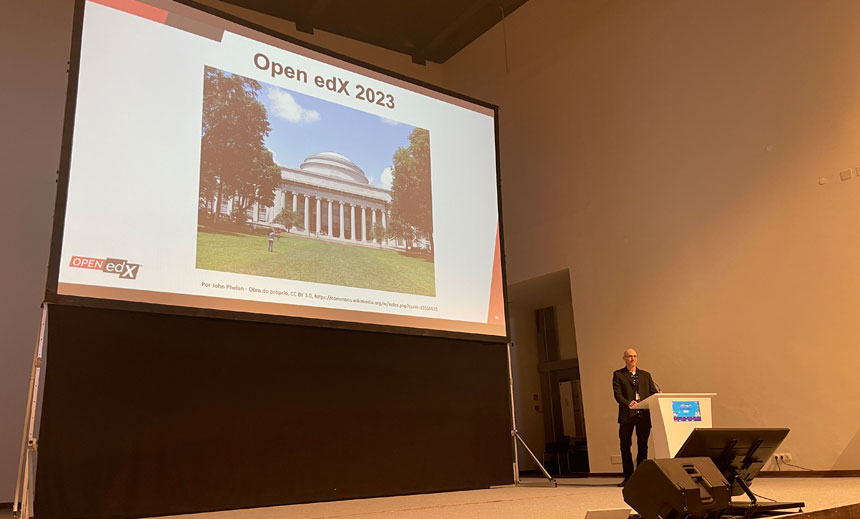
    • Anant Agarwal, CEO at edX and professor at MIT, decided to join 2U after being named for a new executive position: Chief Open Education Officer. He will report to 2U’s CEO, Chip Paucek, and “will continue to steward the edX mission as part of 2U’s executive team.”  [Both in the picture, above]

    Moreover, the announcement indicated: “Anant Agarwal will serve as one of 2U’s representatives on Open edX’s new Technical Oversight Committee, responsible for guiding the technical direction and vision of the open-source platform and community to support learning outcomes around the world.”

    • edX Chief Technology Officer JP Beaudry was appointed Chief Technology Officer at 2U, succeeding former CTO James Kenigsberg.

    • edX VP of Product Lauren Holliday was appointed Managing Director of Open Courses & Marketplace at 2U.

    As part of the closing, 2U and edX also announced, without further detail, “a marketing campaign this week to expand the reach of edX partner organizations”, as well as “a million dollars in funding to support the production of 10 new free courses in Essential Human Skills for the Virtual Age to be developed by the edX partner community.”

    In addition, “edX partner Boston University has committed to launching a new disruptively priced Master of Public Health degree.”

    2U reported that “more than 25 2U partners are joining the edX Consortium and committing to contribute affordable, high-quality learning to edX.org, including Howard University, London School of Economics and Political Science, Morehouse College, Syracuse University, UC Davis, the University of North Carolina at Chapel Hill, Vanderbilt University and others.”

    The Lanham, Maryland – based company reinforced its commitment to “contribute to the ongoing development of the open-source platform Open edX.”

    As part of the PR campaign, Chip Paucek and Anant Agarwal wrote a shared blog post titled “Potential, Unlocked.”

  • A Family-Owned, Private University in Spain Builds a Campus in a Modern Skyscraper

    A Family-Owned, Private University in Spain Builds a Campus in a Modern Skyscraper

    IBL News | Madrid, Spain

    A private university in Spain opened this month campus in a skyscraper in Madrid, as shown in the picture. The inauguration took place last week.

    IE University’s new campus will host 3,800 undergraduate students in the IE Tower, a modern, high-tech, sustainable building that resembles, only in shape, the United Nations headquarters in New York.

    The building looms large amid four other corporate skyscrapers populated by executives from PwC, KPMG, and other global corporations.

    For IE University, a school that teaches in English and has been operating as a business school for over four decades, the 180-meter tall tower is a landmark achievement. Spain’s national and Madrid’s regional governments shared this view.

    This building, visible all over Madrid, Spain, occupies 35 floors filled with 64 classrooms, 50,000 square meters, and 7,000 square meters of green space.

    It includes exhibition halls, a creativity center, a sports zone with swimming pools, and even a meditation room. The classrooms are equipped with technology to simultaneously deliver face-to-face and online sessions.

    The IE Tower expects to house 6,000 students within five years.

    The owner of the IE University [in the picture below] is a prominent, well-connected to the Monarchy, Spaniard entrepreneur and art collector Diego del Alcázar, 71. He privately funded the school 48 years ago. Today his 37-year-old son, Diego de Alcázar Benjumea, operates as a Vice President.


  • Harvard’s Endowment Increases $11.3B to a Whopping $53.2B, Despite the Pandemic

    Harvard’s Endowment Increases $11.3B to a Whopping $53.2B, Despite the Pandemic

    IBL News | New York

    Harvard University’s mythical endowment — the largest endowment in the world — grew even beyond the most favorable expectations this year, despite the pandemic.

    Harvard’s annual financial report for the fiscal year ended June 30, 2021, showed that its endowment increased from $11.3 billion to a breathtaking $53.2 billion, a 27% growth.

    In addition, in the same fiscal year, the university operations yield a $283 million surplus. In 2020, the institution’s budget showed a $10 million operating deficit.

    The fact that the university — an institution with around $5.5 billion in revenues — was forced to send students home in March 2020, beginning more than a year of remote instruction didn’t damage its financial health.

    In their annual report letter summarizing the year, Thomas J. Hollister, Vice President for Finance and CFO, and Paul J. Finnegan, Treasurer, observed that “Harvard’s finances ended the year in a dramatically improved position compared to initial budget assumptions.”

    The net decrease in revenue, 5 percent during the two-year period, was half what University administrators feared. Total student income decreased nearly $200 million in fiscal 2021 (17 percent) to $888 million.

    Overall, Harvard emerged stronger from the pandemic, better positioned to educate and conduct research in the future, Harvard Magazine writes.

    To make things better, Harvard Management Company (HMC) recorded a 33.6% investment return on endowment assets during fiscal 2021, up from 7.3% in the prior year. That was the highest return recorded since the 43.6 percent achieved in fiscal 1983 (during a period of declining interest rates and recovery from a recession) and 32.2 percent in fiscal 2000 (during the dot.com boom).

    Endowment investment returns for the year totaled a staggering $12.8 billion. That sum eclipsed the traumatic $11-billion loss recorded in fiscal 2009, during the financial crisis and Great Recession, and handily outpaced the $9.6 billion realized from all sources and for all uses by Harvard Campaign, which concluded in June 2018.

    “The true heroes for Harvard in fiscal 2021 were supportive donors, past and present,” said the report. The endowment distribution for operations increased about 2 percent, to just over $2 billion. And gifts for current use surged $63 million (13%) to $541 million, although some of this reflects a swing in payments to Harvard from its affiliated hospitals.

    The Harvard Management Company (HMC) recognized that the endowment’s robust return took place in a context of economic recovery, which led to 40-plus percentage-point gains in U.S. stock indexes during the fiscal year of 2021. “Those conditions also prompted a deluge of initial public offerings by new companies at eye-popping valuations (rewarding the venture-capital and private-equity funds that had underwritten them: investment managers to whom large endowments often allocate sizable shares of their assets).”

    The Wilshire Trust Universe Comparison Service, a standard analysis of institutional investments, reported the best overall results in 35 years, with median returns of more than 33 percent for large foundations and endowments. That was nearly ten times the median return of 3.4 percent for fiscal 2020.

    Extraordinary performance in equity investments drove the results of the endowment. HMC’s managers achieved 50 percent returns on public equities (14% of HMC’s assets). Even better were the 77 percent returns on private equity (34 percent of assets, the largest single allocation).

    The large shift toward private equity reflects, to some extent, N.P. Narvekar’s — CEO at Harvard Management Company — focused move in that direction since fiscal 2018 (with a related sharp reduction in the real-estate and natural-resources portfolios).

    Other changes in allocation—such as the sharp decrease in public equity, where HMC’s external managers continued a multiyear record of significantly outperforming market benchmarks—were implemented following Harvard’s risk parameters, as well.


    • Harvard University financial report
    Harvard Gazette Q&A on Harvard’s finances and operations with executive vice president Katie Lapp and Tom Hollister.

    —-