Category: Views

  • MIT’s Analysis Says that 95% of Enterprise AI Projects Drive No Revenue Growth

    MIT’s Analysis Says that 95% of Enterprise AI Projects Drive No Revenue Growth

    IBL News | New York

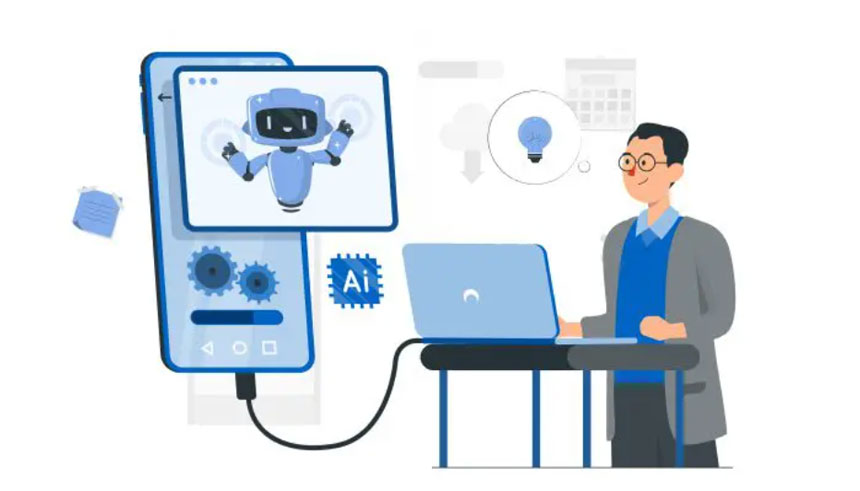
    A new report published by MIT’s NANDA initiative, titled “The GenAI Divide: State of AI in Business 2025,” reveals that 95% of initiatives trying to drive rapid revenue growth at corporations fail, delivering little to no measurable impact.

    Only about 5% of AI pilot programs are achieving rapid revenue acceleration.

    The research is based on 150 interviews with leaders, a survey of 350 employees, and an analysis of 300 public AI deployments.

    MIT’s research points to flawed enterprise integration. Generic tools like ChatGPT excel for individuals because of their flexibility, but they stall in enterprise use since they don’t learn from or adapt to workflows.

    Aditya Challapally, the lead author of the report, explained that “successful organizations pick one pain point, execute well, and partner smartly with companies who use their tools.”

    More than half of generative AI budgets are devoted to sales and marketing tools, yet MIT found the biggest ROI is in back-office automation, when eliminating process outsourcing, cutting external agency costs, and streamlining operations.

    Advanced organizations are already experimenting with agentic systems that can learn, remember, and act independently within set boundaries.

    MIT’s report states that purchasing AI tools from specialized vendors and building partnerships succeed about 67% of the time, while internal builds succeed only one-third as often. The analysis suggests companies see far more failures when going solo.

    This finding is particularly relevant in financial services and other highly regulated sectors, where many firms are building their own proprietary generative AI systems in 2025.

    Other key factors for success include empowering line managers—not just central AI labs—to drive adoption, and selecting tools that can integrate deeply and adapt over time.

    Workforce disruption, although no mass layoffs, is underway in customer support and administrative roles.

  • AI Has Evolved Into Something Quotidian, But Not Disruptive

    AI Has Evolved Into Something Quotidian, But Not Disruptive

    IBL News | New York

    The AI threat has evolved into something more quotidian, similar to other social megatraumas, such as nuclear proliferation, climate change, and pandemic risk. The dystopian prediction of super intelligence takeoff, as well as human extinction and other bad outcomes, didn’t take place, according to experts consulted by The New York Times.

    Arvind Narayanan and Sayash Kapoor, two Princeton-affiliated computer scientists, published in April “A.I. as Normal Technology.” They stated, “We should understand AI as a tool that we can and should remain in control of, and we argue that this goal does not require drastic policy interventions or technical breakthroughs.”

    Elon Musk recently declared that for most people, the best use for his LLM Grok was to turn old photos into microvideos.

    However, the hype cycle dominates the economy:

    • Around 60 percent of stock-market growth in recent years has been attributed to AI-associated companies.

    • Researchers are negotiating pay packages in the hundreds of millions of dollars.

    • Overall, AI capital expenditures show that there is more money being poured into construction related to chip production than into offices. The economist Alex Tabarrok said, “We’re building houses for AI faster than we’re building houses for humans or places for humans to work.”

    Self-driving cars, like Waymo cabs, and Ukrainian autonomous drones will be followed by drug development, materials discovery, and other innovations, and the economy will be transformed. Like electricity, the Industrial Revolution, or the internet, AI will utterly change, but not terminate, the world.

  • Alpha Schools and Other AI-Driven Private Schools Expand Their Footprint In the U.S.

    Alpha Schools and Other AI-Driven Private Schools Expand Their Footprint In the U.S.

    IBL News | New York

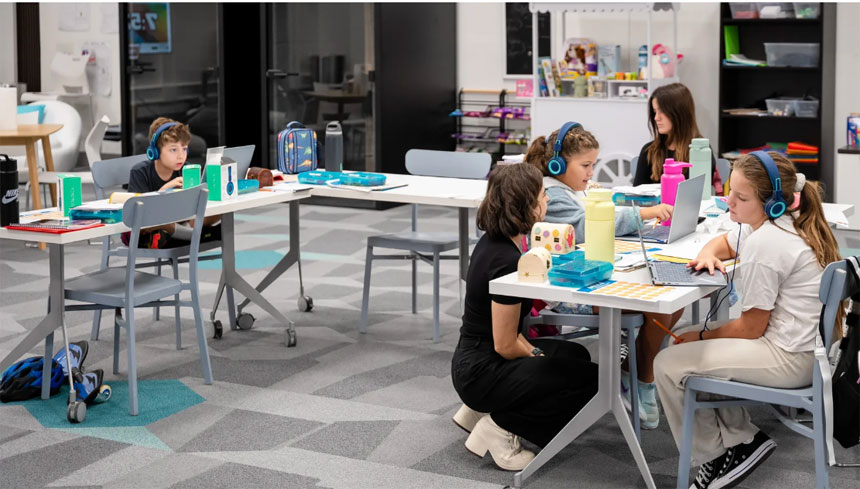
    AI-driven private schools, run by for-profit companies, are expanding their footprint in the U.S. while public schools struggle to attract and retain students, and others accelerate their investments in AI.

    These schools teach core subjects for two hours a day and devote the afternoon to developing practical skills, such as financial literacy, public speaking, and entrepreneurship.

    Alpha Schools was founded in 2014 as a pricey private school in Austin. Today, with an annual tuition of $45,000, it is leading the parental school choice movement while embracing AI technology that generates personalized learning plans for students.

    This fall, Alpha Schools will launch in Santa Barbara, California; New York City; Chantilly, Virginia; and Raleigh and Charlotte, North Carolina, before expanding to Houston, Tampa, and Puerto Rico.

    Existing locations are in Scottsdale, San Francisco, Miami, and Palm Beach. There are also five in Texas, including Brownsville, home of Elon Musk’s SpaceX.

    Instead of teachers, these schools employ professional guides and coaches who
    come from a range of backgrounds, from tech to law. Their mission is to motivate students. They make over $100,000 a year.

    Students learn on third-party apps, such as Synthesis Tutor and Math Academy, as well as Alpha Schools’ own programs. Each subject is taught in 25-minute sessions, with short breaks in between.

    Skeptics have questioned the effectiveness of replacing teachers with AI-assisted learning and restricting learning to 25 minutes per subject.

    Alpha School is gaining more national attention, boosted by the support of billionaire Bill Ackman, an outspoken critic of DEI.

    The New York Times: AI-Driven Education: Founded in Texas and Coming to a School Near You

  • Apple Marketed Its New iPhones As a Best-In-Class Hardware, Not As an AI Device Maker [Video]

    Apple Marketed Its New iPhones As a Best-In-Class Hardware, Not As an AI Device Maker [Video]

    IBL News | New York

    Through a splashy event yesterday, Apple introduced its newest iPhones: the iPhone 17, 17 Pro, 17 Pro Max, and a sleek, lightweight, and slimmer version, the iPhone Air, [in the picture above], 5.6 mm with a 6.5-inch display device.

    The Air’s price point of $999 is 22% more expensive than the 17 base model, which starts at $799. The iPhone 17 Pro starts at $1,099.

    At Apple’s event, the audience witnessed that the company continues to market itself as a best-in-class hardware maker first, not an AI device maker.

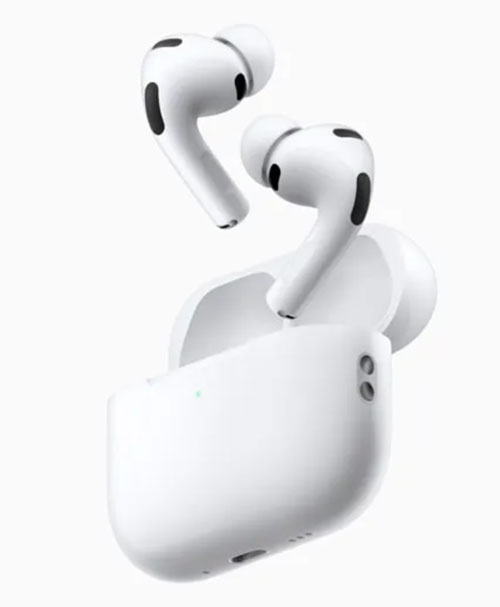
    The most compelling use of AI was the Live Translation feature coming to AirPods 3. Priced at $249, AirPods 3 feature live translation technology, powered by Apple Intelligence, to help users translate foreign languages in real time.

    Beyond the AirPods, AI technology has received only minor upgrades, mostly to its front camera. There was no mention of Siri.

    To date, Apple has only released a baseline of AI features, such as AI writing tools, summarization, generative AI images, live translation, visual search, and Genmoji.

    Sources said that Apple is still looking to outsource some technology to Google Gemini to catch up in the AI race.

    Meanwhile, Google last month rolled out its latest release of an AI-powered Android phone with its Pixel 10.

    TechCrunch wrote that “today’s iPhone owners often swap out Apple’s technology for Google’s by opting for Gmail, Google Drive and Docs, Google Maps, and Chrome over Apple’s own apps like Mail, its iWork suite, Apple Maps, and Safari, for example. When people search the web, they turn to Google’s Search app, not Apple’s built-in Spotlight search, despite its many integrations over the years to offer basic facts and answers, leveraging sources like Wikipedia.”

    The company conveyed that the look and feel of updated iPhones, along with their hardware advancements, will continue to drive sales, enabling Apple to incorporate quality, camera improvements, privacy-preserving technology, intentional software design changes like Liquid Retina, and now, super-thin phones.

  • Creators on Facebook and Instagram Will Be Able to Translate Voice Content Automatically

    Creators on Facebook and Instagram Will Be Able to Translate Voice Content Automatically

    IBL News | New York

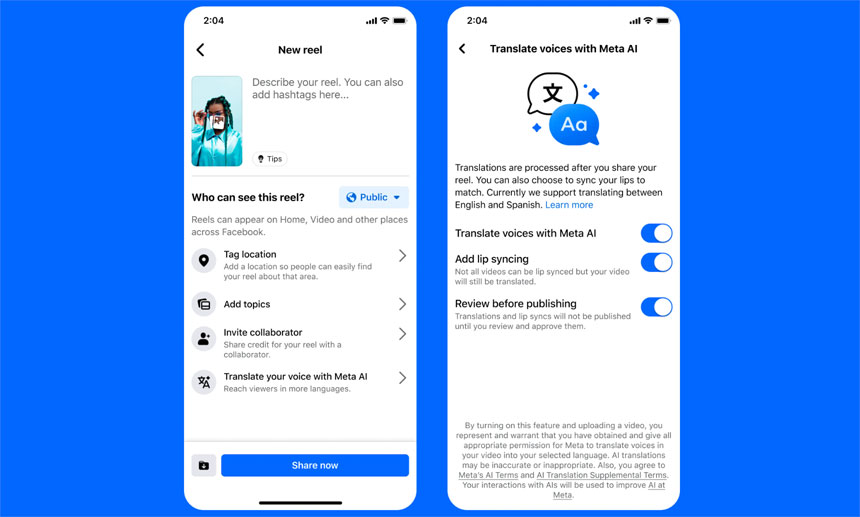
    Meta rolled out this month an AI feature that allows users on Instagram and Facebook to translate voice content with their sound, tone, and lip-sync from English to Spanish.

    With more languages to be added over time, these AI translations are available to Facebook creators with 1,000 or more followers and all public Instagram accounts globally.

    Creators can view translations and lip syncs before they’re posted publicly. Viewers watching the translated reel will see a notice at the bottom that indicates it was translated with Meta AI.

    Creators are also gaining access to a new metric in their Insights panel, where they can see their views by language.

    Instagram head Adam Mosseri explained in a post on Instagram, “If we can help you reach those audiences who speak other languages, reach across cultural and linguistic barriers, we can help you grow your following and get more value out of Instagram and the platform.”


    View this post on Instagram


    A post shared by Adam Mosseri (@mosseri)

  • Elon Musk’s xAI Releases Its First Coding Assistant “Grok Code Fast 1”

    Elon Musk’s xAI Releases Its First Coding Assistant “Grok Code Fast 1”

    IBL News | New York

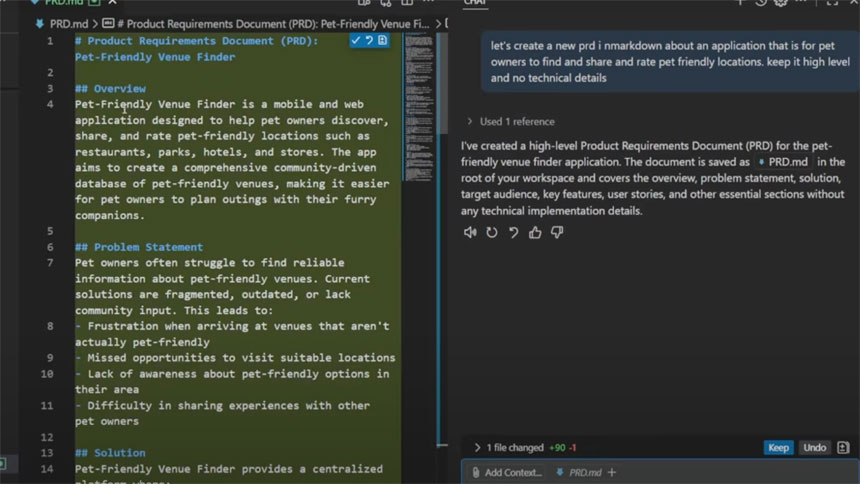
    Elon Musk’s xAI released its first coding assistant model, Grok Code Fast 1, this week, marking the company’s entry into the competitive software development market segment. It is available for free use for a limited time, with select launch partners, including GitHub Copilot and Windsurf. 

    Grok Code Fast 1 is one of the fastest coding models currently available.

    • It shows an impressive processing speed of up to 92 tokens per second.

    • It features a 256,000-token context window.

    • It is powered by a mixture-of-experts architecture with 314 billion parameters, designed specifically for agentic coding workflows with visible reasoning traces.

    xAI positioned it also as an alternative to existing solutions.

    This release aligns with xAI’s broader strategy of open-sourcing various versions of its Grok models, including the base models of Grok-1 and Grok 2.5.


  • Anthropic Creates a Higher Ed Advisory Board and AI Fluency Courses

    Anthropic Creates a Higher Ed Advisory Board and AI Fluency Courses

    IBL News | New York

    Anthropic, the company behind the AI chatbot Claude, announced the creation of a Higher Education Advisory Board made up of academic leaders, along with three new AI Fluency courses.

    This Higher Education Advisory Board will be chaired by Rick Levin, who previously led Yale University and Coursera. He said, “Our role is to advise the company as it develops ethically sound policies and products that will enable learners, teachers, and administrators to benefit from AI’s transformative potential while upholding the highest standards of academic integrity and protecting student privacy.”

    Other Board members come from academia as well:

    • David Leebron, Former President of Rice University.
    • James DeVaney, Special Advisor to the President, Associate Vice Provost for Academic Innovation, and Founding Executive Director of the Center for Academic Innovation at the University of Michigan.
    • Julie Schell, Assistant Vice Provost of Academic Technology at the University of Texas, Austin.
    • Matthew Rascoff, Vice Provost for Digital Education at Stanford University.
    • Yolanda Watson Spiva, President of Complete College America.

    Anthropic has also developed three new courses that build on its existing AI Fluency course. These classes are designed to address the need for practical frameworks for thoughtful AI integration.

    Each course, co-developed with Professor Rick Dakan of Ringling College of Art and Design and Professor Joseph Feller of University College Cork, is available under a Creative Commons license, so any institution can adapt them.

    • AI Fluency for Educators helps faculty integrate AI into their teaching practice, from creating materials and assessments to enhancing classroom discussions. Built on experience from early adopters, it shows what works in real classrooms.

    • AI Fluency for Students teaches responsible AI collaboration for coursework and career planning. Students learn to work with AI while developing their own critical thinking skillsand write their own personal commitment to responsible AI use

    • Teaching AI Fluency supports educators who want to bring AI literacy to their campuses and classrooms. It includes frameworks for instruction and assessment, plus curriculum considerations for preparing students for a more AI-enhanced world.

    Anthropic is not alone in targeting higher education. OpenAI launched ChatGPT Edu, a version of its chatbot customized for universities. It includes administrative controls, enterprise-grade authentication, and features like “Study Mode,” which walks students through problems step by step.

    Highlighting its “commercial data protection” framework,  Microsoft embedded Copilot for Education into Office 365.

    Google doubled down on its education footprint with Gemini in Classroom and Gemini for Education, designed to help teachers generate differentiated materials and give students tutoring experiences.

  • Grok 4 Was Made Freely Accessible to All Users

    Grok 4 Was Made Freely Accessible to All Users

    IBL News | New York

    Elon Musk-owned xAI made Grok 4 freely accessible to all users worldwide this month, in an attempt to compete with rival platforms OpenAI’s GPT-5.

    However, the company said that access to Grok 4 Heavy, its most advanced model, remains exclusive to SuperGrok Heavy subscribers.

    Grok 4 features a dual system: Auto Mode and Expert Mode. In Auto Mode, the AI automatically decides if a user prompt requires deeper reasoning or a simple response. Expert Mode allows users to manually trigger a more in-depth answer if the initial response isn’t satisfactory.

    In addition to Grok 4, xAI also rolled out Grok Imagine, a free AI video generation tool, with a limited number of queries and currently available only in the United States.

    However, it presents challenges such as AI misuse. In this regard, the BBC highlighted Grok 4 misuse in creating explicit deepfake videos of celebrities like Taylor Swift and Sydney Sweeney, raising concerns about content moderation and responsible AI use.

  • China’s Leadership In Open-Source AI Technology Raises Alarm in the U.S.

    China’s Leadership In Open-Source AI Technology Raises Alarm in the U.S.

    IBL News | New York

    China’s adoption and leadership in open-source AI technology is worrying U.S. policymakers and Silicon Valley companies, who are keeping the models proprietary.

    Chinese advances in open source are coming one after another this year, with DeepSeek, Alibaba’s Qween, Moonshot, Z.ai, and MiniMax.

    The open source or open weight models all have versions that are free for users to download and modify.

    In the past, Microsoft’s Windows operating system for desktops, Google’s search engine, and the iOS and Android operating systems for smartphones were a few of the examples of proprietary models’ dominance.

    In its AI action plan released in July, the Trump administration acknowledged that open-source models “could become global standards in some areas of business and in academic research.”

    The report called on the U.S. to build “leading open models founded on American values.”

    For now, open-source initiatives have had slim gains. Proprietary models have spent hundreds of millions of dollars developing free access to models.

    • Many businesses like open-source AI because they can freely adapt it and put it on their computer systems, keeping sensitive information in-house. Moreover, they can avoid being locked into any one model.

    • Researchers have long embraced open source as a way of accelerating the development of emerging technology, since it allows every user to see the code and suggest improvements.

    • Fearing being cut off from American technologies, the Chinese government has encouraged open-source research and development not only in AI but also in operating systems, semiconductor architecture, and engineering software.

    • Meanwhile, the Trump administration worries that if Chinese AI models dominate the globe, Beijing will figure out a way to exploit it for geopolitical advantage.

    • Engineers in Asia said Chinese models were often more sophisticated in understanding their local languages and catching cultural nuances, as they are trained with more data in Chinese, which shares similarities with some other Asian languages.

    WSJ: China’s Lead in Open-Source AI Jolts Washington and Silicon Valley

  • As ChatGPT and Claude, Gemini Will Remember Users’ Past Chats

    As ChatGPT and Claude, Gemini Will Remember Users’ Past Chats

    IBL News | New York

    Google rolled out an update for its Gemini that allows its chatbot to remember users’ past conversations and chats.

    The new feature matches OpenAI’s ChatGPT and Anthropic’s Claude memory feature.

    With the setting turned on, Google’s Gemini automatically recalls users’ key details and preferences and uses them to personalize the output, with more natural and relevant conversations.

    In addition, the Gemini app also introduced a new privacy feature called Temporary Chats, which gives more control over data.

    At I/O, Google introduced its vision for a Gemini assistant that learns and truly understands the user, not one that just responds to your prompt in the same way that it would to anyone else’s prompt.

    At first, personalized conversations will be available when using our 2.5 Pro model in select countries, and Google plans to expand the feature to our 2.5 Flash model and more countries in the weeks ahead.

    Also, Anthropic has introduced a similar feature for Claude solves the problem of referencing information from other conversations with the AI chatbot.

    Anthropic said Claude users can toggle the behavior with this setting.

    Claude’s memory feature is only available for Enterprise, Team, and Max subscribers for now.