Category: Views

  • Children’s Learning Worldwide Is a Priority But 818 Million Students Lack Basic Hand Washing

    Children’s Learning Worldwide Is a Priority But 818 Million Students Lack Basic Hand Washing

    IBL News | New York

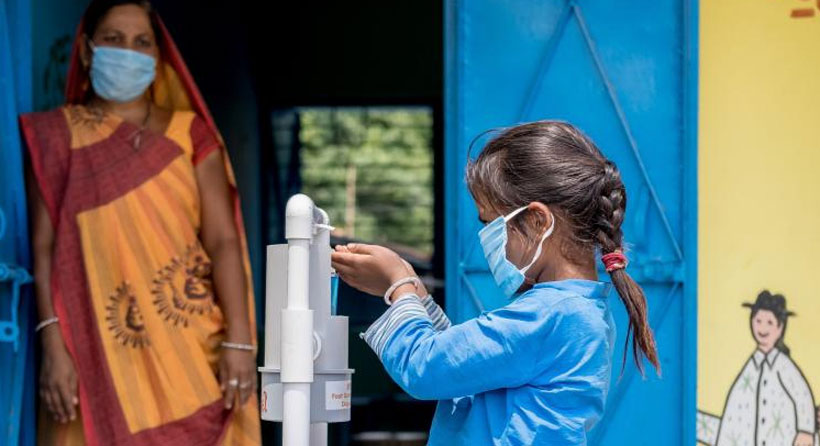
    Access to handwashing stations and safe toilets that are clean and disinfected are key requirements for a safe reopening children’s schools worldwide –United Nations officials told IBL News.

    There are 1.6 billion students in 190 countries. According to UN data, roughly 43%, that is, 818 million lack access to basic handwashing facilities at school, with soap and water. A third of them are in Sub-Saharan Africa.

    The COVID-19 virus pandemic has created the largest disruption to education ever recorded. And the lack of hand hygiene and clean water in half of the student population dramatically aggravates the crisis.

    “Access to water, sanitation, and hygiene services are essential for effective infection prevention and control in all settings, including schools”, said Tedros Adhanom Ghebreyesus, General Manager at the World Health Organization, this week. “It must be a major focus of government strategies for the safe reopening and operation of schools during the ongoing COVID-19 global pandemic.”

    A report built on reopening guidelines published on Thursday 13th by the World Health Organization (WHO) and the UN Children’s Fund, UNICEF, encouraged governments to seek control of coronavirus spread by balancing the need for implementing public health measures against the social and economic impacts of lockdown measures. There is substantial evidence of the negative impacts of prolonged school closures on children.

    Henrietta Fore, Executive Director at UNICEF, stated, “We must prioritize children’s learning, making sure that schools are safe to reopen.”

    Resource: Unicef.org: 2 in 5 schools around the world lacked basic handwashing facilities prior to COVID-19 pandemic 


  • The University of Arizona Becomes a Relevant Player in Online Education by Buying Ashford

    The University of Arizona Becomes a Relevant Player in Online Education by Buying Ashford

    IBL News | New York

    The University of Arizona (UA) made a big play into the online market by acquiring the for-profit college Ashford University–with 35,000 students–and is creating a new private, nonprofit entity called the University of Arizona Global Campus.

    The move, announced on Monday, shakes up the online higher education sphere and can signal more changes.

    This way, the University of Arizona will become a relevant player in the digital education and compete with Arizona State University (ASU), University of Phoenix, and Grand Canyon University.

    The Tucson-based public university–currently with only 4,200 students enrolled online–said that the Global Campus will focus on students who are typically underrepresented in higher education, like older adults, parents, and veterans.

    Ashford University, a fully online university property of Zovio Inc. (Nasdaq: ZVO) education technology services company, moved to the Phoenix area from San Diego last year. Ashford is accredited by the Western Association of Schools and Colleges’ Senior College and University Commission.

    UA is purchasing Ashford University for $1 from Zovio, but will share 19.5 percent of its tuition revenue for 15 years with Zovio, formerly known as Bridgepoint Education. In addition, Zovio will still provide education technology services to the Global Campus under a long-term agreement, UA said.

    The transaction is expected to be completed later this year, after regulatory approvals are granted and the deal is finalized.

    A similar, controversial arrangement deal was reached between Purdue University and Kaplan University, resulting in the formation of Purdue University Global.

    The newly created Global Campus will be a private nonprofit university, not public like UA. It will appoint the initial board of trustees with long-term membership on the board, along with a president for the Global Campus.

  • View: Education and Training as a Tool to Attract Customers and Enhance Presence on Google

    View: Education and Training as a Tool to Attract Customers and Enhance Presence on Google

    IBL News | New York

    Organizations are increasingly using education and training-based content as a tool to attract customers.

    As the effectiveness of traditional online marketing continues to decline, education-powered marketing is gaining ground.

    It not only builds trust with customers by providing them an intellectual betterment, but it also fuels existing content and marketing strategies.

    Google’s craving for renewed and original content gets answered with new education and training related lessons, lectures, and resources.

    This valuable knowledge posted online can be enhanced with certificates. Innovative organizations are understanding the importance of providing some sort of certification.

    This is a list of some of the companies that apply education-based marketing:


    • Hubspot

    • Adobe

    • Nvidia

    • IBM

    • Salesforce

    • Databricks

    • Hootsuite (Hootsuite Academy)

    • Slack

    • Autodesk

    • AWS

    • Mint

    • Microsoft

  • 2U Reported Second Quarter Loss of $66 M; Stock Improved 83% This Year

    2U Reported Second Quarter Loss of $66 M; Stock Improved 83% This Year

    IBL News | New York

    2U (Nasdaq: TWOU) came out yesterday with a reported loss of $66.2 million and revenues of $182.7 million in its second quarter ended June 30. Loss per share was 34 cents, better than Zacks’ analysts expected of 44 cents.

    The stock went up 1.36% yesterday until $43.87. Since the beginning of the year, shares increased 83% versus the S&P 500’s gain of 0.9%. The rise of the stock was 20% in the last 12 month.

    The Lanham, Maryland-based OPM provider presented a different picture of its quarter earnings. It highlighted its revenue increase of 35% to $182.7 million compared to the second quarter of 2019. It added: “Graduate program segment revenue increased 14% to $115.7 million and Alternative Credential Segment revenue increased 97% to $67.0 million, including $36.6 million in revenue from Trilogy, acquired in May 2019.”

    “In these complex and challenging times, the importance of 2U’s mission and the value we deliver for our partners and their students has never been more clear,” Co-Founder and CEO, Christopher “Chip” Paucek said. “As universities accelerate their digital transformations and more students affirmatively choose to pursue an education online, we believe our strong relationships with leading universities and the unmatched scale and quality of our portfolio of offerings position us well for future growth.”

    “We are driving significant improvement in key profitability and cash flow metrics while maintaining quality, enhancing operational efficiency, and executing on growth opportunities,” said Chief Financial Officer, Paul Lalljie. “We delivered a significant improvement in free cash flow in the second quarter and expect to achieve EBITDA profitability next quarter and for the full year. We also increased our financial flexibility with our recent convertible senior notes offering and revolving line of credit.”

  • New International Students Barred for Any F-1 or M-1 Visa for Online Programs

    New International Students Barred for Any F-1 or M-1 Visa for Online Programs

    IBL News | New York

    Immigration and Customs Enforcement (ICE) said on a new guidance document that international students won’t obtain an F-1 or M-1 visa to enroll in online programs in the U.S.

    “New or initial nonimmigrant students who intend to pursue a full course of study that will be conducted completely online will likely not be able to obtain an F-1 or M-1 visa to study in the United States,” stated ICE on its latest document released July 24.

    However, students can remain in the United States if they are already engaged in a fully online program as they do not need a new visa.

    The new guidance from U.S. immigration officials confirms the validity of the approach adopted by Harvard University and the University of Southern California (USC) when advised newly admitted international students who require F-1 visa sponsorship not to come to the U.S.

    According to immigration experts quoted by Inside of Higher Ed, it is still not clear whether international students may obtain visas for hybrid programs consisting of a mix of in-person and online courses.

  • Coursera Valued at $2.5 Billion After a Finance Round of Additional $130 Million

    Coursera Valued at $2.5 Billion After a Finance Round of Additional $130 Million

    IBL News | New York

    Coursera yesterday announced that it raised an additional $130 million, as part of a Series F round, which was led by NEA –an investor in the trading platform Robinhood– and joined by existing investors Kleiner Perkins, SEEK Group, Learn Capital, SuRo Capital Corp, and G Squared.

    This is the biggest funding round for a U.S. education technology company in 2020.

    Investors are valuing the company at a reported $2.5 billion. To date, Coursera has raised $464 million.

    The company’s CEO, Jeff Maggioncalda, assured that “this financing brings the company’s cash balance to more than $300 million.”

    The additional funding will be used “to double down on our product and engineering efforts, expand our job-relevant catalog, and further grow our international presence,” explained Maggioncalda.

    “In particular, it gives us the flexibility to meet the considerable demand for two of our COVID-focused initiatives — Campus Response Initiative to help universities teach impacted students and Workforce Recovery Initiative to help governments reskill unemployed workers.”

    The ongoing pandemic has accelerated the expansion of Coursera, which has added 15 million new users since March. Currently, it sums 65 million learners and it houses 4,500 courses with 160 university partners and 40 companies including Google and IBM. Its workforce accounts for 600 employees.

    Since the company announced on March 12 a free offer on Coursera for Campus on March 12, over 10,000 institutions have signed up, and enrollments have spiked 500 percent over the previous spring, with 1.3 million students taking courses.

    These numbers have been used to appeal to venture capitalists, always interested in detecting major market changes.

    Coursera continues aiming for an IPO, although it has not any date on the horizon yet.


  • Microsoft Will Offer Free Learning Paths for Digital Jobs In-Demand to 25 Million Facing Unemployment

    Microsoft Will Offer Free Learning Paths for Digital Jobs In-Demand to 25 Million Facing Unemployment

    IBL News | New York

    Microsoft will provide by the end of the year free online classes on digital skills, job-hunting resources, and interview prepping to 25 million people facing unemployment due to COVID-19.  According to the corporation, global unemployment in 2020 may reach a quarter of a billion people.

    The training is designed to teach digital skills Microsoft says employees need to enter 10 occupations, such as help-desk technician, digital marketer, and data analyst.

    Microsoft’s employment initiative, announced yesterday on its Official Blog, will include low-cost certification and LinkedIn-job seeking tools, along with free access to content in LinkedIn Learning, Microsoft Learn, and the GitHub Learning Lab –three organizations owned by the giant of software.

    These resources can be accessed at opportunity.linkedin.com  and news.microsoft.com/skills.

    In addition, Microsoft will back the initiative with $20 million in cash grants to selected nonprofits organizations.

    The Seattle-based company will use its outreach on public policy issues. “Microsoft will use its voice to advocate for public policy innovations that will advance skilling opportunities needed in the changed economy,” stated Brad Smith, President of the company, in the same blog post. “Unemployment rates are spiking for people of color and women, as well as younger workers, people with disabilities and individuals with less formal education. Our goal is to combine the best in technology with stronger partnerships with governments and nonprofits to help people develop the skills needed to secure a new job,” he added.

    As part of the initiative, LinkedIn will share free, real-time labor market data and skills insights to help governments, policymakers and business leaders understand what’s happening in their local labor markets: what companies are hiring, the top jobs companies are hiring for and the trending skills for those jobs.  This data can be accessed using a new interactive tool at linkedin.com/workforce. Data is available for more than 180 countries and regions (150+ cities, 30+ countries).

    Microsoft said it used the Economic Graph to identify the key jobs and horizontal skills that are most widely in demand:

    1. Become a Software Developer
    2. Become a Sales Representative
    3. Become a Project Manager
    4. Become an IT administrator (Prepare for CompTIA Network+ Certification)
    5. Become a Customer Service Specialist
    6. Become a Digital Marketing Specialist
    7. Become IT Support / Help Desk (Prepare for the CompTIA A+ Certification)
    8. Become a Data Analyst
    9. Become a Financial Analyst
    10. Become a Graphic Designer

    Regarding LinkedIn Learning paths, these are:

    In terms of Microsoft Certification, the company will make exams that typically cost over $100 available for a fee of $15. Exam takers will have until March 31, 2021, to complete the exam. These will include:

    • Microsoft Certified: Azure Fundamentals
    • Microsoft Certified: Azure Data Fundamentals
    • Microsoft Certified: Azure AI Fundamentals
    • Microsoft Certified: Power Platform Fundamentals
    • Microsoft 365 Certified: Fundamentals
    • Microsoft Certified: Azure Administrator Associate
    • Microsoft Certified: Azure Developer Associate
    • Microsoft Certified: Azure Security Engineer Associate
    • Microsoft Certified: Power Platform App Maker Associate
    • Microsoft 365 Certified: Teams Administrator Associate
    • Microsoft 365 Certified: Security Administrator Associate
    • Microsoft 365 Certified: Developer Associate
    • Microsoft Certified: Data Analyst Associate


  • The Global Pandemic Accelerates the Inequalities in Education; 1.1 Billion Children Still Out of School

    The Global Pandemic Accelerates the Inequalities in Education; 1.1 Billion Children Still Out of School

    Mikel Amigot, IBL News | New York

    The COVID-19 pandemic–with almost 10 million cases worldwide of infected individuals and over 450,000 deaths confirmed– continues to deepen the global crisis in education. Over 1.1 billion children are now out of school, and access to online learning is becoming increasingly unequal and divisive.

    “Providing a range of learning tools and accelerating access to the internet for every school and every child is critical”, said this month Robert Jenkins, Chief of Education at UNICEF.

    Disparities on digital technologies are aggravating the crisis. Three-quarters of countries are using online platforms to deliver online education, but in 71 countries less than half of the population has Internet access. Governments are also using TV networks to deliver distance education.

    However, even broadcast television doesn’t work in many countries. In Sub-Saharan Africa, only 1 in 100 homes in rural Chad has a television.

    UNICEF reports show that countries have been transforming their educational systems to cope with the demand. For example, in West and Central Africa, government officials have pushed service providers to deliver education for primary and secondary school students.

    Innovative experiences have also emerged. An interesting case study happened in Somalia, where offline pre-recorded lessons were uploaded to solar-powered tablets intended for children.

    In addition, video lessons are often shared through Facebook, WhatsApp, and other social media platforms.

    The UN reported that measures have been taken in order to host educational content on connected tablets to vulnerable students.

  • Courses, Strategies, and Resources to Get The Most From Learning with edX and Coursera

    Courses, Strategies, and Resources to Get The Most From Learning with edX and Coursera

    IBL News | New York

    edX’s How to Learn Online course reached over 85,000 enrollments. This 4 to 6-hour course, taught by edX’s learning design team, includes a curation of effective science-backed techniques.

    Related to digital learning, edX offers five more courses under a Professional Certificate program, Course Creator Plus.

    Coursera’s Learning to Teach Online attracted a similar number of users. This 17-hour course is based upon award-winning educational resources developed by Dr. Simon McIntyre and Dr. Negrin Mirriahi, from UNSW Sidney.

    Both the Coursera and edX organizations have been releasing materials lately, with tips and inspirational resources about online learning for the COVID times.

    Regarding learning strategies, edX suggests making sure educators develop new knowledge and skills in a way that can be retained, applied repeatedly, and adapted to new contexts.

    The main advice is to make learning stick by taking advantage of established learning principles of practice, application, and reflection.

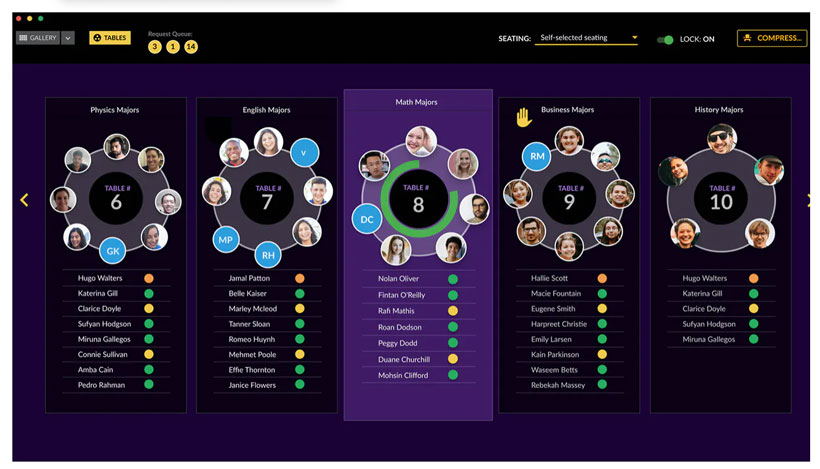
    “A well-designed learning experience will provide you with opportunities to practice, apply, and reflect, but you can reinforce your learning outside of a class by connecting it to your everyday life and work,” explained Nina Huntemann, Senior Director of Academics and Research at edX, and one of the instructors of the “How to Learn Online” course. [In the picture above].

    Nina Huntemann provided three top tips to getting the most from online learning and achieving those learning goals.

    1. Set aside time for learning. Plan and dedicate time to learn as you would to exercise or see friends or spend time with loved ones.
    2. Virtually meet and interact with your learning peers. You are not alone.
    3. Make your learning stick with the practice, application, and reflection.

    Coursera said that live synchronous sessions are optimal for creating a space for collaborative problem solving, peer-to-peer interaction and personalized step-by-step guidance.

    Linlin Xia and Alexandra Urban, from the Teaching & Learning Team at Coursera, described in seven points the best practices regarding live sessions:


    1. Enhance course community

    – Start with ice-breaker questions (e.g. what’s your favorite dessert) or virtual polls to get all students participating from the very beginning.

    – Invite alumni or previous students from the course to share their learning tips.

    – Encourage real-time community by asking students to submit messages, raise a hand, or use other tools within the virtual classroom.


    2. Dive into key concepts

    – Share your screen or use a virtual whiteboard functionality when the problem involves calculations, concept mapping, or images.

    – Show step-by-step problem solving to guide students in your thought process.

    – Make sure to pause and ask students questions throughout the session to ensure understanding.


    3. Preview or debrief an assessment

    – Collect questions from students about the specific project before the session.

    – Walkthrough the purpose and benefits of completing this assignment.

    – If it’s an open-ended project, allow students to share ideas with instructors or their peers and collect feedback.

    – Address common pitfalls, as well as how mistakes can be avoided.


    4. Conduct a live demonstration

    – Make sure the code, software, or interface is large and clear enough for students to read.

    – Zoom in on important elements to focus students’ attention.

    – Talk through the process for conducting this type of simulation or problem solving, so students can recreate needed steps later on their own.


    5. Initiate a team project

    – Encourage peer-to-peer learning through specific prompts and clear deliverables desired.

    – Use virtual breakout rooms with separate video conference links for each student-group to discuss.


    6. Highlight a guest speaker

    – Send a summary of the guest’s background and expertise before the session, so students can prepare.

    – Collect questions from students ahead of time to add structure to the meeting.

    – Add interactive and reflective elements to help students apply what they’re hearing and encourage the guest to brainstorm alongside the students. when possible


    7. Create virtual office hours

    – Let each student or team sign up for 10 to 15-minute slots of time at least one week ahead.

    – Ask students to submit their questions before the event so you can use the time most efficiently and center on the most frequently asked questions.

    – Send out beforehand which topics will be covered to pique students’ interest to attend.

  • Report: Nearly 260 Million Children Are Still Excluded from Education; Pandemic Exacerbates the Breach

    Report: Nearly 260 Million Children Are Still Excluded from Education; Pandemic Exacerbates the Breach

    Mikel Amigot, IBL News | New York

    Over 258 million children worldwide still have no access to education, mostly due to economic poverty and discrimination.

    A United Nations report released this Tuesday stated that the COVID-19 pandemic has exacerbated the problem. During the outbreak, about 90% of the student population was affected by school closures.

    However, despite the Coronavirus pandemic, one-in-five children and youngsters were excluded from schooling before the outbreak.

    “Children from poorer communities as well as girls, the disabled, immigrants and ethnic minorities were at a distinct educational disadvantage in many countries,” said UN Educational, Scientific and Cultural Organization (UNESCO).

    The mentioned quarter-million getting no education represent 17% of all school-aged children. Most of them belong to South and Central Asia and Sub-Saharan African countries. In 20 Sub-Saharan African countries, hardly any rural girls complete secondary school. [See graphic below].

    “Lessons from the past – such as with Ebola – have shown that health crises can leave many behind, in particular the poorest girls, many of whom may never return to school,” Audrey Azoulay, General Manager at UNESCO, wrote in a report.

    UNESCO urged countries to focus on disadvantaged children when schools reopen after coronavirus lockdowns.

    “To rise to the challenges of our time, a move towards more inclusive education is imperative,” Azoulay said. “Failure to act will hinder the progress of societies.” “It has never been more crucial to make education a universal right, and a reality for all”, he added.

    The core recommendation of the UN report is to understand that inclusive education means equal access for all learners, notwithstanding identity, background, or ability.

    “Inclusion is not just an economic but also a moral imperative,” notes UNESCO.