The Israel Defense Forces warn Israelis “to prepare for long days of combat.”
Source: Youtube

The Israel Defense Forces warn Israelis “to prepare for long days of combat.”
Source: Youtube

Oil prices rise and stocks fall as the conflict in the Middle East escalates.
Source: Youtube
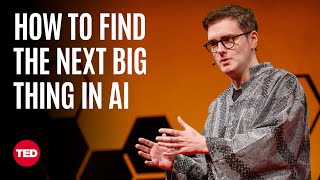
Llion Jones cowrote “Attention Is All You Need,” the seminal paper that introduced the transformer — the architecture that launched the generative AI revolution.
Source: Youtube

Leo XIV: Peace is not built with mutual threats or with weapons.
Source: Youtube
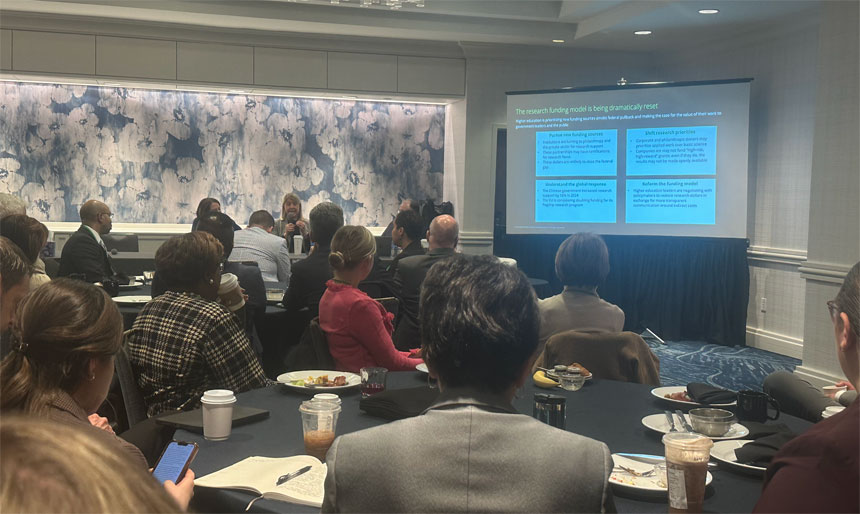
IBL News | Washington, D.C.
The U.S. higher education system faces intense financial pressure from all sides as international and graduate enrollment declines, funding is cut, student loans are capped, AI advances, public confidence weakens, and policymakers and new regulations question the sector’s business model and ROI.
“Institutions can play a critical role in preparing the next generation with the skills needed for a rapidly changing world,” said Cole Clark, Managing Director at the Higher Education sector in Deloitte Services, when presenting the 2026 Higher Education Trends report during the ACE Experience conference hosted last week in Washington, DC. “Consider a future with fewer but stronger US colleges as more institutions choose to merge or form strategic partnerships,” he added.
The analysis portended the renewed importance of building adaptable, human-centered capabilities within liberal arts education, highlighting the need for higher education to re-establish itself as an engine of upward mobility. In this regard, AI will underscore the enduring importance of fundamentally human skills—communication, judgment, and teamwork, said Deloitte.
• “Institutions have an opportunity to chart a more sustainable path forward by reconciling two realities: Students overwhelmingly seek degrees that lead to meaningful employment, and employers need graduates who not only have immediate skills but also the agility to adapt as work continues to evolve—especially under the influence of AI.”
Deloitte’s Center for Higher Education Excellence convened college and university presidents in November 2025 at Deloitte University in Westlake, Texas. After institutional leaders shared successes and lessons learned to drive change, the consultancy company described and prioritized the 2026 trends.
• Trend 1: Erosion of the revenue model for higher education
In some cases, the reductions have been substantial: The University of Southern California laid off more than 900 employees; Stanford University cut 363; and Northwestern University laid off 424, amounting to about 5% of its workforce.
The Institute of International Education reported a 17% drop in new international student graduate enrollments this past fall.
In 2024, more than half of private universities rated by S&P Global posted operating deficits, up from the year before, and early 2025 results look even weaker. A recent analysis of 44 midsize universities with enrollments of between 1,000 and 8,000 students found a weak financial outlook, with many at risk of becoming insolvent in five to 10 years if enrollments fall by 1% to 3% per year over that period. The nation is projected to see a 13% decline in college enrollment from 2025 through 2041.
“While more uncertainty and challenges may come, we are optimistic that creativity and openness to new models will enable us to meet the current moment and our future,” Boston University’s president, Melissa Gilliam, and provost, Gloria Waters, said in a letter to the community announcing a round of layoffs.
• Trend 2: Shifting the conversation from the ‘cost of college’ to the ‘value of a credential.’
Data have long shown that people with college degrees earn a substantial earnings boost compared to those without one. The latest data from the Bureau of Labor Statistics show that workers age 25 and older earn 80% more per week than those with only a high school degree. While that’s true on average, the situation for individuals varies widely depending on a person’s major and other factors.
Colleges now offer more credentials than ever; nearly 1.1 million credentials are offered in the United States. However, the vast majority of nondegree credentials don’t lead to higher paychecks, with only 12% of credentials delivering significant wage gains, according to the Burning Glass Institute.
The July 2025 passage of H.R.1 may further encourage students to pursue non-degree credentials through a provision known as Workforce Pell, which stipulates that low-income students can use Pell grants to pay for credential programs as short as eight weeks. While details must be worked out before the program takes effect in July 2026, the change is expected to increase interest in nondegree credentials.
A study released in November 2025 by the Massachusetts Institute of Technology found that nearly 12% of the U.S. workforce could be replaced by AI tools.
Expanding internships and apprenticeship programs has also proven helpful in bridging the gap between college and work. Recent research by the Strada Education Foundation found that 73% of graduates who completed a paid internship landed a first job that required a degree, compared to 44% of those without an internship.
The rise of AI may lead to a resurgence of interest in the humanities. Proponents of the humanities say that as AI tools reshape jobs, critical thinking, ethics, and judgment will become more highly valued, while the number of jobs in areas such as coding will shrink.
• Trend 3: A reset for sponsored research.
2025 was marked by an unprecedented change and a reduction of federal research dollars after decades of steady growth, including amendments to previously awarded grants, workforce reductions, and incentivized early retirements of thousands of workers at federal agencies that produced research and proposals to reduce future federal research funding.
With funding reductions, many of the top research institutions have trimmed research budgets, frozen hiring, pulled back on PhD admissions, and reduced their workforce, actions that will likely have ripple effects.
In 2026, philanthropic groups, especially big tech and pharmaceutical companies, have emerged as significant funders.
However, federal research support is 10 times that of philanthropy, with US$50 billion from the federal government compared to US$5 billion from philanthropy as of 2021.
Philanthropists such as Roy and Diana Vagelos made a historic donation to Columbia University in 2024 of US$400 million for basic biomedical research, and the Howard Hughes Medical Institute, which has a longstanding pledge to support college research in the biomedical sciences, has given out more than US$7 billion to researchers since 2004.
As universities pursue grants from philanthropic and corporate sponsors, research may shift toward applied work rather than basic science.
Meanwhile, other global powers are ramping up their efforts: The Chinese government increased research support by 10% in 2024. The European Union is debating plans to double the funding for its flagship research program, Horizon Europe, to more than US$200 billion between 2028 and 2034. If US colleges fail to find new models for research support, some experts worry about a brain drain of top science talent to other countries.
Some leaders are betting on emerging AI tools to meet reporting requirements on grants more efficiently.
Models in which principal investigators (PIs) are employed by both the university and industry are increasing in popularity—enabling PIs to draw a larger salary from the portion of their work conducting research for industry while continuing to support the mission of their institution for a lower pay rate.
University leaders are treading carefully to preserve the integrity of scientific discovery, avoiding politicizing the selection of research topics, while also preserving the United States’ ability to lead in scientific exploration and innovation.
• Trend 4: More colleges explore mergers and partnerships to preserve core missions amid demographic and financial pressures.
Mergers, once seen as taboo, akin to admitting failure, but today college leaders are shifting, and higher education is entering a “consolidation era.” Merger success stories are starting to bubble up.
Roughly 80 nonprofit colleges and universities have shuttered or merged in the past five years—not only reflecting an increase in activity, but also seeing a shift from for-profit closures to nonprofit closures, as well as the first instances of a public institution shuttering (not merging).
Nearly 20% of college presidents said it was somewhat or very likely that their institution would merge or be acquired in the next five years.
Antioch University and Otterbein University cofounded the Coalition for the Common Good in 2023, while maintaining distinct undergraduate brands and collaborating on graduate programs and shared services.
Gannon University in Erie, Pennsylvania, is in the process of merging with Ursuline College near Cleveland. Even though the institutions are only about 100 miles apart, the fact that they are in different states is key, as state policies provide financial incentives for students to stay in-state when seeking financial aid. Both colleges say they are financially healthy for now, but see strengths and greater potential for enrollment growth by combining.
Pomona College, a private liberal arts college with around 1,700 students, is reportedly in talks to acquire Claremont Graduate University, which has around 2,200 students.
• Trend 5: A changing global higher education landscape necessitates strategic shifts by American universities.
Many leaders from around the world have earned their degrees from US universities and colleges. The U.S. has long been the most desirable destination for higher education, one of America’s top exports, bringing in more revenue than natural gas and coal combined.
Many American colleges and universities have come to depend on international students as a key revenue source. Students from abroad now make up about 6% of total enrollment at US colleges, or nearly 1.2 million students. At elite institutions, in particular, these students typically pay the full posted tuition rates, which often works out to two to three times what an average domestic student pays.
New international enrollments have recently faltered, however, in part due to new restrictions and heightened scrutiny of student visas.
The number of international students enrolling in American colleges fell by 17% in fall 2025, the first time in 10 years. This decline has been estimated to cost the US economy US$1.1 billion, according to an analysis by the National Association of Foreign Student Affairs and the Association of International Educators. The vast majority of colleges seeing a decline cite concerns about obtaining student visas as a key factor, with two-thirds of those colleges pointing to travel restrictions as a reason.
Across all science and engineering fields, 47% of graduate students and 58% of postdocs are international. Many of these students intend to remain in the country after graduation to work in science and tech fields.
Nearly a third of international students at American campuses come from India, which, in 2020, adopted a policy paving the way for more foreign campuses.
Meanwhile, universities in Asia and Europe recently reported increases in new international student enrollment. If this trend continues, it could lead to a shift in higher ed enrollments from west to east.
Online options may also expand, helping attract more international students. A recent survey of international student recruiters found a jump in interest from international students in seeking entirely online degrees from US colleges.
More U.S. colleges may also choose to bring their educational offerings to other parts of the world by, for instance, adding branch campuses abroad. Currently, American colleges already have more branch campuses abroad than any other country, with 97 satellite campuses in 40 countries.

Iran’s Foreign Minister: Trump’s call for regime change is a “mission impossible.”
Source: Youtube
Trump says US government will immediately cease use of Anthropic AI
Source: Youtube
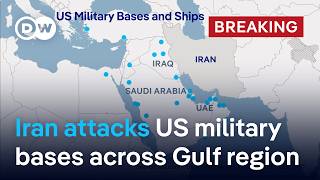
Iran launches retaliatory attacks against U.S. bases in the United Arab Emirates, Bahrain, Qatar, Jordan, and Kuwait.
Source: Youtube

United States and Israel launch an attack against Iran.
Source: Youtube
IBL News | New York
President Trump yesterday ordered all federal agencies to stop using AI technology from Anthropic, describing this company as a “radical Left AI company run by people who have no idea what the real World is all about.”
The company had clashed with the Pentagon over how officials wanted to use its cutting-edge AI model.
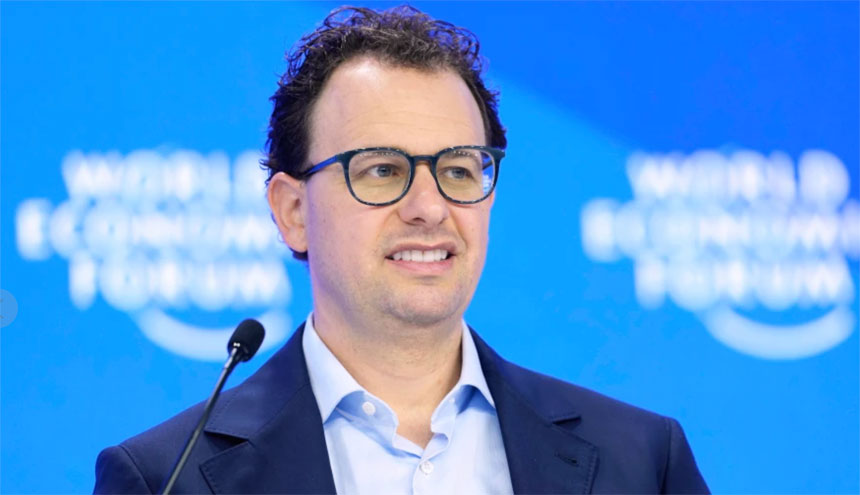
Its CEO, Dario Amodei [in the picture], explained in a statement his refusal of the Pentagon’s terms: “In a narrow set of cases, we believe AI can undermine, rather than defend, democratic values.”
“We do not believe that today’s frontier A.I. models are reliable enough to be used in fully autonomous weapons. Allowing current models to be used in this way would endanger America’s warfighters and civilians. Second, we believe that mass domestic surveillance of Americans constitutes a violation of fundamental rights,” he explained.
Shortly after President Trump’s announcement, War Secretary Pete Hegseth designated the company a “supply-chain risk to national security,” forbidding any contractor or supplier that works with the military from doing business with Anthropic.
The startup said in a statement that it would challenge the move in court.
Meanwhile, Donald J. Trump’s message on his social media network stated:
“THE UNITED STATES OF AMERICA WILL NEVER ALLOW A RADICAL LEFT, WOKE COMPANY TO DICTATE HOW OUR GREAT MILITARY FIGHTS AND WINS WARS! That decision belongs to YOUR COMMANDER-IN-CHIEF, and the tremendous leaders I appoint to run our Military.
The Left-wing nut jobs at Anthropic have made a DISASTROUS MISTAKE trying to STRONG-ARM the Department of War, and force them to obey their Terms of Service instead of our Constitution. Their selfishness is putting AMERICAN LIVES at risk, our Troops in danger, and our National Security in JEOPARDY.
Therefore, I am directing EVERY Federal Agency in the United States Government to IMMEDIATELY CEASE all use of Anthropic’s technology. We don’t need it, we don’t want it, and will not do business with them again! There will be a six-month phase-out period for Agencies like the Department of War that are using Anthropic’s products at various levels. Anthropic better get their act together, and be helpful during this phase out period, or I will use the Full Power of the Presidency to make them comply, with major civil and criminal consequences to follow.
WE will decide the fate of our Country — NOT some out-of-control, Radical Left AI company run by people who have no idea what the real World is all about. Thank you for your attention to this matter. MAKE AMERICA GREAT AGAIN!”
Still, President Trump announced a “six-month phase-out” for the Pentagon and some other agencies, which could allow for more extended negotiations between Anthropic and the War Department.
The Pentagon said it wanted all its contractors to adhere to a single standard: the military can use what it buys however it wants, as long as it complies with the law.
Employees at Anthropic cheered their chief executive’s firm stance. In a moment of unity across Silicon Valley AI companies, employees at two of Anthropic’s competitors, OpenAI and Google, signed letters backing Anthropic’s position.
One letter published Thursday was signed by nearly 50 employees at OpenAI and 175 at Google. It criticized the Pentagon’s negotiating tactics and called on its leaders to “put aside their differences and stand together to continue to refuse the Department of War’s current demands.”