Women who survived the abuses of Jeffrey Epstein speak at the Capitol.
Source: Youtube

Women who survived the abuses of Jeffrey Epstein speak at the Capitol.
Source: Youtube

USA creates a priority visa system for ticket holders for the 2026 World Cup.
Source: Youtube

Judge criticizes series of “errors” in the Justice Department case against Comey.
Source: Youtube

The Future of Education: AI-driven learning, personalized education & building life skills early.
Source: Youtube

How AI can protect you from the next crypto scam
Source: Youtube

According to the New York Times, former Amazon chief and current Blue Origin CEO Jeff Bezos is launching an AI startup called “Project Prometheus” and will serve as its co-chief executive.
Source: Youtube

Artificial intelligence is helping people save money on their Thanksgiving plans this year.
Source: Youtube

Matthew McConaughey has teamed up with AI company ElevenLabs to create a digital version of his voice, and he’s not the only star embracing the technology.
Source: Youtube
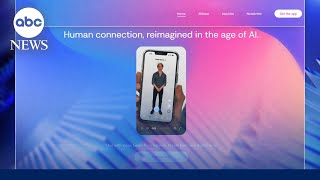
AI app promises to let you talk with the dead.
Source: Youtube

IBL News | New York
Enterprises are rapidly transitioning from experimentation to proving measurable ROI, said a research study conducted by The Wharton School of the University of Pennsylvania. “Gen AI is becoming deeply integrated into modern work.”
The report examines how generative AI technology is being adopted in mainstream enterprises, highlighting the ROI.
The shift is moving from exploration to pilots to more disciplined, enterprise-level adoption, according to the study, which concludes that “the next phase is not about adoption; it is about advantage.”
• 82% of enterprises used Gen AI at least weekly, and 46% used it daily, with 89% agreeing that Gen AI enhances employees’ skills.
• A total of 72% of organizations formally measured the ROI of Gen AI, focusing on productivity gains and incremental profit.
• Three out of four leaders see positive returns on Gen AI investments.
The Wharton School predicted that approximately one-third of Gen AI technology budgets will be allocated to internal R&D, indicating that many enterprises are building custom capabilities for the future.
“Training, hiring, and rollout approaches are key human capital aspects that need to be addressed to increase chances of success.”