YouTube announced that over the coming weeks, it will introduce Handles, a unique name with the @ symbol for each channel that will be used to promote it and interact with people.
The Handle will be how people will mention the channel in their comments and community posts. Handles will become part of the channel URL.
YouTube will allow channel creators to choose their handles, which can be up to 30 characters.
The new handle will become a part of the channel URL. For example, if the handle is @user123, the channel URL will be https://youtube.com/@user123.
If the user hasn’t yet selected a handle for the channel, YouTube will automatically assign a handle, This feature will start on November 14, 2022.
Handles and @usernames are common across social media, including on sites like Facebook, Instagram, Twitter, Telegram, and others.
Experts note that YouTube’s expansion into TikTok’s territory started with Shorts, and now it follows with handles as a way to encourage users to engage in back-and-forth discussions through their short videos.
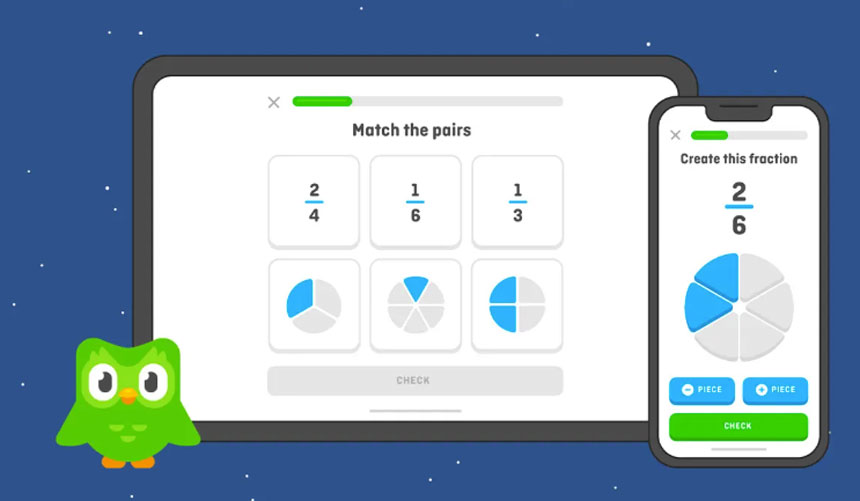
Duolingo (NASDAQ: DUOL) completed its first official acquisition this month: an illustration and animation tiny studio based in Detroit, MI, called Gunner, which produces elements of the learning platform’s brand marketing campaigns.
The purchase price wasn’t disclosed publicly. It is expected to be revealed during Duolingo’s next earning call.
The entire team of 15 people working at Gunner will join Duolingo’s staff as part of the purchase. The studio was already working for Duolingo — as well as other brands, such as Amazon, Dropbox, Spotify, and Google.
“Art and animation are foundational to the Duolingo brand, and we use them to help make Duolingo a beloved daily habit in millions of learners’ lives,” said Co-Founder and CEO Luis von Ahn in a statement.
Duolingo also confirmed that it’s opening up an office in Detroit, joining its other offices in Pittsburgh, New York, Seattle, Detroit, Beijing, and Berlin.
Duolingo’s current stock is trading at $98.30, down over 50% from its 52-week high price of $199.37. The Pittsburgh – based Duolingo reports 500 million users and counted 550 employees worldwide.
The arrival of the web-based software GPT-3 as an API service for developers has started to impact the higher education landscape. One of the first applications is writing papers on the cheap. The Chronicle of Higher Edwonders if this type of artificial intelligence program will kill college writing.
“These outputs can be astonishingly specific and tailored. When asked to write a song protesting the inhumane treatment of animals in the style of Bob Dylan, the program clearly draws on themes from Dylan’s,” says The Chronicle.
The GPT-3 software, developed by an Elon Musk-backed, San Francisco-based nonprofit called OpenAI and introduced in 2020, is a kind of omniscient, smart Siri or Alexa that can turn any prompt into prose or even can write code. There are multiple examples of experiments on YouTube with demos of AI robots interacting with humans. [Example I][Example II][Example III].
This technology performs a wide variety of natural language tasks, translating natural language to code. Many companies are currently building products on top of OpenAI’s flagship large language model (LLM).
In addition to banks using Davinci, the largest GPT-3 model, for its customer service chatbot, this usage of deep learning technology to produce humanlike text, video, and advice is expected to be increasingly implemented in assessments of student learning. The role of faculty, students, research, and publications will be rethought with GPT-3 by the advent of this level of human-computer interaction, according to analyst and writer Ray Schroeder.
Beyond facts and perspectives, neural networks learn and teach skills, including mathematics, computer programming, creative writing (without plagiarizing responses), and even poetry — after they have absorbed and processed terabytes of text and literature online. GPT-3 has been trained on most of what has been publicly written, including Wikipedia, books, scientific papers, and news articles.
The success of GPT-3 has encouraged other companies to launch their own LLM research projects. Google, Meta, Nvidia, and other large tech corporations have accelerated work on LLMs.
Today, there are several LLMs that match or outpace GPT-3 in size or benchmark performance, including Meta’s OPT-175B, DeepMind’s Chinchilla, Google’s PaLM, and Nvidia’s Megatron MT-NLG.
This month, Amazon’s AI researchers unveiled Alexa Teacher Models (AlexaTM 20B), claiming that it beats GPT-3 on NLP benchmarks. The model is yet to be released publicly. [GitHub repository].
GPT-3 also triggered the launch of several open-source projects that aimed to bring LLMs available to a wider audience. BigScience’s BLOOM and EleutherAI’s GPT-J are two examples of open-source LLMs available free of charge. Also, Cerebras has created a huge AI processor that can train and run LLMs with billions of parameters at a fraction of the cost.
However, OpenAI — which has recently slashed the price of its GPT-3 API service by up to two-thirds this month — is no longer the only company that is providing LLM API services. Hugging Face, Cohere, and Humanloop are some of the other players on the field.
Hugging Face provides a large variety of different transformers, all of which are available as downloadable open-source models or through API calls. Hugging Face recently released a new LLM service powered by Microsoft Azure, which OpenAI also uses for its GPT-3 API.
Many organizations can’t handle the technical challenges of training and running the models, as LLM requires dozens or even hundreds of GPUs — huge hardware costs. That’s one of the reasons that OpenAI and other companies decided to provide API access to LLMs.
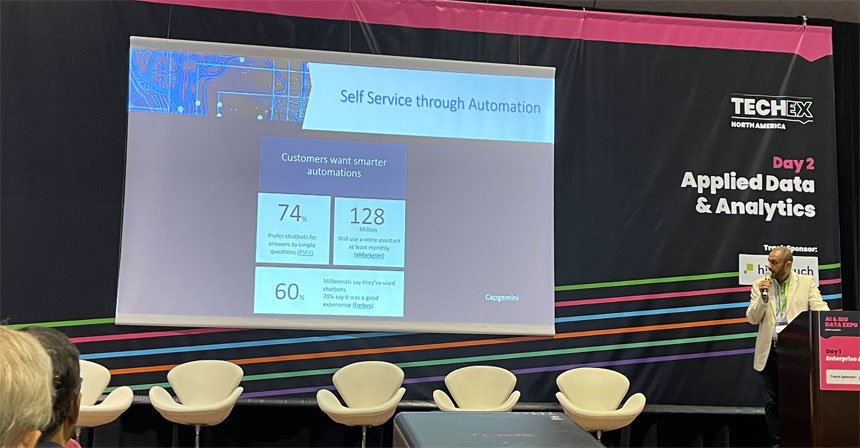
AI-based automated self-services are increasingly expanding and the response of the audience is being favorable. 74% of customers prefer chatbots for answers to simple questions, and almost a similar number of millennials say that it was a good experience.
Adhar Walia, an expert on conversational AI products and currently a product manager working for CVS Health [in the picture above], said that 128 million people use an AI voice assistant at least monthly.
Natural Language voice assistants and speech recognition are currently used to engage and capture the audience’s attention, drive natural human-like conversations, and meet customers.
Artificial Intelligence and Machine Learning solutions are being widely adopted by the industry.
These are the industry-specific solutions according to experts:
Ecommerce & Retail:
– Cross-sell, upsell
– New Product Sourcing
Artificial Intelligence (AI) technology in enterprises has become mainstream. This is one of the main conclusions of the AI & Big Data Expo North America conference, which started yesterday and will continue today.
This in-person and virtual event, hosted in the Santa Clara Convention Center, attracted thousands of attendees — over 5,000, according to the organization of the event. Engineers and business leaders explored the latest innovations and explored impact of AI across industry sectors.
The adoption of AI has surpassed the 60% of the corporate landscape. The average adoption rate across all geographies was 56% in 2021, up to 6% from 2020, according to data shown by Daniel Wu, Head of AI & Machine Learning Commercial Banking and JP Morgan Chase. The banking executive, who participated in an opening talk, agreed on the fact that data is still pretty siloed. He highlighted that the main challenge in this regard is legacy data with inconsistent quality, and a lack of proper data models increased with the fact that cloud and on-premise hybrid systems end up duplicating it.
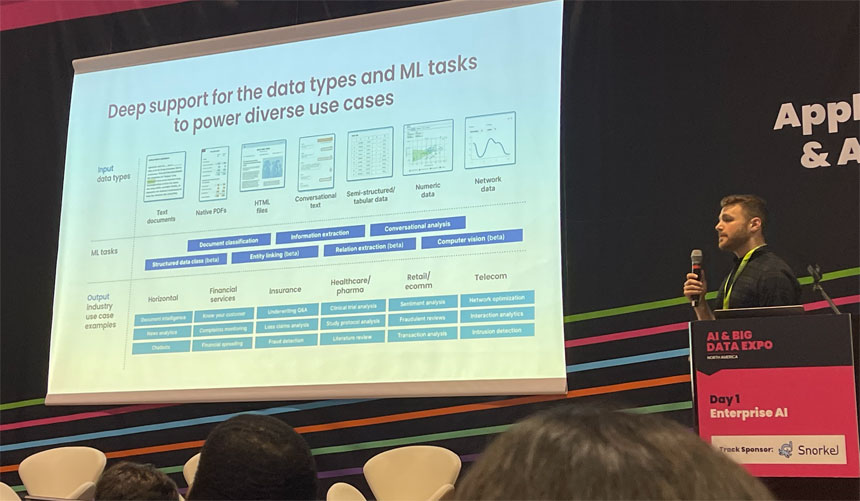
Henry Ehrenberg, Co-Founder at Snorkel AI [in the first picture below], revealed that 85% of data is unstructured, unlabeled, and not ready for AI use.
Currently, data governance is top of mind for every business leader. Other trends are, according to Mohan Reddy, Co-Founder and CTO of SkyHive and Associated Director of Human Perception Lab at Stanford University :
Unified Analytics
Graph Neural Networks and Enterprise Applications
The emergence of no-code AI Platforms
Multilingual models. Transformers as a big part of Enterprise NLP
Federated AI Strategies in large enterprises
New business models
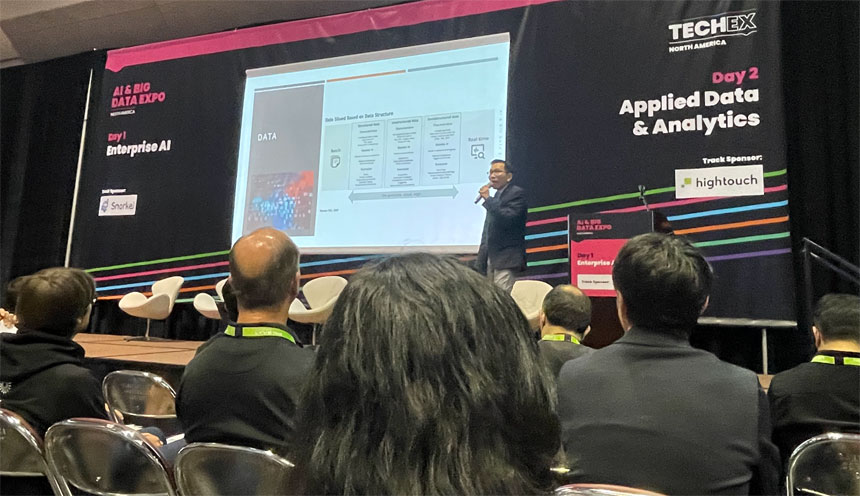
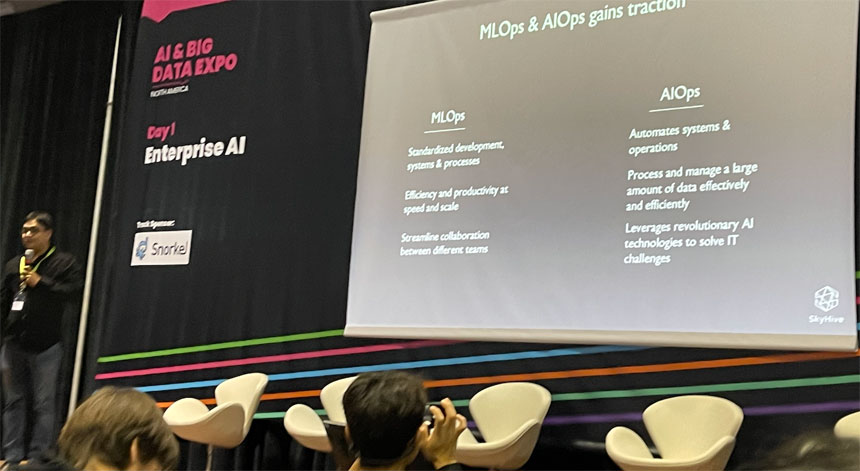
Mohan Reddy [in the second picture below] elaborated on how MLOps and AIOps are gaining traction. He also stressed how organizations are looking to build AI trust by establishing protocols for sourcing, handling, and using data for developing ethical AI solutions and preventing algorithmic bias in outcomes.
IBM announced last week that it will team with 20 historically black colleges and universities (HBCUs) to address the cybersecurity talent shortage.
The tech giant will establish Cybersecurity Leadership Centers on the campuses, giving students and faculty access to IBM training curriculum, enterprise security software, certifications, and simulated cyberattack training sessions at no cost.
The original group of schools in the IBM program included Clark Atlanta University in Georgia, Southern University System and the Xavier University of Louisiana, Morgan State University in Maryland, North Carolina A&T State University, and South Carolina State University.
The 14 additional universities, announced last week at an HBCU conference hosted by the U.S. Department of Education and the White House, span 11 states and include Tuskegee University in Alabama, Grambling State University in Louisiana, and Norfolk State University in Virginia.
With 500,000 unfilled cybersecurity jobs in the U.S., the need for expertise is critical, according to a recent IBM Security study.
Through IBM’s collaboration, faculty and students at participating schools will have access to:
Cybersecurity curricula: IBM will develop for each participating HBCU a customized IBM Security Learning Academy portal, including courses designed to help the university enhance its cybersecurity education portfolio. In addition, IBM will continue to give access to IBM SkillsBuild.
Immersive learning experience: Faculty and students of participating HBCUs will have access to IBM Security’s Command Center, through which they can experience a realistic, simulated cyberattack.
Software: Multiple IBM Security premier enterprise security products hosted in the IBM Cloud.
Professional development: Forums to exchange best practices, learn from IBM experts, and discover IBM internships and job openings.
GiveCampus, a fintech fundraising platform for schools and education-related nonprofits, announced this week it raised $50 million.
The funding was led by Silversmith Capital Partners. Y Combinator’s Managing Director Michael Seibel and Stripe’s executive Claire Hughes Johnson also participated.
Founded in 2014, Washington DC-based, Patreon-style GiveCampus tries to make donations as easy as possible for donors. For that, it allows for receiving donations from Venmo or PayPal, recording in-person donations, and accepting cryptocurrency.
It also can identify and engage with active alumni to promote ongoing donations.
GiveCampus says it has processed $2 billion in donations to 1,000 educational institutions to date.
The company claims that it has been profitable since 2016, with annual earnings of over $20 million.
It started with a bootstrapped family-and-friends round of $1 million in 2015.
“As we embark on this next chapter, we will continue to obsess over the needs and priorities of our partner schools while integrating additional capabilities, data, and insights into our platform in order to drive even bigger impact,” GiveCampus co-founder and CEO Kestrel Linder said in a statement.
Crunchbase reported that social impact startups that make donating easy through frictionless payments are starting to see massive growth.
Between 2018 and 2019, funding in the space jumped 187% and peaked in 2021 with $485 million, according to Crunchbase data.
Betterfly and Sharebite are two of the most popular.
Coursera, Inc. (NYSE: COUR) announced this month that it expanded its offering of short videos and lessons to nearly 200,000 clips addressing the growing demand for micro-learning materials.
The Mountain View, California – based company said that these instructional materials are designed to help students to learn high-demand skills in under 10 minutes. The offerings functions as scalable learning paths toward professional certificates and degree programs.
Coursera also highlighted its intent of accelerating skills development for employees through Clips.
“A growing number of employees are now looking to gain job-specific skills much faster through shorter, more targeted content; with this shift towards microlearning, Clips enables employees to learn specific skills with 5-10 min videos,” said Leah Belsky, Chief Enterprise Officer at Coursera. “It also provides clear pathways into courses for deeper skill development,” he added.
The most viewed Clips to date include a range of data, cloud, and productivity-focused content such as:
Welcome to Python, by University of Michigan [1 min]
Fundamentals of Data Science, by IBM [2 min]
The Business Case for Visionary Leadership, by University of Michigan [7 min]
Why is Storytelling Important?, by Macquarie University [9 min]
Key Cloud Service Providers and their Services, by IBM [6 min]
What is SQL Anyway?, by University of California, Davis [7 min]
Customize Google Calendar, by Google [4 min]
Taking Charge of Excel, by Macquarie University [6 min]
Some companies and government organizations like Google, the New York State Department of Labor, Alstom, and Bosch have adopted Clips for their workforce, according to Coursera.
Coursera’s skills platform allows organizations to assess, measure, and benchmark skills in their workforce. Recent platform innovations include LevelSets which help employees quickly determine their proficiency in key skills and identify areas to focus on moving forward. In addition, SkillSets help employees develop specific skills for specific roles. These Skill Sets provide the foundation for Coursera’s Leadership and Data & Analytics Academies, which offer a packaged learning experience based on the depth of skill needed for specific roles across an organization.
Six Republican-led states are taking legal action to block the Biden administration’s effort to forgive student loan debt, laid out in August. This week, these states accused President Biden of overstepping his executive powers, even as the administration tried to avoid a court challenge by reducing the number of people eligible for relief.
The nonpartisan Congressional Budget Office estimated that student debt cancellation could cost $400 billion in the next three decades.
In the lawsuit, filed last Thursday in a federal court in Missouri by Leslie Rutledge, the Republican Attorney General of Arkansas, those six states argue that Biden’s cancellation plan is “not remotely tailored to address the effects of the pandemic on federal student loan borrowers,” as required by the 2003 federal law that the administration is using as legal justification.
The states of Iowa, Kansas, Missouri, Nebraska and South Carolina joined Arkansas in filing the lawsuit.
Arkansas Attorney General Leslie Rutledge, who is leading the group, said in an interview, “It’s patently unfair to saddle hard-working Americans with the loan debt of those who chose to go to college.”
This lawsuit is the second attempt this week to shut down the loan forgiveness program. On Tuesday, a conservative legal group filed a lawsuit seeking to block debt cancellation, saying the program would force people to pay taxes on the debt that was forgiven.
Abdullah Hasan, a White House spokesman, said the lawsuit is attempting to stop Mr. Biden from providing much-needed relief to people who are struggling in the wake of the pandemic.
UCLA announced this week that it is acquiring two properties belonging to Marymount California University (MCU) in Rancho Palos Verdes (24.5-acre main campus of MCU) and San Pedro (11-acre residential site) for $80 million. This purchase will enable the instruction of nearly 1,000 students in the next academic year and enhance the university’s impact in the region.
Marymount California University ceased operations earlier this year due to rising costs and declining enrollments.
The “shared educational purpose” of the two institutions prompted MCU to opt for UCLA ahead of the residential developers.
“We chose UCLA because it has a long track record of educational excellence, and is perfectly suited to build upon the mission of teaching and community service we established here,” Marymount California University President Brian Marcotte said.
In a message to the UCLA community announcing the news, Chancellor Gene Block said that “this acquisition will allow us to expand student access in line with UC’s 2030 goals, strengthen our connections to the greater L.A. region, and deepen our institution’s research and public service impact.”
The 2030 enrollment goals include increasing summer enrollment, expanding remote instruction as appropriate, and investing in resources to help students graduate more quickly.
UCLA and its Academic Senate will establish a task force of faculty members and administrators to study how best to utilize the property.
The MCU site adds to existing spaces UCLA operates in downtown Los Angeles and elsewhere. UCLA Health also has over 250 patient care facilities throughout the region.