Author: IBL News

  • The “Freshman Year for Free” Platform Surpasses 300,000 Learners

    The “Freshman Year for Free” Platform Surpasses 300,000 Learners

    IBL News | New York

    The ModernStates.org online learning platform announced this month that it surpassed 300,000 registered students on its program “Freshman Year for Free.” In addition, fees for 50,000 credit-bearing exams were reimbursed.

    Launched in 2017, the New York City-based Modern States Education Alliance (“Modern States.org”) philanthropy offers a collection of free freshman-level courses that lead to college credit.

    The courses — which include lectures, readings, and practice questions — work as a public library of post-secondary education.

    There are over 40 top-quality online courses taught by professors from leading universities, such as Columbia, Johns Hopkins, Tufts, and Purdue.

    These classes are designed to prepare students to pass any of the College Board’s credit-bearing College Level Examination Program (CLEP) exams.

    The non-profit organization estimates that “students have saved more than $75 million on college tuition by turning to Modern States.” “The all-in average cost of public college is about $20,000 per year, so every Modern States course and CLEP exam passed can save students about $2,000 of cost,” said Steve Klinsky, Modern States Founder and CEO.

    By passing 8-10 CLEP exams, students can save up to a full year of college costs.

    The NYC x Freshman Year for Free program has more than 1,200 registered students from more than 25 New York City public high schools in Brooklyn, the Bronx, Manhattan, and Queens.

    The NYC students who receive stipends for passing courses and exams use Modern States courses to earn free college credit before high school graduation.

    The pass rate on CLEP exams for NYC public school students has been 85 percent to date, which is about 20 percentage points higher than the approximately 65 percent national average pass rate for all CLEP test-takers.

    The overall pass rate is about 75 percent for students taking Modern States courses.

    The philanthropy aspires to help over one million learners, saving students and taxpayers approximately $2,000 per course and over $1 billion in total.

    [Disclosure: These courses and the learning ecosystem, based on Open edX were produced in partnership with IBL Education, the parent company of the IBL News service].

  • French Corporate SaaS Platform 360Learning Raises $200 Million

    French Corporate SaaS Platform 360Learning Raises $200 Million

    IBL News | New York

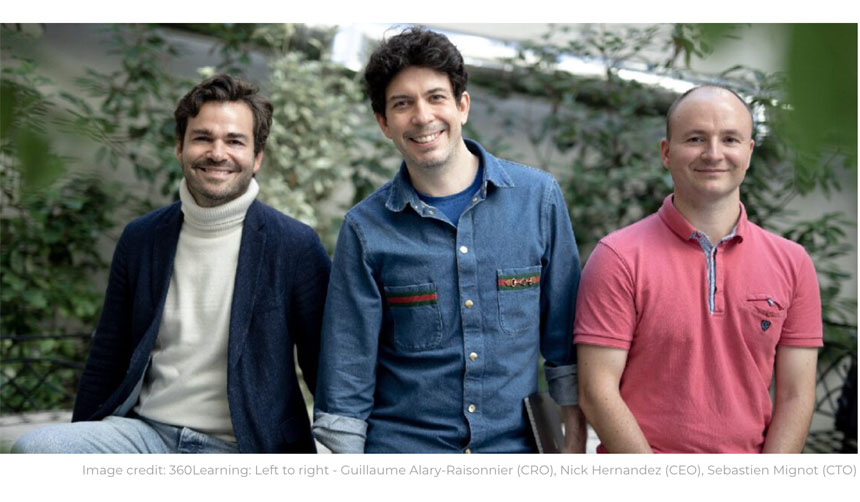
    Corporate collaborative SaaS platform 360Learning announced yesterday it raised $200 million. The funding round came from Sumeru, SoftBank’s Vision Fund 2, and Silver Lake Waterman. Existing investors include Bpifrance’s Large Venture fund, XAnge, and Educapital also participated in a previous funding round of $40 million.

    The Paris-based company will use the capital infusion to hire more people, expand to new markets, and make some acquisitions.

    360Learning lets content creators upload and mix different kinds of video and media, add questions, and work on a course with multiple people in the team.

    Companies using this platform can build their own collection of courses and distribute it to all employees or a group of them specifically.

    The company says that it uses artificial intelligence to identify courses that can be improved to fill gaps in information. Its AI tool also matches courses to employees.

    The start-up claims to have 1,500 companies as clients, with LVMH, Aircall, Toyota, and Appen, among them.

    They mostly use the platform for employee onboarding, software training, and various courses that help you get better at sales, leadership, and soft skills in general.

  • Udemy Targets $4 Billion Valuation In a Major EdTech IPO

    Udemy Targets $4 Billion Valuation In a Major EdTech IPO

    IBL News | New York

    Online learning platform Udemy Inc. set terms for its initial public offering (IPO) this Wednesday, targeting a valuation of almost $4 billion, based on the 137.4 million shares expected to be outstanding after the deal closes.

    This expected market price is a modest bump in worth for the company, last valued at $3.2 billion.

    San Francisco-based Udemy, which plans to list on the Nasdaq under the symbol “UDMY”, will offer 14.5 million shares priced at $27 to $29 each, looking to raise up to $420.5 at the top of that range, according to a filing.

    Morgan Stanley and J.P. Morgan are the lead underwriters for the offering in a syndicate of 11 banks.

    The start-up, which provides over 183,000 courses in 75 languages to 44 million learners, is backed by Learn Capital, Insight Partners, and Norwest, among others.

    It had a net loss of $29.4 million in the six months ended June 30, narrower than the loss of $52.5 million posted in the year-earlier period. Revenue rose to $250.6 million from $201.4 million.

    In the last year, the market has seen the IPOs of several EdTech companies, such as Duolingo, Nerdy, PowerSchool, and Coursera.

    All of the Recent News About Udemy at IBL News
    Udemy S-1 Prospectus

  • Outschool Reaches a Valuation of 3 Billion Four Months After Hitting Unicorn Status

    Outschool Reaches a Valuation of 3 Billion Four Months After Hitting Unicorn Status

    IBL News | New York

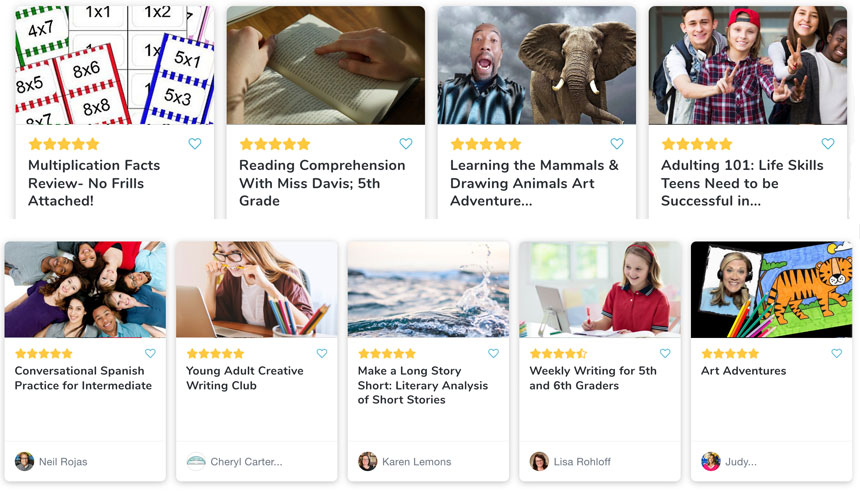
    After-school K-12 classes marketplace Outschool reached a valuation of 3 billion after obtaining funding of $110 million in Series D this month, according to the company. This whooping valuation took place just four months after hitting unicorn status.

    Investor Tiger Global Management led the round. Additional participants included Lightspeed Ventures, Union Square Ventures, Reach Capital, Coatue, FundersClub, and SV Angel. In Api2021, Outschool raised $75 million in Series C.

    With a workforce of 164 employees, Outschool is offering 140,000 virtual, small-group classes to students between the ages of 3 and 18, with 7,000 teachers today.

    “The latest round of funding will be used to fuel our global expansion and ramp up new product offerings for schools and parents seeking alternatives to engage children in a love of learning,” said the company.

    San Francisco- based Outschool has expanded its offering beyond the U.S. and Canada to countries such as Australia, New Zealand, and the U.K.

    Recently, the startup launched Outschool Pods based purely on demand from both teachers and families to have more opportunities for ongoing organized, academic classes in small group settings, disclosed Amir Nathoo, CEO of Outschool.

    Classes on Outschool range from one-time classes to ongoing social groups, one-on-one tutoring, week-long camps, and ongoing courses. Classes are offered to learners ranging from age 3 to 18.

    For families with a financial need, their nonprofit arm Outschool.org provides access to classes and camps. Outschool.org has donated over $3M to schools since its inception in April 2020.

  • IBM Says It Will Train on Technical Skills 30 Million People by 2030

    IBM Says It Will Train on Technical Skills 30 Million People by 2030

    IBL News | New York

    IBM (NYSE: IBM)  announced yesterday a global plan to train around 30 million people by 2030 on technical skills needed for the jobs of tomorrow.

    To achieve it, IBM said it will leverage its existing programs and career-building platforms, and partner with 170 academic, industry organizations, and NGOs.

    Closing the global skills gap could add $11.5 trillion to global GDP by 2028, according to the World Economic Forum (WEF). This organization states that “education and training systems need to keep pace with the new demands of labor markets that are continually challenged by technological disruption, demographic change, and the evolving nature of work.”

    Regarding IBM’s commitment, Arvind Krishna, Chairman and CEO at IBM, said that “this will help democratize opportunity, fill the growing skills gap, and give new generations of workers the tools they need to build a better future for themselves and society.” IBM’s program is featured on a new website.
    • New partnerships in the U.S. include Workforce Development Inc, National Association for Community College Entrepreneurship (NACCE), and OHUB.
    • In India, IBM collaborates with the Haryana State Board of Technical Education, and the Uttar Pradesh State Council of Educational Research and Training (SCERT), to upskill youth from across the country.
    • In Japan, IBM partners with Osaka Municipal Government and Osaka Roudou Kyokai (NPO) to offer SkillsBuild for Job Seekers in Osaka Prefecture, helping them obtain IT skills and earn tech-related jobs. IBM’s curricula include introductions to AI and cloud computing, particularly for positions like help desk specialist, web developer, and data analyst.
    • In Latin America, IBM is partnering with Junior Achievement Americas to provide IBM SkillsBuild and IBM mentors to train women for web development and programming careers.
    • In Spain, IBM has partnered with Agencia para el Empleo del Ayuntamiento de Madrid (Madrid Council Employment Agency) to provide unemployed individuals with technical and professional skills through IBM SkillsBuild. Some of the courses will include interpersonal skills, client engagement, web development, and cybersecurity.
    • In Hong Kong, IBM partnered with Vocational Training Council (VTC), the largest vocational and professional education and training provider for learners of all ages, to include IBM SkillsBuild as part of their core learning on tech-related skills.
    • In Nigeria, IBM partnered with Coca-Cola HBC to skill youth on workplace readiness skills and interpersonal skills.
    • In Sweden, IBM is working with War Child to provide STEM career readiness for women who have escaped war.


  • Labster Acquires UbiSim, a Swiss Leading Virtual Training Platform for Nursing

    Labster Acquires UbiSim, a Swiss Leading Virtual Training Platform for Nursing

    IBL News | New York

    Virtual labs and interactive science platform Labster announced this week it will acquire UbiSim, a virtual reality training platform for nursing.

    “With this strategic addition, Labster is well-positioned to play an important role in the future of nursing education and to help address the critical challenge of the global nursing shortage, estimated at a shortfall of 5.9 million nurses by the World Health Organization,” said Michael Bodekaer Jensen, CEO and Co-Founder of Labster.

    Founded in Denmark in 2012, Labster includes virtual science simulations, lab manuals, lab reports, and 3D animated videos.

    “Students’ learning outcomes improve by an average of one letter grade with these tools, enabling more students to persist in critical courses rather than dropping out of science early in their academic careers,” said the company.

    UbiSim, founded in Switzerland in 2017, offers an immersive VR training platform that enables nursing students to develop clinical reasoning, collaboration, and communication skills by engaging with real-world scenarios and lifelike patients in a safe learning environment.

  • Organizations Change their Learning Strategies in the Light of ‘The Great Resignation’ Phenomenon

    Organizations Change their Learning Strategies in the Light of ‘The Great Resignation’ Phenomenon

    IBL News |  New York

    In the light of the Great Resignation phenomenon, when over a third of people are considering quitting their jobs at an alarming rate, many corporations are re-evaluating their learning cultures and policies.

    A Degreed research report, titled How the Workforce Learns, found that according to data based on a survey of 2,400 people, companies driving change are shifting their focus to creating conditions for learning.

    To keep workforces more skillful and agile — and therefore competitive — organizations are crafting roadmaps intended to embrace a culture of continuous learning. These are five takeaways:

    • Upskilling comes from experiential learning or learning in the flow of work. Thus, this learning should be digitized and make accessible to all workers.
    • The workforce is more engaged in the 70|20|10 models: experiential, interactive, and instructional.
    • Structured learning should be consistent, i.e., attending a class or workshop nearly every month.
    • Classes, workshops, or other formal learning opportunities should be offered on a regular basis using a blended learning approach. “Flipped classrooms” will allow people to play a more active role in applying their skills and teaching others. This will improve knowledge retention.
    • Feedback, insights on skills progress need to be shared, making sure the workforce understands that advancement gives people incentives to update their profiles and look for collaboration, learn, and growth opportunities.


  • Harvard’s Endowment Increases $11.3B to a Whopping $53.2B, Despite the Pandemic

    Harvard’s Endowment Increases $11.3B to a Whopping $53.2B, Despite the Pandemic

    IBL News | New York

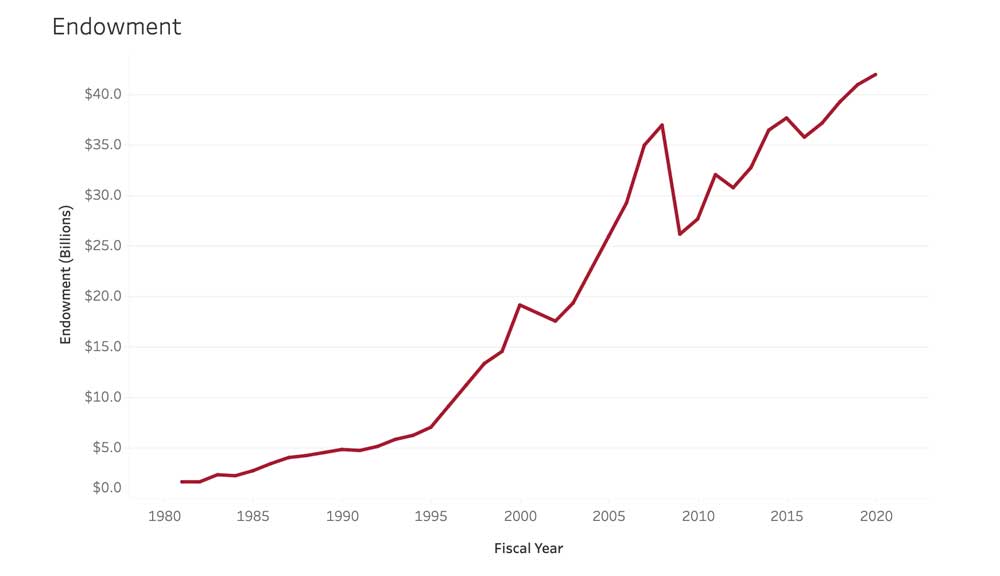
    Harvard University’s mythical endowment — the largest endowment in the world — grew even beyond the most favorable expectations this year, despite the pandemic.

    Harvard’s annual financial report for the fiscal year ended June 30, 2021, showed that its endowment increased from $11.3 billion to a breathtaking $53.2 billion, a 27% growth.

    In addition, in the same fiscal year, the university operations yield a $283 million surplus. In 2020, the institution’s budget showed a $10 million operating deficit.

    The fact that the university — an institution with around $5.5 billion in revenues — was forced to send students home in March 2020, beginning more than a year of remote instruction didn’t damage its financial health.

    In their annual report letter summarizing the year, Thomas J. Hollister, Vice President for Finance and CFO, and Paul J. Finnegan, Treasurer, observed that “Harvard’s finances ended the year in a dramatically improved position compared to initial budget assumptions.”

    The net decrease in revenue, 5 percent during the two-year period, was half what University administrators feared. Total student income decreased nearly $200 million in fiscal 2021 (17 percent) to $888 million.

    Overall, Harvard emerged stronger from the pandemic, better positioned to educate and conduct research in the future, Harvard Magazine writes.

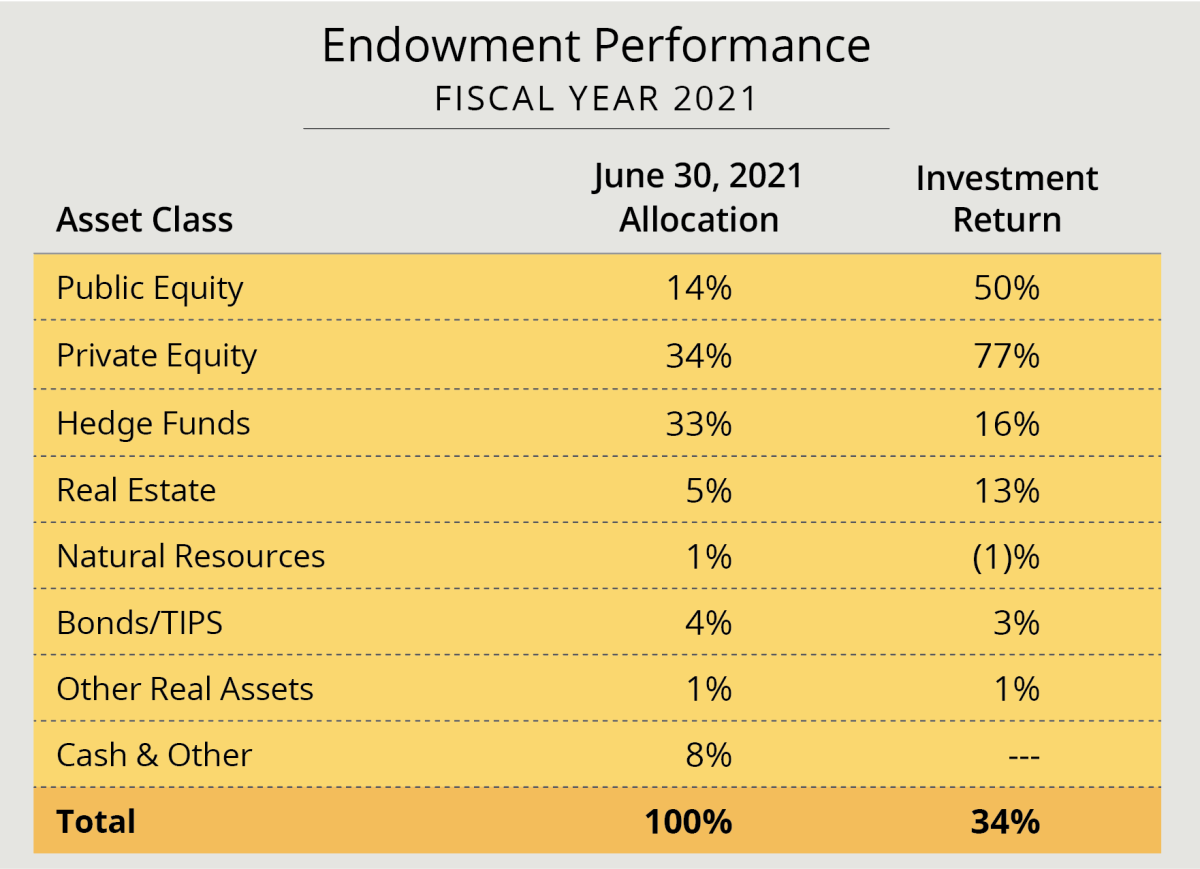
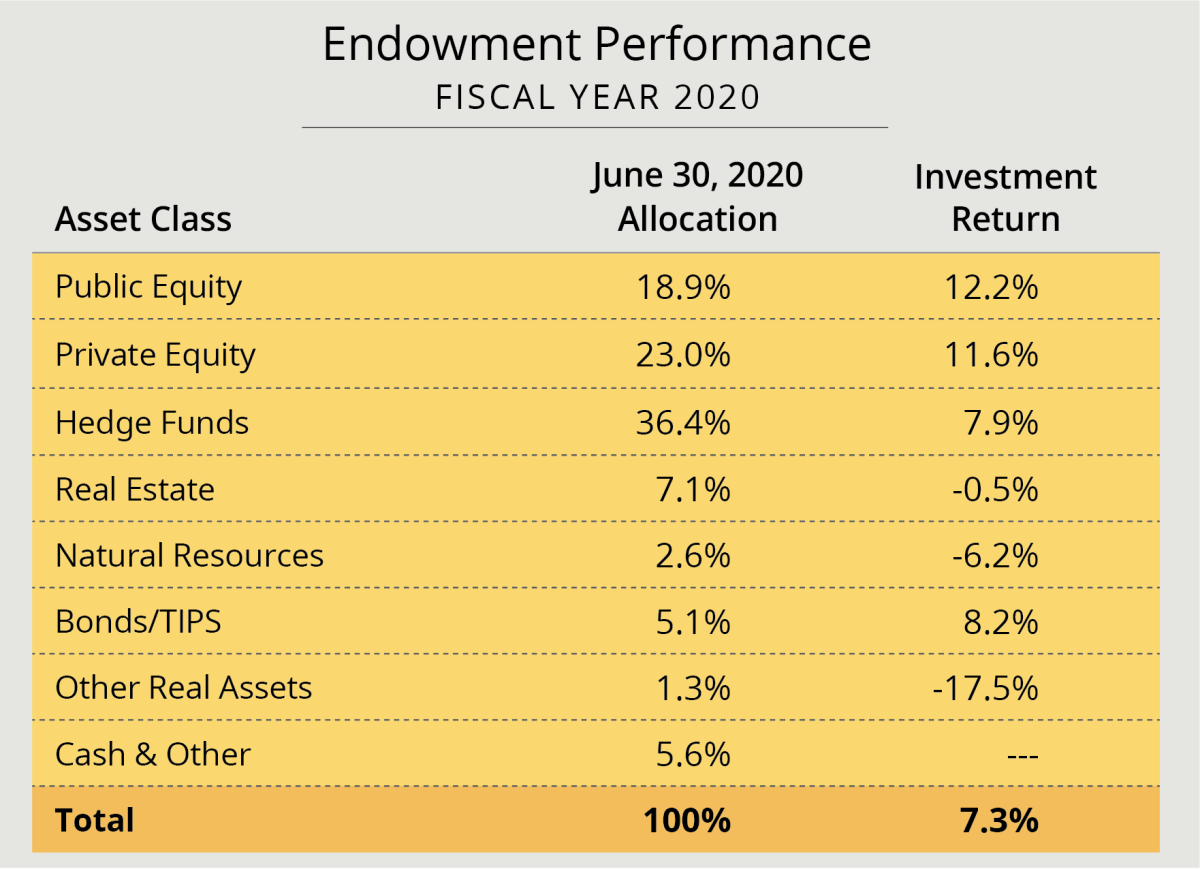
    To make things better, Harvard Management Company (HMC) recorded a 33.6% investment return on endowment assets during fiscal 2021, up from 7.3% in the prior year. That was the highest return recorded since the 43.6 percent achieved in fiscal 1983 (during a period of declining interest rates and recovery from a recession) and 32.2 percent in fiscal 2000 (during the dot.com boom).

    Endowment investment returns for the year totaled a staggering $12.8 billion. That sum eclipsed the traumatic $11-billion loss recorded in fiscal 2009, during the financial crisis and Great Recession, and handily outpaced the $9.6 billion realized from all sources and for all uses by Harvard Campaign, which concluded in June 2018.

    “The true heroes for Harvard in fiscal 2021 were supportive donors, past and present,” said the report. The endowment distribution for operations increased about 2 percent, to just over $2 billion. And gifts for current use surged $63 million (13%) to $541 million, although some of this reflects a swing in payments to Harvard from its affiliated hospitals.

    The Harvard Management Company (HMC) recognized that the endowment’s robust return took place in a context of economic recovery, which led to 40-plus percentage-point gains in U.S. stock indexes during the fiscal year of 2021. “Those conditions also prompted a deluge of initial public offerings by new companies at eye-popping valuations (rewarding the venture-capital and private-equity funds that had underwritten them: investment managers to whom large endowments often allocate sizable shares of their assets).”

    The Wilshire Trust Universe Comparison Service, a standard analysis of institutional investments, reported the best overall results in 35 years, with median returns of more than 33 percent for large foundations and endowments. That was nearly ten times the median return of 3.4 percent for fiscal 2020.

    Extraordinary performance in equity investments drove the results of the endowment. HMC’s managers achieved 50 percent returns on public equities (14% of HMC’s assets). Even better were the 77 percent returns on private equity (34 percent of assets, the largest single allocation).

    The large shift toward private equity reflects, to some extent, N.P. Narvekar’s — CEO at Harvard Management Company — focused move in that direction since fiscal 2018 (with a related sharp reduction in the real-estate and natural-resources portfolios).

    Other changes in allocation—such as the sharp decrease in public equity, where HMC’s external managers continued a multiyear record of significantly outperforming market benchmarks—were implemented following Harvard’s risk parameters, as well.


    • Harvard University financial report
    Harvard Gazette Q&A on Harvard’s finances and operations with executive vice president Katie Lapp and Tom Hollister.

    —-

  • International Leaders Call to Invest More in Teachers — Here’s How Much They Are Paid

    International Leaders Call to Invest More in Teachers — Here’s How Much They Are Paid

    IBL News | New York

    International institutions, particularly UNESCO, called this month to recognize the importance of teachers worldwide while improving their compensation and working conditions.

    “The pandemic has shone a light on the irreplaceable value of the teaching profession in society but also on the difficult working conditions facing many teachers,” said UNESCO’s and UNICEF’s General Managers, Audrey Azoulay and Henrietta H. Fore.

    On the recent “World Teachers’ Day” celebrated on October 5, international humanitarian leaders called to invest in teachers and prioritize them in global education recovery efforts.

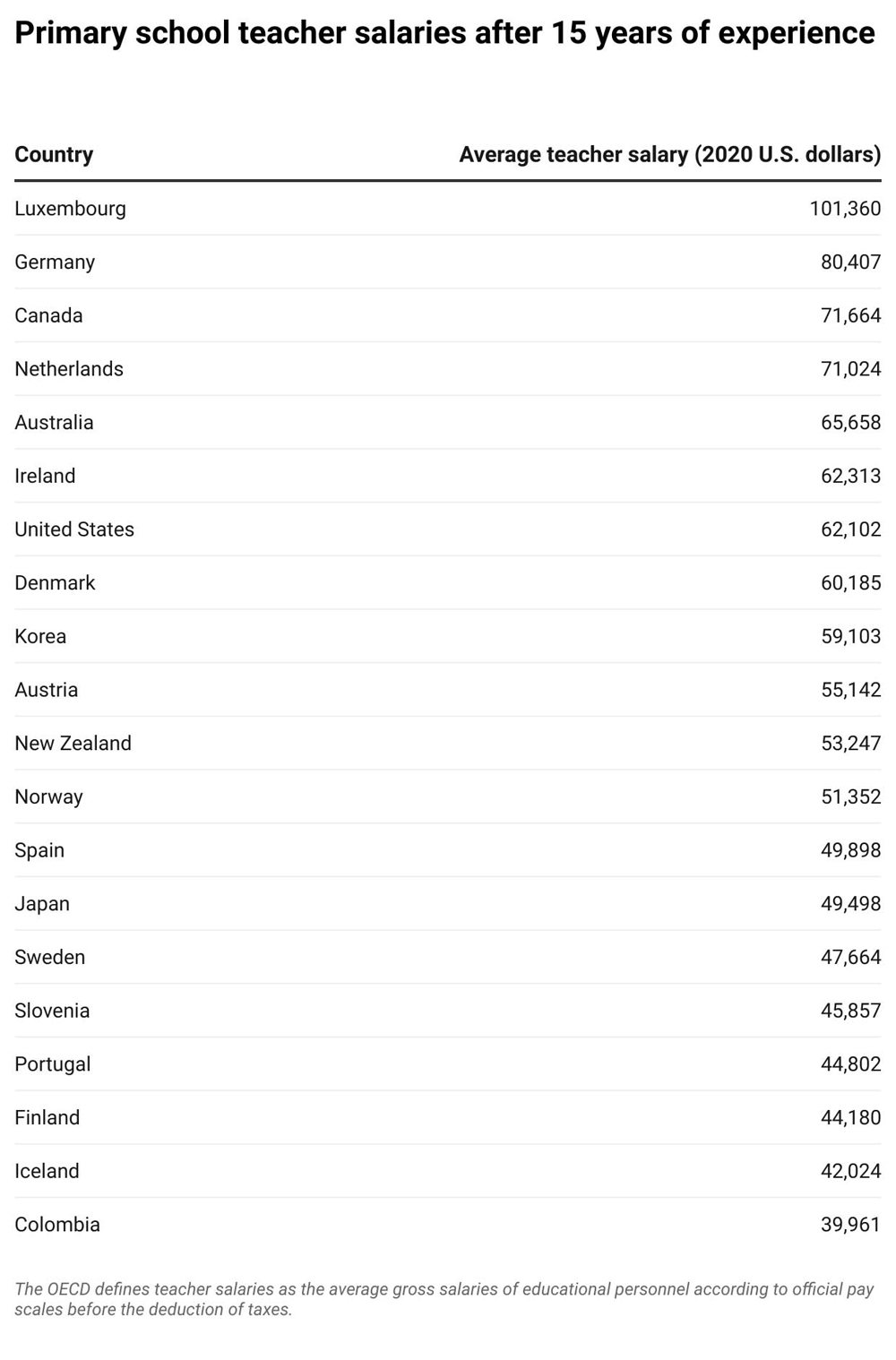
    Most recent OECD data indicate that teachers’ salaries vary widely around the world.

    The highest salary takes place in Luxembourg, where educators earn $101,000 per year, on average.

    In the U.S., primary teachers make closer to $62,000, behind Germany, Canada, Netherlands, Australia, and Ireland.

    Inside our country, teacher conditions vary from state to state. New York has higher-than-average salaries. In contrast, New Hampshire and the District of Columbia were found to be among the worst places for teachers because of relatively low teacher salaries and high teacher turnover rates.

    Before the pandemic, researchers estimated that one out of six American teachers was likely to leave the profession. More recent survey data from 2021 suggests that one out of four teachers considered quitting after the 2020-2021 school year. Quitting happens when instructors feel that they have been exploited rather than due to financial compensation.


  • Adult Learners Prefer Universities for Their Career Preparedness

    Adult Learners Prefer Universities for Their Career Preparedness

    IBL News | New York

    For career preparedness, adult learners prefer to enroll at universities. In their view, higher education institutions better align education with real-world experiences, particularly through hands-on learning.

    This is one of the main findings of a study of The University of Phoenix and The Harris Poll after surveying 3,000 U.S. prospects.

    As a result of the pandemic, adult learners’ demands regarding career enhancement and opportunities are evolving.

    A total of 84% of prospective adult learners say they are more likely to enroll in a higher education institution that places greater emphasis on career preparedness (e.g., hands-on/practical skills) than academic curriculum (e.g., methods, research, theories).

    According to the survey, 92% of adult learners feel that pursuing a higher education degree will help them achieve the “American Dream.” Many adult learners indicate that their vision of the American Dream is rooted in financial stability, security, or success, all achieved through a job or career.

    “Understanding a path forward before making a financial investment is critical to adult learners. They are already juggling jobs, families, and other life demands, and they need to know the value of their commitment,” said John Woods, Provost of the University of Phoenix.

    Adult learners agree that higher education institutions need to rely more on technology and Artificial Intelligence (AI) to best prepare their students for the workforce of the future (75%, current learners; 68%, prospective learners).

    While all support systems are important when attending classes online, academic support from faculty and professors (77%) and IT support if technical difficulties are encountered (75%) are considered very important or absolutely essential for three-quarters of current adult learners who have studied online.