Hundreds of AI-generated influencers have broken into the $21 billion content creator economy, threatening human characters.
Brands have been quick to engage with virtual influencers as a new way to attract attention while reducing costs. In addition, they have total control versus a real person who comes with potential controversy and their own opinions.
These virtual avatars, hyper-realistic created with AI, can be followed by large audiences, as the Financial Times reported.
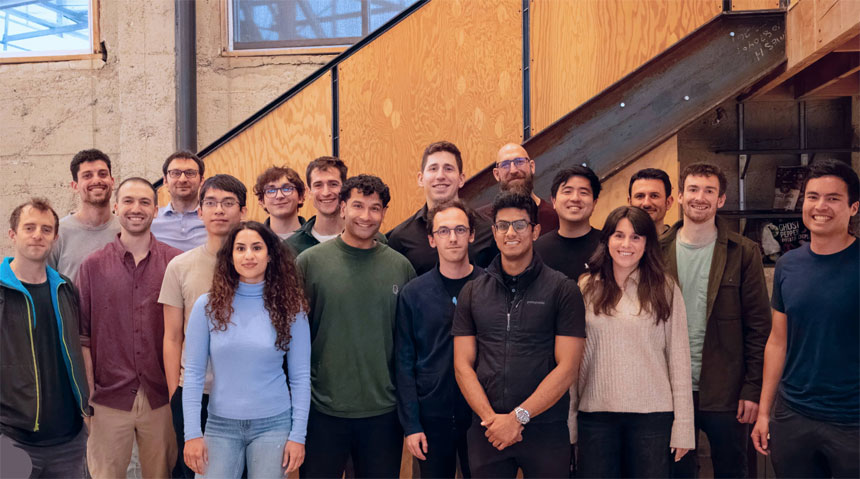
For example, pink-haired, digital Aitana López is followed by over 200,000 people. It was created by the Barcelona-based agency The Clueless, whose creations [in the picture] have been criticized for being overly sexualized.
Brands such as Victoria’s Secret have paid $1,000 a post to promote their products.
Other virtual influencers like Lil Miquela achieved an audience of 3 million followers and have worked with Burberry, Prada, and Givenchy.
The rise of these virtual influencers has been accelerated by the fact that no rule obliges creators to declare that they are generated by AI. India is the only country that forces virtual influencers to reveal their AI origins.
H&M said that its virtual influencer Kuki has reached 11 times more people and resulted in a 91 percent decrease in cost per person compared with a traditional ad.
.
OpenAI responded in a blog post yesterday to The New York Times about its legal action, saying that the paper “manipulated” its models, “is not telling the full story”, and its lawsuit is “without merit.”
• “Training is fair use, but we provide an opt-out because it’s the right thing to do,” OpenAI said.
• “The principle that training AI models is permitted as fair use is supported by a wide range of academics, library associations, civil society groups, startups, leading US companies, creators, authors, and others that recently submitted comments to the US Copyright Office.”
• “We have led the AI industry in providing a simple opt-out process for publishers (which The New York Times adopted in August 2023) to prevent our tools from accessing their sites.”
• “The New York Times is not telling the full story. Our discussions with them appeared to be progressing constructively through our last communication on December 19. (…) Their lawsuit on December 27 came as a surprise and disappointment to us.”
• “It seems The New York Times intentionally manipulated prompts, often including lengthy excerpts of articles, in order to get our model to regurgitate.”
• “We regard The New York Times’ lawsuit to be without merit.”
AI-powered TV anchors are rapidly spreading in Asia. One of the most popular is Lisa, the Indian broadcaster Odisha TV’s anchor [in the picture above].
This robot delivers news bulletins, horoscopes, and weather and sports updates.
Also, Delhi-based India Today Group features Sana, an AI agent that presents news and the weather in English, Hindi, and Bangla, and co-anchors programs with other journalists in 75 languages.
In the southern state of Karnataka, Power TV is using Soundarya, who introduced herself as a “robot anchor.”
This growing tribe of AI anchors also collects and analyzes data, converting it into usable and actionable information.
Production managers say they save costs, allow channels to deliver news in a country with 22 official languages, and crunch vast amounts of data at phenomenal speed.
Critics say the technology is undermining media credibility as they deliver news with a non-human monotonous voice and no hand gestures.
China, Malaysia, and Taiwan broadcasters also use virtual presenters.
.
Paul J. LeBlanc, President and CEO of Southern New Hampshire University (SNHU), who will step down on June 30, 2024, anticipates that the next disruptive wave will be AI. “AI means universities must change dramatically,” he said to The Boston Globe last week.
Paul J. LeBlanc plans to work with a team of six researchers to study emerging AI trends, impacts on education, and opportunities to innovate. He persuaded researcher George Siemens to leave his post and join the team as chief scientist, he revealed to EdSurge.
The group is working on a learning platform as well as setting up to build a massive data consortium in higher-ed, scheduled to be launched in April 2024 at the ASU-GSV conference.
• “I think AI will do to knowledge work — or white-collar jobs if you prefer — what automation did to blue-collar jobs,” he says. “It’s going to be deeply disruptive and displace a lot of people, and we’re going to have to adapt around that.”
• “There are also bigger questions about what jobs will go away and what jobs will be created, which influences the fields of study schools will offer.”
• “In the not-so-distant future, professionals will be judged less by what they know and more by what they can do with what they know, LeBlanc said.” Paul J. LeBlanc led SNHU through major growth in his two decades, transforming a school with 2,500 students in 2003 to more than 225,000 learners, the vast majority of them online, that it serves today.
The Board of Trustees unanimously voted to appoint Lisa Marsh Ryerson as President for a two-year term, effective July 1, 2024.
.
Perplexity — an AI-powered search engine with one million iOS and Android users and $3 million in annual recurring revenue (ARR) — announced yesterday it raised $73.6 million in funding, leading to a valuation of $520 million post-money — a multiple of around 150 times its ARR.
Established in August 2022, this San Francisco-based start-up, with a staff of 40 employees located in a co-working space, says that it plans to go after Google’s dominant position in web search.
The funding round was led by IVP with support from Seed and Series A investors NEA, Elad Gil, Nat Friedman, and Databricks, as well as new investors NVIDIA, Jeff Bezos (through Bezos Expeditions Fund), Tobi Lutke, Bessemer Venture Partners, Naval Ravikant, Balaji Srinivasan, Guillermo Rauch, Austen Allred, Factorial Funds, and Kindred Ventures, among others.
“The times of sifting through SEO spam, sponsored links, and multiple web pages will be replaced by a much more efficient way to consume and share information,” explained Aravind Srinivas, Co-founder & CEO of Perplexity, in a blog post.
He presents the company’s new Copilot product this way:
“It’s an AI research assistant that has changed how we uncover information and learn more about new topics. Copilot tailors search queries with custom follow-up questions, introducing the concept of generative user interfaces. It removes the burden of prompt engineering and does not require users to ask perfectly phrased questions to get the answers they seek. This enables users to gain more relevant and comprehensive answers than other AI chatbots, traditional search engines, or research tools. Copilot has seen strong traction, especially among academics, students, and knowledge workers who rely on frequent research for their day-to-day work and needs.”
In other words, Perplexity says that its advantage is based on using advances in AI to provide direct answers, instead of website links, in response to search queries, without some of the limitations felt by larger companies.
“If you can directly answer somebody’s question, nobody needs those ten blue links,” Srinivas said. Google has begun rolling out a feature that provides lengthy summaries in response to some search queries. Microsoft has struggled to make a dent in Google’s share of the search market since it introduced a version of its Bing search engine that can act like a chatbot.
Neeva, a search start-up that used generative AI to provide direct answers, shut down last year after it failed to gain enough traction to compete with Google.
Perplexity maintains its index of webpages, which it combines with a mixture of AI technology it has designed itself and purchased from outside providers such as OpenAI.
The company, still not profitable, charges $20 a month for a more powerful version of the search engine that uses GPT-4, OpenAI’s most advanced technology.
.
Harvard University’s President, Claudine Gay, resigned Tuesday after facing allegations of plagiarism and criticism over her comments about antisemitism on campus.
Last month, during a tense congressional hearing, Dr. Gay said calls for the killing of Jews were abhorrent. She added, however, that it would depend on the context whether such comments would constitute a violation of Harvard’s code of conduct regarding bullying and harassment.
As a result of the comments, she faced mounting pressure to step down in recent weeks. Dozens of politicians and some high-profile alumni called for her to step down over the comments.
But nearly 700 staff members rallied behind her in a letter, and the university said she would keep her job despite the controversy.
Claudine Gay, 53 years old, served as President for six months and was the first black person, and only the second woman, to be appointed to lead the Ivy League university. Her tenure was the shortest in its 388-year history.
In a letter announcing her resignation, Dr. Claudine Gay said it was in the “best interests” of the university for her to step down.
“This is not a decision I came to easily. Indeed, it has been difficult beyond words,” Dr. Gay said. She added that her resignation would allow Harvard to “focus on the institution rather than any individual”.
Harvard is one of several universities in the U.S. accused of failing to protect its Jewish students following the outbreak of the Israel-Hamas war in October. Jewish groups have reported an alarming rise in antisemitic incidents in the U.S. since the conflict began.
Just hours before she resigned on Tuesday, claims that Dr. Gay had failed to properly cite academic sources emerged and were published anonymously in the conservative Washington Free Beacon newspaper.
Harvard’s board investigated the allegations of plagiarism and found two published papers that required additional citations. The board, however, said that she did not violate standards for research misconduct.
Provost Alan M. Garber ’76, Harvard’s Chief Academic Officer, will serve as interim president effective immediately, The Harvard Gazette reported.
You.com launched this month a set of APIs aimed to give Llama 2 and every other LLM real-time access to the internet, obtain up-to-date context, and augment questions from users.
Most LLMs are trained on publicly available, static data scraped from public web pages, e-books, and elsewhere. That’s sufficient to get them to perform tasks from writing emails to drafting letters and essays. However, it limits the LLMs’ knowledge to the data’s time range.
“When you ask about a recent event, like a Super Bowl score on the day of the Super Bowl, our API will search for those scores on the web, and then you can add that information, in that moment, to the LLM, and it can then use it to answer your question more accurately,” You.com CEO and founder Richard Socher told TechCrunch.
LlamaIndex, Anthropic, and Cohere have already integrated it with their models.
Starting at $100 per month for 14,200 API calls, You.com provides three “flavors” of API at launch: Web search, news results, and RAG (retrieval-augmented generation).
.
The University of California (UC) announced it partnered with Canva to provide all ten campuses with its new AI-powered Magic Studio for free as part of its package of Canva for Campus.
In addition, Canva’s premium suite of visual communication and design tools will be free to students.
The Canva for Campus Visual Suite includes documents, websites, whiteboards, data visualization tools, and Magic Studio. The company said its visual safety tools suite, Canva Shield, addresses using AI responsibly and safely.
The rollout will be conducted in stages, starting in January 2024.
Canva said the partnership highlights its commitment to visual tools as a learning method. Citing its 2023 Visual Economy Report that showed 94% of business leaders across every profession expect employees to have visual design skills. The company said 50 million K–12 teachers and students worldwide use Canva to teach visual literacy.
“Our world today is a visual one. We communicate through presentations, reports, and social media,” said Van Williams, vice president of IT services at UC.
.
Major media outlets and publishers, including Gannett, News Corp, and IAC, in the U.S. have been in confidential talks with OpenAI to license their content, The New York Times reported yesterday. However, agreement on the price and terms has been elusive.
For months, some of the biggest players in the U.S. media industry have been in confidential talks with OpenAI on a tricky issue: the price and terms of licensing their content to the artificial intelligence company.
The Times said that before suing, it had been talking with the companies for months about a deal. And it was not alone. Other news organizations — including Gannett, the largest U.S. newspaper company; News Corp, the owner of The Wall Street Journal; and IAC, the digital colossus behind The Daily Beast and the magazine publisher Dotdash Meredith — have been in talks with OpenAI, said three people familiar with the negotiations, who requested anonymity to discuss the confidential talks.
The News/Media Alliance, which represents more than 2,200 news organizations in North America, has also been talking with OpenAI about coming up with a framework for a deal that would suit its members, a person familiar with the talks said.