Author: IBL News

  • Online Learning | July 2021: Stanford, MIT, ASU-GSV, AI in Education, Chromebook, Robinhood…

    Online Learning | July 2021: Stanford, MIT, ASU-GSV, AI in Education, Chromebook, Robinhood…

    Newsletter format  |  Click here to subscribe ]

    JULY 2021 –  NEWSLETTER #44  |  Breaking news at IBL News  |  Noticias en Español


    Universities

    • Stanford University Sets Its Video Wall for 250 Students on Zoom

    The University of Michigan Extends Its Tuition-Free Program

    • MIT Ranked the World’s Best University for the 10th Year by QS


    Covid

    • Universities with Full Vaccinated People Can Return to In-Person Learning

    • The White House Pushes Colleges and Universities to Get More Students Vaccinated

    • Amazon Starts Selling COVID Test Kits for $39.99 on Its Website


    Industry

    • ASU-GSV Releases the List of the World’s 300 Most Dynamic EdTech Companies

    • AI Technology in Education Will Grow 40% Annually Until 2027


    Initiatives

    • Hollywood Celebrities Set a Film School in Partnership with Los Angeles’ Public System

    • Chromebooks See a Surge of Demand of 43.4 Million Units Due to the Pandemic

    • NVIDIA AI-Based App Turns Rough Sketches into Realistic Landscapes Scenes

    • WordPress Owner Company Buys Journaling App Day One


    Corporate Training

    • IBM Launches a Global Program to Improve the Skills and Employability of Thousands

    • Udacity Issues a Two-Month Free Course on AWS Machine Learning Foundation

    • Bayer Will Use Degreed as Workforce Development Platform


    Wall Street

    • Trading App Robinhood Files Its IPO, Targeting a Valuation of $40B

    • Private Equity Firms Acquire Cloudera In a Deal Valued at $5.3 Billion

    • Chinese Public Companies Lost Billions in Market Cap Because of Deceptive Marketing


    2021 Events | All of the Key Conferences Listed!

    • Education Calendar  – JULY-DECEMBER  |  Conferences in Latin America & Spain


    This newsletter is created in collaboration with IBL Education, a New York City-based company specializing in AI-driven learning platforms. We also film and produce courses for universities and business organizations. Read the latest IBL Newsletter   |  Archive of Open edX Newsletters

  • Open edX & Learning Platforms | July 2021: 2U Buys edX, Coursera, Canvas LMS, Pluralsight…

    Open edX & Learning Platforms | July 2021: 2U Buys edX, Coursera, Canvas LMS, Pluralsight…

    Newsletter format  |  Click here to subscribe ]

    JULY 2021 – NEWSLETTER #38  |  Breaking news at IBL News  |  Noticias en Español


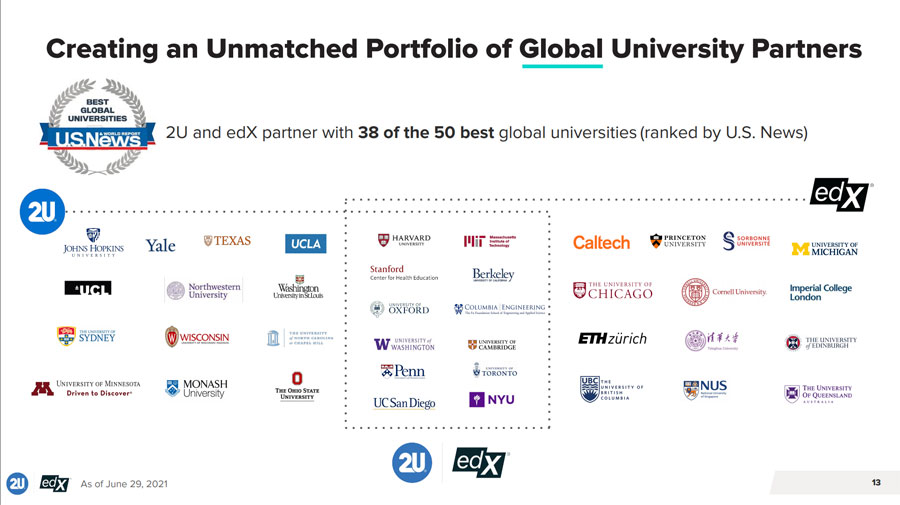
    2U Buys EdX 

    • More Views on What 2U’s Purchase of edX Will Mean for Higher Ed

    • Class Central Says that 2U Might Use edX’s Leads to Push Learners Into Debt

    • Wall Street Receives 2U’s Purchase of edX with Gains

    • Flooded with Cash and the Open edX Software, MIT and Harvard Start to Shape their New Non-Profit Venture

    • 2U Buys MIT’s and Harvard’s edX Platform for $800M; Open edX Software Kept as Non-Profit


    edX | Open edX

    • The University of Cambridge Offers Eight Free Courses on Creative Arts on edX

    • EdX Extends Its Free Catalog of 100 Selected Courses for Universities Until June 2021

    • Open edX Releases Its Twelfth Version of the Platform Called ‘Lilac’


    Coursera

    • Researchers Discovered Security Vulnerabilities on the Coursera.org Platform

    • The U.S. Falls Sharply in Digital Skills Ranking 29th Globally, Says Coursera

    • Billionaire Investor George Soros Strongly Recommends to Buy Coursera’s Stock


    Learning Platforms and Wall Street

    • Instructure Acquires Its Partner “EesySoft” as It Prepares to Go Public… Again!

    • Corporate Training Startup Skillsoft Debuts in the NYSE with a Small Drop

    • The New Skillsoft and Global Knowledge Merged Company Starts in the NYSE

    • Investment Company Platinum Equity Buys McGraw Hill for $4.5 Billion

    • Pluralsight Buys Skills Development Platform A Cloud Guru


    2021 Events | All of the Key Conferences Listed!

    • Education Calendar  –  JULY-DECEMBER  |  Conferences in Latin America & Spain


    This newsletter is created in collaboration with IBL Education, a New York City-based company specializing in AI-driven learning platforms. We also film and produce courses for universities and business organizations. Read the latest IBL Newsletter   |  Archive of Open edX Newsletters
  • Researchers Discovered Security Vulnerabilities on the Coursera.org Platform

    Researchers Discovered Security Vulnerabilities on the Coursera.org Platform

    IBL News | New York

    Three researchers discovered multiple security failings in the Coursera platform, used by 82 million learners and hundreds of Fortune 500 companies.

    Those vulnerabilities on the API (Application Programming Interface) were fixed by Coursera’s tech team, once the company was informed last year.

    Yesterday, Thursday, July 8, the Checkmarx Security Research Team published a report on its finding.

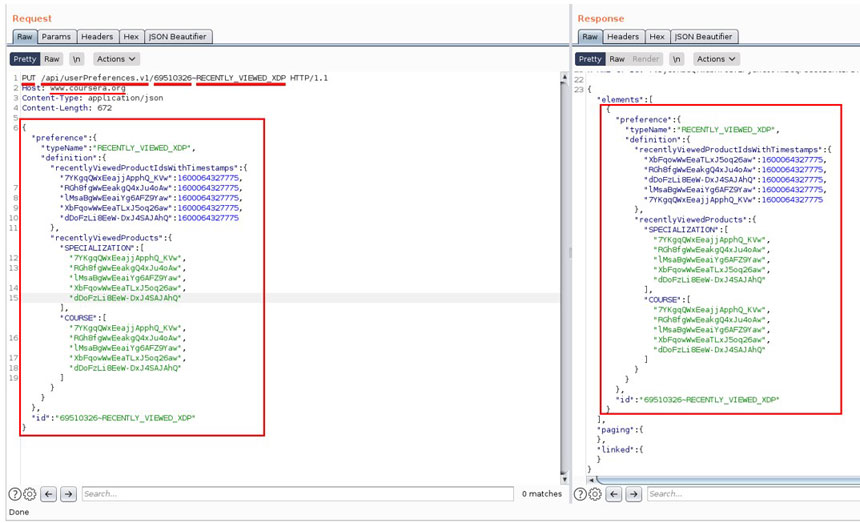
    “Through our research, we discovered multiple API issues, such as user/account enumeration via the reset password feature, lack of resources limiting on both a GraphQL and REST API, and a GraphQL misconfiguration,” wrote Erez Yalon, Head of the Security Research Group at Checkmarx.

    “But specifically, the Broken Object Level Authorization (BOLA) issue we found perfectly fits Coursera’s access control concerns,” 
    he added.

    The main issue of Broken Object Level Authorization (BOLA) security flaw is considered by OWASP to be a major threat due to the ease of exploitation.

    BOLA flaws in APIs may expose endpoints that handle object identifiers, potentially opening the door to wider attacks.

    “This vulnerability could have been abused to understand general users’ courses preferences at a large scale, but also to somehow bias users’ choices, since manipulating their recent activity affected the content rendered on Coursera’s homepage for a specific user,” Erez Yalon stated.

    Meanwhile, Coursera told ZDNet that “the privacy and security of learners on Coursera is a top priority.” “We’re grateful to Checkmarx for bringing the low-risk API-related issues to the attention of our security team last year, who were able to address and resolve the issues promptly.”

  • More Views on What 2U’s Purchase of edX Will Mean for Higher Ed

    More Views on What 2U’s Purchase of edX Will Mean for Higher Ed

    IBL News | New York

    MIT and Harvard’s sale of edX.org to 2U for $800 million continues to dominate the conversation on higher education. New views in favor and against are expressed through articles and forums.

    Paul LeBlanc, President of Southern New Hampshire University (SNHU), one of the largest universities in the U.S., wrote a column on Forbes titled “What 2U’s $800 Million Deal to Acquire edX Means for Higher Ed”.

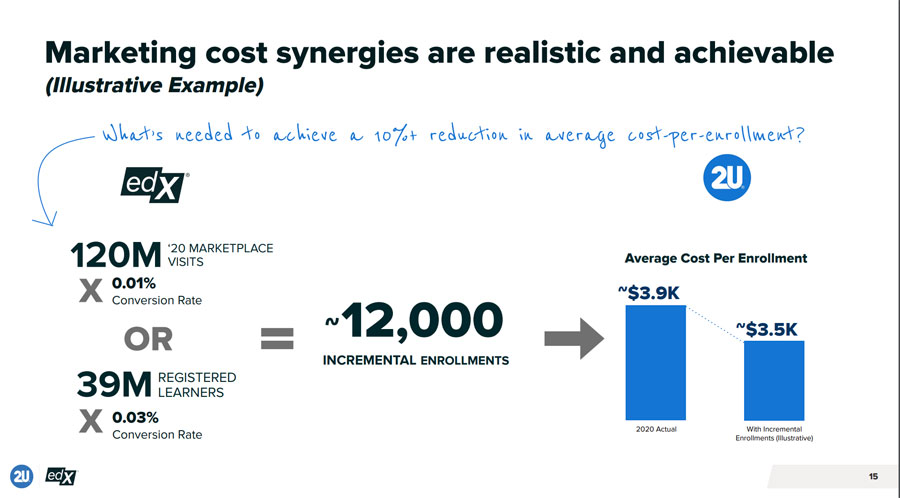
    “For 2U, the acquisition provides not only leads in those markets but also viable product offerings. In an earnings call last week, 2U made the math clear: if it converts only .03% of registered edX learners into its regular offerings, it will reduce the cost of student acquisition by 10% to 15%. Cost of acquisition is huge in online education, 20% or more of the overall budget.”

    “If 2U’s acquisition of edX brings more affordable post-secondary higher education options to more people around the globe with good demonstrable outcomes, then it seems like a good change in the ecosystem for students.”

    The leading newspaper the industry, The Chronicle of Higher Ed, posted an article by Jefferson Pooley, Professor of Media and Communication at Muhlenberg, stating that “MIT and Harvard sold their higher education future, auctioning off the lecture halls of the future.”

    “Harvard and MIT have just made the same disastrous miscalculation. Nonprofits aren’t supposed to flip like this. The edX deal seems to have met the letter, if not the spirit, of nonprofit law by selling off its assets — and by parking the $800 million in a new Harvard-MIT nonprofit with a gauzy “inclusive learning and education” mission.”

    “2U’s mission is fundamentally misaligned with the university tradition. 2U, Coursera, and their venture-funded competitors are built to squeeze profit from our students, using our faculty and course offerings. Harvard and MIT had no right, in the meaningful sense, to sell us off. None of us — not faculty members, not students — signed up for edX to increase Silicon Valley’s wallet share. We will look back on this careless abrogation of stewardship as the tragic squandering that it is.”
    On Inside the Higher Education, columnists focus mostly on ideas towards the new, yet-unnamed nonprofit that MIT and Harvard will create, beyond the officially announced goals of “stewarding and enhancing the Open edX platform“, along with “developing new ways to make online learning more effective, engaging, and personalized.
    Steven Mintz, Professor of History at the University of Texas at Austin, elaborates on “How I’d Spend $800 Million”, suggesting to “do something major”, and states: “There’s a good chance that the $800 million might not materialize in whole or at once. Payments, even in cash, often extend over time.”

    “The single biggest question that needs to be asked is this: Why is it that the edX partners — which include the most highly ranked universities in the world — weren’t able to create a nonprofit open learning endeavor that could successfully compete with for-profits?”

    “Now is the time to look forward by reaffirming edX’s founding vision: to create a cross-institutional collaborative that will address higher ed’s biggest challenges: access, affordability, equity, and attainment.Edward J. Maloney, Professor at Georgetown University, recommends that “the new nonprofit should look beyond online learning and into areas of learning innovation and the scholarship of institutional change.”

    “Both MIT and Harvard are already internationally renowned for their activities in learning science, education scholarship, and research on organizational change.” (…) “Harvard and MIT now have the opportunity to create a new nexus of scholarly inquiry, one that integrates the study of learning and institutional change. Such a focus for the new nonprofit would both continue with, and expand on, the original mission of edX.”

    “This new nonprofit can help to continue edX’s original mission to harness the “transformative power of education.”

    Additional Resource:
    Edward J. Maloney and Joshua Kim in Inside Higher Ed, July 13, 2021: External Partnerships and Higher Ed’s Mission of Critical Analysis

  • Amazon Starts Selling COVID Test Kits for $39.99 on Its Website

    Amazon Starts Selling COVID Test Kits for $39.99 on Its Website

    IBL News | New York

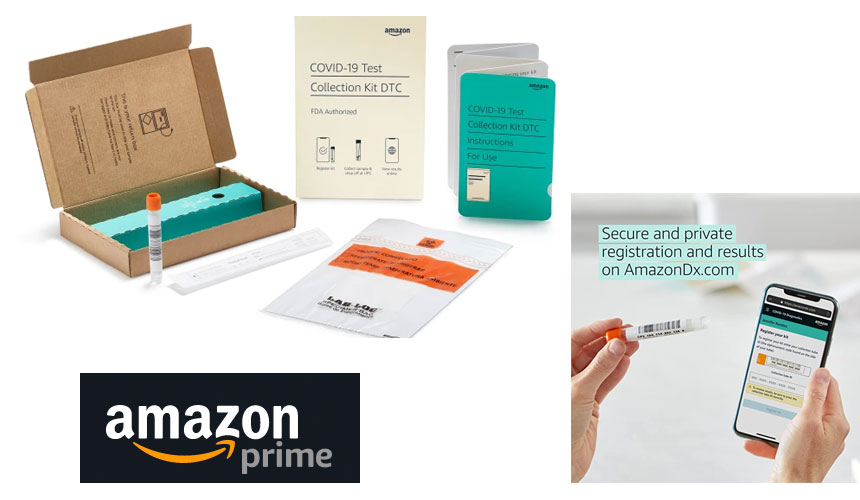
    Amazon.com started today to sell its own COVID-19 at-home test PCR kit, authorized by the FDA. The test retails for $39.99 on the Amazon website and is available only in the U.S., and without a prescription.

    Amazon Covid’s Kit, shipped via Amazon Prime, offers a package needed to perform a nasal swab. It provides results in 24 hours on AmazonDx.com after shoppers send nasal samples to an Amazon lab for processing.

    During the pandemic, Amazon created in-house labs for testing its frontline 750,000 U.S. and U.K. workers. Now the e-commerce giant is offering it to shoppers.

    The Seattle-based company says it uses the most accurate PCR method and it meets requirements for testing when traveling within the US (except Hawaii), and when traveling from the US to many international locations. 


  • Class Central Says that 2U Might Use edX’s Leads to Push Learners Into Debt

    Class Central Says that 2U Might Use edX’s Leads to Push Learners Into Debt

    IBL News | New York

    2U’s purchase of the educational site edX.org will make Coursera.org stronger since edX is surrendering the ideological advantage of its nonprofit status. In addition, 2U is relegating edX to the level of “marketplace” with millions of leads; 2U might use those leads to push thousands of learners into debt, following conversion practices through its “marketing engine.”

    This is the view of Dhawal Shah, an expert in online education and founder and CEO of course aggregator site, Class Central.

    Dhawal Shah’s perspective, expressed in his latest article, “2U + edX Analysis: Win for 2U, Risk for edX, Opportunity for Coursera”, contradicts the dominant narrative of win-win, developed by 2U and edX and amplified by MIT and Harvard University top management.

    Shah’s research doesn’t include the Open edX software, which legally will be owned and controlled by a new nonprofit flooded with $800 million and governed by MIT and Harvard. This open-source platform emerges as one of the winners of the transaction, according to analysts.

    These are the main ideas of the CEO of Class Central:

    • “As someone who’s followed edX and the MOOC space since day 1, this just looks like capitulation.”
    • “For years, edX presented itself as a morally superior alternative to Coursera due to its nonprofit status. But now, they’re relegated to the status of a “marketplace” that might push thousands of learners into debt.”
    • “Some argue this acquisition threatens Coursera. I suspect the opposite: it could make Coursera even stronger since edX is surrendering its biggest, and possibly only, defense against Coursera.”
    • “edX losing its nonprofit status could make some universities rethink their partnerships, creating an opportunity for Coursera to convince some of them to offer courses on their platform or even switch platforms entirely.”
    • “For edX to grow and be able to compete with Coursera, 2U would need to invest hundreds of millions of dollars over the next few years. But is 2U willing to do that? Scratch that. Can 2U even afford to do that?”
    • “edX FY2020’s expenses were about $100M. Will 2U be able to invest another $50–$100 million per year to grow edX?”
    • “Maybe if 2U’s stock price keeps going up, they’ll be able to secure another loan. But this puts edX at the whims of the “market”.”
    • “MIT has already announced it’ll launch a new platform called MITx Online based on Open edX, specifying that “MIT faculty may choose to continue to offer their courses through the new edX after the transaction is completed or move them to MITx Online. This provision signals that some faculty might not be comfortable offering their courses on a for-profit platform, so they’ve been provided a way out. Basically, ~10% of edX’s learners are enrolled in MIT courses. And some of these courses might now move to MITx Online. So this acquisition already cost edX their exclusive access to the offerings of one of the world’s most famous universities.”
    • “2U CEO said the company has long believed that “universities are in control, 2U is not” when it comes to any partnerships with the company. “We have to do right by the stakeholders every single day,” he added. Basically a non-answer from a seasoned executive.”
    • “This is how edX marketplace might work:

    – Combined listings: 2U products will be listed in edX’s catalog. When you visit edX and search for a course, you’ll see programs from edX and 2U combined, with 2U products potentially given priority.

    – Email marketing: registered users might start receiving targeted emails regarding 2U programs based on their activity on the website. For instance, if you enrolled in a data science course, they will send you promotional emails for data science degrees or GetSmarter courses.

    – Landing pages: 2U might also take advantage of edX’s strong presence on Google to create specific landing pages for their online degrees or boot camps.”

    • “2U estimates that 38% of 2U’s 2019 revenue was derived from Title IV loans. But it failed to disclose how many students were getting loans from private lenders.2U’s admissions team tries to convert a “lead” into an actual enrollment through email marketing or direct calls. Companies tend to be really secretive about this and go out of their way to pretend it doesn’t happen.”
    • “I wouldn’t be surprised if there are hundreds of employees at 2U each making dozens of calls daily to prospective students. The now-defunct HotChalk, an OPM like 2U, boasted about making 14k calls daily on its website.”

  • Instructure Acquires Its Partner “EesySoft” as It Prepares to Go Public… Again!

    Instructure Acquires Its Partner “EesySoft” as It Prepares to Go Public… Again!

    IBL News | New York

    Instructure, which owns Canvas LMS, announced last week the acquisition of its long-time partner EesySoft, for an undisclosed amount. The purchase took place in the same week that Instructure quietly announced that it is preparing to go public again, just 15 months after equity firm Thoma Bravo made the company private.

    This June 28, 2021, Instructure Holdings Inc. filed for an IPO (Initial Public Offering) in the SEC. The S-1 filing came after a year-and-a-half-long restructuring of the company discretely, without the watch of regulators and common stockholders in the market.

    In this timeframe, Instructure sold Bridge corporate LMS in February 2021, executed an undisclosed number of layoffs on sales and marketing, and move part of its software development to Budapest, Hungary, where operating costs are notoriously lower.

    Significantly, Instructure didn’t post the announcement of the IPO on its usual PR channels, nor on its Twitter account. The EdTech community’s attention on the 2U-edX transaction helped Instructure’s IPO request to go unnoticed last week.

    Instructure described in its S-1 the restructuring in these terms:

    “We implemented a strategic expense reduction plan that enabled us to focus on delivering customer value sustained by recurring revenue, durable growth, and improved retention, with fewer resources than we had at the time of the Take-Private Transaction. We simplified our organizational design, moved a portion of our development efforts to Budapest, closed and consolidated facilities internationally and within the U.S., and aligned the organization with our sole focus on serving education.”

    The number of shares to be offered and the price range have not yet been determined.

    Instructure will be listed on The New York Stock Exchange (NYSE) under the ticker symbol “INST”, exactly the same it had.

    During the first three months of 2021, Instructure had revenue of $94.0 million and a net loss of $33.1 million, according to the filing. The company’s long-term debt is $778 million.

    Impact by Instructure

    The acquired company EesySoft will be rebranded as “Impact by Instructure”, with solutions to help institutions adopt new tools and evaluate their impact on student engagement and outcomes.

    Steve Daly, CEO of Instructure, explained that “hybrid learning is here to stay” and “districts and schools are under increased pressure to measure the ROI.”

    EesySoft is a 40-person company based in Amsterdam, founded in 2010 by CEO Michel Visser and CTO Jan Henrick Ejme [in the picture above].

    The start-up provides a guided user experience for education technology platforms like Canvas LMS, thereby improving teaching and enhancing the student’s online learning experience. It also offers help for institutions to either add their own or integrate 3rd party assets.

  • Trading App Robinhood Files Its IPO, Targeting a Valuation of $40B

    Trading App Robinhood Files Its IPO, Targeting a Valuation of $40B

    IBL News | New York

    The popular stock trading app for consumers, Robinhood, with 17.7 million active users in its platform, officially filed to go public yesterday, posting its S-1 filing. It will be listed under the symbol “HOOD” in the NASDAQ. According to experts, Robinhood is targeting a valuation of $40 billion.

    The public listing comes after a period of steep growth in crypto trading and a heavy reliance on order-flow payment — a controversial practice of selling trade orders to market makers. Payment for order flow accounted for 81% of Robinhood’s revenue in the first quarter. Options trading brought $198 million. Cryptocurrencies’ revenue rocketed to 17%. More than a third of that cryptocurrency revenue came from joke currency Dogecoin trading.

    Robinhood saw its revenues soar from $277.5 million in 2019 to $985.8 million in 2020. During the first quarter of 2021, it generated revenues of $522.2 million and operating expenses of $463.8 million.

    Notably, Robinhood was profitable in 2020, generating a net income of around $7.4 million during the one-year period.

    However, in the first quarter of 2021, the company lost an epic $1.49 billion. The large loss was due to a fair-value adjustment to convertible notes and warrants that were used to raise emergency funding during the GameStop saga.

    Robinhood is reserving 20% to 35% of its IPO shares for users.

    The filing for IPO came two days after of a landmark fine of $70 million from FINRA, as a result of misleading information.

    To help guide it through its stock market debut, Robinhood has picked Goldman Sachs and JP Morgan as joint lead book-running managers.

    Robinhood raised $3.5 billion this year alone.

  • Wall Street Receives 2U’s Purchase of edX with Gains

    Wall Street Receives 2U’s Purchase of edX with Gains

    IBL News | New York

    While MIT’s and Harvard’s nonprofit edX and publicity traded 2U Inc (NASDAQ: TWOU) continue promoting the advantages of its $800 million deal, the capital markets remain moderately optimistic.

    Since the announcement of the purchase of edX’s brand and nearly all of its assets (on June 29th), the stock is up around 4%, to $42.22 — as it closed this Friday, July 2.

    The market capitalization is $3.14 billion, still far beyond competitor Coursera, with $5.72 billion.

    Edward J. Maloney and Joshua Kim academic experts wrote that “the No. 1 reason as to why this deal is happening, it would be Coursera.”

    “A well-capitalized online platform company like Coursera represents a potentially existential threat to the traditional online program management model, at least in the medium to long term.”

    In addition, 2U and similar OPMs (Online Program Manager) companies spend around 20% of their revenue on client acquisition (paying students), while Coursera’s 80 million global learners allow them to spend considerably less. edX claims to host 39 million registered learners.

    Driving down student acquisition costs, by turning free or low-cost students into paying customers, would allow 2U to scale more rapidly and at a lower cost.

    Coursera can be a strategic threat to existing OPMs, by offering bundled (OPM-like) services, such as instructional design, project management, media, and marketing.

    Regarding edX, MIT and Harvard’s executives implicitly admitted that Coursera’s successful IPO and its well-capitalized strategy made it difficult for a nonprofit to fully compete in the platform space.

    After paying $800 million in cash, education technology provider 2U plans to offer more than 3,500 programs to some 50 million customers globally. The transaction is expected to close in the fall, following regulatory and governmental approval.

    2U did warn that the acquisition could lower its EBIDTA (earnings before interest, taxes, depreciation, and amortization) by a low single-digit percentage on an adjusted basis in 2022. It expects the edX assets will add to earnings in the following year.

    edX will continue to be a public-benefit entity under the umbrella of 2U, allowing ongoing free class auditing and credentials for those seeking lower-cost degrees.

    Analysts said that rising higher education costs make offerings, like edX attractive to students seeking alternative, lower-cost degrees, and certification.

    The shift to remote learning, due to the COVID-19 pandemic, has been a boon to Chegg and 2U, two publicly traded education technology companies that provide everything from tutoring services to online curriculums.


    [Disclosure: IBL Education, the parent company of the IBL News service, uses Open edX software on its platform, and provides custom ecosystems to organizations mentioned in this report and others firms.]

  • Flooded With Cash and the Open edX Software, MIT and Harvard Start to Shape their New Non-Profit Venture

    Flooded With Cash and the Open edX Software, MIT and Harvard Start to Shape their New Non-Profit Venture

    IBL News | New York

    The new, yet-unnamed, educational nonprofit that MIT and Harvard will govern together and will continue to own, advance, and enhance Open edX, MIT said yesterday. It’s expected to be a very different venture from the existing edX Inc, which will be owned by purchaser 2U, becoming a subsidiary registered as a public benefit company.

    It will start with a whopping amount of $800 million in cash paid by 2U and the property of the Open edX software. “It will explore new ways to make online learning more effective, engaging, and personalized,” said MIT.

    Once the transaction is completed, within the next four months, “the nonprofit will aim to do what edX could not: invest at the necessary scale to sustain Open edX as a fresh, vital, open-source learning platform for the world, and tackle the next great research challenges in online learning.”

    “It could, for example, invest in the potential of artificial intelligence to make online learning more responsive and personalized to the individual learner.”

    According to MIT’s President, L. Rafael Reif, the nonprofit mission, focus, agenda, aspirations, and research program will be developed following consultation with faculty of both MIT and Harvard.

    A non-disclosed part of those $800 million in proceeds that 2U paid for the edX brand, course catalog, business, and partners, will be used “to repay a recent line of credit from MIT and Harvard.”

    MIT and Harvard revealed that over the years they contributed $80 million total ($40 million each) to edX. The two institutions said that “they will not recoup those funds from the sale.”

    However, the influx of hundreds of millions of dollars will go to the new non-profit venture. The new venture will keep a non-defined number of employees of the existing edX. Others will work for 2U. The role of CEO Anant Agarwal is not clear yet.

    He will have many options and opportunities to consider, including potentially with the public benefit company edX or the nonprofit MIT and Harvard will govern,” MIT said.

    MITx Online Will Use the Open edX Software

    On the other hand, MIT Open Learning will develop a new world-facing platform called MITx Online, which will host only the institute’s MOOCs. It will not aggregate content generated by other universities. MITx Online will use the Open edX software. OpenCourseWare and the Open Learning Library will continue working.

    2U’s “Marketing Advantages”

    In the meantime, publicly-traded 2U elaborated on the marketing advantages that it will achieve.

    Through a set of slides [PDF download], 2U executives told investors and reporters that the deal will harness the  “marketing engine” of their company with the well-known brand and course marketplace of edX, especially in terms of client acquisition’s cost.

    2U predicts it could convert 0.03% of edX’s users into paying customers. This would lower its marketing costs by $4,000 per enrollment and save 2U $40 to $60 million annually.


    [Disclosure: IBL Education, the parent company of the IBL News service, uses Open edX software on its platform, and provides custom ecosystems to organizations mentioned in this report and other firms.]


    • IBL News, June 29, 2021: 2U Buys MIT’s and Harvard’s edX Platform for $800M; Open edX Software Kept as Non-Profit