Author: IBL News

  • “The New Normal Will Be Blended Education,” Says Agarwal at the Annual Open edX Conference

    “The New Normal Will Be Blended Education,” Says Agarwal at the Annual Open edX Conference

    IBL News | New York

    “The new normal will be blended education in 2025,” said Anant Agarwal, Founder and CEO at edX during the annual Open edX Conference, which took place in a virtual format yesterday. “50% will be online and 50% in person,” he explained.

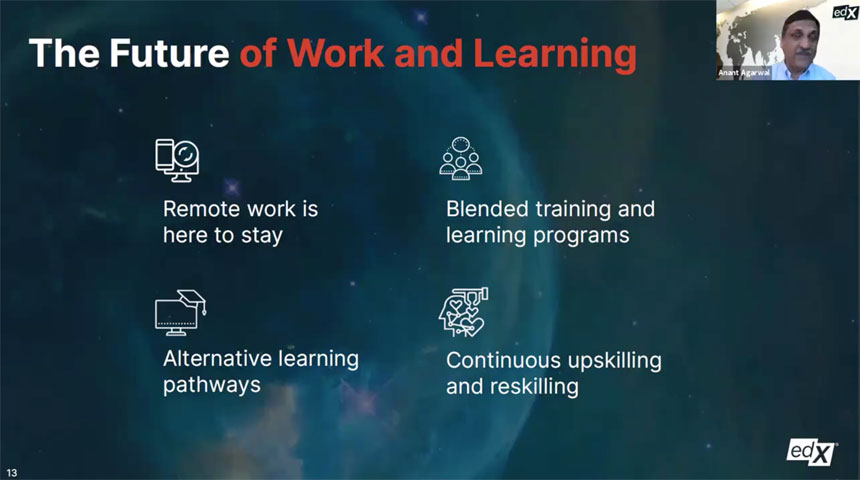
    During the conference’s opening keynote, Mr. Agarwal predicted that the shift will also impact the corporate world. “Remote work and learning are here to stay, and all businesses will go into some kind of blended work model.”

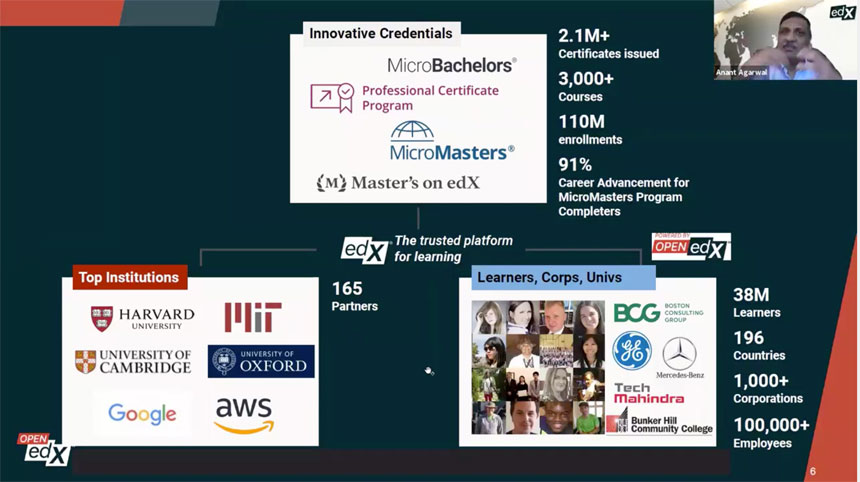
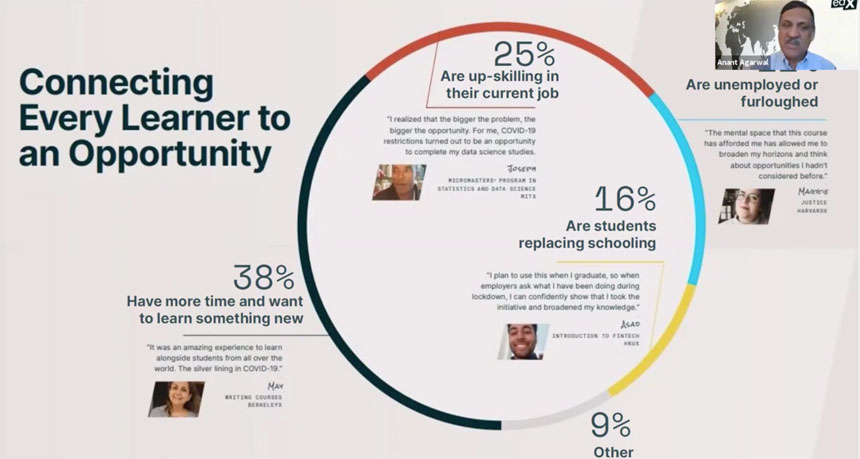
    Anant Agarwal stated that “edX has become the movement of the moment”. The non-profit organization created by MIT and Harvard reached 38 million learners and 1,000 corporations as clients. [See slides below].

    The 2021 Open edX virtual conference — which attracted a limited audience on a paid subscription platform — hosted Sanjay Sarma, Vice President of Open Learning at MIT, as the main speaker. He elaborated about the future of work.

    Sarina Canelake, an edX engineering manager, revealed that 70% of total code contributions on the Open edX platform come from its community of developers.

    One of the successful case studies analyzed was the Harvard University-promoted initiative LabXchange.org. Launched in January 2020, this educational platform has attracted 6.2 million unique users to date.

    As an upcoming development, in addition to the new version of the Open edX platform called Lilac, Marco Morales, from edX, announced that the organization was working on an app that will include “a fully mobile learning experience,” not dependant on the desktop version.

    [Disclosure: IBL Education, the parent company of IBL News, uses Open edX software in its platforms]
     

  • Universities Say to Donors: We Are Happy to Accept Your Crypto as Gift

    Universities Say to Donors: We Are Happy to Accept Your Crypto as Gift

    IBL News | New York

    While the frenzy over cryptocurrencies continues in Wall Street — despite a severe correction last week — colleges and universities launch a message to donors: we are happy to accept your crypto.

    In addition to cash, art, land, or stock, institutions understand that gifting cryptocurrency — Bitcoin, Ethereum, Bitcoin Cash, Litecoin, Dogecoin, Ripple… — is quite beneficial for donors since the money goes directly to the university, avoiding to pay capital gains tax.

    Colleges and universities also do not have to pay capital gains taxes on the gift, because nonprofit organizations are exempt from many taxes.

    The University of Pennsylvania announced last week it received $5 million in Bitcoin. It immediately liquidated that donation and converted it into cash.

    An anonymous donor channeled the crypto money to the Stevens Center for Innovation in Finance at the Wharton School.

    The university is currently accepting cryptocurrency gifts valued at $10,000 or more. However, Penn is using a third-party intermediary called NYDIG to liquidate the assets and transfer cash to the university.

    According to a report at Inside Higher Ed, other universities have also received crypto as gifts, such as the University of Illinois and the University of California.

    The University of California, Berkeley received its first Bitcoin donation in 2017: $50,000 in Bitcoin from the EchoLink Foundation for the university’s Blockchain Lab.

    Seven years ago, an alum gifted $10,000 of Bitcoin to the University of Puget Sound.

  • Economist Education Debuts with a Short Course on ‘The New Global Order’

    Economist Education Debuts with a Short Course on ‘The New Global Order’

    IBL News | New York

    The Economist organization announced yesterday that its new division of Education launched its first course: “The New Global Order: How politics, business, and technology are changing.”

    This 6-week, 6 to 8 hours per week course is part of a new online executive education program, designed “to give business executives an edge in their careers.” It is priced at around $2,000 and has been created in collaboration with GetSmarter, a 2U subsidiary.

    “What makes this program different is that it is created by Economist journalists and features experts from around the world,” said a representative of The Economist to IBL News yesterday.

    “Twenty Economist journalists helped to put together the first course and a number of high-level outside speakers will present including Kevin Rudd, former Prime Minister of Australia, and Eric Schmidt, former CEO of Google.”

    The second course of Economist Education will be on How to Write and is scheduled for the Fall.

  • Dramatic Increase in the Number of Children Falling Basic Reading Skills

    Dramatic Increase in the Number of Children Falling Basic Reading Skills

    IBL News | New York

    Around 460 million children experienced reading difficulties in 2020. That number jumped by 20% to 584 million in 2020, due to the COVID-19 crisis and the school closures.

    This dramatic increase of 100 million children falling behind the minimum proficiency level in reading is wiping out two decades of education gains, according to UNESCO, the United Nations cultural agency. The recovery to the pre-pandemic pathway may take a decade, says this institution.

    The UNESCO’s study One year into COVID: Prioritizing education recovery to avoid a generational catastrophe elaborates on the learning losses. “It’s a generational catastrophe,” states the report.

    The partial or complete shutdown has disrupted schooling for an average of 25 weeks, especially in Latin America and Caribbean countries, as well as in Central and Southern Asia.

    To tackle the problem, UNESCO is calling for schools to reopen “with greater support for teachers; initiatives to prevent pupils from dropping out, and an acceleration of the availability of digital learning tools.”

    The problem of lack of learning gets aggravated with the fact that many nations — one in eight in the world — spend more on debt than education, health, and social protection combined, says a recent report from UNICEF, UN Children’s Fund.

    In this regard, Henrietta Fore, Chief at UNICEF, called for a global effort, with international agencies, creditors, and national governments acting together for debt relief and restructuring. “The personal and public costs are enormous, leaving children, their communities, and their countries with little hope for sustainable economic and social development,” Fore explained.

  • Emeritus.org Acquires Summer Camp ID Tech for $200 Million

    Emeritus.org Acquires Summer Camp ID Tech for $200 Million

    IBL News | New York

    Singapore-based Emeritus.org announced this week the acquisition of ID Tech, an American leading summer camp company specialized in youth STEM education, for $200 million.

    The transaction — which was made through Emeritus’ parent company Eruditus — marks  Emeritus’ expansion into K12 STEM education. Based in Campbell, California, ID Tech will operate independently.

    STEM career opportunities are projected to grow exponentially, with an estimated 3.5 million jobs in the U.S. alone that need to be filled by 2025.

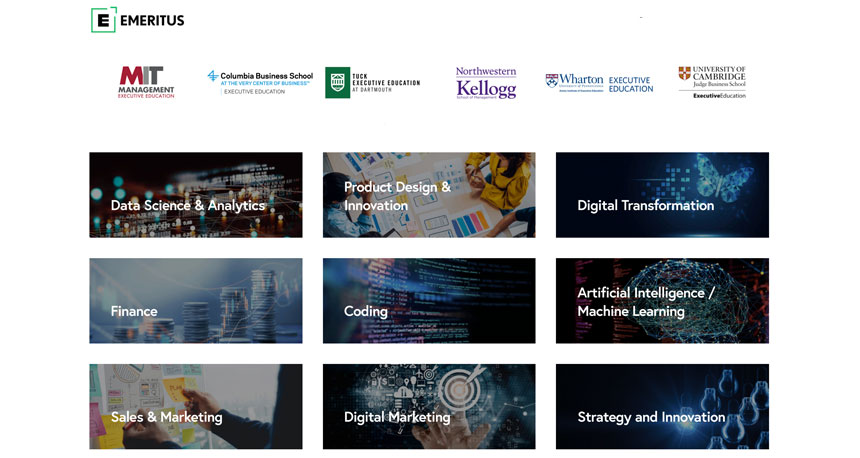
    Emeritus hosts over 200 short courses, online degree programs, boot camps, and CXO programs offered in collaboration with 50 top universities. The main skills taught are related to AR/VR, artificial intelligence, cybersecurity, software engineering, design thinking, and leadership to professionals.

    “We believe that proficiency and mastery of skills should begin in K12, and that iD Tech will be instrumental as we jointly pursue our goal of closing STEM skills gaps globally,” said Ashwin Damera, Co-Founder and CEO at Emeritus.


  • A Course from Penn on edX About the Potential to Fight Diseases with mRNA Vaccines

    A Course from Penn on edX About the Potential to Fight Diseases with mRNA Vaccines

    IBL News | New York

    edX and the Perelman School of Medicine at the University of Pennsylvania (Penn) will launch on May 25 a course about the science behind mRNA vaccines and their potential to radically change the way diseases are fought in the future.

    The COVID-19 Pandemic and the Use of mRNA Vaccines course is taught by Dr. Drew Weissman, professor of Infectious Diseases at Penn Medicine, a pioneer of the mRNA vaccine technology.

    Dr. Drew Weissman’s groundbreaking research forms a foundational part of the two mRNA vaccines from Pfizer/BioNTech and Moderna against Covid.

    Now Weissman and researchers across Penn are investigating mRNA vaccines and treatments for HIV, influenza, and cancer.

    The short, free 6-hour course is designed for non-medical professionals looking to understand more about mRNA vaccines.

    “This is our opportunity and responsibility to give millions of learners access to experts and education that can help them be informed, global citizens,” said Anant Agarwal, CEO and Founder at edX.

    “Education is a critical component of science,” said Weissman. “My colleagues and I are thrilled at the impact mRNA vaccines are having on the world right now, and I’m excited to share my professional passion with people who take the course.”

    The Pfizer/BioNTech and Moderna COVID-19 mRNA vaccines use licensed University of Pennsylvania technology. As a result, Penn and Dr. Weissman have received and may continue to receive significant financial benefits in the future.


  • Engageli.com Nabs Another $33 Million While Announcing the Launch of the Platform

    Engageli.com Nabs Another $33 Million While Announcing the Launch of the Platform

    IBL News | New York

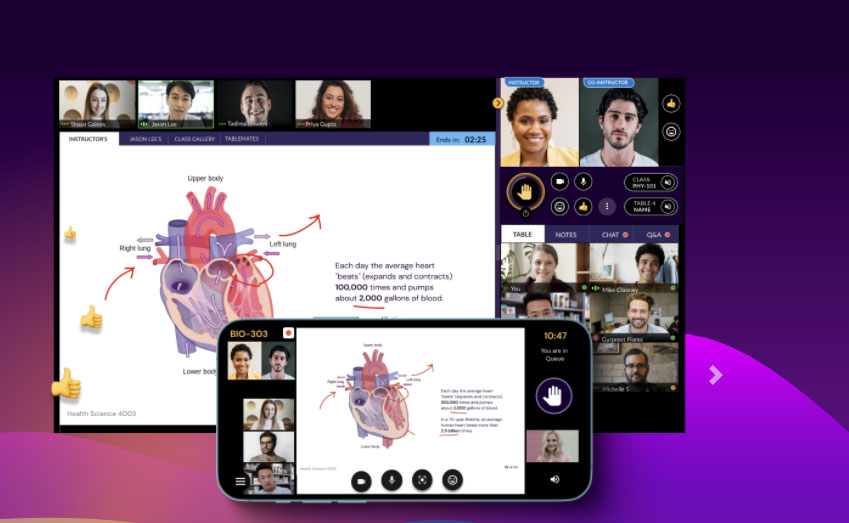
    Engageli.com, a Palo Alto-based collaborative learning platform designed in 2020 to give an answer to Zoom’s teaching limitation, raised another $33 million in Series A this month.

    The round was co-led by Maveron and Corner Ventures. Additional investors included Good Friends, Educapital, and other technology executives. The venture capital firms that invested in Engageli’s seed round also participated in Series A.

    To date, Engageli has raised over $47 million.

    “The new capital will be used to further scale Engageli’s product development and fuel its continued growth,” said Dan Avida, co-founder and CEO of Engageli.

    In parallel, Engageli also announced the spring release of its platform, which includes key features like attendance tracking, LMS integration, a speaker panel, and co-instructor capabilities.

    “Higher education institutions, instructors, and students are looking towards a future where multiple modalities for learning exist in parallel — in person teaching, synchronous and asynchronous online education, as well as hybrid models. Engageli’s platform is designed to support and enhance all these modalities,” said Dan Avida, co-founder and CEO of Engageli.

    Coursera’s Co-Founder and CEO of Insitro Daphne Koller and her husband, computer scientist Dan Avida launched Engageli last fall. Serge Plotkin was also on the founding team.

    https://youtu.be/RNJTjSP-ElQ

    Resources:

    • IBL News, October 2020: Another Zoom Challenger: Engageli Capitalizes on Video Conferencing Limitations

    • IBL News, April 2021: Blackboard’s Former CEO Attracts More Millions for Its Zoom-Based Startup

    • TECHCRUNCH, May 2021: Engageli nabs $33M more for its collaborative video-based teaching platform

  • Google Introduces a Feature that Allows to Video Call While Working on a Shared Doc

    Google Introduces a Feature that Allows to Video Call While Working on a Shared Doc

    IBL News | New York

    Google introduced this week during its year I/O Developer event, Smart Canvas, a workspace collaborative tool that puts docs, productivity, and video together. It means that users can have a video call as they work on a shared document together.

    Many people in higher education use shared documents while they are on a video call, either with Google Meet, Zoom, Webex, or another tool.

    The search giant said that its Smart Canvas enhances every day’s collaborative documents, like Google Docs, Sheets, and Slides, with dozen new features, including emoji reactions in Doc and timeline view in Sheets.

    Another interesting feature was support for live captions and translations in Google Meet. This puts Google in competition with other meeting transcription services, like Otter.ai.


  • Thinkific.com Creates an App Store for the Integration of External Tools

    Thinkific.com Creates an App Store for the Integration of External Tools

    IBL News | New York

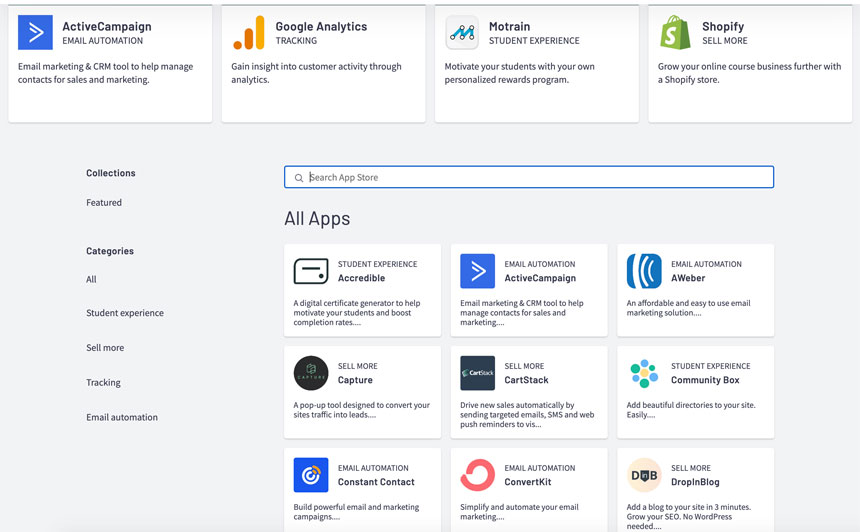
    Thinkific launched its App Store, intended to allow course creators to add interactive elements, games, and one-on-one lessons to their classes.

    To date, the Canadian platform for course creation hosts 30 third-party applications.

    The company encourages using Zapier if that external app is not on the list.

    Riley Webster, from Thinkific, wrote that “connecting apps to their site will keep students glued to the course.”

    This app ecosystem includes apps such as Zoom, Salesforce, Google Analytics, Typeform, Active Campaign, Shopify, and Intercom, among others.

    Marketing automation-related tools for lead conversion are one of the selling points.

    Thinkfic highlights the message that the use of these apps will result in an increase in audience and more revenues on courses.

  • Students Prefer Some Courses Be Fully Online Post-Pandemic

    Students Prefer Some Courses Be Fully Online Post-Pandemic

    IBL News | New York

    Nearly 73% of students say that they would prefer to take some of their courses fully online after the pandemic is gone. A total of 68% of them would choose hybrid learning.

    Faculty members are less in favor of online learning. Only 53% would prefer to teach fully online. 57% prefer hybrid.

    These are the main outcomes of a survey commissioned by Cengage and conducted by Bay View Analytics. The survey polled 1,469 students and 1,286 faculty and administrators across the U.S.

    In terms of digital instructional materials and resources, around 75% of faculty and students claim that they would like to use more technology in the future.

    Robert Hansen, CEO at UPCEA, stated that “the pandemic did not threaten but in fact accelerated the long-term growth, acceptance, and desirability of online learning, and those numbers will only improve, as emergency remote offerings are rebuilt as modern online courses and programs.”