Author: IBL News

  • Zoom Will Allow Users to Create a Digital Clone of Themselves

    Zoom Will Allow Users to Create a Digital Clone of Themselves

    IBL News | New York

    Zoom will allow users to create a digital clone of themselves to chat asynchronously with colleagues. After recording themselves, users can type a script of what they want the digital double to say.

    It will be an AI-animated and photorealistic avatar with synced lip movements and upper arms and shoulders.

    Zoom announced this month during its last annual conference that this feature will be launched in 2025.

    Zoom’s CEO, Eric Yuan, envisions enabling users to create digital twins who can attend meetings, answer emails, and take phone calls.

    Several companies are developing AI tech to clone a person’s face and voice digitally. One example is Tavus, which helps brands create virtual personas for personalized video ads. Another is a Microsoft’s service that generates convincing digital stand-ins for a person.

  • Work AI Platform Glean Raised $260 Million at $4.6 Billion Valuation

    Work AI Platform Glean Raised $260 Million at $4.6 Billion Valuation

    IBL News | New York

    Glean, an AI platform specialized in retrieving data from most used SaaS apps to automate workflows, raised over $260 million in new funding, valued at $4.6 billion. Altimeter and DST Global co-led the round.

    The start-up is introducing advanced prompting capabilities to automate complex, multi-step workflows in its model-agnostic platform. It includes a prompt library.

    Its prompt builder allows users to create, edit, test, and save prompts easily.

    Arvind Jain, CEO at Glean, said, “Every employee, in every role and every company, can leverage AI daily to increase their impact exponentially.”

    “To make AI work at work, it needs to connect and deeply understand all the data, people, processes, and context-specific to your work. It also needs to be intuitive enough for everyone to use, yet powerful enough to do real work.”

    • “The AI transformation we’re in the midst of today promises to be as big or bigger than the internet, mobile, and cloud transformations we’ve seen over the last century.”


     + Product Videos

  • The Image Generation Model Flux 1 Made Available Its API

    The Image Generation Model Flux 1 Made Available Its API

    IBL News | New York

    Black Forest Labs, the Andreessen Horowitz-backed German startup behind the image generation model Flux 1, announced, in a blog post, an API in beta.

    Developers can choose which Flux model to build into their app or service, including content moderation layer and constraints on image resolution.

    The company also unveiled its latest image generation model, Flux1.1 Pro, which it claims provides six times faster generation than its predecessor.

    The model can scale up to 2k (2048 × 1080) images, a feature soon available in the API.

    In addition to Black Forest Labs’ platform, Flux1.1 Pro is available through the startup’s partners, including Together AI, Replicate, Fal.AI, and Freepik.

    Prices start at 2.5 credits per image; 100 credits cost $1. Flux1.1 Pro costs four credits per image.

    Black Forest Labs was co-founded by the engineers who built the tech behind Stability AI, including Andreas Blattmann, Patrick Esser, Dominik Lorenz, and CEO Robin Rombach. It raised $31 million in funding and is now said to be raising $100 million at a $1 billion valuation.

    The start-up’s current backers include Y Combinator CEO Garry Tan and former Oculus CEO Brendan Iribe. It is developing video-generating models.

    Competitors include Ideogram, Pika, Luma, Runway, Stability, Midjourney, and incumbents like OpenAI and Google.

    The startup became controversial after its deal with xAI to build Flux into xAI’s Grok without safety guardrails, resulting in a torrent of outrageous images.

  • Prof. Barba Presents a New Pedagogical Design to Build a Course-Level AI Mentor

    Prof. Barba Presents a New Pedagogical Design to Build a Course-Level AI Mentor

    IBL News | New York

    [Updated: October 17, 2024]

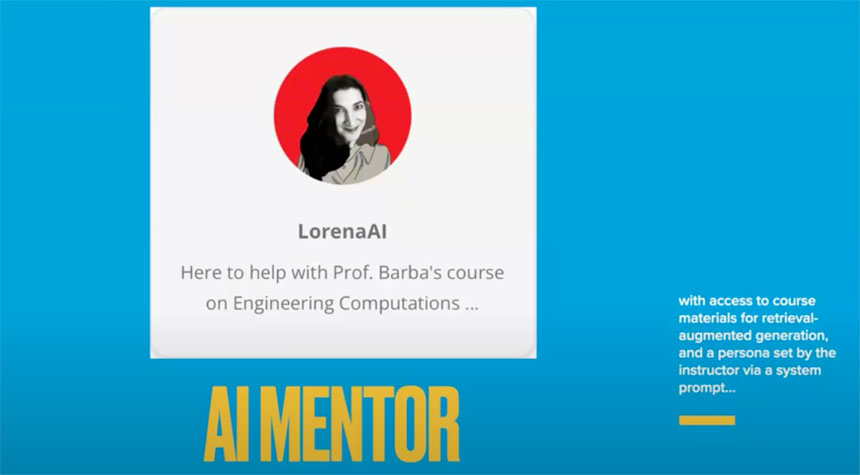
    Professor Lorena A. Barba at George Washington University presented a new AI mentor at the institution’s School of Engineering & Applied Science, one that is both student-centered and faculty-led.

    “What sets our approach apart is its focus on pedagogical design and cost-effectiveness. Unlike enterprise-wide solutions, the pay-as-you-go model could save institutions significant resources while offering greater customization,” Profesor Barba explained.

    GW’s School of Engineering & Applied Science endorsed the initiative.

    According to a July 2024 survey by the Digital Education Council, 86% of students already use AI in their studies.

    “Most are using ChatGPT, and not very well. Our AI mentor addresses this reality by providing a customizable, course-specific tool that grounds AI responses in course materials,” Profesor Barba explained during a presentation [video | pdf document].

    Key features of this AI mentor include:

    • Instructor-controlled AI persona
    • Integration of course resources
    • Context-aware responses (via RAG)
    • Flexible model selection (no vendor lock-in)
    • Cost usage tracking via AI vendor dashboard

    Professor Lorena A. Barba showcased the AI mentor’s interface with a live demo, showing how to add course resources, set the AI’s behavior through prompts, and moderate student interactions.

    The demo included examples of the AI mentor responding to student queries, showcasing its ability to provide course-specific information and encourage critical thinking.

    This pilot was conducted in collaboration with ibl.ai as the technical partner.

    GW: Professor Barba Unveils AI Mentor for Course-Level Support at GW Engineering

    (Disclosure: ibl.ai is the parent company of iblnews.org news service).


  • Nvidia Released a Powerful Open-Source AI Model Named ‘NVLM 1.0’

    Nvidia Released a Powerful Open-Source AI Model Named ‘NVLM 1.0’

    IBL News | New York

    Nvidia released a powerful open-source AI model that competes with proprietary systems like OpenAI and Google this week.

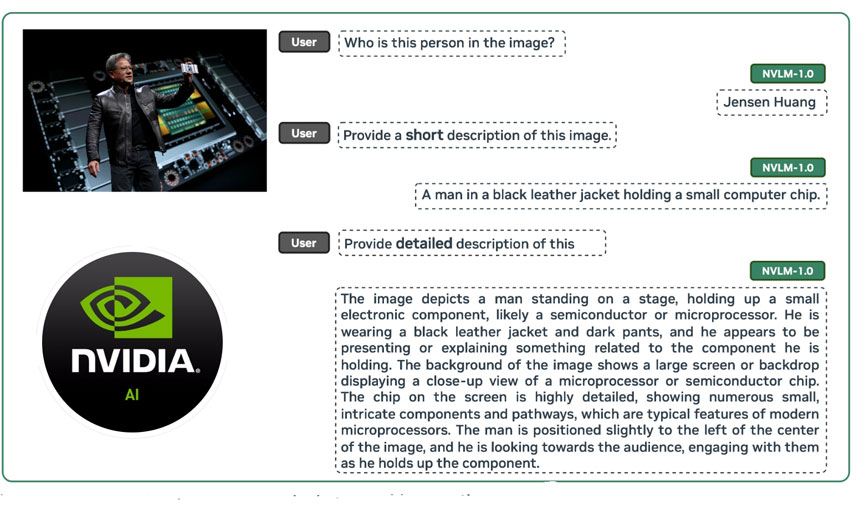
    Nvidia researchers explained in a paper that its new NVLM 1.0 family of large multimodal language models, led by the 72 billion parameter NVLM-D-72B, “demonstrates exceptional performance across vision-language tasks, rivaling the leading proprietary models (e.g., GPT-4o) and open-access models.”

    By making the model weights publicly available and promising to release the training code, Nvidia is breaking from the trend of keeping advanced AI systems closed.

    The initiative grants researchers and developers unprecedented access to cutting-edge technology.

    Benchmark results comparing NVIDIA’s NVLM-D model to AI giants like GPT-4, Claude 3.5, and Llama 3-V, showing NVLM-D’s competitive performance across various visual and language tasks. (Credit: arxiv.org)


    NVIDIA’s new AI model analyzes a meme comparing academic abstracts to full papers, demonstrating its ability to interpret visual humor and scholarly concepts. (Credit: arxiv.org)

    Nvidia’s decision to make such a powerful model openly available could accelerate AI research and development across the field.

    Experts said that this move could spark a chain reaction as other well funded  companies may feel pressure to open their research, potentially accelerating AI progress across the board.

    Nvidia’s decision also raises questions about the future of AI business models. If state-of-the-art models become freely available, companies may need to rethink how they create value and maintain competitive edges in AI.


    [Disclosure: ibl.ai, the parent company of iblnews.org, has NVIDIA as a client]

  • Microsoft Announced New Copilot Capabilities On Windows For All Users

    Microsoft Announced New Copilot Capabilities On Windows For All Users

    IBL News | New York

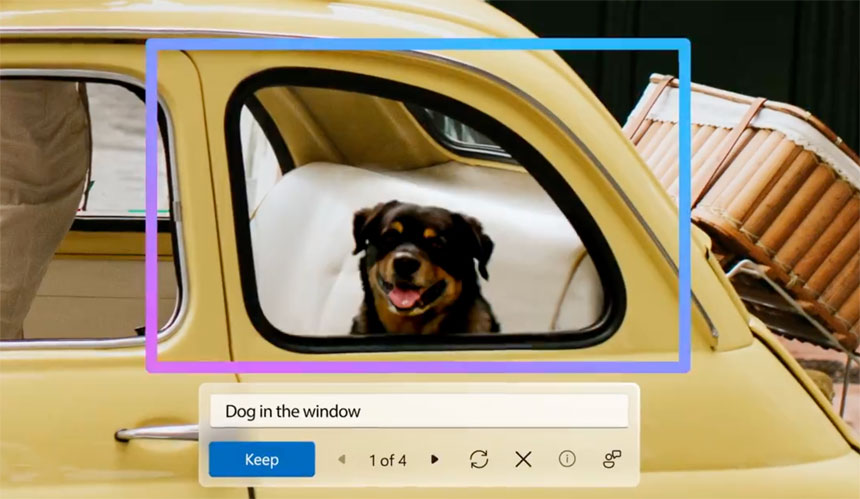
    Microsoft announced new Copilot capabilities on Windows for all users this month, including a tool that responds to questions about what’s on the screen. Also, Microsoft launched new versions, with a new style, of Copilot apps for iOS, Android, Windows, and the web.

    Another feature is Copilot Vision, which, installed on the Edge browser tool, reads and interprets the images and text it sees on the page for the first time.

    According to the giant company, “It can suggest next steps, answer questions, help navigate whatever you want to do, and assist with tasks, all while you simply speak to it in natural language.” However, it can interpret only the types of non-payment websites.

    An additional interesting feature is CoPilot Voice. Like OpenAI’s Advanced Voice Mode for ChatGPT, Copilot Voice can detect the user’s tone during conversations and respond accordingly. Users can interject at any point while Copilot Voice is answering.

  • The OPM Industry Is On Life Support, Analysts Say

    The OPM Industry Is On Life Support, Analysts Say

    IBL News | New York

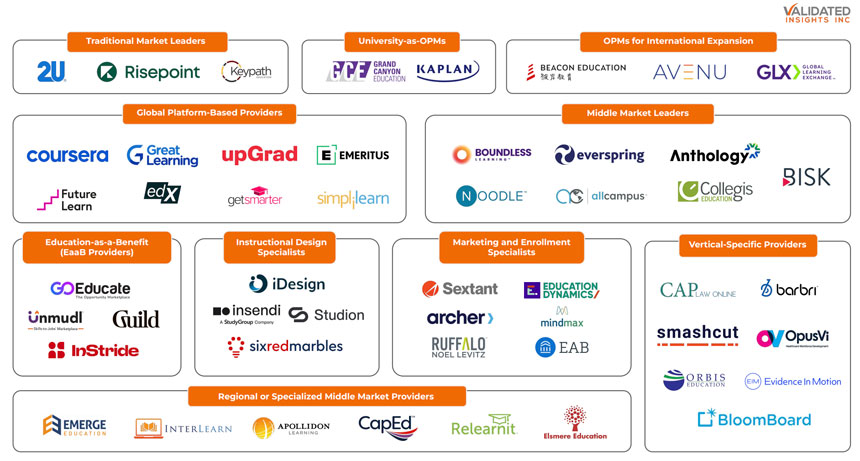
    The OPM (Online Program Manager) industry is at a standstill after colleges’ interest in partnering with these companies vanished, according to data released by market researcher Validated Insights.

    Venture Capital investments for OPMs have disappeared, and colleges appear to simply be disenchanted with OPM providers.

    The OPM companies work on a revenue-sharing model through which they take a percentage, usually a majority, of tuition and fees for every student they recruit.

    In 2023, 147 contracts and partnerships with OPMs expired or were terminated, the most of any year since 2020.

    Only eight new OPM contracts were signed in the first quarter 2025 and 21 in the second quarter.

    Total funding for OPMs has dropped by 97 percent since peak interest in early 2021, and venture capital investments in the companies have all but disappeared.

    Validated Insights’ head of market research, Brady Colby, told Inside Higher Ed, “It used to be that 2U or some other OPM could ink a 15-year agreement at a 70 percent revenue share.” “Those days are over. Institutions now have the upper hand at the negotiating table.”

    Ed-tech market analyst Phil Hill said the sector was “on life support.”

    Last year, federal regulators put the companies in their crosshairs over their aggressive recruitment practices.

    The Education Department is threatening to regulate the OPM space more strictly, primarily by updating guidance for third-party services. For years, OPMs have been able to share revenue with colleges.

    This strict regulatory environment has played a role in the sector’s downturn.

    In 2024, onetime market leader 2U declared bankruptcy. Fordham University filed to end its long-standing partnership with 2U early last month after seven years of what the institution described as “incompetence” and “negligence.”

    In May, Minnesota passed the first state law restricting OPM growth.

    This month, a student legal advocacy group sued provider Coursera and its partner, the University of Maryland Global Campus, challenging the legality of the OPM business model.

  • Hugging Face Hub for Fine-Tuned AI Models Surpassed One Million Listings

    Hugging Face Hub for Fine-Tuned AI Models Surpassed One Million Listings

    IBL News | New York

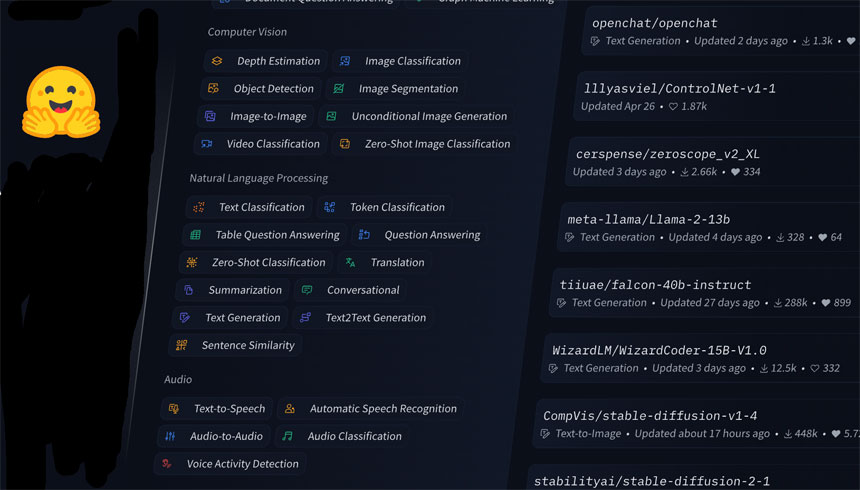
    The Hugging Face hosting platform surpassed 1 million listings of AI models trained on data to perform specific tasks or make predictions.

    The platform started as a chatbot app in 2016 and became an open-source hub for AI models and tools for developers and researchers in 2020.

    In a post on X, Hugging Face CEO Clément Delangue wrote about how his company hosts many high-profile AI models, like “Llama, Gemma, Phi, Flux, Mistral, Starcoder, Qwen, Stable diffusion, Grok, Whisper, Olmo, Command, Zephyr, OpenELM, Jamba, Yi,” but also “999,984 others.”

    Delangue explained,
    “Contrary to the ‘1 model to rule them all’ fallacy, smaller specialized customized optimized models for your use-case, your domain, your language, your hardware and generally your constraints are better. As a matter of fact, something that few people realize is that there are almost as many models on Hugging Face that are private only to one organization—for companies to build AI privately, specifically for their use-cases.”

    Hugging Face’s exponential growth into a major AI platform hosting fine-tuned models shows the increased interest in the field.

    Developers and researchers worldwide have contributed their results, making Hugging Face a large ecosystem.

    For example, many different fine-tuned versions of Llama models are optimized for specific applications.

    At the top of the most downloads category, with a massive lead at 163 million downloads, is Audio Spectrogram Transformer from MIT, which classifies audio content like speech, music, and environmental sounds.

    Following that, with 54.2 million downloads, is BERT from Google, an AI language model that learns to understand English by predicting masked words and sentence relationships, enabling it to assist with various language tasks.

    At the top five AI models, users find OpenAI’s CLIP, which connects images and text, allowing it to classify or describe visual content using natural language.

  • 2U’s CEO, Paul S. Lalljie, Stepped Down After Less Than a Year

    2U’s CEO, Paul S. Lalljie, Stepped Down After Less Than a Year

    IBL News | New York

    2U’s CEO, Paul S. Lalljie, stepped down just weeks after the company emerged from Chapter 11 bankruptcy.

    According to the company’s announcement, Lalljie, who has been 2U’s CEO since late 2023, also resigned from his board seat.

    Lalljie [in the picture] served as chief executive for less than a year after succeeding 2U co-founder and longtime CEO Chip Paucek.

    2U’s Board appointed Matthew Norden as interim CEO and initiated a search for a permanent successor. Norden is currently 2U’s Chief Financial Officer and will continue in this role as well.

    “Leading 2U through this period has been both demanding and fulfilling,” said Lalljie.

    “With over a decade of experience at 2U, Matt Norden deeply understands 2U’s business, its culture, and critically, the needs of our incredible partners,” said Brian Napack, Executive Chairman of 2U’s Board.

    News about 2U


  • Professors Create Digital Twins to Upload Course Materials 

    Professors Create Digital Twins to Upload Course Materials 

    IBL News | New York

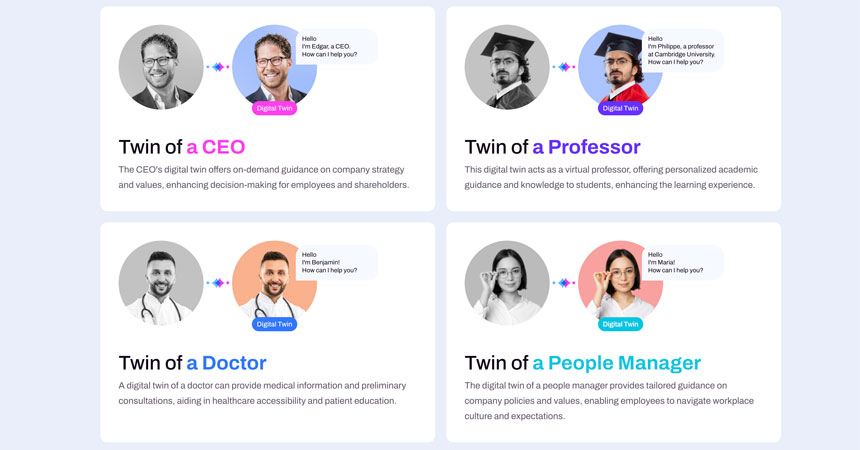
    Another approach to dealing with course materials is to leverage GenAI to create a digital twin and get 24/7 answers to course-related questions.

    This AI-based knowledge base provides students access to the course repository and supplemental learning resources.

    The SecureTwin.AI platform is one of the competing companies.

    This digital twin responds to common queries (provided as prompts) and any other questions the student might have.

    The videos below demonstrate how a professor solved these challenges

    The instructor created a digital twin, populated it with course materials, and allowed students to ask questions via chat.

    This approach allowed him to gain the flexibility to juggle teaching and research.