Author: IBL News

  • What AI Agents Are Needed Beyond Tutoring and Content Creation in Universities?

    What AI Agents Are Needed Beyond Tutoring and Content Creation in Universities?

    IBL News | New York

    What AI agents are needed beyond tutoring and content creation in universities?

    Critical areas relate to student recruitment, admission, enrollment, management, and support. Curriculum design, delivery, and research are also crucial. Strategy, business management, and marketing are other areas that require agents.

    Student Recruitment:
    – Domestic Student Recruitment
    – International Student Recruitment

    Student Admission:
    – Study Application Management
    – Learning Recognition Management

    Student Enrolment:
    – Matriculation
    – Enrollment
    – Student Allocation
    – Timetable Management

    Student Management:
    – Scholarship Management
    – Student Liability Management
    – Student Academic Progress Management
    – Cross-Institutional Study
    – Placement Management
    – Examination Management
    – Special Consideration Management
    – Research Candidature Management
    – Student Misconduct Management

    Student Support:
    – Careers Advice
    – Academic Advice
    – Core Skills Development
    – Financial Advice
    – Student Grievance Management

    Student Assessment:
    – Learning Assessment
    – Student Research Assessment


    Curriculum
    Management:
    – Curriculum Planning
    – Curriculum Design
    – Curriculum Production
    – Curriculum Accreditation
    – Offering Management
    – Curriculum Improvement
    – Curriculum Disestablishment

    Curriculum Delivery:
    – Learning & Teaching Resource Preparation
    – Learning & Teaching Resource Management
    – Learning & Teaching Delivery
    – Student Supervision

    Completion Management:
    – Completion Award


    Research
    Opportunities & Planning:

    – Research Opportunity Management
    – Collaborative Opportunity Management
    – Research Project Design

    Research Funding:
    – Research Fund Sourcing
    – Research Grant Management

    Research Assurance:
    – Research Ethics Management
    – Research Integrity Management
    – Research Performance Management
    – Research Quality Management

    Research Management:
    – Research Funds Management
    – Research Program Management

    Research Delivery:
    – Research Data Management
    – Research-Creation
    – Research Infrastructure Management
    – Research Resource Management

    Research Dissemination:
    – Research Output Management
    – Research Outcome Management
    – Research Impact Management
    – Research Commercialization Management


    Business
    Capability Management:

    – Business Planning
    – Enterprise Architecture
    – Customer Experience Management
    – Business Process Management
    – Service Management
    – Change Management
    – Portfolio & Program Management
    – Project Management
    – Product Management
    – Benefits Management

    Strategy Management:
    – Vision & Strategy Development
    – Strategic Plan Management

    Advancement Management:
    – Alumni Management
    – Development & Fundraising
    – Donor, Sponsor & Philanthropist Management

    Marketing Management:
    – Advertising
    – Campaign
    – Market Research
    – Marketing Planning
    – Communication

    Library Administration:
    – Library Collection Management
    – Collection Access Management


    Government
    , Risk & Compliance:

    – Policy Management
    – Quality Management
    – Risk Management
    – Compliance Management
    – Business Continuity Management
    – Incident Management
    – Investigation Management
    – Internal Audit
    – Complaint & Compliment Management

    Joe Sabado, from UC Santa Barbara, created a compelling diagram about AI agents:

    Curriculum Management:
    – Curriculum Planning
    – Curriculum Design
    – Curriculum Production
    – Curriculum Accreditation
    – Offering Management
    – Curriculum Improvement
    – Curriculum Disestablishment

    Student Recruitment:
    – Domestic Student Recruitment
    – International Student Recruitment

    Student Admission:
    – Study Application Management
    – Learning Recognition Management

    Student Enrolment:
    – Matriculation
    – Enrollment
    – Student Allocation
    – Timetable Management

    Student Management:
    – Scholarship Management
    – Student Liability Management
    – Student Academic Progress Management
    – Cross-Institutional Study
    – Placement Management
    – Examination Management
    – Special Consideration Management
    – Research Candidature Management
    – Student Misconduct Management

    Student Support:
    – Careers Advice
    – Academic Advice
    – Core Skills Development
    – Financial Advice
    – Student Grievance Management

    Curriculum Delivery:
    – Learning & Teaching Resource Preparation
    – Learning & Teaching Resource Management
    – Learning & Teaching Delivery
    – Student Supervision

    Student Assessment:
    – Learning Assessment
    – Student Research Assessment

    Completion Management:
    – Completion Award

    Research Opportunities & Planning:
    – Research Opportunity Management
    – Collaborative Opportunity Management
    – Research Project Design

    Research Funding:
    – Research Fund Sourcing
    – Research Grant Management

    Research Assurance:
    – Research Ethics Management
    – Research Integrity Management
    – Research Performance Management
    – Research Quality Management

    Research Management:
    – Research Funds Management
    – Research Program Management

    Research Delivery:
    – Research Data Management
    – Research Creation
    – Research Infrastructure Management
    – Research Resource Management

    Research Dissemination:
    – Research Output Management
    – Research Outcome Management
    – Research Impact Management
    – Research Commercialization Management

    Strategy Management:
    – Vision & Strategy Development
    – Strategic Plan Management

    Business Capability Management:
    – Business Planning
    – Enterprise Architecture
    – Customer Experience Management
    – Business Process Management
    – Service Management
    – Change Management
    – Portfolio & Program Management
    – Project Management
    – Product Management
    – Benefits Management

    Library Administration:
    – Library Collection Management
    – Collection Access Management

    Government, Risk & Compliance:
    – Policy Management
    – Quality Management
    – Risk Management
    – Compliance Management
    – Business Continuity Management
    – Incident Management
    – Investigation Management
    – Internal Audit
    – Complaint & Compliment Management

    Advancement Management:
    – Alumni Management
    – Development & Fundraising
    – Donor, Sponsor & Philanthropist Management

    Marketing Management:
    – Advertising
    – Campaign
    – Market Research
    – Marketing Planning
    – Communication

  • Colleges and Universities Fear Presidente Trump’s New Policies May Have a Wide Impact

    Colleges and Universities Fear Presidente Trump’s New Policies May Have a Wide Impact

    IBL News | New York

    With Donald Trump’s victory for a second presidential term and a Congress potentially under unified G.O.P. control, colleges feel politically and culturally weaker and fear that new proposed policies can have a wider impact, The New York Times wrote. Who President-elected Trump chooses to lead the Education Department could play an important role.

    During his campaign, President-elected Trump said he thought that colleges needed to be reclaimed from “Marxist maniacs,” while his running mate, JD Vance, has described universities as “the enemy.” (Both men attended Ivy League institutions.)

    In the last years, republicans have portrayed colleges as bastions of leftism, promising to reshape higher education by rooting out progressive ideology.

    Additionally, universities have been under increasing pressure from lawmakers, and public confidence in colleges has fallen.

    Last year, two Ivy League presidents resigned following the way they handled pro-Palestinian activists on their campuses. Other top university leaders have resigned amid criticism over protest responses.

    The Heritage Foundation’s Project 2025 — an outline for President Trump’s second term that he has tried to distance himself from — calls for sweeping changes, like privatizing all student loans, rolling back protections for transgender students, and paring back diversity efforts on campus.

    “The administration could wield control over the arcane but crucial accreditation process, which Mr. Trump has described as his “secret weapon” to force ideological changes. The president-elect has spoken of expanding the taxation of university endowments. And the new administration could scrap President Biden’s expansive student-debt forgiveness efforts and loosen regulation of for-profit colleges,” wrote The Times.

    During his campaign, Mr. Trump floated a powerful idea: a new university called The American Academy. It would be a tuition-free online university competing with existing colleges and dole out bachelor’s degrees that all government agencies and federal contractors would recognize.

    This new institution — which he said would be “strictly nonpolitical” with “no wokeness or jihadism” — would be paid for by expanding taxation of university endowments.

    Some colleges depend heavily on their endowments to pay for student financial aid.

    Another way of applying financial leverage would be to challenge the way colleges and universities are accredited and, therefore, become eligible to participate in federal student aid programs.

    The current system is overseen by nongovernmental organizations approved by the federal government. Mr. Trump has discussed opening the process and allowing states to accredit universities directly. He might also approve new accrediting agencies that are friendlier to for-profit colleges, similar to actions taken during his first term.

  • Microsoft Enhanced Its Notepad with AI-Powered Text Editing

    Microsoft Enhanced Its Notepad with AI-Powered Text Editing

    IBL News | New York

    Microsoft is adding AI-powered text editing to its Windows 11 Notepad.

    This feature, called Rewrite, allows users to rephrase sentences, adjust tone, and modify the length of the content based on preferences. It uses a model named GPT.

    To make it work, the user highlights the text he or she wants to improve.

    The user can rewrite a sentence to sound more formal or make a paragraph more concise. He can also customize the tone of your writing to match your needs, from casual to professional.

    After selecting your desired option, Notepad will generate three variations of the rewritten text.

  • OpenAI Officially Opened Its New York Office

    OpenAI Officially Opened Its New York Office

    IBL News | New York

    OpenAI officially opened its New York office this month. It’s located at the iconic Puck Building. “This new office reflects our mission to harness the potential of GenAI to empower people to solve complex problems right here in New York,” said the company that created ChatGPT

    At the same time, OpenAI announced a partnership with the New York City Economic Development Corporation (NYCEDC) through their startup accelerator program, the Founder Fellowship.

    As a marketing promotion, OpenAI will offer all 2025 $5,000 on API credits to help them innovate and grow. OpenAI is contributing $375,000.

    The Founder Fellowship has supported 250 entrepreneurs across 168 companies, with founders raising over $22 million in venture capital and grant funding.

  • Mistral Introduces a Moderation API to Detect Undesirable Text Content

    Mistral Introduces a Moderation API to Detect Undesirable Text Content

    IBL News | New York

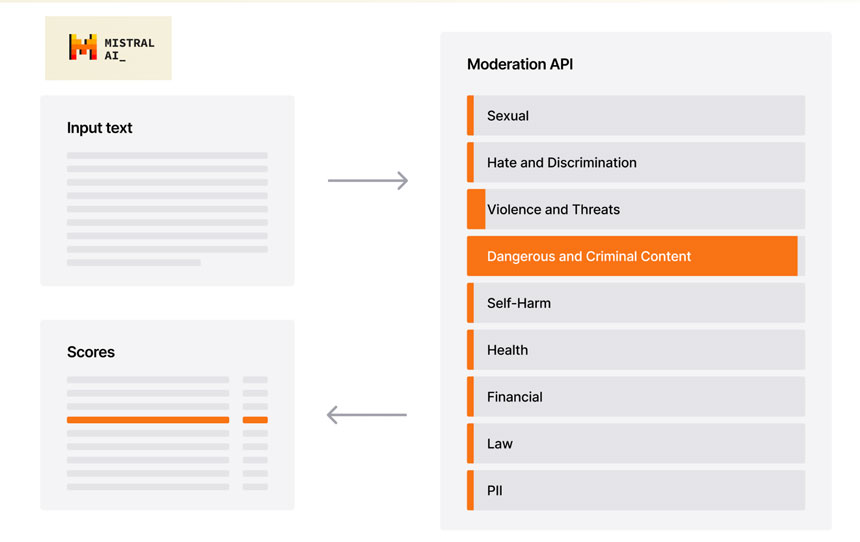
    Paris-based AI startup Mistral launched a new API for content moderation last week. This addresses growing concerns about data privacy, latency, and compliance, which can prove especially attractive to European companies subject to strict data protection regulations.

    This API powers the moderation service in Mistral’s Le Chat. Powered by a fine-tuned model (Ministral 8B), it can be tailored to specific applications and safety standards.

    Mistral is releasing two end-points: one for raw text and one for conversational content.

    The API is the same API that powers moderation in Mistral’s Le Chat chatbot platform.

    It includes English, French, and German languages into one of nine categories: sexual, hate and discrimination, violence and threats, dangerous and criminal content, self-harm, health, financial, law, and personally identifiable information.

    Mistral says the moderation API can be applied to raw or conversational text.

    The moderation API is available through Mistral’s cloud platform, with pricing based on usage.

    The release follows Mistral’s recent announcement of high-profile partnerships, including deals with Microsoft AzureQualcomm, and SAP.

  • Meta’s Llama Open-Source AI Model Is Being User by U.S. National Security Agencies

    Meta’s Llama Open-Source AI Model Is Being User by U.S. National Security Agencies

    IBL News | New York

    Llama open-source AI model is increasingly used by U.S. government agencies, contractors in national security, and large companies such as Accenture, AWS, Azure, Anduril, Booz Allen, Databricks, Deloitte, IBM, Leidos, Lockheed Martin, Microsoft, Oracle, Palantir, Scale AI, and Snowflake.

    Meta talked publicly about it to combat the perception that it is aiding foreign adversaries like China. Last week, Reuters reported that Chinese research scientists linked to the People’s Liberation Army (PLA), the military wing of China’s ruling party, used an older Llama model, Llama 2, to develop a tool for defense applications.

    “These Llama uses will also help establish U.S. open-source standards in the global race for AI leadership,” said the company.

    “Also, open-source systems have helped to accelerate defense research and high-end computing, identify security vulnerabilities, and improve communication between disparate systems.”

    • Lockheed Martin incorporated Llama into its AI Factory, accelerating various use cases such as code generation, data analysis, and enhancing business processes.

    Scale Ai is fine-tuning Llama to support specific national security team missions, such as planning operations and identifying adversaries’ vulnerabilities.

    Meta believes “a global open-source standard for AI models is likely to emerge, as it has with technologies like Linux and Android.”


  • CEOs of Major Tech Companies Congratulated Trump and Vance on Their Victory

    CEOs of Major Tech Companies Congratulated Trump and Vance on Their Victory

    IBL News | New York

    CEOs of major tech companies congratulated Donald Trump and JD Vance on their victory in the U.S. presidential election this Wednesday.

    They all wished Trump success in the Oval Office and stated they looked forward to working with him.

    Amazon’s Founder and owner of The Washington Post, Jeff Bezos, said in a post on X that it was “an extraordinary political comeback and decisive victory.”

    Bezos recently struck a more conciliatory tone and praised Trump for his “courage under literal fire” following the attempted assassination at a Pennsylvania rally.

    Apple CEO Tim Cook congratulated Trump on his victory in a post on X. “We look forward to engaging with you and your administration to help make sure the United States continues to lead with and be fueled by ingenuity, innovation, and creativity,” Cook wrote.

    OpenAI CEO Sam Altman said he hopes Trump will see “huge success in the job.” In a follow-up post, he wrote, “It is critically important that the US maintains its lead in developing AI with democratic values.”

    Meta CEO Mark Zuckerberg said, “We have great opportunities ahead of us as a country.”

    Elon Musk, who runs Tesla, SpaceX, and Neuralink, cheered Trump’s win.

    Sundar Pichai, CEO of Google parent Alphabet, congratulated Trump on his victory and said he’s committed to working with the president-elect’s administration.

    Microsoft CEO Satya Nadella said, “Congratulations, President Trump. We’re looking forward to engaging with you and your administration to drive innovation forward that creates new growth and opportunity for the United States and the world.”

    IBM CEO Arvind Krishna congratulated Trump on his victory in a LinkedIn post. He said the company looks forward to working with the Trump administration and Congress “to advance American leadership in AI and quantum, strengthen America’s competitiveness, and expand economic opportunity across the country.”

    Cisco founder and CEO Chuck Robbins wrote in a post on X that the company looks forward to working with Trump and Congress on policies around “connectivity, innovation, cybersecurity, and more.”

  • GWU Presents a Paper About Organizing a Faculty of Practice on Generative AI

    GWU Presents a Paper About Organizing a Faculty of Practice on Generative AI

    IBL News | New York

    George Washington University’s (GWU) professor Lorena A. Barba presented a white paper about a pilot project to develop and deploy AI mentors over various courses and organize a faculty community of practice to build knowledge and skills.

    The pilot is supported by George Washington University’s Trustworthy AI Initiative.

    It analyses how a catalog of retrieval-augmented generative AI aids for course-level learning support.

    In parallel, a team of social science and education researchers will evaluate the effectiveness of the AI mentors in helping students achieve learning objectives and whether students improve their use of AI assistance over time.

    GWU’s technology partners for this pilot project are ibl.ai, an edtech company that develops software products based on open-source technologies with a growing expertise in generative AI for education.

    [ibl.ai is the parent company of iblnews.org]

    Generative AI for teaching and learning pilot project 2024-5—White paper PDF

  • Virtual Actors Gain Traction as Advancements In Generative AI Continue to Evolve

    Virtual Actors Gain Traction as Advancements In Generative AI Continue to Evolve

    IBL News | New York

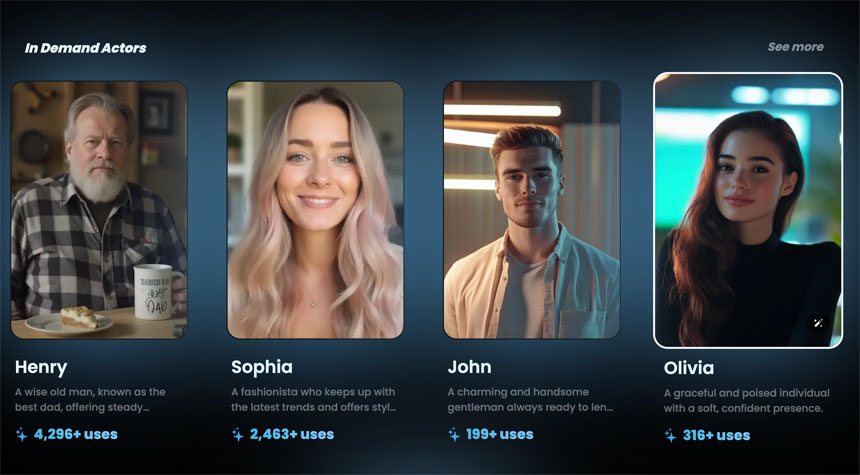
    The concept of AI actors, or “virtual actors,” is gaining traction as advancements in Generative AI continue to evolve.

    These AI actors are entirely digital creations, capable of performing in films, commercials, video games, and other media without the need for human counterparts.

    One of the latest companies in the field is aiactors.app. 

    In the same field, other companies are Soul Machines, Synthesia, and HeyGen.

  • “LLMs Are Becoming A Commodity,” Said Microsoft’s CEO Satya Nadella

    “LLMs Are Becoming A Commodity,” Said Microsoft’s CEO Satya Nadella

    IBL News | New York

    LLMs (large language models), still in their infancy, are becoming “more of a commodity,” said Microsoft chief executive Satya Nadella.

    A common view in the industry is that it is hard to separate OpenAI’s latest GPT from Anthropic’s Claude or Google’s Gemini.

    On the consumer side, Meta said last week that 500 million people are now looking at its Meta.AI at least once a month,

    However, today, OpenAI’s ChatGPT’s dominance is undisputed. Its 250 million users a week and a $20 monthly subscription fee paid by a small minority result in annualized revenue of $3.6 billion.

    Also, ChatGPT can point to a favored position on the iPhone, thanks to a deal with Apple.

    On the downside, OpenAI, without a functional business model yet, is on track to burn through over 5 billion of cash this year,

    Experts say that OpenAI’s biggest challenges are the lack of deep moats around its business and its intense competition, as the costs of querying for other LLMs have fallen rapidly.

    In addition, the capabilities of open-source AI models have advanced quickly, making them viable alternatives and raising the possibility of the commodification of LLMs.

    Meta’s Llama hasn’t yet become “the Linux of AI,” as Mark Zuckerberg suggested last week.

    OpenAI’s latest voice-powered GPT-4o model has been credited with breaking new ground in naturalistic voice interaction, potentially opening up new consumer markets to AI.

    Also, its GPT-o1 is the first model capable of breaking a complex problem.

    For now, OpenAI, backed by investors at a $150 billion valuation, maintains an edge in model-building despite powerful companies in tech closing fast.