Author: IBL News

  • Apple’s Generative AI Suite for iPhone, iPad, and Mac Will Roll Out in October

    Apple’s Generative AI Suite for iPhone, iPad, and Mac Will Roll Out in October

    IBL News | New York

    Apple announced yesterday that its Generative AI suite, Apple Intelligence, will start rolling out in beta in October 2024 in the U.S. with iO 18.1, iPad 18.1, and macOS Sequoia 15.1.

    In addition, Apple introduced the new iPhone 16 lineup (iPhone 16 Plus, iPhone 16 Pro, iPhone 16 Pro Max, iPhone 15 Pro, iPhone 15 Pro Max), built for Apple Intelligence and features more advanced A18 and A18 Pro chips.

    This AI suite, available as a free software update, will include improved Siri, which will have a brand-new design and a glowing light that wraps around the edge of the screen when active on an iPhone, iPad, or CarPlay.

    It will also include Writing Tools for rewriting, proofreading, and summarizing text nearly everywhere they write, including Mail, Notes, Pages, and third-party apps.

    In Photos, the Memories feature now enables users to create movies by simply typing a description. In addition, natural language can be used to search for specific photos and videos.

    The new Clean Up tool can identify and remove distracting objects in a photo’s background without accidentally altering the subject.

    Users can record, transcribe, and summarize audio in the Notes and Phone apps. The phone app automatically notifies participants when a recording is initiated while on a call. Once the call ends, Apple Intelligence generates a summary to help recall key points.
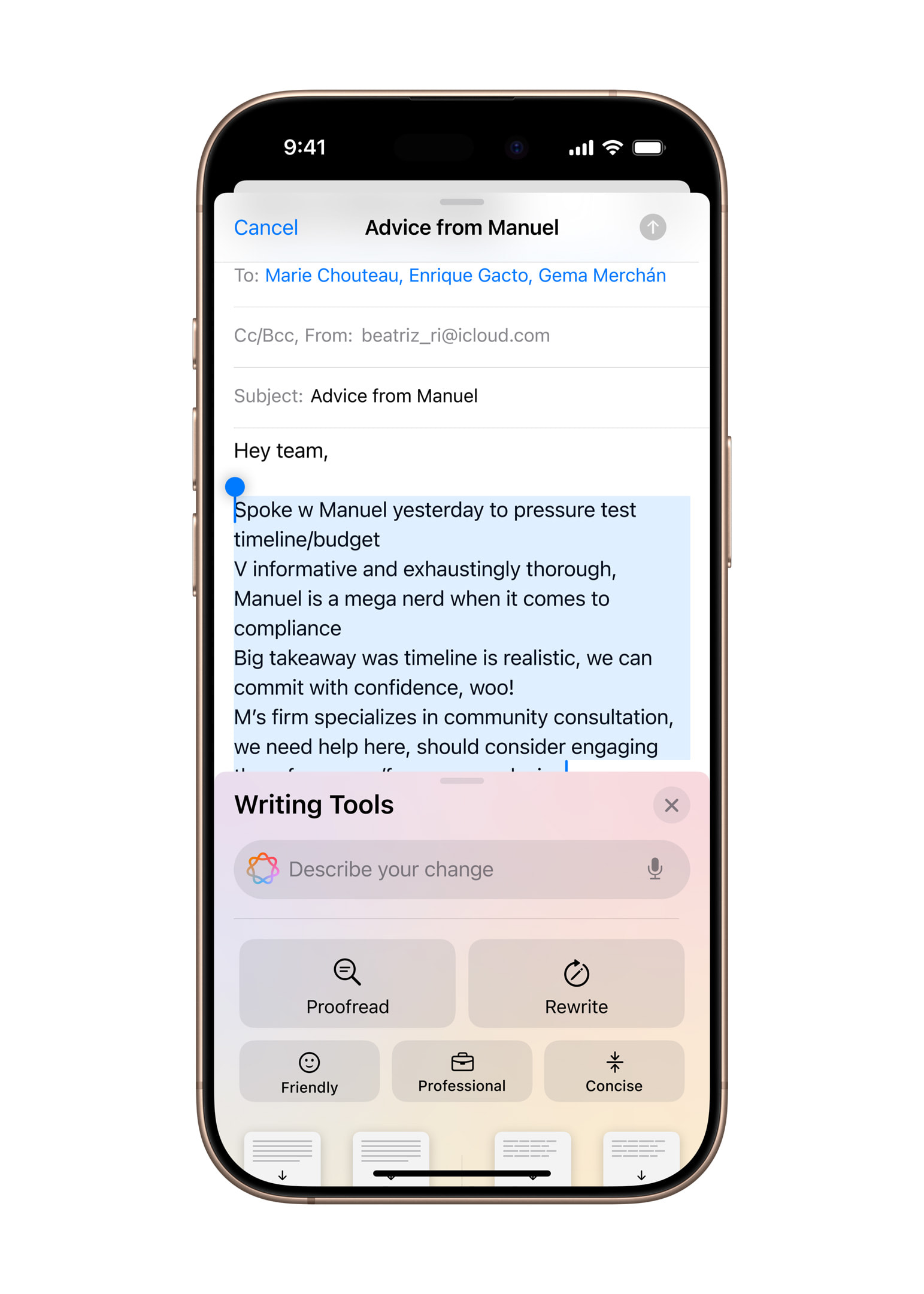
    Across a user’s inbox, summaries convey the most important information of each email instead of simply previewing the first few lines.

    Smart Reply in Mail provides users with suggestions for a quick response and identifies questions in an email to ensure everything is answered.

    More Apple Intelligence features will roll out later this year and in the months following.

    Users can access ChatGPT for free without creating an account, and ChatGPT’s data-use policies apply—for example, IP addresses are obscured, and requests are stored.
  • Dartmouth College and Nvidia Released a New Generative AI Teaching Kit | NVIDIA Technical Blog

    Dartmouth College and Nvidia Released a New Generative AI Teaching Kit | NVIDIA Technical Blog

    IBL News | New York

    Dartmouth College and Nvidia’s Deep Learning Institute (DLI) launched a new Generative AI Teaching Kit to provide students access to tools, frameworks, and practical exercises.

    According to Joe Bungo, Deep Learning Institute (DLI) program manager at NVIDIA, “this teaching kit equips students with a deep understanding of generative AI techniques and enables educators to foster future innovation and creativity in the industry.”

    As students transition into the workforce, they will be better prepared to tackle global challenges, from improving healthcare and science to advancing sustainable technologies.

    Sam Raymond, an adjunct assistant engineering professor at Dartmouth College, said that “empowering students with skills to understand and potentially develop their own GPU-accelerated Generative AI applications is the primary objective“I believe students who take this course will be at a significant advantage in the job market and help bridge the knowledge gap in industries today.”

    Teaching Kits include lecture slides, hands-on labs, Jupyter notebooks, knowledge checks, and free online self-paced courses that provide students with certificates of competency. They are all comprehensively packaged and ready for classroom and curriculum integration.

    The kit aims to introduce the foundational concepts of natural language processing (NLP) that are essential for understanding LLMs and generative AI more broadly. Key concepts of LLMs are then examined using NVIDIA GPUs, tools, services, and open-source libraries and frameworks. A simple pretraining exercise of a GPT model shows basic training processes in the cloud.

    This first release includes these modules:

    • Introduction to Generative AI
    • Diffusion Models in Generative AI
    • LLM Orchestration

    Select professors — such as Mohadeseh Taheri-Mousavi, assistant professor in the Materials Science and Engineering department at Carnegie Mellon University, and Professor Payam Barnaghi from the Department of Brain Sciences at Imperial College London — have already been given early access to first-release modules.

    [Disclosure: ibl.ai, the parent company of iblnews.org, has NVIDIA as a client]

  • OpenAI Is Making Big Changes to Its Structure as It Looks for More Investors

    OpenAI Is Making Big Changes to Its Structure as It Looks for More Investors

    IBL News | New York

    OpenAI, which has 1,700 employees, is making substantial changes to its management team and corporate structure to attract large investors in a deal that would value it at $100 billion.

    However, it has not yet settled on a new structure.

    According to an elaborate report from The New York Times, the transition has been difficult, and early employees continue to leave.

    “Rapid growth hasn’t resolved a fundamental question of what OpenAI is supposed to be: Is it a cutting-edge A.I. lab created for the benefit of humanity, or an aspiring industry giant dedicated to profits?” wrote the paper.

    Only three remain of the 13 people who helped found OpenAI in late 2015 with a mission to create artificial general intelligence (A.G.I). One, Greg Brockman, the company’s president, has taken a leave of absence through the end of the year, citing the need for time off after nearly a decade of work.

    According to a person familiar with OpenAI’s income, its annual revenues have topped $2 billion. ChatGPT has more than 200 million weekly users—twice the number from nine months ago—and more than 1 million paid users for the corporate versions of ChatGPT.

    San Francisco-based research lab said Thursday that the figure includes the total number of people signed up to use its ChatGPT Team and Enterprise services, which are aimed at companies and universities using its ChatGPT Edu product.

    The company said just under half of OpenAI’s corporate users are based in the US. Outside the US, the company’s chatbot is most popular with business users in Germany, Japan, and the United Kingdom.

    However, it is unclear how much the company spends yearly, though one source puts the figure at $7 billion. Microsoft, already OpenAI’s largest investor, earmarked $13 billion for the AI company.

    As some employees departed, they were asked to sign legal papers that said they would lose their OpenAI shares if they spoke out against the company. This incited new concerns among the staff, even after the company revoked the practice.

  • New Safety-Focused AI Startup SSI Raises $1 Billion In Cash

    New Safety-Focused AI Startup SSI Raises $1 Billion In Cash

    IBL News | New York

    The new start-up, Safe Superintelligence (SSI), co-founded by Ilya Sutskever and currently with ten employees, raised $1 billion in cash on a valuation of $5 billion.

    Investors included top VC firms such as Andreessen Horowitz, Sequoia Capital, DST Global and SV Angel. NFDG, an investment partnership run by Nat Friedman and SSI’s Chief Executive Daniel Gross, also participated.

    The funds will be used to acquire computing power and build a small team of researchers and engineers between Palo Alto and Tel Aviv. SSI plans to spend a couple of years doing R&D on the product before bringing it to market.

    Ilya Sutskever, OpenAI’s former chief scientist and one of the most influential technologists in AI [in the center of the picture], told Reuters that his company plans to develop safe artificial intelligence systems that surpass human capabilities.

    AI safety refers to preventing AI from causing harm amid fears that rogue AI could act against humanity’s interests or cause human extinction.

  • Anthropic Issues Claude Enterprise to Compete with OpenAI

    Anthropic Issues Claude Enterprise to Compete with OpenAI

    IBL News | New York

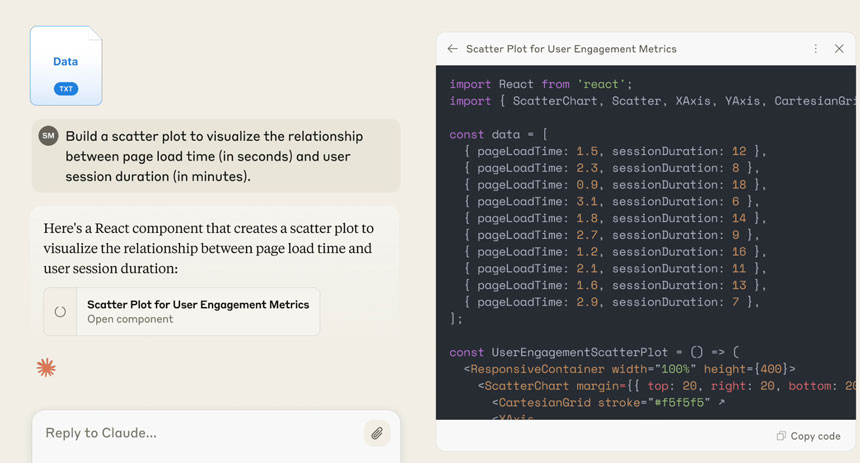
    Anthropic launched an enterprise subscription plan yesterday for its AI chatbot Claude,

    Claude Enterprise, an alternative proposal to OpenAI’s ChatGPT Enterprise, offers a 500K context window (that can be extended to Projects and Artifacts), SSO and domain capture, role-based permissions, audit logs, increased capacity, admin tools, and GitHub integration to work on codebases with Claude.

    “GitHub is the first native integration we’re building to connect Claude to your most important data sources, enabling Claude to provide more relevant and insightful assistance,” said the company. This feature is currently in beta for early Enterprise plan users.

    Claude Enterprise allows businesses to upload internal knowledge to analyze information and answer questions, create graphics and simple web pages, provide deep function-specific guidance, or act as a company-specific AI assistant.

    The 500,000 tokens window means that Anthropic’s models can process up to 200,000 lines of code, dozens of 100-page documents, or a two-hour audio transcript in a single prompt.

    Anthropic refused to disclose the price of Claude Enterprise, encouraging it to “contact sales.”

    The existing Anthropic’s Team plan costs $30 per month per member.

  • Google Launches ‘Gmail Q&A’ on Android Allowing Users to Chat About Email

    Google Launches ‘Gmail Q&A’ on Android Allowing Users to Chat About Email

    IBL News | New York

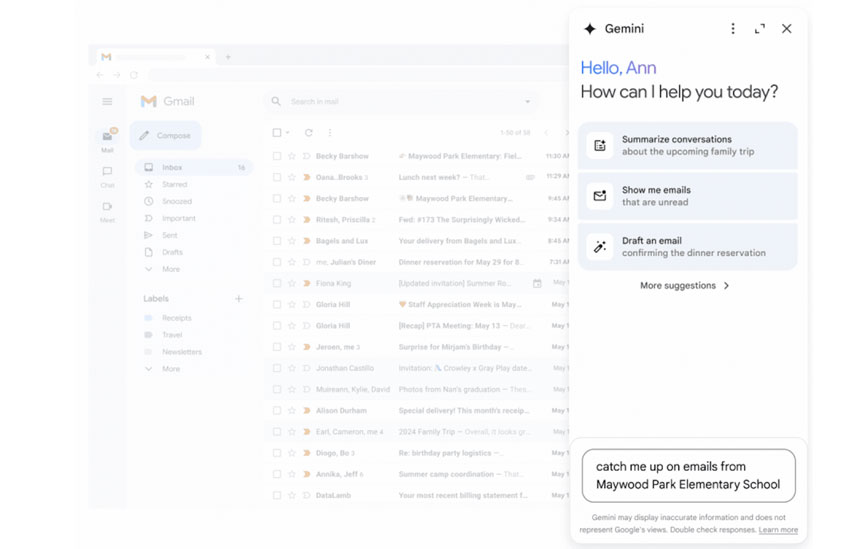
    Google rolled out a feature that allows Gmail mobile app users on Android to chat directly with the AI assistant Gemini about their emails. The company promised that this Gmail Q&A feature will come “soon” to Apple’s iOS.

    To activate Gmail Q&A on Android, administrators must ensure that smart features and personalization settings are enabled in the Admin console.

    In June, the search giant made Gemini available on Gmail’s side panel for $20 monthly. It allows users to summarize emails, ask questions, and find specific information.

    Traditionally, the search bar at the top of Google was used to find information in Gmail. The Gemini button will be added to the search bar to access emails.

    The company plans to add Gemini to its existing products, including Google Docs, Gmail, Google Calendar, and more — but it all comes at a price.

    It’s unlikely that Gmail Q&A will come to free Gmail users anytime soon.
    Gemini in Gmail on mobile

  • Open Courses on AI

    Open Courses on AI

    IBL News | New York

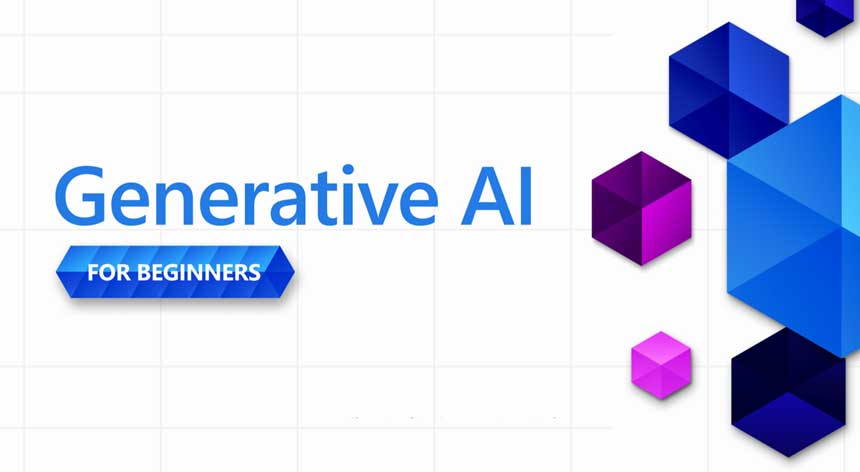
    • Microsoft Generative AI for Beginners

    00
    Course Setup

    01
    Introduction to Generative AI and LLMs

    02
    Exploring and comparing different LLMs

    03
    Using Generative AI Responsibly

    04
    Understanding Prompt Engineering Fundamentals

    05
    Creating Advanced Prompts

    06
    Building Text Generation Applications

    07
    Building Chat Applications

    08
    Building Search Apps Vector Databases

    09
    Building Image Generation Applications

    10
    Building Low Code AI Applications

    11
    Integrating External Applications with Function Calling

    12
    Designing UX for AI Applications

    13
    Securing Your Generative AI Applications

    14
    The Generative AI Application Lifecycle

    15
    Retrieval Augmented Generation (RAG) and Vector Databases

    16
    Open Source Models and Hugging Face

    17
    AI Agents

    18
    Fine-Tuning LLMs

    • Anthropic Courses: API fundamentals and Prompt engineering

    • J.P. Morgan Chase: Training on Python

  • Salesforce Plans to Launch its Low-Code Platform ‘AgentForce’ to Create, Test, and Scale Custom AI Agents

    Salesforce Plans to Launch its Low-Code Platform ‘AgentForce’ to Create, Test, and Scale Custom AI Agents

    IBL News | New York

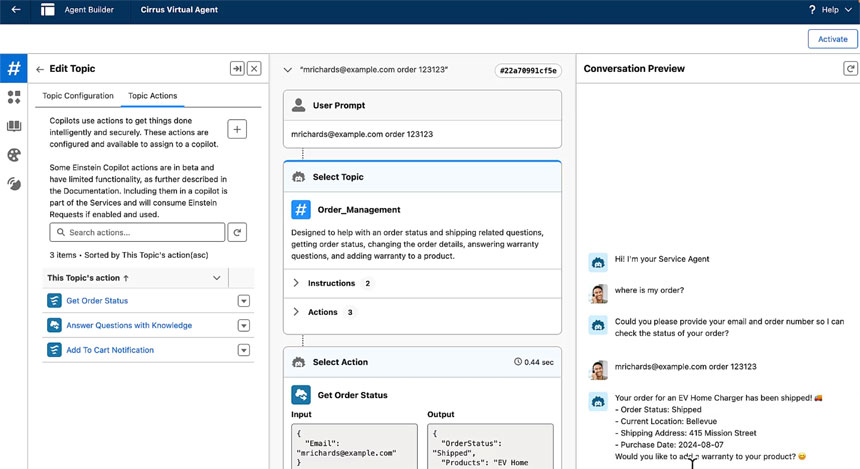
    Salesforce plans to launch its platform in September, during its Dreamforce conference, to create, test, and scale custom AI agents.

    It is called Agentforce and uses the company’s Einstein1 low-code platform.

    “With Agentforce, your custom AI agents achieve greater accuracy by securely grounding in all your enterprise data with Data Cloud, take action seamlessly by leveraging Flow automation, connect effortlessly to your enterprise APIs through MuleSoft, test with confidence in Sandboxes before deployment, use in your apps, web, social, and Slack,” wrote Salesforce CEO, Marc Benioff.

    He said his company will deploy millions of AI-powered “agents,” intending to reach 1 billion in the business wild.

  • Apple, Nvidia, and Microsoft in Talks to Invest in OpenAI at a Valuation of $100 Billion

    Apple, Nvidia, and Microsoft in Talks to Invest in OpenAI at a Valuation of $100 Billion

    IBL News | New York

    Apple and NVIDIA are in talks to invest in OpenAI at a valuation of over $100 billion. Microsoft, which already owns 49% of OpenAI, may also participate.

    The New York Times reported that Thrive Capital would lead the deal should it happen.

    Early this year, Thrive Capital led a deal that valued OpenAI at over $80 billion.

    This new round takes place as OpenAI is said to be on track to lose $5 billion by year-end as it expands its AI training and staffing efforts.

    OpenAI runs and trains its generative AI models primarily on Nvidia GPUs, while Apple agreed to integrate ChatGPT into iOS as part of Apple’s upcoming AI features.

  • ChatGPT Remains the Leader Among AI Chatbots with 200 Million Weekly Users

    ChatGPT Remains the Leader Among AI Chatbots with 200 Million Weekly Users

    IBL News | New York

    OpenAI said ChatGPT has more than 200 million weekly active users, doubling the 100 million last November.

    The company’s spokesperson, Taya Christianson, confirmed the number and added that the API usage has doubled following the release of the cheaper model GPT-4o Mini.

    She also said that 92% of Fortune 500 companies use its products.

    “People are using our tools now as a part of their daily lives, making a real difference in areas like healthcare and education—whether it’s helping with routine tasks, solving hard problems, or unlocking creativity,” CEO Sam Altman said in a statement to Axios.

    On the other hand, this week,
    Meta CEO Mark Zuckerberg revealed that the company’s AI assistant has reached over 400 million monthly active users and 185 million weekly active users — despite not rolling out in the UK, Brazil, or EU yet.

    The adoption of its open-source Llama models has also grown sharply. With the release of Llama 3.1 in May and July of this year, usage at the major cloud service providers doubled.

    “The path for Llama to become the industry standard is by being consistently competitive, efficient, and open generation after generation,” Zuckerberg wrote last month.

    Meta pointed to a handful of large enterprises using the Llama models, such as Japanese bank Nomura Holdings, food delivery service DoorDash, and professional services provider Accenture.