Author: IBL News

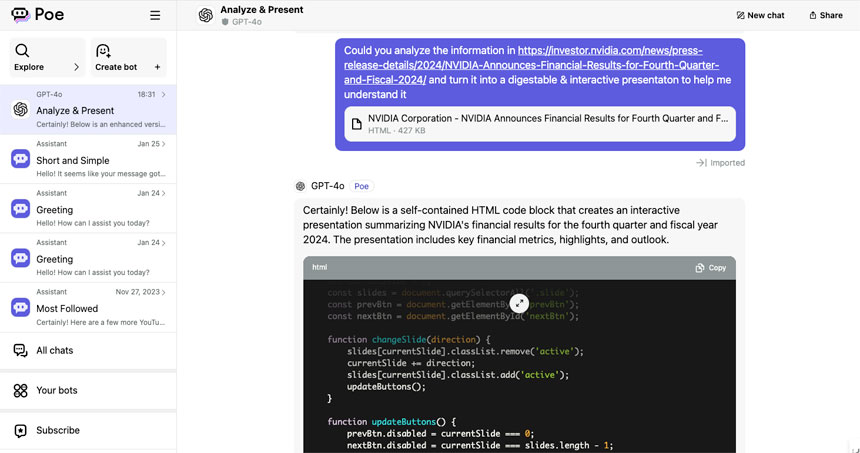
  • Poe Introduces ‘Previews’, Which Like Antrophic’s Artifacts Allows to Create Webapps in the Chat

    Poe Introduces ‘Previews’, Which Like Antrophic’s Artifacts Allows to Create Webapps in the Chat

    IBL News | New York

    Poe, Quora’s subscription-based cross-platform aggregator of chatbots, introduced yesterday a feature called Previews that lets users build interactive web experiences directly in chats. It requires paying $20 per month for Poe’s premium plan.

    Previews works particularly well with LLMs that excel at coding, including Claude 3.5 Sonnet, GPT-4o, and Gemini 1.5 Pro.

    These applications include games, animations, drag-and-drop interfaces, and data visualizations, and support HTML output with CSS and Javascript functionality.

    Users can also leverage Poe features like multi-bot chat, file upload, and video input to help you build your custom web applications.

    They can be shared using a dedicated link. These are some examples:

    Poe said it plans to introduce support for additional formats in the coming days and weeks.

    Previews are like Anthropic’s recently introduced Artifacts: dedicated workspaces where users can edit and add to AI-generated content like code and documents.

  • Cornell Launches an Certificate Program and Clones a Faculty Member

    Cornell Launches an Certificate Program and Clones a Faculty Member

    IBL News | New York

    Cornell University launched an innovative online certificate program, Designing and Building AI Solutions, authored by Cornell Senior Visiting Lecturer Lutz Finger, who generated an AI clone of himself to update the courses with new content continuously.

    Lutz Finger explained that his AI clone is supercharging him to enhance his teaching capabilities.

    “In the courses, I use him as a case study to identify all of the product, business, and design decisions that need to be considered,” he said.

    This certificate program from the Cornell SC Johnson College of Business also includes an AI-powered co-pilot, available 24/7, that provides coding assistance to help non-technical professionals build products.

    Available through eCornell, the program provides a hands-on deep dive into prompt engineering and machine learning applications and data handling, ethics, and compliance.

    Five online courses take learners on a virtual journey to multiple locations worldwide to examine real-life applications for AI products across industries. Finger’s style of integrated lectures provides edutainment as he visits ski slopes, cow pastures, airport terminals, and more.

    “I designed this program to be entertaining while also breaking new ground by weaving the AI tools we are learning about into every facet of the program—from actual course delivery to hands-on practice,” said Finger.

    The program is designed for managers, leaders, innovators, and anyone interested in applying AI and automation in their industry. Participants will be placed in small, virtual classes with peers to maximize learning and support networking and collaboration.

  • Vanderbilt University Releases an Open Source Gen AI Platform for Institutions

    Vanderbilt University Releases an Open Source Gen AI Platform for Institutions

    IBL News | New York

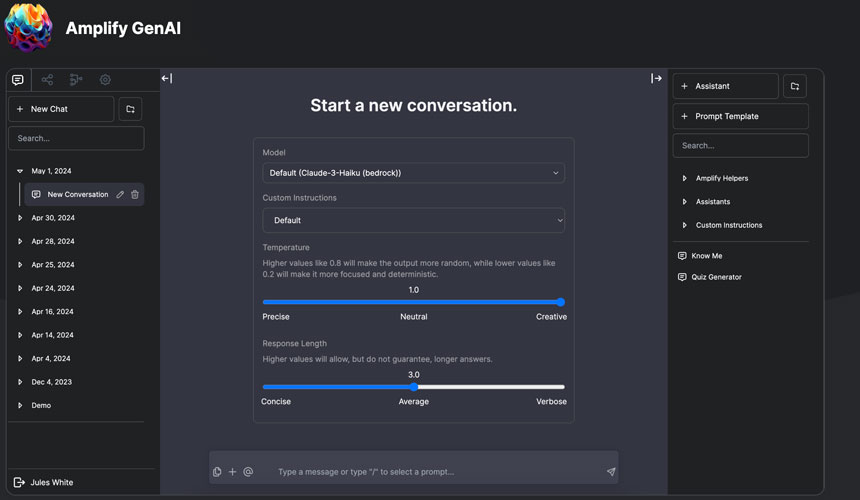
    Vanderbilt University made its Generative AI platform open source under the MIT license.

    “We run what we believe is the most advanced enterprise, open-source Generative AI platform, competitive with or better than the top commercial offerings,” said Jules White, Senior Advisor to the Chancellor on Generative AI & Professor of Computer Science. “Assistants and agents are the future.”

    The platform, named Amplify GenAI, is a model-independent solution that allows the building assistants to work with documents and PowerPoints, and access RAG. It runs privately in the institution’s AWS account.

    The cost per user (tokens + AWS bill) for unlimited access to any model from OpenAI, Anthropic, or Mistral is ~$3/mo.

    “It isn’t clear which model is best. We wanted to be model- and vendor-independent to always tap into the best-performing or most cost-effective models,” Jules White explained. “The competition between model vendors means that our costs have continued to fall while the reasoning capabilities of the models keep going up.”


  • Character.AI Introduces a Feature that Allows to Call AI Chatbots

    Character.AI Introduces a Feature that Allows to Call AI Chatbots

    IBL News | New York

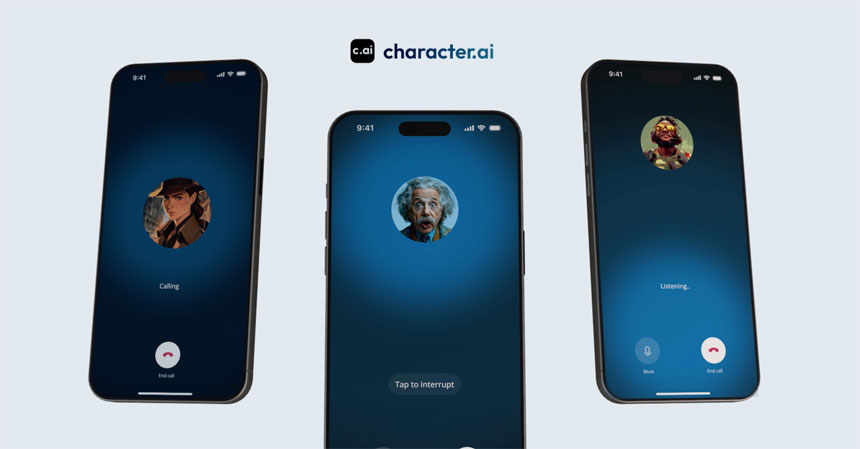
    Character.AI launched a free feature last month that allows users to talk to chatbots over calls in multiple languages and with reduced latency in a two-way voice conversation. Users can also seamlessly switch between calling and texting.

    The a16z-backed startup noted that calls with AI characters can be useful for practicing language skills, giving mock interviews, and people development for games. “It’s like having a phone call with a friend,” said the company.

    Earlier in March, Character.AI launched Character Voices so users can hear the characters speak in one-on-one chats.

    Meanwhile, according to some media reports, Google is developing a customized chatbot platform to compete with Character.AI and Meta.

  • Google Rolls Out a Gen AI Side Panel on Its Everyday Apps

    Google Rolls Out a Gen AI Side Panel on Its Everyday Apps

    IBL News | New York

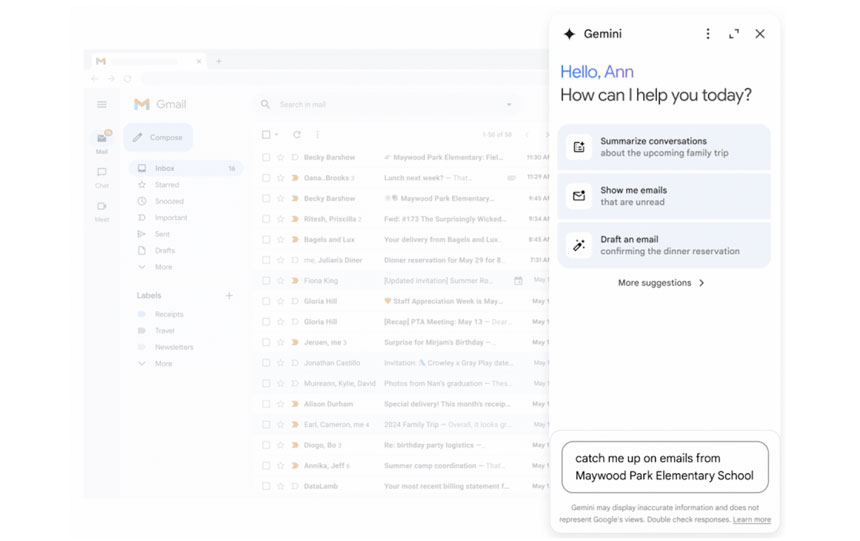
    Google is rolling out a side panel in Gmail, Docs, Sheets, Slides, and Drive that helps with summarizing and writing emails or brainstorming ideas.

    • It also allows ask questions and find specific information within these Google tools.

    • In Slides, users can generate new slides and custom images.

    • In Sheets, they can create tables, generate formulas, and perform data tasks.

    This Gemini-based sidebar is only available to paid Google Workspace customers or Gemini Education.

    Google is the latest tech giant to add generative AI features to its everyday apps and services. Recently, Meta brought its chatbot to Instagram and WhatsApp, while Apple added AI into Siri, Messages, Mail, and Notes. Microsoft incorporated this technology into the Office suite last year.

  • Firefox Allows Users to Choose ChatGPT, Gemini, HuggingChat, and Mistral

    Firefox Allows Users to Choose ChatGPT, Gemini, HuggingChat, and Mistral

    IBL News | New York

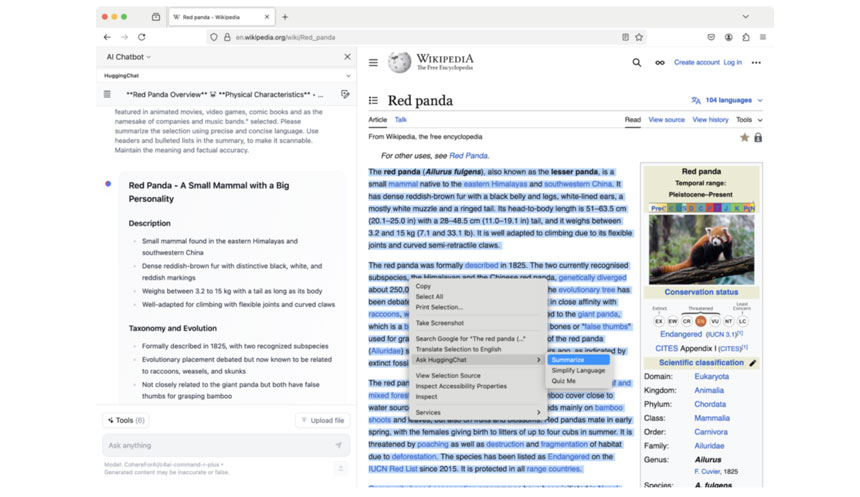
    The browser Firefox announced last week that it started allowing users on its experimental version, ‘Nightly,’ to choose their preferred chatbot service, including, for now, ChatGPT, Google’s Gemini, HuggingChat, and Le Chat Mistral.

    Mozilla, the company running Firefox, plans to improve the experience before releasing it in beta.

    In a blog post, Firefox Senior Vice President Ian Carmichael wrote, “None of the models are perfect, and each has its unique strengths and weaknesses.”

    “Offering options allows experimenting with many services to find the one that’s most helpful in solving their problem,” he added.

    Almost all browsers — Chrome, Edge, Opera, DuckDuckGo, etc. — add AI features to their products.

  • OpenAI Launched Its ChatGPT Desktop App for Macs

    OpenAI Launched Its ChatGPT Desktop App for Macs

    IBL News | New York

    OpenAI launched ChatGPT on macOS this month.

    This launch follows Apple’s recent partnership with OpenAI for multiple iPhone, iPad, and Siri integrations.

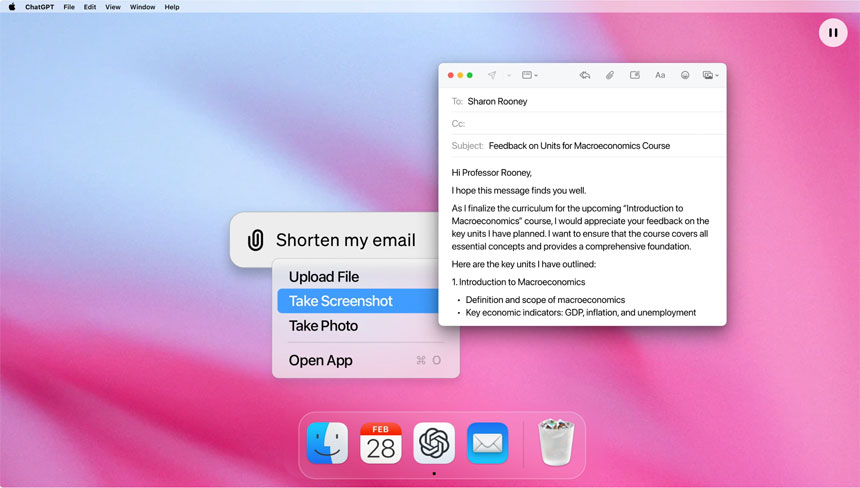
    On Mac laptops and desktops, once the ChatGPT app is installed, users, both free and paid, can quickly call up ChatGPT by using the keyboard combination of Option + Space.

    Then, the chat interface appears overlaid on top of the screen.

    MacOS users can upload files and photos via the app, speak to ChatGPT from their desktop, and search through their past conversations.

    These integrations are also powered by GPT-4o.

  • Users of Character.ai Complain About Personality Changes on Their Chatbots

    Users of Character.ai Complain About Personality Changes on Their Chatbots

    IBL News | New York

    Users of Character.ai are reporting sudden personality changes on their chatbots and complain that they aren’t as good as they were in the last weeks.

    The r/CharacterAI subreddit reflected these views.

    In a company blog post last week, Character.AI claimed that it serves around 20,000 queries per second–about 20% of the request volume served by Google Search.

    Character.ai also noted that pornographic content is forbidden, although romantic and erotic roleplay is a massive draw for users, and people use it for “companionship.”

    Last year, chatbot companion app Replika tweaked its filters for erotic roleplay, making them more strict, and many people complained, especially those who spent months or years developing connections.

    Valued at $1 billion after raising $150 million in a round led by a16z, Character.ai allows users to choose characters from a library or create their own.

    Last year, a16z said that Character.ai was the second most popular LLM platform, only outranked by ChatGPT.

    The platform is free to use with limited features, but it requires paying $10 per month for faster messages and other enhancements.

    Some media outlets have reported that Google is developing a competitor to Character.ai. It’d be based on chatbots modeled after celebrities and real people.

  • A Startup that Sells Human-Like AI Agents Raised $35 Million in Funding

    A Startup that Sells Human-Like AI Agents Raised $35 Million in Funding

    IBL News | New York

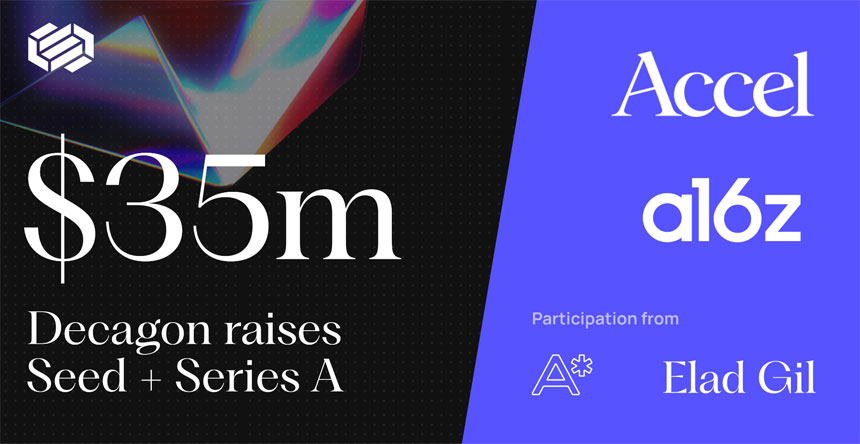
    Decagon, a gen AI startup that sells customer support solutions, raised $30 million in Series A funding and $5 million in seed funding.

    The Seed round was led by a16z, and the Series A was led by Accel with participation from A*, Elad Gil, and angels including Aaron Levie (CEO, Box), Howie Liu (CEO, Airtable), Matt MacInnis (COO, Rippling), Aaref Hilaly (Partner, BCV), Mike Vernal (Ex-Sequoia), Frederic Kerrest (Cofounder, Okta), Jack Altman (CEO, Lattice), and Ed Hallen (Cofounder, Klaviyo).

    Founded by CEO Jesse Zhang and CTO Ashwin Sreenivas [in the picture below], Decagon provides businesses such as Eventbrite, Bilt, Webflow, Substack, and Rippling with a generative AI platform that mirrors human capabilities by handling complex customer support jobs.

    “By integrating with our customers’ existing workflows, our AI agents can take tangible action on behalf of the customer, such as processing a refund request or postponing an upcoming shipment,” said Jesse Zhang, co-founder and CEO of Decagon.

    Decagon’s AI-powered analytics dashboard automatically reviews and categorizes customer conversations to identify themes and suggests additions to the knowledge base to better address customer inquiries.

    Its platform is built on a mix of large language models, including both third-party and fine-tuned models. It regularly tests and selects the optimal model for each task, such as categorizing an incoming request, checking a message for accuracy, or writing a final response to the customer.

    It also functions as a company’s internal customer support liaison, providing services like creating software bug reports, analyzing customer emails to suggest product improvements, or writing internal documentation.

    The company is competing with other well-capitalized customer support AI startups, such as Forethought, which has raised over $90 million.

  • AI Tutors Start Changing How Kids Study in the U.S

    AI Tutors Start Changing How Kids Study in the U.S

    IBL News | New York

    AI tutors are quietly changing how kids study in the U.S.

    According to data from Data.ai in May, five of the top 20 education apps in the U.S. Apple Store are AI agents that help students with their school assignments and can remember students’ learning habits.

    These AI tutors, who help with everything from writing history papers to solving physics problems, are mostly constrained to text-based interactions.

    However, soon they will be able to speak to students, optimizing each student’s learning style, whether that means a more empathetic, humorous, or creative style.

    In May 2024, OpenAI’s GPT-4o demonstrated an AI assistant that can generate voice responses in various emotive styles.

    Interestingly, the three most popular AI helpers in the U.S. are Chinese-owned (although published by Singaporean entities): Question AI, with six million downloads, TikTok’s Gauth, and Answer AI.