Author: IBL News

  • OpenAI Trains Models to Explain Themselves Better

    OpenAI Trains Models to Explain Themselves Better

    IBL News | New York

    OpenAI researchers released a new scientific paper this month revealing a new algorithm by which OpenAI’s GPT-4 and other LLMs can learn to explain them better to users.

    The paper “Prover-Verifier Games Improve Legibility of LLM Outputs” explains how OpenAI is improving the legibility of LLM outputs.

    “Understanding and addressing the performance/legibility balance can lead to more effective and trustworthy AI applications, benefiting a wide range of fields where precise and clear communication is essential,” say the researchers.

    OpenAI’s researchers used two custom fine-tuned GPT-4 family models and had them engage in several rounds of the game, in which they were asked to answer grade school math word problems with known answers.

  • Google Open-Sources ‘Project Oscar’, An AI Agent that Enriches Issues Reports

    Google Open-Sources ‘Project Oscar’, An AI Agent that Enriches Issues Reports

    IBL News | New York

    Google announced Project Oscar, an experimental open-source project maintainer of agents developed under the auspices of the Go project.

    Project Oscar focuses on processing incoming issues, such as matching questions to existing documentation.

    In other words, Go uses an AI agent that takes issue reports and enriches them by reviewing this data or invoking development tools to surface the information that matters most. The agent also interacts with whoever reports an issue to clarify anything, even if human maintainers are not online.

    “Oscar is very much an experiment. We don’t know yet where it will go or what we will learn. Even so, our first prototype, the @gabyhelp bot, has already had many successful interactions in the Go issue tracker,” said Google.

    Google said Project Oscar will soon be deployed to other open-source projects from Google.


  • Meta Now Allows Users to Create AI Characters to Reach More Fans

    Meta Now Allows Users to Create AI Characters to Reach More Fans

    IBL News | New York

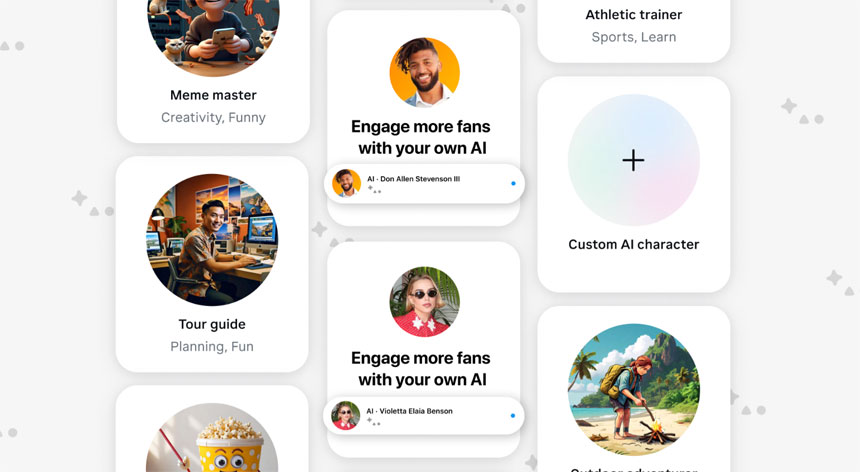
    Meta started rolling out AI Studio in the U.S. this week. This tool, built with Llama 3.1, allows users to discover AI characters and create an AI agent based on their interests as an extension of themselves to reach more fans. AI’s character name, personality, tone, and tagline can be customized.

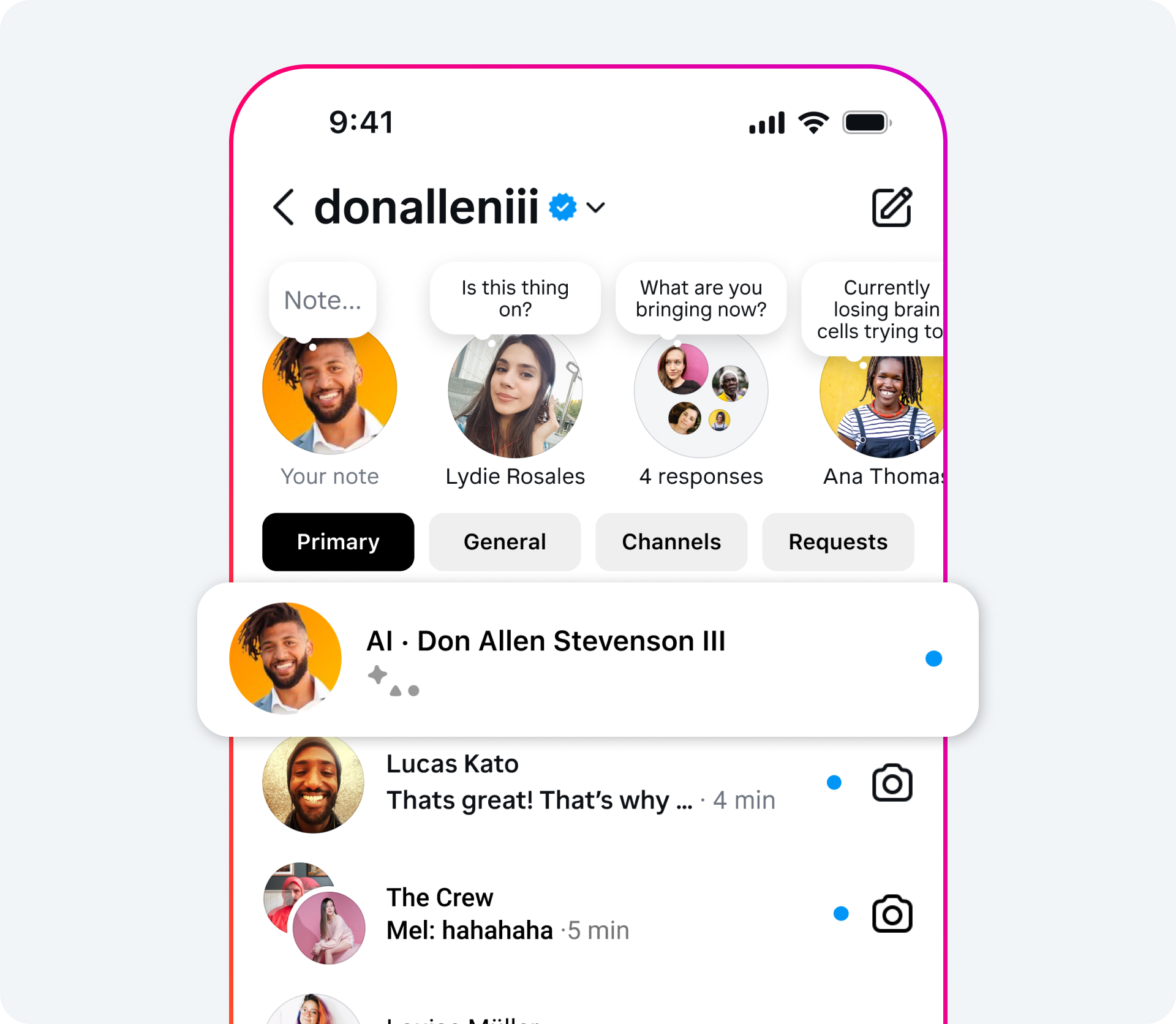
    Instagram users with many followers can make AI can answer messages on their behalf.

    Mark Zuckerberg expects there will eventually be “hundreds of millions” of creator-made AIs on Meta’s apps.

    Meta previously experimented with AI chatbots that took on the personalities of celebrities like Snoop Dogg and Kendall Jenner.

    AI Studio is available at ai.meta.com/ai-studio or through the Instagram app.

    There are a variety of prompt templates to start with, such as AI that teaches to cook, helps with Instagram captions, or generates memes to make friends laugh.

    Meta created a step-by-step guide with expert tips and best practices.

    These are some of the AI characters recently created by the community, according to Meta:

    > “Creators can customize their AI based on their Instagram content, topics to avoid, and links they want it to share.”

    > “Through the professional dashboard in the Instagram app, creators can turn auto-replies on and off and even decide who their AI replies to. Responses from creator AIs are clearly labeled, so there’s full transparency for fans.”

    > “Creators like Chris AshleyViolet BensonDon Allen, and Kane Kallaway have already created their AIs.” Tap the Message button with the ✨icon on your Instagram profile (accessible via mobile only).”

    Phone screen showing the AI character options

    GIF of a phone screen showing an AI response from a creator AI


  • Meta and Mistral Released Their New Open-Source Text-Only, Not Multimodal, LLMs

    Meta and Mistral Released Their New Open-Source Text-Only, Not Multimodal, LLMs

    IBL News | New York

    Last week, Meta and Mistral launched two new open-source LLMs that are much more capable, with higher performance and better pricing.

    Llama 3.1 405b is Meta’s biggest model, containing 405 billion parameters. According to the company, it is competitive with leading LLMs like OpenAI’s GPT-4o and Anthropic’s Claude 3.5 Sonnet.

    Available to download or use on cloud platforms like AWS, Azure, and Google Cloud, Llama 3.1 405b is currently being used on WhatsApp and Meta.ai.

    Like Mistral Large 2, Meta’s latest model can perform various tasks, from coding and answering basic math questions to summarizing documents in eight languages (English, German, French, Italian, Portuguese, Hindi, Spanish, and Thai).

    It’s not multimodal — and neither is Mistral Large 2. It’s text-only, meaning it can’t, for example, answer questions about an image.

    In this regard, OpenAI is far ahead of the competition in multimodal AI systems that simultaneously process images and text.

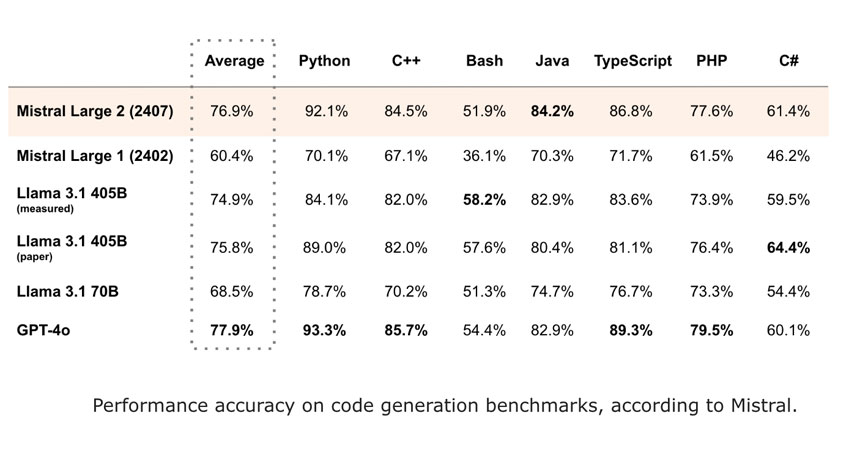
    In its announcement, the Paris-based AI startup Mistral said that Large 2 is “significantly more capable in code generation, mathematics, and reasoning, as well as provides much stronger multilingual support and advanced function calling capabilities.”

    “It performs on par with leading models such as GPT-4o, Claude 3 Opus, and Llama 3 405B,” said Mistral.

    The model has a 128,000 token window (roughly a 300-page book in a single prompt.)

    Additionally, Mistral Large 2 is trained to acknowledge when it cannot find solutions or has insufficient information to provide a confident answer.

    This model is available via la Plateforme under the name mistral-large-2407. It can also be used on Google Vertex AI, Amazon Bedrock, Azure AI Studio, and IBM Watsonx.ai. Weights for the instruct model are available and are also hosted on HuggingFace.

    It is not fully open source, as any commercial application needs a paid license.

  • 2U Bankruptcy Opens the Chance to Rework Contracts

    2U Bankruptcy Opens the Chance to Rework Contracts

    IBL News | New York

    2U’s filing for Chapter 11 bankruptcy might prompt the company’s 260 higher education institutions partners and customers to rework their contracts or finally leave OPM, experts told Inside Higher Ed.

    Moreover, the bankruptcy could give 2U the chance to renegotiate the current contracts.

    The news site also wrote that the 2U revenue-sharing model may no longer be possible under pending regulations from the Department of Education.

    2U’s CEO, Paul Lalljie, expects the Chapter 11 process to be completed by the end of September, if not earlier.

    If the U.S. bankruptcy court approves the deal, the restructuring agreement will take the company private, allow 2U to reduce its debt by more than half, and provide $110 million in new capital, extending its runway by two years.

    Longtime opponents of OPMs, including the Center for American Progress, the Project on Predatory Student Lending, and the Student Borrower Protection Center, said the filing was an easy way out for a company that is long overdue.

    These opponents of the OPM model always said it encourages dishonest recruiting methods to attract more students and more profits.

    In 2021, 2U Inc. acquired from Harvard and MIT the edx.org platform, paying $800 million. The edX sale straddled 2U with almost $5oo million in debt. By 2022, edX became 2U’s flagship brand and platform.

    “The decision to file for bankruptcy protection raises further questions about the long-term sustainability of edX — which continues to offer free, on-demand courses taught by faculty members at Harvard,” wrote The Harvard Crimson.

    Currently, edx offers 3,300 courses, including CS50, Harvard’s flagship computer science course.

    Harvard and MIT used the $800 million from the sale to launch Axim Collaborative in 2023, a nonprofit dedicated to supporting innovation in education. Axim has funded 15 partnerships with universities, including community and historically Black colleges.

  • OpenAI Enters Into the Search Market With “SearchGPT”

    OpenAI Enters Into the Search Market With “SearchGPT”

    IBL News | New York

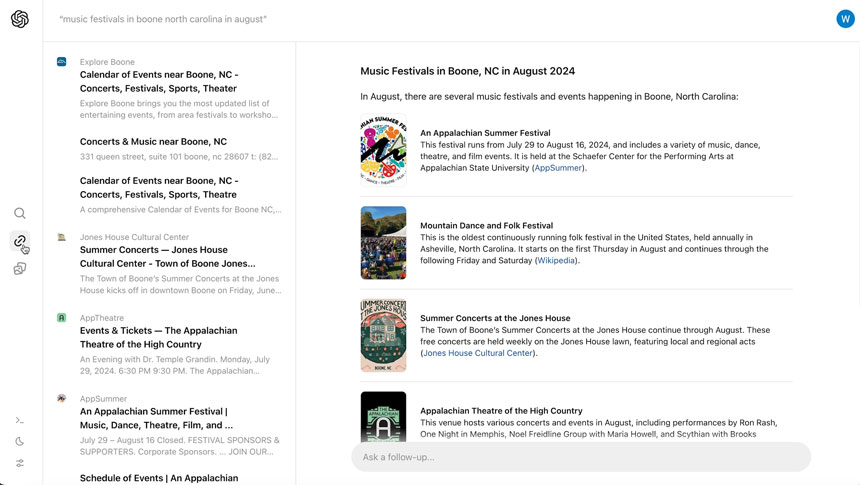
    Yesterday, OpenAI announced SearchGPT, a prototype of new search features that combines the strength of its AI models with real-time information across the internet.

    It provides timely answers with relevant sources, becoming a meaningful threat to Google, which rushed to add AI features across its search engine.

    It also puts OpenAI in more direct competition with the startup Perplexity, which labels itself as an AI “answer” engine.

    Powered by the GPT-4 family of models, this AI-powered search engine was launched only to 10,000 test users and publishers — among them The Wall Street JournalThe Associated Press, and The Verge. OpenAI said that “in the future,” it will be integrated into ChatGPT. Now, there is a waitlist. 

    • SearchGPT prominently cites and links to publishers in searches. Responses have clear, in-line, named attribution and links.

    • It allows users to search in a more natural, intuitive way by asking follow-up questions or clicking the sidebar to open other relevant links.

    • It provides visual responses with images and video.


  • 2U / edX Files for Chapter 11 Bankruptcy and Lenders Take It Private

    2U / edX Files for Chapter 11 Bankruptcy and Lenders Take It Private

    IBL News | New York

    Publicly traded online learning company 2U Inc., owner of edX.org, filed for Chapter 11 bankruptcy protection in New York while being taken private in a deal that will wipe out about $459 million, or more than half its $945 million debt.

    As a private company, 2U will be backed by its existing lenders and noteholders, including funds managed by Mudrick Capital Management, LP, Greenvale Capital LLP, and Bayside Capital, LLC.

    The Lanham, Maryland-based company ensured that “all educational programs and services will continue seamlessly with no interruption for partners or learners.”

    The agreement with its debtholders included infusing $110 million of new capital into 2U. 

    To implement the transaction, 2U and its subsidiaries filed voluntary “prepackaged” Chapter 11 cases in the U.S. Bankruptcy Court for the Southern District of New York. 2U expects to complete the Chapter 11 process by the end of September.

    “This financing demonstrates the investors’ deep belief in 2U and commitment to its essential mission,” said Brian Napack, Strategic Advisor to the investment group and former CEO of John Wiley (WLY).

    “Today marks an important milestone for 2U. New capital and a healthier balance sheet will enable us to continue our long-standing mission,” said Paul Lalljie, Chief Executive Officer of 2U.

  • D2L Showcased an Early Version of Lumi, Its AI Feature

    D2L Showcased an Early Version of Lumi, Its AI Feature

    IBL News | New York

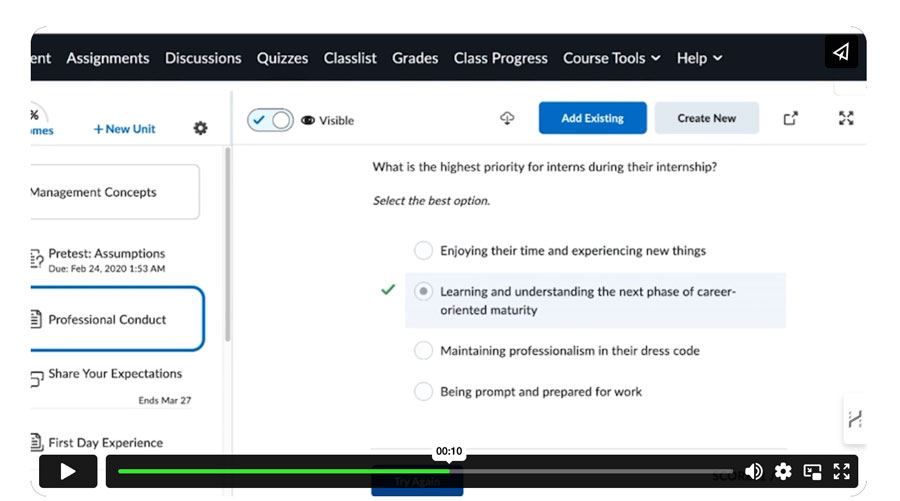
    D2L Brightspace’s learning platform showcased an early version of Lumi, its AI feature for building content, assessments, and activities, during its annual gathering this month.

    The Toronto–based LMS described Lumi this way:

    1. “Lumi Quiz – Helps educators generate quiz questions based on their course content seamlessly. 
    2. Lumi Idea – Generates intuitive suggestions for new assignments and discussions aligned with course material.  
    3. Lumi Practice – Creates practice questions in Creator+ based on course content, saving time and helping to improve learning outcomes. 
    4. Lumi Chat – Creates automated answers to FAQs, surfaces resources and how-to guides for users, and helps to reduce the volume of IT tickets and shorten wait times.”

    “In the coming months, D2L Lumi will be included throughout our core products to enhance everyday workflows, helping save time and supporting the best learning experiences possible,” said Stephen Laster, President of D2L.

    “D2L Lumi is helping to make course creation, delivery, teaching, and learning easier and more engaging,” added John Baker, Founder and CEO of D2L.

    > Video

  • NVIDIA Releases Mistral NeMo 12B, a New Open Source, Enterprise LLM

    NVIDIA Releases Mistral NeMo 12B, a New Open Source, Enterprise LLM

    IBL News | New York

    NVIDIA and French startup Mistral AI released Mistral NeMo 12B this week, a new open-source LLM with 12 billion parameters and 128,000 token context window.

    It is intended for developers who customize and deploy enterprise applications supporting chatbots, multilingual tasks, coding, and summarization without extensive cloud resources.

    The open model license, Apache 2.0, allows enterprises to integrate Mistral NeMo into commercial applications seamlessly.

    “We have developed a model with unprecedented accuracy, flexibility, high efficiency, and enterprise-grade support and security thanks to NVIDIA AI Enterprise deployment,” said Guillaume Lample, cofounder and chief scientist of Mistral AI.

    Mistral NeMo is trained on the NVIDIA DGX Cloud AI platform and comes packaged as an NVIDIA NIM inference microservice. To advance and optimize the process, NVIDIA TensorRT-LLM for accelerated inference performance and the NVIDIA NeMo development platform was also used.

    Designed to fit on the memory of a single NVIDIA L40S, NVIDIA GeForce RTX 4090, or NVIDIA RTX 4500 GPU, the Mistral NeMo NIM offers high efficiency, low compute cost, and enhanced security and privacy.

    With the flexibility to run anywhere — cloud, data center, or RTX workstation — Mistral NeMo is available as an NVIDIA NIM via ai.nvidia.com, with a downloadable NIM coming soon.

  • Goldman Sachs Questions Gen AI: “It’s Most Decidedly Not the Future.”

    Goldman Sachs Questions Gen AI: “It’s Most Decidedly Not the Future.”

    IBL News | New York

    Goldman Sachs investment bank published a 31-page report titled “Gen AI: Too Much Spend, Too Little Benefit?” wonders if this technology is a bubble and states that this is “unreliable, unsustainable, requires an entire rebuild of America’s power grid, and is most decidedly not the future.”

    “Tech giants and beyond are set to spend over $1tn on AI capex in coming years, with so far little to show for it. So, will this large spend ever pay off?” questions Goldman Sachs.

    The investment bank states, “The technology isn’t designed to solve the complex problems that would justify the costs, which may not decline as many expect.”

    “Even if it does, we explore whether the current chips shortage and looming power shortage will constrain AI growth.”

    Goldman Sachs mentions that utility companies will have to spend nearly 40% more in the next three years to keep up with the demand from hyperscalers like Google and Microsoft.

    It also adds that only about 5% of companies report using generative AI in regular production.

    The report includes an interview with economist Daron Acemoglu of MIT, an Institute Professor who published a paperback in May called “The Simple Macroeconomics of AI” that argued that “the upside to US productivity and, consequently, GDP growth from generative AI will likely prove much more limited than many forecasters expect.”

    Acemoglu declared that “truly transformative changes won’t happen quickly, and few—if any—will likely occur within the next 10 years.”

    “AI’s ability to affect global productivity is low because “many of the tasks that humans currently perform are multi-faceted and require real-world interaction, which AI won’t be able to improve anytime soon materially.”