Google introduced a major update to its video-creation capabilities in NotebookLM for AI Ultra subscribers — Google’s highest AI subscription tier — on the web and mobile.
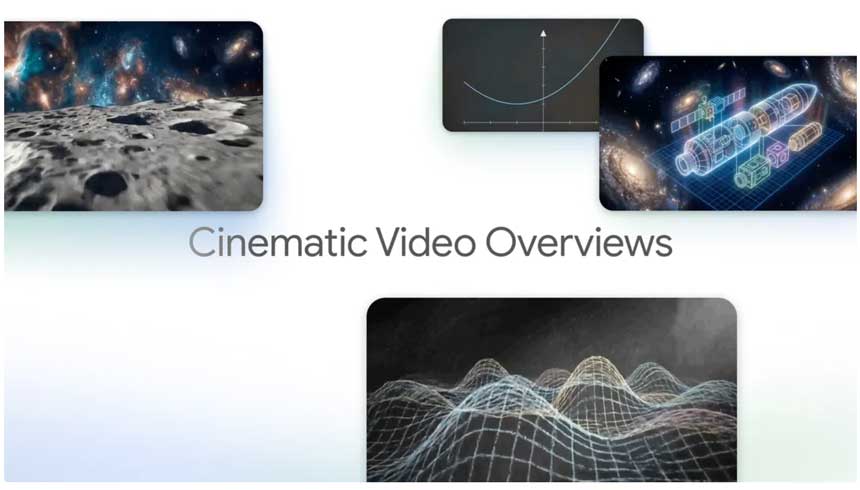
The new feature, named Cinematic Video Overviews, adds immersive and enriched animated visuals to the clips.
It uses a combination of three Google models: Gemini 3, Nano Banana Pro, and Veo 3.
Google explained this way, “Gemini now acts as a creative director, making hundreds of structural and stylistic decisions to best tell the story with your sources.”“It determines the best narrative, visual style and format, and even refines its own work to ensure consistency.”
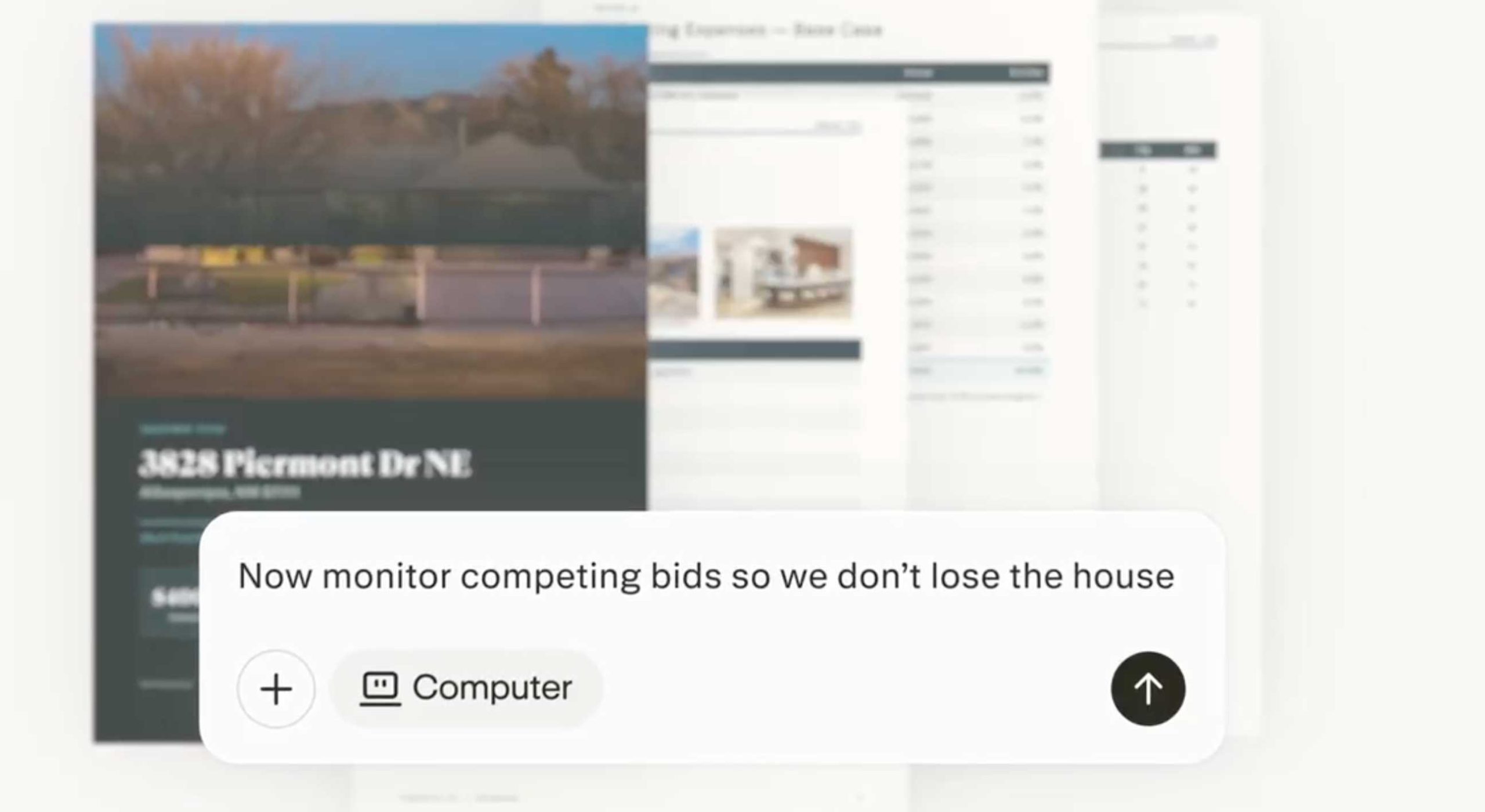
Perplexity introduced Computer, an agentic tool that unifies all AI capabilities into one system, enabling it to research, design, code, deploy, and manage any project end-to-end. The agent runs into a secure development sandbox.
Perplexity Computer appears as a rival to Claude Code and OpenClaw for creating personal AI agents that can build websites, dashboards, applications, and perform analysis and visualizations.
The company described it as “a general-purpose digital worker that operates the same interfaces you do” and “a system that creates and executes entire workflows, capable of running for hours or even months.”
It’s only available on the web for Perplexity Max subscribers ($200/month) to start, while Perplexity says it will roll out to Pro ($20/month).
Perplexity Computer coordinates with tools, files, personal context, various AI models, deep research on the open web, agentic web access, coding capabilities, and file creation.
It draws from 19 models, open-source and proprietary, but at the start, it “uses Opus 4.6 for orchestration and coding tasks, Gemini for deep research, Nano Banana for images, Veo 3.1 for video, Grok for speed in lightweight tasks, and ChatGPT 5.2 for long-context recall and wide search.”
Perplexity has introduced per-token billing for consumers, as agents can rack up token costs quickly. Max users get 10,000 tokens as part of their plans, and Perplexity is giving them an extra 20,000 tokens for the launch of Perplexity Computer.
Introducing Perplexity Computer.
Computer unifies every current AI capability into one system.
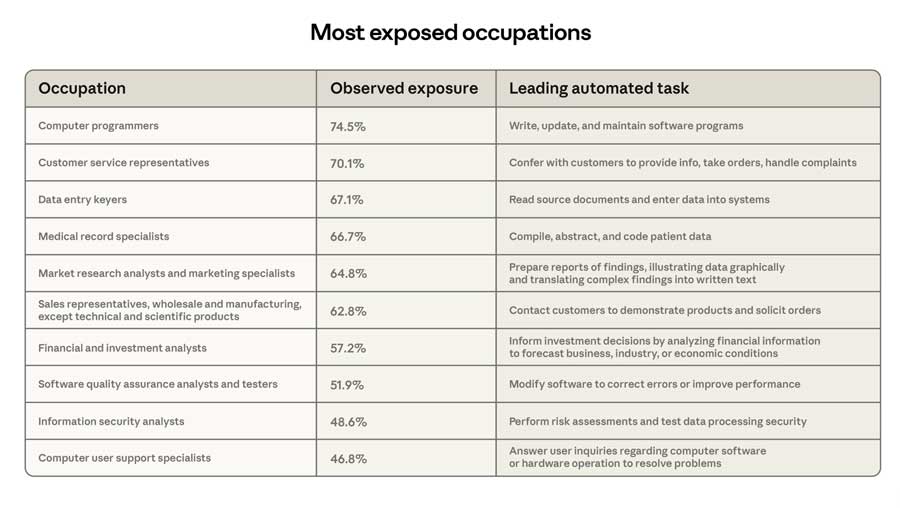
Computer programmers, customer service representatives, and financial analysts will be among the occupations most exposed to AI.
Anthropic has forecasted the impact of AI on labor markets by combining LLM capability with real-world data, including the O*NET database, which enumerates tasks associated with around 800 unique occupations in the US.
The most exposed workers will likely be older, female, more educated, and higher-paid, according to the company.
However, it’s unclear if there will be a disruption. The effects of industrial robots on unemployment continue to be debated.
The top ten most exposed occupations under Anthropic’s measure show that Computer Programmers are at the top, with 75% coverage, followed by Customer Service Representatives. Finally, Data Entry Keyers, whose primary task of reading source documents and entering data is significantly automated, are 67% covered.
At the bottom end, 30% of workers have zero coverage. This group includes, for example, Cooks, Motorcycle Mechanics, Lifeguards, Bartenders, Dishwashers, and Dressing Room Attendants.
The US Bureau of Labor Statistics (BLS) publishes regular employment projections, with the latest set, published in 2025, covering predicted employment changes for every occupation from 2024 to 2034.
Anthropic compared its job-level coverage measure to the Federal Government’s predictions.
Researchers have taken different approaches. Some say that the job apocalypse is unlikely, as today, more AI programmers are being hired
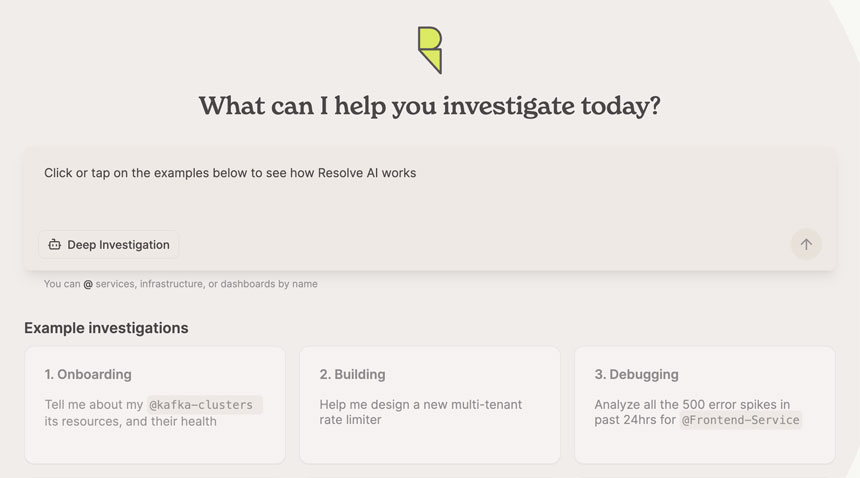
Resolve AI, a startup building AI agents to find and fix problems in live software systems, raised an additional $125 million, reaching a $1 billion valuation.
To reduce downtime, AI agents take actions autonomously, monitoring source code, connected databases, and underlying infrastructure, identifying the issue’s root cause and resolving it automatically, without requiring engineers to be on call to manually intervene.
These agents also help keep the system healthy and secure, flagging potential vulnerabilities and performance degradation.
To build its AI agents, Resolve AI uses frontier AI models and its in-house models.
While agents like Cursor or Claude Code help developers generate new code faster, Resolve AI focuses on software that’s already working.
The mentioned round was led by Lightspeed Venture Partners. Existing investors Unusual Ventures, Artisanal Ventures, and A* also participated, along with Greylock Partners, which led the startup’s $35 million seed round in late 2024.
The startup has since signed on high-profile customers, including Salesforce, Coinbase, and DoorDash, as well as 17 others.
Co-founders CEO Spiros Xanthos and CTO Mayank Agarwal started Resolve AI after leaving Splunk, the data platform Cisco Systems acquired in March 2024 for $28 billion. (Splunk had acquired Xanthos and Agarwal’s prior company, Omnition, in 2019.)
As developers, Xanthos and Agarwal spent about 80% of their time maintaining tools that were already live with customers.
OpenAI released its new foundation model, GTP-5.4, last week, presented as “the most capable and efficient frontier model for professional work, involving spreadsheets, documents, and presentations.”
It’s also OpenAI’s first model with native computer-use-capabilities, enabling agents to operate computers and carry out complex workflows across applications.
In addition to the standard version, the San Francisco lab introduced GTP-5.4 Thinking as a reasoning model, and GTP-5.4 Pro for high performance.
The model’s API has been released with the largest context window from OpenAI: 1 million tokens.
Also, the company has reworked how the API manages tool calling, introducing a new system called Tool Search, resulting in faster and cheaper requests.
OpenAI said GPT-5.4 can write code to operate computers and issue keyboard and mouse commands in response to screenshots.
GPT-5.4 also showed improvements while using web browsers and gathering information from multiple sources, too, as the company says the model “can more persistently search across multiple rounds to identify the most relevant sources, particularly for ‘needle-in-a-haystack’ questions, and synthesize them into a clear, well-reasoned answer.”
Currently, this agent framework is available to a limited number of customers, including Intuit, State Farm, Thermo Fisher, and Uber, with dozens of other companies having piloted it as well. Broader availability is expected in the coming months. Its use pricing has not been disclosed at this point in time.
“The product was inspired by looking at how enterprises already scale people,” said OpenAI.
OpenAI Frontier provides agents with the same skills as people in the workforce: shared context, onboarding, hands-on learning with feedback, and clear permissions and boundaries.
These agents are connected to other tools and resources needed to work and communicate effectively, enabling them to operate across different environments.
Organizations will be able to “hire AI coworkers” for tasks such as running code and performing data analysis.
“By the end of the year, most digital work in leading enterprises will be directed by people and executed by fleets of agents,” said Fidji Simo, OpenAI’s CEO of Applications.
Experts see OpenAI’s platform as a direct response to Anthropic’s Claude Code / Claude Cowork, and Microsoft’s Agent 365 agent manager.
Frontier comes as AI companies expect to handle AI agentic tools that create revenue streams and are genuinely useful for their customers, as an enormous amount of money has been pumped into the industry.
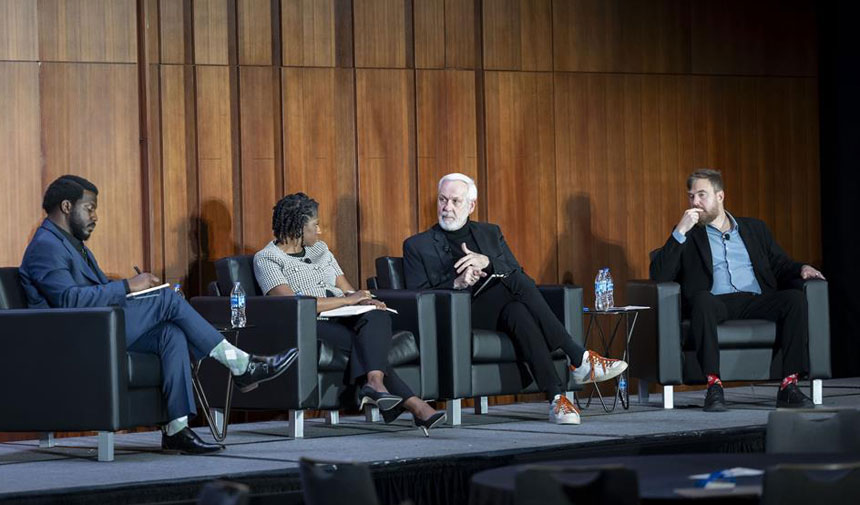
“The transition into AI is going to be really hard,” said Paul J. LeBlanc, former President of Southern New Hampshire University (SNHU), during the ACE Experience 2026 (ACEx2026) conference, which took place last week in Washington, D.C., gathering hundreds of higher education leaders.
“Have you seen the latest technology, OpenClaw, which creates a personal agent? All of the workflows are automated overnight,” he explained. “We are not prepared for AI.”
Regarding the impact of AI, John O’Brien, President of Educause, encouraged attendees during this talk on Thursday to innovate “as AI creates new opportunities.” “AI will do things for you soon,” he explained.
Bryan Alexander, a futurist author and a Georgetown University Senior Scholar, said, “We have to figure out how to compete with AI.” “Everyone is figuring out their economic model.”
During the ACEx2026 event, presidents and chancellors, senior campus leaders, policy experts, and advocates confronted higher education’s challenges and examined how the industry can lead through uncertainty.
“We will not retreat, we will not surrender independence,” ACE President Ted Mitchell told attendees in his address titled “Truth, Trust, and Leadership: Higher Education’s Inflection Point” on Feb. 26. “It has been a hard year. We’ve been assaulted, punished for doing the right thing.”
Addressing the audience, Ted Mitchell said, “You continue providing the world’s best education, helping to build America even in these trying times.”
“To do that, we must improve, we must innovate, and we must inspire the public,” he stated.
Freeman A. Hrabowski III, president emeritus of the University of Maryland, Baltimore County, also helped set the tone at the welcoming reception. “We represent the future of our society. And when we are most depressed or challenged or uncertain, when we can come together and see what people are doing and be inspired by other people, it makes all the difference.”
Arne Duncan, former Secretary of Education, and David Pressman, former Ambassador to Hungary, stressed, “The rising tide of authoritarianism and its implications for higher education, underscoring the stakes of the current moment.”
Nicholas Kent, Under Secretary of Education, offered the Trump administration’s perspective on federal priorities shaping the sector, particularly stressing the need for institutional accountability in areas such as student outcomes and campus climate. “My goal is not for us to agree on everything, but to ensure that we understand where we see challenges, what steps we are taking to address them, and how we can work together to move forward,” he said.
Throughout ACEx2026, participants discussed responses to policy challenges; exchanged strategies for building future-ready institutions capable of addressing AI, structural change, and shifting student demographics, among other factors.
ACE President Ted Mitchell unveiled a new development in the Higher Education Builds America campaign, highlighting the wide impact American colleges and universities — all featured in a new video.
Another plenary session featured a panel, sponsored by Deloitte Services, on the 2026 Higher Education Trends report, as reported by IBL News this week.
The organization of ACE honored institutions and leaders through its Annual Awards for advancing ideas and delivering results for students and communities.
Investors and stock traders continue to question whether software companies such as Salesforce, Adobe, and others can withstand the competition and the threat posed by AI-powered rivals.
Selloff has intensified with each new announcement from AI companies. In the first two months of 2026, the State Street SPDR S&P Software & Services ETF, which tracks an equal-weight benchmark of about 140 software companies, has dropped 20% and almost 30% since its high from this past fall.
Despite these classical software companies‘ pricey subscriptions, minimal capital expenditures, and strong profit margins, investors wonder how long the pain can last.
Companies in the State Street software ETF have lost a combined $1.6 trillion in market capitalization this year.
These corporations are trading at roughly 19 times their next 12 months of earnings, down from a peak of more than 47 times in 2022. Companies in the broad S&P 500, meanwhile, are trading at close to 22 times forward earnings.
• Microsoft, AppLovin, Intuit, Salesforce, and ServiceNow have each lost at least $50 billion in market capitalization.
• Intuit, the maker of TurboTax and QuickBooks, is the S&P 500’s worst performer year to date, dropping some 42%.
• The human-resources software platform Workday posted a 38% decline.
• Atlassian, the maker of Jira and Trello, is now trading near 22 times forward earnings.
The slump extends beyond stocks. Software accounts for around 13% of speculative-grade corporate loans that were broadly syndicated by banks to investors. Some of the biggest private lenders are getting caught in the carnage.
Anthropic introduced last month Claude Code Security, a new capability now in a limited research preview that scans codebases for vulnerabilities and suggests targeted software patches that traditional tools, which usually look for known patterns, often miss.
Security teams face the challenge of addressing too many subtle, context-dependent vulnerabilities exploited by attackers, which require skilled human researchers to deal with ever-expanding backlogs.
“AI is beginning to change that calculus. We’ve recently shown that Claude can detect novel, high-severity vulnerabilities. But the same capabilities that help defenders find and fix vulnerabilities could help attackers exploit them,” said the company in a blog post.
Rather than scanning for known patterns, Claude Code Security reads and reasons about the code the way a human security researcher would: understanding how components interact, tracing how data moves through the application, and catching complex vulnerabilities that rule-based tools miss.
Claude Code Security is being released as a limited research preview to Enterprise and Team customers, with expedited access for maintainers of open-source repositories.
Using Claude Opus 4.6, released earlier this month, Anthropic found over 500 vulnerabilities in production open-source codebases—bugs that had gone undetected for decades, despite years of expert review.
“We also use Claude to review our own code, and we’ve found it to be extremely effective at securing Anthropic’s systems. We built Claude Code Security to make those same defensive capabilities more widely available. And since it’s built on Claude Code, teams can review findings and iterate on fixes within the tools they already use.”
The company expects that a significant share of the world’s code will be scanned by AI in the near future, given how effective models have become at finding long-hidden bugs and security issues.
“Attackers will use AI to find exploitable weaknesses faster than ever. But defenders who move quickly can find those same weaknesses, patch them, and reduce the risk of an attack. “
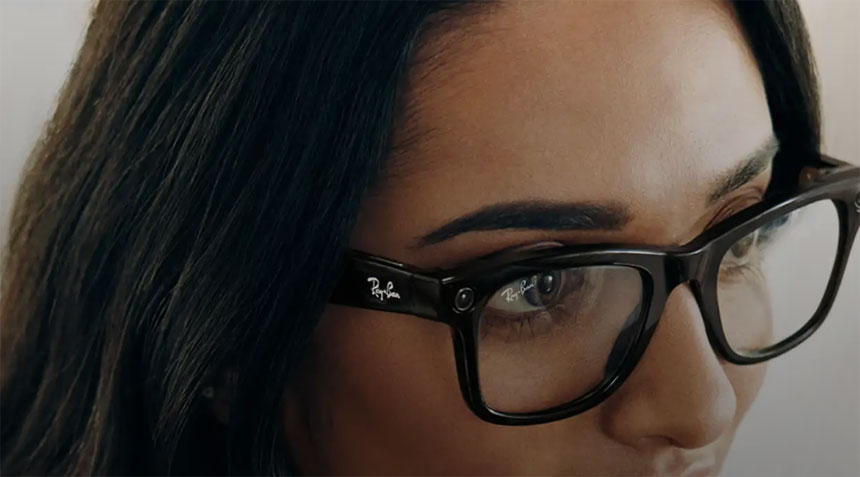
The Ray-Ban maker, French-Italian eyewear EssilorLuxottica, said it sold over 7 million Meta AI glasses last year, tripling its sales over 2023 and 2024 combined.
Meta’s success with its smart glasses, including the Oakley brand, shows that adoption of wearable AI devices is gaining momentum among consumers. “Our success in wearables is helping to propel the AI-glasses revolution, with our iconic brands being a powerful driver of demand,” the company said in a release.
EssilorLuxottica and Meta launched the first edition of the glasses in September 2021, but the device didn’t gain widespread attention until the second-generation launch in 2023.
In September, the two companies introduced a new Ray-Ban model, controlled by hand gestures and neural technology. That device retails for $799 and features a small display in one of the lenses.