Category: Top News

  • The Trump Administration Dismisses the Risks of AI as It Pursues Faster Economic Growth

    The Trump Administration Dismisses the Risks of AI as It Pursues Faster Economic Growth

    IBL News | New York

    The Trump Administration is dismissing the risks of AI — from mass job losses to a potential financial bubble — as it is chasing faster growth and cheers soaring stock prices.

    Asked whether he harbors any fears about an emerging bubble that can damage the economy, President Trump recently said, “No. I love AI.”

    In an elaborated report, The New York Times concludes that the president and his top aides have fully embraced AI and showered its leading corporate backers with money and regulatory support.

    That optimism was on display on Tuesday, after the federal government reported that the U.S. economy grew at an annual rate of more than 4 percent last quarter.

    Kevin Hassett, the director of the White House National Economic Council, said the new data indicated the president’s broader agenda was working, as he touted signs of a “boom” in AI.

    However, many economists and even some technologists in Silicon Valley say that AI might cause significant job losses and pose a risk of financial havoc.

    President Trump, who has long viewed the stock market as a barometer of his economic success, has celebrated the soaring stock prices of major technology companies like Nvidia.

    Through a series of executive orders, signed over the last 11 months, Mr. Trump has moved to eliminate regulatory guardrails and make it easier for tech companies to build data centers, power their operations, sell computer chips, and source critical materials.

    He has done so under the advisement of David Sacks, a Silicon Valley investor now serving at the White House, who has publicly likened AI skeptics to a “doomer cult.”

    For now, economic data show no mass firings due to AI. But it also proves how it is reshaping the labor force, particularly for younger Americans, including recent college graduates.

    A study from the Federal Reserve Bank of New York found that companies embracing AI in the region mainly opted to retrain their workers, rather than let people go. More striking, however, was the slow rate at which these companies were hiring new workers, especially for college-educated positions.

    The New York Fed’s report also found that adoption disproportionately reduced employment for workers ages 22 to 25 in industries set to be highly affected by the technology.

    This month, President Trump signed a directive that restricted states from imposing their own regulations on the technology.

  • ChatGPT Dominates Usage at Universities, Followed by Gemini, Microsoft Copilot, and Claude

    ChatGPT Dominates Usage at Universities, Followed by Gemini, Microsoft Copilot, and Claude

    IBL News | New York

    OpenAI has sold over 700,000 ChatGPT licenses to about 35 public universities for use by students and faculty, according to Bloomberg.

    Among those public universities, Arizona State University and the California State University system have purchased licenses to OpenAI.

    Google’s Gemini AI and Microsoft Copilot are expanding their campus presence, but ChatGPT currently has the highest student adoption.

    Bloomberg noted that OpenAI is offering discounted products to students to turn them into customers.

    Schools willing to purchase bulk access to ChatGPT are also offered discounted pricing below the $20 per month that OpenAI typically charges for a smaller number of educational users. For corporate customers, ChatGPT can cost up to $60 each month.

    According to Copyleaks’ 2025 AI in Education Trends report, ChatGPT dominates usage at 74%, followed by Google Gemini (43%), Grammarly/GrammarlyGO (38%), Microsoft Copilot (29%), Claude (25%), and Perplexity (16%).

    Nearly 90% of U.S. school students report using AI for schoolwork, with 29% relying on it daily and 24% several times per week.

    Usage is rising, with 73% saying they engage with AI more frequently this year than last, signaling ongoing growth rather than plateauing adoption.

  • Institutions, In a Hurry Up to Comply with the Disabilities Act of 2024

    Institutions, In a Hurry Up to Comply with the Disabilities Act of 2024

    IBL News | New York

    Universities and public colleges are in a hurry to make their webpages, online course content, and mobile apps accessible to people with disabilities by April 2026 to meet compliance guidelines and requirements.

    The Department of Justice gave institutions two years to comply with its regulations under Title II of the Americans with Disabilities Act (ADA), effective April 2024.

    Experts in Higher Ed said that this Act will require serious time and financial investment, making it prohibitive for many institutions.

    Compliance requires publicly funded entities to ensure that all web and media content — thousands of webpages — adheres to the Web Content Accessibility Guidelines.

    It means every PDF file must be accessible, captions and audio descriptions must accompany every video, and every sound clip must be paired with a transcript.

    Faculty have to make course materials accessible, and any third-party tech platform from vendors must also be compliant.

    The consequences of not responding are severe, as the DOJ has taken a larger role in enforcing civil rights laws in higher ed under the second Trump administration. Also, legal and activist groups can sue noncompliant institutions.

    Some experts have pointed out that the White House can use the new rules in its negotiations with higher ed institutions, given the widespread lack of preparation.

  • Anthropic Will Release Its Agents Skills Technology as an Open Standard

    Anthropic Will Release Its Agents Skills Technology as an Open Standard

    IBL News | New York

    Anthropic said last week that it would release its Agents Skills technology as an open standard, with a reference SDK available at agentskills.io.

    To date, Microsoft has adopted Agent Skills in VS Code and GitHub and has coding initiatives such as Cursor, Goose, Amp, and OpenCode, among others.

    At their core, Agent Skills are folders containing instructions, scripts, and resources that tell AI systems how to perform specific tasks consistently, using reusable modules, rather than requiring elaborate prompts each time. It’s a new way to build specialized agents using files and folders.

    Each skill takes only a few dozen tokens to summarize the context window, with full details loading only when the task requires them.

    This architecture allows for the deployment of extensive skill libraries without overwhelming the AI’s working memory.

    The coding community has received the tools very well, awarding the skills repository on GitHub with 30,000 stars.

    Atlassian’s Jira and Confluence, Figma, Canva, Stripe, and Zapier are participating as partnering developers in the launch of Skills.

    It’s a mutually beneficial ecosystem similar to the MCP connector partner relationship.

    The Skills approach is a shift from the AI industry’s approach of building specialized agents for different use cases — a customer service agent, a coding agent, a research agent. Skills suggest a different model: one general-purpose agent equipped with a library of specialized capabilities.

    This insight has significant implications for enterprise software development. Rather than building and maintaining multiple specialized AI systems, organizations can invest in creating and curating skills that encode their institutional knowledge and best practices.

    To activate skills, developers need to write a SKILL.md file with custom guidance for their agent. As mentioned, a skill is a directory containing a SKILL.md file that includes organized folders of instructions, scripts, and resources, giving agents additional capabilities.


    Blog: Skills for organizations, partners, the ecosystem

  • Google Released an Early Version of Remote MCP Servers

    Google Released an Early Version of Remote MCP Servers

    IBL News | New York

    Following the launch of the Gemini 3 model, Google released this month an early version of remote MCP servers that allow developers to paste a URL to a managed endpoint, rather than spending many hours setting up connectors. They are offered at no extra cost to enterprise customers who already pay for Google services.

    At launch, Google is starting with MCP servers for Maps, BigQuery, Compute Engine, and Kubernetes Engine.

    In practice, this setup might look like an agent querying BigQuery or interacting with infrastructure services.

    “We expect to bring them to general availability very soon in the new year,” Google said.

    Google plans to expand MCP support beyond the initial set of servers. In the next few months, the company says it will roll out support for services across areas like storage, databases, logging and monitoring, and security.

    “We built the plumbing so that developers don’t have to.”


  • OpenAI Issues Its first Certified Skills-Driven Course, ‘AI Foundations’

    OpenAI Issues Its first Certified Skills-Driven Course, ‘AI Foundations’

    IBL News | New York

    OpenAI announced its first certified course, titled AI Foundations, as part of its OpenAI Certifications and the OpenAI Jobs Platform initiatives – the latter in collaboration with Indeed and Upwork.

    This course is designed to help users learn core, practical AI skills that apply across roles and industries. It intends to be a hands-on, real-world training experience in using today’s AI tools.

    The course is available within ChatGPT, a single environment where the bot acts as a tutor, providing practice questions and a feedback loop in context.

    There is also a version of this class for K-12 teachers, ChatGPT Foundations for Teachers, available on Coursera. This class is designed to help educators build AI expertise and put it to work in the classroom and administrative tasks. It will be brought directly into the ChatGPT environment in early 2026.

    OpenAI stated that its goal is to certify 10 million Americans by 2030.

    The company said that AI Foundations is launching through pilot programs with firms such as Walmart, John Deere, Lowe’s, Boston Consulting Group, Hearst, Russell Reynolds Associates, Upwork, Elevance Health, Accenture, and the Office of the Governor of Delaware.

    “Coursera, ETS, and Credly by Pearson will help ensure our courses and certifications meet high standards for learning design, psychometric rigor, and real-world impact, allowing learners to earn high-value and portable evidence of their skill development.”

    “We are also piloting certifications with Arizona State University and the California State University system staff, faculty, and students to create pathways for students to hone their AI skills and showcase them to employers as they enter the job market.”

  • Google Improves with Gemini 3 Its AI-Powered Design Tool ‘Stitch’

    Google Improves with Gemini 3 Its AI-Powered Design Tool ‘Stitch’

    IBL News | New York

    Google incorporated its latest model, Gemini 3, into Stitch, its experimental AI-powered design tool.

    This implementation leads to higher-quality UI generation.

    Additionally, Google introduced another experimental feature called “Prototypes,” which allows users to stitch together different screens on their canvas to create a working prototype.

    Along with Stitch, many users are using another free Google AI tool to design professional-level app UI. They take those designs into Google AI Studio to turn them into fully functional apps, as shown in the video below.


  • Coursera Merges with Udemy, Owning 59% of The Combined Company, Valued at $2.5B

    Coursera Merges with Udemy, Owning 59% of The Combined Company, Valued at $2.5B

    IBL News | New York

    Online education platform Coursera said on Wednesday it will buy rival Udemy in an all-stock deal, valuing the combined merged company at $2.5 billion.

    Coursera shareholders will own 59%, and Udemy shareholders will own 41% of the company.

    Udemy shareholders would receive 0.8 shares of Coursera for each held, valuing the company at about $930 million. Coursera shares were up about 8%, while Udemy jumped nearly 28%.

    According to Morgan Stanley, which acted as Exclusive Financial Advisor to Udemy, the company will generate annual run-rate cost synergies of $115MM within 24 months of closing and will have $1.2Bn in cash.

    The deal unites two of the largest U.S.-based online learning platforms at a time when course enrollment growth has cooled, prompting companies to seek scale and pursue enterprise clients and more predictable subscription revenue.

    Coursera and Udemy bet that a combined platform will be better positioned to capture corporate demand for workforce training, particularly in artificial intelligence, data science, and software development, as employers invest in reskilling workers amid rapid advances in generative AI.

    Coursera, which partners with universities and institutions to offer degree programs and professional certificates, has increasingly focused on enterprise customers. At the same time, Udemy operates a marketplace of independent instructors selling individual courses and subscriptions to businesses.

    Shares of online education companies have lagged the broader market amid concerns about competition, pricing pressure, and AI’s impact.

    Udemy shares have fallen about 35% so far this year, while Coursera is down roughly 7% over the same period, leaving both companies trading well below their post-IPO highs.

    Morgan Stanley led the IPOs of Coursera, Udemy, Instructure, Docebo, Phoenix Education Partners, and Kinder Care. It was the exclusive financial advisor to Udacity on its sale to Accenture and to Kahoot! – $1.7Bn Public Takeover Led by GSPE companies trading well below their post-IPO highs.

  • Google Says that 1,000 U.S. Higher Ed Institutions Are Using Gemini for Education and NotebookLM

    Google Says that 1,000 U.S. Higher Ed Institutions Are Using Gemini for Education and NotebookLM

    IBL News | New York

    Google said that, in 2025, over 1,000 U.S. higher education institutions, reaching 10 million students, were using Gemini for Education and NotebookLM.

    With over 150 features related to teaching and learning, Google disclosed the main uses as follows:

    • Building a deep understanding with Guided Learning.
    • Prepping for exams with personalized practice quizzes and study guides in Gemini Canvas and flashcards in NotebookLM.
    • Preparing for interviews, receiving resume feedback, and creating professional headshots with Nano Banana..
    • Drawing connections between materials with interactive visual Mind Maps in NotebookLM makes research and synthesis easier.
    • Creating visual explainers for presentations and group projects using Video Overviews and transforming written content into Audio Overviews for on-the-go learning.
    • Adding fresh ideas, relevant resources, and differentiated activities to lessons with Gemini in Classroom, available for Google Workspace for Education.
    • Sharing interactive AI learning experiences for students using NotebookLM and Gems from their learning management. system, through integrations with Google Classroom, Canvas by Instructure, and PowerSchool Schoology Learning.
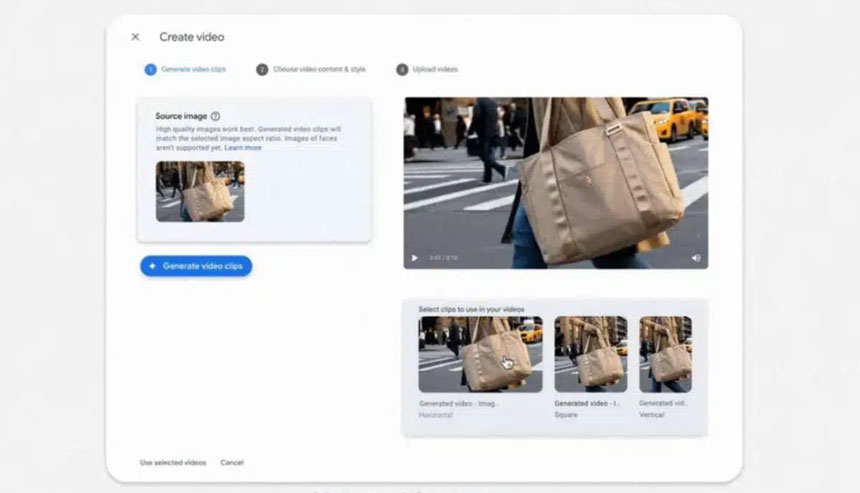
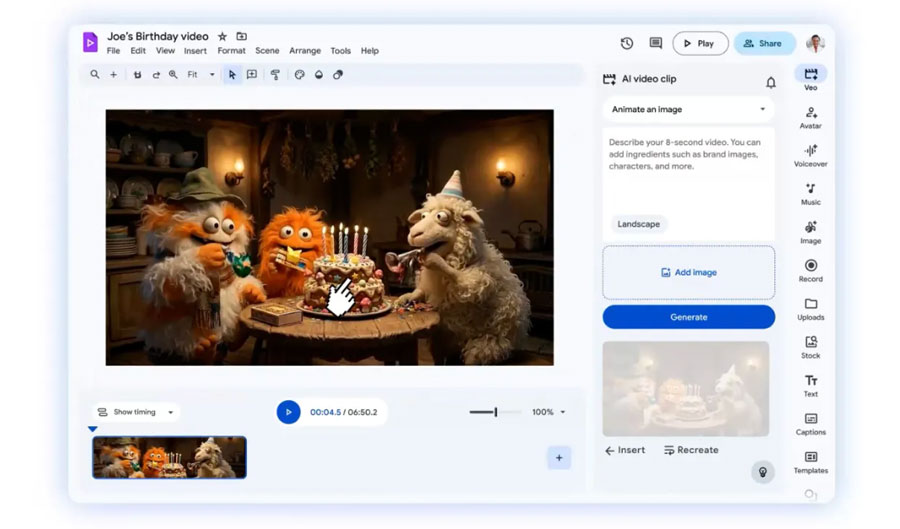
    • Producing polished, collaborative video content with Google Vids, using AI features like sample scripts and voiceovers.
    • Creating engaging lessons and flexible teaching with Chromebook and Chromebook Plus devices.

    In 2025, in terms of AI literacy, over 1 million educators and students received Google for Education training, with over 100,000 earning Gemini Certifications.

    Educators got hands-on with ready-to-use AI prompts for teachers and 100+ ways to use Geminii in education.


    150 Google for Education announcements in the 2025 Year in Review guide.

  • “Enterprise AI Adoption Is Accelerating, Enabling People To Do New Kinds of Work”

    “Enterprise AI Adoption Is Accelerating, Enabling People To Do New Kinds of Work”

    IBL News | New York

    OpenAI, whose ChatGPT now serves 800 million users per week, shared the State of the Enterprise AI Report, which draws on a survey of 9,000 workers across 100 enterprises adopting AI.

    The primary outcome is that enterprise AI adoption is accelerating, reshaping how people work, teams collaborate, and organizations build and deliver products.

    In addition, AI is not just helping people do the same work faster—it is enabling people to do new kinds of work.

    AI is gaining traction across every sector, with technology, healthcare, manufacturing, professional services, and finance seeing a momentum.

    Globally, the fastest‑growing business customer bases include Australia, Brazil, the Netherlands, and France, each exceeding 140% year‑over‑year growth.

    International API customer growth has exceeded 70% over the last six months, with Japan having the most significant number of corporate API customers outside the U.S.

    Across surveyed enterprises, 75% of workers report that using AI at work has improved either the speed or quality of their output. Workers report saving 40-60 minutes per day, with heavy users reporting more than 10 hours per week.

    Across departments:

    • 87% of IT workers report faster IT issue resolution.
    • 85% of marketing and product users report faster campaign execution.
    • 75% of HR professionals report improved employee engagement.
    • 73% of engineers report faster code delivery.