Category: Top News

  • Esri’s Free MOOC Program, with 150,000 Students, Sets a Reference in Corporate Education at Scale

    Esri’s Free MOOC Program, with 150,000 Students, Sets a Reference in Corporate Education at Scale

    Mikel Amigot | IBL News, Milwaukee

    Esri, the Redlands, California-based company that manages the GIS mapping software, has been quietly developing a successful and free MOOC program, setting a reference in the corporate world for digital education at scale.

    Esri’s MOOCs, now part of the Top 100 Free Online Courses list provided by Class Central, has attracted over 150,000 enrollments worldwide, as mentioned in an interview with IBL News. [Watch the interview below].

    The most successful open course has been “Cartography”, with 80,000 learners.

    So far, they have developed five MOOCs, ranging between 4-6 weeks long, and include certificates of completion, free of charge.

    A sixth course, titled Spatial Data Science, is currently in the works. Esri’s passionate subject matter experts teach those online classes.

    The completion rate numbers on these courses are as equally impressive, varying between 25% to 30%. “Our students must be more motivated than others,” Adena Schutzberg, MOOC Program Manager at Esri, explained.

    Esri’s MOOC program was started by David DeBiase, a GIS instructor and manager within the company. His idea was based on expanding teaching while driving marketing opportunities.

    In addition to MOOCs, Esri offers a hundred short classes intended to keep up with the fast-paced developments in geospatial technology. The corporation uses its own home-made LMS.

    To promote active learning and engagement in courses, the MOOC instruction team nudged students toward active, independent and social learning.

    “Our tough-love approach guided students to practice a skill needed for future success and provided the instruction team members with a new perspective on their roles in teaching and learning,” stated Adena Schutzberg.

    She keynoted the last IEEE Learning with MOOCs conference, which took place in October 23-25 in Milwaukee, WI.

    Her talk titled “Using Tough Love to Promote Active Learning” was exclusively recorded by IBL. [Watch it below]


  • The CEO of Instructure May Reap Over $22M After the Sale of the Company

    The CEO of Instructure May Reap Over $22M After the Sale of the Company

    IBL News | New York

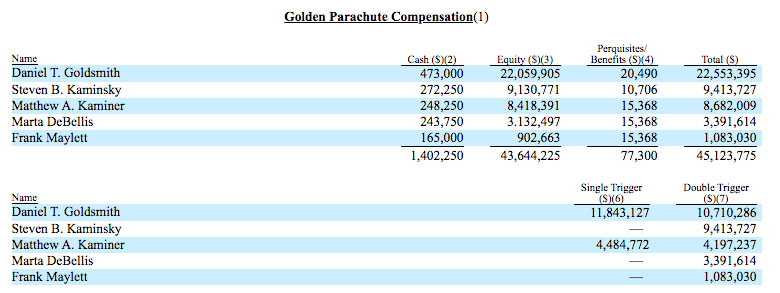
    Five top executives at Instructure Inc (NYSE: INST), a top learning company about to be acquired by equity firm Thoma Bravo, may receive a “golden parachute compensation” of over $25 million, following a “change in control” of the company, according to a statement filed to the SEC on January the 2nd.

    The CEO Daniel T. Goldsmith (Dan Goldsmith) would obtain over $22 million ($473K in cash, $22M in equity and $20K in perquisites/benefits), assuming the Instructure’s transaction occurs on February 13, 2020.

    The second-largest compensation would be for the CFO Steven B. Kaminsky, a total of $9.4 million. Matthew A. Kaminer, Senior Vice President and General Counsel, would reap $8.6 million; Marta DeBellis, Chief Marketing Officer, $3.3 million; and Frank Maylett, EVP Sales at Instructure, $1.08.

    These payments are automatically activated upon “Termination At” or following “Change in Control”, as those executives are entitled to additional compensation or benefits. The amounts, shown in the table below, do not include the payments or benefits that would have been earned with equity awards –including cast bonuses for 2018– prior to the $2 billion all-cash sale to Thoma Bravo –which all the Board urged shareholders on December to approve.

    The company’s filings to the SEC assumes that the merger with Thoma Bravo will occur on February 13, 2020.

    Another Investor Opposes to Thoma Bravo’s Takeover

    On the other hand, a fourth shareholder of Instructure, Lateef Investment Management LP, came out against the takeover by Thoma Bravo, arguing the education software company is selling for cheap after running a flawed sale process, Bloomberg reported.

    Lateef Investment Management LP, which owns roughly 1.5% of Instructure, highlighted that the company is worth at least $60 per share.

    Quoc Tran, Chief Investment Officer at Lateef Investment Management LP, stated, “Goldsmith staying on as CEO seems like a conflict of interest where he’s putting his own interests ahead of shareholders.“We don’t think Dan has done a good job with Bridge and this deal rewards him rather than hold him accountable.”

    Responding to criticism from other three top shareholders – Praesidium Investment Management (7.5%), Rivulet Capital (5%) and Obendorf Enterprises (6%) –, Instructure said two weeks ago that equity firm Thoma Bravo offered the highest price, $2 billion on a $47.60 per share deal.

    The firm added that its review process lasted 11 months with 19 parties signing non-disclosure agreements.

    The deal has a so-called go-shop period in which it can solicit other offers until tomorrow Wednesday.


    Related story:
    Bloomberg, Dec 31: Instructure Set Up $25 Million Stock Payoff for Bosses Amid Sale

  • Federal Students Loan Portfolio Tops $1.51 Trillion After a 5% Increase

    Federal Students Loan Portfolio Tops $1.51 Trillion After a 5% Increase

    IBL News | New York

    Today, the outstanding federal student loan portfolio is $1.51 trillion, according to data released by the Education Department on Friday.

    The Direct Loan (DL) portfolio now represents 82 percent of the total, while the Federal Family Education Loan (FFEL) portfolio represents 17 percent, and Federal Perkins Loan Program loans comprise less than 0.5 percent.

    Year-over-year, the total federal loan portfolio has increased 4.9 percent—about $71 billion—with the FFEL portfolio decreasing by more than seven percent and the DL portfolio increasing by eight percent.

    Through September 30, 2019, approximately 16.1 million applications were submitted for the 2019-2020 application cycle, a 3.1 percent decrease from the same time period in the prior year.

    During FY2019 Q4, the percentage of new defaulters slightly increased compared to the same time last year while the percentage of dollars entering default remained on par with last year. Approximately 260,000 DL borrowers—or 1.4 percent of recipients who were in repayment last quarter—with outstanding balances totaling $6.3 billion—or 0.9 percent of the total outstanding dollars that were in repayment last quarter— entered default.

    DL delinquency rates have resumed their downward trend following an uptick over the last few quarters as a result of disaster-impacted borrowers exiting forbearance statuses. In fact, more than 83 percent of non-defaulted DL recipients with loans in active repayment are current on their loans (i.e. on time or less than 31 days delinquent), putting the 31-day plus delinquency rate at 16.7 percent by recipient count and 13.2 percent by total dollar balance, representing year-over-over decreases of 10.9 and 10.5 percent, respectively.

  • The LearnLauch Conference this Month in Boston Expects 1,500 Educators and Investors

    The LearnLauch Conference this Month in Boston Expects 1,500 Educators and Investors

    IBL News | New York

    One of the first education events in the calendar of this year will be the LearnLaunch Across Boundaries Conference, scheduled in Boston from January 30-31. Education innovators from across the country and the world will gather in this 8th edition, where over 1,500 educators, entrepreneurs, and investors are expected.

    This year the conference features a new President and Executive Director, Jane Swift, the former Massachusetts Governor, who joined the organization on July 1. She will be hosting a Future of Work showcase together with the University of Massachusetts President Marty Meehan and Rosalin Acosta, the Massachusetts Secretary of Labor and Workforce Development, on day two of the conference.

    At Across Boundaries, thought leaders will examine this year’s issues such as Artificial Intelligence, workforce development, technology, gaming and financial assistance during the conference, which its focus is on “Creating the Future of Learning.”

    On Thursday, January 30, a keynote panel comprised of Michael Hansen—the CEO of Cengage, Frank Britt—the CEO of Penn Foster, and Jamie Candee—the CEO of Edmentum, will explore the influence of technology on learning and the future workforce. The conversation will be moderated by John J-H Kim of Harvard Business School.

    Other highlights for Day 1 include keynote speeches by Dr. Parminder K. Jasaal of the Institute for the Future, and Scott Pulsipher of Western Governors University. Jassal will bring the audience through an interactive exercise in the year 2030 as they explore how the intersection of work and learning will impact the innovation of education.

    On Friday, January 31, Kaya Henderson of Teach for All, will discuss access to education, along with the lessons we are learning from Washington, D.C.  Tom Vander Ark, the CEO of Getting Smart, and a leading strategist in U.S. education, will lead the final keynote, hosted by Jean Eddy of the American Student Assistance.


  • IBL News Releases the 2020 Calendar

    IBL News Releases the 2020 Calendar

    IBL News | New York

    As we start a new year and decade, it is time to check, or re-check, what are the main conferences for education, edtech and learning at scale for the upcoming months in the U.S. and abroad.

    There are plenty of events, and at IBL News, we have selected many of them. Our editorial team likes to organize them by month, indicating first the date and location.

    IBL’s goal is to provide and maintain the most complete and up to date calendar available within the industry. We are constantly adding new events (so don’t forget to check regularly). However, if we missed any, please let us know.

    As of today, the conference calendar is as follows:

    Our journalistic team also maintains a calendar of conferences taking place in Latin America and Spain, through our Spanish news site.

  • First Online MBA on edX: “If We Don’t Do it, Someone Else Will,” Says Boston University

    First Online MBA on edX: “If We Don’t Do it, Someone Else Will,” Says Boston University

    IBL News | New York

    Beginning in fall 2020, Boston University (BU) and its Questrom School of Business will offer a low-cost online MBA worldwide on edX.org – a platform created in 2012 by Harvard University and MIT, now with more than 21 million registered users. Its tuition will be $24,000.

    The university sees this MBA – the first one offered through edX – as an opportunity for growth, and to be a disruptor, in a changing landscape.

    “With the online MBA, we’re seizing the initiative to offer a major degree for which we believe there is global demand. Higher education must evolve in a fast-changing world. We aim to lead in this evolution,” President Robert A. Brown said in Boston Today.

    In launching the online MBA, the university is investing in the potential to deliver high-quality online graduate programs with the capability for large-enrollment rates, which could be key in the near future, said Jean Morrison, BU Provost and Chief Academic Officer.

    “Through this degree, BU opens itself to the world in a manner we haven’t done before,” stated Chrysanthos Dellarocas, Associate Provost for Digital Learning & Innovation.

    “This is a paradigm shift on so many levels,” adds Susan Fournier, Allen Questrom Professor and Dean of the Questrom School of Business.

    “The way to think about it is, if we don’t do it, someone else will. We might as well be the ones that lead the pack,” added Dellarocas.

    Because of the affordability of the program, BU will not offer scholarships to online students, although scholarships are available from a variety of external sources. Federal financial aid will be available to enrolled Questrom Online MBA students, as well.

    Regarding instructional challenges, Chrysanthos Dellarocas, who is also the Richard C. Shipley Professor in Management, noted that “it will drive us to get really clever in exploring how far we can take peer engagement and how creatively we can combine technology and human instructors.”

    There are 300 full-time and 600 to 700 part-time students in the on-campus MBA program and 50 to 60 in the executive MBA program.


    edX Partnership

    BU has already been in partnership with edX for six years, offering a number of free or low-cost MOOCs, and in the last couple of years two MicroMasters in business, where students take five courses and earn a certificate.

    “I think this is exciting, having an online MBA from a top school that can be made available to the whole world on edX. I think it’s a big deal,” said Anant Agarwal, edX co-CEO on BT Today. “It is one of the highest-demanded programs on edX.”

    Last fall edX offered its first 10 master’s degree programs, including a master’s in analytics from the Georgia Institute of Technology, with currently 3,000 learners enrolled.

    Additionally, edX offers more than 2,000 MOOCs from 140 schools, usually available free, as well as 53 MicroMasters and 94 professional certificate programs.

    About two-thirds of edX’s learners already have bachelor’s degrees and are typically looking for employment or to advance within their jobs.

    BU TodayQuestrom to Offer Online MBA with edX in 2020

  • A Dynamic 2019 for Open edX, edX, Coursera, and Udacity: IBL’s Top-20 Headlines

    A Dynamic 2019 for Open edX, edX, Coursera, and Udacity: IBL’s Top-20 Headlines

    IBL News | New York

    Platforms dedicated to providing online education at scale saw a high-powered 2019.

    Without attracting attention from the mainstream or financial media, teams at Open edX, edX, Coursera, Udacity, and others quietly moved forward in their development this year. While Coursera and Udacity were still considering their IPOs, edX continued strengthening its financial sustainability.

    Several initiatives on the Open edX open-source ecosystem also made headlines.

    Here is the IBL News’ selection of the top-20 stories:


    Open edX

    • The Open edX Ironwood version is out. Open edX Issues Ironwood.2, a New Release of Its Platform

    • A successful Open edX conference in San Diego. 2020’s will be in Portugal. Open edX Posts Videos of All Talks from Their Recent Conference

    • Harvard’s Blockstore Technology Will Enable Personalized Learning on Open edX. The Next Evolutionary Step in MOOCs Will Be ‘Blockstore’, Says Robert Lue, from Harvard

    • XuetangX, China’s Open edX Platform, Reaches 16M Learners

    • NVIDIA’s DLI reaches 120,000 learners and launches new courses on Data Science


    edX

    • edX Offers Its First Online MBA, from BU Questrom School of Business

    • The edX Organization Adopts a More Commercial Structure Appointing a New Co-CEO

    • edX Cancels Its Annual Partners Conference Scheduled in Hong Kong Due to Safety Concerns

    • edX Announces Its Eleventh Degree: A Master’s in Electrical and Computer Engineering

    • Two Professors from Dartmouth and IMT of France Awarded After their ‘C Programming with Linux’ Course


    Coursera

    • Coursera’s Blockbuster Classes of 2019: Preeminence of AI, with 2M Enrollments

    • Coursera Offers Its 3,600-Course Catalog to Non-Affiliated Universities

    • Coursera’s Google IT Support Certificate Program Gets a Good Response

    • Coursera for Business Claims 100% Year-Over-Year Customer Growth

    • Illinois Shuts Down its Traditional MBA and Focuses into Online’s iMBA


    Udacity

    • Udacity Will Fund 100,000 Scholarships As Part of the Pledge to America’s Workers

    • Udacity’s Achievement with its Nanodegree Program: Over 100,000 Graduates


    Industry

    • The New Standard LTI 1.3, which Allows Interoperability of Grades and Assignments, Excites the Industry

    • Google Classroom, One of the World’s Top LMS: 40M Users In Five Years

    • Black Friday and Cyber Monday: edX, Pluralsight, Udemy, and Skillshare Join the Marketing Season


  • 2019’s Most Popular Online Courses According to Class Central

    2019’s Most Popular Online Courses According to Class Central

    IBL News | New York

    ClassCentral.com issued a list of the 100 most popular free online university courses of 2019. These MOOCs have been developed by 68 universities.

    In the past eight years, over 900 universities have launched 13,500 online courses, which have been taken by 110 million learners.

    Class Central’s ranking is based on data generated from the users on its website, specifically regarding enrollments and bookmarks.

    This is the list:

    University of Tasmania
    Understanding Multiple Sclerosis (MS)
    via FutureLearn

    The Hong Kong University of Science and Technology
    Differential Equations for Engineers
    via Coursera

    British Council
    Teaching English: How to Plan a Great Lesson
    via FutureLearn

    Princeton University
    The Art of Structural Engineering: Vaults
    via edX

    University of Groningen
    Improving Your Study Techniques
    via FutureLearn

    British Council
    Understanding IELTS: Speaking
    via FutureLearn

    Doon University, Dehradun, UGC
    Mathematical Economics
    via Swayam

    Princeton University
    Constitutional Interpretation
    via edX

    The University of Texas at Austin
    Happier Employees and Return-On-Investment Course
    via edX

    The University of British Columbia
    Gender and Sexuality: Applications in Society
    via edX

    University of Leeds
    The IB Extended Essay: Managing your Research Project
    via FutureLearn

    University System of Maryland
    Agile Leadership Principles
    via edX

    Banaras Hindu University, UGC
    ANIMATIONs
    via Swayam

    The Hong Kong University of Science and Technology
    Python and Statistics for Financial Analysis
    via Coursera

    Tel Aviv University
    Unlocking Information Security: Part Ⅰ
    via edX

    University of Minnesota
    Herbal Medicine
    via Coursera

    Amnesty International
    Digital Security and Human Rights
    via edX

    Massachusetts Institute of Technology
    Fundamentals of Statistics
    via edX

    British Council
    Ideas for a Better World: Leading Change Through Policymaking
    via FutureLearn

    Indian Institute of Technology, Kharagpur, NPTEL
    Ethical Hacking
    via Swayam

    University of California, Santa Cruz
    C for Everyone: Programming Fundamentals
    via Coursera

    University of Roehampton
    The Tudors
    via FutureLearn

    Microsoft
    Data Analysis: A Practical Introduction for Absolute Beginners
    via edX

    McMaster University
    Hacking Exercise For Health. The surprising new science of fitness.
    via Coursera

    IBM
    Python for Data Science and AI
    via Coursera

    Tecnológico de Monterrey
    Critical thinking: reasoned decision making
    via edX

    University of Colorado System
    Managing ADHD, Autism, Learning Disabilities, and Concussion in School
    via Coursera

    University of Colorado Boulder
    Cannabis, Mental Health, and Brain Disorders
    via Coursera

    Yale University
    Introduction to Climate Change and Health
    via Coursera

    EDHEC Business School
    Python and Machine Learning for Asset Management
    via Coursera

    University of Toronto
    Introduction to Self-Driving Cars
    via Coursera

    University of Illinois at Urbana-Champaign
    Applying Data Analytics in Finance
    via Coursera

    Alberta Machine Intelligence Institute
    Introduction to Applied Machine Learning
    via Coursera

    State University of New York
    Empowering Yourself in a Post-Truth World
    via Coursera

    Macquarie University
    Negotiation skills: Negotiate and resolve conflict
    via Coursera

    University of Virginia
    Hypothesis-Driven Development
    via Coursera

    MathWorks
    Exploratory Data Analysis with MATLAB
    via Coursera

    University of Rochester
    Introduction to Self-Determination Theory: An approach to motivation, development and wellness
    via Coursera

    University of Michigan
    Foundational Skills for Communicating About Health
    via Coursera

    University of Pennsylvania
    Exploring Renewable Energy Schemes
    via Coursera

    Eindhoven University of Technology
    Improving Your Statistical Questions
    via Coursera

    Harvard University
    The Health Effects of Climate Change
    via edX 3-5

    Harvard University
    China’s Political and Intellectual Foundations: From Sage Kings to Confucius
    via edX

    The University of Hong Kong
    Blockchain and FinTech: Basics, Applications, and Limitations
    via edX

    The University of Texas at Austin
    Machine Learning
    via edX

    Hong Kong Polytechnic University
    English@Work: Basic Job Interview Skills
    via edX

    Harvard University
    Child Protection: Children’s Rights in Theory and Practice
    via edX 1-3

    Columbia University
    Freedom of Expression and Information in the Time of Globalization: Foundational Course
    via edX

    Harvard University
    CS50 for Lawyers
    via edX

    Harvard University
    Women Making History: Ten Objects, Many Stories
    via edX 2-3

    Google
    Advanced Android with Kotlin
    via Udacity

    Stanford University
    The New World of Arnold Schönberg’s Piano Music
    via Stanford OpenEdx

    International Monetary Fund
    Financial Development and Financial Inclusion
    via edX 8-10

    Linux Foundation
    Exploring GraphQL: A Query Language for APIs
    via edX

    Harvard University
    Rhetoric: The Art of Persuasive Writing and Public Speaking
    via edX 2-3

    The World Bank
    The Future of Work: Preparing for Disruption
    via edX

    Research and Development in Discrete Industries
    via openSAP

    Harvard University
    Backyard Meteorology: The Science of Weather
    via edX

    University of the Witwatersrand
    Academic writing for clarity and meaning
    via edX 2-3 hours

    University of Michigan
    Successful Negotiation: Essential Strategies and Skills
    via FutureLearn

    Indian Institute of Technology Bombay, NPTEL
    An Introduction to Programming through C++
    via Swayam

    Indian Institute of Technology Madras, NPTEL
    Python for Data Science
    via Swayam

    Chennai Mathematical Institute, NPTEL
    Programming, Data Structures And Algorithms Using Python
    via Swayam

    Indian Institute of Technology, Kharagpur, NPTEL
    Programming in Java
    via Swayam

    University of California, Berkeley
    Mindfulness and Resilience to Stress at Work
    via edX

    Massachusetts Institute of Technology
    Machine Learning with Python: from Linear Models to Deep Learning
    via edX

    University of Strathclyde
    Caring for Children Moving Alone: Protecting Unaccompanied and Separated Children
    via FutureLearn

    Queensland University of Technology
    Inclusive Education: Essential Knowledge for Success
    via FutureLearn

    Raspberry Pi Foundation, National Centre for Computing Education
    Introduction to Encryption and Cryptography
    via FutureLearn

    University System of Maryland
    Data Analysis for Decision Making
    via edX

    IBM
    Introduction to Artificial Intelligence (AI)
    via Coursera

    University of Illinois at Urbana-Champaign
    Applying Data Analytics in Marketing
    via Coursera

    deeplearning.ai
    Introduction to TensorFlow for Artificial Intelligence, Machine Learning, and Deep Learning
    via Coursera

    Emory University
    Weight Management: Beyond Balancing Calories
    via Coursera

    IE Business School
    Brand Identity and Strategy
    via Coursera

    University of Colorado Boulder
    Developing a Systems Mindset
    via Coursera

    Amazon Web Services, Amazon
    Getting Started with AWS Machine Learning
    via Coursera

    California Institute of the Arts
    The Language of Design: Form and Meaning
    via Coursera

    Imperial College London
    Introduction to Android graphics
    via Coursera

    Copenhagen Business School
    The Neuromarketing Toolbox
    via Coursera

    Ural Federal University
    Personal growth basics (for people with limited health abilities)
    via edX 6-7

    Macquarie University
    GMBA824 Know your customers
    via Coursera

    Tapei Medical University
    Nutrition: Eating to Live Well
    via FutureLearn

    Seoul National University
    Counseling Practice and Research
    via edX 1-2

    Indian Institute of Technology, Ropar, NPTEL
    Joy of computing using Python
    via Swayam

    Indian Institute of Technology Madras, NPTEL
    Artificial Intelligence Search Methods For Problem Solving
    via Swayam

    Indian Institute of Technology Madras, NPTEL
    Introduction to Machine Learning (IITM)
    via Swayam

    Indian Institute of Technology Kanpur, NPTEL
    Developing Soft Skills and Personality
    via Swayam

    University of Reading
    Managing People: Understanding Individual Differences
    via FutureLearn

    Norwegian University of Science and Technology
    Digital Transformation in the Classroom
    via FutureLearn

    Université Côte d’Azur
    From database to big data
    via France Université Numerique

    The Open University
    Diplomacy in the 21st Century
    via FutureLearn

    University of Exeter
    Understanding Gender Inequality
    via FutureLearn

    EIT Food, Università di Torino, Universidad Autónoma de Madrid
    Science Communication and Public Engagement
    via FutureLearn

    University of Amsterdam
    English Pronunciation in a Global World
    via FutureLearn

    Johns Hopkins University
    America’s Opioid Epidemic: From Evidence to Impact
    via Coursera

    King’s College London
    Understanding ADHD: Current Research and Practice
    via FutureLearn

    Waseda University
    Steps in Japanese for Beginners1 Part1
    via edX 3-5

    University of Glasgow
    End of Life Care: Challenges and Innovation
    via FutureLearn

    Deakin University
    Food and Mood: Improving Mental Health Through Diet and Nutrition
    via FutureLearn


    Links to the courses at Class Central



  • 2019 Year Review: MIT’s Epstein Scandal, Sale of Canvas LMS, 2U’s Collapse, and Pearson’s CEO’s Resignation

    2019 Year Review: MIT’s Epstein Scandal, Sale of Canvas LMS, 2U’s Collapse, and Pearson’s CEO’s Resignation

    IBL News | New York

    As 2019 comes to an end, it’s time to review the year’s breaking news in online education.

    Here’s the IBL editor’s top-10 list, dominated by the Epstein’s scandal at MIT, the sale of Instructure/Canvas, 2U’s collapse, and the push-out of Pearson’s CEO.

    1  The MIT Media Lab‘s Scandal: Its Director Resigns After Lying Over His Ties to Epstein

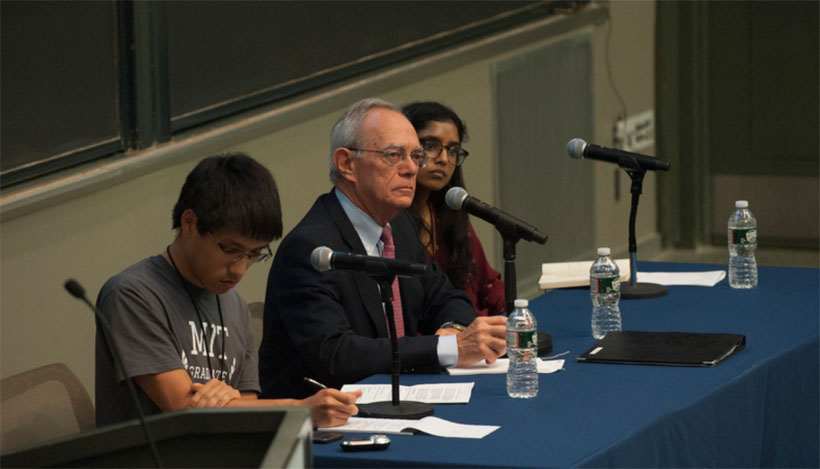
    As a result of it, MIT started to examine its engagement practices with gifts and grants. [President Reif, in the picture above]

    2  2U Shares Continue to Drop After the Company Announcement of Big Losses

    Previous to the collapse, 2U acquired Trilogy Education for $750 million and duplicated its portfolio of universities.

    3  An Equity Investment Firm Buys Instructure for $2 Billion, Taking It Private

    Earlier in the year, Instructure / Canvas LMS bought the Portfolium digital portfolios company for $43 million.

    4  Pearson Pushes Out His CEO After a Dramatic Tenure Full of Sales and Job Cuts


    Six additional stories caught our attention:

    5  The Open Education Conference Falls Apart, Leaving a Community of Passionate OER Supporters

     ISTE Conference Organizer Absorbs EdSurge Media – Investors Won’t Be Rewarded

     Over 1,000 Students Will Graduate from Georgia Tech’s Online Master in Computer Science

    8  Harvard Changes Its Caption System to Settle Deaf Association’s Lawsuit

     University of Oxford Will Invest $190 Million on Humanities and Create an Institute for Ethics in AI

    10  IBM Launches a Blockchain Credentials Network – A Community College At The Forefront


  • Chatbots and Other Artificial Intelligent Cases Are on the Rise, Despite High Expectations

    Chatbots and Other Artificial Intelligent Cases Are on the Rise, Despite High Expectations

    Mikel Amigot | IBL News

    “In education, AI is still a sleeping giant,” researcher Dr. Tony Bates wrote in a must-read article.

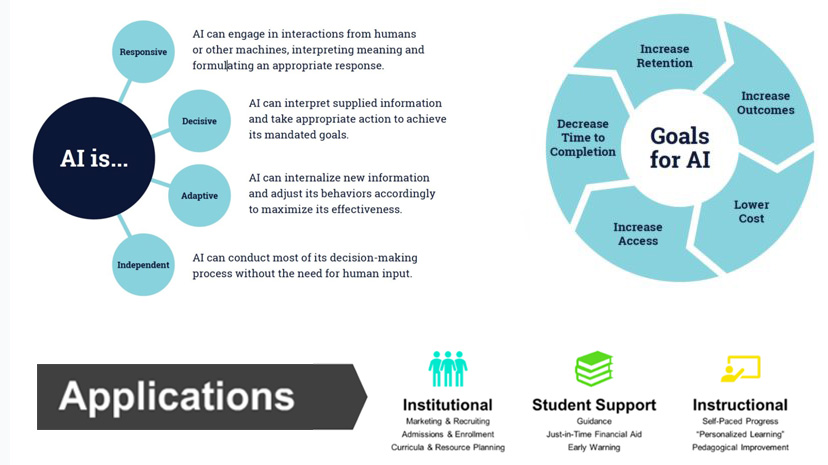
    Today, one of the most extended cases of AI in teaching and learning lies in chatbots. These intelligent tutoring systems, that guide conversations or “chat” through text or voice interactions, are on the rise.

    In a recent interview with IBL News, David Joyner, Associate Director of Senior Experience at the Online Master of Science Computer Science and instructor of the program, commented on the new role of Georgia Tech’s AI-agent –formerly known as Jill, and now named ATA– on how it is connecting students to other learners in the same class.  “It’s a social TA (Teacher Assistant),” he explained.

    Chatbots have become a common tool for banks and large finance and marketing companies as a way to reduce costs and response times. Now, a growing number of colleges and universities use this technology.

    Two examples:

    • Australia’s University of Adelaide announced that students received responses 13 times faster, and learners’ approval of the quality of service increased by 60 percent, after deploying a chatbot to deal with admissions questions in 2018.
    • Western Governors University, or WGU, in 2018 received a $750,000 award from the National Science Foundation to use machine learning in order to improve interactions with students and help them with the decision-making process, i.e., to find programs.

    Among many others, companies like Oracle, AdmitHub, and Ivy.ai, also provide this type of solution.

    As AI-based adaptive technology advances, systems will deal with several tasks, as Tony Bates reminds.

    At least, they will:

    • Provide teaching content to students and simultaneously provide support by giving adaptive feedback and hints to solve questions related to the content, as well as to detect students’ difficulties/errors with content or exercises.
    • Curate learning materials based on students’ needs, such as providing specific recommendations regarding types of reading materials and exercises, along with personalized courses of action to aid in the students’ learning experience.
    • Facilitate collaboration between learners by providing automated feedback, generating automatic questions for discussion, and an analysis of the process.

    It is undeniable that there are inflated expectations for AI –a term that is often incorrectly used to describe any computational activity.

    Beyond the extreme hype, there are clear areas of application. AI enables adaptive learning by recommending personalized content, predictive analytics, automated feedback and support in many conversations.

    Artificial Intelligence is not a panacea for education. However, by having access to massive amounts of information and analyzing these data sets through algorithms and computational power, innovative software organizations can develop worthwhile applications.