Category: Top News

  • The Open Education Consortium Awards Contributors to OER and Online Projects

    The Open Education Consortium Awards Contributors to OER and Online Projects


    IBL News | New York

    The Open Education Consortium announced yesterday the winners of its Awards for Excellence, which recognizes “outstanding contributions, exemplary leaders, open educational resources, and open projects and initiatives.”

    The Leadership Award went to Cheryl Hodgkinson-Williams, “a leading figure in the international open educational resources (OER) research community and currently holds the first-ever UNESCO Chair in Open Education and Social Justice,” the Open Education Consortium described. [On the left in the picture]

    The Practitioner Award was given to Carlos Delgado Kloos, Professor and Vice President for Strategy and Digital Education at the Universidad Carlos III de Madrid. [On the right in the picture].

    “Professor Delgado Kloos has been an outstanding educator for over 35 years. His most recent contribution to open education includes two MOOC trilogies on Introduction to Java Programming published on edX that have reached near 500,000 registered learners. He has participated in 4 other MOOCs on edX and MiríadaX, and in a course for OpenCourseWare.”

    The Student Award recipients were Dirk Ulijn and Bart Meeuwissen, from TU Delft. They participated in the Hyperloop project and created a MOOC, Hyperloop: Changing the Future of Transportation, featured on the edX platform.

  • Universidad de los Andes Will Develop the First MOOC-Based Master’s in Spanish

    Universidad de los Andes Will Develop the First MOOC-Based Master’s in Spanish

    IBL News | New York

    Universidad de los Andes, a leading institution in Colombia, will develop the first top-tier online master’s degree at scale in Latin America. It will be also the first Spanish-language degree on Coursera.

    This Master’s in Software Engineering will prepare Spanish-speaking learners — even those without a bachelor’s degree in computer science — to lead high-performance software development teams,” said Dil Sidhu, Chief Content Officer at Coursera, in a blog post.

    Latin America currently has an estimated shortage of nearly 450,000 IT professionals.

    Admissions are expected to begin by August 2010, and launch in 2021, after official approval from the Colombian Ministry of Education.

    The degree will be comprised of 18 courses, with two credits and eight weeks per course. Pricing has not been announced yet.

    “Businesses today need software engineers that can lead teams, coordinate complex projects, and bring new ideas to the forefront but there aren’t enough qualified graduates in Latin America to help move the industry forward,” said Alfonso Reyes, Dean of the School of Engineering at Universidad de los Andes.

  • 2U’s Trilogy Education Launches Two Boot Camps with Columbia and Rice University

    2U’s Trilogy Education Launches Two Boot Camps with Columbia and Rice University

    IBL News | New York

    Trilogy Education, a 2U, Inc. brand (NASDAQ: TWOU), announced last week the launch of two boot camps with Rice University and Columbia Engineering to train professionals in the fintech data field.

    The boot camps curriculum will include the usage of technology tools relevant to financial services, such as:

    • Analyzing stock movement using financial APIs in Jupyter notebooks.
    • Creating predictive models for stock prices with time series analysis using Python.
    • Building a decentralized identity system using blockchain technologies.
    • Applying machine learning algorithms to analyze sentiment scores for cryptocurrency news.
    • Using TensorFlow and Keras to build deep learning neural networks to predict financial outcomes.
    • Developing an AI-driven robo-advisor capable of providing financial services with minimal human intervention.

    The U.S. has added over 1.5 million fintech-related jobs over the past eight years, according to Burning Glass. For example, U.S. Bancorp and JP Morgan Chase had more open coding positions in the last year than Apple and Google.

    Partnering with boot camps is an emerging practice for universities to offer training for coding, cybersecurity, analytics, and other in-demand skills.

    Trilogy –acquired by 2U for $750 million earlier this year – has helped pioneer the trend by providing its services to institutions such as the University of Oregon, Johns Hopkins University, and the University of North Carolina’s business school.

    Controversial 2U CFO Retires

    Secondly, 2U announced the retirement of Cathy Graham as Chief Financial Officer, effective April 1, 2020, “following a successful seven-year career”.

    The educational company highlighted that it is conducting an external search for its next CFO, although it hid the fact that Cathy Graham was, along with the CEO Chip Paucek, the participant in the disastrous earning call of July 30, which prompted the collapse of 2U, losing two-thirds of its value.

    Cathy Graham [in the picture] and Chip Paucek’s commentaries caused a rush of devastating analyst downgrades alongside a massive sell-off.

    ForbesMany People Saw The Crash Of A Billion Dollar EdTech Company Coming

  • The 2019 Learning with MOOCs Conference Unveils Its Keynote Speakers

    The 2019 Learning with MOOCs Conference Unveils Its Keynote Speakers

    IBL News | New York

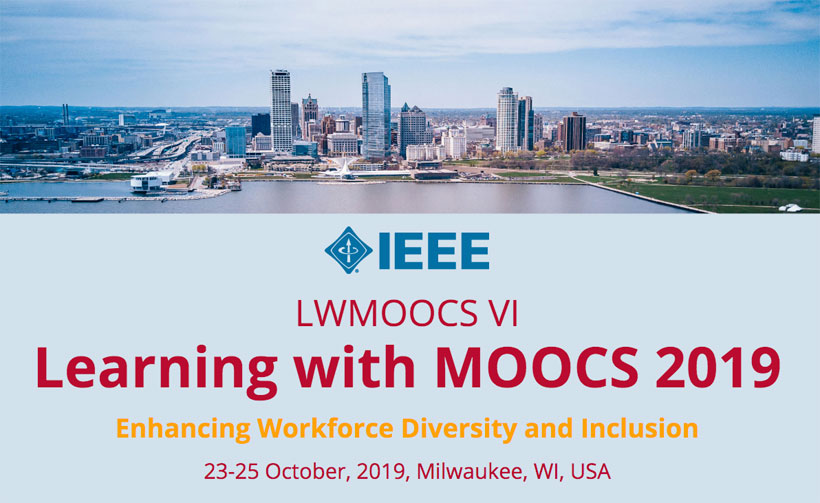
    Organizers of the IEEE Learning with MOOCs 2019 conference (October 23-25 in Milwaukee, WI) unveiled to IBL News the preliminary list of speakers at the event.

    • Kerry Douglas (Assistant Professor, Purdue University), “Evaluation for advanced STEM MOOCs (preliminary)”
    • Zachary A. Pardos (Assistant Professor, UC Berkeley), “Learning analytics, deep learning in education, and MOOC data analysis (preliminary)”
    • Kristina Wilson/Bonnie Tomlin (Wisc-Online-Wisconsin Technical College System), “Basic Computer Skills Course MOOC – Creating a MOOC from the Ground Up”
    • Anant Agarwal (CEO, edX), “The Future Learner”
    • Dhawal Shah (Founder and CEO, Class Central), “A Product at Every Price: Overview of MOOC Monetization Models”
    • Manoel Cortes (Engineer & Writer, Class Central), “Communicating Effectively about MOOCs: Approach & Takeaways”; “The Full-Time Online Student: Benefits & Limitations”
    • Carlos Delgado-Kloos (Vice President, Universidad Carlos III de Madrid, Spain), “MOOCs for Development: Experience from the MOOC-Maker and COMPETEN-SEA Projects”
    • Rocael Hernandez (Director Galileo Educational System, Universidad Galileo), “Next Decade Challenges and the Role of MOOCs”
    • Carina S. González (Universidad de La Laguna, Spain), “Technology for STEM and diversity (preliminary)”
    • Ting-Chuen Pong (Professor, Hong Kong University of Science and Technology), “Experimental Learning and MOOCs (preliminary)”
    • Carina S. González (Universidad de La Laguna, Spain), “Gamification and Fun in MOOCs (preliminary)”
    • Manuel Castro (Professor, IEEE Division VI Director & UNED, Spain), “New Practical Competences in MOOCs”
    • Kristina Wilson (Learning and Development Designer for Learning Innovations, Fox Valley Technical College) and Bonnie Tomlin (Learning Innovations Multimedia Developer), “Creating a MOOC from the Ground Up”

    The sixth edition of the LWMOOCs (Learning with MOOCs) reunion will be held on the campus of the Milwaukee School of Engineering for three days at the end of October.

    “Keynote speakers from academia and industry will discuss learning analytics, diversity in MOOC audiences, using machine learning to guide learning timelines, and experiences creating and managing MOOCs taken by hundreds of thousands of users,” said Professor Manuel Castro, a member of the steering committee.

    This year the theme will revolve around “Enhancing workforce diversity and inclusion.”  In addition, the technical program includes the following topics:

    • Increasing diversity through educational access
    • Assistive and inclusive MOOC techniques
    • Expanding the learner community through MOOCs
    • Social implications of MOOCs
    • Open content, open licensing, and MOOC delivery
    • International cooperation in MOOC projects
    • Using MOOCs in employee training
    • Learning analytics in MOOC courses
    • Machine Learning, AI, and MOOC delivery

    The IEEE Learning with MOOCs conference will attract an international audience of researchers and practitioners.

    One-hundred or more attendees will converge on Milwaukee from all over the world. Representatives from academic institutions such as MIT, Columbia, Purdue, Wisconsin Technical College System, North Dakota State, Old Dominion, Georgia Tech, Berkeley, the Spanish Distance University, Carlos III University, La Laguna University, Hasso Plattner Institut, Hochschule Bonn-Rhein-Sieg, University of Turku, Tokyo Tech, Victoria University of Wellington, have already confirmed their attendance.

    Similarly, representatives from the industry and government institutions like edX, MathWorks, FutureLearn, ClassCentral, IEEE, the American Museum of National History, the India National Institute of Technical Teachers Training and Research, and Evimed have also registered.

    The IEEE Learning with MOOCS event will be sponsored by edX, ClassCentral, FutureLearn, the IEEE Education Society, the IEEE Milwaukee Section, and the Milwaukee School of Engineering. IBL News will be the Media Partner.


  • Andrew Ng Internationally Expands His AI-Based Educational and VC Companies

    Andrew Ng Internationally Expands His AI-Based Educational and VC Companies

    IBL News | New York

    Andrew Ng, former CEO of Coursera and instructor on courses developed by his startup Deeplearning.ai, is choosing Medellin, in Colombia, as the place to expand.

    After reviewing a wide range of cities in Europe, Asia, and Latin America, Andrew Ng will open a second office for his AI-related projects in Colombia, according to TechCrunch.

    These projects include, in addition to Deeplearning.ai, the AI Fund startup studio for building AI companies and Landing.ai, which helps enterprises use AI.

    Ng believes that Medellin offers a strong talent pool, along with an educational and business ecosystem, since it is home to a number of universities and a hub for startups and incubators.

    “It’s important that we set up AI hubs outside of Silicon Valley and China, in part, because they will provide a different perspective,” Ng explained.

    Andrew Ng [in the picture] plans to expand his existing team of 50 people into 150 to 200 employees over the next two years. His view is based on building specialized components to various verticals.

  • Coursera Acquires an Online Platform for Hands-On Projects In Order to Enhance Its New R&D Unit

    Coursera Acquires an Online Platform for Hands-On Projects In Order to Enhance Its New R&D Unit

    IBL News | New York

    Coursera.org announced on August 28 its first-ever acquisition of the startup Rhyme Softworks, creator of a platform that allows developers to build hands-on, virtual e-learning projects.

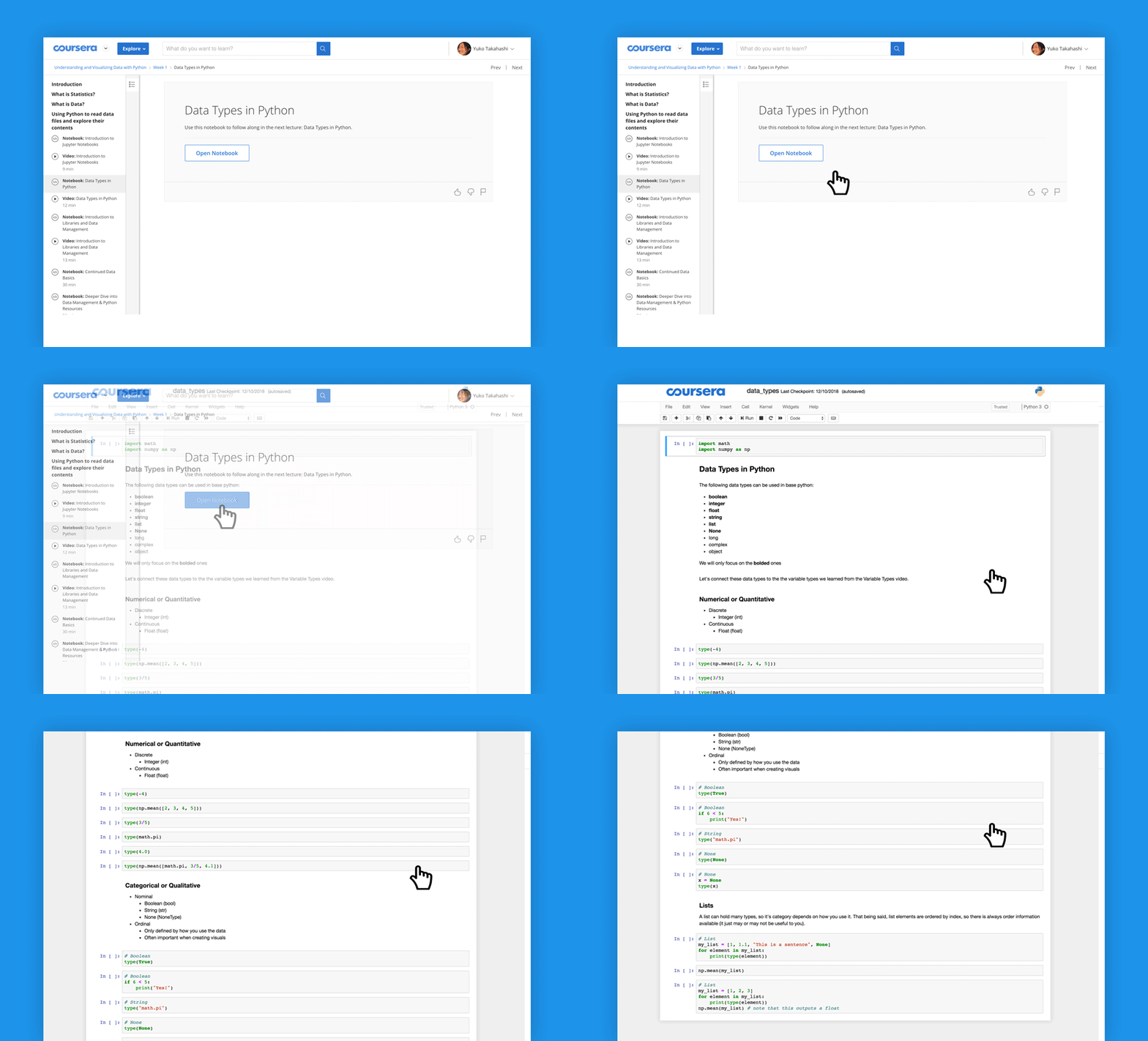
    Along with the transaction, Coursera unveiled Coursera Labs. This new offering lets educational institutions and industry partners to work on projects and assignments in a browser without any environment setup or software downloads using tools like Jupyter Notebook, RStudio, VS Code, and cloud software consoles.

    The terms of the acquisition of Rhyme Softworks – a San Mateo, Calif-based company with a team of only six – were not disclosed.

    “With Rhyme’s virtual machines, beginner to intermediate-level learners can follow along with self-paced or live guided sessions while simultaneously completing a project or assignment — all from one browser using pre-configured Windows or Linux cloud desktops,” explained Jeff Maggioncalda, CEO at Coursera, in a blog post.

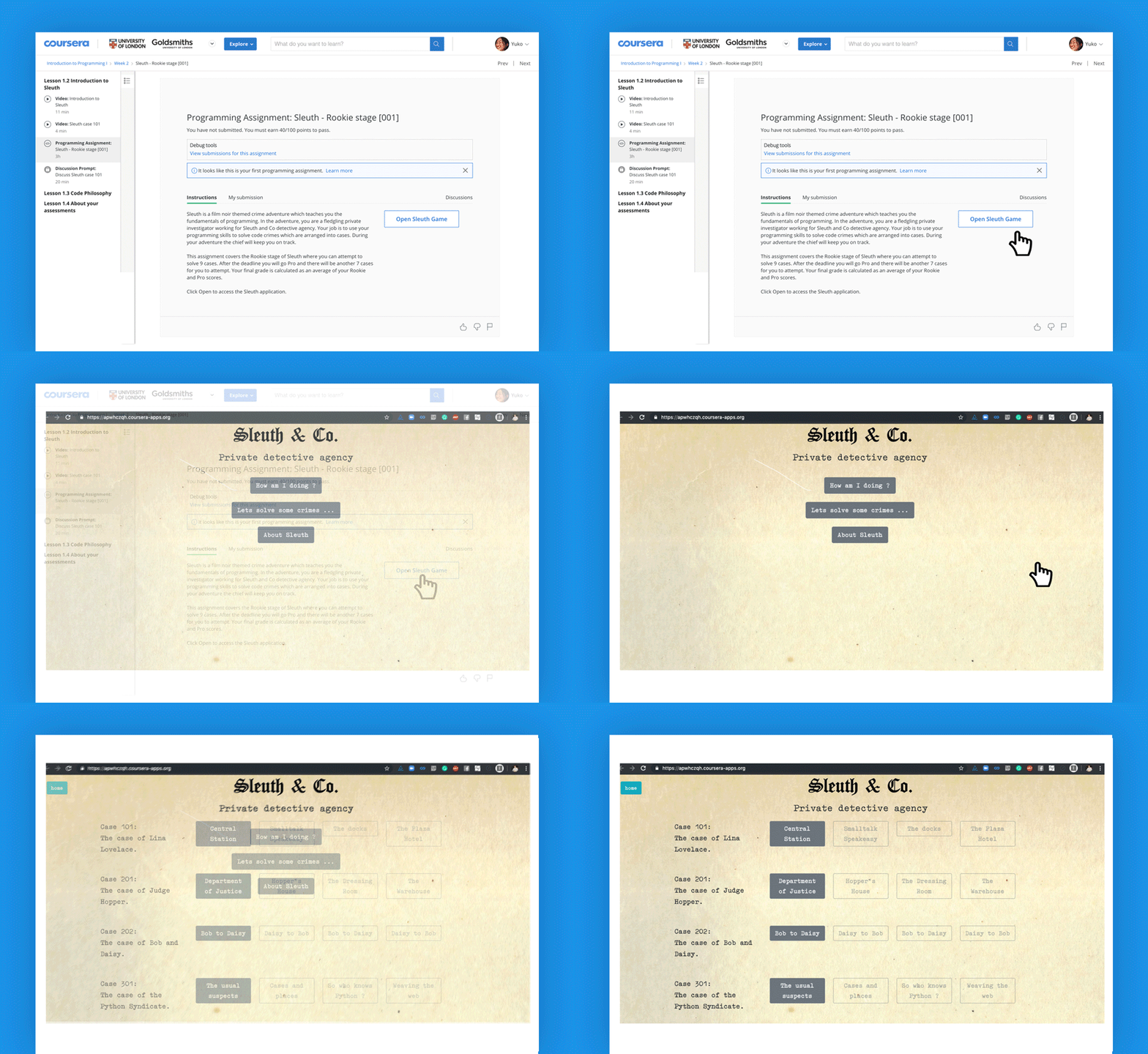
    Jeff Maggioncalda also disclosed that the University of London was a pilot partner for Coursera Labs, creating an innovative way for learners of their Introduction to Computer Programming course.

    For instance, with a custom application called Sleuth, students are able to write code to solve a series of interactive detective puzzles.

    The University of Michigan and the University of Illinois also plan to use this functionality for their upcoming content on the Coursera platform by the end of the year.

    “As online learning continues to support workforce training on the job and at home, it’s important to provide engaging, hands-on experiences that enable learners to test their mastery of new skills with the tools used in the workplace,” concluded Maggioncalda.

    Mountain View, Calif-based Coursera currently hosts 3,600 courses and 14 degrees, from 190 top university and industry partners, attracting 43 million learners and 2,000 corporate customers.

    The organization recently raised $103 million at a valuation of $1 billion. It competes with well-funded rivals like Udemy and Udacity, as well as the nonprofit edX.org.

  • GitHub Classroom Builds an Extensible Ecosystem to Integrate Popular LMSes

    GitHub Classroom Builds an Extensible Ecosystem to Integrate Popular LMSes

    IBL News | New York

    GitHub Classroom, the LMS of the leading repository, is building an extensible ecosystem to integrate popular learning systems.

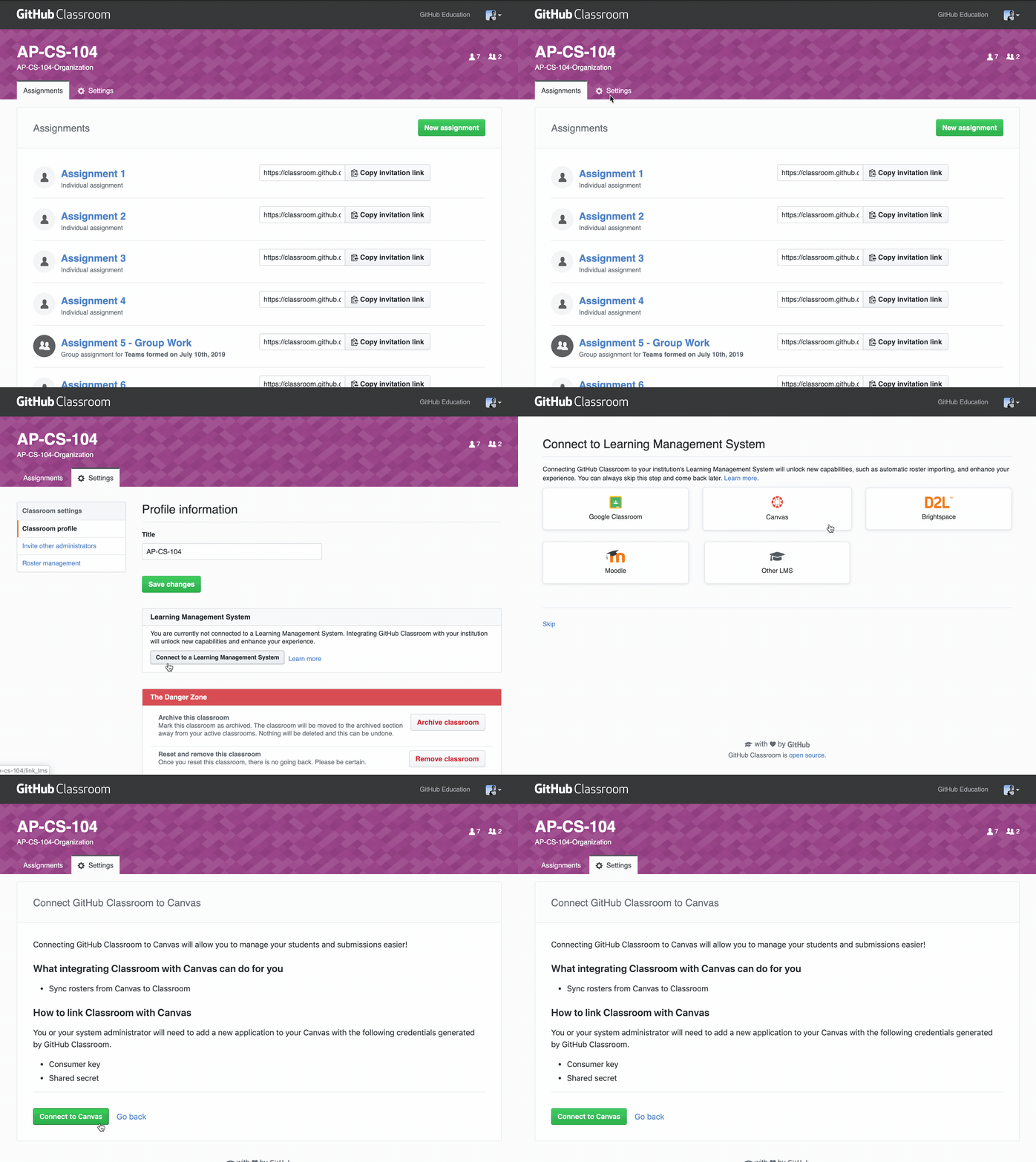
    Recently, GitHub announced integrations with Google Classroom, Canvas, Brightspace, and Moodle. Blackboard is expected to be added soon to the list of LMSes supported, according to its blog.

    GitHub, which is an open source, is used by almost 20,000 teachers to hand out assignments, monitor student progress, and give feedback.

    “We’re excited to announce the new integration with the learning management systems (LMS) you already use,” wrote Nathaniel Woodthorpe, program manager at GitHub. “This integration allows you to sync your list of students from your LMS with GitHub Classroom—all without the need for manual copying. Even better, you can make changes to this list throughout the semester,” he added.


  • Sebastian Thrun Picks an Executive of LendingTree as a New CEO at Udacity

    Sebastian Thrun Picks an Executive of LendingTree as a New CEO at Udacity

    IBL News | New York

    Udacity announced yesterday the appointment of Gabriel Dalporto as a new CEO, after nearly ten months searching for a top executive. Dalporto fills a vacant position since Vishal Makhijani stepped down in October 2018.

    “With Gabe’s dynamic leadership style and outcome-driven approach, I know he is the right person to lead Udacity into our next phase of growth,” wrote Sebastian Thrun, co-founder and currently in charge of day-to-day operations at Udacity in a blog post . “And I will continue to support him as Executive Chairman of Udacity,” he added.

    Gabriel Daporto’s last managing position was CFO at LendingTree. He was also a member of the Board of Directors at LendingTree and Guitar Center.

    “Gabe takes over Udacity at an opportune moment in time,” explained Thrun while issuing an array of bullish statements:

    • “Since June 2019, the company has been cash-flow positive, and it is growing aggressively”.

    • “The consumer business has grown by more than 60%.”

    • “Our enterprise and government businesses are also booming, with bookings each increasing by over 100% year over year.”

    • “Our corporate clients now consistently report over 80% course completion rates, a far cry from MOOCs and other content-only offerings.”

    • “Staying truthful to our social mission, we launched more than 50,000 new scholarships with AT&T, Google, Bertelsmann, Facebook, and AWS.”

    [Gabriel Dalporto and Sebastian Thrun, in the picture above]

    [Official Press Release: Udacity Names Gabriel Dalporto as Chief Executive Officer]

  • Arizona State University Develops the First Adaptive-Learning Degree in Science

    Arizona State University Develops the First Adaptive-Learning Degree in Science

    IBL News | New York

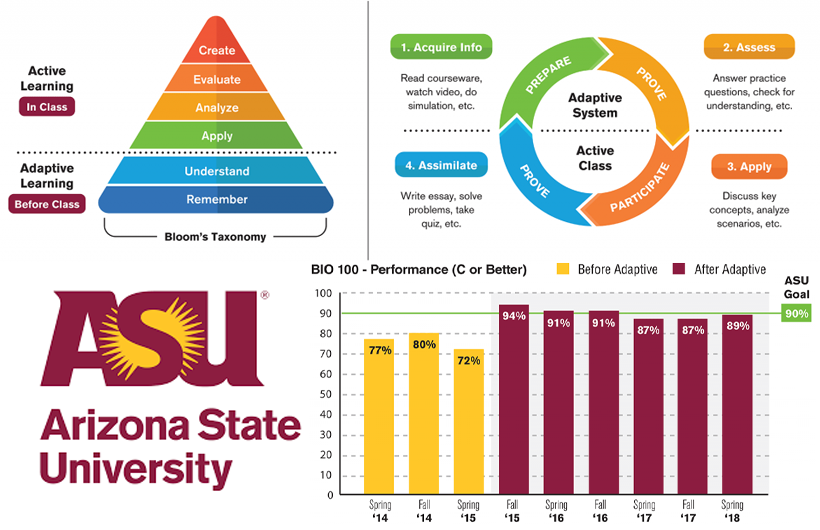
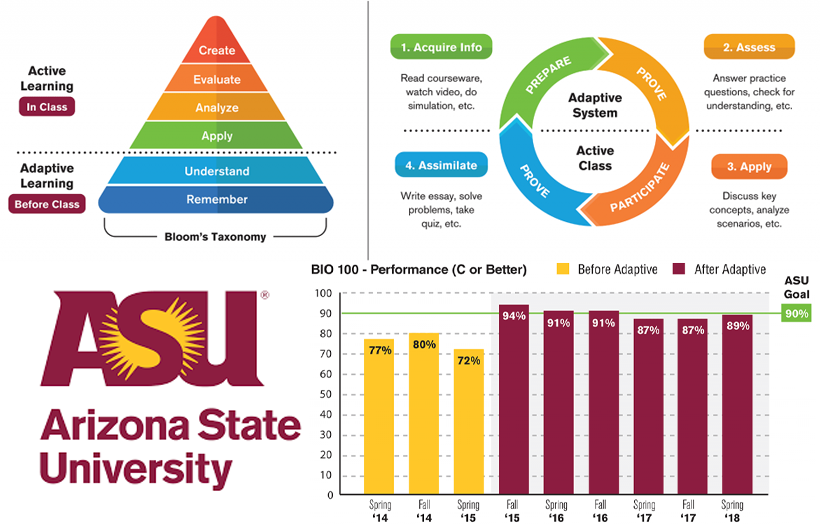
    Arizona State University (ASU) announced last week that it has developed the world’s first adaptive-learning biology degree, adjusting to its students’ needs in real-time.

    “We are moving away from mass production to mass personalization,” said Dale Johnson, director of adaptive-learning initiatives with EdPlus at ASU. “We used to teach everyone the same thing at the same time. Now, we’re connecting the right student to the right lesson. We are changing the structure of higher education from static to dynamic,” he added.

    The four-year degree in Biological Sciences is built in a new adaptive-learning platform called BioSpine. The technology was co-created between ASU and a Scottish company called CogBooks.

    “With the support, we are creating through adaptive learning, as well as true assessments that measure the range of student learning, students will receive support and direction when course material is especially challenging,” said Joshua Caulkins, assistant director of undergraduate programs with ASU.

    The degree program uses the BioSpine adaptive-learning courseware rather than textbooks.

    Faculty members link learning activities to the platform, which then allows students to progress through more challenging coursework when they are ready, or step back and get support in relearning material from a previous course or chapter.

    ASU believes a large lecture hall doesn’t engage students in science classrooms, nor is it effective in producing an exceptional performance in exams.

    “Key BioSpine features include aligning the curriculum, integrating content, shifting faculty roles from lecturers to leaders and empowering faculty to see when a student needs intervention,” said ASU.

    Students have responded enthusiastically to the change, and even some faculty members have received an ovation from learners at the end of courses.

  • Coding Bootcamps Are Booming: 23k New Graduates This Year

    Coding Bootcamps Are Booming: 23k New Graduates This Year

    IBL News | New York

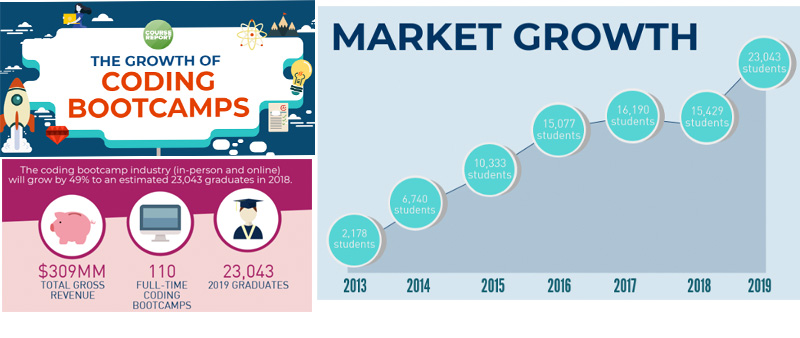
    Coding bootcamps, currently an industry of $309 million in revenue, will graduate around 23,000 developers in 2019, an increase of 49% over 2018, according to an in-depth study by Course Report.

    As a point of reference, in 2018 there were about 93,000 undergraduate computer science majors graduating from American universities.

    A key finding shows that online coding boot camps are growing even than in-person bootcamps  in growth around 171% year-over-year. However, by sheer count, in-person graduates still dominate — 17,524 vs. 5,519 in 2019.

    As a trend alert, Course Report indicates that 29 bootcamps will teach an additional 22,549 students via 995 corporate training partners.

    Additional key findings highlight that:

    • In 2019, there are 96 in-person bootcamp providers and 14 online bootcamp providers. As of June 1, there are coding bootcamps in 71 U.S. cities and 38 states.


    • Average tuition price of qualifying in-person courses is on the rise – $13,584, with an average program length of 15.1 weeks. Online bootcamps are slightly less expensive ($12,898) and much longer (24.3 weeks).


    • Tuition revenue from qualifying schools will be $309,237,750 in 2019 (not including corporate training revenue) – this includes $71,186,477 from online schools in 2019. Trend Alert: 23 bootcamps offer Deferred Tuition or Income Sharing Agreements in 2019.


    • This year, Full Stack JavaScript continues to be the most common teaching language, used in 44% of Web Development courses.


    • The length of online programs has stretched out, from 15.4 weeks in 2018 to 24.3 weeks in 2019. This rise in duration is attributed to the launch of six-month programs in 2018 by online operators such as Lambda School and Thinkful.


    • In-person coding bootcamps were also trending longer. The average length of an in-person bootcamp is now 15.1 weeks, a bump up from 14.4 weeks in 2018.