Category: Top News

  • The University of Glasgow Will Deliver Its First Online Degree in Late 2020

    The University of Glasgow Will Deliver Its First Online Degree in Late 2020

    IBL News | New York

    The 550-year-old University of Glasgow, one of the top world 100 universities, will deliver its first online degree via FutureLearn at the end of 2020.

    The degree will be offered through the FutureLearn platform. It will be on End of Life Studies and will be accompanied by a free “taster course” in late 2019, so prospective students can learn what the program might entail.

    The degree will be available as a master’s, postgraduate diploma, and postgraduate certificate, with 180, 120 and 60 credits awarded respectively.

    Terms of the arrangement, announced early this month, were not disclosed.

    The University of Glasgow has been a FutureLearn partner since this platform launched in 2012, with the institution hosting online courses such as A History of Royal FashionUnderstanding Suicide and Suicide Prevention Strategies in a Global Context, and Antiquities Trafficking and Art Crime.

    Regarding the subject of the degree, the Scottish university explains, “as the global population ages and grows, there will be a huge increase in the number of people who die in the world every year, from around 56 million currently to 90 million, or even more, by the second half of the century.”

    “This degree will explore the many contested issues concerning where, how, when and where we die.”

    “The course will draw on the social sciences, humanities and clinical disciplines to examine new theories, empirical studies and innovative methods that are shedding light on the issues of death, dying and bereavement across cultures and geographies.”
  • Google’s AI-Based App Provides Answers to Learners Who Get Stuck While Studying

    Google’s AI-Based App Provides Answers to Learners Who Get Stuck While Studying

    IBL News | New York

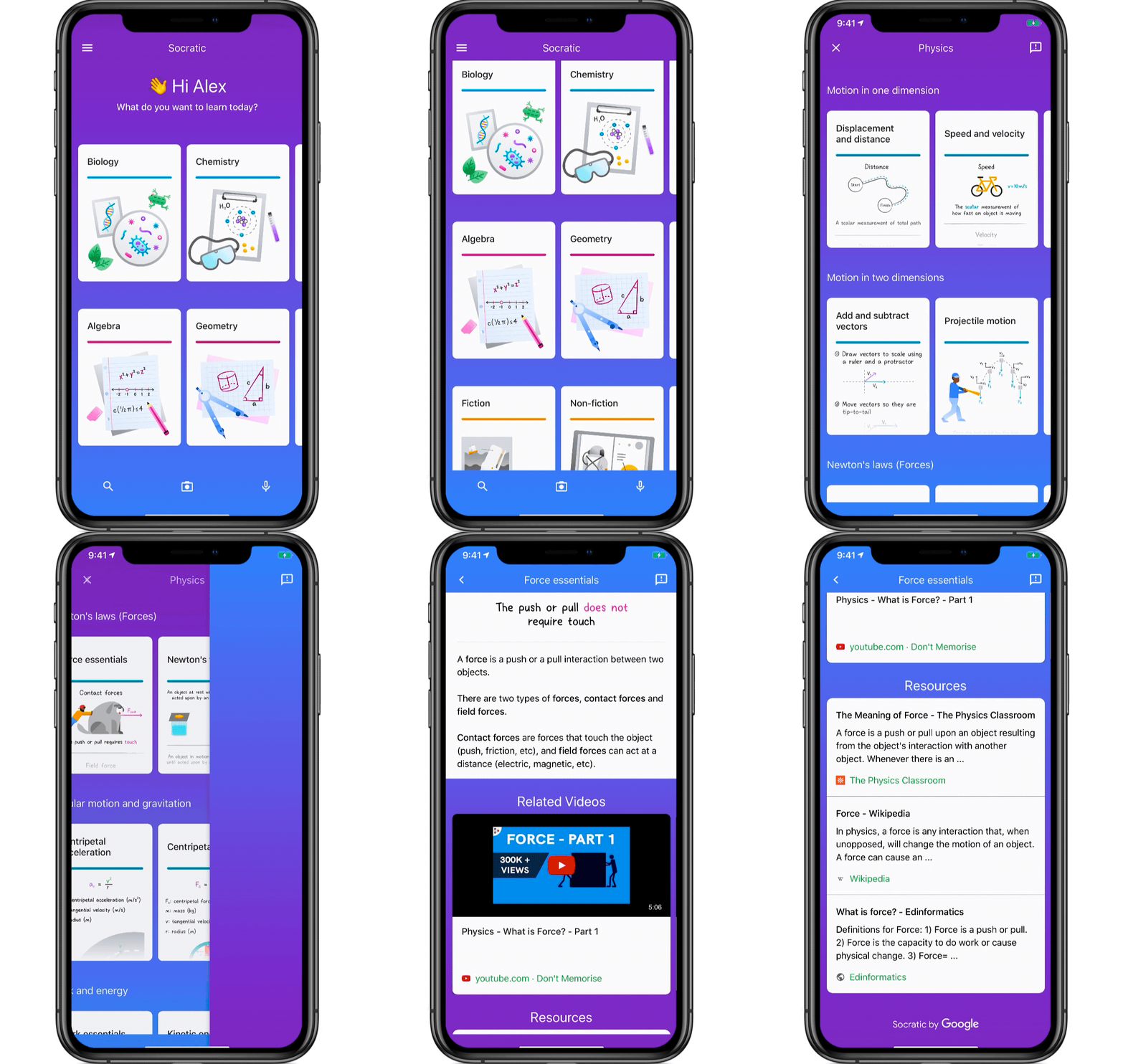
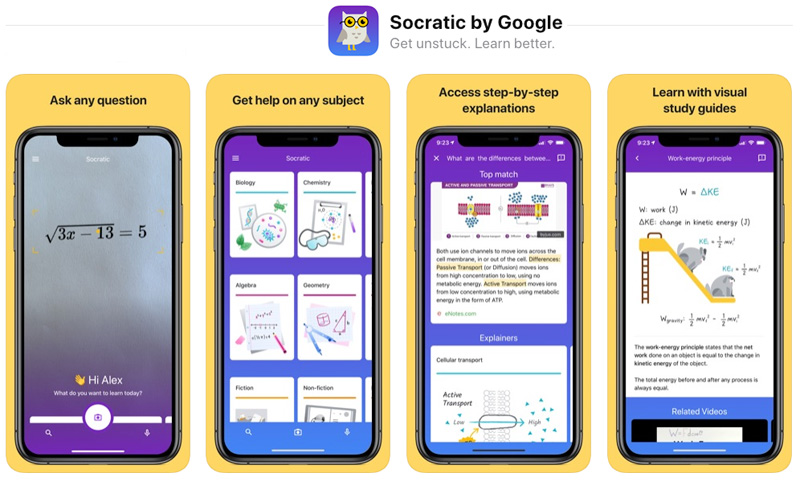
    Google is rolling out a revamped version of Socratic, a mobile learning app it quietly acquired in 2018.

    Empowered with AI and Machine Learning technology, the mobile app is intended for high school and university learners who often get stuck and frustrated while studying on their own.

    It answers questions on 1,000 subjects by using trained algorithms that identify the concept and find relevant material on the web.

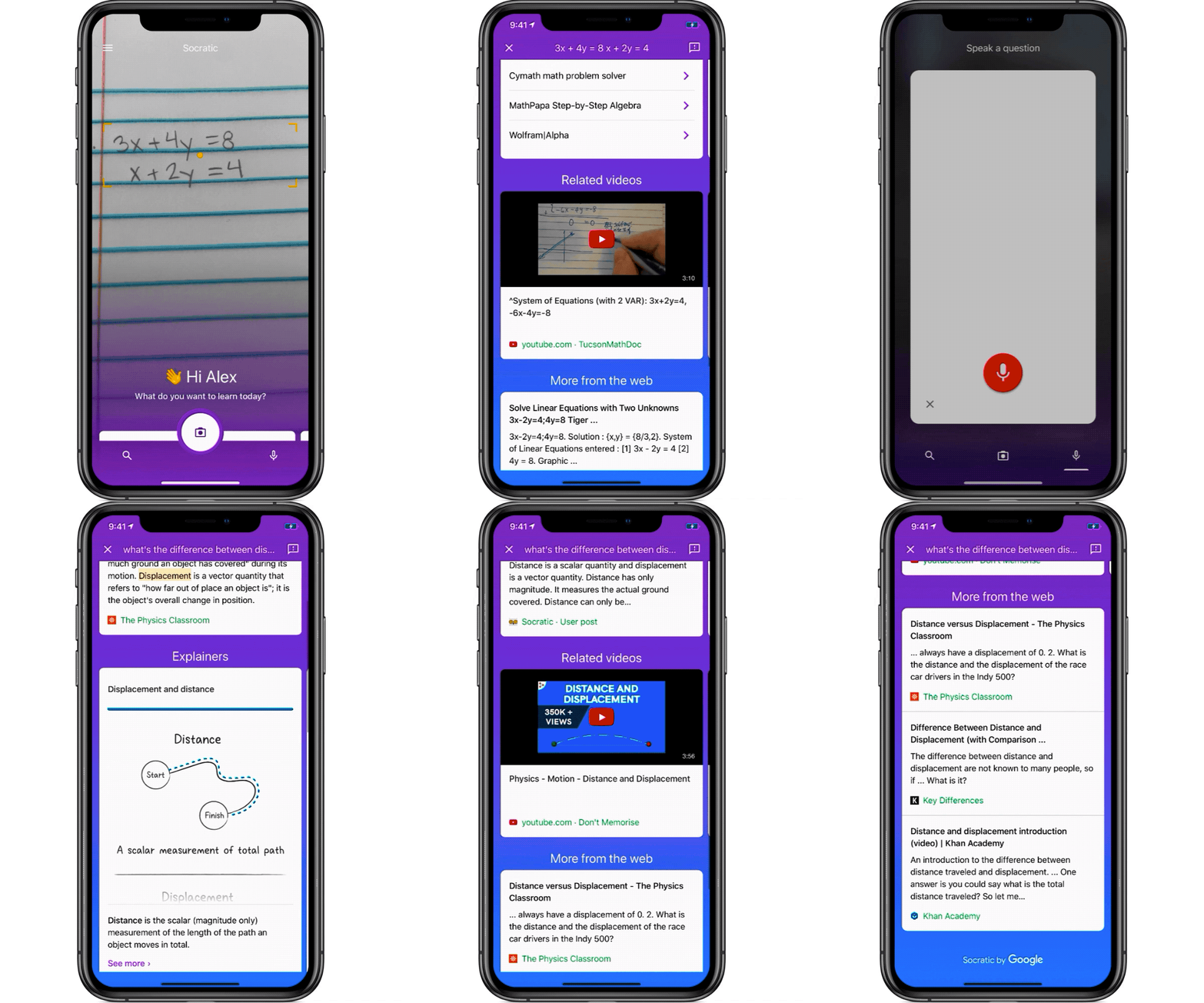
    For example, as Google demonstrates in its blog post (shown below), the students could take a picture of a square- root equation and receive help understanding how to simplify square roots. Also, if they struggle to understand textbook content or handouts, they can take a picture of the page and check out alternative explanations of the same concepts.

    The app also supports speech recognition so users can also ask questions via their voice.

    The new Socratic version is available only on iOS. This fall, it will be released on Android.

    Similar apps in the space are Photomath, Mathway, and DoYourMath.

  • LearnX.UQ, The University of Queensland’s New Open edX Ecosystem

    LearnX.UQ, The University of Queensland’s New Open edX Ecosystem

    IBL News | New York

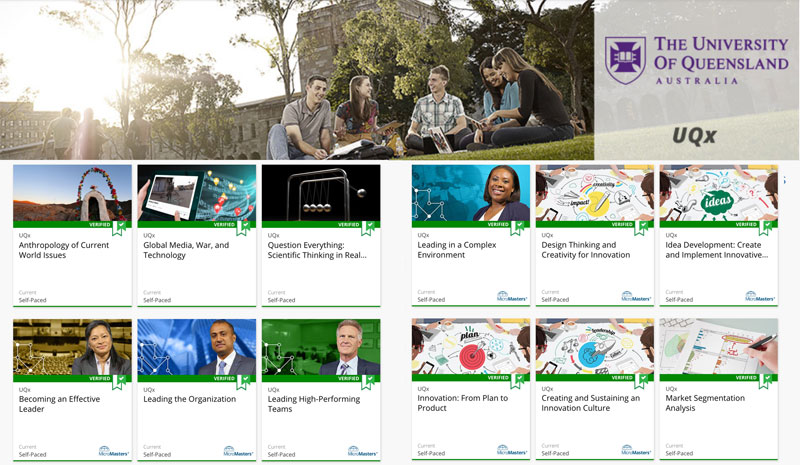
    The University of Queensland (UQ), in Australia, has started its own Open edX ecosystem, called LearnX.UQ. The university has over 50 MOOCs and programs on edx.org and dozens of SPOCs on edge.edx.org.

    This deployment will join UQ’s Blackboard LMS, known as Learn.UQ, becoming a key component of its virtual learning environment.

    “Our initial focus for LearnX.UQ is blended learning for UQ students, but phase 2 will encompass our fully-online programs and alternative credentials,” wrote John Zornig, Director of UQx at University of Queensland (UQ) on the Open edX forum.

    “We are excited to be working with IBL Education as our technical partner for the development and operations of LearnX.UQ,” he added. “We look forward to contributing where we can to the future of Open edX”.

    The University of Queensland (UQ), in Australia, is one of the world’s premier teaching and research institutions and has been an edX partner since 2013.


  • Big Tech Launches Confidential Computing Consortium to Improve Data Security

    Big Tech Launches Confidential Computing Consortium to Improve Data Security

    Mikel Amigot | IBL News (San Diego)

    The Linux Foundation announced on August 22 the formation of the Confidential Computing Consortium (CCC), a nonprofit organization dedicated to boosting the confidential computing market during the opening of the Open Source Summit North America – which returned to San Diego.

    The CCC will assess technical and regulatory standards, and develop open-source tools for Trusted Execution Environment (TEE) development, also known as enclaves. The projects will be available under the MIT open-source license.

    “Essentially, the end goal is to enable better data security by protecting that data in use,” said Jim Zemlin, executive director at The Linux Foundation, in a statement.

    By confidential computing, the CCC refers to technical solutions for isolating encrypted data inside a computer’s memory without sharing it with the rest of the system, reducing exposure and giving users more control and transparency.

    Tech giants committed to this initiative include Microsoft, Intel, Google Cloud, IBM, Red Hat, Swisscom, Arm and the Chinese companies Alibaba, Baidu, and Tencent. Developers and academics will be involved, too.

    The CCC will also serve as a foundation for education and outreach projects.

    To proceed, companies made a series of open source project contributions, including Intel’s Software Guard Extensions SDK, Microsoft Open Enclave SDK, and Red Hat Enarx.

    For Zemlin, the only way to arrive at this solution for all these different entities is to unify.

    The consortium will be funded through membership dues and will be accepting applications for members.

    The announcement of the CCC wasn’t positively received by everyone. “Wow, that name for this, and its goals and those companies being behind it,” said a critic sarcastically at the Phoronix community. “This must be a big joke,” they continued.


  • Pluralsight.com Faces Class-Action Lawsuits From Investors Who Suffered Losses

    Pluralsight.com Faces Class-Action Lawsuits From Investors Who Suffered Losses

    IBL News | New York

    2U (NASDAQ: TWOU) is not the only public EdTech facing class-action lawsuits for alleged securities fraud. Pluralsight (NASDAQ: PS) is now being targeted by several law firms on behalf of investors who have suffered significant losses exceeding $50,000 between August 2018 and July 2019.

    For example, San Francisco-based law firm, Hagens Berman Sobol Shapiro LLP, argues in a recent press release:

    “Defendants [Pluralsight] misled investors about its business outlook, particularly related to its salesforce and ability to generate strong growth in billings.”

    “Pluralsight and senior management concealed the Company’s substantial delays in hiring and properly training the salesforce necessary to meet its lofty billing projections.”

    “On July 31, 2019, Pluralsight announced (1) disappointing financial results for 2Q 2019, (2) blamed Pluralsight’s declining growth in billings on sales execution problems with its salesforce, and (3) the departure of the Company’s Chief Revenue Officer.”

    In result, several analysts lowered their price targets for Pluralsight shares.

    “We’re focused on investors’ losses, the extent to which management may have misled investors about reasonable growth prospects, internal controls, and reasons for the recently-announced auditor change,” said Hagens Berman partner Reed Kathrein.

    New York-based Rosen Law Firm is also filing a class-action lawsuit, announcing on August 20, it seeks to recover damages for Pluralsight investors under the federal securities laws.

    On August 20, six more firms announced their legal actions including Faruqi & Faruqi, Robbins Arroyo, The Schall Law Firm, Bronstein, Gewirtz & Grossman, Levi & Korsinsky and The Gross Law Firm.

    Other firms filing are Bronstein, Gewirtz & Grossman, Levi & Korsinsky, and The Gross Law Firm,

    On July 31, Pluralsight stock plunged over than 20 % issuing third-quarter guidance that was below Wall Street estimates.

    The education software company reported second-quarter net losses of $35.6 million, or 30 cents a share, compared with losses of $43.8 million, or 19 cents a share, during its 2018 second quarter.

    On August 27-29, Pluralsight.com will be celebrating its annual conference in its hometown Salt Lake City, Utah.

  • SNHU Will Be the First University to Recognize Salesforce Training

    SNHU Will Be the First University to Recognize Salesforce Training

    IBL News | New York

    Southern New Hampshire University (SNHU) will be the first university to award college credit to students who complete their Salesforce training through Trailhead, the company free online learning platform for developers and administrators.

    Over than 1.5 million learners have completed Trailhead modules since 2014 in order to learn how to use Salesforce as administrators or developers. Around 3.33 million jobs are expected to be created in the Salesforce economy by 2022.

    Completing any collection of 100+ Trailhead modules for either the Admin or Developer role, along with a Superbadge, will count as a 3-credit Experiential Learning course at SNHU.

    The credit can be applied as a major elective for applicable IT-related programs or as a free elective towards one of over 100 undergraduate degree programs at SNHU.

    “Trailhead and SNHU are a DNA match in our shared passion for putting students at the center of a new kind of learning experience – one focused on real-world outcomes, not just graduation,” said Sarah Franklin, EVP, and GM of Platform, Trailhead and Developers at Salesforce.

    “SNHU is focused on treating learners how the best companies treat their customers – always connected so we can anticipate, meet and support their needs,” said Dr. Paul LeBlanc, President of Southern New Hampshire University. “While that “customer-centric” approach can be a foreign concept in higher education, SNHU has always worked hard to do that well,” said LeBlanc. “Working with Salesforce to talk about new ways to connect learning, college, and career success is a natural extension of that philosophy,” said LeBlanc.

  • Senators Address EdTech Top Players On Student Data Collection Practices

    Senators Address EdTech Top Players On Student Data Collection Practices


    IBL News | New York

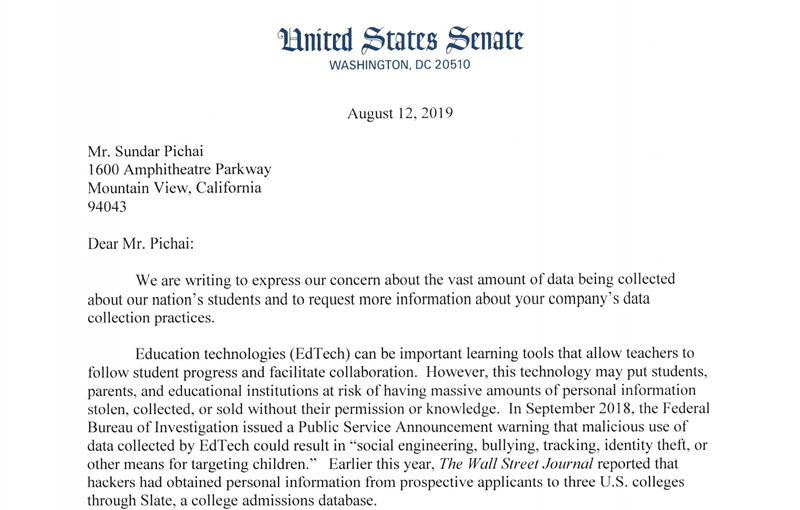
    Fifty-five prominent EdTech corporations, non-profit organizations, and data brokers received a letter from a team of Democratic senators inquiring about data collection practices on American students last week.

    U.S. Senators Dick Durbin (D-IL), Ed Markey (D-MA) and Richard Blumenthal (D-CT) raised concerns that the learning tools used by these companies could pose a serious risk to students, parents, and educational institutions due to the potential for massive amounts of personal information being stolen, collected, or sold without their permission or knowledge.

    The Senators reminded that “in 2018, FBI issued a Public Service Announcement warning that malicious use of data collected by EdTech could result in “social engineering, bullying, tracking, identity theft, or other means for targeting children.”

    “It is imperative that we take steps to ensure students’ data is being secured and protected,” the Senators wrote. “Parents, students, and educational institutions deserve to have more control over their data.”

    Durbin, Markey, and Blumenthal urged data brokers “to make a clear statement to students that you are committed to transparent and fair data collection practices.” They also addressed the brokers should “and allow parents and students to fully delete any data retained by your company.”

    Among those organizations who received the letter were Google, Facebook, ACT, College Board, Kaplan, Instructure, Blackboard, Moodle, and Pearson. This is the full list of all the organizations inquired:

    Companies that received today’s letter include: Google, Facebook, Smart Sparrow, DreamBox Learning, ScootPad, ST Math, Curriculum Associates i-Ready, Realizeit, Macmillan, McGraw-Hill, Snapwiz, Kaplan, Wiley Education, College Board, ACT, Pearson, Student Opportunity Center, Cognitive Toy Box, AdmitHub, Upswing, Formative, Flocabulary, BrightBytes, Hapara, Intellus Learning, Civitas Learning, Education Elements, No Red Ink, Straighter Line, Turnitin, Cengage, VitalSource, RedShelf, Barnes and Noble Education, Canvas/Instructure, Blackboard, Sakai, Moodle, D2L Brightspace, Edmodo, Quizlet, Schoology Accurate Leads, American Student Marketing, AmeriList, ASL Marketing, Caldwell List Company, Complete Mailing Lists, DataMasters, DMDatabases, Dunhill International List Co., Inc., Exact Data, InfoUSA, LakeB2B, NRCCUA, Scholarships.com.

    The full text of the letter to educational technology companies is available here.

  • Startup Partners With University of Pittsburgh to Offer Transfer Credit for Online Classes

    Startup Partners With University of Pittsburgh to Offer Transfer Credit for Online Classes

    IBL News | New York

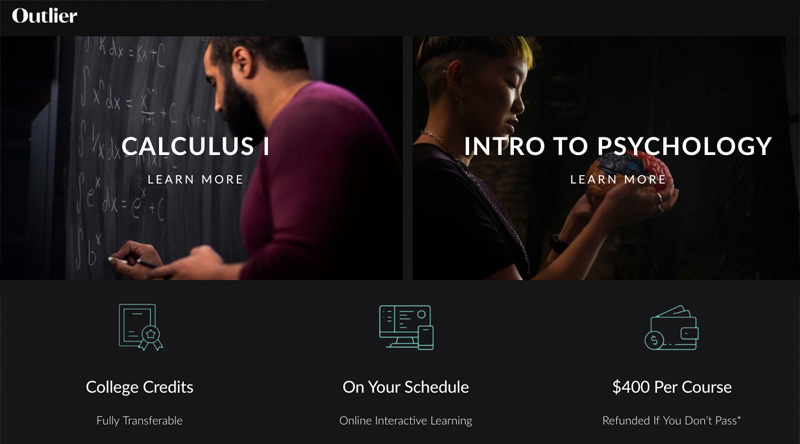
    Outlier.org, a new educational provider created by MasterClass co-founder, Aaron Rasmussen, will offer introductory credit for online college courses at $400 per course.

    Outlier.org will launch on September 9 with two, three-credit, 14-week courses: Calculus I and Introduction to Psychology. They will be offered through the University of Pittsburgh, which will facilitate the transfer of credits.

    The company has promised to offer refunds to any student who doesn’t pass.

    Despite the .org name and address, Aaron Rasmussen, co-founder and former creative director of MasterClass, addressed Outlier is a for-profit company. “Our goal is a social impact. Coming up with a market solution to education, rather just relying on people’s charity, is far more durable.”

    Rasmussen explained that each year, one million students take a college-level Calculus I course in the United States, at an average cost of $2,500, and 40% of them fail, explained Rasmussen. “That means we’re wasting $1 billion per year, and that’s just on a single class,” he explained.

    The main question is whether the existing university system will accept the transfer of these credits.

    Students will need to check and verify which institutions will accept these credits.

    Rasmussen’s experience in education is mostly based on MasterClass.com, a provider known for light-hearted, online classes from celebrities in disciplines like photography, guitar-shredding or home cooking.

    Other companies such as StraighterLine or Study.com tried to bring general education courses at scale in the past.

    “While Outlier.org has taken the lead in many of these areas, Pitt faculty members have closely reviewed the syllabi and assessments to ensure that they meet our high standards,” said the University of Pittsburgh Provost Ann Cudd at Education Dive.

    The courses, developed on a proprietary LMS, will combine video lectures with open-access materials and. The platform will implement proctoring through Examity for assessments.

    Students will be able to choose from different instructors or even switch between them mid-semester. The teachers for Calculus I, for example, include Hannah Fry of University College London, Tim Chartier of Davidson College and John Urschel of MIT.

    Outlier expects less than 100 students in each class for the fall term. Classes will be broken up into smaller study groups of four to five students who can connect over video chat.

    The startup said that it will remain focused on the first 25 college-level courses, rather than recreating an entire college curriculum.


    https://www.youtube.com/watch?v=BkElzZfQhS0

    https://www.youtube.com/watch?v=6hrgCkRA-0k

  • Learning At Scale | August 2019: Google Classroom, IBM Training, AWS, 2U, Pearson…

    Learning At Scale | August 2019: Google Classroom, IBM Training, AWS, 2U, Pearson…

    Newsletter format  |  Click here to subscribe ]

    AUGUST 2019  –  NEWSLETTER #25 ON ONLINE EDUCATION AT SCALE


    INITIATIVES

    • Google Introduces a Plagiarism Checker for Classroom and Assignments

    • Mark Cuban Launches an AI Bootcamp in Partnership with Microsoft and Walmart

    • UT Austin Joins Colleges that Offer Tuition-Free Programs


    TRAINING

    • IBM Offers Employees Four Programs in AI and Data Science in Partnership with a Web Training Firm

    • Amazon Will Invest $700 Million to Retrain 100,000 Employees Over Six Years

    • SV Academy Trains and Get High-Paying Jobs to People with Non-Tech Background


    2U’s DROP

    • 2U’s New $24K Online Undergrad Degree: Trend of Publicity Stunt?

    • More Securities Class-Action Lawsuits Against 2U for “False or Misleading Statements” During the Second Quarter

    • New York Litigation Firm Announces an Investigation of 2U on Behalf of Purchasers

    • Analysts Raise Suspicion: A $23k Degree on edX Prompts Doubts on the 2U Model

    • 2U Logs a Small Gain But Uncertainty Over Its Business Model Persists

    • 2U Shares Continue to Drop After the Company Announcement of Big Losses


    ANALYSIS

    • Pearson’s Bold Move Into Digital Will Allow Them to Re-Establish Control of the Market

    • Amazon’s Gigantic Training Effort Shows How Automation Is Transforming the Job Market

    • Asimov Predicted the State of Education in 2019. Was He Right?


    INSTRUCTIONAL DESIGN

    • Creating Compelling Slides: Bullet Point the Content or Read Scripts?

    • It’s All About Increasing Learners’ Engagement in Courses and Programs


    2019 UPCOMING EVENTS

    Education Calendar  –  AUGUST |  SEPTEMBER |  OCT–DEC 2019


    This newsletter about learning innovation is a monthly report compiled by IBL News and IBL Education. If you enjoy what you read please consider forwarding it to spread the word. Click here to subscribe.

    Read the latest IBL Newsletter on Online Education at Scale  |  Archive of Open edX Newsletters
     

  • Google Introduces a Plagiarism Checker for Classroom and Assignments

    Google Introduces a Plagiarism Checker for Classroom and Assignments

    IBL News | New York

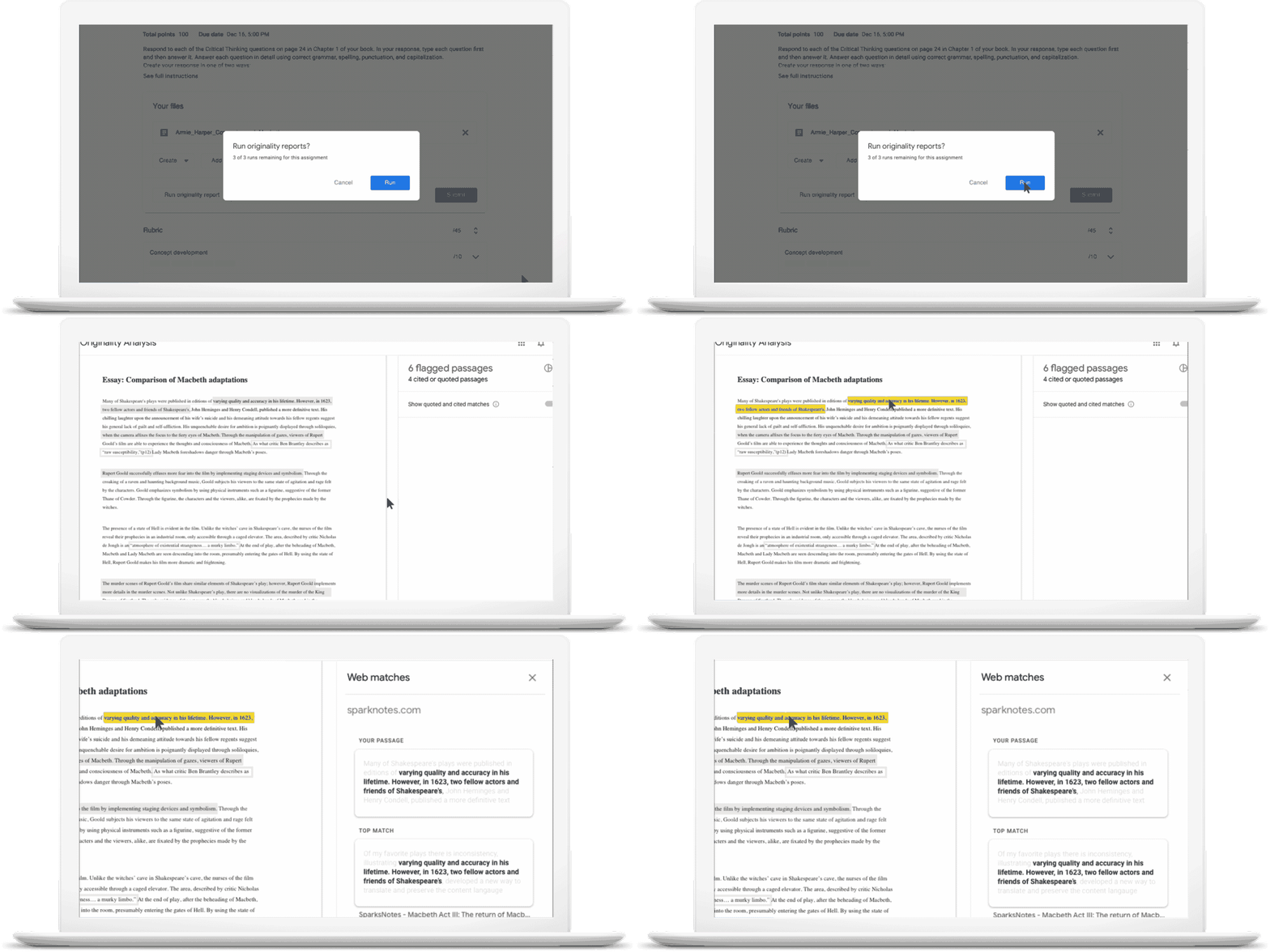
    Google unveiled a new functionality on its educational platform, Google Classroom and Assignments, enabling educators to detect plagiarism in students’ work.

    The tool, called “Originality reports,” will be publicly available later in 2019, but until then it remains in beta mode.

    “Originality reports compare student work against hundreds of billions of web pages and tens of millions of books,” explained Google. “The reports highlight missing citations, ineffective paraphrasing, or unintended plagiarism due to high similarity and link to the external source.”

    Students will be able to run Originality reports up to three times before submitting, allowing them to identify and address citation errors.

    Google promised that scanned work won’t be retained by its organization. It announced that it plans to add an option for schools to have a private repository of student submissions, so instructors can see peer-to-peer matches.

    Google’s Turnitin-style plagiarism detection tool has been in high demand by G Suite for clients in the educational field.

    Originality reports will be free for up to three assignments in each course using Google’s tools. Beyond that, an upgrade is needed for a G Suite Enterprise for Education account, which currently starts at $4 per month per instructor.