Category: Top News

  • Learning At Scale | May 2019: Creative Commons, Docker, Coursera, Pluralsight…

    Learning At Scale | May 2019: Creative Commons, Docker, Coursera, Pluralsight…

    Newsletter format  |  Click here to subscribe ]


    MAY 2019  –  NEWSLETTER #22 ON ONLINE EDUCATION AT SCALE


    INITIATIVES

    Creative Commons developed a new Search engine which allows users to find and use 300 million open licensed images.

    • Docker created a foundation to educate minority engineers.

    The Horizon Report for 2019 examined what past predictions got wrong, and gamification in education is one of them.


    OPM

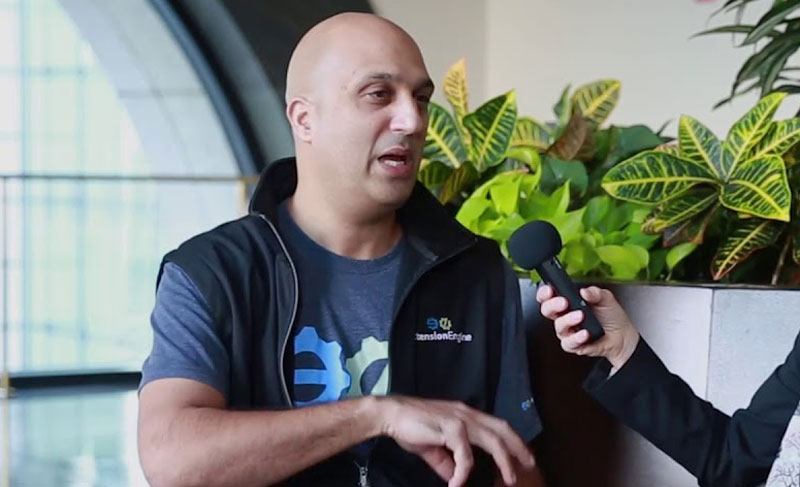
    A 10-year contract means signing away your digital future, said an Extension Engine manager.

    “Be careful when you hire an OPM: Outsourcing your virtual future is a bad idea”, writes Robert Ubell.


    INDUSTRY

    Knewton, who raised $180m in total funding to promote its adaptive learning technology, sold its assets to Wiley for an undisclosed amount.

    McGraw-Hill and Cengage, two of the country’s three biggest textbook publishers, announced that they would merge.

    Credly raised $11.1 million in new funding. This digital credentials company acquired Acclaim from Pearson last year.


    ACADEMIA

    Arizona State University (ASU) is adopting an AI-powered calculus learning platform created by two math professors at Stevens.

    The Unizin consortium added Rutgers and Miami universities, along with two vendors, Examity and Kaltura.

    Georgia Tech disclosed a data breach that could have exposed the personal information of 1.3 million people.

    “At the end of the day, we reflect the voice of the learner”, says edX’s CEO.


    LEARNING PLATFORMS

    • SEEK Australian Marketplace acquired 50% of FutureLearn for $64M.

    • Coursera raised an additional $103 million placing itself closer to an IPO.

    Pluralsight made its first acquisition since it went public in May 2018. It bought GitPrime, a code repository platform, for $170 million in cash.

    Austin-based training platform A Cloud Guru raised $33 million to expand its content library and hire more instructors, engineers, and staff.


    2019 UPCOMING EVENTS

    Education Calendar  –    MAY  |  JUNE  |  JULY  |  AUG – DEC 2019


    This newsletter about learning innovation is a monthly report compiled by IBL News and IBL Education. If you enjoy what you read please consider forwarding it to spread the word. Click here to subscribe.

    Archive:
    IBL Newsletter #21– April 2019
    IBL Newsletter #20– March 2019
    IBL Newsletter #19– January 2019
    IBL Newsletter #18 – December 2018
    IBL Newsletter #17 – November 2018


  • Open Resources Such as Jupyter and Open edX Transform STEM Education, Proves Prof. Barba

    Open Resources Such as Jupyter and Open edX Transform STEM Education, Proves Prof. Barba

    Mikel Amigot | IBL News

    Using open educational resources such as Jupyter and Open edX to teach STEM will transform teaching and learning and result in an engaging active experience in the classroom.

    This was the central idea of a faculty workshop conducted by Professor Lorena A. Barba, from The George Washington University (GW), at the University at Buffalo this weekend.

    During this hands-on seminar, participants reviewed some of the education research underpinning design decisions and discovered practices of open education.

    Also, it included an introduction to the Jupyter toolbox for teaching and learning.

    “Jupyter is a killer app, it provides a medium for expression using computing as part of the learning,” said Professor Lorena Barba who has been using Jupyter for over six years.

    “Using the Open edX course platform, you can construct learning pathways using content pulled dynamically from a public Jupyter notebook (e.g., on GitHub), with the Jupyter Viewer Xblock.”

    GW, along with IBL Education, contributed two XBlocks to build edX-style courses based on Jupyter: the Viewer, and a Jupyter Grader for auto-graded student assignments.

    Jupyter-based courses can be written using an open development model (like any open-source software project), collaboratively and under version control. Once the material is ready, instructors can build a MOOC-style course on Open edX, pulling the content from the notebooks without duplication in the course platform.

    Instructors can interleave short videos and graded sub-sections using the built-in problem types, or using the Graded Jupyter XBlock.

    “Our course development workflow is the product of several years of refinement and applies evidence-based instructional design. Combined with modern pedagogies used in the classroom, like active learning via live coding, you can create learning experiences that are effective on campus and online,” explained Prof. Barba.

    Watch the interview with Professor Lorena A. Barba in the video below.


    Valuable resource: Jupyter-first courses

  • Decentralization & Blockchain on Open edX: Sharing Without Needing Trust

    Decentralization & Blockchain on Open edX: Sharing Without Needing Trust

    Zoe Mackay | IBL News

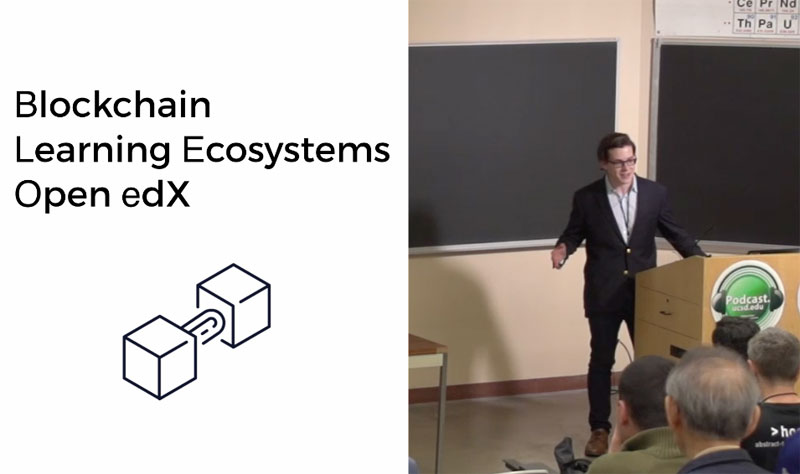
    Miguel Amigot II, CTO of IBL Education, spoke to the issue of data centralization in today’s learning ecosystems during the 2019 Open edX Conference in San Diego. Blockchain technology, he argues, decentralizes data ownership away from a small selection of vendors which allows the ability for companies to share data without having to trust one another.

    Centralization is where we are today, as businesses protect their learners’ data and commoditize it. However, this is inefficient for the learner as there is no ability to move with ease between different learning management systems.

    When we look at the alternative, Miguel says, decentralization is the ability to use Blockchain as the infrastructure layer, which in turn allows that decentralization to happen. “The common analogy is, Blockchain is HTTP.”

    Blockchain allows us to see what a world would be where businesses and different organizations don’t make a living by siloing off that data.

    An obvious use case is certificates, Miguel argues, which require time sensitivity and validity from their sources. This has already gained traction, such as MIT’s blockcerts that “allow us to insert certificates on the (public) Ethereum blockchain.”

    Adaptive learning as another case study illuminates the issue that due to the siloing of information by companies, true adaptive learning is not yet possible. There is a rigidity that users face where they cannot prove what skills they have already mastered, because they are unable to share achievements from other learning platforms.

    Blockchain allows convenience and flexibility in these case studies and many others, such as user management. In his talk, Miguel urges us to think, “Are these problems worth solving? Are we just going to say, in the future, everything is going to be centralized and we are going to live in a world where perpetually organizations make their money by siloing data and really implementing dark practices…”

    Blockchain allows us to share without trusting each other. “There is some data that we are going to agree to share, and the arguments for that aren’t altruistic necessarily…it’s really just about what is most practical.”

    Watch Miguel Amigot’s full talk in the video below.


  • Docker Creates a Foundation to Educate Minority Engineers

    Docker Creates a Foundation to Educate Minority Engineers

    Miguel Amigot II | IBL News (San Francisco)

    San Francisco-based Docker Inc, known for its widely used containerization software, introduced today Docker Foundation, intended to lower barriers to education and create opportunities for others.

    “We want to transform the world through inclusive access to technology and education,” said CEO Steve Singh on his keynote this morning during the 2019 Dockercon conference.

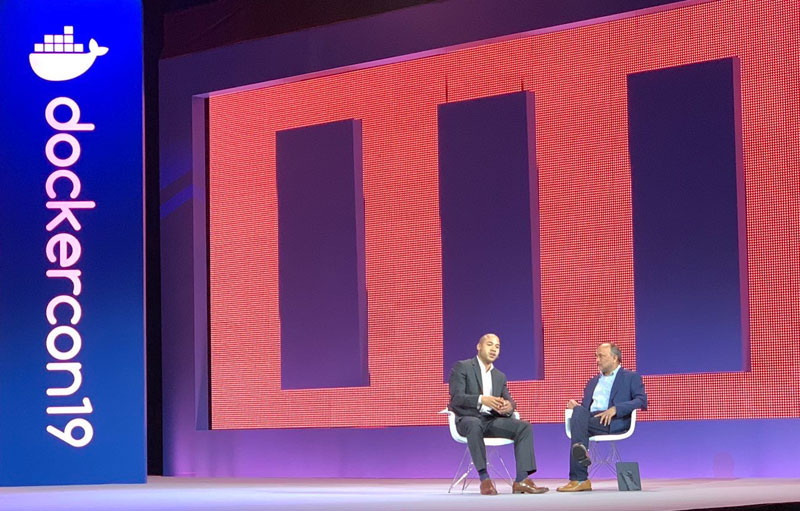
    One of the first partners of the Docker Foundation is CodePath.org, whose CEO Michael Ellison participated in a conversation with Steve Singh this morning. [In the picture].

    “There is a huge wealth of minority tech talent that has been largely overlooked. They have the potential to succeed, but they need computer science programs that are designed to work with them” said Michael Ellison.

    CodePath has developed three free, semester-long courses: Technical Interview Prep, Professional iOS, and iOS for CS Majors. Courses are offered on over 25 campuses worldwide.

    Two other supported organizations will be Black Girls Code and the Holberton School.

    Docker’s CEO announced that he is donating one million dollars to the Foundation. Another million will come from former CEO Ben Golub, serial entrepreneur and currently Executive Chairman and Interim CEO at Storj Labs.

    The Docker Foundation is also joining the Pledge 1 % global philanthropy movement dedicated to giving back to those in need.

  • Interview with Dr. Charles Severance, World’s #1 Python Professor

    Interview with Dr. Charles Severance, World’s #1 Python Professor


    Mikel Amigot, Zoe Mackay | IBL News

    Dr. Charles Severance, Clinical Professor at the University of Michigan School of Information, discussed with IBL News the success of his world-renowned python course and where he sees his future in online education.

    While Severance did not have the first python course online, he has the world’s most popular course which has reached over 4 million students. “Across all the platforms it exists on (Coursera, edX, and others), I have probably graduated about 200,000 students.

    “What I’ve found is a very unique niche… computer science professors actually don’t know how to teach an introductory computer science course. They know how to teach [this] to someone who has been programming for several years. I specialize in actually teaching introduction to programming, which is a prerequisite to introduction to computer science.”

    With Severance’s course, students were able to get the fundamental skills in programming that they necessitate to succeed in other introductory computer science courses. “I became, over the last 5 years, the de facto prerequisite for literally everything python.”

    As the need for programmers is expanding, Dr. Severance’s courses offer a possibility to students who have no background in the computer sciences. Right now “you could learn python, you could work an entire 50-year career, and never learn another programming language. And in the future, python is going to further dominate.”

    Primarily, his courses were offered on Coursera, but as of January 2019, Severance’s courses are available on edX.

    I knew that edX was missing a course that was a beginning programming course, and if I could just give that as a gift to the entire edX community, then edX would be better.”

    That is python for everybody, everywhere. And that is my joy, my joy is everywhere. No matter what country, what language, everyone has a chance to get a decent technical job that can take care of their families and give them a life and a future, and give them a step into education.”

    The “Django for Everybody” Course Will Start In the First Quarter of 2020

    With the most successful online introductory programming courses in the world, everyone is excited about new releases from Dr. Severance.

    His “Django for Everybody” course, he says, will be started in the first quarter of 2020, after teaching it once more on campus. He aims to alter the course into a MOOC to be offered on Coursera or edX but will be available on his own website by January 2020.

    Severance’s main goal is to adequately prepare students to fully succeed within computer science curricula. “I think there are many good degrees in computer science… My goal in life is to get as many people ready to go into a real degree with 40 or 50 faculty members.”

    Speaking at the Open edX conference, Severance says that while he is attending “partly as a happy and satisfied faculty member successfully teaching on edX,” he is also aware that online learning is bound to change, and he also attended to see how “the next generation of LMS’s might take benefit from all of the wonderful experience that the edX software base [has provided].”

    I think the greatest mistake that we can make is that just because products are successful in the marketplace does not mean they cannot be replaced by the next generation. If there has been anything in the last 15 years of education technology, it’s that there is always a new generation… and a wheel of progress.

    I believe that there’s going to be a transformation…and the next LMS generation is going to be based on the next generation of standards — learning tools interoperability LTI advantage is just coming out.”


    Watch the first part of the interview with Dr. Chuck Severance in the two videos below.

    Part I


    Part II

  • SEEK Australian Jobs Marketplace Acquires 50% of FutureLearn for $64M

    SEEK Australian Jobs Marketplace Acquires 50% of FutureLearn for $64M

    The leading Australian employment marketplace SEEK continues its grandiose march into the education at scale industry, after a huge investment in Coursera last week.

    FutureLearn, the fourth largest MOOC platform (after Coursera, edX, and Udacity) announced today, through its CEO Simon Nelson, that SEEK is taking 50 % of this educational portal for $64.6 million (£50 million).

    “This is big news for us. SEEK adds experience and expertise in the employment sector, a good fit for the education sector as more people look for a return on the time and money they invest in learning,” stated Simon Nelson.

    “We will still be offering access to courses for free but the investment means we can do more, more quickly. For example, we’ll continue to invest to ensure our platform remains extremely user-friendly and enjoyable to use on mobile, desktop and tablet. We’ll also remain focused on the courses we bring you so look out for more courses in terms of new subject areas, more degrees, and bite-sized stackable courses for learners keen to develop a particular skill for the workplace.”

    SEEK invested another $50 million on a minority stake in Coursera last week.

    • Press Release: The Open University secures £50M investment in social learning platform FutureLearn

    • IBL News: Coursera Raises an Additional $103 Million – Closer to an IPO?


  • “Finding a Positive Synergy between MIT’s MOOCs and Learning on Campus”

    “Finding a Positive Synergy between MIT’s MOOCs and Learning on Campus”

    Zoe Mackay, Chris Dowhan | IBL News

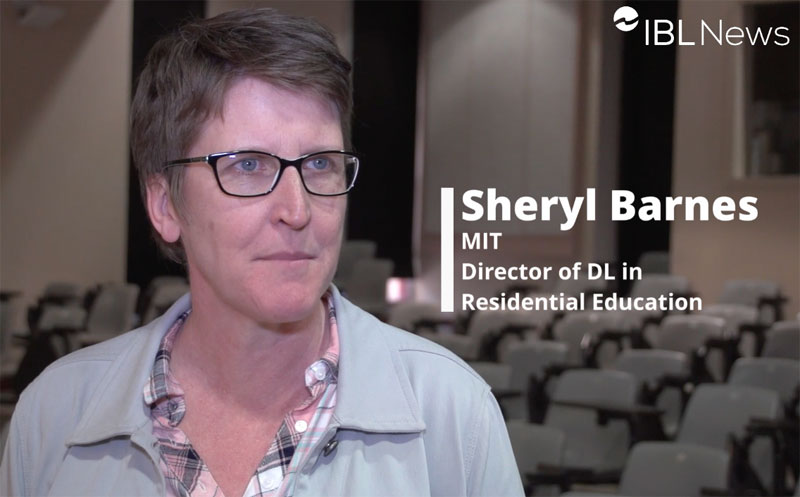
    Sheryl Barnes, Director of Digital Learning and Residential Education at MIT, shared with IBL News MIT’s extensive use of the edX platform following her talk at the Open edX conference.

    MIT has a local version of the Open edX platform in addition to many MOOCs currently running on edX. Her task is “finding a positive synergy between the work that goes into developing the MOOCs and teaching on campus.” The content that is created for the MOOCs is easily repurposed for blended MIT classroom experiences, where instructors can utilize their video lectures and “repurpose the classroom time to do higher order thinking application, value added-type activities.”

    99% of undergraduate MIT students have taken a class that utilizes the Open edX platform. The two major perks, as identified by Barnes, are the ability for instructors to create video lectures that are “the version they would like to give every time,” and using the self-graded problem types that allow instant feedback to students.

    Barnes says that she is “excited about the teaching and learning folks in the community coming together.” While the Open edX conference has been steered toward the developer community in the past, the broadening to include these other sections of the online learning community has been beneficial for Barnes and her counterparts in education.

    Watch Sheryl Barnes full interview with IBL News in the video below.

  • “At the End of the Day, We Reflect the Voice of the Learner”, Says Anant Agarwal

    “At the End of the Day, We Reflect the Voice of the Learner”, Says Anant Agarwal

    With $80 million of financing from MIT and Harvard, and a consortium business model, mainly based on partnerships with top universities and companies, edX is an unusual non-profit organization, although a successfully disrupting shop.

    “Over the past eight years, everything that we’ve done has been controversial, where somebody or other has lobbed a call to me saying, “Anant, are you crazy? What are you doing? But over time, people have gotten used to it,” revealed Anant Agarwal, CEO at edX, on a candid conversation with Harvard Business School Professor Joe Fuller.

    Open sourcing the platform, setting a paywall for courses, partnering with the corporate world, and the launch of the edX For Business marketplace are among those controversial decisions. “There are 2,400 other sites using Open edX, on which there are an additional 25 million learners learning.”

    “As a nonprofit consortium of universities, we have a lot of debate, and we, ourselves, don’t move as fast as I would like to see us move because of the need to communicate and get everybody’s buy-in. But even then, certainly bringing in corporate partners to offer content on edX was controversial, and we certainly hear from university partners about that. However, at the end of the day, we reflect the voice of the learner, and we believe we should be doing what is right for humankind. And, by and large, the partners come along once they realize that the motivation here is nonprofit. It’s for the good of the learner, and they’ve all bought into it.”

    “Corporations bring a whole new perspective to learning. Where the university courses tend to be oftentimes theoretical and rich in one sense, the corporate courses tend to be much more applications-focused and bring a whole different kind of view on learning.”

    Mr. Agarwal highlights the idea that staying relevant in today’s workplace requires constantly adding and being credited with new skills. “Skills are moving at an incredible pace.” “Employees that are working—or looking for work—need new literacies, need new ways of building skills, need new skills to be able to get jobs in the new economy. There are various studies that show that, within the next 10 years, by 2030, half the people on this planet will need to upskill themselves, or they will risk losing their jobs”.

    edX’s CEO mentions the MicroMasters program as an example of innovation that responds to learners’ demand and the fact that 75% of them are looking for a modular demand. The outcome is clear: 91% of MicroMasters’ students say that they’ve already achieved a career advancement based on that certificate.

    “Given the future of work, how technology is rapidly changing work in amazing ways, the future of learning will be lifelong. (…) For lifelong learning to happen, I don’t believe there is any other way to do it than online. What are the odds that you’re going to be able to go to a campus for a year once you’re 35 years old? You need modular credentials, you need online learning, and it has to be open enrollment. We can’t have admissions processes.”

    What edX has done is, by applying a platform approach to education, it is aggregating learners from all over the world—20 million of them, and 140 institutional partners—to be part of the platform. The content comes from many places, and learners come from many places that coordinate on the platform.” (…) “We have 100 professional certificate programs and 50 MicroMasters programs on topics like blockchain and fintech and Python programming and Azure Cloud and cloud computing, and all kinds of topics.”


  • Coursera Raises an Additional $103 Million – Closer to an IPO?

    Coursera Raises an Additional $103 Million – Closer to an IPO?

    Coursera.org has raised an additional $103 million in funding, Jeff Maggioncalda, CEO of the company announced.

    This investment, in a Series E equity round, comes from the Australian SEEK Group ($50 million) and two existing investors, Future Fund and NEA.

    How this funding will be used was not disclosed. “The additional funding gives us the resources and flexibility to further expand internationally and to accelerate the development of a learning platform that currently serves 40 million learners, 1,800 businesses, and over 150 top universities,” said Jeff Maggioncalda.

    Coursera, the leading MOOC platform which competes with Udacity and edX, has raised a total of $313 million in funding over 9 rounds, including this latest one.

    This investment places the company closer to an IPO.

  • A 10-Year Contract Means Signing Away Your Digital Future, Says Extension Engine OPM

    A 10-Year Contract Means Signing Away Your Digital Future, Says Extension Engine OPM

    Extension Engine’s Furqan Nazeeri Discusses Adult Learning, Revenue-Sharing vs. Fee-for-Service Models, and the OPM Market


    Henry Kronk | IBL News

    Online students owe their education, in part, to companies that don’t often receive the recognition they’re due. While many institutions of higher ed build their online courses and degree paths internally, others turn to online program managers (OPMs) to fill in any gaps that might remain. While these companies play indispensable roles in online education, many students and faculty are not aware they exist. Extension Engine –which provides Open edX services, too– has been working in the higher ed space for nearly 20 years. 
    IBL News recently got in touch with Furqan Nazeeri, who was worked as a partner at the OPM for 10 years.


    Furqan Nazeeri: Actually, before that, I was a customer [of Extension Engine]. At the time, I was an entrepreneur-in-residence at Softbank Capital, one of the investors at my previous company. I had been looking around … I had a project to basically build an academic research product working with the faculty at Harvard Business School. I ended up hiring Extension Engine to help with that project.

    It was just a wonderful experience. It took about a year before I decided to join. I love the idea of a service business that’s focused on a specific clientele and really becoming a world expert in solving problems for those clients. I love the idea that we don’t have outside investors. At Extension Engine, we don’t have venture money or outside investors and there’s no debt so it really allows us to focus on our customers and our employees.

    Last I heard, the OPM market is worth $2-something billion in revenue, so it’s a huge industry. The vast majority of that is revenue-share, [where, in exchange for services, institutions share a percentage of their online program revenue with their OPM]. We are a small piece along with Noodle, iDesign, and a few others that are in the fee-for-service category. Right now, it’s very small. If you ask me, I’m biased but, even if you ask analysts who cover the OPM industry more generally, they’ll say the fee-for-service is where a lot of growth is going to be.


    Henry Kronk: Some OPMs specialize in certain areas of service, while others are more jacks-of-all-trades. Where does Extension Engine fall on this spectrum?

    Furqan Nazeeri: I would say our roots are in really innovative technology-based around creating customized learning experiences. We have also built deep, deep expertise in instructional design, (content creation and assessment). We have a small but, I would say, incredibly powerful practice around marketing services in terms of enrollment and recruitment. Those are the three things we really hang our hat on. Over the years, those have evolved.

    We started out with technology. We added content. And most recently a few years ago, we added the marketing services.


    Henry Kronk: Why does Extension Engine focus on those services?

    Furqan Nazeeri: We partner with our clients and we become really integral parts of the overall team. We’ve helped deliver some amazing, innovative programs. As a result, our clients grow to trust us.

    When we’ve launched a new service, I’d like to say that I had some Harvard MBA sort of strategy that I was implementing. But the truth of the matter is, our clients came to us and said, “We have this problem. You guys have been a great partner. Is this something you would consider offering as a service?”

    A great example is instructional design. This is going back 7 or 8 years. At the time, we had been developing these amazing technology platforms. One of our clients came to us and said, “You guys have been doing great work. We’ve actually been working with this other company on instructional design and content creation. That company has this amazing team there, but the company is going under. Would you guys consider either partnering with them or hiring this team and developing an instructional design practice?”

    We said, “That’s interesting, let’s talk to them.” So that has been the evolution. Our client actually introduced us to the people we hired to lead our instructional design team. It was organic growth driven by strong partnerships with our clients.

    I think if I’d written a business plan and said, ‘Hey, I’m going to go develop this thing,’ and I tried to sell it to my clients … I think it would have felt like a plumber turning around and saying to someone, “Hey, I just fixed your sink. Do you have full life insurance?”


    Henry Kronk: Does Extension Engine have a typical client?

    Furqan Nazeeri: So our clients are a mix. Half are higher ed, half are non-profits outside of higher ed. It’s all around digital transformation of adult learning, it’s just half are with institutions of higher ed, half are not.

    Of the higher ed, the vast majority are private. They tend to be category leaders, meaning that they could be nationally or globally recognized brands in higher ed like Harvard or MIT, or it could be a top institution in a smaller category, something like an ArtCenter College of Design, which is a top school in industrial design and fine arts.


    Henry Kronk: A study by Eduventures about a year ago found that colleges who partnered with an OPM were more likely to increase enrollment online than those who had not. But the report also described how this broad stroke of a statement obscures more granular data and, at the end of the day, some online programs are very successful and some are not, regardless of whether or not an OPM is involved.

    This is a tangent, but I’ve read elsewhere that marriage counselors can tell within minutes of their first meeting with a couple whether or not the marriage will be saved. Are you able to tell whether or not an online course or program will be successful before it launches?

    Furqan Nazeeri: I think it’s pretty hard to screw up an online program. Try and do some research on failed online degree programs. There’s underreporting, right? People don’t go reporting “This program blew up.” But I’d say for every blown up, failed program, there has got to be 50 successful ones or something like that.

    Rising tides lift all boats. Sure, there are some boats that have 10 holes in the bottom, and they sink. But it’s not like half of these programs fail. It’s far from that. If you go back 10 years, it was very expensive and it was considered very risky to go online. If you think about 10 years ago, the University of Phoenix was the big name online in terms of degree programs.

    Everybody kind of looked down their nose at them as a for-profit. If you look at online degrees nowadays, there are close to 300 different institutions offering a fully online MBA in the U.S. 300. There are only, I think, maybe 500 residential programs.

    The National Center for Education Statistics (NCES) showed that, in 2016, 28% of graduate students in the U.S. enrolled in online-only programs.

    When I graduated from college, it was 1995. If you were dating somebody and someone asked you where did you meet your partner, you wouldn’t be caught dead telling someone you met online. You would make up a story and say, “Oh I met them at the library or the club or something.”

    But if you talk to someone who just graduated college today, it’s sort of assumed that they met whoever they’re dating online. More than half of people meet whoever they’re dating online. I think that same transition has happened in higher ed. It’s considered incredibly normal. If you’re a Master’s of Nursing student, more than half the students you encounter are in an online program. It’s considered totally normal.

    To wind it back to the original question, it’s hard to answer because so few of them actually fail.


    Henry Kronk: I guess it depends on what your criteria for success are. NCES data shows that online degree programs still have much worse 6-year graduation rates than their brick-and-mortar versions.

    Furqan Nazeeri: I think it’s a super important point. The data on this requires a deeper understanding. There’s just so many factors going on here. I was at a conference a few years ago. Someone was talking about student success and they had research data that showed something like 70% of the reasons that students dropped out and didn’t finish a program were for non-academic reasons. You know, their spouse lost their job, they had a kid, they were forced to move—all these things that didn’t have to do necessarily with the quality of the academic program. Although there are things like mentoring and coaching and student services that can help to mitigate some of these non-academic challenges.

    But I wonder when you’re looking at in-person vs. online, how much of that is selection bias? You know, the people enrolling on campus have fewer of those academic constraints? I think unless you control for some of those things, it’s hard to attribute those completion rates to quality of instruction. Community colleges have on average I think, what, a 15% 6-year completion rate. It’s not that the professor teaching algebra at community college is 80% worse than the college professor teaching it at BU. It’s a selection bias problem.


    Henry Kronk: So let’s talk revenue models. You mentioned before that you don’t know why someone would enter into a revenue-share agreement with an OPM. I can think of a few. For one, it’s cheaper up front.

    Furqan Nazeeri: Doing it rev-share doesn’t actually make it cheaper. It actually makes it more expensive. It does impact budget and cash-flow. With the rev-share, you don’t have to go make a budget request and come up with the money up front. But you pay for it as a percent of revenue over 10 years (more or less). It’s not like an OPM doing a rev-share has some magical thing they can offer or a cheaper way of doing something.

    It’s less cash-flow up front. For a lot of institutions, it’s much easier to sign a commercial contract and not have to go make a budget request. There’s definitely some really strong financial reasons to go with a rev-share. And by the way, most of the industry is rev-share, so it’s not like this is some unusual thing. I think you’re starting to see more and more institutions look specifically for fee-for-service or at least consider it. There have been a lot of RFPs out recently that specifically mention fee-for-service.

    Cash-flow and finances are reason #1 for sure. The perceived risk mitigation is another big one.

    On the other side of the balance sheet, there are some tradeoffs of signing with a rev-share deal. One is length of contract. It’s usually a 10 year contract. Some might be a little shorter, some might be a little longer. One of the challenges with a 10-year contract is often times, you’re solving a 2-year problem in terms of cash-flow with a 10-year contract, which is always tricky. Who knows in 10 years what the right bet will be in terms of partner and technology and platform, and things like that? That’s a difficult decision to make.

    If you, in 2005, are a telecom company making a 10-year decision, it would be hard to see Apple coming out with the iPhone.

    I think there’s also something that, more and more, higher ed is becoming aware of, which is capacity development. Let’s say a university gives its president, provost, and/or deans a mandate to launch a digital transformation effort. So you’re building capacity online. If you sign a 10-year deal with the rev-share OPM, 10 years go by. At the end of that period, you haven’t developed any internal capacity for designing, building, launching, or running a successful online program. You’ve outsourced that to a 3rd party. When that contract comes up for renewal, you really don’t have much choice. You have this rev-share stream coming in that you’ve become addicted to. It’s funding other programs and initiatives. But you don’t have any capacity. So you’re forced to renew.

    If you look at universities that are now beginning to come up on that contract renewal period … Simmons College comes to mind. They just renewed with 10 or 15 years with 2U. For Simmons, that was the only real decision that they had. They didn’t have any internal capacity, so they needed to renew that contract.

    For a university, signing that first 10-year contract, you’re essentially signing away your digital future.

    I think the fee for service is a way of building internal capacity. First of all, it’s not a long-term contract. But second of all, it’s not a bundle. You can say, “I need surge capacity to help with technology and course development, or marketing, or enrollment services.” As time goes by, and you hire internal staff, you can build internal capacity. That, I think is very important for universities of the future—to not only have a digital platform, but have the core capacity for delivering that digital experience within the core capabilities of the institution.


    Henry Kronk: And who knows what online programs will look like in 10 years?

    Furqan Nazeeri: The most entertaining thing to do is to go on the Wayback Machine. You can go back to 2005 and look at websites and it’s got like the Cha-Cha Baby from GeoCities and stuff.

    The same thing is going to happen. It’s not like innovation is slowing down. In 10 years, it’s entirely possible we might have augmented reality, virtual reality, artificial intelligence—there’s so many different vectors of innovation that it just seems hard to commit your digital future to a single outsourced partner.

    By the way, if you look at the market, 2/3 of universities that launched graduate programs have come to the same conclusion, right? They’ve done it internally or with staffing contractors or fee-for-service providers or others while a third of them have signed on to a revenue share OPM.


    Henry Kronk: Extension Engine has a stated mission to “help every person get a great education, which ultimately will make the world a better place.” When it comes to online learning, many people believe it has the potential to increase equity in education. And there’s a lot to indicate that it has improved access for certain people, such as parents raising kids. A lot of data, however, also indicates that the same or similar academic achievement exhibited in brick-and-mortar institutions plays out online. How would you weigh in on this issue?

    Furqan Nazeeri: It’s not a panacea. Online is not going to solve the income inequality that we see in the U.S. or the world, but it definitely helps. We worked with in 2017 a client who had launched an university in Africa online offering a bachelor’s degree competency based. The tuition price point is $3,000. For a bachelor’s degree. Not $3,000 a year, not $3,000 per semester, but $3,000 for the entire degree.

    That’s not something you can do with a brick-and-mortar university, certainly not at scale. I think there is an opportunity to have an impact. I think it’s also challenging to structure. Getting into Harvard is insanely difficult for a degree program. But Harvard Business School online offers amazing quality online learning experiences at a fraction of the price. They’re still expensive, but they’re way cheaper than a degree and they’re accessible. Most people who are interested can get access to it. Now, 10s of thousands of people have been through these learning experiences.

    It can be life-changing. I do think online can enable new forms of education delivery, but it can also make the existing brick-and-mortar face-to-face experience better, faster, cheaper. I’m bullish on online.