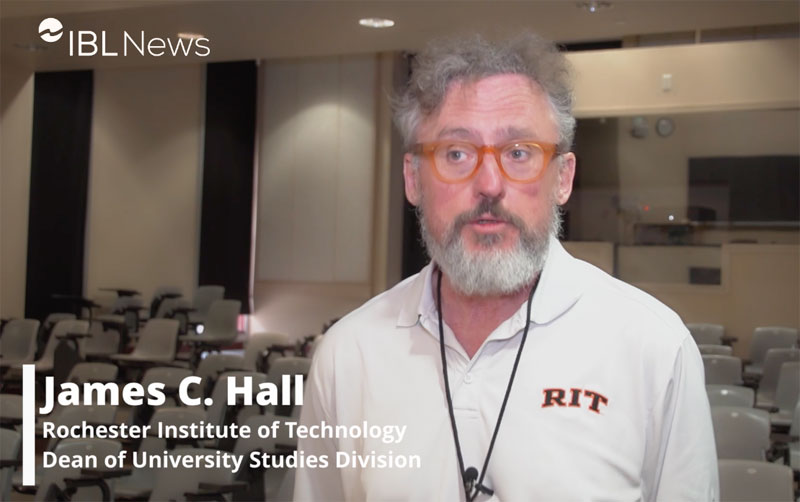
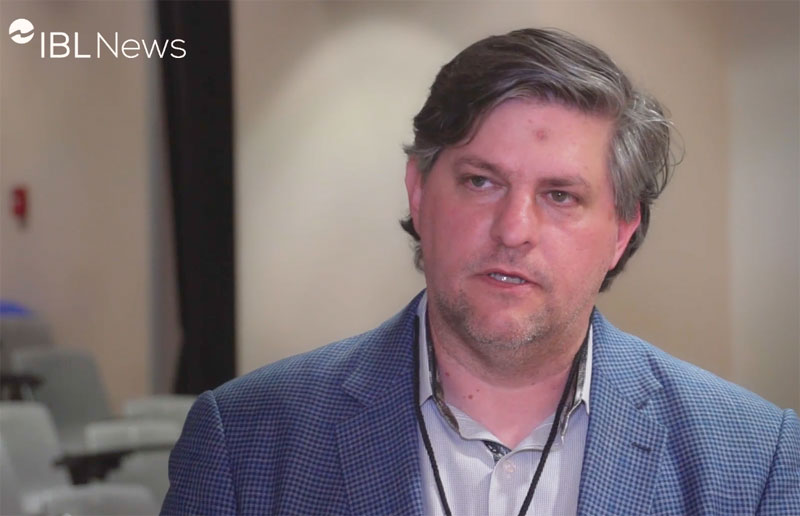
James Hall, the Dean of University Studies at the Rochester Institute of Technology (RIT), spoke with IBL News about his work on “customized degree pathways at the associate, bachelors, and masters’ level.”
RIT has a “significant footprint on the main edX platform,” with two MicroMasters in cybersecurity and project management, and another coming soon in design thinking. RIT also has invested in professional certificates in soft skills and other short courses.
As a relatively new university in online education, Hall discusses some of the biggest challenges to transforming traditional education online.
“Our instructional design and production folks will tell you that they’re making it all up as they go. We’re benefitting a lot from the emergence of a kind of community of practice amongst MicroMasters folks in particular, and we spend a lot of time learning from each other. I think one of the rich things about both the Open edX and edX partnership is the ways in which there is a general enthusiasm of sharing knowledge.”
Watch the full interview with Jim Hall in the video below.
Developments in AI are now accelerating at an unprecedented rate. Several corporations are deploying AI at scale, as we noticed this week at the O’Reilly AI Conference in New York.
There is faster hardware for sensing, model training and model inference; we saw new cloud and on-premise tools, architectures and pipelines. Among those impactful implementations, we didn’t find emerging developments for our learning industry.
Only one exhibitor out of 28 was on education: a Chinese company called Squirrel AI Learning, squirrelai.com. It featured itself as “the first pure-play AI-powered adaptive education provider in China”. “We provide personalized and high-quality K-12 after-school tutoringat an affordable price”.
This company, owned by Yixue Group, says it has opened 1,700 schools, with a teaching staff of 3,000 in 200 cities across China. Apparently, it accumulates funding of $15 million.
Is China so ahead in AI-driven education?
We attended the O’Reilly-organized press conference with the experts in that industry to inquire about it.
Martial Hebert, a leading researcher and Director of Carnegie Mellon Robotics Institute, explained to us that there are a number of elements of AI that can be used on education at scale such as facial recognition.
This is an application which some companies already use in China, including the parent organization of Open edX-based platform XuetangX.com.
However, the state of this technology seems to be at a very early stage.
The goal of all of these tools, including the data analytics approach, aligns with the adaptive and personalized learning requirement. It means being able to respond to the student’s interaction in real-time by automatically providing her with individual support.
In small traditional classrooms, the lack of personalized attention can be tackled with an AI-based face recognition solution, especially if there is no data-protection concern, as it happens in China.
The machine reads the learner’s expression in order to determine whether he or she is struggling to grasp a subject. If so, the instructor receives a notification and modifies the lessons to respond accordingly.
This can be done with a reduced number of students, but is it feasible in online education at scale?
Carnegie Mellon is working on it, but it doesn’t seem to be close.
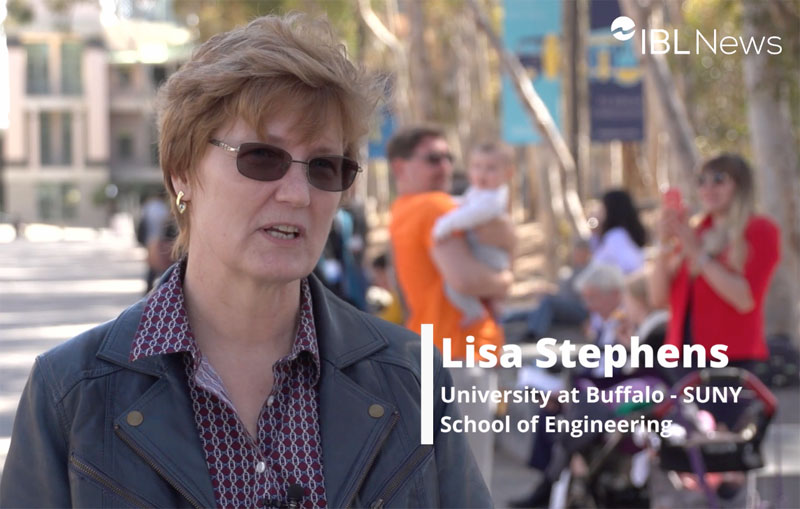
Lisa Stephens, Assistant Dean for Digital Education at the University of Buffalo School of Engineering and Applied Science and Senior Strategist in academic innovation for the State University of New York, shared her views on the necessity of upskilling modern workforces with IBL News at the 2019 Open edX conference in San Diego.
Online learning provides the opportunity for lifelong education catered to career professions who want to stay up to date, she says, and for traditional universities to fill this space and provide these programs.
“There are a lot of people who need to up-skill in order to stay current and competitive in the job market… I think there is a huge opportunity for continuing and professional education, and MicroMasters and stackable credentials in particular.”
The SUNY system is a pioneer in open education resources (OER) production, such as their open textbook initiative, which she says leads to a “natural extension to then look at online education and opening up education in general.”
In the process of experimenting with their pilot instance, Stephens finds that “there is an opportunity within [Open edX] for customization that we don’t see available to us in other platforms. Of course with that ability to be open and to be customized comes with it a lot of responsibility.”
Watch the full interview with Lisa Stephens in the video below.
Leveraging What Makes Us Human to Benefit the Learning Process: An Interview with Walter Bender
Zoe Mackay, Chris Dowhan | IBL News
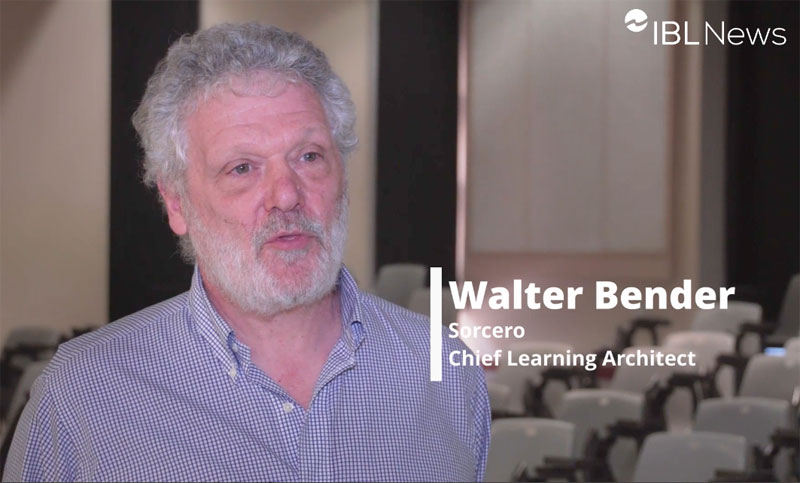
Walter Bender, the Chief Learning Architect at Sorcero and the founder of Sugar Labs and One Laptop One Child, shared with IBL News how transparent AI will revolutionize online learning following his talk at the Open edX conference last month in San Diego. The main goal, he posits, is “to leverage what makes us human to become part of the learning process.”
His talk, “Beyond the Black Box: How Transparent AI can Transform Learning,” focused on the strides that Sorcero is making with AI and online learning. With his extensive experience in academia and accessible and open online education, he says his experiences were “a case study for transparency, for providing tools and a framework.”
The natural extension from this was to switch gears and talk about AI, the “tool du jour in machine learning these days.”
One of the largest issues with machine learning, says Bender, is that “it’s completely opaque. The people using these tools don’t know how they work, they don’t know the consequences of what they are doing and there is no way to really relate to these tools.”
At Sorcero, they are taking a different approach, he says, by building “a hybrid AI that uses natural language processing in a much more structured way that is more similar to the way people understand the language… When it fails, it fails in a very human way…as opposed to having some strictly statistical model.”
He exemplifies the benefits of Sorcero’s approach while discussing the tools they’ve built for learner’s to ask questions. The AI first attempts to understand the questions, which may include a back and forth between the learner. If the question can be answered by the AI, it will answer, but if it cannot, it will consult the subject matter expert.
“One of the things that have happened repeatedly in our pilots is that the subject matter expert will say, ‘well why are they asking that?’ Well, they’re asking that because that’s the question that [the student] got, and that’s not what you taught them. So maybe you should think about teaching them that because that’s the kind of thing that they are bumping up against. So it is exposing these gaps. It’s providing some structure, feedback, and guidance to the SME as well in the mentoring process.”
A great benefit, he adds, is that “it’s really easy to drop into Open edX and use outside of Open edX as well.”
Watch the full interview with Walter Bender in the video below.
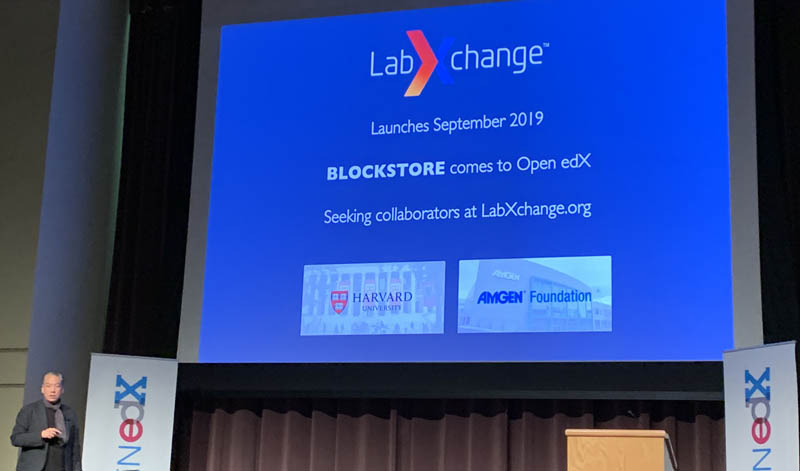
Robert Lue, the Faculty Director and Principal investigator for LabXchange at Harvard has envisioned an advanced way to create personalized learning paths through community engagement on Open edX with the upcoming release of Blockstore.
“The hope is that what Blockstore on Open edX will allow us to do is truly create an environment for learning that is extremely flexible,” he said.
LabXchange, which launches in September 2019, “represents a real effort to see if we can move Open edX to the next stage of evolution where we’ll be able to create much more flexible learning experiences that can be personalized.”
Personalized learning started with MOOCs, and while there are vast libraries of open educational resources, these learning assets are locked within specific learning sequences — or courses.
This is the issue LabXchange wants to fix, by proposing a single dynamic repository called the Blockstore. “Instead of [learning assets] being locked into courses, they are broken up at the asset level — to individual videos, problems, text documents, HTML pages, etc,” which are meta-tagged and searchable.
Lue shows how you will be able to build a new learning pathway, by utilizing individual learning assets, remixing them and creating customized content.
“What we’ve done is created a new environment where content can be used in a variety of different ways…this allows, for the first time, the ability to remix it and issue it with a unique URL that let’s say a teacher can share with her class free of charge.”
LabXchange has also created a learning network to share “what [people] have learned from,” which allows others to share the learning pathways that can be built, have personal profiles, and the ability to mentor.
“The hope is that what Blockstore on Open edX will allow us to do is truly create an environment for learning that is extremely flexible, that will [allow people] to work with an entirely different set of data around how content is used and reused by instructors, by learners, how are things clustered, how that aligns with performance, how that aligns with building proposals, to solve problems and what sort of networks can now form on a platform that allows you to network through learning and trying to solve problems.”
LabXchange will launch in September 2019, and Blockstore plans on being rolled out over the next two releases of Open edX.
Watch the Robert Lue’s full talk at the Open edX conference in the video below.
This newsletter about Open edX is a monthly report compiled by the IBL News staff, in collaboration with IBL Education, a New York City-based company that builds AI analytics-driven, revenue-oriented learning ecosystems, and courses with Open edX and other educational software.
The University of Notre Dame and the College of the Holy Cross in Worcester, Massachusetts, have announced a Bachelor of Arts/Master of Science degree collaboration, opening a new educational model.
After graduation from Holy Cross, students participating in the program continue in Notre Dame’s online M.S., receiving their graduate degree the following spring.
“Integrating online professional-graduate education with an undergraduate liberal arts experience is a new frontier,” said Elliott Visconsi, associate provost and chief academic digital officer at Notre Dame.
“This partnership helps Holy Cross to expand our curriculum in a high-demand field and connect our liberal arts model with professional graduate training, all while maintaining the deeply residential quality of the undergraduate experience. We are delighted to collaborate with Notre Dame to support our students in achieving their post-graduate goals and to cultivate ‘three-dimensional’ data scientists,” said Margaret Freije, provost, and dean of the faculty at College of the Holy Cross.
John Mark Walker, Open edX Community Lead, said in an interview with IBL News that “we are moving towards a more inclusive, comprehensive [Open edX] community, where we hope to be the home for learning practitioners in an open source collaborative way.“
He reflects after the 2019 Open edX conference, which took place during the last week of March in San Diego.
With 5 years of progress, Walked reminisces on the community that edX has fostered, and looks to the future of growing this community.
“Over time, we found a lot of companies, like IBM, Microsoft, Redis Labs, Mongo DB…these are all joining the party because they are seeing the power of online learning.” These companies, says Walker, utilize Open edX because of the deeper engagement with their communities, customers, and partners. “It becomes a key component of a community and marketing strategy.”
“The idea of offering training to everyone who uses software as a service is relatively new, but now with things like Open edX, with an open source platform, and a growing number of people that know how to use it… you’re now getting this convergence of practitioners that are expanding the universe of online learning.”
With 20 years of experience in open source software, Walker identifies the different approaches taken by edX. These other companies were very circular, in that “it was technologists creating technology for other technologists.” When he came to edX, he found that edX incorporated their community, and strived for collaboration.
“There is a lot of demand for this combined world where technologists and course designers and educators can come together and collaborate with each other, and that’s what we are focusing on.”
edX aims to tailor its future approach toward instructional designers and researchers. With each Open edX conference, Walker says he realizes the need to expand and give these different groups of the edX community the attention they deserve. The Open edX community “really is the most positive community I’ve ever worked in. It is the most inclusive…and you feel that energy.”
To watch John Mark Walkers full comments following the 2019 Open edX Conference, please see the interview below.
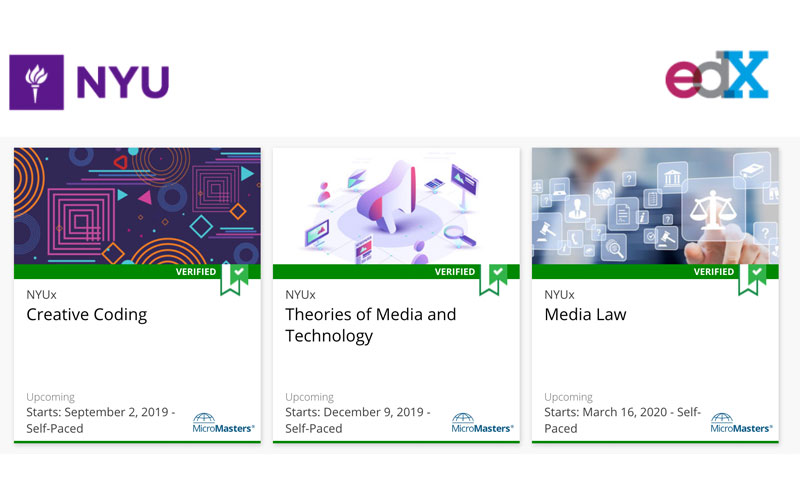
This program, which is open for enrollment, consists of three courses followed by a capstone project (for a total of $900).
Creative Coding – It introduces the fundamentals of object-oriented programming, and allows the use of code as a method of self-expression in a variety of media, including 2D graphics, animation, and video processing. This course starts on September 2, 2019.
Theories of Media and Technology, – It examines a range of historical and contemporary trends in the theoretical analysis of media and enables students to critically describe and discuss media concepts and projects, helps gain an understanding of how people create and consume media. This course starts on December 9, 2019.
Media Law, – It consists of an advanced seminar that explores media and communications principles and regulations and fosters an understanding of the legal and ethical framework surrounding issues in digital media. This course starts on March 16, 2020
“Our partnership with edX allows us to offer yet another pathway to becoming a lifelong learner,” said NYU Tandon Dean Jelena Kovačević.
“The road to an advanced degree is not always conventional or linear, and we are proud to offer a new entry point for motivated students, from mortarboard to beyond. We know that science, technology, and engineering are vital and enriching subjects, whether you are a K-12 student or a mid-career professional, and we are committed to offering learning opportunities to those at every stage.”
“At NYU Tandon, we are finding novel ways to engage nontraditional students, such as our online Bridge Program, which we created to provide individuals with non-engineering backgrounds with the tools needed to embark on graduate-level studies here, and our MicroMasters program on edX is a welcome addition in our efforts to bridge the gap between aspiration and attainment,” she added.
“NYU Tandon’s Integrated Digital Media program provides a wholly unique combination of theory and practice that sets it apart from other digital media offerings,” said R. Luke DuBois and Scott Fitzgerald, co-directors of the school’s IDM program.
“We consider this MicroMaster’s to be only the beginning, and look forward to partnering with edX in the future,” stated Nasir Memon, NYU Tandon’s associate dean for online learning.
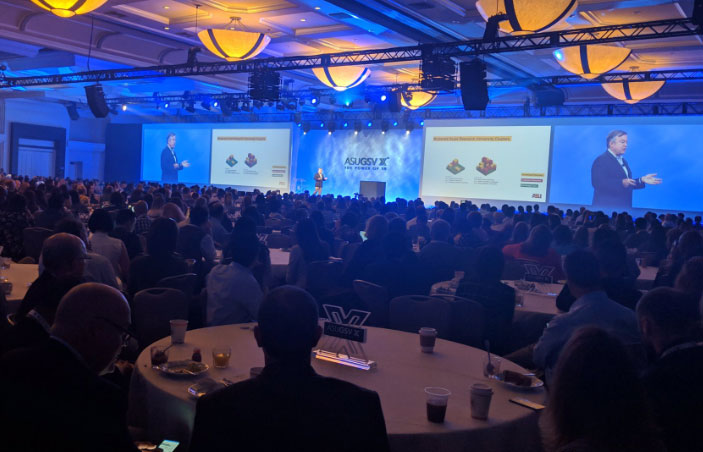
Michael M. Crow, President at Arizona State University (ASU), talked today on a keynote during the ASU GSV Conference in San Diego about the importance of connecting the workforce with lifelong learning opportunities.
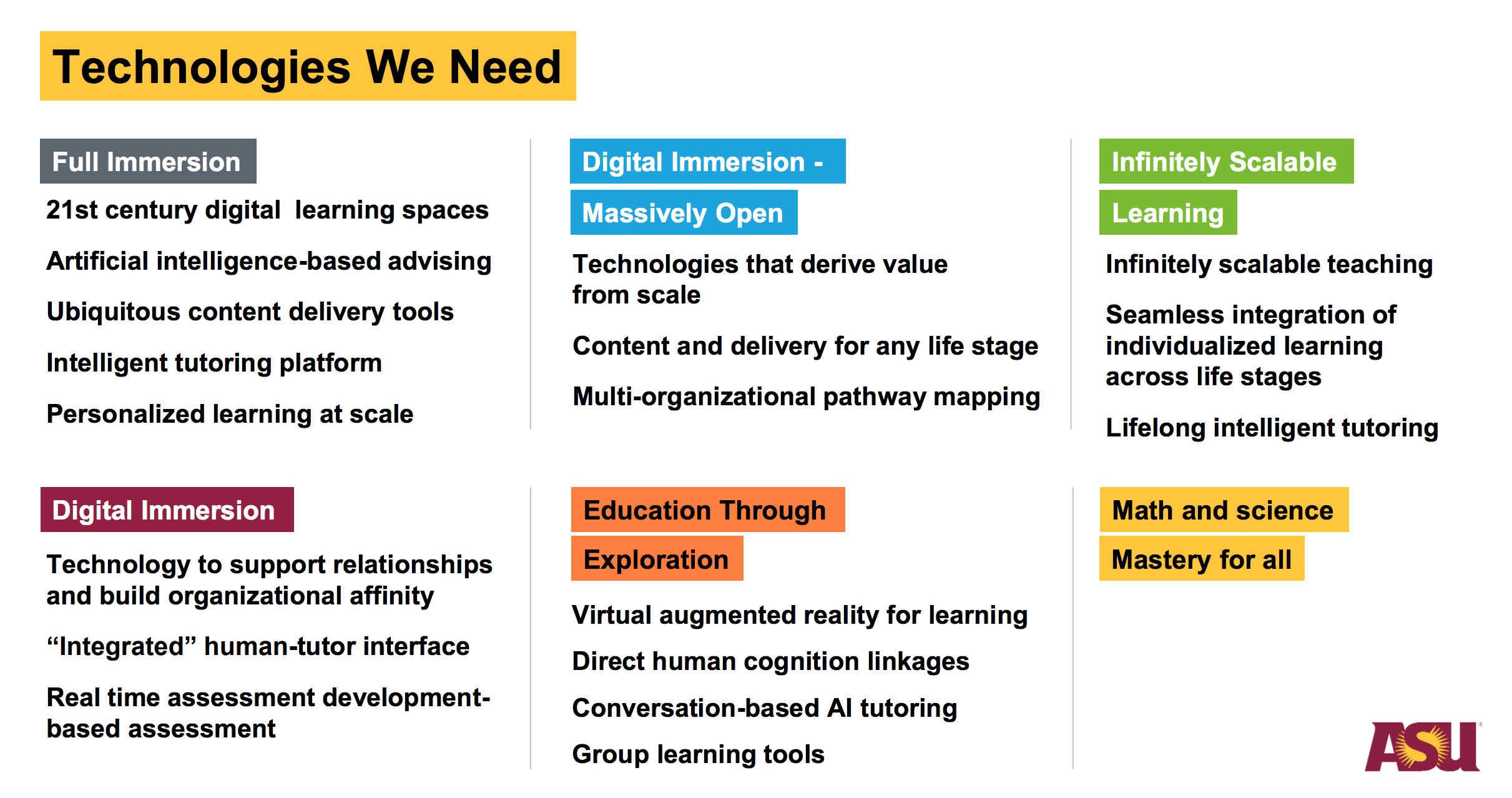
He elaborated on ASU’s model and mentioned the “technologies we need” to achieve a maximum impact in education. He listed those technologies in the following six categories. Personalized learning at scale will be one of the requirements.
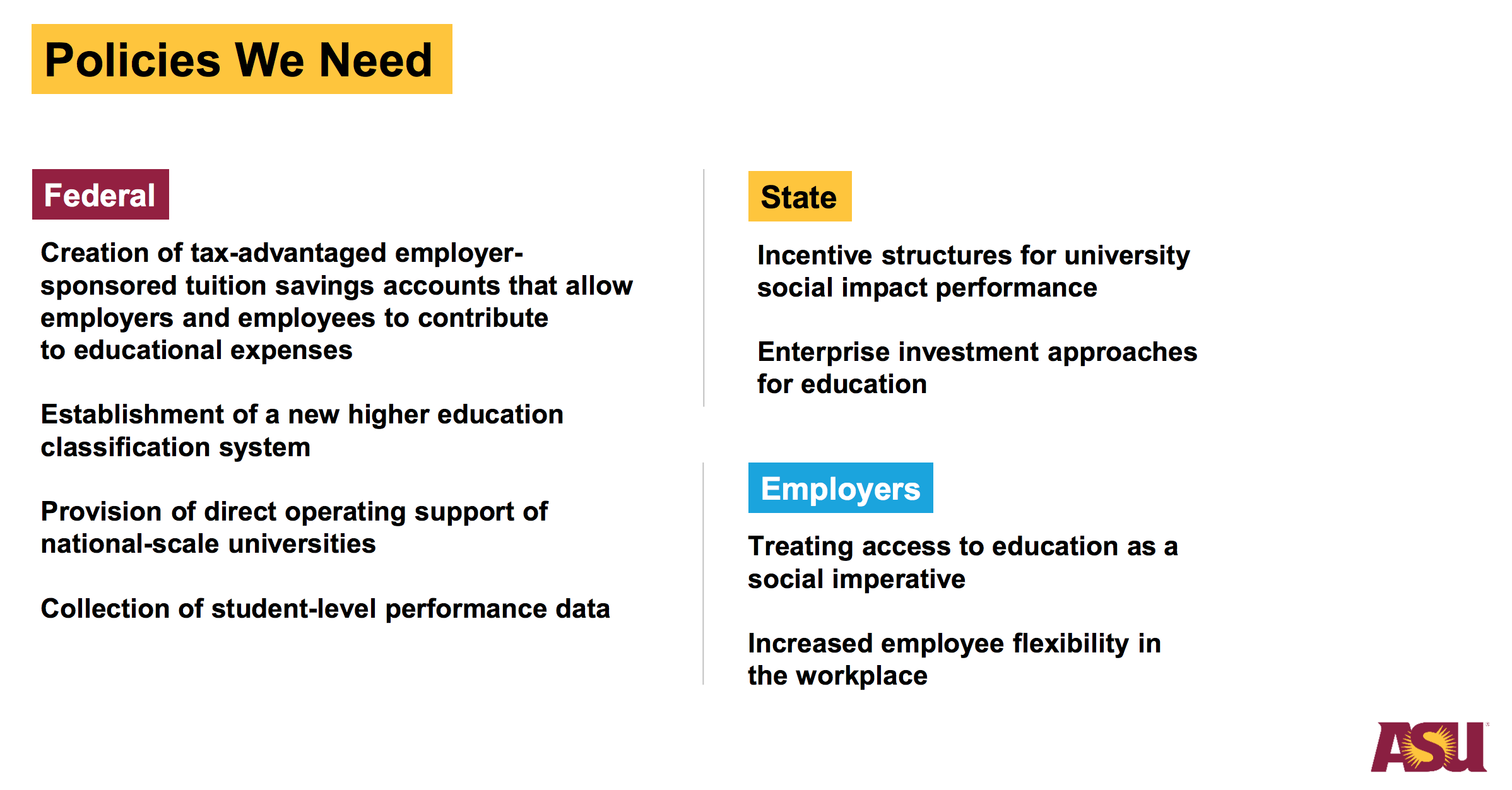
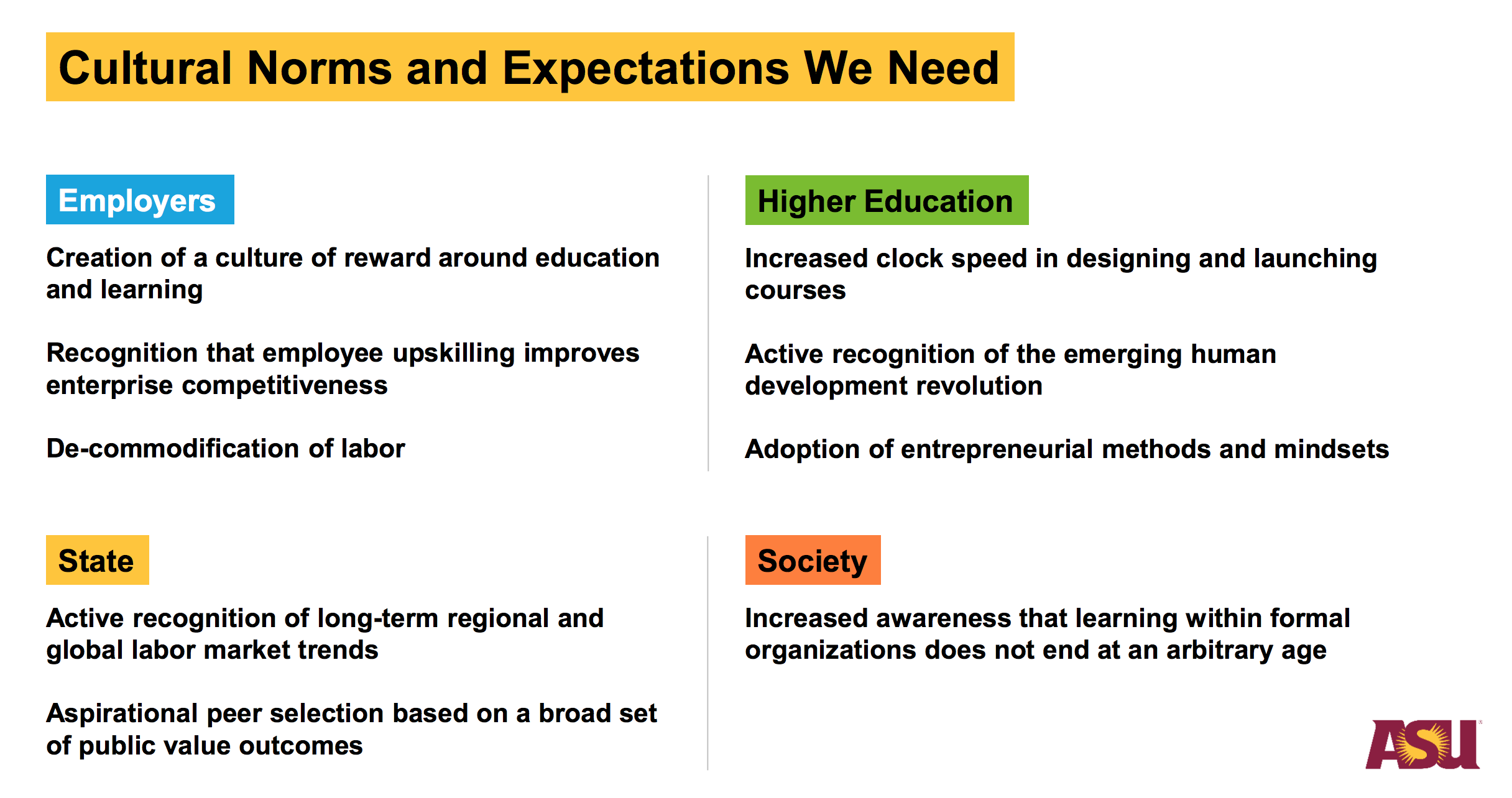
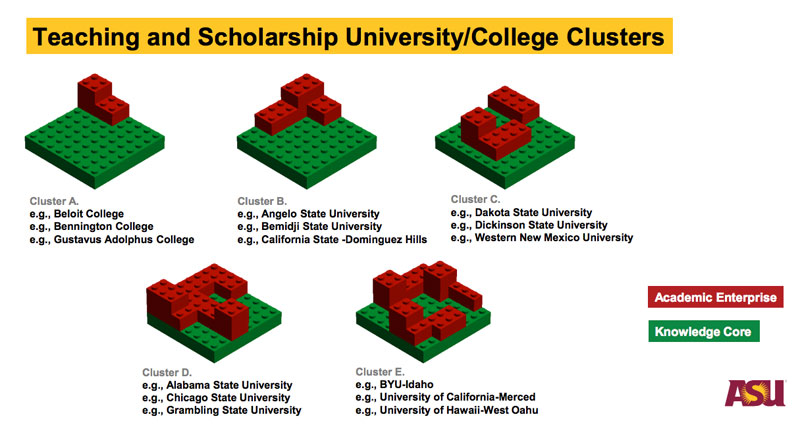
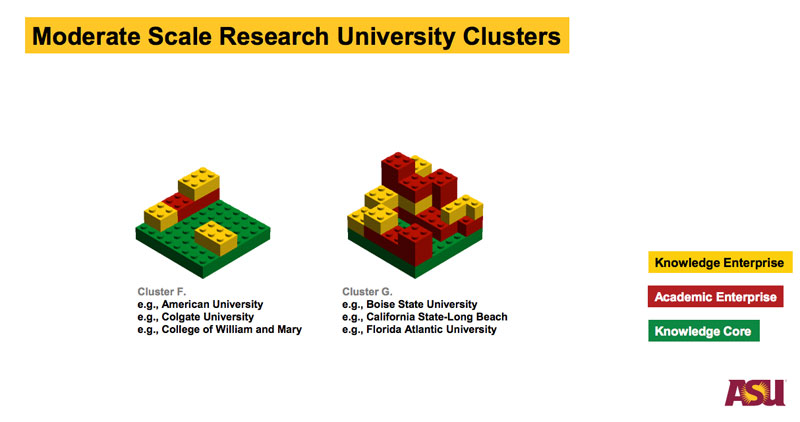
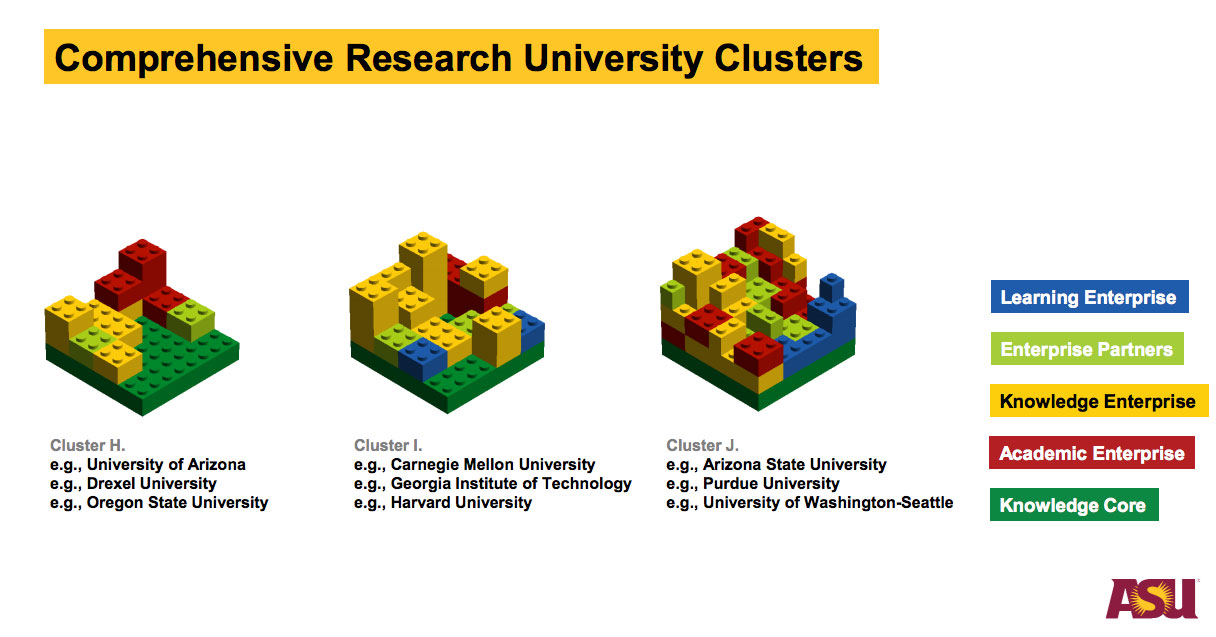
Mr. Crow, who has transformed ASU into one of the nation’s leading public metropolitan research universities, explained that “there are some policies as well as cultural norms and expectations we need to accomplish”, as reflected in these slides.
The President of ASU stated that workplace partners are like “legos”, while “learning systems have multiple potential configurations”.
At the kickoff of his talk, Michael M. Crow elaborated about how a universal learning system should be designed and what building blocks would be needed to create a new university.
In this view, these are the three existing clusters:
Exploring how corporations should help employees attain higher education, Crow highlighted ASU’s partnership with Starbucks, Adidas, and Uber.
Kevin Johnson, CEO of Starbucks, revealed on Monday that about 12,000 Starbucks employees are taking ASU classes through the Starbucks College Achievement Plan, with about 3,000 graduates so far.
“We find now that 50 percent of the graduates stay at Starbucks and get promoted faster and about 50 percent move on,” he said. “In new applicants for jobs at Starbucks, nearly 20 percent indicate their primary reason is to get an education in partnership with ASU.”
Steve Ellis, Managing Partner at TPG Growth and the Rise Fund, said that a new model of education accessed via the workplace could help ease income inequality.
“What would it take for us to create a movement that would make this a responsibility of all corporations and organizations? There was more than $800 billion of company stock bought back in 2018. What if we spent a tiny fraction of that to create programs like the Starbucks College Achievement Plan?”