IBL News

    • About IBL News
    • Contact Us
    • cronicas-iframe-ibl
    • Do you want to advertise, write for IBLNews.org or share a story?
    • Events: IBL Picks
    • footer – teme footer
    • Home
    • RSS Feeds
    • Terms of Use

Category: Top News

  • EdX 2017 Global Conference: Goal is to Triple Our Reach to 100 Million Learners


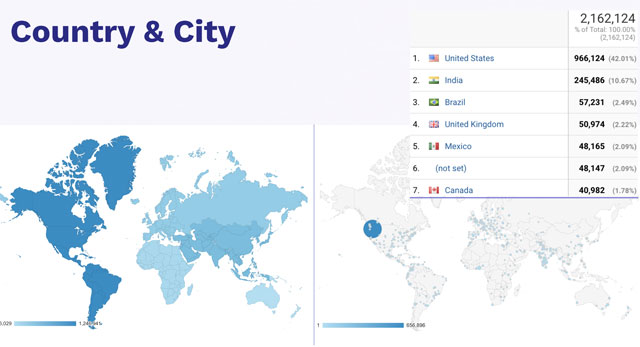
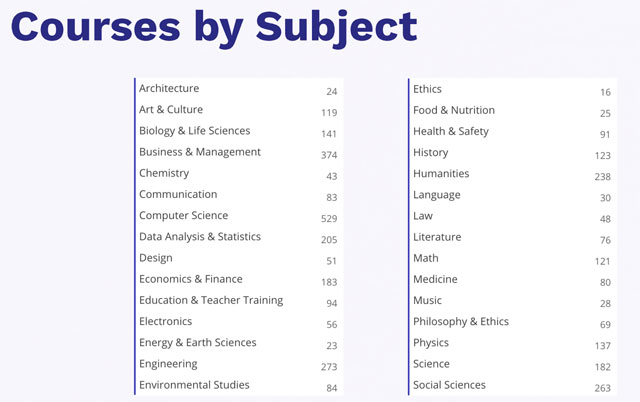
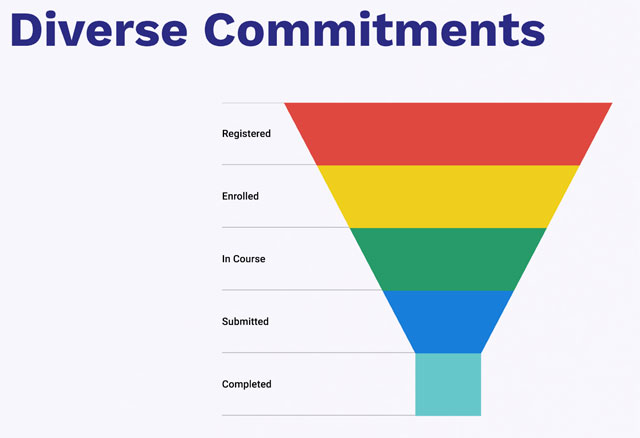
    edX partners joined in Whistler, British Columbia in the annual Global Forum event on December 5 and 6. The event, hosted by the University of British Columbia (UBC), allowed partners to exchange ideas and views on education.

    One the conference’s main topics was innovative pathways to credit and credentialing after the MOOCs have mostly faded off because of the lack of profitability.

    During this 2017 event, three business challenges were highlighted:

    • Create a true community of learners on a sticky platform that learns continuously over a period of at least 5 years, develop a portfolio of credentials, and demonstrate their achievements
    • Establish valued, relevant credentials for lifelong learning
    • Partner with companies for interviews, employment, upskilling, and content.

    In terms of technology, attendants shared the goal of setting the bar on high-quality and engaging education:

    • Leverage fully the power of digital technology for learning
      – AI-powered personalized learning (e.g., HarvardX Super-Earths, Quant Methods course)
      – Leverage the engagement of VR and AR
      – Harness the power of networks, e.g., crowdsource hinting
    • Unleash the power of cognitive science, e.g. retrieval learning
    • Deploy deep analytics for learner engagement and platform stickiness

    As main goals, Anant Agarwal, CEO at edX, remarked the following:

    • Triple our goal reach to 100M, continue Open edX commitment, support national platforms
    • Further internationalization and launch more language platforms
    • Ensure diverse offerings and new credentials at the Bachelor’s and Master’s levels in more in-demand fields

    Ju-Ho Lee, Professor at KDI School of Public Policy and Management and former Minister of Education, Science, and Technology, Korea, delivered the welcoming keynote.

    Professors Andrew Howells and Bernadette Drabsch, from the University of Newcastle, were recognized as winners of the 2017 edX Prize, because of their contribution in online teaching and learning and commitment to the open education. Their course, Drawing Nature, Science and Culture: Natural History Illustration 101, captured a unique and creative look at natural history.

    “This course shows how it is possible to successfully bridge science and art theory, delivering innovative, online methods that break down the illustration components and theory of drawing into accessible techniques, so that learners can truly gain the skills they need to see and draw nature like a professional illustrator,” praised Anant Agarwal, CEO at edX. [This course will re-open on April 4, 2018.]

    The 2017 event recognized also other professors who were finalists.


    December 10, 2017
  • A New iPad App for edX Courses

    edX has launched its first iPad app. It is now available in the iOS App store.

    This mobile app allows to take courses hosted at edX.org.

    In addition, the software is open source. It means that any developer can use it on Open edX related projects.

    The edX app includes these features:

    • Learn from the best instructors from more than 70 global universities and institutions
    • Stream class videos via Wi-Fi or cellular connection
    • Download course videos to watch anytime
    • Test your knowledge with basic quizzes and exams
    • View course announcements and handouts
    • Follow along course videos with closed captions
    • Education and tutorials on your schedule


    November 25, 2017
  • edX MicroMasters Will Expand to Fill Post-College Gap

    edX plans to expand its MicroMasters program until covering most subjects in order to fill the skills’ gap post-college, Anant Agarwal, CEO at edX, said in an interview at The Huffington Post.

    “It is predicted that 50 percent of current jobs will disappear by 2030. Different new jobs and even fields are surfacing. Recent college graduates as well as current workers are already looking for quality courses and certification programs in order to learn aspects of data science, augmenting their familiarity with and use of data, as well as content in many other fields,” explained.

    edX has 40 different MicroMasters already, tailored to hybrid jobs where soft skills are needed in combination with technical competencies. These programs are provided by 130 institutional partners – a combination of enterprise and academic.

    “In coordinating with major organizations such as IBM, Google, Accenture, we also received their endorsement for specific programs. This validation is important for course participants to be assured that the credential will be recognized by current or future employers.”

    November 16, 2017
  • The edX Platform Integrates Stripe

    edX has made available the integration of Stripe for payments on its platform.

    edX uses CyberSource and PayPal to accept payments, but the codebase now contains support for Stripe.

    This development includes support for charges via credit card entry, Apple Pay, Pay with Google, and Payment Request API (which is a W3C browser standard that provides Apple Pay-like behavior across different browsers).

    These payment methods use tokenization. Sensitive data–credit card number, card expiration date, and CVC is relayed to Stripe in exchange for a token. This token is sent to the e-commerce service in order to complete the checkout process.

    edX’s Read the Docs posted all of the info related to payment processors.

    November 12, 2017
  • A Reviewed Course to Learn the Fundamentals of Creating edX Courses

    edX’s training team has launched a new version of its StudioX course, intended to teach the fundamentals of creating courses on the edX platform.

    “StudioX: Creating a Course with edX Studio” introduces to Studio, edX’s course-authoring tool, and is ideal for course authors and course teams interested in successfully creating a course and provide students a great experience.

    Through activities and hands-on learning, this 4-week course walks the learner through the course development process directly in Studio.

    In addition, edX has launched the version 2.11 of the edX mobile app for Android and iOS. This release includes some interesting improvements, such as information about video size, assignment due dates and initial support for Spanish.

    November 9, 2017
  • Ideas to Generate Revenue on Online Courses

    There are multiple ways to generate revenue on higher ed and professional training.

    Appsembler, an Open edX provider, elaborated on this challenge during a webinar titled “10 Strategies to Generate Revenue”.

    Its CEO, Nate Aune, explained that there are basically ten ways:

    1. Lead generation
    2. eCommerce
    3. Subscriptions
    4. Remote coaching
    5. Premium content
    6. Virtual labs
    7. Hybrid learning
    8. Bundling / learning paths
    9. Branded sites
    10. Mobile apps

    The webinar can be seen here.


    November 6, 2017
  • 'Online Learning Design Is Now a Refined Art'

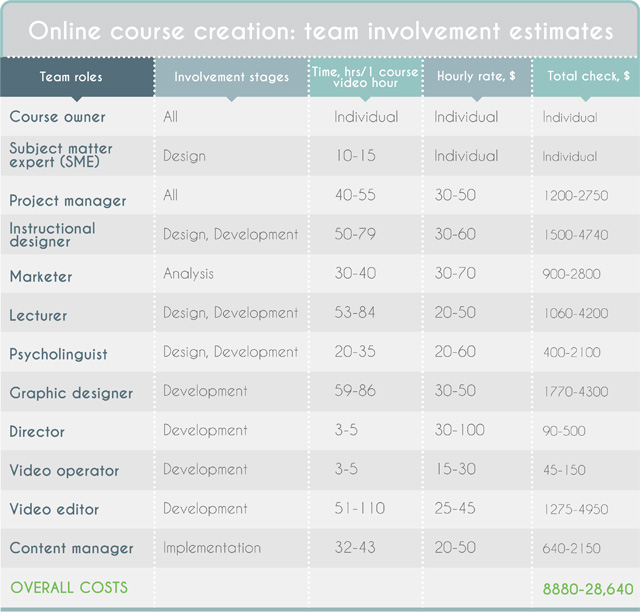
    “Online learning design is now a refined art, and universities must show they can produce high-quality courses at a reasonable cost,” writes in Times of Higher Education Geoff Webster, Managing Director at CEG Digital, the blended learning division of Cambridge Education Group.

    • “To deliver the level of quality that both students and academics expect, and is provided by leading online programmes today, universities must be willing to invest substantial resources in development.”
    • Blended learning has a higher rate of student satisfaction, outcomes and retention, but requires institutional capability and flexibility to deliver a high-quality face-to-face experience within the context of an online learning programme.
    • Coming technological advances, such as adaptive content provision and virtual and augmented experiences will have their place in certain subject areas, but will add their own development and delivery overheads. As an institution invests in online, focusing in-house IT departments on what may start out as a small number of students can be a real challenge. 
    • Fortunately the twin engines of growth – domestic and international demand – should provide a sufficient body of students, with a breadth of subjects, levels and entry requirements.
    • The key strategic questions are: how quickly can an institution get to market, can it produce and deliver programmes of the right quality and with the right cost base, and are these investments sustainable in the long term? Student expectations, learning design, delivery modes, technology choices and recruitment should be top of mind for vice-chancellors. 


    November 3, 2017
  • Duke: We Have No Incentive to Invest in MOOCs

    Duke University does not believe in MOOCs at all.

    “Elite universities have little incentive to invest resources in providing features that improve the quality and credibility of online courses. Furthermore, elite universities have no incentive to dilute the value of their product by helping to bridge the credibility gap between MOOC degrees and traditional four-year degrees,” this institution has written on its board news.

    Duke is one of the first elite universities to publicly express its view against MOOCs –which edX, Coursera, FutureLearn and other consortiums promote. In 2012 Duke became one member of the initial cohort of twelve universities that partnered with Coursera to offer its courses online.

    “Investments on MOOCs will most likely have to come from philanthropic and public-sector actors. Until then, MOOCs, while a boon for democratizing information, still have a long way to go before they actually fulfill their ambitious promise of providing affordable higher education to the digital masses.”

    “One problem is that MOOCs and elite universities are in the business of offering fundamentally different experiences in terms of higher education. The most valuable products that elite institutions like Duke sell for over $70,000 a year are not high-quality courses but rather the prestige of the Duke brand as well as access to networks of other talented students, professors and elite employers. It is impossible to democratize access to these goods because their value depends on scarcity—on low student-to-faculty ratios, on interactions in exclusive clubs and Greek organizations, on single-digit admissions rates. MOOCs can provide world-class information and learning but democratizing education is not the same as democratizing opportunity.”

    “While the stated mission of MOOC providers is to equalize education, their bottom-line driven partners have no such altruistic motives.”

    • DukeChronicle.com: Rethinking MOOCs


    October 31, 2017
  • Argentine UNC University Joins EdX

    https://www.youtube.com/watch?v=UQU4LDXiDFs

    The Universidad Nacional de Córdoba (UNC) in Argentina, and one of the leading universities in Latin America, has joined the edX Consortium.

    Its first open course, in Spanish, is titled Introducción a las ondas gravitacionales and scheduled for November 27. [See video trailer above]

    It is taught by Dr. Gabriela Gonzalez, who is part of the LIGO group, which includes members who received the Nobel Prize in Physics.

    October 27, 2017
  • Unizin, a CanvasLMS Supported Consortium, Says It Will Invest on the Open edX Platform

    So thrilled to partner with @UnizinEd! Exciting step for our mission to increase edu access. @OpenEdx https://t.co/IS7XM5zKig pic.twitter.com/B3pjJ8syCt

    — anant agarwal (@agarwaledu) October 23, 2017

    Unizin, a nonprofit consortium of 25 universities, announced yesterday a partnership with edX.org, in order to “advance technology standards and to open access to data for users of the Open edX learning experience.”

    Unizin, a consortium committed to the Canvas LMS platform, reveals now that it is investing in Open edX as a hosted platform for its member universities. Ohio State University, Indiana University, and University of Michigan have committed to the hosted Open edX software from Unizin. [Disclosure: IBL is providing consultancy services to Unizin].

    Amin Qazi, Unizin’s CEO, explained: “Unizin was created to enable universities to innovate together and shape the essential tools for education, and this strategic alliance with edX expands those possibilities for our members.”

    “We are pleased that the Unizin and Open edX communities will have the opportunity to share leading practices to shape the future of education both online and on-campus.”

    No further details have been disclosed about the nature of this partnership.

    Additionally, Unizin expanded its agreement with Cengage as the “exclusive services partner for expert course design, production services and curriculum analysis to improve student retention and learner success” for consortium members. Unizin members can tap Cengage’s Learning Solutions team to help “measure, review and tailor content, technology and design services,” according to a news announcement.

    • Press release: Unizin Announces Strategic Alliance with edX to Advance Education


    October 24, 2017
←Previous Page
1 … 250 251 252 253 254 … 304
Next Page→

IBL News

Global Education, Innovation and Technology: Insights + Breaking News

  • Blog
  • About
  • FAQs
  • Authors
  • Events
  • Shop
  • Patterns
  • Themes

Twenty Twenty-Five

Designed with WordPress