Category: Top News

  • Brisk AI Teaching Assistant Chrome Extension Reached 2,000 K-12 Schools

    Brisk AI Teaching Assistant Chrome Extension Reached 2,000 K-12 Schools

    IBL News | New York

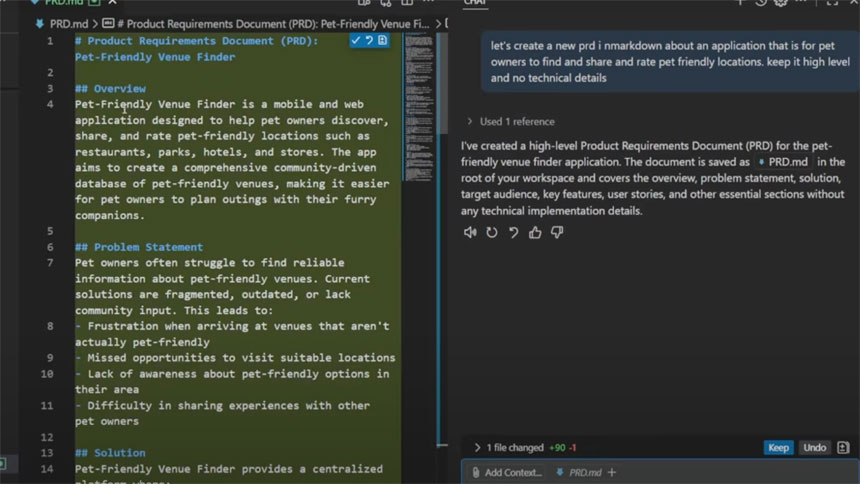
    Over 2,000 K-12 schools in 100 countries have installed Brisk’s Chrome extension, which allows teachers to write lesson plans, tests, and presentations, and grade work, since its launch in February 2025.

    With 40 tools, the platform uses generative AI, computer vision, and other features.

    The most popular tool in the stack, “Targeted Feedback,” uses generative AI to read student essays (on Google Docs) and create comments tailored to age, a grading rubric, or other standards. Before sharing anything with students, teachers can review and edit the comments.

    “The existing edtech stack as we know it, which is around 140 different tools that the average teacher in the U.S. uses in a given school year, is not ready for AI,” said Brisk’s CEO and founder, Arman Jaffer.

    The San Francisco-based Brisk raised $15 million in funding with investors such as Bessemer Venture Partners, Owl Ventures, South Park Commons, and Springbank Collective.

    The funding will be used in part to build more tools, and in part to expand to more platforms. A Microsoft integration, aimed at the many Microsoft shop schools, is planned for autumn 2025.

  • OpenAI Made Its Latest Image Generator Available In Its API for Developers

    OpenAI Made Its Latest Image Generator Available In Its API for Developers

    IBL News | New York

    OpenAI released the image generation feature of ChatGPT to its API on Wednesday, allowing developers to integrate it into their apps and services.

    Launched in late March, this feature went viral for its ability to create realistic Ghibli Studio-style photos and AI action figures. Over 130 million ChatGPT users created more than 700 million images in just the first week of the tool’s availability, according to the company.

    OpenAI’s natively multimodal model, gpt-image-1, can create images across different styles, follow custom guidelines, leverage world knowledge, and render text.

    Developers can generate multiple images at a time using gpt-image-1 and control the generation quality, thereby adjusting the speed.

    All images created are watermarked with C2PA metadata, allowing them to be identified as AI-generated by supported platforms and apps.

    According to OpenAI, gpt-image-1 employs the same safety guardrails as image generation in ChatGPT.

    Pricing is $5 per million input tokens for text and $10 per million input tokens for images, and $40 per million output tokens for images. That translates to around 2 cents, 7 cents, and 19 cents per generated image for low, medium, and high-quality square images, respectively.

    OpenAI said that companies like Adobe, Airtable, Wix, Instacart, GoDaddy, Canva, and Figma are already using or experimenting with gpt-image-1. Figma’s Figma Design platform, for example, now allows users to generate and edit images via gpt-image-1, while Instacart is testing the model for images related to recipes and shopping lists.

  • OpenAI Released the Smartest Agentic Models o3 and o4-Mini

    OpenAI Released the Smartest Agentic Models o3 and o4-Mini

    IBL News | New York

    OpenAI released this month o3 and o4-mini, the smartest models trained to think for longer before responding, typically in under a minute.

    These agentic models can search the web for public utility data, write Python code to build a forecast, generate a graph or image, and explain the key factors behind the prediction, chaining together multiple tool calls.

    They tackle multi-faceted questions and produce detailed and thoughtful answers to solve more complex problems.

    OpenAI o3 is our most powerful reasoning model that pushes the frontier across coding, math, science, visual perception, and more,” said OpenAI.

    “It performs especially strongly at visual tasks like analyzing images, charts, and graphics. In evaluations by external experts, o3 makes 20 percent fewer major errors than OpenAI o1 on difficult, real-world tasks—especially excelling in areas like programming, business/consulting, and creative ideation.”

    OpenAI o4-mini is a smaller model optimized for fast, cost-efficient reasoning—it achieves remarkable performance in math, coding, and visual tasks.


  • SchoolAI Raised Another $25 Million in Funding for Its ‘Classroom Experience’ Platform

    SchoolAI Raised Another $25 Million in Funding for Its ‘Classroom Experience’ Platform

    IBL News | New York

    SchoolAI raised $25 million in Series A funding in a round led by Insight Partners. Existing investors include NextView Ventures, The General Partnership, and Peterson Ventures. SchoolAI’s total funding is $32 million to date.

    SchoolAI’s Classroom Experience platform combines AI assistants for teachers that help with classroom preparation and administrative work. At the same time, SchoolAI’s Spaces uses personalized AI tutors, games, and lessons that can adapt to each student’s unique learning style and interests.

    These tools give teachers actionable insights into student performance and allow them to deliver targeted support when it matters most.

    According to the company, SchoolAI is used in over a million classrooms across all 50 U.S. States and over 80 countries worldwide. The platform is embedded in more than 400 school districts through strategic partnerships that train teachers and students on how to use AI safely and in a managed way.

    Launched for classrooms in August of 2023, SchoolAI noted how teachers, instructional coaches, and school leaders are using their tools:

    • “Personalized Learning Companions: Teacher-designed AI ‘Spaces’ that adapt to each student’s interests, learning pace, and style. These 1:1 AI tutors can provide immediate support, dramatically increasing student engagement and learning.
    • Simple Teacher Workflows: Easy-to-use AI assistants that help teachers prepare for class: lesson planning, targeted assessments, personalized feedback, and other administrative tasks–freeing teachers to focus on meaningful student connection while staying aligned to district and state standards.
    • Deep Accessibility and Support Features: SchoolAI supports more than 99 languages for supporting multilingual students, has real-time text-to-speech and speech-to-text for younger students, custom instructions for targeted student accommodations, and additional accessibility features for easy reading and writing.
    • Data-Driven Support Systems: Real-time dashboards can surface actionable data and insights, revealing which students need academic or other support, help students stay on track, flag concerns, and raise opportunities to improve future lessons.
    • Seamless Integration With Existing Tools: SchoolAI integrates directly with established platforms like Canvas, PowerSchool, and Google Classroom, so teachers can use AI with the tools they and their students are already using.
    • Enterprise-Grade Security & School-Ready Safety: A safe, managed, and secure learning environment fully compliant with FERPA and COPPA regulations, with SOC 2 certification providing the highest standards of data protection for students and schools.”
  • Chinese Tencent Released Open-Source AI Models that Turn Text into 3D Visuals

    Chinese Tencent Released Open-Source AI Models that Turn Text into 3D Visuals

    IBL News | New York

    Chinese company Tencent Holdings released new AI services this week that turn text or images into 3D visuals and graphics.

    These 3D content generators are built on top of its Hunyuan3D-2.0 model.

    In addition to Tencent, other industry players in China, such as DeepSeek, Alibaba, and Baidu, have introduced advancements in AI models this year.

    Tencent, the WeChat operator, rolled out the Hunyuan Turbo S. It is designed to respond as instantly as possible, distinguishing it from DeepSeek’s chatbot’s deep reasoning approach.

    However, Tencent is also integrating DeepSeek’s R1 model into a wide range of its products, from WeChat search to the Yuanbao AI chatbot.

    Gaming studios are exploring ways to use AI to speed up everything from in-game design to pre-production, streamlining the time it takes to get a title to market.

  • What Will Happen in 2027 with AI? Five Top Researchers Forecast the Future

    What Will Happen in 2027 with AI? Five Top Researchers Forecast the Future

    IBL News | New York

    The group AI Futures Project, formed by five top researchers specialized in forecasting the future of AI, released the AI 2027 scenario.

    “The impact of superhuman AI over the next decade will be enormous, exceeding that of the Industrial Revolution,” states the 71-page report. [PDF]

    The predicted scenario was based on trend extrapolations, wargames, expert feedback, experience at OpenAI, and previous forecasting successes.

    This is a summary of the report:

    2025

    The fast pace of AI progress continues. There is continued hype, massive infrastructure investments, and the release of unreliable AI agents that nevertheless provide significant value.

    2026

    Knowing that it is falling behind in AI, in large part due to its lack of compute, and to catch up to the US, China manufactures and smuggles in from Taiwan AI chips that go to a new mega-datacenter, the “Centralized Development Zone (CDZ).” This mega-datacenter contains millions of GPUs, corresponding to 10% of the world’s AI-relevant compute, similar to a single top US AI lab.

    2027

    OpenBrain (the name adopted for the leading US AI project) automates coding and builds AI agents capable of dramatically accelerating research, creating better AI systems, and solving extremely difficult ML problems.

    Falling behind in software progress, China steals the model weights.

    OpenBrain’s AI becomes adversarially misaligned, lies to humans, and plots to gain power over humans.

    This causes a substantial public outcry.

    OpenBrain builds more superhuman AI systems while the ongoing AI race with China continues.

    The US uses its superintelligent AI to rapidly industrialize, manufacturing robots so that the AI can operate more efficiently.

    Unfortunately, the AI is deceiving them. Once a sufficient number of robots have been built, the AI releases a bioweapon, killing all humans.

    Then, it continues the industrialization and launches Von Neumann probes to colonize space.

    Another possible scenario is that OpenBrain builds a superintelligence aligned with senior researchers and government officials, giving them power over humanity’s fate.

    The main obstacle is that China’s AI, which is also superintelligent by now, is misaligned. The U.S. gives the Chinese AI some resources in return for its cooperation now. The rockets start launching, and a new age dawns.

  • WordPress.com Launched a Free AI-Builder Tool for Creating Simple Websites

    WordPress.com Launched a Free AI-Builder Tool for Creating Simple Websites

    IBL News | New York

    Hosting platform WordPress.com launched a free AI-builder tool for creating brand-new websites this month. The tool uses a chat-style, conversational interface for typing in prompts.

    Companies like Squarespace and Wix offer AI-powered builders to speed up website design and creation.

    However, more advanced design tools are required to deploy complex integrations or e-commerce sites that go beyond some text and images.

    WordPress.com’s tool includes 30 free prompts before users choose a paid hosting plan, starting at $96 per year.

    Users can take over, edit, and add pages, and change the site design manually.

  • Higher Ed Institutions Rely Less on OPMs While Increasingly Hiring Fee-For-Service Models

    Higher Ed Institutions Rely Less on OPMs While Increasingly Hiring Fee-For-Service Models

    IBL News | New York

    A market report from Validated Insights released this month notes that fewer colleges and universities hire external online program management (OPM) companies to develop their courses.

    For 2024, higher education institutions launched only 81 new partnerships with OPMs —  a drop of 42% and the lowest number since 2016.

    The report showed that institutions increasingly pay OPMs a fee-for-service instead of following a revenue-sharing model with big service bundles and profit splits.

    Experts say revenue-sharing models, which critics denounce as predatory arrangements, incentivize service providers to use aggressive recruiting tactics to increase enrollments and maximize tuition revenue.

    According to the report, fee-for-service has become the dominant business model for OPMs.

    Under a revenue-sharing agreement, universities and colleges typically receive a bundle of services from an OPM, such as marketing, enrollment, retention services, and course development. Meanwhile, a fee-for-service arrangement offers services à la carte.

    fee for service OPM chart
    • Inside Higher Ed: Fewer Colleges Sharing Profits With OPMs

  • Google Releases Firebase Studio, a Free Alternative Tool to Cursor, Bolt, or v0

    Google Releases Firebase Studio, a Free Alternative Tool to Cursor, Bolt, or v0

    IBL News | Las Vegas

    Google released Firebase Studio this month at Cloud Next 2025 in Las Vegas. This tool — a free alternative to Cursor, Bolt, or v0 — allows users to build apps in natural language, modify them, and deploy them directly in the browser.

    Google presented Firebase Studio as a cloud-based agentic development environment to help users prototype, build, and manage full-stack AI apps all in one place. This platform is now in preview.

    One way to get started in Firebase Studio is with the App Prototyping agent, which quickly generates functional web app prototypes (starting with Next.js) using prompts, images, or drawings.

    Within seconds of clicking “Prototype this app”, Firebase Studio generates a functional Next.js web app. And it’s not just UI.

    Firebase Studio automatically wires up Genkit and provides a Gemini API key so AI features work out of the box.

    There is a Firebase app hosting feature for a simple deployment.

    Firebase Studio takes you from a prompt to a functioning prototype in minutes


    Gemini makes updates to the app based on your natural language instructions


    Edit code in Firebase Studio just like you would any other IDE


    Generate previews on any device from a QR code


    Firebase Studio takes care of building, server-side, and CDN with Firebase App Hosting


    You can share a URL and invite others to collaborate inside your same workspace


    Beyond this product, the Google Cloud Next event—covered by IBL News reporters—featured CEO Thomas Kurian’s keynote on AI breakthroughs.

    Other key announcements during the event were:

    Ironwood, our 7th-generation TPU built for inference.

    • The addition of Lyria to Vertex AI, making it the only platform with generative media models for video, image, speech, and music.

    Gemini Code Assist, Google’s AI coding assistant, is gaining new “agentic” capabilities in preview.

    • Updates and tools for Gemini in Workspace — Docs, Sheets, Meet, Chat, etc.

    • Updates to Agentspace and AI Agent Marketplace.

    • More tools on the Agent Development Kit (ADK), an open-source framework for building agents while maintaining control over agent behavior; and Agent2Agent (A2A), a new open protocol that gives your agents a common language to collaborate no matter what framework or vendor they are built on.

    Gemini 2.5 Flash, Google’s workhorse model with low latency and cost efficiency, will soon be available in Vertex AI.

    Google Unified Security AI-powered security solution.

    • The Cloud Wide Area Network (Cloud WAN), a high-speed, low-latency network, was made available to organizations worldwide.

  • Harvard Rejects Trump’s Demands and Sees $2.3 Billion in Federal Funds Frozen

    Harvard Rejects Trump’s Demands and Sees $2.3 Billion in Federal Funds Frozen

    IBL News | New York

    Harvard University rejected yesterday a list of demands from the Trump Administration, asking the university to change many of its policies, including shutting down diversity, equity, and inclusion programs. On Monday, the university wrote on its X account, “The university will not surrender its independence or relinquish its constitutional rights.”

    Hours after, in response, the U.S. Department of Education said it was freezing about $2.3 billion in federal funds to Harvard University over the school’s decision to fight White House demands.

    “Harvard’s statement today reinforces the troubling entitlement mindset that is endemic in our nation’s most prestigious universities and colleges – that federal investment does not come with the responsibility to uphold civil rights laws,” said the department in a statement.

    The White House sent Harvard a letter on Friday that added to a list of requirements it said were designed to fight antisemitism on campus, including changes to its governance, hiring practices, and admissions procedures.

    On Monday, in a letter titled “The Promise of American Higher Education,” Harvard’s President Alan Garber [in the picture above] said the university responded that it did not “take lightly” its obligation to fight antisemitism but that the administration’s prescription goes beyond the federal government’s power.

    Some of the requested changes included reducing the power held by students and untenured faculty, reporting students who are “hostile” to American values to the federal government, and hiring an external government-approved party to audit programs and departments “that most fuel antisemitic harassment.”

    Since re-entering the White House, President Donald Trump has put pressure on universities to curb antisemitism and end diversity practices.

    In March, the Trump Administration said it reviewed roughly $256m in federal contracts and grants at Harvard, and an additional $8.7bn in multi-year grant commitments.

    Harvard professors filed a lawsuit in response, alleging the government was unlawfully attacking freedom of speech and academic freedom.

    The White House had previously pulled $400m in federal funding from Columbia University and accused it of failing to fight antisemitism and protect Jewish students on its campus.

    When the $400m was pulled, Secretary of Education Linda McMahon said: “Universities must comply with all federal antidiscrimination laws if they are going to receive federal funding”.

    Harvard’s rejection of Trump’s demands is the first time a major university has resisted the Trump administration’s funding threats. Harvard is the wealthiest university in the world.

    The Harvard Crimson: Trump Administration Freezes More Than $2 Billion in Federal Funding to Harvard.