Category: Top News

  • OpenAI Launched Its ChatGPT Desktop App for Macs

    OpenAI Launched Its ChatGPT Desktop App for Macs

    IBL News | New York

    OpenAI launched ChatGPT on macOS this month.

    This launch follows Apple’s recent partnership with OpenAI for multiple iPhone, iPad, and Siri integrations.

    On Mac laptops and desktops, once the ChatGPT app is installed, users, both free and paid, can quickly call up ChatGPT by using the keyboard combination of Option + Space.

    Then, the chat interface appears overlaid on top of the screen.

    MacOS users can upload files and photos via the app, speak to ChatGPT from their desktop, and search through their past conversations.

    These integrations are also powered by GPT-4o.

  • Users of Character.ai Complain About Personality Changes on Their Chatbots

    Users of Character.ai Complain About Personality Changes on Their Chatbots

    IBL News | New York

    Users of Character.ai are reporting sudden personality changes on their chatbots and complain that they aren’t as good as they were in the last weeks.

    The r/CharacterAI subreddit reflected these views.

    In a company blog post last week, Character.AI claimed that it serves around 20,000 queries per second–about 20% of the request volume served by Google Search.

    Character.ai also noted that pornographic content is forbidden, although romantic and erotic roleplay is a massive draw for users, and people use it for “companionship.”

    Last year, chatbot companion app Replika tweaked its filters for erotic roleplay, making them more strict, and many people complained, especially those who spent months or years developing connections.

    Valued at $1 billion after raising $150 million in a round led by a16z, Character.ai allows users to choose characters from a library or create their own.

    Last year, a16z said that Character.ai was the second most popular LLM platform, only outranked by ChatGPT.

    The platform is free to use with limited features, but it requires paying $10 per month for faster messages and other enhancements.

    Some media outlets have reported that Google is developing a competitor to Character.ai. It’d be based on chatbots modeled after celebrities and real people.

  • A Startup that Sells Human-Like AI Agents Raised $35 Million in Funding

    A Startup that Sells Human-Like AI Agents Raised $35 Million in Funding

    IBL News | New York

    Decagon, a gen AI startup that sells customer support solutions, raised $30 million in Series A funding and $5 million in seed funding.

    The Seed round was led by a16z, and the Series A was led by Accel with participation from A*, Elad Gil, and angels including Aaron Levie (CEO, Box), Howie Liu (CEO, Airtable), Matt MacInnis (COO, Rippling), Aaref Hilaly (Partner, BCV), Mike Vernal (Ex-Sequoia), Frederic Kerrest (Cofounder, Okta), Jack Altman (CEO, Lattice), and Ed Hallen (Cofounder, Klaviyo).

    Founded by CEO Jesse Zhang and CTO Ashwin Sreenivas [in the picture below], Decagon provides businesses such as Eventbrite, Bilt, Webflow, Substack, and Rippling with a generative AI platform that mirrors human capabilities by handling complex customer support jobs.

    “By integrating with our customers’ existing workflows, our AI agents can take tangible action on behalf of the customer, such as processing a refund request or postponing an upcoming shipment,” said Jesse Zhang, co-founder and CEO of Decagon.

    Decagon’s AI-powered analytics dashboard automatically reviews and categorizes customer conversations to identify themes and suggests additions to the knowledge base to better address customer inquiries.

    Its platform is built on a mix of large language models, including both third-party and fine-tuned models. It regularly tests and selects the optimal model for each task, such as categorizing an incoming request, checking a message for accuracy, or writing a final response to the customer.

    It also functions as a company’s internal customer support liaison, providing services like creating software bug reports, analyzing customer emails to suggest product improvements, or writing internal documentation.

    The company is competing with other well-capitalized customer support AI startups, such as Forethought, which has raised over $90 million.

  • AI Tutors Start Changing How Kids Study in the U.S.

    AI Tutors Start Changing How Kids Study in the U.S.

    IBL News | New York

    AI tutors are quietly changing how kids study in the U.S.

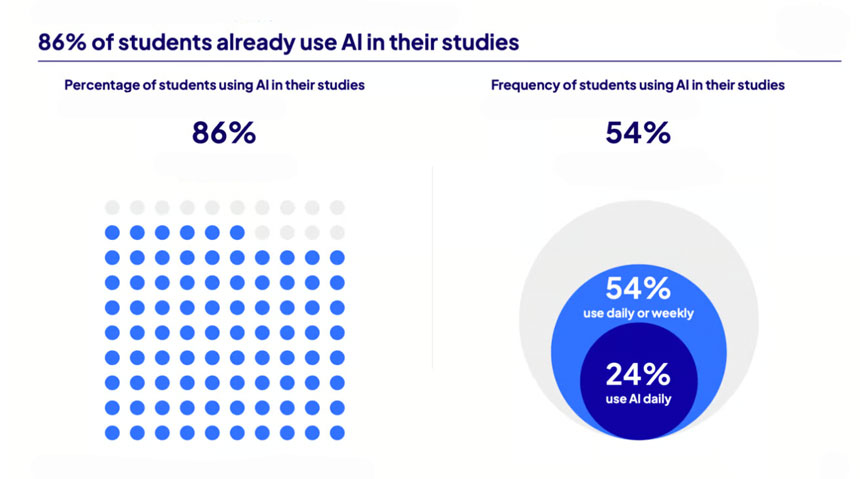
    According to data from Data.ai in May, five of the top 20 education apps in the U.S. Apple Store are AI agents that help students with their school assignments and can remember students’ learning habits.

    These AI tutors, who help with everything from writing history papers to solving physics problems, are mostly constrained to text-based interactions.

    However, soon they will be able to speak to students, optimizing each student’s learning style, whether that means a more empathetic, humorous, or creative style.

    In May 2024, OpenAI’s GPT-4o demonstrated an AI assistant that can generate voice responses in various emotive styles.

    Interestingly, the three most popular AI helpers in the U.S. are Chinese-owned (although published by Singaporean entities): Question AI, with six million downloads, TikTok’s Gauth, and Answer AI.

  • Scale AI Evaluated the Performance of LLMs

    Scale AI Evaluated the Performance of LLMs

    IBL News | New York

    Training data provider Scale AI Inc., which serves OpenAI and Nvidia, published its LLM leaderboard ranking AI models’ performance, rating their capabilities in common use cases, such as generative AI coding, instruction following, math, and multilingualism.

    The AI training company didn’t divulge the nature of the prompts it used to evaluate LLMs.

    OpenAI’s GPT models rank first in three of the four initial domains, with Anthropic’s Claude 3 Opus grabbing first place in the fourth category. Google LLC’s Gemini models rank joint-first with the GPT models in a few domains.

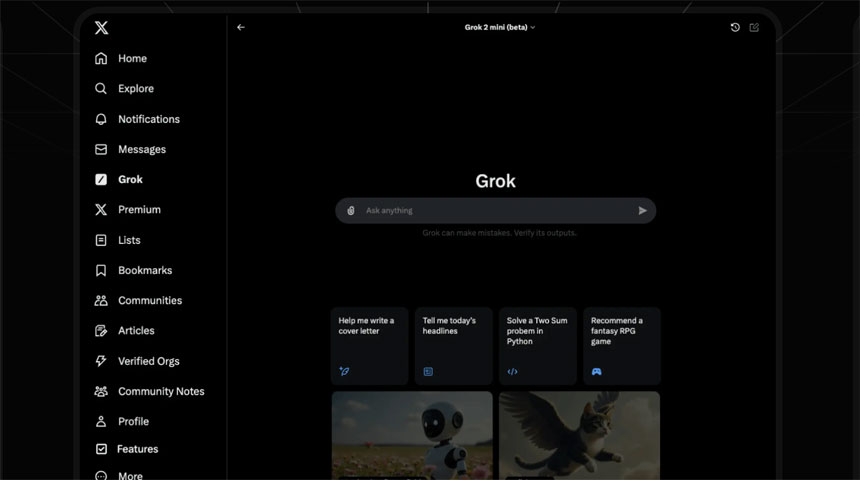
    Many high-profile LLMs have been left out of the evaluations. For instance, AI21 Labs Inc.’s Jurassic and Jamba, Cohere Inc.’s Aya and Command LLMs, and xAI’s Grok are notably absent from these assessments.

  • GWU Professor Shows How Jupyter AI Accelerates the Creation of Educational Content 

    GWU Professor Shows How Jupyter AI Accelerates the Creation of Educational Content 

    IBL News | New York

    Jupyter AI can automatically generate course learning objectives for over 100 engineering courses based on brief descriptions — GWU Professor Lorena A. Barba showcased in PyCon Colombia 2024.

    At a keynote titled “Transforming Engineering Education with Jupyter AI,” Professor Barba explained that Jupyter AI, using GPT-3.5 and GPT-4 models, can suggest computational activities aligned with the course’s learning activities. [Slides Download]

    While some outputs required refinement, many provided excellent starting points for instructors to build upon.

    “Perhaps the most exciting part was using 𝙹𝚞𝚙𝚢𝚝𝚎𝚛 𝙰𝙸’s “/generate” command to create a raw Jupyter notebook tutorial for a specific course. Through an iterative process of explanation, refinement, and expansion using the AI chat interface, I transformed the notebook into a polished 11-page lab activity on vibration analysis. A task that would typically take perhaps a week was completed in just 2.5 hours with AI assistance,” she added.

    “Jupyter AI is a powerful tool, but it’s not a replacement for pedagogical best practices.”

  • Apple Didn’t Pay OpenAI Anything for Using the GPT-4o Model

    Apple Didn’t Pay OpenAI Anything for Using the GPT-4o Model

    IBL News | New York

    Apple didn’t pay OpenAI anything for using the GPT-4o model to power tasks on iOS 18, iPadOS 18, and macOS Sequoia, according to a Bloomberg report.

    Apple seems to have persuaded OpenAI to work for exposure, as the San Francisco-based research lab exposes its technology to hundreds of millions of users.

    Following this deal, Siri will use ChatGPT capabilities to summarize articles, find photos, or use writing and proofreading tools. Users will only pay more ($20 a month) if they choose a Plus account to access extra perks. In this scenario, Apple will get a commission.

    Apple is also reportedly in talks with Google to offer Gemini integration to iOS users later this year. Anthropic might offer its Claude AI chatbot as another option.

  • HeyGen Raised $60M to Scale Its Avatar Generation Business

    HeyGen Raised $60M to Scale Its Avatar Generation Business

    IBL News | New York

    HeyGen, a startup that lets users create realistic-looking avatars, raised $60 million in a Series A funding round that values the company at $500 million.

    The financing was led by Benchmark and included investors such as Conviction, Thrive Capital, and Bond Capital.

    HeyGen said its ARR has grown from $1M to over $35M in a year and has been profitable since Q2 2023. It claims to host 40,000 paying business customers globally.

    Founded in 2020, HeyGen is one of many startups aiming to make it cheaper and easier to create videos with generative AI.

    The company provided some examples of its work:


  • Anthropic Released Claude 3.5 Sonnet, Its Strongest Vision Model

    Anthropic Released Claude 3.5 Sonnet, Its Strongest Vision Model

    IBL News | New York

    Anthropic released yesterday Claude 3.5 Sonnet, its first release in the forthcoming Claude 3.5 model family.

    “Claude 3.5 Sonnet is our strongest vision model yet, surpassing Claude 3 Opus on standard vision benchmarks,” said the company.

    Michael Gerstenhaber, Product Lead at Anthropic, said that the improvements result from architectural tweaks and new training data, including AI-generated data.

    The OpenAI rival startup made Claude 3.5 Sonnet available for free on Claude.ai and the Claude iOS app.

    A paid version with “significantly higher rate limits” was released. It was also available via the Anthropic API, Amazon Bedrock, and Google Cloud’s Vertex AI.

    The model costs $3 per million input tokens and $15 per million output tokens, with a 200K token context window.

    In addition, Anthropic introduced Artifacts on Claude.ai, a workspace feature that allows users to generate content like code snippets, text documents, or website designs.

  • Mistral AI Raised $640 Million Obtaining a Valuation of $6 Billion

    Mistral AI Raised $640 Million Obtaining a Valuation of $6 Billion

    IBL News | New York

    Paris-based Mistral AI closed its Series B funding round, raising €600 million ($640 million) in equity and debt. The startup is now valued at $6 billion following this funding round.

    General Catalyst, an existing investor, led the round. Other investors include Belfius, Bertelsmann Investment, BNP Paribas, Bpifrance (through its Digital Venture fund), Cisco, Eurazeo, Headline, Hanwha Asset Management’s venture fund, IBM, Korelya Capital, Latitude, Millennium New Horizons, Sanabil Investments, ServiceNow, and SV Angel.

    Co-founded by alumni from Meta and Google’s DeepMind, Mistral AI raised a massive $112 million seed round a year ago to establish a European rival to OpenAI and other AI giants.

    The company is working on foundational models to compete with the best-performing models today, such as OpenAI’s GPT-4o, Anthropic’s Claude 3, and Meta’s Llama 3.

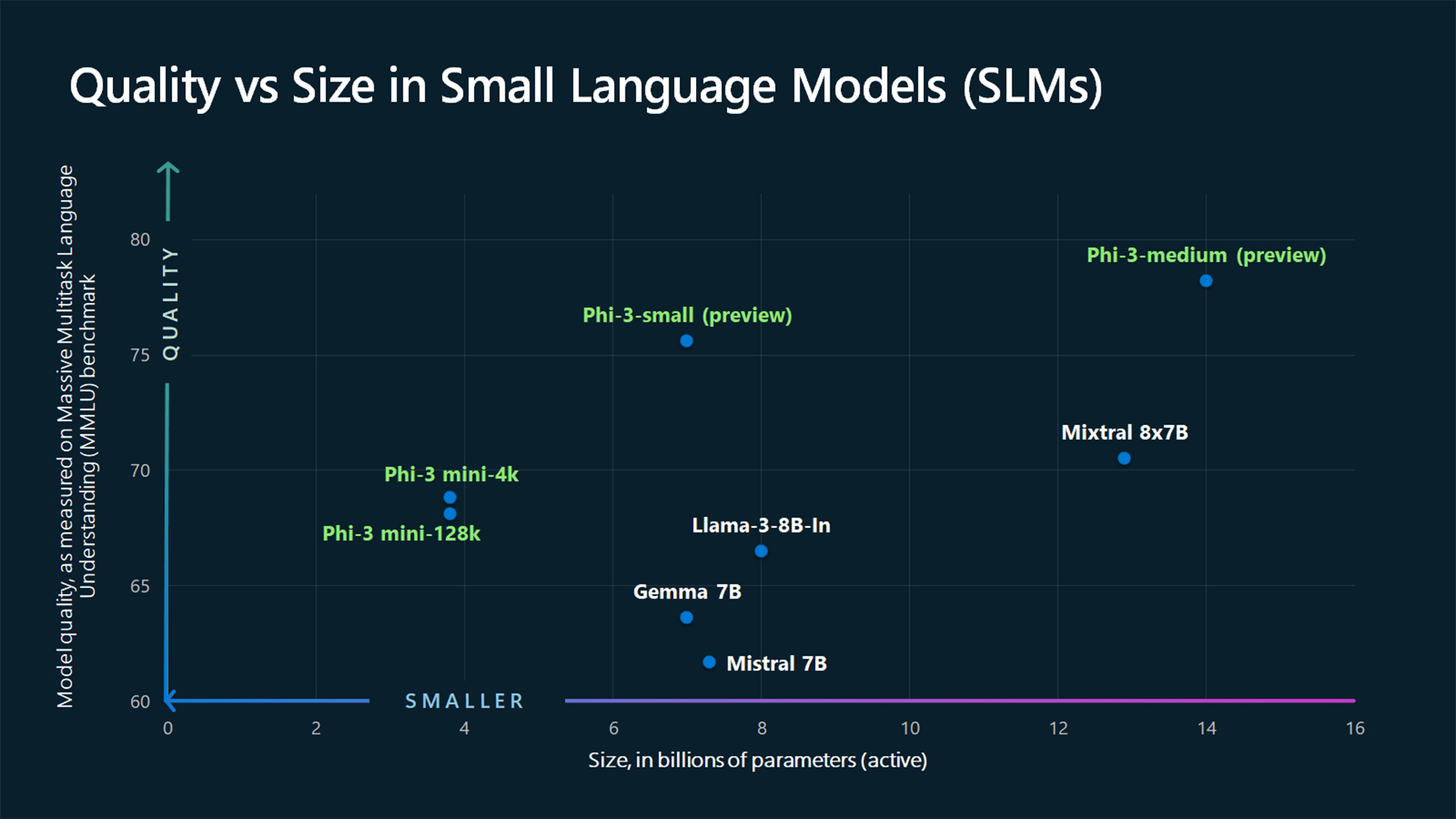
    Mistral AI has also released pre-trained and fine-tuned models under an open-source license with open weights. For instance, Mistral 7B, Mistral 8x7B, and Mistral 8x22B were released under the Apache 2.0 license.