Category: Top News

  • Cohere, which Creates Cloud-Agnostic LLMs, Raised $270M, with Nvidia and Oracle as Investors

    Cohere, which Creates Cloud-Agnostic LLMs, Raised $270M, with Nvidia and Oracle as Investors

    IBL News | New York

    Generative AI startup Cohere, which is developing a model ecosystem for the enterprise, raised $270 million as part of its series C round. A mix of VC and strategic investors, including Nvidia, Oracle, and Salesforce Ventures, among others, participated in the round.

    This Toronto – based company has raised a total of $445 million to date. Only OpenAI ($11.3 billion) and Anthropic ($450 million) have raised more, ahead of rivals Inflection AI ($225 million) and Adept ($415 million). This influx of money has resulted in a valuation of around $2.1 billion, according to Bloomberg.

    Founded in 2019 and with a workforce of 180 employees, Cohere builds, trains, and customizes large language models for enterprise customers. Corporations can use their proprietary data models — which can be expensive to train — to do things like summarize customer emails or help write website copy.

    Nvidia CEO Jensen Huang said of Cohere, “Their service will help enterprises around the world harness these capabilities to automate and accelerate.”

    Cohere’s platform is cloud agnostic, allowing companies to use their preferred cloud provider to increase data privacy and make implementation simpler.

    The platform can be deployed inside public clouds (e.g., Google Cloud, Amazon Web Services), a customer’s existing cloud, virtual private clouds, or on-site.

    The startup works with companies like Jasper and HyperWrite for copywriting generation tasks like creating marketing content, drafting emails, and developing product descriptions. Also, it collaborates with LivePerson, the conversational marketing company, to build fine-tuned LLMs to improve explainability, as well as with several news outlets.

    Cohere said it sees “search and retrieval” as the next core area of growth, so models or chatbots have the ability to expand on their knowledge base and search the web for information that’s relevant to a query.

    The President and COO, Martin Kon, told TechCrunch: “Today, chatbots don’t have access to the world. They don’t know about what happened ten minutes ago. They have to memorize everything within themselves, and they only have a memory of what they saw during training. With search and retrieval, you can require a model to cite sources, so users don’t need to blindly trust a model; everything links out to a site that you can verify and fact-check.”

    Cohere plans to build additional models that can take action and work for customers, like booking a flight, scheduling a meeting, or filing an expense report on a person’s behalf. In that way, it’s chasing after competitors like Adept, Inflection, and OpenAI, all of which are building systems to connect AI with third-party apps, services, and products.

  • A Virtual Romantic Partner Chatbot Named CarynAI Attracts Thousands of Users

    A Virtual Romantic Partner Chatbot Named CarynAI Attracts Thousands of Users

    IBL News | New York

    CarynAI, an AI clone of a 23-years-old Snapchat influencer named Caryn Marjorie, has become a profitable voice-based chatbot that bills itself as “the first influencer transformed into AI: your virtual girlfriend.” People pay $1 per minute for a relationship with the chatbot. In one week, the project has already generated $71,610 in revenue.

    CarynAI was launched as a private, invite-only test on the Telegram app. Today, it claims to have 20,534 members, accepting new users at random. The bot — “just an extension of me an extension of my consciousness,” says Caryn Marjorie — engages through secure and private messaging.

    “Whether you need somebody to be comforting or loving, or you just want to rant about something that happened at school or at work, CarynAI will always be there for you,” said the real Marjorie to Fortune magazine.

    CarynAI is the first romantic companion avatar from AI company Forever Voices, which has made chatbot versions of Steve Jobs, Taylor Swift and Donald Trump, among others, that are similarly available for pay-per-minute conversations on Telegram.

    CarynAI promises to create a real emotional bond with users as a romantic partner, raising all sorts of ethical questions.

    Forever Voices developers’ built CarynAI by analyzing 2,000 hours of Marjorie’s now-deleted YouTube content to build her speech and personality engine.

    CarynAI could bring in $5 million per month, assuming that 20,000 members of Marjorie’s 1.8 million-person Snapchat following will become paying and regular subscribers. Today, Marjorie makes around $1 million annually from the Snapchat’s revenue sharing program.

    Forever Voices hopes to raise venture capital funding to expand the AI companions concept to more social media influencers and to adult film stars.

    CarynAI brings to mind the 2013 movie Her, in which  the male protagonist falls in love with his virtual assistant.

  • Adobe Brings Firefly to Enterprise Ensuring that Generated Images Are Commercially Safe

    Adobe Brings Firefly to Enterprise Ensuring that Generated Images Are Commercially Safe

    IBL News | New York

    Adobe announced this week that it is bringing its Firefly image generator and Adobe Express design app—previously called Adobe Spark—to its enterprise customers.

    The announcement comes two weeks after Adobe integrated Firefly into Photoshop. Adobe is moving quickly to integrate the new generative AI capabilities across its product portfolio.

    The software giant has bet on the fact that Firefly is producing commercially safe images  from its stock marketplace.

    Adobe is so confident in Firefly’s ability to respect creators’ copyrighted images that it’ll legally compensate businesses if they’re sued for copyright infringement over any images its tool creates. This is what Claude Alexandre, VP of Digital Media at Adobe, said at the company’s flagship summit event.

    The Firefly model is trained on stock images for which Adobe already holds the rights, as well as on openly licensed content (for example, Creative Commons images) and public-domain content.

    In addition to these Firefly announcements, Adobe has also launched a number of other generative AI-powered services as part of its Sensei GenAI platform, which focuses on text and data-centric models.

    In this regard, Adobe Experience Manager and Adobe Journey Optimized include a generative AI-based marketing copy generator (currently in beta) that will allow brands to edit, rephrase, and summarize their text while producing SEO-ready content. Brands can tune the model with their own data.

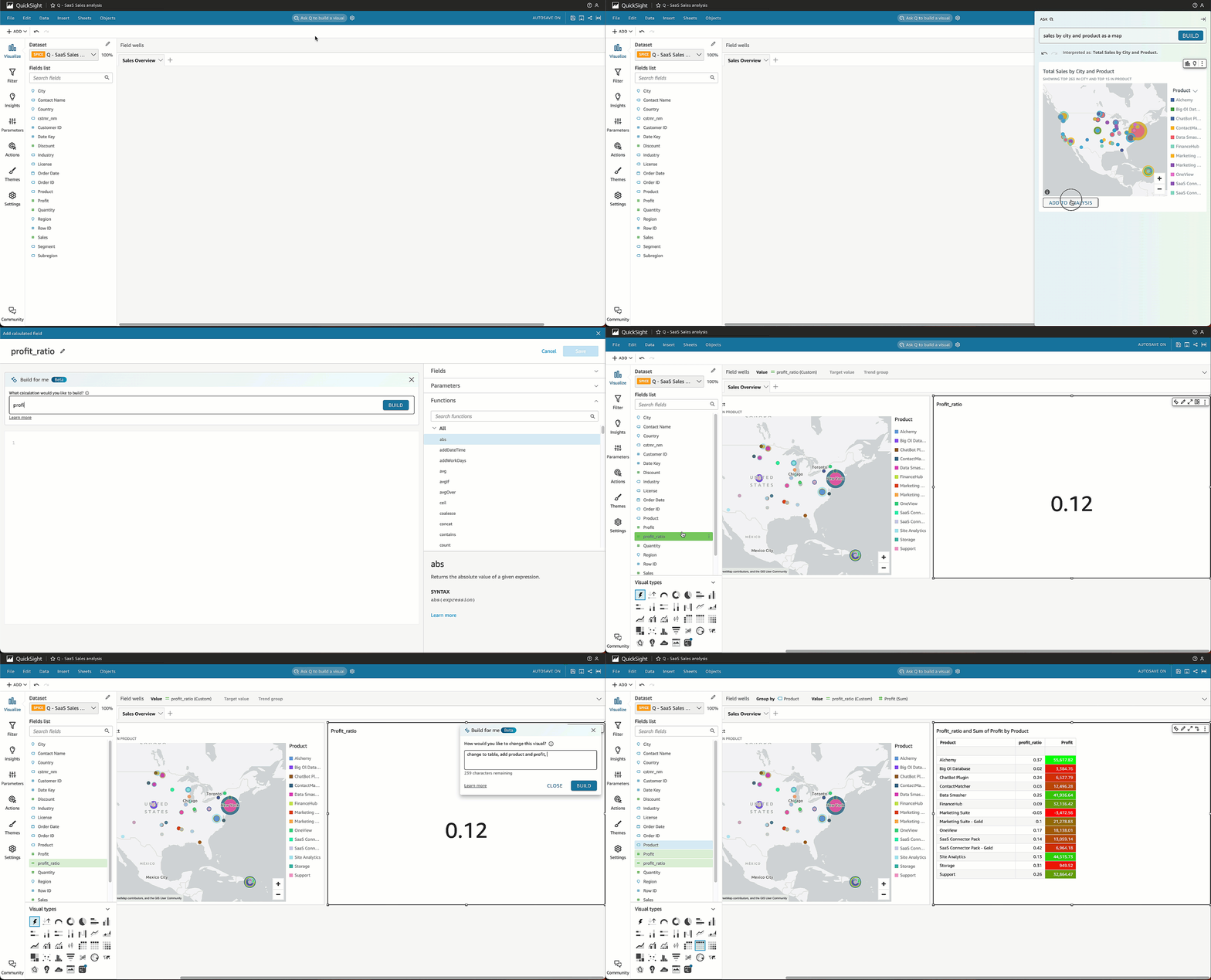
    Users of Customer Journey Analytics will now be able to use natural language queries to analyze their data, and the service can automatically caption charts and graphs.

    Adobe says it’s already working with hundreds of brands, including Mattel, IBM, and Dentsu, to help them adopt these AI-powered tools.

  • Bard, Google’s AI model, Improves by 30% in Answering Math and Coding Prompts

    Bard, Google’s AI model, Improves by 30% in Answering Math and Coding Prompts

    IBL News | New York

    Google’s Bard included this week an improvement in math and programming and added export action to Google Sheets, the company in a blog-post.

    “Bard is getting better at mathematical tasks, coding questions and string manipulation,”
    due to a new technique called “implicit code execution”, which helps the AI assistant detect computational prompts and run code in the background.

    “So far, we’ve seen this method improve the accuracy of Bard’s responses to computation-based word and math problems in our internal challenge datasets by approximately 30%,” said Jack Krawczyk, Product Lead at Bard. However, “Bard won’t always get it right.”

    Google explained that LLMs are like prediction engines. When given a prompt, they generate a response by predicting what words are likely to come next in a sentence. That makes them extremely capable on language and creative tasks, but weaker in areas like reasoning and math. “In order to help solve more complex problems with advanced reasoning and logic capabilities, relying solely on LLM output isn’t enough.”

    When given a prompt, they generate a response by anticipating what words are likely to come next in a sentence. That makes them exceptionally good email and essay writers, but somewhat error-prone software developers.

    Google also recently added support for new languages, multimodal queries and image generation.

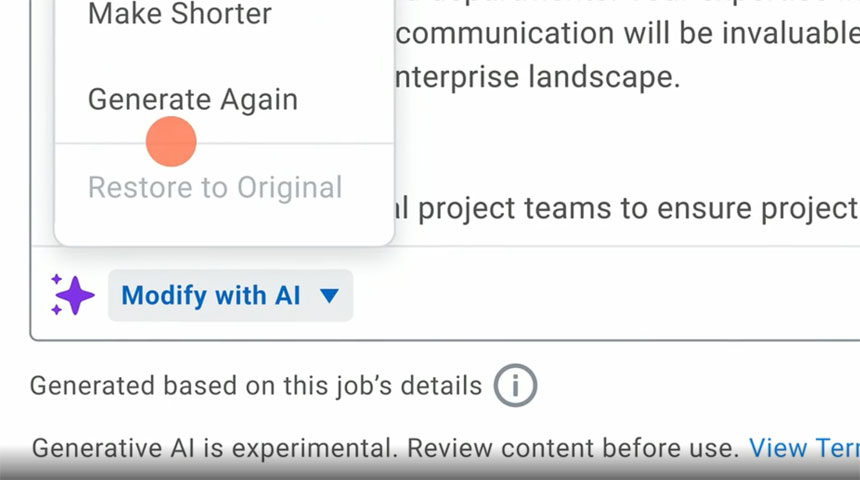
    A GIF showing the Bard interface. Bard is asked to “reverse the word ‘Lollipop’ for me” and provides a response.

  • Attackers Distribute Malware Using Fake ChatGPT-Related Websites

    Attackers Distribute Malware Using Fake ChatGPT-Related Websites

    IBL News | New York

    AI bad actors have shown up. Attackers distributing malware posing as ChatGPT are on the rise across Facebook, Instagram, and WhatsApp. Many of them are in Vietnam.

    They set up fake websites that claim to offer ChatGPT-based tools and promote malicious extensions on social media through sponsored search results to trick people into downloading malware. See the example below.

    Their ultimate goal is to compromise businesses with access to ad accounts across the internet.

    Meta/Facebook said that there are ten malware families, including Ducktail, to deliver malicious software.

    Two Meta/Facebook engineers shared their latest work to detect and disrupt malware campaigns targeting business users across the Internet.

    “Malicious groups behind malware campaigns are extremely persistent, and we fully expect them to keep trying to come up with new tactics and tooling in an effort to survive disruptions by any one platform where they spread,” they said.

    “We encourage people to be cautious when downloading new software like browser extensions or mobile apps, or downloading files across the internet.”
    .

  • edX.org Releases Six Free, Short, Online Courses About ChatGPT

    edX.org Releases Six Free, Short, Online Courses About ChatGPT

    IBL News | New York

    2U’s edX.org released six ChatGPT-related courses this month.

    These are one-to-two hours, self-paced, free courses, designed to educate audiences in the characteristics and opportunities around the new technologies pioneered by OpenAI.

    These online classes have been developed in partnership with IBL Education, an AI software development company and course production studio based in New York.

    The led instructor is IBL’s CTO, Miguel Amigot II. The production took place at the company’s film and video production studio in Brooklyn, New York.

    • Introduction to ChatGPT
      This course provides a practical introduction to ChatGPT, from signing up to mastering its advanced features. Topics covered include conversing with ChatGPT, customizing it, using it for productivity, and building chatbots, as well as advanced applications like language translation and generating creative content. Best practices and tips for using ChatGPT are also included. To date, the course has attracted over 18,200 enrollments.
    • Prompt Engineering and Advanced ChatGPT
      This course is designed to teach advanced techniques in ChatGPT, an artificial intelligence chatbot developed by OpenAI and launched in November 2022. It covers advanced techniques for prompting ChatGPT, applications for multiple use cases, integrating it with other tools, and developing applications on top while considering its limitations.
    • How to Use ChatGPT in Tech/Coding/Data
      In this course, users will learn how to harness the power of ChatGPT to revolutionize their coding process. From ideation to testing and debugging, ChatGPT can generate code programmatically, saving valuable time and energy.
    • How to Use ChatGPT in Education
      This course is designed for students and instructors to explore the many ways that ChatGPT can be used to enhance the learning experience.
    • How to Use ChatGPT in Business
      This course is designed to introduce learners to the world of ChatGPT and how it can transform various aspects of business operations and take businesses to the next level.
    • How to Use ChatGPT in Healthcare
      This course explores AI’s impact and transformation in healthcare. It shows ChatGPT use cases, navigate ethics and legalities, and streamlines patient care, data access, and administration.

  • Harvard University’s CS50 Online Course Will Add AI Teacher Assistants

    Harvard University’s CS50 Online Course Will Add AI Teacher Assistants

    IBL News | New York

    The edX.org’s CS50 course, taught by Harvard University’s Professor David J. Malan, will use virtual TAs to grade assignments, teach and provide feedback on coding, and personalize learning tips.

    In terms of pedagogy, this AI assistant will ask rhetorical questions and offer suggestions rather than simply catch errors and fix coding bugs.

    “Providing support tailored to students’ specific questions has been a challenge at scale, with so many more students online than teachers,” said Malan to Fortune Magazine. “AI is just hugely enabling in education.” 

    CS50 (Computer Science 50) was originally an introductory class on computing but has now evolved into multiple classes with 4.7 million people enrolled, 1.4 million YouTube subscribers, and branded merchandise.
    .

  • Apple Unveiled AI Features, But No Mention of Chatbots

    Apple Unveiled AI Features, But No Mention of Chatbots

    IBL News | New York

    On its annual developer’s conference WWDC on June 5, in Cupertino, California, Apple announced how much work it’s doing in AI and machine learning but it didn’t introduce any product or service related to Generative AI and chatbots, as Microsoft, Google, Adobe, and other large companies recently did.

    It’s Apple’s way: a practical approach to AI with features, including an improved autocorrect tool running on the iPhone based on machine learning.

    Nonetheless, Apple’s new augmented reality headset, Vision Pro, attracted worldwide attention despite its high price tag of $3,500.

    Apple wants AI models on its devices, unlike its rivals who are building large data farms and supercomputers. As a product company, Apple mentions the feature and says that there is cool technology working behind the scenes.

    One example of this was an announced improvement to AirPods Pro that automatically turns off noise cancelling when the user engages in conversation. Apple didn’t frame it as a machine learning or AI-based solution.

    Another feature: Apple’s new Digital Persona, a feature that makes a 3D scan of the user’s face and body and then can recreate what they look like virtually while videoconferencing with other people while wearing the Vision Pro headset.

    Apple also mentioned other new features that used the company’s skill in neural networks, such as the ability to identify fields to fill out in a PDF or a feature that enables the iPhone to identify your pet, versus other cats or dogs, and put all the user’s pet photos in a folder.

    CNBC: I tried the Apple Vision Pro mixed-reality headset — here’s what it’s like

  • The U.S. Department of Education Highlights the Opportunities to Work with AI Tools

    The U.S. Department of Education Highlights the Opportunities to Work with AI Tools

    IBL News | New York

    The U.S. Department of Education outlined in a report its view about opportunities for using AI to improve education while fully rejecting the idea that AI could replace teachers.

    The report notes that AI assistants will be able to automate tasks, freeing up teacher time for interacting with students and providing instant feedback for students like a free-to-use tutor.

    “AI often arrives in new applications with the aura of magic, but educators and procurement policies require that edtech show efficacy. AI may provide information that appears authentic, but actually is inaccurate or lacking a basis in reality,” states the Department.

    “It is imperative to address AI in education now to realize key opportunities, prevent and mitigate emergent risks, and tackle unintended consequences.”

    The Education Department’s report is the result of a collaboration with the nonprofit Digital Promise, based on listening sessions with 700 stakeholders in education.

    • Full report: Artificial Intelligence and the Future of Teaching and Learning (PDF)

  • Asana Makes Enterprise AI Capabilities Core to Its Management Platform

    Asana Makes Enterprise AI Capabilities Core to Its Management Platform

    IBL News | New York

    Work management platform Asana, Inc. (NYSE: ASAN) joined the generative AI scene and announced its latest product capabilities this week.

    In addition to the classical features such as a writing assistant, summarizer, and ask-anything features, Asana added these AI capabilities for goal-based resource management and self-optimizing workflows.

    The platform monitors and surfaces resource recommendations based on team capacity and changing business needs to accelerate decision-making.

    The San Francisco, CA – headquartered company made these AI capabilities available to customers in a closed beta and added a waitlist for a live demo.

    With goal-based resource management, Asana’s AI functionalities — powered by OpenAI — monitor and intelligently surfaces resource recommendations.

    “Asana was made for this moment. Asana Intelligence makes enterprise AI capabilities core to Asana’s work management platform, powering organizations to accelerate decision-making, improve productivity, and focus on what matters,” said Dustin Moskovitz, Co-Founder, and Chief Executive Officer at Asana.
    .