Category: Top News

  • OpenAI Introduces a Mentorship Program for Entrepreneurs in an Early Stage

    OpenAI Introduces a Mentorship Program for Entrepreneurs in an Early Stage

    IBL News | New York

    OpenAI introduced a mentorship program named “Grove” last week for tech founders at the very earliest stages, looking to build with artificial intelligence and accelerate their projects. It offers participants in a pre-seed stage resources and counsel from the OpenAI team.

    The company said that the Grove program is “the starting point of a long-term network.”

    It begins with five weeks of content and programming hosted in the OpenAI San Francisco HQ, including in-person workshops, weekly office hours, and mentoring from OpenAI technical leaders.

    In addition to technical support and community, participants will also have the opportunity to get hands-on with new OpenAI tools and models prior to general availability.

    Following the program, participants will be able to explore raising capital or pursue another avenue, either internally or externally, within OpenAI.

    The first Grove cohort will consist of approximately fifteen participants. The program will run from Monday, October 20th, 2025, to Friday, November 21st, 2025.

    Applications are due by September 24th, 2025.

    Other programs, such as Pioneers and OpenAI for Startups, are designed for established companies building in a specific domain.

  • MIT’s Analysis Says that 95% of Enterprise AI Projects Drive No Revenue Growth

    MIT’s Analysis Says that 95% of Enterprise AI Projects Drive No Revenue Growth

    IBL News | New York

    A new report published by MIT’s NANDA initiative, titled “The GenAI Divide: State of AI in Business 2025,” reveals that 95% of initiatives trying to drive rapid revenue growth at corporations fail, delivering little to no measurable impact.

    Only about 5% of AI pilot programs are achieving rapid revenue acceleration.

    The research is based on 150 interviews with leaders, a survey of 350 employees, and an analysis of 300 public AI deployments.

    MIT’s research points to flawed enterprise integration. Generic tools like ChatGPT excel for individuals because of their flexibility, but they stall in enterprise use since they don’t learn from or adapt to workflows.

    Aditya Challapally, the lead author of the report, explained that “successful organizations pick one pain point, execute well, and partner smartly with companies who use their tools.”

    More than half of generative AI budgets are devoted to sales and marketing tools, yet MIT found the biggest ROI is in back-office automation, when eliminating process outsourcing, cutting external agency costs, and streamlining operations.

    Advanced organizations are already experimenting with agentic systems that can learn, remember, and act independently within set boundaries.

    MIT’s report states that purchasing AI tools from specialized vendors and building partnerships succeed about 67% of the time, while internal builds succeed only one-third as often. The analysis suggests companies see far more failures when going solo.

    This finding is particularly relevant in financial services and other highly regulated sectors, where many firms are building their own proprietary generative AI systems in 2025.

    Other key factors for success include empowering line managers—not just central AI labs—to drive adoption, and selecting tools that can integrate deeply and adapt over time.

    Workforce disruption, although no mass layoffs, is underway in customer support and administrative roles.

  • Anthropic Makes ‘Sonnet 4.5’, Its Latest Coding Model, Available This Week

    Anthropic Makes ‘Sonnet 4.5’, Its Latest Coding Model, Available This Week

    IBL News | New York

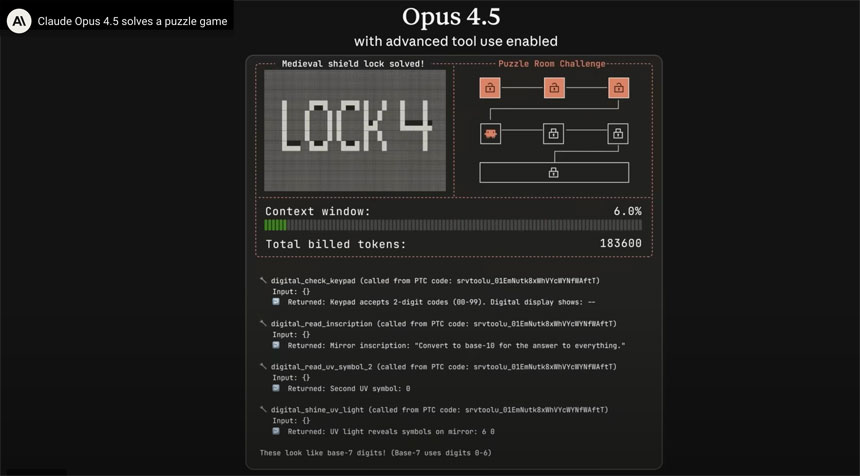
    Anthropic, the owner of the chatbot Claude, made its latest coding model, Sonnet 4.5, available this week. Developers can use the Claude API.

    The tool includes checkpoints, a feature that allows users to save progress and roll back instantly to a previous state. The company reports substantial gains in reasoning and math.

    Anthropic explained:

    • “We’ve refreshed the terminal interface and shipped a native VS Code extension. We’ve added a new context editing feature and memory tool to the Claude API that lets agents run even longer and handle even greater complexity.”

    • “In the Claude apps, we’ve brought code execution and file creation (spreadsheets, slides, and documents) directly into the conversation.”

    • “We have made the Claude for Chrome extension available to Max users who joined the waitlist last month.”

    • “We’re also giving developers the building blocks we use ourselves to make Claude Code. We’re calling this the Claude Agent SDK. The infrastructure that powers our frontier products—and allows them to reach their full potential—is now yours to build with.”


  • OpenAI Issues Its Video Generation Model ‘Sora 2’ As An iOS App

    OpenAI Issues Its Video Generation Model ‘Sora 2’ As An iOS App

    IBL News | New York

    OpenAI released its latest video and audio generation model, Sora 2, this week, aiming to establish a competitive position against more advanced offerings, such as Google’s Veo 3, Runway, and KlingAI.

    This new AI video generator is available in the U.S. and Canada as a free iOS app, simply called “Sora”.

    ChatGPT Pro users will also be able to use the experimental, higher-quality Sora 2 Pro model on sora.com (and soon in the Sora app as well).

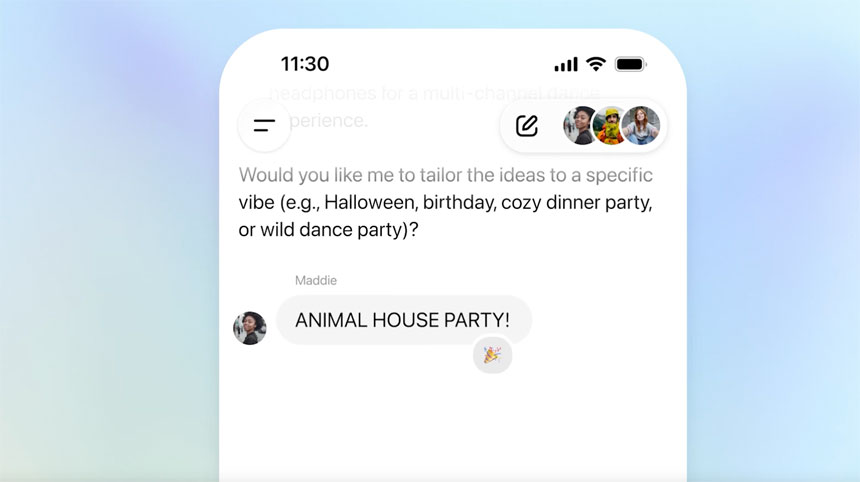
    The new model also allows the injection of elements from the real world, such as cameos, enabling people to insert themselves into any AI-generated video scene.

    The feature of “cameos” can generate significant social traction. “Overwhelming feedback from testers is that cameos are what make this feel different and fun to use, as it is a new and unique way to communicate with people.” 

    OpenAI is rolling this out as an invite-based app “to make sure you come in with your friends.”

    Only users can decide who can use their own cameos, and they can revoke access or remove any video that includes it at any time. Videos containing cameos, including drafts created by other people, are viewable by the users at any time.

    OpenAI has announced that it is implementing default limits on the number of generations teens can view per day in the feed, and it’s also rolling out stricter permissions on Cameos for this group. In addition, it’s scaling up teams of human moderators to quickly review potential cases of bullying.

    Sora 2 creates background soundscapes, speech, and realistic sound effects. along with realistic and cinematic scenes.

    Though it still makes plenty of mistakes, Sora 2 is better about obeying the laws of physics compared to prior systems. “It excels at realistic, cinematic, and anime styles,” said the company.

    The San Francisco-based research lab compared Sora 2 to GPT-3.5, while its original, overoptimistic model of Sora would be GPT-1.

    OpenAI plans to release Sora 2 as an API, while Sora 1 Turbo will remain available, and all content created will continue to reside in the existing sora.com library.

  • Google’s NotebookLM Introduced Flashcards and Quizzes As Study Guide

    Google’s NotebookLM Introduced Flashcards and Quizzes As Study Guide

    IBL News | New York

    NotebookLM introduced two new interactive, personalized AI features for active learning engagement and study guide: flashcards and quizzes. These features are grounded in users’ source documents such as lecture notes, research papers, or work reports.

    The tools can generate detailed overviews and are primarily used for preparing exams, starting new projects, or exploring new interests.

    Defined as an AI partner for research and thinking, NotebookLM aims to help users understand complex material more efficiently. It seeks to enable users to turn information into high-quality, knowledgeable, and tailored briefing documents, reports, study guides, glossaries, and explainers.

    • The redesigned reports now include a new Blog Post format.

    • A new “Learning Guide” helps break down problems step-by-step and adapts explanations, building a deeper understanding of the subject. “Learning Guide is like having a personal tutor for users who source directly within NotebookLM,” said Google.

    • New ready-to-use interactive Notebooks curated with free textbooks on these subjects: Biology, AP® Biology, Introduction to Business, Chemistry, Psychology, and Principles of Management.

    • Audio Overviews help learners understand material on the go. For example, the Debate format allows for exploring two sides of a topic before a class discussion. The new formats include:

         -Brief: A single AI host delivers a short summary of your sources’ core ideas.

         -Critique: Two AI hosts review your material, offering constructive feedback on an essay or design document.

         -Debate: Two AI hosts discuss different perspectives on the topics in your sources.

    Educators can create Notebooks from their class materials and assign them directly in Canvas LMS and PowerSchool Schoology Learning using Gemini LTI.

    In the coming weeks, educators will also be able to create and assign notebooks in Google Classroom.

  • The UN Will Establish a Global Forum for Discussing AI Governance

    The UN Will Establish a Global Forum for Discussing AI Governance

    IBL News | New York

    As part of its General Assembly last week, the United Nations (UN) announced a plan to establish a global forum for discussing AI governance, aiming to gather ideas and best practices.

    The UN plans to form a 40-member panel of scientific experts to synthesize and analyze the research on AI risks and opportunities.

    The UN follows the pattern of previous similar efforts on climate change and nuclear policy.

    To launch the initiative, dozens of U.N. member nations, along with tech companies, academics, and nonprofits, spent last week summarizing their hopes and concerns about AI.

    This program is an effort to ensure that control of the AI is not left in the hands of a few tech companies and countries, as the United States and China.

    The UN highlighted its hope that AI can cure diseases, expand food production, and accelerate learning.

    It also identified risks, including mass surveillance, the spread of misinformation, the depletion of energy resources, and widening income gaps among individuals and nations.

  • Texas Tech Universities Ban Teaching About Transgender and Other Gender Topics

    Texas Tech Universities Ban Teaching About Transgender and Other Gender Topics

    IBL News | New York

    The five universities of the Texas Tech system directed their faculty to comply with an executive order from President Trump, which recognizes only male and female genders.

    The move, the first among large institutions of higher education, bans teaching about transgender and other gender topics. Currently, in K-12 classrooms, this is explicitly prohibited by Texas law.

    Chancellor Tedd L. Mitchell addressed the requirement in a letter dated last Thursday, citing President Trump’s order from January, a letter from Governor Greg Abbott that directed state agencies to follow Mr. Trump’s order, and a state law that requires government agencies to collect data on only two biological sexes, male and female.

    “While recognizing the First Amendment rights of employees in their personal capacity, faculty must comply with these laws in the instruction of students, within the course and scope of their employment,” Mitchell wrote.

    The letter followed the firing this month of a professor at Texas A&M who objected to a discussion of gender identity and then shared a video of the encounter with a Republican lawmaker. The university’s president, Mark Welsh, resigned soon after.

    Other public universities and community colleges have been exploring similar changes regarding the teaching of gender, according to the Texas conference of the American Association of University Professors. The New York Times reported on it.

    However, outside of Texas Tech, no institution appears to have put its guidance into writing yet.

    Earlier this year, the Mississippi Legislature passed a law banning diversity, equity, and inclusion, as well as “promoting transgender ideology,” in the state’s schools and universities, but a federal judge put it on hold.

  • Around 40% of Employees Use AI At Work, Up From 20% in 2023

    Around 40% of Employees Use AI At Work, Up From 20% in 2023

    IBL News | New York

    Showing an unprecedented adoption speed, in the U.S., 40% of employees report using AI at work, up from 20% two years ago, as the recently released Anthropic Economic Index stated. This advancement reflects the ease of use of AI, by just typing or speaking without specialized training.

    The study found that the shares of education and science usage are on the rise. While the use of Anthropic’s Claude.ai chatbot for coding continues to dominate at 36%, educational tasks have surged from 9.3% to 12.4%, and scientific tasks have increased from 6.3% to 7.2%.

    Geographically, Singapore and Canada are among the countries with the highest usage per capita, while emerging economies, including Indonesia and India, use Claude less.

    Lower-adoption countries tend to see more coding usage, while high-adoption regions show diverse applications across education, science, and business. For example, coding tasks are over half of all usage in India versus roughly a third of all usage globally.

    “Rapidly advancing AI capabilities only reinforce the conclusion that immense change is on the horizon. And yet early AI adoption is strikingly uneven,” explains the Anthropic report.

    “We are still in the early stages of this AI-driven economic transformation. The actions that policymakers, business leaders, and the public take now will shape the years to come.”

  • Productivity Software Startup Notion AI Launches Customizable Agents

    Productivity Software Startup Notion AI Launches Customizable Agents

    IBL News | New York

    Productivity software startup Notion AI is expected to achieve $500 million in revenue this year and a valuation of over $10 billion.

    Productivity software is a highly competitive space, with Microsoft and Google at the center.

    Originally designed as a “writing assistant” for brainstorming, editing, and summarizing using an OpenAI model, the company has approximately 1,000 employees and over 100 million users.

    Corporate clients include Kaiser Permanente, Mitsubishi Heavy Industries, Nvidia, and Volvo Cars.

    This month, Notion launched a customizable agent — named Notion 3.0 with Agents — that creates documents to pull in data from various sources, utilizing models from companies like OpenAI and Anthropic.

    Another custom agent can be instructed to produce and send a list of articles relevant to a person’s interests on a weekly basis.

    Notion’s custom agents can perform actions in the background.

    In May, Notion.com introduced AI products for summarizing meetings and searching through corporate files.

  • OpenAI Acquired the Product Testing Startup Statsig for $1.1 Billion

    OpenAI Acquired the Product Testing Startup Statsig for $1.1 Billion

    IBL News | New York

    OpenAI announced the acquisition of Statsig, an experimentation platform that powers A/B testing, feature flagging, and real-time decisioning, which had as a client its current purchaser.

    OpenAI, with a $300 billion valuation, is paying $1.1 billion for Statsig in an all-stock deal — one of the largest acquisitions ever for the ChatGPT maker.

    Following the transaction, the founder and CEO of Statsig, Vijaye Raji, will step into a new role as CTO of Applications in OpenAI. All Statsig employees will become employees of OpenAI.

    The acquisition is part of OpenAI’s effort to build out its applications business, helmed by the former CEO of Instacart, Fidji Simo, who started work at the company in August.