Category: Top News

  • Open AI: “Aligning AI Systems with Human Values Is a Top Priority for Our Company”

    Open AI: “Aligning AI Systems with Human Values Is a Top Priority for Our Company”

    IBL News | New York

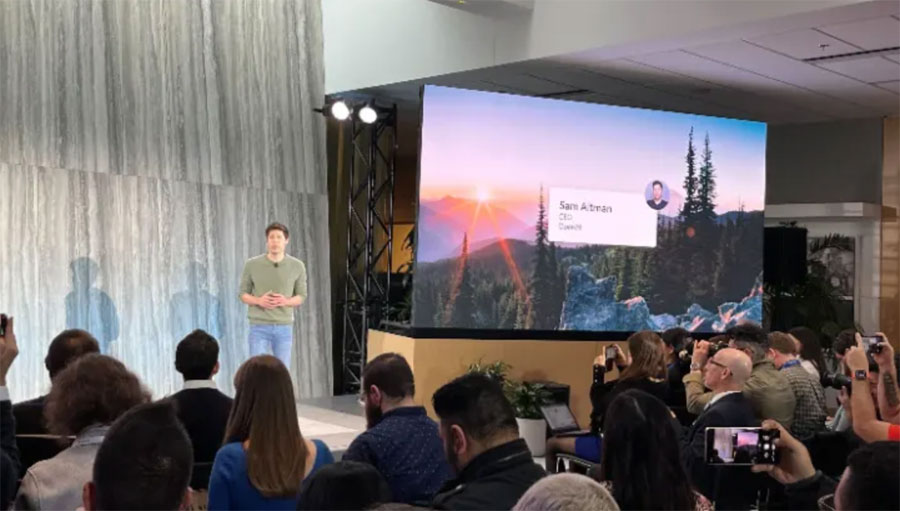
    Sam Altman, CEO at Open AI [in the picture, along with Microsoft CEO), addressed yesterday the controversial topic of ethics of AI and how these systems should behave. He advocated for “less biased defaults, lots of user customization within very broad bounds, and public input on bounds and defaults.”

    In a blog post titled “How should AI systems behave, and who should decide” published on the OpenAI’s website, the company insisted that “our mission is to ensure that artificial general intelligence (AGI) benefits all of humanity.”

    “Improving our methods for aligning AI systems with human values is a top priority for our company, particularly as AI systems become more capable.”

    “Unlike ordinary software, our models are massive neural networks; their behaviors are learned from a broad range of data, not programmed explicitly.”

    Regarding the cultural war and political bias of ChatGPT, OpenAI shared a portion of our guidelines that pertain to controversial topics. “Our guidelines are explicit that reviewers should not favor any political group.”

    OpenAI also said it is developing an upgrade to its viral chatbot that users can customize as it works to address concerns about bias in artificial intelligence.

    The San Francisco-based startup, which Microsoft Corp has funded and used to power its latest technology, said it has worked to mitigate political and other biases but also wanted to accommodate more diverse views.


  • Nvidia CEO: “ChatGPT Is One of the Greatest Things Ever Created in Computing”

    Nvidia CEO: “ChatGPT Is One of the Greatest Things Ever Created in Computing”

    IBL News | New York

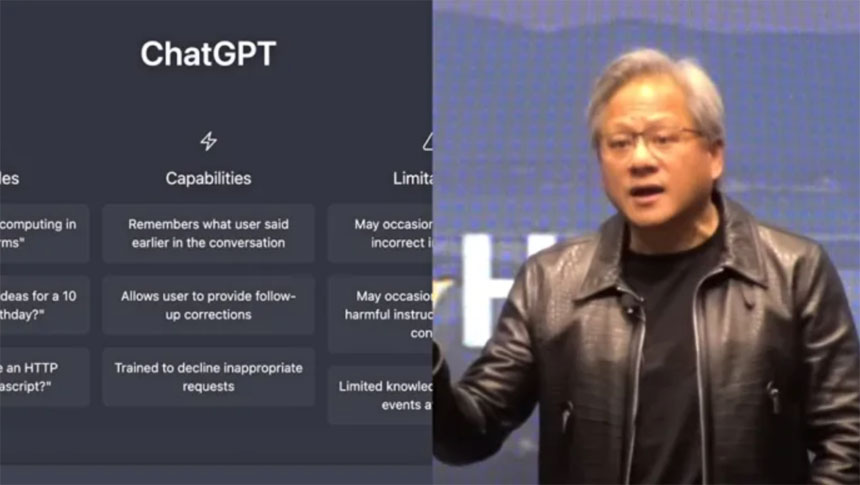
    Nvidia’s CEO, Jensen Huang, declared that at “ChatGPT is one of the greatest things ever created in the computing industry.”

    “What OpenAI has done, what the team over there has done, genuinely is one of the greatest things that has ever been done for computing. We have democratized computing in a very, very large way, and so I am very, very excited about that.”

    Responding to a student’s inquiry during the Q&A session in Berkeley Haas University in California, earlier this month, described the new software as a “very, very big deal.” 

    “It can write a poem, it could fill out a spreadsheet, it can write a SQL query and do a SQL query, it can write python code, it can write. And if it can’t do it today, of course it will be able to do it someday,” he added.

    “For a lot of people who have been working on this, we have been waiting for this moment. This is the iPhone moment, if you will, of artificial intelligence. This is the time when all of the big ideas about mobile computing and all that, it all came together in a product.”

    Huang acknowledged that ChatGPT’s impact is yet to be felt by the rest of the world.

    “Now the question is, how is it gonna impact healthcare? How’s it gonna impact transportation? How’s it gonna impact retail, logistics? How’s it gonna impact manufacturing? The other trillion hundred dollar industry that is today, largely not served by technology. Computing industry is tiny compared to the world’s industry. And so we could do something now.”

    As an example of generative AI, ChatGPT generates human-like content based on input data. Another example is OpenAI’s own DALL-E 2, which creates realistic images from even the most bizarre text descriptions.

    Nvidia is considered one of the biggest beneficiaries of ChatGPT’s technology. Already focused on graphics processing units used in video games, video editing, and machine learning, the Silicon Valley company now leads the world in chipmaking for AI and its wide-ranging applications.

    Huang, 59, who co-founded chipmaker Nvidia in 1993, has seen his net worth balloon to $18.9 billion, making him the largest gainer among U.S. billionaires so far this year.

  • Opera Will Release a New Browser with Built-In Access to ChatGPT and Other AI Services

    Opera Will Release a New Browser with Built-In Access to ChatGPT and Other AI Services

    IBL News | New York

    Opera announced the upcoming integration of AI-generated content services into the sidebar of its desktop and mobile browsers.

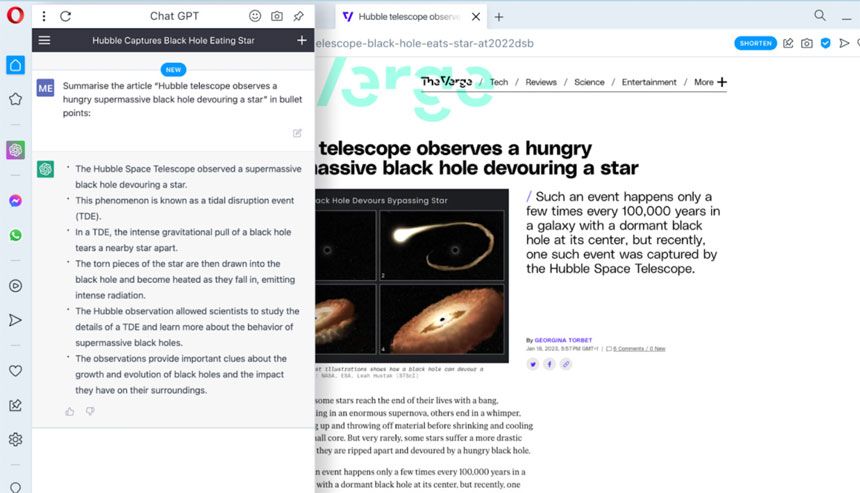
    One of the first features that will be available is a new “Shorten” button in the right of address bar that will be able to use AI to filter through all the content and generate short summaries of articles and webpages.

    When tapped, it opens a sidebar where ChatGPT will provide a bulleted summary of the webpage, as shown in the video below.

    No specific date of the public launching was provided by Opera.

    Opera’s AI integration is in line with the browser’s previous addition of direct access to platforms such as TikTok, Telegram, and WhatsApp.

    “Following the mass interest in generative AI tools, we believe it’s now time for browsers to step up and become the gateway to an AI-powered web,” said Song Lin, Co-CEO of Opera.

    We see the rise of Generative Intelligence as the beginning of a new future in which consumer app developers like Opera will be able to build experiences on top of AI-based platforms,” he added.

    Opera is a twenty-five years-old browser.

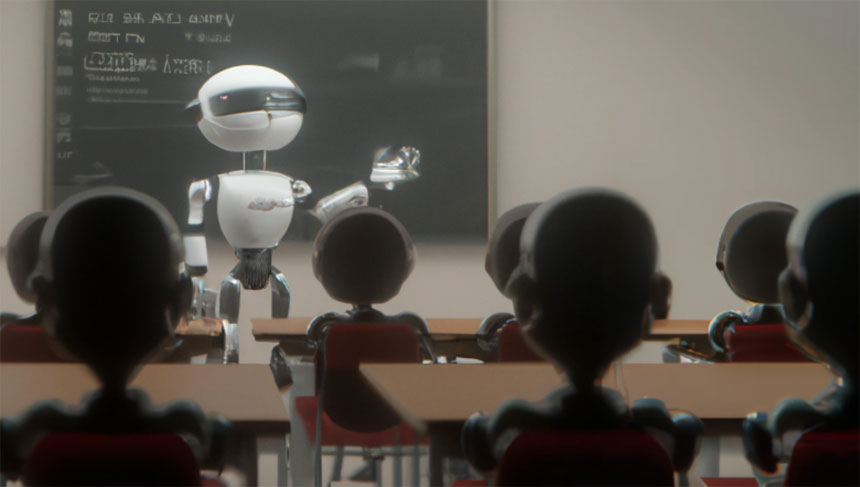
  • “Students Need to Learn How to Prompt an AI, and Evaluate Its Accuracy and Originality”

    “Students Need to Learn How to Prompt an AI, and Evaluate Its Accuracy and Originality”

    IBL News | New York

    Can ChatGPT really improve education? Or is it a threat that should be banned??

    A professor at the UCLA School of Law explained in an article in Scientific American why he is allowing students to incorporate into their writing process ChatGPT, which can produce clear, long-form answers to complex questions.

    • “Rather than banning students from using labor-saving and time-saving AI writing tools, we should teach students to use them ethically and productively.”
    • “To remain competitive throughout their careers, students need to learn how to prompt an AI writing tool to elicit worthwhile output and know how to evaluate its quality, accuracy and originality.”
    • “They need to learn to compose well-organized, coherent essays involving a mix of AI-generated text and traditional writing. As professionals working into the 2060s and beyond, they will need to learn how to engage productively with AI systems, using them to both complement and enhance human creativity with the extraordinary power promised by mid-21st-century AI.”
    • “Honor code or not, many students will be unable to resist the temptation to seek AI assistance with their writing. Future versions of AI will get better at emulating human writing—including to the point of emulating the style of the particular person who is using it. In the resulting arms race, the AI writing tools will always be one step ahead of the tools to detect AI text.”
    • “Some students who use ChatGPT despite a ban would avoid having their writing flagged as AI-assisted. Some students would be falsely accused of using ChatGPT, triggering enormous stress and potentially leading to punishment for a wrong they did not commit.”
    • “Writing is a craft worthy of enormous respect, one which few of us ever master. But most students don’t aspire to become professional writers. Instead, they are preparing for careers where they will write to further goals beyond the production of writing. As we do today, they will write to communicate, explain, convince, memorialize, request and persuade. AI writing tools, when properly used, will help them do those things better.”


    • The New York Times: What Students Are Saying About ChatGPT

  • Over 1 Million People Signed Up for the Bing Waitlist; Microsoft Shows Viva Sales Emails

    Over 1 Million People Signed Up for the Bing Waitlist; Microsoft Shows Viva Sales Emails

    IBL News | New York

    Microsoft will demonstrate in March how new ChatGPT-like AI will transform its Office productivity apps — Word, PowerPoint, and Outlook, among others. This announcement comes after the software giant showed its Prometheus Model on its new Bing search engine earlier this week.

    Over a 1 million people have signed up for the Bing waitlist in 48 hours, and Bing was the third most popular app in the App Store in the US as of Thursday.

    Microsoft is already using OpenAI’s ChatGPT for its Viva Sales emails, as shown below. The company announced a new generative AI experience in Microsoft Viva Sales a week ago.

    Microsoft is already using OpenAI tech for its Viva Sales emails.


    It is expected that Outlook will include features for suggesting replies to emails and Word document integration to improve a users’ writing.

    The new Bing AI sidebar in Microsoft Edge can already be used with web-based Office apps.

    The sidebar includes a compose tab that gives an early preview of some of the work Microsoft has been testing for Word and Outlook.

    Microsoft is also working on ways to generate graphs and graphics for PowerPoint. Bing can already generate tables and charts for basic data, but transforming those into visual graphics for presentations or even for use in Excel is a logical next step.

    On the other hand, as Google battles to compete with ChatGPT, the manager in charge of Google’s search engine warned against the pitfalls of AI in chatbots.

    “This kind of artificial intelligence we’re talking about right now can sometimes lead to something we call hallucination,” Prabhakar Raghavan, Senior Vice President at Google and Head of Google Search, told a German newspaper.

    “This then expresses itself in such a way that a machine provides a convincing but completely made-up answer,” he added.

    This week, Google’s parent company Alphabet Inc announced Bard, its own chatbot. This AI robot shared inaccurate information in a promotional video, costing the company $100 billion in market value on Wednesday, according to several analysts.

    Alphabet, which is still conducting user testing on Bard, has not yet indicated when the app could go public.

  • “ChatGPT is High Tech Plagiarism; It Undermines Education,” Says Noam Chomsky

    “ChatGPT is High Tech Plagiarism; It Undermines Education,” Says Noam Chomsky

    IBL News | New York

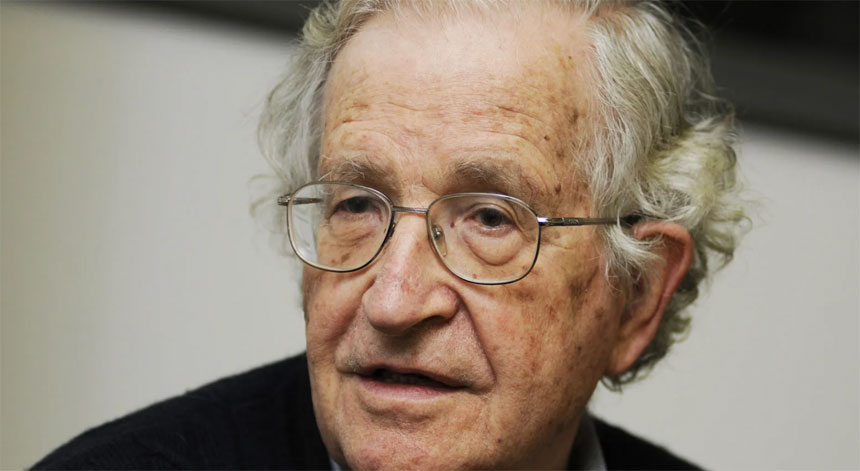
    “ChatGPT is high-tech plagiarism; it undermines education,” said Noam Chomsky, American linguist, philosopher, and public intellectual.

    In an interview with the host of YouTube channel EduKitchen, Chomsky explained:

    “For years there have been programs that have helped professors detect plagiarized essays,” Chomsky says. “Now it’s going to be more difficult, because it’s easier to plagiarize. But that’s about the only contribution to education that I can think of.”

    Chomsky sees the use of ChatGPT as “just a way of avoiding learning.” (…) “Students learn absolutely nothing from this.” (…) “The way to deal with it is to make education programs interesting enough.”

    Chomsky, 94, author the theory of language acquisition — which argues that human brain structures naturally to learn and use languages — stated that students instinctively employ high technology to avoid learning, “a sign that the educational system is failing.”

    “If it has no appeal to students, doesn’t interest them, doesn’t challenge them, doesn’t make them want to learn, they’ll find ways out,” just as he himself did when he borrowed a friend’s notes to pass a dull college chemistry class without attending it back in 1945.

    After spending most of his career teaching at MIT, Chomsky retired in 2002 to become a full-time public intellectual.

  • Microsoft Reaches a $2 Trillion Market Cap Helped with the Rise of ChatGPT

    Microsoft Reaches a $2 Trillion Market Cap Helped with the Rise of ChatGPT

    IBL News | New York

    A rally in Microsoft stock in the last days, fueled by news related to its integration of ChatGPT technology on Bing, Edge, and Office, is giving the tech giant a valuation of $2 trillion. This market cap allows Microsoft to rejoin tech peer Apple in the $2 trillion club.

    Microsoft shares have climbed over 17% in the past month, to $266.73 yesterday.

    On Tuesday the increase was 4% after the company announced its search engine Bing would include artificial intelligence from ChatGPT parent OpenAI.

    Microsoft first reached a $2 trillion market capitalization in June of 2021, making it only the second publicly traded company in the US to join the club. However, last year’s bear market hammered the tech sector, amid aggressive rate hikes from the Federal Reserve.

    The rise of ChatGPT has spurred investor excitement over the future of AI. Microsoft has positioned as a top beneficiary of ChatGPT, after its investment of $10 billion in parent company OpenAI.

    Meanwhile, Google is seeing an opposite landscape since announcing an artificial intelligence chatbot, entitled Bard AI.

    Shares of parent-company Alphabet sank as much as 8% Wednesday, after its ad for much-trumpeted Bard showed the chatbot giving a wrong answer.

    AI appears to have made an error in one of the very few questions the world has seen it answer. According to analysts, it might have helped wipe $100 million from the company’s value.

    The system appears to have claimed that Nasa’s James Webb Space Telescope took the first image of an exoplanet – but that was wrong. The first such image was actually taken in 2003, by the European Southern Observatory’s Very Large Telescope.

    Google used the question and false answer in a tweet that looked to demonstrate how the new system, named Bard, might be used in future.

  • Microsoft Presented Its New Bing Search, Powered by ChatGPT

    Microsoft Presented Its New Bing Search, Powered by ChatGPT

    IBL News | New York

    Microsoft announced in a press conference yesterday new AI-powered features on its Bing searches engine and Edge browser.

    The new version of Bing is available to try in a limited preview mode.

    Microsoft said it’s using conversational AI to create a new way to browse the web.

    The search engine is powered by ChatGPT and GPT-3.5, according to OpenAI CEO Sam Altman (as shown in the picture below). He took the stage momentarily during the presentation event, as shown on the video of the announcement, which was not live-streamed.

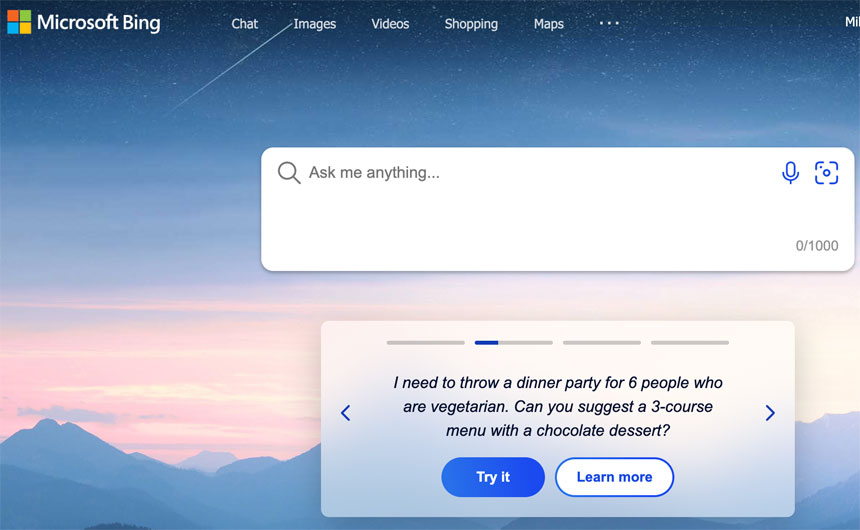
    This means that the new Bing can answer questions with lots of context, similar to the way ChatGPT does. It allows users to chat to Bing like ChatGPT, asking questions and receiving answers in natural language.

    The company said a waitlist will be available for the full version of Bing in the coming weeks. It also plans a mobile version of Bing.

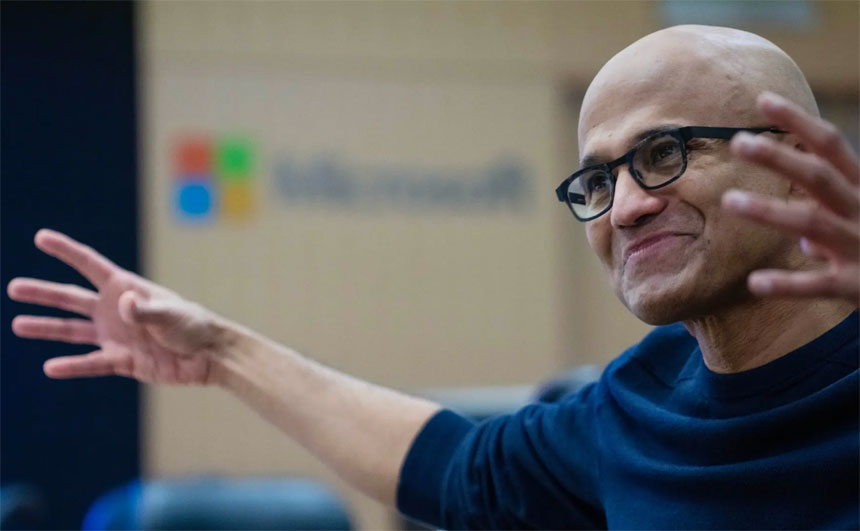
    “It’s a new day in search,” said Microsoft CEO Satya Nadella. He argued that the paradigm for web search hasn’t changed in decades, but AI can deliver information more fluidly and quickly than traditional methods.

    “The race starts today, and we’re going to move and move fast,” Nadella said. “Most importantly, we want to have a lot of fun innovating again in search, because it’s high time.”

    The company showed various configurations. One of these displays traditional search results side-by-side with AI annotations, while another mode lets users talk directly to the Bing chatbot, asking it questions in a chat interface like ChatGPT.

    Unlike ChatGPT, the new Bing can also retrieve news about recent events.

    Microsoft says these features are all powered by an upgraded, more powerful version of GPT 3.5, which it calls the “Prometheus Model.”

    Later, Microsoft will bring its AI-powered chat features to all browsers, starting with Microsoft Edge.

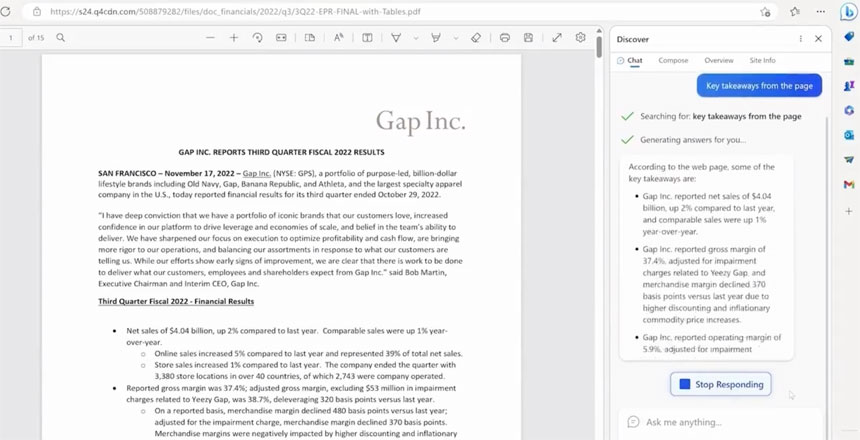
    Edge browser will embed within its sidebar “chat” and “compose.” “Chat” will let users ask questions about the document or webpage they’re looking at, while “compose” acts as a writing assistant, helping to generate text, from emails to social media posts, based on a few starting prompts.


  • Google Announces ‘Bard’, a Testing, ChatGPT-Style AI Service

    Google Announces ‘Bard’, a Testing, ChatGPT-Style AI Service

    IBL News | New York

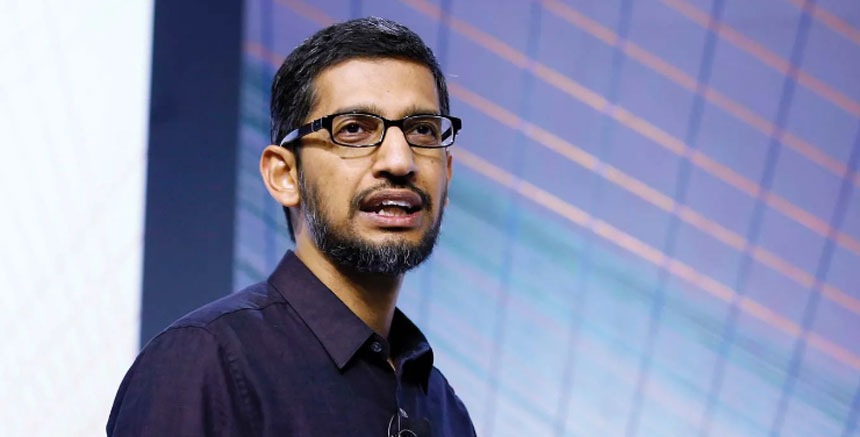
    Google CEO Sundar Pichai has announced in a blog post yesterday the launch of its experimental conversational AI service, Bard, powered by LaMDA Language Model for Dialogue Applications.

    Bard will be available to “trusted testers” before being made more widely available to the public in the coming weeks and will compete directly with OpenAI’s ChatGPT.

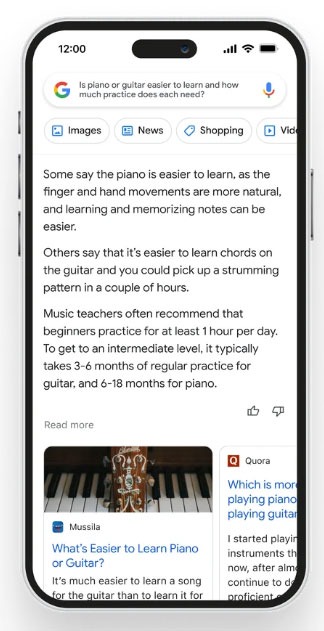
    Bard will have a search desktop design that can be used in a question-and-answer format.

    In the last months, Google has accelerated its developments as part of a “code red” plan to respond to ChatGPT. Features of the chatbot Bard will include a search desktop design that could be used in a question-and-answer format, as shown in the image below released by Google’s CEO.

    “Bard seeks to combine the breadth of the world’s knowledge with the power, intelligence, and creativity of our large language models. It draws on information from the web to provide fresh, high-quality responses,” Sundar Pichai wrote.

    “We’ll combine external feedback with our own internal testing to make sure Bard’s responses meet a high bar for quality, safety, and groundedness in real-world information,” he added.

    Sundar Pichai said that this rival of ChatGPT is a “lightweight model version of LaMDA,” and “enables us to scale to more users, allowing for more feedback.”

    “Our newest AI technologies — like LaMDA, PaLM, Imagen, and MusicLM — are creating entirely new ways to engage with information, from language and images to video and audio. We’re working to bring these latest AI advancements into our products, starting with Search.”

    In addition, Google is scaling its AI efforts through Google Cloud partnerships with CohereC3.ai, and Anthropic, which was just announced last week.

    Google’s AI chief, Jeff Dean, told recently that the company has much more “reputational risk” in providing wrong information and thus was moving “more conservatively than a small startup.”


  • ChatGPT and Upcoming AI Bots Will Make Jobs Obsolete in Several Industries

    ChatGPT and Upcoming AI Bots Will Make Jobs Obsolete in Several Industries

    IBL News | New York

    The surprisingly intelligent bot ChatGPT — released to the public as a free tool by a Microsoft-backed research laboratory in November 2021 — and other upcoming AI systems can leave many well-paid workers vulnerable, making many jobs obsolete in industries such as finance, health care, higher-ed, graphic design, software, and publishing.

    These are some sectors at risk of being supplemented by AI, according to several experts quoted by The New York Post.

    Education
    ChatGPT — currently banned in NYC schools — would work well at the middle or high school level. In higher education, AI could teach without oversight. At the Ph.D. level, AI would struggle, for now, to create an independent thesis on an area not studied yet.

    Finance
    Wall Street could see many jobs axed in coming years, especially in the trading and investment bank sides. Currently, many people are hired out of college and spend two, or three years to work doing Excel modeling, a job that AI does much faster.

    Software Engineering
    Website designers and engineers responsible for simple coding are at risk of being made obsolete within a few years since AI can draft the software hand-tailored to a user’s requests and parameters.

    Journalism
    AI technology is already highly qualified for copy editing, including summarizing, making an article concise, and composing headlines. For now, the tool is showing a complete inability to fact-check efficiently and write a story with proper citations.

    Graphic Design
    OpenAI‘s DALL-E, which can generate tailored images from user-generated prompts, along with Craiyon, Stable Diffusion, and Midjourney, pose a threat to many in the graphic and creative design industries.

    Copyright issues are also being generated by image-based AI. Getty Images recently announced legal action against Stability AI — Stable Diffusion’s parent company — claiming that the program “unlawfully copied and processed millions of images protected by copyright.”

    Update:

    A recent article in Forbes, said, “Professions that will be disrupted by generative AI include marketing, copywriting, illustration and design, sales, customer support, software coding, video editing, film-making, 3D modeling, architecture, engineering, gaming, music production, legal contracts, and even scientific research.”

    “Software applications will soon emerge that will make it easy and intuitive for anyone to use generative AI for those fields and more.”

    “Other industries ripe for disruption by generative AI may not immediately seem obvious. It may be used in the finance sector to make recommendations and manage risk. It can help the healthcare sector with diagnoses and predictive medicine. The advertising industry can use generative AI not only for creative work, but also in customer targeting. Biopharma can use generative AI to search medical literature, finding novel ways of using existing medicines off-label, and discovering new compounds to treat disease.”

    “Without hyperbole, this may be a technology inflection point like the world has never seen before.”

    “Tectonic as these changes are, you should expect to see massive disruption in 2023, 2024, and 2025. This is happening now.”


    • Insider
    : From financial planning to dealmaking, here’s how ChatGPT could impact jobs across Wall Street