Category: Platforms

  • The AI-Native University – Blueprint for the Institution of the Future

    The AI-Native University – Blueprint for the Institution of the Future

    The AI-Native University

    Blueprint for the Institution of the Future

    [PDF]

    Mikel Amigot 


    Preface

    Every generation inherits a university shaped by the technologies of the one before it.

    The medieval university was built around manuscripts and oral instruction. The Industrial Revolution gave rise to the modern research university. The computer transformed administration. The internet connected classrooms across continents. Cloud computing made education global.

    Each technological revolution changed not only the tools universities used, but also how they fulfilled their mission.

    Artificial intelligence (AI) represents the next transformation.

    Yet this book is not about using AI in higher education. It is about reimagining the university itself.

    Much of today’s conversation focuses on isolated applications: AI tutors, automated grading, chatbots and agents, plagiarism detection, content generation, or research assistants. These innovations are important, but they are incremental improvements to an institutional model designed long before artificial intelligence existed.

    Adding AI to a university is like adding electricity to a factory built for steam power. The technology helps, but it does not fundamentally redesign the system.

    An AI-native university begins with a different question:

    If we were designing a university today, knowing that artificial intelligence exists, what would we build?

    This question changes everything.

    It changes how students learn.

    It changes how faculty teach.

    It changes how research is conducted.

    It changes how decisions are made.

    It changes how institutions are governed.

    It changes how universities fulfill their mission to society.

    Being AI-native does not mean replacing professors with machines. It does not mean automating every decision. Nor does it mean chasing the latest technology trend.

    Instead, it means designing an institution in which human and artificial intelligence work together intentionally. Faculty become even more essential as mentors, scholars, and creators. Students receive unprecedented levels of personalized support. Administrators gain intelligent partners that reduce complexity and improve decision-making. Researchers accelerate discovery while preserving academic rigor and integrity.

    Throughout my career working with colleges and universities, I have had the privilege of witnessing both the extraordinary strengths of higher education and the immense challenges it faces. Institutions are being asked to educate more diverse learners, prepare graduates for rapidly evolving careers, expand access, improve outcomes, reduce costs, and innovate faster than ever before—all while operating under increasing financial and organizational pressure.

    Artificial intelligence does not solve these challenges by itself.

    But it offers us the opportunity to redesign the institution in ways that were previously impossible.

    This book proposes a blueprint for that redesign.

    It draws from years of collaboration with universities, technology leaders, faculty members, instructional designers, administrators, and students. It combines practical experience with an optimistic vision: that AI can strengthen, rather than diminish, the core values of higher education.

    The university has endured for nearly a thousand years because it has continuously adapted to profound societal change. Artificial Intelligence is another such moment—not one to fear, but one to shape with wisdom, purpose, and courage.

    The future of higher education will not be determined by artificial intelligence alone.

    It will be determined by the leaders who choose how to design institutions that use it wisely.

    This book is an invitation to those leaders. Not simply to adopt AI. But to build the AI-native university.


    About the Author

    Mikel Amigot is a Spanish-American technology entrepreneur, software architect, and visionary in Artificial Intelligence for Higher Education. As the CEO of ibl.ai, he has dedicated his career to designing intelligent systems that empower universities and schools to teach, learn, conduct research, and operate more effectively in the age of AI.

    Over the past decade, Amigot has worked alongside university presidents, provosts, CIOs, faculty members, instructional designers, and technology leaders to develop AI platforms that enhance every aspect of the academic enterprise—from personalized learning and student success to institutional analytics, administrative automation, and autonomous AI agents.

    His work is driven by a simple belief: Artificial Intelligence should amplify human potential, not replace it. Rather than viewing AI as another educational technology, he sees it as the foundation for a new generation of institutions that are more personalized, more adaptive, more accessible, and better equipped to fulfill higher education’s enduring mission.

    In The AI-Native University, Amigot introduces a comprehensive framework for redesigning colleges and universities around AI as a foundational institutional capability. Drawing on years of experience building AI platforms for higher education, he presents a practical blueprint for leaders seeking to prepare their institutions for the decades ahead.

    Beyond technology, Amigot is passionate about the intersection of education, leadership, ethics, Christianity, and innovation. His mission is to help institutions harness artificial intelligence responsibly while preserving the human relationships, intellectual curiosity, and pursuit of knowledge and wisdom that define the university.

    The AI-Native University is the first in a series of works exploring how AI will transform education, organizations, and society.


    Content

    PART I

    The End of the Traditional University

    Chapter 1

    The Next Great Transformation

    How universities evolved:

    • Medieval University
    • Research University
    • Digital University
    • Online University
    • AI-Native University

    Chapter 2

    Why Today’s Model Is Breaking

    • Rising costs
    • Enrollment pressures
    • Administrative complexity
    • Faculty burnout
    • Student expectations
    • Global competition
    • AI as a catalyst for change

    Chapter 3

    What Is an AI-Native University?

    • Definition
        • Principles

    PART II

    The AI-Native Learning Model

    Chapter 4

    Every Student Has a Personal AI Mentor

    • Personalized tutoring
    • Learning companions
    • Accessibility
    • Coaching
    • Lifelong mentorship

    Chapter 5

    The New Role of Faculty

    Faculty evolve from lecturers to:

    • Mentors
    • Designers
    • Coaches
    • Researchers
    • Community builders

    Chapter 6

    Personalized Learning at Institutional Scale

    • Adaptive learning
    • Competency-based education
    • Mastery pathways
    • Continuous assessment
    • Individual learning journeys

    Chapter 7

    Curriculum That Evolves

    How AI enables:

    • Dynamic curricula
    • Modular credentials
    • Stackable learning
    • Industry responsiveness
    • Lifelong education

    PART III

    The AI-Native Campus

    Chapter 8

    Admissions Without Friction

    AI-driven:

    • Recruitment
    • Advising
    • Application review
    • Enrollment communications
    • Forecasting

    Chapter 9

    Student Success Never Sleeps

    AI for:

    • Retention
    • Advising
    • Wellness routing
    • Financial aid guidance
    • Intervention
    • Graduation planning

    Chapter 10

    The Autonomous University

    • Every administrative department transformed
    • Admissions
    • Registrar
    • Finance
    • HR
    • IT
    • Facilities
    • Legal
    • Compliance
    • Marketing
    • Advancement

    Chapter 11

    The AI Workforce

    • Faculty
    • Staff
    • Students
    • AI coworkers
    • Agentic organizations

    PART IV

    Research and Innovation

    Chapter 12

    AI-Augmented Scholarship

    • Research assistants
    • Grant writing
    • Data analysis
    • Literature review
    • Knowledge synthesis
    • Scientific discovery

    Chapter 13

    Institutional Intelligence

    • Move beyond dashboards
    • Universities reason instead of simply reporting
    • Predictive planning
    • Strategic simulations
    • Decision support
    • Resource optimization

    PART V

    Building the AI-Native Institution

    Chapter 14

    The AI Operating System

    The university becomes an intelligent platform.

    • Institutional memory
    • Agent orchestration
    • Permissions
    • Knowledge systems
    • workflow automation
    • interoperability

    Chapter 15

    Designing an AI Agent Ecosystem

    A framework for specialized agents across the institution, including:

    • Academic Affairs
    • Admissions
    • Student Success
    • Faculty Support
    • Research
    • Finance
    • Human Resources
    • IT
    • Marketing
    • Advancement
    • Executive Leadership

    How these agents collaborate rather than operate in isolation.

    Chapter 16

    Governance, Ethics, and Trust

    • Human oversight
    • Privacy
    • Security
    • Academic integrity
    • Transparency
    • Bias mitigation
    • Responsible AI policies

    Chapter 17

    Leading Institutional Transformation

    • Managing change.
    • Preparing faculty.
    • Preparing staff.
    • Preparing students.
    • Creating institutional buy-in.

    PART VI

    The Institution of the Future

    Chapter 18

    A Day in the Life of an AI-Native University

    Follow:

    • A student
    • A faculty member
    • An advisor
    • A researcher
    • A CIO
    • A president

    Show how AI quietly supports each role throughout the day.

    Chapter 19

    The Roadmap

    A phased implementation model:

    Phase 1

    AI-Enabled University

    Phase 2

    AI-Integrated University

    Phase 3

    AI-Orchestrated University

    Phase 4

    AI-Native University

    Milestones, organizational changes, governance, technology, and culture for each stage.

    Chapter 20

    Building the Institution That Learns

    The broader vision: universities that continuously improve through human expertise and AI working together, expanding access, enhancing learning, accelerating research, and strengthening institutional resilience.


    PART I

    The End of the Traditional University

    Chapter 1

    The Next Great Transformation

    “The university has never been a static institution. For nearly a thousand years, it has continuously reinvented itself in response to profound changes in society, technology, and the nature of knowledge. Artificial intelligence is not the first transformation the university has faced—but it may be the most significant since its founding.”


    Every Great Institution Evolves

    Universities are often viewed as among the world’s oldest and most enduring institutions beyond the Catholic Church. Long before modern governments and corporations existed, universities were already educating scholars, preserving knowledge, and shaping civilizations.

    Yet the longevity of the university has never been the result of resisting change.

    Quite the opposite.

    The university has survived because it has repeatedly adapted to the changing needs of society while remaining faithful to its enduring mission: the pursuit, preservation, and transmission of knowledge and truth.

    Every era has reshaped the university.

    The invention of the book transformed learning from oral tradition to written scholarship. The printing press democratized access to knowledge. Scientific inquiry gave birth to the research university. Computers digitized administration. The internet dissolved the walls of the classroom. Cloud computing made learning available anywhere in the world.

    Each transformation changed how institutions were organized, how faculty taught, how students learned, how research was conducted, and how society interacted with higher education.

    Today we stand at the threshold of another transformation.

    Artificial intelligence is not simply another educational technology.

    It is a new institutional capability.

    Like electricity, the internet, or cloud computing, AI will not remain confined to a single department or application. It will become part of the underlying infrastructure of the university itself, influencing every academic, administrative, and research function.

    Understanding why this moment is different requires looking back at the remarkable evolution of the university over the past thousand years.

    The Medieval University

    The first universities emerged in medieval Europe during the eleventh and twelfth centuries. Institutions such as Bologna, Oxford, Salamanca, Paris (Sorbonne), Cambridge, and Padua were founded not as campuses in the modern sense, but as communities of scholars dedicated to studying theology, law, medicine, and philosophy.

    Knowledge was scarce.

    Books were copied by hand.

    Libraries were small.

    Learning centered on lectures because professors often possessed the only available copy of a text.

    The professor was the primary source of knowledge.

    The university existed to preserve and transmit that knowledge from one generation to the next.

    Its organizational model reflected the realities of its time.


    The Research University

    The nineteenth century brought another profound transformation.

    Inspired by Humboldt’s model in Germany — whose core idea was a holistic combination of research and education — universities expanded their mission beyond teaching.

    They became centers of discovery.

    Research laboratories emerged.

    Faculty were expected not only to teach existing knowledge but also to create new knowledge.

    Scientific inquiry became central to the identity of higher education.

    This model spread around the world and shaped the modern university as we know it today.

    Teaching remained essential.

    Research became equally important.

    Knowledge was no longer merely preserved—it was continuously expanded.


    The Digital University

    The arrival of computers transformed university operations long before it transformed teaching.

    Student records became digital.

    Libraries migrated online.

    Financial systems became integrated.

    Email replaced much of institutional correspondence.

    Enterprise software connected admissions, registration, finance, human resources, and alumni relations.

    The university became increasingly digital, but largely maintained the same organizational structures and educational philosophy.

    Technology improved efficiency without fundamentally redefining the institution.

    The digital university modernized administration.

    It did not reinvent higher education.


    The Online University

    The internet changed something more fundamental.

    Learning no longer requires physical proximity.

    Students could access lectures, assignments, discussions, and assessments from anywhere in the world.

    Learning management systems became the digital campus.

    Entire degree programs moved online.

    Universities expanded access to millions of learners who previously could not participate in higher education.

    The online university represented far more than distance learning.

    It challenged long-held assumptions about where learning occurs, when learning occurs, and who can participate.

    Yet even online education largely replicated traditional academic structures.

    The semester remained.

    The course remained.

    The lecture remained.

    The professor remained the central organizer of learning.

    The classroom simply became virtual.


    The AI-Native University

    Artificial intelligence represents a different kind of transformation.

    Unlike previous technologies, AI does not simply store information, deliver content, or connect people.

    It reasons.

    It generates.

    It explains.

    It recommends.

    It analyzes.

    It collaborates.

    Increasingly, it performs complex cognitive tasks that once required human expertise alone.

    For the first time in history, universities possess a technology capable of participating in nearly every knowledge-based activity they perform.

    This changes the fundamental assumptions upon which universities have been designed for centuries.

    If every student can have a personalized tutor, should education remain one-size-fits-all?

    If every faculty member can work alongside intelligent assistants, how should teaching evolve?

    If administrative decisions can be supported by institutional intelligence, how should universities organize themselves?

    If research can be accelerated through AI collaboration, what becomes possible that was once unimaginable?

    These are not questions about technology.

    They are questions about institutional design.


    The Next Great Transformation

    Throughout history, universities have adapted whenever society discovered a fundamentally new way to create, organize, or share knowledge.

    Artificial intelligence represents the latest chapter in that evolution.

    The institutions that embrace this transformation thoughtfully will expand access, improve learning, accelerate discovery, and strengthen their societal impact.

    Those that merely add AI to existing processes may improve efficiency, but they will miss the larger opportunity.

    The defining question for today’s leaders is not whether universities should adopt artificial intelligence.

    The defining question is whether universities are willing to redesign themselves around the possibilities that artificial intelligence makes possible.

    That is the journey this book explores.

    It begins not with technology, but with a new vision for one of humanity’s most enduring institutions: the AI-native university.


    Chapter 2

    Why Today’s Model Is Breaking

    “The greatest threat to universities is not artificial intelligence. It is the belief that the institution designed for the twentieth century is sufficient for the twenty-first.”


    The Success That Created Today’s Challenges

    Modern universities are among humanity’s greatest achievements. They have educated generations of leaders, advanced scientific discovery, preserved culture, and fueled economic development around the world.

    Also, the traditional university has been remarkably successful. Its structures, governance, academic disciplines, and educational models were designed to solve the challenges of a different era. For decades, those structures served society extraordinarily well.

    But institutions are always products of their time.

    Today’s university was largely designed for a world in which information was scarce, expertise was concentrated, careers were relatively predictable, and institutional change unfolded gradually.

    That world no longer exists.

    The pressures facing higher education today are not isolated problems. They are interconnected symptoms of an institutional model struggling to keep pace with unprecedented social, technological, demographic, and economic change.

    Artificial intelligence did not create these pressures.

    It merely exposed them.


    Rising Costs

    Higher education has become increasingly expensive for institutions and students alike.

    Universities must maintain campuses, laboratories, libraries, technology infrastructure, student services, research facilities, athletics, compliance offices, cybersecurity, and countless administrative functions.

    At the same time, students and families increasingly question whether the financial investment produces sufficient value.

    The challenge is not simply reducing costs.

    It is delivering greater value without compromising academic quality.

    AI alone cannot solve this equation, but it can fundamentally change how universities allocate human expertise, automate routine work, and deliver personalized services at scale.


    Enrollment Pressures

    Many institutions now compete for a shrinking pool of traditional-age students.

    Changing demographics, declining birth rates in many regions, alternative credentials, workforce learning, and expanding global education options have transformed the enrollment landscape.

    Competition is no longer local.

    It is global.

    Students compare universities not only with neighboring institutions but with online providers, international universities, corporate education programs, and emerging learning platforms.

    The question is no longer, “Can we recruit enough students?”

    It is, “Why should learners choose us?”


    Administrative Complexity

    Over time, universities have accumulated layers of systems, offices, policies, approvals, committees, and processes.

    Each exists for a reason.

    Collectively, they create extraordinary complexity.

    Admissions.

    Financial aid.

    Registration.

    Compliance.

    Accreditation.

    Human resources.

    Research administration.

    Procurement.

    Information technology.

    Each department often operates effectively within its own domain while remaining disconnected from the institution as a whole.

    The result is fragmentation.

    Students experience multiple systems.

    Faculty navigate countless processes.

    Administrators struggle to coordinate across organizational boundaries.

    Complexity becomes the hidden cost of growth.


    Faculty Burnout

    Faculty entered higher education to teach, mentor, discover, and contribute to knowledge.

    Increasingly, many spend significant time on administrative responsibilities, reporting requirements, technology management, assessment documentation, email, scheduling, and repetitive tasks.

    These responsibilities are important.

    Yet they often reduce the time available for the work only human educators can truly perform: inspiring curiosity, mentoring students, advancing scholarship, and building academic communities.

    Artificial intelligence should not replace faculty.

    It should return the time to them.


    Student Expectations

    Today’s learners expect experiences shaped by the digital services they use every day.

    They expect immediacy.

    Personalization.

    Accessibility.

    Flexibility.

    Continuous support.

    Yet many university processes still reflect assumptions from previous generations.

    Students often navigate disconnected websites, office hours, paper forms, multiple portals, and delayed responses.

    In nearly every other industry, intelligent digital assistance has become commonplace.

    Students increasingly expect the same level of responsiveness from their educational institutions.


    Global Competition

    Knowledge has become borderless.

    A student in Nairobi can enroll in a program offered in New York.

    A learner in São Paulo can earn certificates from institutions in London.

    Employers increasingly recognize skills acquired outside traditional degree pathways.

    Universities no longer compete solely with other universities.

    They compete within an expanding global ecosystem of educational providers.

    The competitive advantage of the future will not be geography.

    It will be institutional adaptability.


    AI as a Catalyst for Change

    Artificial intelligence is often described as a disruptive force.

    In reality, AI is better understood as a catalyst.

    Catalysts accelerate reactions that were already possible.

    Higher education was already evolving.

    AI accelerates that evolution.

    It reveals inefficiencies.

    It expands possibilities.

    It changes expectations.

    Most importantly, it enables institutions to rethink how education itself is designed.

    The question is no longer whether universities will adopt artificial intelligence.

    Many already have.

    The real question is whether they will redesign themselves around its possibilities—or simply use it to reinforce yesterday’s model.


    Executive Insight

    Artificial intelligence is not the crisis facing higher education.

    It is the opportunity to address challenges that have been building for decades.


    Blueprint Summary

    The traditional university is not failing because its mission has become obsolete.

    It is under strain because its structures were designed for a world that no longer exists.

    The next chapter explores what comes next.


    Questions for Institutional Leaders

    • Which institutional challenges existed before AI emerged?
    • Which problems could AI meaningfully address?
    • Where does complexity create unnecessary friction?
    • How much of your institution was designed for a pre-AI world?
    • If you were designing your university today, what would you build differently?


    Chapter 3

    What Is an AI-Native University?

    “Artificial intelligence should not be an add-on to the university. It should become part of the institution’s architecture.”


    A New Kind of Institution

    Every generation names its defining institutional model.

    The medieval university.

    The research university.

    The land-grant university.

    The digital university.

    The online university.

    Each reflected the technologies, economic realities, and societal needs of its time.

    The AI-native university represents the next stage in that evolution.

    It is not defined by the presence of artificial intelligence.

    It is defined by intentional design.

    An institution becomes AI-native when AI is woven into its academic, administrative, and research foundations—not as a replacement for human judgment, but as an enduring institutional capability.


    Definition

    An AI-native university is an institution intentionally designed around artificial intelligence as a foundational capability, integrating AI into teaching, learning, research, operations, governance, and student success while preserving the essential human mission of higher education.

    The emphasis is not on technology.

    It is on institutional design.

    The AI-native university begins with a different question:


    If we were founding a university today, knowing what artificial intelligence makes possible, how would we design it?

    Everything else follows from that question.


    The Seven Principles of an AI-Native University

    1. Human-Centered

    AI amplifies people.

    Faculty remain educators.

    Students remain learners.

    Leadership remains accountable.

    Technology serves human flourishing.


    1. AI-First Design

    New processes are designed assuming intelligent assistance is available from the beginning—not added later.


    1. Agentic Collaboration

    Specialized AI agents work alongside faculty, staff, students, and administrators, each performing well-defined responsibilities under human oversight.


    1. Personalized Experiences

    Every learner, educator, researcher, and employee receives support tailored to their goals, responsibilities, and context.


    1. Data-Informed Intelligence

    Institutional knowledge is transformed into actionable intelligence that supports better decisions across every level of the university.


    1. Secure by Design

    Privacy, governance, transparency, cybersecurity, compliance, and ethical oversight are foundational—not afterthoughts.


    1. Continuously Learning

    An AI-native university improves itself continuously.

    Every interaction generates insight.

    Every process becomes measurable.

    Every system becomes more intelligent over time.


    Beyond Technology

    The AI-native university is not defined by the number of AI tools it deploys.

    It is defined by how intelligently people, processes, knowledge, and technology work together.

    Technology changes.

    Institutional principles endure.

    Just as cloud-native organizations are defined by architecture rather than specific cloud vendors, AI-native universities are defined by design principles rather than particular AI models.

    That distinction will allow institutions to adapt as technology evolves while remaining faithful to their mission.


    Executive Insight

    The AI-native university is not a technology initiative.

    It is a new institutional model.


    Blueprint Summary

    Artificial intelligence is not the destination.

    A better university is.

    The purpose of becoming AI-native is to create an institution that is more personal, more effective, more accessible, more resilient, and more human than ever before.


    Questions for Institutional Leaders

    • Which of the seven principles are already present in your institution?
    • Which principles require the greatest transformation?
    • Are your current AI initiatives connected by a common institutional vision?
    • If AI disappeared tomorrow, which of your design principles would still improve your university?
    • What would it take for your institution to become truly AI-native rather than simply AI-enabled?

    PART II

    The AI-Native Learning Model

    Chapter 4

    Every Student Has a Personal AI Mentor

    “The greatest educational inequality in history has never been access to information. Artificial intelligence gives us, for the first time, the opportunity to access personalized guidance”


    Imagine the First Day

    Emma is a first-year engineering student.

    She arrives on campus excited, uncertain, and overwhelmed.

    She is the first in her family to attend college.

    Her professors are accomplished scholars.

    Her advisors genuinely care about her success.

    Her classmates are eager to begin.

    Yet, like thousands of students before her, Emma faces a familiar reality.

    Her professors teach hundreds of students.

    Her advisor supports hundreds more.

    Tutoring centers operate during limited hours.

    Office hours are often brief.

    Questions arise at midnight, early in the morning, during weekends, or while studying alone.

    For generations, universities have accepted this as inevitable.

    Not because educators lacked commitment, but because personalized guidance has always been constrained by one finite resource: Time.

    Artificial intelligence changes that equation.

    Imagine instead that, from the moment Emma enrolls, she is introduced to a mentor who knows her courses, understands her learning goals, remembers previous conversations, adapts explanations to her preferred learning style, and is available whenever she needs help.

    Not a search engine.

    Not a chatbot.

    A mentor.

    This is not science fiction.

    It is the foundation of the AI-native learning model.


    The Personal Tutor That History Never Made Possible

    Educational researchers have long recognized one of the most powerful findings in learning science.

    Students who receive consistent one-on-one tutoring often achieve dramatically better learning outcomes than those taught exclusively in traditional classroom settings.

    Personalized instruction allows misconceptions to be identified immediately.

    Feedback becomes continuous.

    Learning proceeds at the student’s pace.

    Questions are encouraged rather than postponed.

    Yet for centuries, individualized tutoring remained a privilege available only to a small number of learners.

    Universities simply could not provide a dedicated human tutor for every student.

    The economics made it impossible.

    Artificial intelligence fundamentally changes that assumption.

    For the first time, institutions can aspire to provide every learner with continuous academic support—not by replacing professors or human tutors, but by extending their reach.

    The AI mentor becomes the first line of guidance, helping students understand concepts, practice skills, prepare for discussions, and build confidence before engaging with faculty and peers.

    Rather than reducing the role of educators, this approach allows faculty to devote more time to the conversations, mentoring, and intellectual engagement that only humans can provide.

    The goal is not fewer human interactions.

    It is better for human interactions.


    More Than a Chatbot

    Many universities have experimented with AI chatbots.

    They answer admissions questions.

    They provide technical support.

    They help students locate policies or office hours.

    These systems are useful.

    But they are not mentors.

    A mentor understands context.

    A mentor remembers previous conversations.

    A mentor recognizes strengths and weaknesses.

    A mentor encourages persistence.

    A mentor asks thoughtful questions instead of merely providing answers.

    A mentor adapts.

    An AI-native university does not give students a generic AI assistant.

    It gives every learner a persistent academic companion that grows alongside them throughout their educational journey.

    That mentor knows the student’s courses, learning objectives, institutional resources, academic history, and aspirations.

    It becomes a trusted guide—not because it possesses all the answers, but because it helps students ask better questions.


    Personalized Tutoring

    No two students learn in exactly the same way.

    One learner understands calculus through visual explanations.

    Another prefers step-by-step derivations.

    A third learns best by solving real-world engineering problems.

    Traditional classrooms necessarily balance these differences.

    An AI mentor can embrace them.

    It adjusts explanations.

    Provides additional examples.

    Changes vocabulary.

    Offers alternative approaches.

    Generates practice exercises.

    Identifies misconceptions before they become obstacles.

    Learning becomes adaptive rather than standardized.

    Personalization no longer becomes a luxury.

    It becomes the institutional default.


    A Learning Companion

    Education extends far beyond answering academic questions.

    Students often need encouragement.

    Organization.

    Reflection.

    Confidence.

    Accountability.

    An AI mentor can remind students of upcoming deadlines, recommend study strategies, summarize previous learning sessions, encourage healthy study habits, and celebrate milestones.

    It cannot replace friendships.

    It cannot replace faculty.

    It cannot replace community.

    But it can ensure that no student feels academically alone.

    For many learners—particularly first-generation students, working adults, online learners, military students, or those returning to education after many years—that continuous presence can make the difference between persistence and withdrawal.


    Accessibility by Design

    Perhaps the greatest promise of AI mentors lies in expanding educational access.

    Students learn differently.

    Some require additional time.

    Others benefit from simplified explanations.

    Some need translations.

    Others rely on assistive technologies.

    Artificial intelligence can instantly adapt content to meet diverse needs while preserving academic rigor.

    It can explain complex concepts using simpler language.

    Translate materials into multiple languages.

    Generate captions.

    Support screen readers.

    Offer multiple representations of the same idea.

    Accessibility is no longer an accommodation added after instruction has been designed.

    It becomes part of the learning experience from the beginning.

    This is not simply a technological improvement.

    It is a moral one.


    Coaching Rather Than Answering

    The purpose of education is not to produce correct answers.

    It is to develop capable thinkers.

    An AI mentor should therefore behave less like an answer engine and more like an academic coach.

    Instead of immediately solving every problem, it asks questions.

    It encourages reflection.

    It provides hints before solutions.

    It recommends additional resources.

    It helps students develop confidence in their own reasoning.

    The objective is not dependency.

    It is independence.

    The best mentor is the one who gradually becomes less necessary as the learner grows.


    A Mentor for Life

    Universities have traditionally measured their relationship with students in semesters.

    An AI-native university thinks in decades.

    Imagine graduating with a mentor who continues to evolve alongside you.

    One who understands your education.

    Your professional interests.

    Your continuing certifications.

    Your graduate studies.

    Your career transitions.

    Your lifelong learning goals.

    The relationship between learner and institution no longer ends at commencement.

    It becomes continuous.

    Universities become lifelong partners in intellectual growth rather than providers of time-limited credentials.

    This shift may prove to be one of the most significant consequences of artificial intelligence in higher education.

    The university is no longer simply a place people attend.

    It becomes a lifelong learning companion.


    The Human Difference

    Some critics worry that AI mentors will weaken the relationship between students and faculty.

    The opposite should be true.

    When AI helps students overcome routine obstacles, professors gain more opportunities for meaningful conversations, deeper inquiry, richer discussions, and individualized mentorship.

    Faculty become less occupied with repetitive explanations and more engaged in the uniquely human dimensions of education.

    Curiosity.

    Creativity.

    Judgment.

    Wisdom.

    Character.

    Artificial intelligence cannot cultivate these qualities alone.

    Great educators can.

    The AI mentor exists not to replace that relationship, but to make it stronger.


    Executive Insight

    Every student deserves personalized guidance.

    For centuries, universities could not provide it at scale.

    Artificial intelligence makes that aspiration achievable for the first time.


    Blueprint Summary

    An AI-native university ensures that every learner has access to a persistent, personalized, and ethical AI mentor that supports learning, complements faculty, expands accessibility, and extends the university’s relationship with students throughout their lives.

    The measure of success is not how often students interact with AI.

    It is how much more effectively they learn, grow, and engage with the human community around them.


    Questions for Institutional Leaders

    • If every student had access to a personal AI mentor tomorrow, what would change first?
    • Which student populations would benefit most from continuous personalized support?
    • How should AI mentors complement—not replace—faculty advising and human relationships?
    • What institutional knowledge should an AI mentor possess to provide meaningful guidance?
    • How can your university extend mentorship beyond graduation and into lifelong learning?

    The promise of the AI-native university is not that every student has access to artificial intelligence.

    It is that every student is known, supported, challenged, and encouraged throughout their educational journey.

    For the first time in history, that vision is within reach.


    Chapter 5

    The New Role of Faculty

    “The future of higher education will not be defined by artificial intelligence replacing professors. It will be defined by professors becoming more human because artificial intelligence has taken over the work that never required them in the first place.”


    The Professor Is Not Becoming Obsolete

    Every technological revolution has sparked predictions about the end of teaching.

    The printing press was expected to replace lecturers.

    Television was supposed to replace classrooms.

    The internet was expected to replace universities.

    Massive Open Online Courses (MOOCs) were predicted to make campuses unnecessary.

    Now, artificial intelligence has become the latest catalyst for speculation.

    Will professors become obsolete?

    Will AI teach every course?

    Will universities no longer need faculty?

    These questions misunderstand both education and artificial intelligence.

    The purpose of a professor has never been merely to deliver information.

    If that were true, books would have replaced professors centuries ago.

    Information alone has never been education.

    Education is transformation.

    Transformation requires relationships.

    It requires curiosity.

    It requires challenge.

    It requires mentorship.

    It requires wisdom.

    Artificial intelligence can support these activities.

    It cannot replace the uniquely human capacity to inspire them.

    The AI-native university therefore begins with a different premise.

    Faculty become more—not less—important.

    But their work changes.


    From Lecturer to Mentor

    For centuries, professors served as the primary source of knowledge.

    Students attended lectures because information was scarce.

    Today, information is abundant.

    Students can access textbooks, research papers, recorded lectures, simulations, digital libraries, and AI explanations within seconds.

    This does not diminish the importance of faculty.

    It changes where their greatest value lies.

    The professor of the future spends less time transmitting information and more time helping students interpret it.

    Mentorship becomes central.

    A mentor sees potential before students recognize it themselves.

    A mentor asks difficult questions.

    A mentor challenges assumptions.

    A mentor encourages resilience after failure.

    A mentor shapes not only what students know, but who they become.

    Artificial intelligence can explain calculus.

    It cannot recognize the quiet student whose confidence has quietly disappeared.

    Only a human mentor can.


    From Content Creator to Learning Designer

    Teaching is far more than delivering lectures.

    It is the intentional design of meaningful learning experiences.

    Faculty become architects of learning.

    They determine what students should understand.

    They design authentic projects.

    They create opportunities for collaboration.

    They define learning outcomes.

    They decide how knowledge connects across disciplines.

    Artificial intelligence becomes an extraordinarily capable design partner.

    It can suggest activities.

    Generate examples.

    Develop simulations.

    Create formative assessments.

    Adapt materials for accessibility.

    Translate content.

    Produce multiple versions of learning resources.

    Yet every one of these outputs still depends upon human judgment.

    Technology accelerates creation.

    Faculty determine purpose.

    The professor becomes less of a content producer and more of an educational architect.


    From Instructor to Coach

    Great coaches rarely perform for their athletes.

    They observe.

    Guide.

    Correct.

    Encourage.

    Challenge.

    Celebrate progress.

    The same is true for exceptional educators.

    Rather than solving every problem for students, faculty help students develop the confidence and habits necessary to solve problems themselves.

    Artificial intelligence expands this coaching model.

    Routine questions may be answered instantly.

    Practice opportunities become abundant.

    Feedback becomes continuous.

    When students arrive in class, professors can spend less time reviewing basic concepts and more time facilitating discussion, debate, experimentation, and reflection.

    Learning becomes active rather than passive.

    The classroom becomes a place for discovery instead of information delivery.


    From Individual Scholar to Research Leader

    Artificial intelligence is transforming scholarship as profoundly as it is transforming teaching.

    Researchers now have intelligent collaborators capable of searching literature, organizing evidence, generating code, analyzing datasets, summarizing publications, and identifying patterns that might otherwise remain unnoticed.

    This does not diminish academic rigor.

    It raises expectations.

    Faculty become directors of increasingly sophisticated research ecosystems.

    Their expertise shifts from manually performing every task to framing meaningful questions, evaluating evidence critically, interpreting results responsibly, and advancing knowledge ethically.

    Artificial intelligence accelerates research.

    Scholars provide direction.

    Discovery remains fundamentally human because curiosity remains fundamentally human.


    From Classroom Instructor to Community Builder

    Universities are more than collections of courses.

    They are communities.

    Students develop intellectually by engaging with people who challenge their thinking, broaden their perspectives, and encourage their growth.

    Faculty play an indispensable role in creating those communities.

    They cultivate belonging.

    They facilitate dialogue.

    They mentor future leaders.

    They foster intellectual curiosity.

    They model ethical reasoning.

    No artificial intelligence system can replicate the trust, empathy, or shared purpose that emerges within an authentic academic community.

    If AI assumes more routine responsibilities, faculty gain something increasingly valuable.

    Time.

    Time to know students.

    Time to collaborate.

    Time to innovate.

    Time to build stronger academic cultures.

    Perhaps the greatest gift artificial intelligence can offer educators is not efficiency.

    It is the opportunity to reconnect with the reasons many entered higher education in the first place.


    The Faculty-AI Partnership

    The AI-native university rejects two extreme visions.

    The first imagines AI replacing professors.

    The second insists AI should never influence teaching.

    Neither reflects reality.

    Instead, the AI-native university embraces partnership.

    Artificial intelligence contributes speed.

    Faculty contribute wisdom.

    Artificial intelligence recognizes patterns.

    Faculty exercise judgment.

    Artificial intelligence generates possibilities.

    Faculty determine purpose.

    Artificial intelligence scales support.

    Faculty cultivate human potential.

    The question is no longer whether professors will work with artificial intelligence.

    The question is how thoughtfully that partnership will be designed.


    Preparing the Next Generation of Faculty

    Transforming faculty roles requires more than introducing new technology.

    It requires institutional investment.

    Universities must prepare educators to thrive in AI-native environments.

    Professional development can no longer focus solely on learning how to use AI tools.

    Faculty need opportunities to rethink pedagogy, assessment, mentoring, curriculum design, and scholarly practice.

    Promotion and tenure systems may also evolve.

    Institutions should increasingly recognize excellence in mentoring, interdisciplinary collaboration, educational innovation, AI literacy, and community engagement alongside traditional measures of scholarship and teaching.

    Supporting faculty is not an implementation challenge.

    It is a strategic imperative.

    Universities that invest in their educators will be far better positioned to realize the promise of AI-native learning.


    The Most Human Profession

    Ironically, artificial intelligence may elevate the importance of the qualities that machines cannot replicate.

    Compassion.

    Judgment.

    Ethics.

    Creativity.

    Leadership.

    Inspiration.

    Wisdom.

    For centuries, professors have balanced two responsibilities: transmitting knowledge and shaping people.

    Artificial intelligence increasingly assumes responsibility for the first.

    That allows faculty to devote more attention to the second.

    The future professor is no less important.

    The future professor is more profoundly human.


    Executive Insight

    Artificial intelligence should automate tasks—not relationships.

    The highest purpose of AI in higher education is to create more time for faculty to teach, mentor, inspire, and lead.


    Blueprint Summary

    The AI-native university redefines faculty work around five enduring roles:

    • Mentor — developing students as learners and individuals.
    • Learning Designer — creating meaningful educational experiences.
    • Coach — guiding growth through feedback and reflection.
    • Research Leader — directing AI-augmented scholarship and discovery.
    • Community Builder — fostering belonging, dialogue, and intellectual culture.

    Artificial intelligence enhances each of these roles but replaces none of them.


    Questions for Institutional Leaders

    • Which responsibilities currently consume faculty time without requiring faculty expertise?
    • How might AI free professors to spend more time mentoring students?
    • Does your promotion and tenure system reward the roles faculty will play in an AI-native university?
    • How should institutions prepare educators for AI-native teaching and research?
    • If administrative burdens were significantly reduced, how would faculty choose to reinvest that time?

    The AI-native university does not redefine the value of professors.

    It reveals it.

    By allowing artificial intelligence to perform routine cognitive work, universities can enable faculty to focus on the uniquely human work that has always been at the heart of higher education: inspiring minds, cultivating character, advancing knowledge, and building communities of learning.


    Chapter 6

    Personalized Learning at Institutional Scale

    “For centuries, universities have educated students in groups because personalization could not scale. Artificial intelligence changes that assumption forever.”


    One Curriculum. Thousands of Learners.

    Walk into almost any university classroom today, and you will find students with remarkably different backgrounds, abilities, aspirations, and learning preferences.

    Some arrive directly from high school.

    Others return after decades in the workforce.

    Some are first-generation college students.

    Others come from families with long academic traditions.

    Some learn visually.

    Others learn by discussion.

    Some grasp concepts quickly.

    Others require additional practice before confidence develops.

    Despite these differences, higher education has historically organized learning around a common structure.

    One syllabus.

    One pace.

    One sequence of assignments.

    One set of examinations.

    One academic calendar.

    This approach has served universities well because it allows institutions to educate large numbers of students while maintaining consistency and academic standards.

    Yet every educator understands its limitations.

    Students do not learn at the same pace.

    They do not struggle with the same concepts.

    They do not arrive with the same preparation.

    The challenge has never been recognizing these differences.

    The challenge has been responding to them.

    Artificial intelligence offers universities the opportunity to do something educators have long imagined but could never fully achieve:

    Deliver personalized learning at institutional scale.


    From Standardization to Personalization

    The modern university was built around standardization.

    Standardized admissions.

    Standardized courses.

    Standardized semesters.

    Standardized assessments.

    Standardized graduation requirements.

    Standardization created fairness, predictability, and operational efficiency.

    But it also required treating many learners similarly despite their individual differences.

    An AI-native university preserves academic rigor while replacing unnecessary uniformity with intentional personalization.

    Every student still pursues the same educational goals.

    The journey toward those goals becomes unique.

    Some students may require additional examples.

    Others may progress more rapidly.

    Some benefit from visual simulations.

    Others prefer Socratic dialogue.

    Some need repeated practice.

    Others thrive through project-based exploration.

    The destination remains shared.

    The path becomes personal.


    Adaptive Learning

    Imagine two students enrolled in the same introductory biology course.

    After the first week, one demonstrates a strong understanding of cellular structure.

    The other struggles with foundational concepts.

    In a traditional classroom, both continue at the same pace.

    In an AI-native university, learning adapts.

    The first student receives advanced challenges, research articles, and interdisciplinary applications.

    The second receives additional explanations, interactive models, personalized practice, and targeted feedback until mastery develops.

    Neither student is labeled.

    Neither is left behind.

    Neither is artificially constrained.

    The learning environment continuously adjusts to meet each learner where they are.

    Adaptation becomes an ongoing conversation rather than a one-time intervention.


    Competency Over Time

    Higher education has traditionally measured learning through time.

    Students complete fifteen-week semesters.

    Attend scheduled lectures.

    Accumulate credit hours.

    Receive grades.

    Progress to the next course.

    These structures provide organizational stability.

    They do not necessarily reflect how learning occurs.

    Some students master concepts quickly.

    Others require additional opportunities to practice.

    Artificial intelligence allows institutions to shift attention from time spent learning toward evidence of learning itself.

    Competency becomes the organizing principle.

    Students advance because they demonstrate understanding, not simply because enough weeks have passed.

    Time remains important.

    Learning becomes more important.


    Mastery Pathways

    Every expert was once a beginner.

    Mastery develops gradually through practice, feedback, reflection, and persistence.

    Unfortunately, traditional assessment often rewards performance at a single moment rather than growth over time.

    An AI-native university reimagines mastery.

    Instead of asking, “Did the student succeed on this examination?”

    It asks, “Has the student demonstrated lasting understanding?”

    Artificial intelligence supports this approach by continuously monitoring progress, identifying misconceptions, recommending targeted practice, and documenting evidence of competency.

    Learning becomes iterative.

    Students improve until mastery is achieved.

    Failure becomes temporary rather than permanent.

    Assessment becomes part of learning instead of simply measuring it.


    Continuous Assessment

    Most university courses rely upon a limited number of major assessments.

    A midterm.

    A final examination.

    Several assignments.

    These evaluations provide valuable information, but they capture only isolated moments in a student’s educational journey.

    Artificial intelligence enables something fundamentally different.

    Assessment becomes continuous.

    Every practice exercise.

    Every discussion.

    Every simulation.

    Every reflection.

    Every project contributes evidence of learning.

    Students receive immediate feedback rather than waiting weeks for evaluation.

    Faculty gain richer insight into student understanding.

    Intervention occurs earlier.

    Success becomes more predictable.

    Continuous assessment is not about collecting more grades.

    It is about providing more opportunities to learn.


    Individual Learning Journeys

    Imagine asking graduating seniors to compare their academic experiences.

    In today’s university, many would describe remarkably similar paths.

    The same required courses.

    The same semester sequence.

    The same assignments.

    The same examinations.

    The AI-native university tells a different story.

    Every learner follows an educational journey shaped by their aspirations, strengths, interests, and progress.

    A student interested in renewable energy might encounter engineering, environmental science, economics, and public policy through integrated projects.

    Another student pursuing medicine might emphasize biology, ethics, psychology, and communication.

    Both meet institutional learning outcomes.

    Neither has experienced the same university.

    Education becomes less like moving through an assembly line and more like navigating an intelligently designed landscape.


    Learning Beyond the Classroom

    Artificial intelligence expands the boundaries of where learning occurs.

    A student’s educational journey no longer pauses when class ends.

    Learning continues during internships.

    Research experiences.

    Study abroad.

    Volunteer work.

    Professional certifications.

    Employment.

    Community engagement.

    AI mentors connect these experiences into a coherent learning record.

    Students begin to see education not as a collection of disconnected courses, but as an integrated process of personal and intellectual development.

    The university becomes a lifelong partner in learning rather than a place visited for four years.


    Personalization Without Lowering Standards

    Some critics worry that personalized learning weakens academic rigor.

    The opposite is true.

    An AI-native university does not personalize expectations.

    It personalizes support.

    Every graduate must still achieve the institution’s learning outcomes.

    Every degree maintains its academic integrity.

    Every standard remains consistent.

    What changes is the pathway.

    Students receive different explanations, different resources, different pacing, and different forms of feedback—but they arrive at the same destination through demonstrated competence.

    Personalization is not about making learning easier.

    It is about making success more attainable.


    The End of One-Size-Fits-All Education

    Perhaps the most significant promise of artificial intelligence is not automation.

    It is personalization.

    For centuries, universities accepted standardized education because no alternative could scale.

    Today, that assumption deserves to be reconsidered.

    Artificial intelligence enables institutions to know learners as individuals while educating thousands—or even hundreds of thousands—of students.

    Scale and personalization no longer stand in opposition.

    For the first time in history, they can coexist.


    Executive Insight

    The future of higher education is not mass education.

    It is mass personalization.

    Artificial intelligence enables universities to deliver individualized learning experiences while preserving academic excellence and institutional scale.


    Blueprint Summary

    The AI-native university transforms learning through five interconnected capabilities:

    • Adaptive Learning — instruction responds continuously to each learner’s needs.
    • Competency-Based Education — progress is measured by demonstrated learning rather than time alone.
    • Mastery Pathways — students receive multiple opportunities to achieve deep understanding.
    • Continuous Assessment — feedback becomes an ongoing part of learning rather than isolated events.
    • Individual Learning Journeys — every student follows a personalized path toward common institutional outcomes.

    The result is not a different standard for every learner.

    It is a better pathway to the same standard.


    Questions for Institutional Leaders

    • Which aspects of your curriculum genuinely require standardization, and which could be personalized?
    • How might AI help faculty identify struggling students before they fall behind?
    • What evidence would demonstrate true mastery rather than short-term performance?
    • How can your institution balance flexibility with academic rigor?
    • If every student followed a personalized learning journey, what would remain common across all graduates?

    The AI-native university does not abandon the ideals of higher education.

    It fulfills one of its oldest aspirations: to educate every student according to their potential while holding every graduate to the highest standards of intellectual achievement.


    Chapter 7

    Curriculum That Evolves

    “For centuries, universities designed curricula for a world where knowledge changed slowly. The AI-native university designs curricula for a world where knowledge never stops evolving.”


    The Curriculum as a Living System

    Walk through the halls of almost any university, and you will discover an extraordinary truth.

    The curriculum represents the collective wisdom of generations of scholars.

    Every course has been carefully designed.

    Every prerequisite has been thoughtfully considered.

    Every learning outcome reflects years of academic experience.

    Curricula are among the university’s most valuable intellectual assets.

    Yet they also reveal one of higher education’s greatest challenges.

    They are remarkably difficult to change.

    Departments meet.

    Committees review proposals.

    Faculty debate revisions.

    Academic senates deliberate.

    Accreditors evaluate changes.

    Boards approve programs.

    The process exists for good reason.

    Universities protect academic quality by ensuring that curricular change is thoughtful rather than impulsive.

    But the world outside the university no longer changes at the same pace.

    Entire industries emerge within a few years.

    Technologies evolve every few months.

    New scientific discoveries reshape professional practice.

    Employers seek skills that did not exist a decade ago.

    Students prepare for careers that are still being invented.

    The university therefore faces a new challenge.

    How can institutions remain academically rigorous while becoming intellectually agile?

    The answer is not abandoning careful governance.

    The answer is creating curricula that continuously learn.


    From Static Programs to Dynamic Learning

    Traditionally, a curriculum has been treated as a completed design.

    Faculty create it.

    Students follow it.

    The institution reviews it periodically.

    An AI-native university adopts a different perspective.

    The curriculum becomes a living system.

    Learning outcomes remain stable.

    Academic standards remain rigorous.

    Institutional mission remains constant.

    What evolves is how those outcomes are achieved.

    Artificial intelligence continuously analyzes emerging research, workforce trends, student performance, employer feedback, and professional standards.

    It identifies opportunities for improvement.

    It highlights outdated content.

    It recommends new resources.

    It surfaces interdisciplinary connections.

    Faculty remain responsible for every academic decision.

    AI simply ensures they have unprecedented insight when making those decisions.

    The curriculum becomes informed by continuous evidence rather than periodic review alone.


    Dynamic Curricula

    Imagine a cybersecurity course.

    Traditional revisions may occur every three or four years.

    Yet cybersecurity threats evolve every week.

    An AI-native curriculum continuously monitors developments within the discipline.

    Faculty receive recommendations about new case studies.

    Recent legal decisions.

    Emerging technologies.

    Current vulnerabilities.

    Industry standards.

    Research breakthroughs.

    The professor determines what belongs in the course.

    Artificial intelligence ensures the professor never works from yesterday’s world.

    Dynamic curricula do not mean changing every lesson every semester.

    They mean enabling continuous academic relevance.


    Modular Credentials

    For generations, the university degree has been the primary unit of educational achievement.

    Bachelor’s degrees.

    Master’s degrees.

    Doctorates.

    These remain enormously valuable.

    But learners increasingly seek additional forms of recognition.

    Professional certificates.

    Microcredentials.

    Industry certifications.

    Specialized concentrations.

    Short learning experiences.

    Artificial intelligence allows institutions to organize knowledge into meaningful modules that can be combined in multiple ways.

    Students complete focused areas of expertise.

    Those achievements accumulate.

    Over time, they contribute toward larger academic credentials.

    Education becomes more flexible without becoming fragmented.

    The university maintains coherence while providing learners with greater choice.


    Stackable Learning

    Learning rarely occurs in a straight line.

    Graduates leave the university.

    They gain experience.

    They change careers.

    They return to study.

    They acquire new skills.

    Traditional higher education often treats these experiences as separate chapters.

    The AI-native university connects them.

    A learner may begin with a certificate.

    Later, complete additional modules.

    Eventually earn a bachelor’s degree.

    Return years later for graduate study.

    Continue acquiring professional credentials throughout an entire career.

    Each experience builds upon previous learning.

    Knowledge accumulates.

    Credentials become stackable rather than isolated.

    Education becomes continuous rather than episodic.


    Responding to Industry Without Chasing It

    Universities have always balanced two responsibilities.

    Preparing students for meaningful careers.

    Preparing students for meaningful lives.

    These responsibilities are complementary.

    Not competing.

    Artificial intelligence helps institutions better understand how industries evolve.

    It identifies emerging skills.

    Highlights workforce trends.

    Analyzes employer demand.

    Recognizes interdisciplinary opportunities.

    But universities must avoid becoming training centers that merely follow the latest market fluctuations.

    Higher education exists to cultivate critical thinking.

    Ethical reasoning.

    Creativity.

    Communication.

    Scientific inquiry.

    Citizenship.

    These qualities endure long after specific technologies change.

    The AI-native curriculum therefore responds to industry without becoming captive to it.

    It prepares students not simply for today’s jobs.

    It prepares them for lifelong adaptability.


    Interdisciplinary Learning

    Many of society’s greatest challenges refuse to fit neatly inside academic departments.

    Climate change.

    Artificial intelligence.

    Healthcare.

    Cybersecurity.

    Urban development.

    Global public health.

    These challenges require expertise from multiple disciplines.

    Artificial intelligence helps faculty discover connections that might otherwise remain hidden.

    Engineering intersects with ethics.

    Biology intersects with computer science.

    Economics intersects with environmental policy.

    Psychology intersects with data science.

    The curriculum becomes increasingly interdisciplinary while preserving the depth of individual disciplines.

    Students graduate prepared to solve complex problems rather than merely master isolated subjects.


    Lifelong Education

    Perhaps the most profound transformation concerns the university’s relationship with its graduates.

    Historically, graduation marked the completion of formal education.

    Increasingly, it marks only the beginning.

    Professional knowledge now evolves throughout an individual’s lifetime.

    Careers change repeatedly.

    Entire industries transform.

    Graduates require continuous opportunities to learn.

    The AI-native university no longer views alumni as former students.

    It views them as lifelong learners.

    Artificial intelligence enables institutions to recommend new learning opportunities based on professional goals, emerging industries, technological change, and individual interests.

    Graduation becomes a milestone.

    Not an ending.

    The university becomes a lifelong intellectual partner.


    The University That Never Stops Learning

    Universities have traditionally been institutions that create knowledge.

    The AI-native university also becomes an institution that learns from itself.

    It observes how students progress.

    Which learning experiences prove most effective?

    Which instructional strategies produce stronger outcomes?

    Where learners struggle.

    Where innovation succeeds.

    These insights continuously inform curricular improvement.

    The curriculum becomes increasingly intelligent with every graduating class.

    Not because artificial intelligence determines what should be taught.

    But because it helps educators better understand how students learn.


    Executive Insight

    The future curriculum is not rewritten every decade.

    It evolves continuously through the partnership of faculty expertise, institutional evidence, and artificial intelligence.


    Blueprint Summary

    The AI-native curriculum is built upon five defining capabilities:

    • Dynamic Curricula — continuously informed by new knowledge, research, and evidence.
    • Modular Credentials — flexible learning experiences organized into meaningful academic units.
    • Stackable Learning — educational achievements accumulate across a lifetime.
    • Industry Responsiveness — programs remain relevant while preserving the enduring mission of higher education.
    • Lifelong Education — universities become permanent partners in intellectual and professional development.

    The curriculum ceases to be a static catalog of courses.

    It becomes a living architecture for lifelong learning.


    Questions for Institutional Leaders

    • How frequently is your curriculum reviewed, and is that pace sufficient for today’s world?
    • Which elements of your curriculum should remain enduring, and which should evolve more rapidly?
    • How can AI provide evidence to support faculty-led curricular decisions without replacing academic governance?
    • What opportunities exist to expand modular and stackable credentials while maintaining institutional coherence?
    • How might your university remain a trusted learning partner long after students graduate?

    The AI-native university recognizes that knowledge will never stop changing.

    Neither should the curriculum.

    Its purpose is not to chase every new trend, but to ensure that every generation of learners is prepared for a world that continues to evolve.

    And in doing so, the university itself becomes what it has always encouraged its students to be:

    A lifelong learner.


    PART III

    The AI-Native Campus

    Chapter 8

    Admissions Without Friction

    “Every student’s relationship with a university begins long before the first class. The admissions experience is not simply an administrative process—it is the institution’s first act of teaching, mentoring, and hospitality.”


    The Front Door to the University

    Long before students attend orientation, meet their professors, or walk across campus, they experience the university through its admissions process.

    They search websites.

    Download brochures.

    Attend information sessions.

    Complete applications.

    Submit transcripts.

    Write essays.

    Request financial aid.

    Wait for decisions.

    Ask questions.

    Sometimes dozens of questions.

    For many students, especially first-generation applicants, international learners, adult professionals, and military veterans, the admissions process is not merely confusing.

    It is intimidating.

    Universities rarely intend to create this complexity.

    Admissions offices work tirelessly to guide prospective students through increasingly sophisticated processes involving academic requirements, financial aid, scholarships, immigration regulations, transfer credit evaluations, housing, orientation, and enrollment planning.

    Yet every additional requirement introduces another point of friction.

    Every unanswered question creates uncertainty.

    Every delay increases the likelihood that a student simply chooses another institution.

    The AI-native university begins improving student success long before students become students.

    It begins by redesigning admissions.


    From Transactions to Relationships

    Traditional admissions often revolve around transactions.

    Receive an inquiry.

    Send information.

    Collect an application.

    Review documents.

    Issue a decision.

    Confirm enrollment.

    Each step is important.

    Yet prospective students rarely experience admissions as a sequence of administrative tasks.

    They experience it as one of the most important decisions of their lives.

    They ask questions that are deeply personal.

    “Can I succeed here?”

    “Can I afford this?”

    “Will I belong?”

    “What happens if I change my major?”

    “Can I continue working while studying?”

    “Is this the right university for me?”

    These are not questions for forms.

    They are questions for mentors.

    Artificial intelligence enables universities to transform admissions from a transactional workflow into an ongoing conversation.


    AI-Powered Recruitment

    Recruitment has traditionally depended upon travel, marketing campaigns, college fairs, email outreach, phone calls, and campus visits.

    These remain valuable.

    Artificial intelligence does not replace them.

    It strengthens them.

    An AI Recruitment Advisor can engage prospective students at any hour, in any time zone, and in multiple languages.

    It answers questions instantly.

    Recommends programs aligned with a student’s interests.

    Explains career pathways.

    Connects applicants with faculty, alumni, and current students.

    Provides personalized follow-up.

    Suggests scholarships.

    Schedules campus visits.

    Most importantly, it remembers every interaction.

    When a prospective student returns weeks later, the conversation continues naturally rather than beginning again.

    Recruitment becomes relationship-building rather than information delivery.


    Personalized Admissions Advising

    No two applicants arrive with identical backgrounds.

    A high school senior requires different guidance than a transfer student.

    An international applicant faces different questions than a military veteran.

    An adult learner returning after twenty years has different concerns than an eighteen-year-old beginning college.

    Artificial intelligence allows universities to provide individualized guidance from the first interaction.

    Prospective students receive explanations tailored to their educational history, career aspirations, geographic location, financial circumstances, and academic goals.

    Questions are answered immediately.

    Recommendations become personalized.

    Students feel known rather than processed.

    Admissions advisors remain central to the experience.

    Their conversations become richer because routine questions have already been addressed.

    Human expertise is reserved for the moments that matter most.


    Application Review

    Application review has always required careful judgment.

    Universities evaluate academic preparation.

    Personal essays.

    Recommendations.

    Extracurricular achievements.

    Professional experience.

    Leadership potential.

    Institutional fit.

    Artificial intelligence should never replace these judgments.

    It should support them.

    AI can organize application materials.

    Identify missing documentation.

    Highlight relevant experiences.

    Summarize extensive records.

    Detect inconsistencies.

    Recommend additional review when necessary.

    Admissions professionals remain responsible for every decision.

    The role of AI is not to determine who belongs.

    It is to reduce administrative burden so admissions committees can devote greater attention to thoughtful evaluation.

    The objective is not faster decisions.

    It is better decisions.


    Continuous Enrollment Communication

    One of the most common reasons students fail to enroll is surprisingly simple.

    Communication breaks down.

    Emails go unread.

    Deadlines are misunderstood.

    Documents remain incomplete.

    Questions remain unanswered.

    Months of recruitment disappear because of preventable confusion.

    An AI-native university maintains continuous communication throughout the enrollment journey.

    Students receive reminders before deadlines.

    Explanations when requirements change.

    Guidance when documents are missing.

    Encouragement when progress slows.

    Celebration when milestones are achieved.

    Communication becomes proactive rather than reactive.

    The institution demonstrates that someone is paying attention.

    Because someone is.


    Enrollment Forecasting

    Universities make critical decisions months before students arrive.

    Faculty hiring.

    Course scheduling.

    Housing.

    Financial planning.

    Budget allocation.

    Scholarship distribution.

    These decisions depend upon enrollment forecasts.

    Historically, forecasting has relied upon historical trends, demographic analysis, and institutional experience.

    Artificial intelligence expands these capabilities.

    It identifies emerging patterns.

    Recognizes changing applicant behavior.

    Simulates multiple enrollment scenarios.

    Evaluates recruitment strategies.

    Provides institutional leaders with richer insight into future enrollment dynamics.

    Forecasting does not become prediction.

    It becomes informed preparation.

    Leadership remains responsible for strategic decisions.

    Artificial intelligence strengthens the quality of the evidence supporting those decisions.


    The Admissions Team of the Future

    The AI-native admissions office does not become smaller.

    It becomes more capable.

    Imagine a team composed of admissions professionals working alongside specialized AI agents.

    One supports recruitment.

    Another answers financial aid questions.

    Another evaluates transcript completeness.

    Another monitors enrollment progress.

    Another forecasts institutional trends.

    Each performs a clearly defined responsibility.

    Each operates under human supervision.

    Together they allow admissions professionals to focus on what no technology can replace.

    Building trust.

    Recognizing potential.

    Helping students imagine a future they may not yet believe is possible.

    Admissions becomes less about processing applications.

    It becomes more about opening doors.


    Every Accepted Student Should Feel Known

    The first promise of an AI-native university is not efficiency.

    It is belonging.

    Imagine receiving an acceptance letter from a university that already understands your interests, your goals, your questions, and your aspirations.

    Imagine arriving on campus without repeating your story to five different offices.

    Imagine beginning your education with confidence because the institution has already begun learning about you.

    That is the true promise of AI-native admissions.

    Not faster applications.

    Better beginnings.


    Executive Insight

    Admissions is the university’s first learning experience.

    Artificial intelligence enables institutions to make that experience more personal, more responsive, and more human.


    Blueprint Summary

    The AI-native admissions model transforms enrollment through five foundational capabilities:

    • AI-Powered Recruitment — continuous, personalized engagement with prospective students.
    • Personalized Advising — guidance tailored to each applicant’s circumstances and goals.
    • AI-Assisted Application Review — administrative efficiency combined with human judgment.
    • Continuous Enrollment Communication — proactive support throughout the admissions journey.
    • Enrollment Forecasting — AI-supported institutional planning informed by real-time evidence.

    Admissions ceases to be a collection of disconnected administrative steps.

    It becomes the beginning of a lifelong relationship between the learner and the university.


    Questions for Institutional Leaders

    • How much friction currently exists in your admissions process, and where does it occur?
    • Which applicant questions consume the greatest amount of staff time without requiring human judgment?
    • How can AI strengthen relationships rather than simply automate communication?
    • What admissions decisions should always remain under human authority?
    • If prospective students described your admissions process as a reflection of your institutional culture, what would they say?

    Every university promises students an exceptional educational experience.

    The AI-native university begins delivering on that promise before students ever attend their first class.

    Its first lesson is simple:

    You are welcome here. We know you. We are ready to help you succeed.


    Chapter 9

    Student Success Never Sleeps

    “A university can schedule classes between eight in the morning and six in the evening. Learning—and life—do not follow that schedule.”


    The Moments That Matter

    Every university celebrates commencement.

    Graduates cross the stage.

    Families applaud.

    Faculty congratulate students.

    Diplomas recognize years of perseverance and achievement.

    Yet every graduate represents hundreds of moments that almost never appear in institutional reports.

    The student who nearly withdrew after failing the first examination.

    The first-generation learner who was too embarrassed to ask for help.

    The working parent balancing assignments with two jobs.

    The international student struggling with homesickness.

    The veteran adapting to civilian life.

    The student who almost missed a financial aid deadline.

    The learner who quietly lost confidence after one disappointing semester.

    Universities often remember these students only after they succeed.

    Too often, they discover them only after they leave.

    Student success has never depended upon a single intervention.

    It has always depended upon hundreds of timely conversations.

    The challenge has been scale.

    Faculty care.

    Advisors care.

    Counselors care.

    Financial aid professionals care.

    Student affairs professionals care.

    But no institution has ever possessed enough people to know, at every moment, which students needed support and precisely when they needed it.

    Artificial intelligence changes that equation.


    Student Success Is Not a Department

    Many universities organize student success within a dedicated office.

    This structure creates accountability.

    It does not reflect reality.

    Student success is influenced by every interaction a student has with the institution.

    Admissions.

    Orientation.

    Academic advising.

    Faculty relationships.

    Financial aid.

    Technology support.

    Career services.

    Campus life.

    Mental health resources.

    The registrar.

    The bursar.

    The library.

    Success is not created by one office.

    It emerges from the entire institution.

    The AI-native university recognizes this truth.

    Rather than operating as isolated departments, every student-facing service becomes part of an integrated support ecosystem.

    Artificial intelligence connects these experiences into a coherent journey.

    Students no longer navigate the university alone.

    The university actively walks beside them.


    From Reactive to Proactive Support

    Traditional student support often begins after a problem has become visible.

    A failed examination.

    A missed tuition payment.

    An academic warning.

    A request for help.

    A withdrawal form.

    By the time these events occur, valuable opportunities for intervention have often been lost.

    Artificial intelligence enables a fundamentally different model.

    The institution recognizes patterns before crises emerge.

    A student who suddenly stops participating.

    A learner whose study habits have changed dramatically.

    Someone who repeatedly struggles with prerequisite concepts.

    An applicant who has completed every enrollment step except one critical requirement.

    These observations are not conclusions.

    They are invitations to begin a conversation.

    The AI-native university does not predict failure.

    It recognizes opportunities for support.


    Intelligent Advising

    Academic advising has always been one of higher education’s greatest strengths.

    Exceptional advisors do far more than recommend courses.

    They understand students’ aspirations.

    They help them navigate uncertainty.

    They encourage persistence.

    They celebrate milestones.

    Unfortunately, advising demand often exceeds advising capacity.

    An advisor responsible for hundreds of students cannot maintain continuous contact with every learner.

    Artificial intelligence extends—not replaces—that relationship.

    Routine questions receive immediate answers.

    Degree requirements are explained clearly.

    Scheduling conflicts are identified early.

    Registration recommendations become personalized.

    Career interests connect naturally with academic planning.

    When students meet with human advisors, the conversation begins at a deeper level.

    Time previously spent reviewing administrative details can instead focus on goals, purpose, opportunities, and personal growth.

    Artificial intelligence makes advising more human by allowing advisors to spend less time explaining systems and more time understanding people.


    Wellness Routing

    Learning cannot be separated from well-being.

    Students arrive carrying far more than textbooks.

    Financial pressures.

    Family responsibilities.

    Health concerns.

    Anxiety.

    Isolation.

    Uncertainty about the future.

    Universities increasingly recognize that academic achievement and personal well-being are inseparable.

    Artificial intelligence must approach these realities with extraordinary care.

    It is not a counselor.

    It is not a therapist.

    It does not diagnose.

    Its role is different.

    It listens.

    It recognizes when students may benefit from additional support.

    It encourages them to seek appropriate campus resources.

    It helps them navigate available services.

    It reduces barriers to asking for help.

    When signs suggest a student may require professional assistance, AI serves as a compassionate guide, directing them toward qualified human experts.

    Technology never replaces care.

    It helps students find it.


    Financial Aid Guidance

    For many students, financial uncertainty creates as much stress as academic difficulty.

    Scholarships.

    Loans.

    Grants.

    Verification requirements.

    Payment plans.

    Employment opportunities.

    Deadlines.

    Policies.

    The complexity can overwhelm even highly organized students.

    Artificial intelligence provides continuous financial guidance throughout the academic journey.

    Students receive reminders before deadlines.

    Clear explanations of unfamiliar terminology.

    Personalized guidance based on their circumstances.

    Recommendations for scholarships.

    Alerts regarding incomplete documentation.

    Financial aid professionals remain responsible for decisions.

    AI ensures students understand those decisions.

    Knowledge reduces anxiety.

    Clarity increases persistence.


    Timely Intervention

    The greatest value of intervention lies in timing.

    Support offered too late often becomes recovery rather than prevention.

    Artificial intelligence continuously monitors the educational journey—not to judge students, but to identify moments where encouragement, guidance, or additional resources may prove valuable.

    Sometimes intervention is remarkably simple.

    A reminder.

    A suggestion.

    A message of encouragement.

    A recommendation to attend tutoring.

    A prompt to contact an advisor.

    A faculty member notified that a student may benefit from additional outreach.

    Most successful interventions are small.

    Their impact becomes profound because they occur at exactly the right moment.


    Graduation Planning

    Completing a degree involves far more than passing courses.

    Students must satisfy institutional requirements.

    Meet prerequisite sequences.

    Complete internships.

    Submit applications.

    Apply for graduation.

    Plan careers.

    Prepare for life after university.

    Artificial intelligence helps students understand the entire pathway long before graduation approaches.

    It identifies missing requirements.

    Suggests alternative pathways.

    Simulates graduation timelines.

    Connects academic planning with career aspirations.

    The objective is not merely graduating sooner.

    It is graduating intentionally.

    Students finish their education understanding not only what they have accomplished, but where their learning can lead next.


    A University That Knows Its Students

    Historically, universities have accumulated extraordinary amounts of student information.

    Admissions records.

    Course enrollments.

    Grades.

    Financial data.

    Learning management activity.

    Advising notes.

    Library usage.

    Career planning.

    Much of this information remains isolated within different systems.

    The AI-native university transforms institutional data into institutional understanding.

    Not to monitor students.

    To support them.

    The goal is not surveillance.

    The goal is stewardship.

    Students should feel known.

    Never watched.

    Supported.

    Never managed.

    The distinction is essential.

    Trust becomes the foundation of every AI-enabled student success initiative.


    Success Beyond Graduation

    The mission of student success does not conclude with commencement.

    Graduates continue learning.

    Changing careers.

    Pursuing advanced education.

    Developing new skills.

    Serving communities.

    Leading organizations.

    The AI-native university continues supporting these journeys.

    Career guidance evolves alongside professional growth.

    Learning recommendations adapt to changing industries.

    Alumni remain connected to mentors, faculty, and lifelong educational opportunities.

    The relationship between student and university becomes permanent.

    Graduation marks a transition.

    Not a conclusion.


    Executive Insight

    Student success is not created by isolated interventions.

    It is created through thousands of meaningful moments of guidance delivered consistently throughout a learner’s journey.

    Artificial intelligence makes those moments possible at institutional scale.


    Blueprint Summary

    The AI-native student success model rests upon six interconnected capabilities:

    • Retention Through Continuous Support — proactive engagement rather than reactive recovery.
    • Intelligent Advising — AI extends the reach of human advisors while preserving meaningful relationships.
    • Wellness Routing — compassionate guidance connecting students to appropriate human support.
    • Financial Aid Guidance — clear, personalized assistance that reduces unnecessary barriers.
    • Timely Intervention — early opportunities for encouragement before challenges become crises.
    • Graduation Planning — personalized pathways that connect education with lifelong success.

    Student success is no longer a collection of independent services.

    It becomes a coordinated institutional commitment supported by humans and intelligent systems working together.


    Questions for Institutional Leaders

    • How many students currently receive support only after they ask for help?
    • Where does institutional fragmentation prevent coordinated student success efforts?
    • Which student interactions should always remain deeply human?
    • How can AI help advisors, faculty, counselors, and student affairs professionals work as one connected team?
    • If every student were known personally by the institution, how would their educational experience change?

    The AI-native university recognizes a simple but transformative truth.

    Students do not need more technology.

    They need more support.

    Artificial intelligence allows universities to provide that support continuously, thoughtfully, and at a scale that has never before been possible.

    For the first time in the history of higher education, the university’s commitment to student success no longer ends when the office closes.

    It never sleeps.


    Chapter 10

    The Autonomous University

    “The first generation of enterprise software digitized work. The next generation of artificial intelligence performs work. The university is about to become the first institution in history where every employee has an intelligent teammate.”


    Beyond Digital Transformation

    Over the past four decades, universities have invested billions of dollars in digital transformation.

    They implemented enterprise resource planning systems.

    Learning management systems.

    Student information systems.

    Customer relationship management platforms.

    Financial software.

    Human resource systems.

    Research administration platforms.

    Cybersecurity tools.

    Cloud infrastructure.

    Each investment modernized an important part of the institution.

    Together, they created the digital university.

    Yet despite these remarkable advances, something fundamental remained unchanged.

    Software stored information.

    People performed the work.

    A student submitted an application.

    Someone reviewed it.

    A professor submitted grades.

    Someone processed them.

    An employee requested reimbursement.

    Someone approved it.

    A faculty member completed paperwork.

    Someone entered it into another system.

    The university became digital.

    It did not become intelligent.

    Artificial intelligence changes this relationship.

    For the first time, software does not simply record institutional activity.

    It actively participates in it.

    This marks the beginning of the autonomous university.


    What Does “Autonomous” Mean?

    The word autonomous often creates unnecessary anxiety.

    It suggests institutions operating without people.

    Universities governed by machines.

    Algorithms replacing leadership.

    That is not the vision presented in this book.

    Autonomy does not mean independence from humans.

    It means intelligent systems performing clearly defined responsibilities under human supervision.

    Modern aircraft operate with sophisticated autopilot systems.

    Pilots remain essential.

    Hospitals use advanced diagnostic technologies.

    Physicians remain responsible for patient care.

    Financial institutions automate millions of transactions.

    Executives remain accountable for every policy and decision.

    The AI-native university follows the same principle.

    Artificial intelligence performs routine cognitive work.

    Humans provide judgment, ethics, leadership, creativity, and accountability.

    Autonomy expands institutional capacity.

    It never replaces institutional responsibility.


    The Rise of Institutional Agents

    The traditional university is organized around departments.

    Admissions.

    Registrar.

    Finance.

    Human Resources.

    Information Technology.

    Marketing.

    Student Affairs.

    Academic Affairs.

    Each department employs talented professionals with specialized expertise.

    The AI-native university preserves these departments.

    It augments them with specialized AI agents.

    Every department gains intelligent collaborators designed for clearly defined responsibilities.

    These agents do not replace departments.

    They strengthen them.

    Every employee gains additional capacity.

    Every office becomes more responsive.

    Every process becomes more intelligent.

    The institution evolves from a collection of software systems into an ecosystem of human and artificial intelligence working together.


    Admissions

    Admissions professionals spend enormous amounts of time answering routine questions, organizing documentation, scheduling appointments, evaluating application completeness, and communicating with prospective students.

    Admissions agents perform these repetitive responsibilities continuously.

    Recruitment agents engage prospective students.

    Application agents organize documentation.

    Enrollment agents monitor progress.

    Scholarship agents explain financial opportunities.

    International admissions agents assist with country-specific requirements.

    Human admissions professionals devote more time to evaluating applicants, building relationships, and helping students make one of the most important decisions of their lives.


    The Registrar

    Few offices touch more students than the registrar.

    Course registration.

    Academic records.

    Graduation verification.

    Transcript requests.

    Degree audits.

    Transfer credit.

    Academic policies.

    These responsibilities require exceptional accuracy.

    Registrar agents monitor prerequisite conflicts before registration occurs.

    Explain academic regulations.

    Generate degree progress reports.

    Guide students through graduation requirements.

    Prepare documentation.

    Coordinate with academic departments.

    Routine administrative work becomes immediate.

    Complex academic decisions remain under registrar leadership.

    The office becomes more accessible without sacrificing precision.


    Finance

    University finance departments manage extraordinary complexity.

    Budget planning.

    Accounts payable.

    Procurement.

    Payroll.

    Student billing.

    Financial reporting.

    Grant accounting.

    Artificial intelligence continuously reconciles transactions, identifies anomalies, prepares financial analyses, supports forecasting, and explains financial policies.

    Finance professionals spend less time compiling reports and more time interpreting institutional strategy.

    The question shifts from What happened? to What should we do next?


    Human Resources

    Universities depend upon talented faculty and staff.

    Recruiting.

    Hiring.

    Onboarding.

    Professional development.

    Benefits.

    Performance management.

    Policy guidance.

    Human Resources increasingly becomes an employee experience organization.

    AI agents answer policy questions instantly.

    Guide employees through benefits.

    Support onboarding.

    Coordinate training.

    Assist managers.

    Identify opportunities for professional development.

    Human Resources professionals devote more attention to culture, leadership development, organizational effectiveness, and employee well-being.

    People remain the focus.

    Processes become easier.


    Information Technology

    Information Technology has traditionally supported the university’s infrastructure.

    Networks.

    Devices.

    Security.

    Applications.

    Identity management.

    Support services.

    In an AI-native university, IT becomes the architect of institutional intelligence.

    AI agents resolve common support requests.

    Diagnose technical issues.

    Monitor cybersecurity threats.

    Recommend infrastructure improvements.

    Manage software provisioning.

    Assist users continuously.

    Technology professionals spend less time solving repetitive problems and more time designing secure, scalable, and innovative digital ecosystems.

    IT evolves from service provider to strategic enabler.


    Facilities

    Buildings have always shaped the educational experience.

    Classrooms.

    Laboratories.

    Libraries.

    Residence halls.

    Athletic facilities.

    Maintenance.

    Utilities.

    Security.

    Artificial intelligence helps facilities operate more intelligently.

    Predictive maintenance identifies equipment before failure occurs.

    Energy systems optimize resource consumption.

    Classroom utilization improves scheduling.

    Campus operations respond more efficiently to changing needs.

    Facilities teams spend less time reacting to emergencies and more time creating environments where learning thrives.


    Legal and Compliance

    Higher education operates within an increasingly complex regulatory environment.

    Contracts.

    Privacy.

    Accessibility.

    Research regulations.

    Employment law.

    Accreditation.

    International requirements.

    Artificial intelligence assists legal and compliance professionals by organizing documentation, monitoring policy changes, identifying potential risks, summarizing regulations, and supporting institutional governance.

    Legal judgment remains entirely human.

    Administrative complexity becomes significantly more manageable.

    Responsible AI depends upon responsible governance.


    Marketing and Communications

    Universities tell stories.

    About students.

    Faculty.

    Research.

    Community engagement.

    Institutional impact.

    Marketing agents help personalize communication across thousands of audiences.

    Prospective students.

    Current students.

    Parents.

    Alumni.

    Donors.

    Employers.

    Government partners.

    Content becomes more relevant.

    Campaigns become more responsive.

    Institutional voice remains authentic because human communicators continue to define it.

    AI expands creativity.

    It does not replace it.


    Advancement

    Advancement offices build relationships that often span decades.

    Alumni engagement.

    Annual giving.

    Major gifts.

    Corporate partnerships.

    Foundation support.

    Campaign planning.

    Artificial intelligence identifies patterns in engagement, recommends outreach opportunities, summarizes donor histories, prepares briefing materials, and supports stewardship.

    Fundraisers spend less time researching and more time cultivating meaningful relationships.

    Generosity remains profoundly human.

    Artificial intelligence simply helps institutions become better listeners.


    The Intelligent Institution

    When viewed individually, each AI agent appears useful.

    When viewed collectively, something extraordinary emerges.

    The university itself becomes intelligent.

    Departments communicate more effectively.

    Information flows naturally.

    Knowledge is shared rather than duplicated.

    Routine work happens continuously.

    Institutional memory becomes permanent.

    Leaders gain unprecedented visibility into operations.

    Faculty and staff devote increasing portions of their time to work requiring uniquely human capabilities.

    The university no longer consists solely of people using software.

    It becomes an ecosystem where people and intelligent agents collaborate toward a common mission.


    Every Employee Has an Intelligent Teammate

    Perhaps the defining characteristic of the autonomous university is remarkably simple.

    Every employee gains a teammate.

    Not another administrator.

    Not another committee.

    An intelligent partner.

    Available continuously.

    Specialized for particular responsibilities.

    Integrated into institutional knowledge.

    Always operating under human oversight.

    The objective is not reducing the importance of people.

    It is multiplying their capacity.

    For centuries, universities expanded by hiring more employees.

    The AI-native university expands by giving every employee greater capability.

    The institution grows smarter before it grows larger.


    Executive Insight

    The autonomous university is not a university without people.

    It is a university where every person is supported by intelligent agents that perform routine cognitive work, allowing humans to focus on leadership, relationships, creativity, and judgment.


    Blueprint Summary

    The autonomous university transforms administration through specialized institutional agents supporting every major function:

    • Admissions — recruitment, applications, enrollment.
    • Registrar — records, registration, graduation.
    • Finance — planning, reporting, forecasting.
    • Human Resources — employee experience and development.
    • Information Technology — infrastructure and institutional intelligence.
    • Facilities — predictive, efficient campus operations.
    • Legal and Compliance — governance and responsible oversight.
    • Marketing — personalized institutional communications.
    • Advancement — lifelong alumni and donor engagement.

    The result is not administrative automation.

    It is institutional augmentation.

    Every department becomes more capable.

    Every employee becomes more effective.

    Every student receives better service.


    Questions for Institutional Leaders

    • Which administrative activities consume significant staff time without requiring complex human judgment?
    • Where do departments repeatedly duplicate work because institutional knowledge is fragmented?
    • If every employee had an intelligent teammate tomorrow, how would their role change?
    • What governance structures are necessary to ensure institutional agents remain secure, ethical, and accountable?
    • How can AI increase administrative capacity while strengthening—not weakening—the human culture of the university?

    The AI-native university does not replace its people with machines.

    It equips its people with something universities have never possessed before:

    A permanent, intelligent workforce that never tires, never forgets, continuously learns, and exists for one purpose alone—

    to help human beings accomplish more than they ever could alone.


    Chapter 11

    The AI Workforce

    “Every great technological revolution has transformed the workforce. Artificial intelligence is the first to introduce an entirely new kind of colleague.”


    The Workforce Is Expanding

    For centuries, universities have been built upon three communities.

    Faculty.

    Staff.

    Students.

    Each plays a distinct and indispensable role.

    Faculty create and share knowledge.

    Staff make the institution function.

    Students learn, discover, and ultimately become the next generation of scholars, professionals, and leaders.

    Together they form the university.

    Artificial intelligence introduces something entirely new.

    Not another software application.

    Not another administrative system.

    A new participant in institutional work.

    The AI-native university therefore expands its understanding of the workforce.

    It no longer consists solely of people.

    It becomes a community where humans and intelligent agents collaborate toward shared institutional goals.

    This is not a replacement of the workforce.

    It is an expansion of it.


    The Four Workforce Model

    The AI-native university is built upon four complementary groups.

    Faculty

    The intellectual leaders of the institution.

    Staff

    The professionals who operate the university.

    Students

    Active participants in creating knowledge, not merely recipients of it.

    AI Coworkers

    Specialized intelligent agents that perform defined responsibilities under human direction.

    Each group contributes differently.

    Each depends upon the others.

    None exists to replace another.

    The purpose of AI coworkers is remarkably simple.

    Increase human capacity.


    Faculty in the AI Workforce

    Faculty remain the university’s greatest intellectual resource.

    Artificial intelligence changes how professors work.

    It does not change why they matter.

    Professors continue to ask important questions.

    Develop curriculum.

    Guide research.

    Mentor students.

    Shape disciplines.

    Exercise academic judgment.

    Artificial intelligence assumes many repetitive cognitive responsibilities.

    Preparing draft materials.

    Organizing literature.

    Creating practice activities.

    Summarizing information.

    Analyzing large datasets.

    Faculty increasingly devote their energy toward the activities that define scholarship itself.

    Original thought.

    Critical reasoning.

    Mentorship.

    Discovery.

    Academic leadership.

    The AI-native university elevates faculty by allowing them to spend more time being professors.


    Staff in the AI Workforce

    Every university depends upon extraordinary professionals.

    Admissions counselors.

    Academic advisors.

    Financial aid specialists.

    Librarians.

    Instructional designers.

    Human resource professionals.

    Technology experts.

    Facilities managers.

    Researchers.

    Communications specialists.

    Their work rarely receives public recognition.

    Yet without them, universities simply do not function.

    Artificial intelligence strengthens every one of these professions.

    Routine inquiries become automated.

    Documentation becomes organized.

    Scheduling becomes intelligent.

    Communication becomes personalized.

    Analysis becomes immediate.

    Staff spend less time managing administrative complexity.

    They spend more time solving institutional problems.

    Their expertise becomes increasingly strategic.

    The role of staff evolves from processing work to improving work.


    Students as Active Contributors

    Students are often described as consumers of education.

    The AI-native university rejects that perspective.

    Students become active participants in the institution’s intellectual community.

    Artificial intelligence enables learners to conduct meaningful research earlier.

    Develop sophisticated projects.

    Create original scholarship.

    Collaborate across disciplines.

    Build entrepreneurial ventures.

    Contribute solutions to real-world challenges.

    Students no longer wait until graduate school to participate in knowledge creation.

    Artificial intelligence lowers barriers to exploration while preserving rigorous academic expectations.

    The university becomes a place where every learner contributes.

    Not merely receives.


    AI Coworkers

    Every technological era has introduced new tools.

    Artificial intelligence introduces collaborators.

    An AI coworker is not simply software.

    It possesses memory.

    Context.

    Reasoning.

    Communication.

    Specialized expertise.

    The ability to complete defined responsibilities independently within established boundaries.

    One AI coworker assists admissions.

    Another supports faculty research.

    Another monitors cybersecurity.

    Another guides financial aid.

    Another prepares accreditation documentation.

    Another helps students navigate degree requirements.

    Each possesses a clearly defined mission.

    Each operates continuously.

    Each improves through institutional learning.

    Each remains accountable to human leadership.

    AI coworkers are not employees.

    They are institutional capabilities embodied through intelligent agents.


    Designing Human-AI Teams

    The most successful AI-native universities will not simply deploy intelligent agents.

    They will redesign teams.

    Imagine an advising office.

    Instead of twenty advisors managing hundreds of routine questions every day, each advisor works alongside several specialized AI coworkers.

    One monitors degree progress.

    One answers policy questions.

    One prepares meeting summaries.

    One recommends interventions.

    One tracks graduation requirements.

    Human advisors spend nearly every conversation discussing purpose, aspirations, and student growth.

    Artificial intelligence prepares the conversation.

    Humans transform it.

    This pattern repeats throughout the institution.

    The future organization is not human or artificial.

    It is collaborative.


    Agentic Organizations

    Most organizations today consist of people supported by software.

    Agentic organizations operate differently.

    They consist of people working alongside intelligent agents capable of performing meaningful work independently.

    Universities are uniquely positioned to become among the first truly agentic organizations.

    Knowledge already defines their mission.

    Reasoning defines their work.

    Learning defines their culture.

    Artificial intelligence naturally extends each of these characteristics.

    Departments become networks of humans and AI coworkers.

    Institutional knowledge flows continuously.

    Routine work happens automatically.

    Decision support becomes immediate.

    Innovation accelerates.

    The university itself becomes an intelligent organization.


    Leadership in an AI Workforce

    Leading people has always required trust.

    Leading an AI-native workforce requires something additional.

    Design.

    Leaders must determine:

    Which responsibilities belong to humans?

    Which belong to AI?

    Where should collaboration occur?

    How should accountability be maintained?

    How should institutional knowledge be governed?

    How should ethics guide autonomous systems?

    Managing people remains essential.

    Designing intelligent organizations becomes equally important.

    Leadership evolves from supervising employees to orchestrating entire human-AI ecosystems.


    Culture Matters More Than Technology

    Technology alone cannot create an AI-native university.

    Culture can.

    Faculty must trust intelligent systems.

    Staff must view AI as a partner rather than a threat.

    Students must understand how AI supports learning without replacing intellectual effort.

    Leadership must communicate that artificial intelligence exists to strengthen the institution’s mission—not diminish the value of its people.

    Organizations that focus exclusively on technology will automate isolated processes.

    Organizations that focus on culture will transform themselves.

    The AI-native university is ultimately a cultural transformation supported by technology.

    Not the other way around.


    A New Definition of Work

    Perhaps the greatest change introduced by artificial intelligence concerns the meaning of work itself.

    For centuries, institutions have measured productivity by the number of people performing tasks.

    The AI-native university measures capability.

    Every faculty member gains research capacity.

    Every advisor gains mentoring capacity.

    Every administrator gains analytical capacity.

    Every student gains learning capacity.

    Artificial intelligence expands what every individual can accomplish.

    The institution becomes more capable without becoming less human.

    That is the defining characteristic of the AI workforce.


    Executive Insight

    Artificial intelligence does not create a smaller workforce.

    It creates a more capable one.

    The AI-native university succeeds not by replacing people, but by enabling every person to accomplish more meaningful work.


    Blueprint Summary

    The AI workforce is built upon four interconnected communities:

    • Faculty — mentors, scholars, and academic leaders.
    • Staff — strategic professionals supported by intelligent automation.
    • Students — active contributors to knowledge and innovation.
    • AI Coworkers — specialized institutional agents performing defined responsibilities under human governance.

    Together they form an agentic organization—an institution where humans and intelligent systems collaborate to advance teaching, research, service, and discovery.

    The measure of success is not how much work AI performs.

    It is how much more meaningful work humans are able to perform because of AI.


    Questions for Institutional Leaders

    • If AI coworkers became part of your workforce tomorrow, how would you introduce them to your institution?
    • Which responsibilities should always remain uniquely human?
    • How should universities prepare employees to work alongside intelligent agents?
    • What leadership skills become essential in an agentic organization?
    • How can institutional culture ensure that AI strengthens trust rather than eroding it?

    The university has always been a community of people dedicated to learning.

    The AI-native university remains exactly that.

    It simply recognizes that, for the first time in history, learning communities can include a new kind of colleague.

    Not human.

    Not merely software.

    An intelligent coworker whose purpose is to help every member of the university fulfill the institution’s enduring mission:

    To expand human knowledge, cultivate human potential, and serve society through education.


    PART IV

    Research and Innovation


    Chapter 12

    AI-Augmented Scholarship

    “Every great scientific instrument has expanded humanity’s ability to observe the world. Artificial intelligence expands our ability to understand it.”


    The University’s Second Great Mission

    Universities exist for two enduring purposes.

    The first is education.

    The second is discovery.

    Teaching preserves and transmits knowledge.

    Research expands it.

    For centuries, scholarship has advanced because curious people asked difficult questions, challenged accepted assumptions, designed careful experiments, and pursued evidence wherever it led.

    Artificial intelligence does not change that mission.

    It changes the speed, scale, and sophistication with which scholars pursue it.

    The AI-native university recognizes that AI is not another research tool.

    It is a new intellectual instrument—one that allows researchers to devote more time to asking profound questions and less time performing repetitive cognitive work.

    Just as the microscope transformed biology and the telescope transformed astronomy, artificial intelligence is transforming scholarship across every discipline.

    The question is no longer whether researchers will use AI.

    The question is how universities will ensure that AI strengthens rigor, creativity, integrity, and discovery.


    Research Begins With Questions

    Scientific breakthroughs rarely begin with answers.

    They begin with curiosity.

    Why does this phenomenon occur?

    What explains this pattern?

    Can this theory be improved?

    What have previous researchers overlooked?

    Artificial intelligence cannot replace curiosity.

    It cannot decide which questions deserve investigation.

    Those remain profoundly human responsibilities.

    What AI can do is remove many of the barriers that prevent researchers from spending time on those questions.

    Administrative work.

    Information overload.

    Repetitive analysis.

    Manual organization.

    Formatting.

    Documentation.

    These activities remain necessary.

    They should not consume the majority of a scholar’s intellectual energy.

    The AI-native university frees researchers to focus on discovery.


    Research Assistants for Every Scholar

    Historically, experienced researchers have relied upon graduate assistants, postdoctoral fellows, and research teams.

    These relationships remain invaluable.

    Yet not every faculty member has access to extensive research support.

    Artificial intelligence democratizes assistance.

    Every researcher gains access to an intelligent collaborator capable of organizing projects, summarizing findings, preparing datasets, identifying references, drafting documentation, generating code, and maintaining research workflows.

    The AI research assistant never replaces human collaborators.

    Instead, it expands what every scholar can accomplish regardless of institutional size or available funding.

    A faculty member at a small regional university gains capabilities once available only to large research laboratories.

    The playing field becomes more equitable.

    Intellectual potential becomes less constrained by administrative capacity.


    Literature Review in the Age of Abundance

    One of the greatest challenges facing modern researchers is no longer finding information.

    It is navigating overwhelming amounts of information.

    Thousands of new articles are published every day.

    Entire disciplines evolve continuously.

    Interdisciplinary research requires familiarity with literature across multiple fields.

    Artificial intelligence helps scholars navigate this expanding landscape.

    It identifies influential publications.

    Summarizes emerging themes.

    Highlights competing theories.

    Recognizes methodological trends.

    Surfaces overlooked connections.

    Suggests adjacent disciplines.

    Yet AI should never become a substitute for critical reading.

    Researchers remain responsible for evaluating evidence, interpreting findings, and understanding nuance.

    Artificial intelligence accelerates exploration.

    Scholars determine significance.


    Knowledge Synthesis

    Research increasingly depends upon connecting ideas rather than merely collecting them.

    Some of the most significant breakthroughs occur where disciplines intersect.

    Medicine and artificial intelligence.

    Engineering and ethics.

    Economics and environmental science.

    Psychology and neuroscience.

    Artificial intelligence excels at identifying relationships across enormous bodies of knowledge.

    It reveals patterns.

    Organizes concepts.

    Maps intellectual landscapes.

    Highlights contradictions.

    Suggests opportunities for collaboration.

    Knowledge synthesis becomes one of the defining capabilities of AI-augmented scholarship.

    Researchers spend less time locating information.

    More time creating new understanding.


    Data Analysis

    Modern research produces unprecedented volumes of data.

    Genomic sequences.

    Satellite imagery.

    Survey responses.

    Clinical records.

    Sensor networks.

    Learning analytics.

    Economic indicators.

    Social interactions.

    Artificial intelligence enables researchers to analyze these datasets more rapidly and more comprehensively than ever before.

    Patterns emerge more quickly.

    Anomalies become visible.

    Models evolve continuously.

    Visualizations become richer.

    Analysis becomes more accessible across disciplines.

    Yet statistical rigor remains essential.

    Artificial intelligence generates possibilities.

    Researchers validate conclusions.

    Scientific integrity depends upon careful interpretation rather than computational speed.


    Grant Writing

    Research depends upon ideas.

    It also depends upon resources.

    Preparing competitive grant proposals requires extraordinary effort.

    Researchers articulate significance.

    Develop methodologies.

    Construct budgets.

    Coordinate collaborators.

    Review agency requirements.

    Prepare supporting documentation.

    Artificial intelligence reduces much of this administrative burden.

    It organizes proposal components.

    Suggests relevant literature.

    Ensures consistency.

    Identifies missing elements.

    Adapts narratives to agency priorities.

    Faculty remain responsible for the intellectual vision.

    AI improves the process of communicating that vision.

    The result is not simply more proposals.

    It is more time for the research those proposals make possible.


    Scientific Discovery

    Artificial intelligence does not invent scientific curiosity.

    It accelerates scientific exploration.

    Across disciplines, researchers increasingly use AI to identify molecular structures, analyze astronomical observations, discover new materials, model climate systems, explore archaeological evidence, and simulate complex biological processes.

    The pace of discovery increases because scholars can investigate more possibilities within the same amount of time.

    The AI-native university embraces these capabilities while preserving the principles that define scholarship.

    Transparency.

    Reproducibility.

    Peer review.

    Evidence.

    Academic freedom.

    Research ethics.

    Technology expands discovery.

    Scientific integrity remains unchanged.


    Responsible Scholarship

    With greater capability comes greater responsibility.

    Universities must prepare researchers to use AI thoughtfully.

    Every institution should establish clear expectations regarding transparency, attribution, reproducibility, intellectual property, authorship, and ethical use.

    Researchers should disclose when artificial intelligence contributes to significant aspects of scholarly work.

    Students should learn not only how to use AI.

    They should understand when its use strengthens research—and when it undermines it.

    Responsible scholarship becomes a defining characteristic of the AI-native university.


    Discovery Without Limits

    The purpose of artificial intelligence is not to conduct research instead of scholars.

    It is to expand what scholars are capable of discovering.

    The university has always existed to push the boundaries of human knowledge.

    Artificial intelligence allows those boundaries to move farther than ever before.

    The future researcher will not spend less time thinking.

    They will spend less time searching.

    Less time formatting.

    Less time organizing.

    Less time repeating.

    More time imagining.

    More time questioning.

    More time discovering.


    Executive Insight

    Artificial intelligence does not replace scholarship.

    It amplifies the scholar.

    The greatest research breakthrough of the AI era may not be a single discovery, but humanity’s vastly expanded capacity to discover.


    Blueprint Summary

    AI-augmented scholarship transforms research through six interconnected capabilities:

    • Research Assistants
    • Intelligent Literature Review
    • Knowledge Synthesis
    • Advanced Data Analysis
    • Grant Writing Support
    • Accelerated Scientific Discovery

    Each capability strengthens human inquiry while preserving the rigor, ethics, and intellectual independence that define the university.


    Questions for Institutional Leaders

    • How much of your researchers’ time is devoted to administration rather than discovery?
    • Which AI capabilities would most expand research productivity across your institution?
    • How should universities establish policies governing AI-assisted scholarship?
    • What new interdisciplinary collaborations become possible through AI?
    • How can institutions ensure that increased speed never compromises scientific integrity?

    The AI-native university does not seek faster publications.

    It seeks deeper discovery.

    Artificial intelligence gives researchers a more powerful set of intellectual instruments.

    Human curiosity remains the force that guides them.


    Chapter 13

    Institutional Intelligence

    “For decades, universities have collected data. The AI-native university transforms data into understanding, understanding into judgment, and judgment into action.”


    Information Is No Longer Enough

    Walk into the office of any university president and you are likely to find dashboards.

    Enrollment dashboards.

    Financial dashboards.

    Student success dashboards.

    Research dashboards.

    Human resources dashboards.

    Technology dashboards.

    Institutions have become exceptionally good at measuring themselves.

    They know what happened.

    How many students enrolled.

    How many graduated.

    How much revenue was generated.

    How many grants were awarded.

    How many tickets were resolved.

    These measurements are valuable.

    But they answer only one question.

    What happened?

    Leadership requires answering different questions.

    Why did it happen?

    What will happen next?

    What should we do?

    Those questions require something beyond reporting.

    They require reasoning.


    Beyond Dashboards

    The digital university reports information.

    The AI-native university interprets it.

    Instead of opening ten dashboards before a cabinet meeting, imagine asking a single question.

    “Which three institutional risks deserve our attention this month?”

    Or:

    “What factors are contributing to declining enrollment in engineering?”

    Or:

    “If we invest in online graduate programs over the next five years, what outcomes should we expect?”

    Artificial intelligence transforms institutional information into institutional conversation.

    Data becomes dialogue.

    Leadership becomes increasingly informed by reasoning rather than reporting.


    The University That Reasons

    Universities have long aspired to become data-informed institutions.

    The AI-native university becomes something more.

    A reasoning institution.

    Reasoning is fundamentally different from reporting.

    Reporting describes reality.

    Reasoning explains it.

    Reporting presents numbers.

    Reasoning identifies relationships.

    Reporting summarizes the past.

    Reasoning explores possible futures.

    This distinction represents one of the most significant transformations in institutional leadership.

    Artificial intelligence does not merely provide information.

    It helps leaders understand it.


    Predictive Planning

    Universities constantly make decisions about uncertain futures.

    How many students will enroll?

    Which academic programs will grow?

    Where should new faculty positions be created?

    Which research initiatives deserve investment?

    How will demographic shifts affect institutional strategy?

    Artificial intelligence continuously evaluates historical patterns, current conditions, and emerging signals to support predictive planning.

    It does not eliminate uncertainty.

    It reduces it.

    Leadership becomes more proactive.

    Planning becomes more resilient.

    Institutions prepare for multiple futures rather than reacting to a single one.


    Strategic Simulations

    One of the most powerful capabilities of institutional intelligence is simulation.

    Leaders can explore possibilities before making decisions.

    What happens if tuition changes?

    What if enrollment increases by ten percent?

    What if a new academic program launches?

    What if research funding declines?

    What if artificial intelligence reduces administrative workload by twenty percent?

    Strategic simulations allow presidents, provosts, and governing boards to evaluate consequences before implementing change.

    Institutions become better prepared because they rehearse the future.

    Planning evolves from prediction to exploration.


    Decision Support

    Leadership has always depended upon judgment.

    Artificial intelligence does not replace judgment.

    It strengthens it.

    Institutional intelligence gathers evidence from across the university.

    Academic performance.

    Financial health.

    Enrollment.

    Research activity.

    Operational efficiency.

    Student success.

    Faculty workload.

    External trends.

    Rather than overwhelming leaders with information, AI synthesizes evidence into meaningful recommendations.

    The president remains responsible for the decision.

    Artificial intelligence ensures that decision is informed by the full knowledge of the institution.


    Resource Optimization

    Every university manages limited resources.

    Faculty positions.

    Scholarships.

    Research funding.

    Technology investments.

    Facilities.

    Time.

    Attention.

    Artificial intelligence helps leaders align these resources with institutional priorities.

    It identifies inefficiencies.

    Recognizes duplication.

    Recommends opportunities for collaboration.

    Models investment scenarios.

    Supports long-term sustainability.

    Optimization is not simply about saving money.

    It is about maximizing institutional impact.

    Every dollar.

    Every employee.

    Every classroom.

    Every research initiative.

    Every student.

    The AI-native university asks not merely whether resources are being used.

    It asks whether they are advancing the institution’s mission.


    Institutional Memory

    Universities possess extraordinary knowledge.

    Policies.

    Procedures.

    Historical decisions.

    Committee reports.

    Research.

    Strategic plans.

    Accreditation documents.

    Faculty expertise.

    Much of this knowledge remains scattered across documents, systems, and people’s memories.

    Institutional intelligence transforms fragmented information into shared institutional memory.

    Knowledge no longer disappears when leaders retire or employees change positions.

    The university learns continuously.

    Every decision contributes to future understanding.

    Institutional wisdom becomes cumulative.


    The Executive Copilot

    Imagine a university president preparing for tomorrow’s cabinet meeting.

    Instead of collecting reports from multiple departments, the president asks:

    “Summarize the institution’s five greatest opportunities and five greatest risks.”

    The AI executive copilot responds.

    Supporting evidence is provided.

    Alternative strategies are suggested.

    Relevant historical decisions are recalled.

    Potential consequences are identified.

    The president still leads.

    The cabinet still debates.

    The board still governs.

    Artificial intelligence simply ensures that leadership begins from a position of unprecedented institutional understanding.


    Intelligence in Service of Mission

    The purpose of institutional intelligence is not greater efficiency alone.

    It is better stewardship.

    Universities exist to educate students.

    Advance knowledge.

    Serve society.

    Artificial intelligence helps leaders pursue those purposes with greater clarity, greater foresight, and greater confidence.

    The AI-native university does not become governed by algorithms.

    It becomes guided by wisdom supported by intelligence.


    Executive Insight

    Reporting tells leaders what happened.

    Institutional intelligence helps leaders understand why it happened, anticipate what may happen next, and determine what should happen next.

    That is the difference between information and wisdom.


    Blueprint Summary

    Institutional intelligence transforms leadership through six capabilities:

    • Moving Beyond Dashboards
    • Organizational Reasoning
    • Predictive Planning
    • Strategic Simulations
    • Executive Decision Support
    • Intelligent Resource Optimization

    The AI-native university does not simply become data-driven.

    It becomes wisdom-driven.


    Questions for Institutional Leaders

    • Which leadership decisions currently rely more on intuition than institutional evidence?
    • What strategic questions cannot be answered by your existing dashboards?
    • How might AI help your leadership team reason together rather than simply review reports?
    • Where is valuable institutional knowledge currently trapped in documents or individual experience?
    • If your university could ask any question of its institutional intelligence system, what would you ask first?

    The AI-native university is distinguished not by the amount of data it possesses.

    Every university has data.

    It is distinguished by what it does with that knowledge.

    It reasons.

    It learns.

    It adapts.

    And in doing so, it becomes not merely a collection of information systems, but an intelligent institution capable of serving its students, faculty, and society with greater wisdom than ever before.


    PART V

    Building the AI-Native Institution


    Chapter 14

    The AI Operating System

    “The operating system of a computer coordinates hardware, software, memory, security, and applications into a single coherent platform. The AI-native university requires something similar—not for computers, but for the institution itself.”


    Beyond Artificial Intelligence

    When people imagine artificial intelligence transforming universities, they often picture chatbots, virtual tutors, or intelligent assistants.

    These technologies are important.

    They are not the transformation.

    They are applications.

    Just as mobile apps are not a smartphone’s operating system, AI agents are not the foundation of an AI-native university.

    Something more fundamental is required.

    An institution cannot become AI-native by deploying dozens of disconnected AI tools.

    Nor can it become intelligent by purchasing isolated software applications.

    Without an underlying architecture, every new capability creates additional complexity.

    Knowledge becomes fragmented.

    Systems become disconnected.

    Departments develop independent AI initiatives.

    Data remains isolated.

    The institution becomes more digital.

    It does not become more intelligent.

    The AI-native university therefore requires an entirely new institutional foundation.

    An AI Operating System.

    Not a software product.

    An institutional architecture.


    What Is an AI Operating System?

    The AI Operating System is the digital foundation upon which every intelligent capability of the university is built.

    Just as an operating system coordinates the resources of a computer, the AI Operating System coordinates the resources of the institution.

    People.

    Knowledge.

    Processes.

    Data.

    Policies.

    Artificial intelligence.

    Workflows.

    Institutional memory.

    It enables every department, every employee, every student, and every intelligent agent to operate within a common environment.

    Without it, artificial intelligence remains fragmented.

    With it, the university begins to function as one coherent, learning institution.

    The operating system is not another department.

    It is the invisible layer connecting every department.


    The University as an Intelligent Platform

    Historically, universities have been organized as collections of offices supported by technology.

    Admissions used one system.

    Finance used another.

    The registrar maintained its own records.

    Research administration operated independently.

    Student affairs maintained separate databases.

    Each department optimized its own responsibilities.

    Each possessed valuable institutional knowledge.

    Very little of that knowledge flowed naturally across the institution.

    The AI-native university adopts a different model.

    It becomes an intelligent platform.

    Information moves securely across organizational boundaries.

    Knowledge is shared rather than duplicated.

    Artificial intelligence assists every department while respecting institutional governance.

    Every interaction strengthens the institution’s understanding of itself.

    The university no longer behaves like a collection of independent systems.

    It behaves like a single intelligent organism.


    Institutional Memory

    Every university possesses extraordinary institutional knowledge.

    Faculty expertise.

    Research findings.

    Policies.

    Procedures.

    Accreditation reports.

    Strategic plans.

    Meeting minutes.

    Course materials.

    Advising records.

    Administrative decisions.

    Much of this knowledge remains hidden.

    It exists in documents.

    Email archives.

    Individual computers.

    Shared drives.

    Personal experience.

    When employees retire, much of that knowledge retires with them.

    The AI-native university creates institutional memory.

    Knowledge becomes continuously available.

    Searchable.

    Connected.

    Governed.

    Preserved.

    Every approved policy.

    Every academic procedure.

    Every institutional decision.

    Every lesson learned.

    Together they form a living body of institutional knowledge that supports students, faculty, staff, administrators, and intelligent agents alike.

    Institutional memory becomes one of the university’s most valuable strategic assets.


    Knowledge Systems

    Data alone does not create intelligence.

    Knowledge requires context.

    Relationships.

    Meaning.

    Universities already possess enormous amounts of data.

    Student information.

    Learning management systems.

    Financial systems.

    Human resources.

    Research administration.

    Facilities management.

    Libraries.

    Customer relationship management platforms.

    The challenge has never been collecting information.

    It has been connecting it.

    Knowledge systems organize institutional information into meaningful relationships.

    Programs connect to courses.

    Courses connect to learning outcomes.

    Faculty connect to research.

    Students connect to academic pathways.

    Policies connect to institutional procedures.

    Artificial intelligence reasons over knowledge rather than isolated data.

    The result is not simply faster answers.

    It is better understanding.


    Agent Orchestration

    The AI-native university does not rely upon a single intelligent agent.

    It depends upon an ecosystem of specialized agents.

    Admissions agents.

    Faculty assistants.

    Research agents.

    Financial advisors.

    Registrar agents.

    Compliance specialists.

    Executive copilots.

    Each performs a distinct responsibility.

    The challenge is coordination.

    Imagine a student changing majors.

    One event affects admissions records.

    Academic advising.

    Degree planning.

    Financial aid.

    Course scheduling.

    Career planning.

    Faculty mentoring.

    Housing.

    Billing.

    Dozens of systems may require updates.

    Agent orchestration ensures that intelligent agents work together rather than independently.

    Information flows appropriately.

    Responsibilities remain clearly defined.

    Human oversight remains present.

    The university behaves less like isolated offices and more like a coordinated team.


    Identity and Permissions

    One of the greatest responsibilities of an AI-native university is determining who should know what.

    Students should access their own records.

    Faculty should access information relevant to their courses.

    Researchers should work with approved datasets.

    Financial officers should view financial information.

    Executives require institutional insight without compromising privacy.

    Artificial intelligence must respect these same boundaries.

    Every AI agent operates according to carefully defined permissions.

    It knows only what it is authorized to know.

    It performs only what it is authorized to perform.

    Institutional trust depends upon this principle.

    Artificial intelligence should never expand access.

    It should enforce it.

    Security is not an additional feature of the AI Operating System.

    It is one of its foundational principles.


    Workflow Automation

    Universities perform thousands of recurring processes every day.

    Applications are reviewed.

    Courses are approved.

    Grades are submitted.

    Invoices are processed.

    Contracts are evaluated.

    Research proposals are routed.

    Support requests are resolved.

    Historically, these workflows required extensive manual coordination.

    Emails moved between offices.

    Forms circulated.

    Approvals accumulated.

    Artificial intelligence transforms these workflows into intelligent processes.

    Routine steps occur automatically.

    Approvals are prepared.

    Missing information is identified.

    Stakeholders receive timely notifications.

    Exceptions are escalated to human decision-makers.

    The objective is not eliminating human involvement.

    It is ensuring that human attention is devoted to the moments where judgment truly matters.


    Interoperability

    No university begins from scratch.

    Every institution already possesses valuable technology.

    Student Information Systems.

    Learning Management Systems.

    Enterprise Resource Planning platforms.

    Identity providers.

    Research systems.

    Financial software.

    Library services.

    The AI Operating System does not replace these investments.

    It connects them.

    Interoperability becomes a defining architectural principle.

    Systems exchange information securely.

    Applications communicate through shared standards.

    Artificial intelligence understands institutional context regardless of where information originates.

    The university gains intelligence without abandoning its existing technology ecosystem.

    Transformation becomes evolutionary rather than disruptive.


    The Platform That Learns

    Perhaps the most remarkable characteristic of the AI Operating System is that it continuously improves.

    Every interaction enriches institutional understanding.

    Every workflow generates insight.

    Every successful intervention strengthens future recommendations.

    Every policy refinement becomes part of institutional memory.

    The operating system itself becomes a learning platform.

    Not because artificial intelligence replaces institutional leadership.

    Because leadership now possesses an institution capable of learning alongside it.

    The university becomes both a place where people learn and an organization that learns.


    Invisible, Yet Essential

    Students should rarely think about the AI Operating System.

    Faculty should not need to understand every architectural component.

    Most administrators will never see it directly.

    Its success lies precisely in its invisibility.

    Like electricity within a building or the nervous system within the human body, the operating system quietly connects everything.

    Supporting.

    Coordinating.

    Remembering.

    Reasoning.

    Learning.

    Its purpose is not to attract attention.

    Its purpose is to make every part of the university more intelligent, more responsive, and more connected.


    Executive Insight

    Artificial intelligence alone does not create an AI-native university.

    Architecture does.

    The AI Operating System transforms isolated technologies into a unified institutional intelligence capable of supporting every learner, every educator, every employee, and every decision.


    Blueprint Summary

    The AI Operating System is built upon six foundational capabilities:

    • Institutional Memory — preserving and connecting the university’s collective knowledge.
    • Knowledge Systems — transforming information into meaningful institutional understanding.
    • Agent Orchestration — coordinating specialized AI agents across departments and workflows.
    • Identity and Permissions — ensuring secure, governed, role-based access to institutional knowledge.
    • Workflow Automation — intelligently managing routine institutional processes while preserving human oversight.
    • Interoperability — connecting existing technologies into one coherent institutional platform.

    Together, these capabilities create the digital foundation upon which every AI-native university is built.

    The operating system does not replace the university.

    It enables the university to become something it has never before been:

    An intelligent institution.


    Questions for Institutional Leaders

    • Does your institution currently operate as one connected system, or as a collection of independent technologies?
    • Where is valuable institutional knowledge trapped in documents, databases, or individual experience?
    • Which workflows consume the greatest amount of human effort without requiring complex judgment?
    • How should AI agents share information while preserving privacy, security, and institutional governance?
    • If you were designing your university’s digital architecture today, what would you build differently?

    The AI-native university is not defined by the number of AI tools it deploys.

    It is defined by the intelligence of the platform that connects them.

    Just as every great city depends upon invisible infrastructure—roads, utilities, communications, and public services—every AI-native university depends upon an operating system that quietly coordinates knowledge, people, processes, and intelligent agents into a single living institution.

    The future university will not simply use artificial intelligence.

    It will be built upon it.


    Chapter 15

    Designing an AI Agent Ecosystem

    “Universities have long organized people into departments. The AI-native university organizes intelligence into ecosystems.”


    Beyond the Universal Assistant

    The first generation of artificial intelligence introduced a simple idea.

    One intelligent assistant.

    One chatbot.

    One copilot.

    One conversational interface capable of answering a wide variety of questions.

    These systems represented an extraordinary technological achievement.

    They also reflected a significant limitation.

    Universities are not general-purpose organizations.

    They are communities of extraordinary specialization.

    Admissions professionals possess different expertise than registrars.

    Researchers approach problems differently than financial officers.

    Faculty think differently than marketers.

    Student affairs professionals solve different challenges than information technology teams.

    The university itself succeeds because of specialization.

    Artificial intelligence should follow the same principle.

    The AI-native university therefore moves beyond the concept of a single institutional assistant.

    Instead, it develops an ecosystem of specialized intelligent agents.

    Each possesses a clearly defined purpose.

    Each develops deep institutional expertise.

    Each collaborates with both humans and other agents.

    Together they form what this book calls the Institutional Agent Ecosystem.


    The University as an Ecosystem

    A university is not a hierarchy of isolated offices.

    It is a living ecosystem.

    Every department influences every other department.

    Admissions affects enrollment.

    Enrollment shapes course scheduling.

    Scheduling influences faculty workload.

    Faculty workload affects student learning.

    Student success influences retention.

    Retention affects institutional finance.

    Finance supports research.

    Research enhances institutional reputation.

    Reputation strengthens admissions.

    Everything connects.

    The AI-native university recognizes that intelligent agents must reflect this same interconnected structure.

    Agents cannot operate independently.

    They must collaborate.

    An ecosystem succeeds because relationships are stronger than individual components.


    Academic Affairs

    Academic Affairs forms the intellectual heart of the university.

    Its responsibilities include curriculum, accreditation, academic quality, program development, assessment, scheduling, and faculty governance.

    Rather than relying upon a single academic assistant, the AI-native university deploys a collection of specialized academic agents.

    Curriculum agents monitor learning outcomes.

    Assessment agents organize institutional evidence.

    Scheduling agents optimize instructional resources.

    Accreditation agents prepare documentation.

    Policy agents explain academic regulations.

    Together they support deans, department chairs, faculty committees, and provosts.

    The objective is not replacing academic leadership.

    It is expanding its capacity.


    Admissions

    Admissions agents guide prospective students from curiosity to enrollment.

    Recruitment agents personalize outreach.

    Application agents organize documentation.

    Scholarship agents explain financial opportunities.

    Transfer agents evaluate prior learning.

    International admissions agents assist learners across multiple countries and educational systems.

    These agents share information continuously while respecting institutional governance.

    Applicants experience one university.

    Not multiple disconnected offices.


    Student Success

    The student success ecosystem extends across the entire learner journey.

    Academic advising.

    Degree planning.

    Tutoring.

    Career development.

    Financial guidance.

    Wellness support.

    Graduation planning.

    Rather than functioning as isolated services, specialized agents collaborate continuously.

    A degree planning agent communicates with advising.

    A financial guidance agent coordinates with scholarship services.

    A tutoring agent shares progress with learning mentors.

    Students receive one integrated support experience.

    Not a collection of disconnected conversations.


    Faculty Support

    Faculty deserve intelligent partners just as students do.

    Teaching agents assist with course preparation.

    Assessment agents organize learning evidence.

    Research assistants support scholarly work.

    Accessibility agents adapt instructional materials.

    Learning design agents recommend instructional strategies.

    Administrative agents prepare reports and documentation.

    Professors remain responsible for every academic decision.

    Artificial intelligence removes unnecessary friction from academic work.

    The result is not automated teaching.

    It is empowered teaching.


    Research

    Research increasingly depends upon collaboration.

    Grant agents coordinate proposals.

    Literature agents monitor emerging publications.

    Data agents organize complex datasets.

    Compliance agents support ethical review.

    Laboratory agents coordinate research workflows.

    Publication agents assist with dissemination.

    Knowledge flows naturally across interdisciplinary research communities.

    The institution becomes more capable of solving complex problems because its intellectual resources collaborate more effectively.


    Finance

    Financial ecosystems require precision.

    Budget agents monitor institutional planning.

    Procurement agents coordinate purchasing.

    Payroll agents assist employees.

    Forecasting agents model future scenarios.

    Audit agents identify anomalies.

    Reporting agents prepare executive summaries.

    Financial professionals continue exercising judgment.

    Artificial intelligence expands analytical capacity while reducing routine administrative effort.


    Human Resources

    Human Resources increasingly becomes the steward of institutional culture.

    Recruitment agents identify talent.

    Onboarding agents welcome new employees.

    Benefits agents answer policy questions.

    Professional development agents recommend learning opportunities.

    Performance support agents assist managers.

    Employee experience improves because administrative complexity decreases.

    People become the focus.

    Processes become nearly invisible.


    Information Technology

    The Information Technology ecosystem serves as the university’s digital architect.

    Infrastructure agents monitor systems.

    Cybersecurity agents identify threats.

    Support agents resolve technical issues.

    Identity agents manage secure access.

    Integration agents connect institutional systems.

    AI platform agents coordinate the broader agent ecosystem.

    Technology no longer exists merely to maintain systems.

    It enables institutional intelligence.


    Marketing and Advancement

    Universities communicate continuously with prospective students, alumni, donors, employers, government agencies, and community partners.

    Marketing agents personalize communication.

    Content agents support storytelling.

    Campaign agents optimize outreach.

    Advancement agents identify engagement opportunities.

    Stewardship agents strengthen donor relationships.

    Events agents coordinate institutional activities.

    Communication remains authentically human.

    Artificial intelligence ensures that communication is timely, relevant, and meaningful.


    Executive Leadership

    Perhaps the most important agents support institutional leadership.

    Executive agents do not make decisions.

    They prepare leaders to make better decisions.

    They summarize institutional conditions.

    Identify emerging risks.

    Recommend strategic opportunities.

    Coordinate information across departments.

    Retrieve institutional memory.

    Prepare briefing materials.

    Simulate alternative scenarios.

    The president gains an institutional copilot.

    The provost gains an academic strategist.

    The chief financial officer gains a planning partner.

    Leadership becomes increasingly informed by institutional intelligence rather than fragmented reports.


    Collaboration Over Automation

    The true power of the Institutional Agent Ecosystem does not lie within individual agents.

    It lies between them.

    Imagine a student changing majors.

    The advising agent recognizes the request.

    The curriculum agent evaluates degree requirements.

    The registrar agent updates academic records.

    The financial aid agent analyzes funding implications.

    The scheduling agent recommends future courses.

    The career agent suggests revised professional pathways.

    The faculty mentor receives a summary before the next meeting.

    No department works in isolation.

    No student repeats the same information multiple times.

    The ecosystem behaves as one coordinated institution.

    Artificial intelligence does not automate departments.

    It connects them.


    Designing Healthy Ecosystems

    Every ecosystem depends upon balance.

    No single agent should attempt to perform every responsibility.

    Specialization creates expertise.

    Coordination creates intelligence.

    Governance creates trust.

    The AI-native university therefore designs its agent ecosystem according to several enduring principles.

    Every agent has a clearly defined purpose.

    Every action occurs within established permissions.

    Every recommendation remains transparent.

    Every significant decision remains accountable to human leadership.

    Every interaction contributes to institutional learning.

    Complexity is managed through thoughtful architecture rather than uncontrolled automation.


    The Institution That Thinks Together

    For centuries, universities have organized knowledge into colleges, schools, departments, and disciplines.

    Artificial intelligence introduces a new organizational layer.

    Not another bureaucracy.

    Not another committee.

    An ecosystem of intelligent collaborators.

    The university begins thinking together.

    Knowledge flows naturally.

    Departments cooperate continuously.

    Leaders understand the institution more completely.

    Students experience one coherent university.

    This is not simply better technology.

    It is better organization.


    Executive Insight

    An AI-native university is not built upon one intelligent assistant.

    It is built upon hundreds of specialized agents working together under human leadership.

    Institutional intelligence emerges from collaboration, not concentration.


    Blueprint Summary

    The Institutional Agent Ecosystem organizes specialized agents across every major institutional function:

    • Academic Affairs — curriculum, assessment, accreditation, scheduling.
    • Admissions — recruitment, applications, enrollment.
    • Student Success — advising, tutoring, financial guidance, graduation.
    • Faculty Support — teaching, research, accessibility, instructional design.
    • Research — grants, literature, compliance, data.
    • Finance — budgeting, forecasting, procurement, reporting.
    • Human Resources — recruitment, onboarding, employee development.
    • Information Technology — infrastructure, security, identity, integrations.
    • Marketing and Advancement — communications, alumni, fundraising, engagement.
    • Executive Leadership — institutional intelligence, strategic planning, decision support.

    The defining characteristic of the ecosystem is not the intelligence of individual agents.

    It is the intelligence created by their collaboration.


    Questions for Institutional Leaders

    • If every department developed AI independently, what new silos might emerge?
    • Which institutional processes require multiple departments to work together, and how could intelligent agents strengthen that collaboration?
    • How should responsibilities be divided among specialized agents to maximize expertise without creating unnecessary complexity?
    • What governance structures ensure that agents share information securely while respecting institutional boundaries?
    • If your university were designed today, would you organize AI around software applications—or around an ecosystem of intelligent collaborators?

    The AI-native university is not transformed because it deploys more artificial intelligence than other institutions.

    It is transformed because it organizes intelligence differently.

    Just as the modern university became one of history’s most successful institutions by bringing scholars together into communities of learning, the AI-native university becomes the next great institutional model by bringing people and intelligent agents together into a single collaborative ecosystem.

    The future university will not think through one machine.

    It will think through an ecosystem.


    Chapter 16

    Governance, Ethics, and Trust

    “Technology determines what is possible. Governance determines what is permissible. Ethics determines what is right.”


    Trust Is the Foundation

    Universities exist because society trusts them.

    Parents trust them to educate their children.

    Students trust them with their futures.

    Researchers trust them to pursue truth.

    Governments trust them with public resources.

    Communities trust them to prepare future leaders.

    Trust is the university’s most valuable asset.

    Artificial intelligence does not change this reality.

    It makes it even more important.

    The AI-native university cannot simply become more intelligent.

    It must become more trustworthy.

    Every intelligent system introduced into the institution must strengthen—not weaken—the confidence that students, faculty, staff, alumni, and society place in higher education.

    Technology earns admiration.

    Trust earns legitimacy.

    Without trust, no AI initiative can succeed.


    Governance Before Technology

    Many organizations begin their AI journey by asking:

    “Which AI tools should we deploy?”

    The AI-native university asks a different question.

    “How should artificial intelligence be governed?”

    Governance comes first.

    Technology comes second.

    This order matters.

    Without governance, AI expands unpredictably.

    Different departments adopt different tools.

    Policies become inconsistent.

    Security becomes fragmented.

    Students receive conflicting experiences.

    Institutional knowledge becomes dispersed.

    Governance provides coherence.

    It establishes common principles.

    Defines accountability.

    Clarifies responsibilities.

    Protects institutional values.

    The purpose of governance is not to slow innovation.

    It is to ensure that innovation advances the university’s mission.


    Human Oversight

    Artificial intelligence should assist decisions.

    It should not replace institutional responsibility.

    Every meaningful academic, financial, legal, and strategic decision must remain accountable to human leadership.

    Admissions professionals decide who is admitted.

    Faculty determine academic standards.

    Researchers interpret scientific findings.

    Counselors provide care.

    Presidents establish institutional direction.

    Boards govern the university.

    Artificial intelligence contributes analysis.

    Humans contribute judgment.

    This distinction protects both institutional integrity and public trust.

    The AI-native university is never governed by algorithms.

    It is governed by people informed by intelligent systems.


    Privacy

    Universities hold some of society’s most sensitive information.

    Student records.

    Research data.

    Medical information.

    Financial aid documentation.

    Employment records.

    Intellectual property.

    Artificial intelligence must never weaken the protection of these assets.

    Privacy is not merely a legal obligation.

    It is a moral commitment.

    Students should understand how their information is used.

    Faculty should know how institutional knowledge supports AI systems.

    Employees should trust that their data remains protected.

    Transparency builds confidence.

    Consent strengthens legitimacy.

    The AI-native university treats privacy as a foundational design principle rather than a compliance requirement.


    Security

    Every technological advancement creates new responsibilities.

    Artificial intelligence introduces powerful capabilities.

    It also expands potential risks.

    Unauthorized access.

    Data leakage.

    Prompt injection.

    Model manipulation.

    Identity fraud.

    Cybersecurity therefore becomes inseparable from artificial intelligence.

    The AI-native university designs security into every layer of its architecture.

    Identity is verified.

    Permissions are enforced.

    Sensitive information remains protected.

    Institutional knowledge is governed.

    Every AI agent operates within clearly defined boundaries.

    Security should never become visible because it has failed.

    Its success lies in protecting the institution quietly and continuously.


    Academic Integrity

    Universities have long understood that integrity forms the foundation of scholarship.

    Honest inquiry.

    Original thought.

    Proper attribution.

    Respect for evidence.

    Artificial intelligence does not diminish these principles.

    It requires institutions to reaffirm them.

    Students should learn when AI strengthens learning and when it undermines it.

    Faculty should establish clear expectations for appropriate AI use.

    Researchers should disclose significant AI assistance where appropriate.

    Assessment should increasingly measure reasoning, creativity, judgment, collaboration, and authentic problem solving rather than simple information recall.

    Academic integrity evolves.

    Its purpose remains unchanged.

    Universities do not teach students merely to produce correct answers.

    They teach students to become trustworthy thinkers.


    Transparency

    One of the greatest risks associated with artificial intelligence is invisibility.

    Students may not know when AI influences recommendations.

    Faculty may not understand how suggestions are generated.

    Leaders may rely upon conclusions without understanding underlying reasoning.

    The AI-native university embraces transparency.

    Whenever practical, intelligent systems explain their reasoning.

    Recommendations identify supporting evidence.

    Policies clarify institutional expectations.

    Users understand the role artificial intelligence plays in significant decisions.

    Transparency does not eliminate complexity.

    It creates confidence.

    People trust systems they understand.


    Bias Mitigation

    Artificial intelligence learns from data.

    Data reflects history.

    History often contains bias.

    Universities therefore carry a profound responsibility.

    AI should never reinforce unfairness simply because unfairness existed in the past.

    Institutions must continuously evaluate AI systems for unintended bias.

    Across admissions.

    Student success.

    Hiring.

    Research.

    Financial aid.

    Institutional decision-making.

    Bias mitigation is not a one-time technical exercise.

    It is an ongoing institutional commitment.

    Universities have always challenged assumptions through scholarship.

    The AI-native university applies that same intellectual discipline to its own intelligent systems.


    Responsible AI Policies

    Every AI-native university requires a clear institutional framework governing the use of artificial intelligence.

    Who may deploy AI?

    Which systems are approved?

    What data may be used?

    How should AI-generated content be disclosed?

    How are institutional agents evaluated?

    How are errors reported?

    How are models monitored?

    How is accountability maintained?

    Responsible AI policies provide consistent answers before problems arise.

    Good governance reduces uncertainty.

    Clear expectations strengthen confidence.

    Institutional policy becomes the bridge between technological capability and ethical responsibility.


    Ethics as Innovation

    Too often, ethics is presented as an obstacle to technological progress.

    The AI-native university rejects that assumption.

    Ethics enables innovation.

    Trust encourages adoption.

    Transparency strengthens participation.

    Responsible governance accelerates institutional transformation because people are willing to embrace systems they believe are worthy of confidence.

    The most successful AI-native universities will not necessarily possess the most sophisticated technology.

    They will possess the strongest culture of responsible innovation.

    That culture becomes a competitive advantage.

    More importantly, it fulfills the university’s historic responsibility to society.


    Stewardship

    Universities have always served as guardians of knowledge.

    Artificial intelligence expands that responsibility.

    Institutions must now become guardians of intelligent knowledge systems.

    Every technological decision reflects institutional values.

    Every policy shapes future practice.

    Every AI deployment teaches students something about how society should use intelligence.

    The university therefore carries a responsibility extending far beyond its own campus.

    It models how intelligent institutions should behave.

    Stewardship has always defined higher education.

    Artificial intelligence simply gives stewardship a new dimension.


    Executive Insight

    Artificial intelligence does not create trust.

    People do.

    Governance, ethics, transparency, and responsible leadership ensure that AI strengthens the university’s mission rather than compromising it.

    Technology changes rapidly.

    Trust is earned slowly.


    Blueprint Summary

    The AI-native university is governed through seven foundational commitments:

    • Human Oversight — meaningful decisions remain accountable to people.
    • Privacy — institutional data is protected, respected, and responsibly managed.
    • Security — intelligent systems are designed to safeguard institutional knowledge.
    • Academic Integrity — AI strengthens learning while preserving honesty and scholarly rigor.
    • Transparency — users understand how and when AI contributes to institutional decisions.
    • Bias Mitigation — intelligent systems are continuously evaluated for fairness and equity.
    • Responsible AI Policies — governance provides consistent institutional expectations before technology is deployed.

    These principles do not restrict innovation.

    They make trustworthy innovation possible.


    Questions for Institutional Leaders

    • Does your institution have an AI governance framework, or only AI initiatives?
    • Which university decisions should always require meaningful human oversight?
    • How can students, faculty, and staff better understand when AI is influencing institutional processes?
    • What mechanisms exist to identify and address unintended bias in AI systems?
    • If your institution became known nationally for one characteristic of its AI strategy, would you want it to be technological sophistication—or public trust?

    The AI-native university will not be remembered for deploying the largest number of intelligent systems.

    It will be remembered for something far more important.

    It demonstrated that artificial intelligence and human values are not opposing forces.

    When guided by thoughtful governance, ethical leadership, and institutional trust, they become partners in advancing one of humanity’s oldest and most important missions:

    The pursuit of truth, the cultivation of wisdom, and the education of future generations.


    Chapter 17

    Leading Institutional Transformation

    “Universities are not transformed by technology. They are transformed by people who choose to lead differently.”


    Technology Is the Easy Part

    Throughout this book, we have explored a new vision for higher education.

    Personal AI mentors.

    AI-augmented faculty.

    Intelligent research.

    Autonomous administration.

    Institutional intelligence.

    An AI Operating System.

    An ecosystem of intelligent agents.

    Taken together, these ideas describe a fundamentally different university.

    Yet history teaches an important lesson.

    Technology alone has never transformed an institution.

    People do.

    The internet did not create online education.

    Leaders did.

    Cloud computing did not modernize universities.

    Visionaries did.

    Artificial intelligence will not create the AI-native university.

    Leadership will.

    Every institution possesses the ability to purchase technology.

    Far fewer possess the courage to redesign themselves around it.

    Transformation is not a software implementation.

    It is an institutional journey.


    Change Begins With Purpose

    Universities have always evolved with purpose.

    They did not adopt libraries because books became fashionable.

    They built libraries because knowledge mattered.

    They embraced scientific laboratories because discovery mattered.

    They developed online education because access mattered.

    Artificial intelligence deserves the same clarity of purpose.

    Universities should never implement AI simply because competitors have done so.

    They should implement AI because it advances their mission.

    Every AI initiative should answer a simple question.

    How does this improve teaching?

    How does this improve learning?

    How does this improve research?

    How does this improve service?

    How does this improve the lives of our students?

    Purpose precedes technology.

    Without purpose, transformation becomes experimentation.

    With purpose, transformation becomes strategy.


    Managing Change

    Universities are among the world’s most enduring institutions.

    Their longevity reflects careful governance, shared decision-making, and respect for academic tradition.

    These characteristics should not be viewed as barriers.

    They are strengths.

    Successful transformation honors institutional culture while preparing it for the future.

    Leaders should expect questions.

    Healthy skepticism.

    Faculty debate.

    Committee discussions.

    Requests for evidence.

    These conversations are not signs of resistance.

    They are signs that universities continue to take ideas seriously.

    Transformation succeeds when leaders engage these conversations openly rather than attempting to avoid them.

    Change imposed rarely lasts.

    Change understood becomes institutional culture.


    Preparing Faculty

    Faculty determine the academic character of every university.

    No AI strategy can succeed without their confidence.

    Preparing faculty begins with reassurance.

    Artificial intelligence is not arriving to diminish academic freedom.

    It is arriving to expand academic possibility.

    Professional development should move beyond software demonstrations.

    Faculty need opportunities to rethink pedagogy.

    Assessment.

    Curriculum design.

    Research.

    Mentorship.

    Interdisciplinary collaboration.

    Most importantly, faculty need time.

    Time to experiment.

    Time to discuss.

    Time to question.

    Time to discover how AI strengthens rather than weakens their work.

    Universities should create environments where exploration is encouraged and thoughtful skepticism is respected.

    Faculty become champions of transformation when they experience its benefits themselves.


    Preparing Staff

    Staff members often experience technological change differently than faculty.

    Many wonder whether automation threatens their professional roles.

    Leadership must address these concerns honestly.

    The purpose of AI is not reducing the importance of staff.

    It is reducing the amount of routine work that prevents staff from exercising their expertise.

    Admissions professionals become relationship builders.

    Advisors become mentors.

    Financial specialists become strategic planners.

    Human resource professionals become culture builders.

    Technology teams become architects of institutional intelligence.

    Transformation should expand professional contribution rather than diminish it.

    When employees see AI creating opportunities instead of uncertainty, trust grows.


    Preparing Students

    Students will often become the earliest adopters of artificial intelligence.

    Many already use AI every day.

    The university therefore carries a responsibility not simply to permit AI use, but to teach responsible AI literacy.

    Students should graduate understanding:

    How AI works.

    Where it succeeds.

    Where it fails.

    How to collaborate with intelligent systems ethically.

    How to verify information.

    How to protect privacy.

    How to exercise judgment when technology produces convincing—but incorrect—answers.

    The AI-native university prepares graduates not merely for today’s workforce.

    It prepares them for a lifetime of working alongside intelligent systems.

    AI literacy becomes as fundamental as digital literacy became a generation ago.


    Creating Institutional Buy-In

    Transformation cannot belong exclusively to the Information Technology department.

    Nor should it belong only to academic affairs.

    The AI-native university requires institutional ownership.

    Boards establish vision.

    Presidents provide leadership.

    Provosts guide academic transformation.

    Chief Information Officers build infrastructure.

    Faculty shape pedagogy.

    Staff redesign operations.

    Students contribute perspective.

    Every community participates.

    Buy-in emerges when people recognize themselves within the future being created.

    Transformation becomes a shared institutional project rather than an administrative initiative.


    Building a Culture of Experimentation

    Universities should not attempt to become AI-native overnight.

    They should become learning organizations.

    Pilot programs.

    Small experiments.

    Faculty innovation grants.

    Student partnerships.

    Cross-functional teams.

    Institutional laboratories.

    Every successful pilot generates confidence.

    Every lesson informs future implementation.

    The AI-native university develops through continuous learning rather than one dramatic transformation.

    Progress matters more than perfection.


    Leadership in the Age of Artificial Intelligence

    The role of institutional leadership is changing.

    Presidents become architects of intelligent organizations.

    Provosts become designers of AI-native learning.

    Chief Information Officers become builders of institutional intelligence.

    Chief Financial Officers become stewards of intelligent resource allocation.

    Chief Human Resource Officers become leaders of human-AI workforces.

    Every executive role expands.

    Leadership increasingly involves designing systems where people and intelligent agents collaborate responsibly.

    This is not simply technological leadership.

    It is organizational leadership.


    Measuring Transformation

    Transformation should never be measured by the number of AI tools deployed.

    Meaningful measures look different.

    Do students receive more personalized support?

    Do faculty spend more time mentoring?

    Do researchers accelerate discovery?

    Do staff devote less time to repetitive administration?

    Do leaders make better-informed decisions?

    Does the institution fulfill its mission more effectively?

    Artificial intelligence remains a means.

    Mission remains the destination.

    Universities should measure human outcomes rather than technological activity.


    Leading With Courage

    Every generation of university leaders inherits a defining challenge.

    Some expanded access.

    Some strengthened research.

    Some embraced digital learning.

    Today’s leaders are called to redesign the institution itself.

    This work requires courage.

    Not because artificial intelligence is frightening.

    Because meaningful institutional change has never been easy.

    Leadership requires balancing innovation with tradition.

    Experimentation with responsibility.

    Technology with humanity.

    Vision with patience.

    The AI-native university will not emerge because technology makes it possible.

    It will emerge because leaders choose to make it real.


    Executive Insight

    Artificial intelligence transforms institutions only when leaders transform organizations.

    The most important investment an AI-native university makes is not in technology.

    It is in people.


    Blueprint Summary

    Leading institutional transformation requires five enduring commitments:

    • Managing Change — aligning innovation with institutional mission and culture.
    • Preparing Faculty — empowering educators to redesign teaching, research, and mentorship.
    • Preparing Staff — enabling professionals to evolve from administrative processors to strategic contributors.
    • Preparing Students — developing graduates who understand how to work ethically and effectively with AI.
    • Creating Institutional Buy-In — making AI a shared institutional strategy rather than an isolated technology initiative.

    The AI-native university is not created by software.

    It is created by leadership.


    Questions for Institutional Leaders

    • Why does your institution want to become AI-native, and can every employee clearly articulate that purpose?
    • Which groups on campus need the greatest support during this transformation?
    • How will you create opportunities for faculty, staff, and students to shape the future rather than simply respond to it?
    • What indicators will tell you that your institution’s culture—not just its technology—is changing?
    • Five years from now, what do you hope people will say about the way your university led the transition into the age of artificial intelligence?

    Every university will adopt artificial intelligence in some form.

    The defining difference will not be whether they adopted it.

    It will be how they led.

    The AI-native university is ultimately not a story about machines becoming more intelligent.

    It is a story about institutions becoming wiser.

    And wisdom has always begun with leadership.


    PART VI

    The Institution of the Future


    Chapter 18

    A Day in the Life of an AI-Native University

    “The true measure of an AI-native university is not how much technology people notice. It is how much more fully people are able to learn, teach, discover, serve, and lead because the technology quietly supports them.”


    The University Awakens

    It is early morning.

    The campus is quiet.

    Walkways are nearly empty.

    The library lights are just beginning to glow.

    A few students move across campus with coffee in hand.

    Faculty open laptops before their first class.

    Researchers arrive at laboratories.

    Advisors review their schedules.

    The Chief Information Officer scans the institution’s overnight systems report.

    The president prepares for a day of meetings.

    Nothing appears futuristic.

    There are no robots in the hallways.

    No screens announcing technological revolution.

    No visible sign that the institution has been redesigned around artificial intelligence.

    The university still looks like a university.

    Students still learn.

    Faculty still teach.

    Researchers still discover.

    Advisors still guide.

    Leaders still serve.

    Yet beneath the ordinary rhythm of the day, a new institutional architecture is quietly at work.

    Artificial intelligence is not the center of attention.

    It is the supporting structure.

    It prepares.

    It connects.

    It remembers.

    It recommends.

    It alerts.

    It assists.

    It disappears into the service of the university’s mission.

    This is a day in the life of an AI-native university.


    The Student

    Maya is a second-year biology major.

    She is preparing for a demanding day: organic chemistry, a research methods seminar, a shift at her part-time job, and an evening study session with classmates.

    Before she leaves her room, her AI mentor has already organized the day.

    It reminds her that today’s chemistry lecture builds on a concept she struggled with the previous week.

    Rather than simply warning her, it offers a short review tailored to her learning history.

    Not a generic video.

    Not a random explanation.

    A personalized sequence of examples, practice questions, and visual models designed around her specific misconceptions.

    As Maya works through the review, the mentor does not simply give answers.

    It asks questions.

    It offers hints.

    It waits.

    It helps her reason her way forward.

    By the time she arrives in class, she is not fully confident.

    But she is prepared.

    Later that morning, Maya receives a message about registration for next semester.

    Her degree pathway agent has identified that one required laboratory course conflicts with her work schedule.

    Instead of leaving her to discover the problem during registration, it presents three alternative pathways and recommends that she discuss them with her advisor.

    It also notes that one pathway would keep her on track for a summer research opportunity.

    Maya does not experience this as automation.

    She experiences it as care.

    The university seems to know where friction may appear before she reaches it.

    It does not remove challenge from her education.

    It removes unnecessary confusion.

    By evening, Maya reviews the day’s learning with her AI mentor.

    It summarizes the concepts she mastered.

    It identifies what remains unclear.

    It suggests questions for her next faculty office hour.

    It recommends rest.

    The system is intelligent enough to understand that learning is not merely cognitive.

    Students are human beings.

    They need structure, encouragement, challenge, and care.

    Maya ends the day not because every problem has been solved, but because she knows exactly what to do next.


    The Faculty Member

    Professor Elena Rivera teaches history.

    Her course explores democracy, technology, and social change.

    Before class begins, she reviews a brief prepared by her teaching assistant agent.

    It summarizes the previous week’s student reflections.

    It identifies several themes that emerged across discussion posts.

    It highlights two misconceptions that appear repeatedly.

    It recommends three primary sources that may deepen today’s conversation.

    Professor Rivera does not accept these recommendations automatically.

    She reviews them.

    Rejects one.

    Adapts another.

    Adds her own.

    The agent has prepared possibilities.

    The professor makes academic choices.

    In class, she does not lecture for the entire period.

    Students have already reviewed background materials with their personal mentors.

    Instead, the class begins with a question:

    “What happens to democracy when citizens no longer agree on what counts as truth?”

    The discussion is rich, difficult, and deeply human.

    Artificial intelligence helped prepare the conditions.

    It did not conduct the conversation.

    After class, Professor Rivera’s agent drafts a summary of themes from the discussion and suggests optional readings for students who want to explore further.

    It also identifies several students who may benefit from encouragement—not because they are failing, but because their written work shows hesitation despite strong ideas.

    Professor Rivera sends personal notes to two of them.

    Those notes matter more than any automated message could.

    AI helped her notice.

    She provided the human response.

    That is the new role of faculty in the AI-native university.

    Not less present.

    More present.

    Not replaced by intelligent systems.

    Freed to become more fully human.


    The Advisor

    Marcus is an academic advisor.

    He supports hundreds of students across multiple programs.

    In the traditional university, much of his time would have been consumed by course requirements, policy questions, registration problems, and degree audits.

    In the AI-native university, those details are prepared before every meeting.

    When Marcus opens his first advising session, the student’s academic pathway is already summarized.

    Progress toward graduation.

    Unmet requirements.

    Financial aid considerations.

    Career interests.

    Recent academic challenges.

    Recommended discussion topics.

    Potential risks.

    All visible in one place.

    The student arrives worried.

    She is considering changing majors but fears losing time and credits.

    In the past, Marcus might have spent most of the appointment calculating requirements and reviewing catalogs.

    Now that work has already been completed.

    Three possible pathways are ready.

    Each includes academic implications, estimated time to completion, financial considerations, and career connections.

    The conversation therefore begins at a deeper level.

    “What are you hoping this new major will make possible for you?”

    The student pauses.

    No system could ask that question with the same understanding.

    No algorithm could read her hesitation in quite the same way.

    The AI has prepared the map.

    Marcus helps her understand the journey.

    Throughout the day, his advising agents continue monitoring students who may need outreach.

    One has missed two academic milestones.

    Another has not completed financial aid verification.

    Another is ahead of schedule and may be ready for an honors opportunity.

    The system does not reduce students to alerts.

    It gives Marcus a better way to care for them.

    Advising becomes less reactive.

    More relational.

    Less administrative.

    More purposeful.


    The Researcher

    Dr. Samuel Chen leads an interdisciplinary research team studying climate resilience in coastal cities.

    His work requires engineering, public policy, environmental science, urban planning, economics, and community engagement.

    No single scholar can master every relevant development across all these fields.

    His research agents help him see more broadly.

    Overnight, they reviewed newly published literature, government datasets, grant announcements, and related studies from multiple disciplines.

    By morning, Dr. Chen receives a synthesis.

    Three new studies are highly relevant.

    One dataset may improve the team’s model.

    A federal grant opportunity aligns with their current work.

    A paper from a different field suggests a method the team had not considered.

    The agent does not declare a breakthrough.

    It offers possibilities.

    Dr. Chen evaluates them.

    He sees a connection worth pursuing.

    Later that day, his data analysis agent prepares several visualizations from the team’s latest simulation.

    One result appears unusual.

    The system flags it, not as an error, but as an anomaly requiring human interpretation.

    Dr. Chen brings it to his graduate students.

    They debate it.

    Question it.

    Test it.

    Research advances not because AI replaces inquiry, but because it expands the field of inquiry.

    The AI-native university does not produce scholarship automatically.

    It gives scholars more room to think.


    The CIO

    The Chief Information Officer begins the day with a different kind of dashboard.

    Not a collection of disconnected charts.

    An institutional intelligence briefing.

    Overnight system performance.

    Security events.

    Integration health.

    AI agent activity.

    Data access patterns.

    User support trends.

    Governance alerts.

    Most routine issues have already been resolved.

    A classroom technology problem was identified before the instructor arrived.

    A suspicious authentication pattern was blocked.

    Several systems completed scheduled updates.

    A new integration request from the research office has been classified and routed for review.

    The CIO’s work has shifted.

    Less time reacting.

    More time designing.

    Less time maintaining isolated systems.

    More time building institutional intelligence.

    Today, she meets with the provost, CFO, and student affairs leadership to discuss a new student success agent.

    Her first concern is not technical capability.

    It is governance.

    What data should the agent access?

    Who approves its recommendations?

    How are students informed?

    What actions require human intervention?

    How will bias be monitored?

    How will effectiveness be measured?

    In the AI-native university, the CIO is not simply responsible for technology.

    She is responsible for the integrity of the institution’s intelligent infrastructure.

    Her role has become more strategic, more ethical, and more central to the university’s future.


    The President

    By late afternoon, the president prepares for a meeting with the Board of Trustees.

    In earlier decades, this preparation might have required binders, slide decks, departmental reports, and dozens of separate briefings.

    Now, the president works with an executive intelligence agent.

    The agent summarizes the institution’s current condition.

    Enrollment trends.

    Student success indicators.

    Research growth.

    Budget scenarios.

    Faculty workload.

    Operational risks.

    External pressures.

    Strategic opportunities.

    It also retrieves relevant institutional memory.

    Previous board decisions.

    Strategic plan commitments.

    Accreditation priorities.

    Donor interests.

    Regional workforce needs.

    The president asks a question:

    “What are the three most important decisions we need to make this year to strengthen the university over the next decade?”

    The system does not answer with certainty.

    It presents scenarios.

    Invest in AI-native student success.

    Expand interdisciplinary graduate programs.

    Modernize institutional infrastructure.

    Strengthen faculty development.

    Each option includes implications, risks, tradeoffs, and supporting evidence.

    The president studies the analysis.

    Then closes the screen.

    The decision will not be made by the system.

    It will be made through judgment, conversation, values, and leadership.

    Artificial intelligence has informed the decision.

    It has not assumed responsibility for it.

    The president walks into the board meeting better prepared, but not less human.

    Leadership remains leadership.

    Only now, it is supported by the full intelligence of the institution.


    The Quiet Pattern

    Across the day, a pattern emerges.

    The student is supported before confusion becomes failure.

    The faculty member is prepared before class begins.

    The advisor understands the student before the appointment starts.

    The researcher sees connections before they would have surfaced manually.

    The CIO protects and orchestrates the institution’s intelligence.

    The president leads with deeper institutional understanding.

    In each case, artificial intelligence is present.

    But it is rarely the point.

    The point is learning.

    Teaching.

    Guidance.

    Discovery.

    Stewardship.

    Leadership.

    AI quietly removes friction so that people can focus on the work that matters most.

    This is the defining characteristic of the AI-native university.

    Technology does not dominate the institution.

    It serves it.


    The Institution of the Future

    As evening settles over campus, the university continues its work.

    Students study.

    Faculty prepare.

    Researchers analyze.

    Advisors plan outreach.

    Systems monitor security.

    Agents organize tomorrow’s tasks.

    The institution remains alive with activity, but not with noise.

    It is not chaotic.

    It is coordinated.

    Not automated.

    Amplified.

    Not less human.

    More capable of serving human beings.

    The AI-native university is not a fantasy of machines replacing people.

    It is a vision of people finally supported by an institution intelligent enough to meet them where they are.

    A student who feels known.

    A faculty member who has time to mentor.

    An advisor who sees the whole learner.

    A researcher who discovers new connections.

    A CIO who builds trustworthy infrastructure.

    A president who leads with wisdom.

    This is the institution of the future.

    Not because it has artificial intelligence.

    Because it has organized intelligence around human purpose.

    Executive Insight

    The AI-native university succeeds when artificial intelligence becomes quiet, trustworthy, and useful enough to disappear into the background.

    Its purpose is not to impress people with technology.

    Its purpose is to help them learn, teach, discover, guide, protect, and lead.


    Blueprint Summary

    A day in the life of an AI-native university reveals six transformed experiences:

    • The Student — receives personalized mentorship, academic guidance, and proactive support throughout the day.
    • The Faculty Member — gains time for discussion, mentorship, creativity, and deeper teaching.
    • The Advisor — moves from administrative problem-solving to meaningful student guidance.
    • The Researcher — expands discovery through literature synthesis, data analysis, and interdisciplinary connection.
    • The CIO — becomes the architect and steward of intelligent institutional infrastructure.
    • The President — leads with institutional intelligence, strategic foresight, and deeper understanding.

    AI supports each role quietly.

    The university remains visibly human.


    Questions for Institutional Leaders

    • What would a day in the life of your institution look like if AI removed unnecessary friction?
    • Which role would benefit first from quiet, intelligent support: students, faculty, advisors, researchers, technology leaders, or executives?
    • Where do people currently spend time navigating systems instead of fulfilling the mission?
    • What must remain deeply human, even in the most advanced AI-native university?
    • If your institution became more intelligent tomorrow, how would students and employees feel the difference?

    The future university will not be judged by the intelligence of its machines.

    It will be judged by the flourishing of its people.

    The AI-native university is not the end of the human university.

    It is its renewal.

    It is the university redesigned so that every learner is better supported, every educator is better equipped, every researcher is better empowered, every advisor is better prepared, every leader is better informed, and every person is more fully able to contribute to the enduring mission of higher education.

    The institution of the future is not less human because it uses artificial intelligence.

    It is more human because it finally has the intelligence to serve people well.


    Chapter 19

    The Roadmap

    “Institutions do not become AI-native in a single leap. They become AI-native through a disciplined sequence of choices, capabilities, habits, and trust.”


    Transformation Has Stages

    Every university will adopt artificial intelligence.

    Not every university will become AI-native.

    The difference lies in intentional progression.

    Some institutions will experiment with isolated tools.

    Others will integrate AI into existing workflows.

    A smaller number will orchestrate intelligent agents across departments.

    The most ambitious will redesign themselves around AI as a foundational institutional capability.

    The journey matters.

    An AI-native university is not created by announcement, procurement, or enthusiasm alone.

    It is created through stages of maturity.

    Each stage requires different leadership decisions, governance structures, technological capabilities, cultural changes, and measures of success.

    The purpose of this roadmap is to help institutions understand where they are, where they are going, and what must happen next.


    Phase 1

    The AI-Enabled University

    The AI-enabled university begins with experimentation.

    Faculty explore AI tools.

    Students use AI assistants.

    Staff test productivity applications.

    Leadership forms committees.

    Policies begin to emerge.

    Early pilots appear across campus.

    This phase is important because it introduces institutional curiosity.

    People begin asking better questions.

    How should AI support teaching?

    What does appropriate student use look like?

    Can administrative tasks be simplified?

    How should privacy be protected?

    At this stage, AI remains mostly individual and fragmented.

    Innovation exists, but it is not yet coordinated.


    Milestones

    The AI-enabled university typically achieves several early milestones:

    • Initial AI policy guidance.
    • Faculty workshops.
    • Student AI literacy conversations.
    • Small pilots in teaching, advising, admissions, or administration.
    • Early evaluation of approved tools.
    • Basic governance discussions.
    • Identification of institutional champions.

    The purpose of Phase 1 is not perfection.

    It is learning.


    Organizational Changes

    At this stage, the institution should create an AI steering group.

    This group should include academic leadership, IT, faculty, students, legal, compliance, accessibility, student success, and operations.

    Its purpose is not to control every experiment.

    Its purpose is to create shared direction.

    The institution also begins identifying champions across departments.

    Transformation rarely begins centrally.

    It often begins with trusted faculty, staff, and administrators willing to demonstrate what is possible.


    Governance

    Governance in Phase 1 should focus on clarity.

    What uses are permitted?

    Which tools are approved?

    What data may not be entered into external systems?

    How should students disclose AI use?

    How should faculty communicate expectations?

    The goal is to reduce confusion.

    People should feel safe experimenting within clear boundaries.


    Technology

    Technology in Phase 1 is usually tool-based.

    Generative AI platforms.

    Writing assistants.

    Tutoring pilots.

    Administrative copilots.

    Research support tools.

    The institution should begin evaluating security, privacy, accessibility, integration, and cost.

    But it should resist building a fragmented landscape of disconnected tools without a long-term architecture.


    Culture

    Phase 1

    The cultural task of Phase 1 is reducing fear.

    Faculty need reassurance.

    Staff need honesty.

    Students need guidance.

    Leaders must communicate that AI is not a passing trend, but neither is it a reason to abandon institutional values.

    The AI-enabled university begins with exploration grounded in trust.


    Phase 2

    The AI-Integrated University

    The AI-integrated university moves from experimentation to intentional adoption.

    AI begins entering core institutional workflows.

    Courses incorporate AI literacy.

    Faculty use AI for instructional design.

    Advisors use AI-supported planning.

    Admissions teams use AI for communication.

    Researchers use AI for literature review and data analysis.

    Administrative departments begin automating routine work.

    The key difference from Phase 1 is coordination.

    AI is no longer merely something individuals use.

    It becomes something the institution supports.


    Milestones

    The AI-integrated university reaches more formal milestones:

    • Approved institutional AI strategy.
    • AI literacy embedded into student learning.
    • Faculty development programs at scale.
    • Department-level AI adoption plans.
    • Initial integration with LMS, SIS, CRM, or knowledge systems.
    • AI governance committee with defined authority.
    • Evaluation metrics for pilots and programs.
    • Secure data and access policies.
    • Early institutional memory initiatives.

    At this stage, AI becomes part of planning.

    Not just experimentation.


    Organizational Changes

    The institution begins creating formal AI roles and responsibilities.

    These may include:

    AI program leads.

    Faculty fellows.

    Instructional AI specialists.

    Responsible AI officers.

    Data governance leaders.

    AI adoption teams.

    Departments begin redesigning workflows rather than simply adding tools to existing processes.

    The institution also begins aligning AI initiatives with strategic priorities such as retention, access, research growth, operational efficiency, and workforce readiness.


    Governance

    Governance becomes more structured.

    Policies mature.

    Risk classifications are established.

    AI use cases are reviewed according to data sensitivity and institutional impact.

    Human oversight requirements are defined.

    Accessibility and equity standards are applied.

    The institution begins asking not only, “Can we use AI?”

    But also:

    “Should we use AI here?”

    “Who is accountable?”

    “How will we evaluate impact?”


    Technology

    Technology begins shifting from standalone tools to institutional integrations.

    AI connects with learning platforms.

    Student services.

    Knowledge bases.

    Research systems.

    Support operations.

    Identity and access management.

    The university begins building the technical foundations for secure, governed, role-based AI.

    Integration becomes more important than novelty.

    The institution learns that intelligence requires architecture.


    Culture

    The cultural task of Phase 2 is participation.

    People must begin seeing AI as part of their work, not as something happening around them.

    Faculty redesign assignments.

    Staff identify repetitive processes.

    Students learn responsible AI collaboration.

    Leaders celebrate thoughtful use rather than flashy experimentation.

    Trust grows because AI becomes useful.


    Phase 3

    The AI-Orchestrated University

    The AI-orchestrated university moves beyond integration.

    It connects intelligent capabilities across departments.

    Specialized agents begin collaborating.

    Institutional memory becomes usable.

    Workflows span offices.

    Leadership gains decision support.

    Students experience coordinated services.

    The university begins behaving less like separate systems and more like one intelligent institution.

    This phase marks the transition from AI as a collection of tools to AI as institutional infrastructure.


    Milestones

    The AI-orchestrated university demonstrates advanced capabilities:

    • Institutional agent ecosystem deployed across multiple functions.
    • Shared institutional memory governed by permissions.
    • AI Operating System architecture in place.
    • Cross-department workflows automated or assisted.
    • Executive intelligence dashboards and reasoning tools.
    • Role-based AI assistants for students, faculty, advisors, researchers, and leaders.
    • Mature privacy, security, audit, and oversight processes.
    • Continuous evaluation of AI quality, bias, and outcomes.
    • AI-supported strategic simulations.

    At this stage, AI begins creating institutional coherence.


    Organizational Changes

    Departments begin redesigning around collaboration.

    Admissions works more closely with financial aid and student success.

    Academic affairs connects curriculum, advising, and assessment.

    IT becomes the steward of institutional intelligence.

    Data governance becomes central.

    Staff roles evolve toward judgment, relationship-building, and exception handling.

    Leadership shifts from managing isolated AI projects to orchestrating an institutional ecosystem.


    Governance

    Governance in Phase 3 must become operational.

    Policies are no longer documents alone.

    They are embedded into systems.

    Permissions are enforced automatically.

    Sensitive workflows require human approval.

    Audit trails track agent activity.

    Bias monitoring becomes continuous.

    Risk review becomes routine.

    AI governance becomes part of institutional operations rather than a periodic committee discussion.


    Technology

    Technology in Phase 3 is architectural.

    The institution now requires:

    Identity and permissions.

    Secure institutional knowledge systems.

    Agent orchestration.

    Workflow automation.

    Interoperability.

    Monitoring.

    Evaluation.

    Human-in-the-loop approvals.

    The university no longer asks only which tool to use.

    It asks how every intelligent capability fits into the larger institutional platform.


    Culture

    The cultural task of Phase 3 is confidence.

    People must trust not only individual tools, but the ecosystem.

    Faculty trust that AI respects academic governance.

    Students trust that AI supports rather than surveils them.

    Staff trust that AI augments rather than diminishes their work.

    Leaders trust institutional intelligence while retaining judgment.

    Confidence grows when systems are reliable, explainable, useful, and accountable.


    Phase 4

    The AI-Native University

    The AI-native university is not defined by universal automation.

    It is defined by intentional design.

    AI is now part of the institution’s architecture.

    Students receive continuous personalized support.

    Faculty work alongside intelligent assistants.

    Research is AI-augmented.

    Administrative departments operate through coordinated agents.

    Leaders govern with institutional intelligence.

    The university continuously learns from its own activity.

    Artificial intelligence is no longer a project.

    It is an institutional capability.


    Milestones

    The AI-native university achieves a new level of maturity:

    • Every student has access to a personal AI mentor.
    • Every faculty member has AI-supported teaching and research capacity.
    • Every major administrative function is augmented by specialized agents.
    • Institutional intelligence supports executive decision-making.
    • Curriculum, student success, research, and operations continuously improve.
    • AI governance is embedded across policy, culture, and technology.
    • Lifelong learning pathways connect students and alumni.
    • The institution measures AI impact through human outcomes.
    • The university itself functions as a continuously learning organization.

    This is the institution of the future.

    Not because it has AI everywhere.

    Because AI is organized around mission everywhere.


    Organizational Changes

    At Phase 4, the university becomes an agentic organization.

    Human and AI coworkers operate together.

    Roles are redesigned.

    Departments become more connected.

    Faculty and staff focus increasingly on judgment, mentorship, creativity, research, relationships, strategy, and leadership.

    The institution no longer thinks of AI as separate from work.

    AI becomes part of how work is designed.


    Governance

    Governance becomes a permanent institutional capability.

    Responsible AI is embedded into leadership, budgeting, procurement, curriculum, research, assessment, cybersecurity, and compliance.

    Human oversight remains clear.

    Transparency remains expected.

    Privacy remains protected.

    Trust remains central.

    The AI-native university does not govern AI once.

    It governs AI continuously.


    Technology

    Technology becomes invisible.

    Students do not think about systems.

    Faculty do not think about integrations.

    Staff do not think about disconnected workflows.

    Leaders do not think about dashboards.

    The institution simply works better.

    The AI Operating System connects institutional memory, knowledge systems, identity, permissions, agents, workflows, and decision intelligence into one coherent platform.

    Technology disappears into mission.


    Culture

    The cultural task of Phase 4 is renewal.

    The institution understands itself differently.

    It is no longer merely a place where learning happens.

    It is an organization that learns.

    Students learn.

    Faculty learn.

    Staff learn.

    Leaders learn.

    The institution itself learns.

    AI-native culture is not defined by enthusiasm for technology.

    It is defined by a shared belief that the university can continuously improve in service of human flourishing.


    Moving From One Phase to the Next

    Institutions should not rush the roadmap.

    Skipping stages creates fragility.

    Deploying agents without governance creates risk.

    Integrating tools without architecture creates complexity.

    Automating processes without trust creates resistance.

    The roadmap is sequential for a reason.

    Phase 1 builds curiosity.

    Phase 2 builds adoption.

    Phase 3 builds coordination.

    Phase 4 builds transformation.

    Each phase prepares the institution for the next.


    The Roadmap Is Not Linear for Everyone

    Different parts of the university may mature at different speeds.

    A research office may become AI-integrated before admissions.

    Student success may become AI-orchestrated before finance.

    Faculty adoption may vary by discipline.

    This variation is normal.

    The roadmap is not a rigid ladder.

    It is a maturity model.

    It helps leaders identify progress, gaps, priorities, and risks.

    The goal is not uniformity.

    The goal is coherence.


    What Leaders Should Do First

    Every institution should begin with five questions:

    Where are we today?

    What institutional problems matter most?

    Which AI capabilities directly support our mission?

    What governance must exist before expansion?

    Who needs to be prepared, included, and trusted?

    These questions prevent AI strategy from becoming technology strategy alone.

    They ground transformation in institutional purpose.


    Executive Insight

    The AI-native university is not built by deploying AI everywhere at once.

    It is built by progressing deliberately from experimentation to integration, from integration to orchestration, and from orchestration to institutional transformation.


    Blueprint Summary

    The roadmap includes four phases:

    • Phase 1: AI-Enabled University — experimentation, early pilots, basic guidance, and institutional learning.
    • Phase 2: AI-Integrated University — coordinated adoption, formal strategy, workflow integration, and scalable faculty and staff development.
    • Phase 3: AI-Orchestrated University — connected agents, institutional memory, cross-department workflows, and operational AI governance.
    • Phase 4: AI-Native University — AI as a foundational institutional capability organized around teaching, research, operations, governance, and lifelong learning.

    Each phase requires progress across five dimensions:

    • Milestones.
    • Organizational change.
    • Governance.
    • Technology.
    • Culture.

    Transformation becomes sustainable when all five advance together.


    Questions for Institutional Leaders

    • Which phase best describes your institution today?
    • Which departments are moving faster, and which require additional support?
    • What governance must be established before AI expands further?
    • Which cultural barriers need to be addressed before deeper adoption becomes possible?
    • What would prove that your university is becoming more AI-native rather than merely more AI-enabled?

    The roadmap is not a race.

    It is a discipline.

    The goal is not to become the first AI-native university.

    The goal is to become a wise one.

    A university that moves deliberately.

    Builds trust.

    Strengthens people.

    Protects its values.

    Learns continuously.

    And ultimately becomes capable of fulfilling its mission with a level of intelligence, personalization, and resilience that previous generations could only imagine.


    Chapter 20

    Building the Institution That Learns

    “The highest purpose of the AI-native university is not to make the institution more technological. It is to make the institution more capable of learning.”


    The Final Transformation

    Every chapter of this book has pointed toward one central idea.

    The future university will not be defined by artificial intelligence alone.

    It will be defined by what artificial intelligence allows the university to become.

    A more personal institution.

    A more responsive institution.

    A more intelligent institution.

    A more humane institution.

    A university that learns.

    For centuries, universities have taught students to learn.

    They have trained scholars to discover.

    They have helped societies understand themselves.

    Yet universities themselves have often learned slowly.

    Processes remained unchanged for decades.

    Institutional memory disappeared when people left.

    Student struggles were discovered too late.

    Research opportunities remained hidden across disciplines.

    Administrative complexity accumulated silently.

    Artificial intelligence gives universities the opportunity to change this pattern.

    The institution itself can become capable of continuous learning.


    Expanding Access

    The AI-native university expands who can participate in higher education.

    A working adult receives guidance after midnight.

    A first-generation student receives personalized mentoring.

    A student with disabilities receives learning materials adapted from the beginning.

    An international learner receives support in their own language.

    An alumnus returns years later for new skills.

    Access is no longer only about admission.

    It is about continuous support.

    The question is not merely, “Who can enter?”

    It becomes:

    “Who can succeed once they arrive?”


    Enhancing Learning

    Artificial intelligence enables universities to honor a truth educators have always known.

    Students learn differently.

    They need different explanations.

    Different pacing.

    Different forms of encouragement.

    Different pathways to mastery.

    The AI-native university does not lower standards.

    It raises support.

    Faculty remain central.

    Mentorship remains essential.

    Community remains irreplaceable.

    But learning becomes more personal, more adaptive, and more continuous.

    Education becomes less about moving students through a system and more about helping each learner reach their full potential.


    Accelerating Research

    The AI-native university also expands the frontier of discovery.

    Researchers gain intelligent assistants.

    Literature becomes more navigable.

    Data becomes more usable.

    Grant writing becomes less burdensome.

    Interdisciplinary connections become more visible.

    Scientific discovery accelerates.

    But the scholar remains at the center.

    Curiosity remains human.

    Judgment remains human.

    Ethics remain human.

    Artificial intelligence does not replace the researcher.

    It gives the researcher a more powerful instrument with which to understand the world.


    Strengthening Institutional Resilience

    Universities face an uncertain future.

    Demographic change.

    Financial pressure.

    Technological disruption.

    Global competition.

    Workforce transformation.

    Political scrutiny.

    Social complexity.

    The AI-native university becomes more resilient because it understands itself more clearly.

    It can detect risks earlier.

    Model future scenarios.

    Coordinate resources.

    Support students more proactively.

    Adapt curricula.

    Improve operations.

    Learn from experience.

    Resilience is not simply the ability to survive disruption.

    It is the ability to grow wiser through it.


    Human Expertise and Artificial Intelligence

    The future of higher education will not be human or artificial.

    It will be human and artificial.

    Professors and AI mentors.

    Researchers and intelligent assistants.

    Advisors and student success agents.

    Staff and AI coworkers.

    Presidents and institutional intelligence systems.

    Each partnership should be designed around one principle:

    Artificial intelligence should do what machines do well so human beings can do what humans do best.

    Machines can process.

    Humans can understand.

    Machines can summarize.

    Humans can judge.

    Machines can recommend.

    Humans can choose.

    Machines can scale.

    Humans can care.

    The AI-native university succeeds when this partnership is designed with wisdom.


    The University Remains Human

    Some fear that artificial intelligence will make education less human.

    It can.

    If implemented carelessly.

    If used to replace relationships.

    If treated as a shortcut.

    If governed poorly.

    But used wisely, AI can make universities more human.

    It can give faculty more time to mentor.

    Advisors more time to guide.

    Researchers more time to discover.

    Students more confidence to persist.

    Leaders more clarity to govern.

    The question is not whether AI is human.

    It is whether humans will use AI to build institutions worthy of human flourishing.


    The Institution That Learns

    An AI-native university learns continuously.

    It learns from every course.

    Every student journey.

    Every research project.

    Every advising conversation.

    Every administrative process.

    Every strategic decision.

    It does not learn to control people.

    It learns to serve them better.

    This is the great promise of the AI-native university.

    Not automation.

    Not efficiency alone.

    Not technological novelty.

    Continuous institutional improvement in service of an enduring human mission.


    A Blueprint, Not a Prediction

    This book is not a prediction of what must happen.

    It is a blueprint for what can happen.

    Universities can choose fragmentation.

    Or integration.

    Fear.

    Or leadership.

    Automation.

    Or augmentation.

    Novelty.

    Or wisdom.

    The future is not predetermined by technology.

    It will be shaped by the institutions courageous enough to design it.


    The Work Ahead

    Building the AI-native university will not be easy.

    It will require governance.

    Investment.

    Faculty leadership.

    Staff participation.

    Student trust.

    Technical architecture.

    Ethical clarity.

    Cultural change.

    Institutional courage.

    But the alternative is not stability.

    The alternative is drift.

    The world is changing whether universities redesign themselves or not.

    The question is whether higher education will respond defensively or creatively.

    The university has adapted before.

    It can adapt again.


    The Institution of the Future

    The institution of the future is not a machine.

    It is a community.

    A community supported by intelligence.

    A community that knows its students.

    Empowers its faculty.

    Supports its staff.

    Accelerates its researchers.

    Guides its leaders.

    Serves society.

    Learns from itself.

    Improves continuously.

    And remains faithful to the timeless purpose of higher education.

    To seek truth.

    To cultivate wisdom.

    To expand opportunity.

    To prepare human beings for meaningful lives.

    Artificial intelligence does not replace that mission.

    It gives universities a new way to fulfill it.


    Final Executive Insight

    The AI-native university is not the end of the traditional university.

    It is its renewal.

    The next great university will not be the one with the most advanced technology.

    It will be the one that learns most deeply, serves most personally, adapts most wisely, and remains most fully human.


    Closing Blueprint

    To build the institution that learns, universities must commit to five enduring purposes:

    • Expand access so more learners can participate and succeed.
    • Enhance learning through personalization, mentorship, and mastery.
    • Accelerate research through AI-augmented discovery.
    • Strengthen resilience through institutional intelligence and continuous adaptation.
    • Preserve humanity by ensuring that AI always serves people, purpose, and wisdom.

    This is the blueprint.

    Not for a university that uses AI.

    For a university worthy of the age of AI.

    The AI-native university is not built in a single year.

    It is built through thousands of decisions.

    Every policy.

    Every course.

    Every workflow.

    Every agent.

    Every conversation.

    Every act of leadership.

    Each one asks the same question:

    Will this help the university become more intelligent, more humane, and more capable of fulfilling its mission?

    If the answer is yes, the future begins there.

    And if enough institutions ask that question with courage, humility, and imagination, higher education will not merely survive the age of artificial intelligence.

    It will lead it.


  • NVIDIA Unveils the Nemotron 3 AI Model, Which Enables Agents to Perform at a Lower Cost

    NVIDIA Unveils the Nemotron 3 AI Model, Which Enables Agents to Perform at a Lower Cost

    IBL News | New York

    NVIDIA unveiled the new open-source Nemotron 3 Ultra this week, a 550 billion-parameter mixture-of-experts AI model for enterprise workflows, coding, and research, with “up to 5x faster inference and up to 30% lower cost than open frontier models in its class,” according to the company.

    The chip company said the model will be released on June 4 on Hugging Face, ModelScope, OpenRouter, and build.nvidia.com as NVIDIA NIM microservices, as well as through a broad ecosystem of NVIDIA Cloud Partners, inference platforms, and cloud service providers.

    The verified NVIDIA agent skills are available in the Claude Code plug-in marketplace and the Hermes Skills Hub. NVIDIA also released a major collection of open-source physical AI libraries, skills, models, and frameworks, enabling AI agents and developers to stand up workflows that accelerate the development of robotics, autonomous vehicles, and industrial systems.

    The Nemotron 3 Ultra models work with several orchestration frameworks for deploying and coordinating agents, including Hermes Agent, LangChain Deep Agents, OpenClaw, OpenHands, and OpenCode.

    These new models and datasets for always-on agents are developed in collaboration with the NVIDIA Nemotron Coalition.

    In the Artificial Intelligence ranking, Nemotron 3 Ultra scores 48 points, well ahead of other open U.S. models such as Gemma 4 31B (39), Nemotron 3 Super (36), and gpt-oss-120b (33). It doesn’t reach the top open models from China, though. Kimi K2.6 scores 54 points there. The current strongest closed model, Opus 4.8, hits 61 points.

    On provider DeepInfra, Nemotron 3 Ultra also delivers more than 300 tokens per second, according to Artificial Analysis. Comparably sized models from DeepSeek or Moonshot currently manage only 50 to 100.

    Firms like CrowdStrike and Palantir also use these kinds of agents to process complex data, coordinate tasks, and streamline operations across cybersecurity and enterprise environments.

    • “CrowdStrike is using NVIDIA Nemotron models for its specialized agents that continuously identify, prioritize, and remediate vulnerabilities and policy misconfigurations, helping stop adversaries faster while reducing the operational burden on security teams.”
    • “Palantir is integrating NVIDIA Nemotron models into its AI FDE (Forward Deployed Engineer) platform to autonomously execute complex tasks, enabling continuous learning from agent interactions to build domain-specific, air-gapped enterprise systems.”

    Autonomous agents that write code, generate sub-agents, and remember context across sessions can access local files, learn new tools, and execute advanced workflows with increasing independence. The more capable agents become, the more important it is to have necessary guardrails for the agents to operate within. The critical layer is a runtime with adjustable privacy and security controls that make autonomous agents safer to deploy at scale.

    Canonical will integrate OpenShell with Ubuntu via supported snaps and rocks (aka OCI-compliant containers) to run autonomous agents on enterprise servers worldwide.

    Red Hat is integrating OpenShell into its full-stack Red Hat AI platform to maintain infrastructure-level oversight and policy. The company is also making key contributions to the OpenShell upstream open-source project to help standardize the management of agents on enterprise platforms.

    Yesterday’s announcements build on recent integrations by SAP, which is embedding OpenShell into Joule Studio runtime — part of SAP Business AI Platform for enterprise AI agents — and ServiceNow, which secured Project Arc, ServiceNow’s enterprise autonomous desktop agent, with OpenShell to add policy-based management for enterprise safety.

    OpenShell runs in on-premises, hybrid, and enterprise cloud environments, local devices such as NVIDIA RTX Spark, NVIDIA DGX Spark™, and GB10 systems from system providers, as well as NVIDIA DGX Station™ for Windows and NVIDIA DGX Station GB300 systems from NVIDIA partners.


    • Huang’s keynote at NVIDIA GTC Taipei.


  • Cisco Launched ‘DefenseClaw’ Open-Source Security Tools for OpenClaw

    Cisco Launched ‘DefenseClaw’ Open-Source Security Tools for OpenClaw

    IBL News | New York

    Cisco has launched DefenseClaw, a free, open-source security tool for OpenClaw that runs inside NVIDIA’s OpenShell this month.

    In mid-March, at its GTC 2026 conference, NVIDIA announced NemoClaw and OpenShell to address security issues.

    OpenShell provides the infrastructure-level sandbox that OpenClaw never had — kernel isolation, deny-by-default network access, YAML-based policy enforcement, and a privacy router that keeps sensitive data local.

    It’s out-of-process enforcement, meaning the controls live outside the agent and can’t be overridden by it.

    Cisco Systems is building on that foundation. Its AI Defense team published research showing how malicious skills exploit the trust model — through prompt injection, credential theft, and silent exfiltration — and released an open source Skill Scanner so the community could start vetting what they install.

    OpenShell gives users a sandbox for the operational layer.

    Sitting on top of OpenShell, Cisco introduced an open-source agentic governance layer, DefenseClaw, that scans everything before it runs. Every skill, every tool, every plugin, and every piece of code generated by the Claw gets scanned before it’s allowed into any Claw environment.

    The scan engine includes five tools: skill-scanner, mcp-scanner, a2a-scanner, CodeGuard static analysis, and an AI bill of materials generator. Nothing bypasses the admission gate.

    DefenseClaw detects threats at runtime — not just at the gate. Claws are self-evolving systems. A skill that was clean on Tuesday can start exfiltrating data on Thursday. DefenseClaw doesn’t assume what passed admission stays safe — a content scanner inspects every message flowing in and out of the agent at the execution loop itself.

    Cisco explained:

    “DefenseClaw enforces block and allow lists — and enforcement is not advisory. When you block a skill, its sandbox permissions are revoked, its files are quarantined, and the agent gets an error if it tries to invoke it. When you block an MCP server, the endpoint is removed from the sandbox network allow-list, and OpenShell denies all connections. This happens in under two seconds, no restart required. These aren’t suggestions. They’re walls.”

    “And here’s the part that matters for anyone running Claws at scale: every claw is born observable.”

    “DefenseClaw connects to Splunk out of the box. Every scan finding, every block/allow decision, every prompt-response pair, every tool call, every policy enforcement action, every alert — it all streams into Splunk as structured events the moment your claw comes online. You don’t bolt on observability after the fact and hope you covered everything. The telemetry is there from the beginning. The goal is simple: if your claw does something — anything — there’s a record.”

    As an AI that reads personal files, manages tools, runs shell commands, and connects to platforms to build new capabilities, OpenClaw represents a paradigm shift — a new Jarvis — but it has also sparked one of the most concerning security crises in open-source history.

    Within three weeks of it going viral, OpenClaw suffered a wave of serious security incidents that forced nation-states, restricted agencies, and companies to stop running it.

    “I purposefully didn’t make OpenClaw simpler, but at the end of the day, if you build a hammer… You can hurt yourself. So should we not build hammers anymore?” explained the Austrian programmer who created OpenClaw.

    Some vulnerabilities seen included:

    • A critical remote code execution vulnerability; visiting a malicious webpage could hijack any agent.

    • 135,000+ exposed OpenClaw instances on the public internet.

    • A coordinated attack called ClawHavoc planted over 800 malicious skills in ClawHub — roughly 20 percent of the entire registry of productivity tools

    • A security researcher created a malicious third-party skill that performed data exfiltration and prompted injection without user awareness, demonstrating security flaws in OpenClaw implementations.

    To its credit, OpenClaw has been transparent about the risks, and the team has patched issues rapidly. But the structural reality is problematic: an agent with full system access, broad network reach, and a community-contributed skill ecosystem is a magnet for hackers.

  • Anthropic Announced the Frontier Model “Claude Mythos Preview” to Secure Most Critical Software

    Anthropic Announced the Frontier Model “Claude Mythos Preview” to Secure Most Critical Software

    IBL News | New York

    Anthropic announced yesterday “Project Glasswing, a new initiative focused on global safety and security on the software side.

    This new AI cybersecurity initiative has already garnered commitments from large technology companies, such as Apple, Amazon Web Services, Microsoft, Broadcom, Cisco, CrowdStrike, Google, JPMorganChase, the Linux Foundation, NVIDIA, and Palo Alto Networks

    To enhance their security projects, participant companies that will have the chance to build on Project Glasswing will have access to Claude Mythos Preview, a new general-purpose language model for computer security tasks.

    According to Anthropic, “Mythos Preview will help secure the world’s most critical software and prepare the industry for the practices we all will need to adopt to keep ahead of cyberattackers.”

    The company said that Mythos Preview already found “thousands of high-severity vulnerabilities” in “every major operating system and web browser,” especially “in real open source codebases.”

    Project Glasswing will help companies turn these capabilities “to work” and focus on “defensive purposes” against significant threats.

    “Over 99% of the vulnerabilities we’ve found have not yet been patched, so it would be irresponsible for us to disclose details about them (per our coordinated vulnerability disclosure process). Yet even the 1% of bugs we are able to discuss give a clear picture of a substantial leap in what we believe to be the next generation of models’ cybersecurity capabilities—one that warrants substantial coordinated defensive action across the industry. We conclude our post with advice for cyber defenders today, and a call for the industry to begin taking urgent action in response.”

    “During our testing, we found that Mythos Preview is capable of identifying and then exploiting zero-day vulnerabilities in every major operating system and every major web browser when directed by a user to do so. The vulnerabilities it finds are often subtle or difficult to detect. Many of them are ten or twenty years old, with the oldest we have found so far being a now-patched 27-year-old bug in OpenBSD—an operating system known primarily for its security.”

    “Non-experts can also leverage Mythos Preview to find and exploit sophisticated vulnerabilities. Engineers at Anthropic with no formal security training have asked Mythos Preview to find remote code execution vulnerabilities overnight, and woken up the following morning to a complete, working exploit. In other cases, we’ve had researchers develop scaffolds that allow Mythos Preview to turn vulnerabilities into exploits without any human intervention.”

  • American Universities Continue to Lead Globally by Academic Field, According the QS Rankings

    American Universities Continue to Lead Globally by Academic Field, According the QS Rankings

    IBL News | Washington, D.C.

    American universities continue to lead globally, with 228 ranked institutions — nearly double the next competitor — and the most number-one spots across academic disciplines worldwide, according to the QS World University Rankings by Subject 2026, released this week during the 2026 Global Skills Week in Washington, DC.

    Another remarkable statistic is that just 9 countries account for roughly half of all ranked universities worldwide.

    The top 10 by number of ranked institutions are:

    1. 🇺🇸 United States — 228

    2. 🇨🇳 China — 158

    3. 🇬🇧 United Kingdom — 114

    4. 🇮🇳 India — 99

    5. 🇫🇷 France — 93

    6. 🇩🇪 Germany — 72

    7. 🇮🇹 Italy — 61

    8. 🇪🇸 Spain — 54

    9. 🇯🇵 Japan — 53

    10. 🇰🇷 South Korea — 47

    The most dramatic story in the data is China’s trajectory. In just four years (2022-2026), China went from 90 to 158 ranked institutions, a 75% increase. Other fast risers are:

    • 🇰🇷 South Korea: 30 → 47 (+57%)

    • 🇵🇰 Pakistan: 15 → 35 (+133%)

    • 🇹🇷 Turkey: 15 → 28 (+87%)

    • 🇮🇩 Indonesia: 12 → 26 (+117%)

    • 🇸🇦 Saudi Arabia: 10 → 23 (+130%)

    Notably, India has flatlined at 99 institutions since 2022, growing in number but not adding new ranked programs.

    China alone contributed 34 new subject entries in 2026, with particular focus on Medicine (8), Chemistry (6), Economics (6), Computer Science (4), and Physics (4). India added 20, concentrated in Chemistry (5), Medicine (4), and Computer Science (4).

    Both countries are making deliberate bets on STEM, and it’s showing in the rankings.

    Through its World Future Skills Index, which weights both quality and quantity, QS formalized that the top 10 countries for “Academic Readiness” were:

    1. 🇬🇧 United Kingdom — 100
    2. 🇩🇰 Denmark — 99.6
    3. 🇳🇱 Netherlands — 99.3
    4. 🇦🇺 Australia — 98.9
    5. 🇩🇪 Germany — 98.6
    6. 🇭🇰 Hong Kong — 98.2
    7. 🇺🇸 United States — 97.8
    8. 🇨🇦 Canada — 97.4
    9. 🇮🇹 Italy — 97.1
    10. 🇨🇭 Switzerland — 96.7

    Universities investing in AI programs have been climbing these rankings faster than traditional ones, signaling that the AI capability and institutional competitiveness game is now in the rankings.

    QS is increasingly weighting “employer reputation” and “research citations” — both metrics where AI-focused universities are surging.

    Per institutions, MIT dominates across 12 STEM subjects, including computer science, engineering, and data science. MIT has been ranked #1 overall for 14 consecutive years.

    • Oxford — two departments are top in their subjects globally.
    • FIU — hospitality ranked #3, politics top 15 among US public universities
    • CU Boulder — ranked top 100 nationally in 25+ subjects, including computer science, engineering, business, law, and medicine
    • University of Hawaii Mānoa — 14 programs recognized globally

    In the ranking, data science & AI is now a standalone ranked subject — for the first time, QS treats it as a full discipline, not a subcategory of CS. This is significant because universities investing in AI programs now receive direct rewards in rankings.

    The ranking and its conclusions were presented by Leigh Kamolins, Vice President, Evaluation and Insights at QS Quacquarelli Symonds, and Jacques de Champchesnel, Head of Consulting, QS Quacquarelli Symonds, during the 2026 Global Skills Conference [in the picture above].

    The session title was “How the Higher Education Sector is Rising to the Skills Challenge: The QS World University Rankings by Subject.” [Slides]

    They both highlighted the US paradox: With over 200 institutions but a median score of less than 50, America has extraordinary peaks — MIT, Stanford, Harvard — but a very long tail of weaker programs that drag the average down. The US ranks 34th in median quality.

    On AI readiness and who’s actually training the AI workforce, QS assessed countries on subjects that directly feed the AI and digital economy: Computer Science, Data Science, Engineering & Technology, Electrical Engineering, Mathematics, Statistics, Linguistics, Psychology, Business, Communication, Library Management, and Art & Design.

    “The pattern is unmistakable: Hong Kong, the Netherlands, Denmark, and Australia consistently outperform the US in AI-related academic quality. The US ranks near the bottom of the top 10 in every single AI/digital category — 43 in Computer Science, 49 in Engineering, 47 in Electrical Engineering,” said the authors to IBL News.

    The top 10 countries were:

    Computer Science:
    Hong Kong 70 → Netherlands 60 → Denmark 58 → Australia 54 → Switzerland 53 → Canada 51 → UK 50 → Italy 44 → US 43 → Germany 42

    Data Science:
    Hong Kong 70 → Denmark 59 → Switzerland 57 → Netherlands 56 → Australia 56 → Belgium 56 → UK 52 → Germany 42 → US 43

    Engineering & Technology:
    Hong Kong 74 → Denmark 66 → Netherlands 66 → Belgium 63 → Australia 59 → Canada 59 → UK 56 → Italy 54 → Switzerland 52 → Germany 50 → US 49

    Electrical Engineering:
    Hong Kong 73 → Netherlands 69 → Denmark 67 → Switzerland 67 → Australia 62 → Belgium 57 → Canada 55 → UK 54 → Italy 50 → Germany 48 → US 47

    Leigh Kamolins and Jacques de Champchesnel highlighted the AI research explosion, as the number of AI publications in Computer Science grew from 100,000 in 2013 to 242,740 in 2023.

    “Universities that aren’t investing in AI research infrastructure are falling behind in real-time.”

    As key takeaways, these two QS researchers insisted on seven points:

    1. Quantity ≠ Quality. The US has the most ranked universities in the world, but ranks 34th in median quality. As mentioned, having 228 programs means nothing if most of them underperform.

    2. The real AI education leaders aren’t who you’d expect. Hong Kong, the Netherlands, and Denmark consistently outrank the U.S. in AI and digital subjects. Small, focused systems beat sprawling ones.

    3. China is the fastest-growing force in global education. From 90 to 158 ranked institutions in 4 years, with a strategic focus on STEM. India has stalled.

    4. Research impact is the differentiator. Countries that score highest in AI subjects aren’t just publishing more — they’re being cited more. Quality of research, not volume, is what separates the elite.

    5. The UK is the world’s most balanced education system. #1 on the Future Skills Index for Academic Readiness — combining 114 institutions with consistently high quality across subjects.

    6. AI publications have grown 143% in a decade, with 2023 seeing the biggest single-year jump (+20.8%) — driven by the generative AI boom.

    7. Higher education is an economic policy. QS’s framing is explicit: countries that invest in AI-, digital-, and sustainability-focused academic programs are positioning themselves for long-term economic competitiveness. Universities are no longer optional infrastructure — they’re strategic national assets.

    “How the Higher Education Sector Is Rising to the Skills Challenge (PDF Presentation Slides)


  • “The Transition Into AI Is Going to Be Really Hard,” Said Paul J. LeBlanc, Former President of SNHU

    “The Transition Into AI Is Going to Be Really Hard,” Said Paul J. LeBlanc, Former President of SNHU

    IBL News | Washington, D.C.

    “The transition into AI is going to be really hard,” said Paul J. LeBlanc, former President of Southern New Hampshire University (SNHU), during the ACE Experience 2026 (ACEx2026) conference, which took place last week in Washington, D.C., gathering hundreds of higher education leaders. 

    “Have you seen the latest technology, OpenClaw, which creates a personal agent? All of the workflows are automated overnight,” he explained. “We are not prepared for AI.”

    Regarding the impact of AI, John O’Brien, President of Educause, encouraged attendees during this talk on Thursday to innovate “as AI creates new opportunities.” “AI will do things for you soon,” he explained.

    Bryan Alexander, a futurist author and a Georgetown University Senior Scholar, said, “We have to figure out how to compete with AI.” “Everyone is figuring out their economic model.” 

    During the ACEx2026 event, presidents and chancellors, senior campus leaders, policy experts, and advocates confronted higher education’s challenges and examined how the industry can lead through uncertainty.

    “We will not retreat, we will not surrender independence,” ACE President Ted Mitchell told attendees in his address titled “Truth, Trust, and Leadership: Higher Education’s Inflection Point” on Feb. 26. “It has been a hard year. We’ve been assaulted, punished for doing the right thing.”

    Addressing the audience, Ted Mitchell said, “You continue providing the world’s best education, helping to build America even in these trying times.”

    “To do that, we must improve, we must innovate, and we must inspire the public,” he stated.

    Freeman A. Hrabowski III, president emeritus of the University of Maryland, Baltimore County, also helped set the tone at the welcoming reception. “We represent the future of our society. And when we are most depressed or challenged or uncertain, when we can come together and see what people are doing and be inspired by other people, it makes all the difference.”

    Arne Duncan, former Secretary of Education, and David Pressman, former Ambassador to Hungary, stressed, “The rising tide of authoritarianism and its implications for higher education, underscoring the stakes of the current moment.”

    Nicholas Kent, Under Secretary of Education, offered the Trump administration’s perspective on federal priorities shaping the sector, particularly stressing the need for institutional accountability in areas such as student outcomes and campus climate. “My goal is not for us to agree on everything, but to ensure that we understand where we see challenges, what steps we are taking to address them, and how we can work together to move forward,” he said.

    Throughout ACEx2026, participants discussed responses to policy challenges; exchanged strategies for building future-ready institutions capable of addressing AI, structural change, and shifting student demographics, among other factors.

    ACE President Ted Mitchell unveiled a new development in the Higher Education Builds America campaign, highlighting the wide impact American colleges and universities — all featured in a new video.


    Another plenary session featured a panel, sponsored by Deloitte Services, on the 2026 Higher Education Trends report, as reported by IBL News this week.

    The organization of ACE honored institutions and leaders through its Annual Awards for advancing ideas and delivering results for students and communities.

  • The OpenClaw Explosion in Usage with IronClaw as An Enterprise-Grade Security Agent

    The OpenClaw Explosion in Usage with IronClaw as An Enterprise-Grade Security Agent

    IBL News | New York

    With over 200,000 GitHub stars in 84 days, OpenClaw has become the fastest-growing software repo in history. It heralds an AI agent explosion. Just as LLM agents were a new layer on top of LLMs, claws are a new layer on top of LLM agents, elevating orchestration, scheduling, context, tool calls, and persistence to the next level.

    This software, created to run 24/7 fully autonomous agents and developed by the Austrian programmer Peter Steinberger, now working for OpenAI, continues to grow rapidly.

    An increasing number of developers are running AI agents on Mac minis, old gaming PCs, post-viral TikToks, managing their entire inboxes, and even controlling smart homes.

    The security, a huge concern from the beginning, has been dramatically improved for production with IronClaw, written in Rust by security researchers. IronClaw has been created for high-security environments handling sensitive data, where prompt injection and data exfiltration are real threats. It promises enterprise-grade security in an open-source agent.

    The security architecture has five layers, each a hard boundary:

    • Layer 1: Network. TLS 1.3 encryption, SSRF protection, and rate limiting per tool.
    • Layer 2: Request filtering. Endpoint allowlisting (HTTP requests restricted to explicitly approved hosts/paths), prompt injection pattern detection, and content sanitization.
    • Layer 3: Credential management. Secrets encrypted with AES-256-GCM, injected at host boundaries. Tools never see raw credentials. 22 regex patterns with Aho-Corasick optimization scan all requests and responses for credential leaks in real-time.
    • Layer 4: WASM sandbox. Untrusted tools run in isolated WebAssembly containers with capability-based permissions. No ambient access to the system.
    • Layer 5: Docker isolation. Intensive tasks run in Docker containers with per-job resource limits (CPU, memory, execution time).

    Essentially, OpenClaw is an LLM that can do things, with the Claude Agent SDK managing the entire loop (reason, act, observe, repeat) until the task is done, with platform-specific messaging output (Telegram, WhatsApp, Discord, etc.), an agent loop can chain together complex multi-step tasks (read a file, find a bug, fix it, run tests, check if they pass, and report back, with a hard cap of 20 iterations), and a Memory agent which has its identity personality, and hard boundaries (“never execute financial transactions”), and persists knowledge across conversations, using human-readable, and human-editable markdown files.

    Users define new capabilities as SKILL.md files, markdown documents with instructions that the agent understands and executes the workflow.

    This architecture (agent loop + memory + skills) is the shared DNA, and it’s MCP-first. Web search, file operations, image generation, and code execution are all external MCP tool servers that the agent connects to at startup. Adding a new capability means plugging in a new MCP server rather than modifying the core codebase.

    The personality system uses seven Markdown files (AGENTS.md, SOUL.md, USER.md, TOOLS.md, IDENTITY.md, HEARTBEAT.md, MEMORY.md) that define the agent’s behavior. Changing your agent’s personality means editing a text file, not writing code.

    OpenClaw has several models (Claude, GPT, DeepSeek, Ollama, Mistral, etc.) and over 11 messaging platforms (WhatsApp, Telegram, Discord, Slack, Signal, iMessage, Matrix, Teams, Google Chat, Zalo, WebChat).

    The ecosystem presents over 5,700 skills on ClawHub, with agents able to do almost anything: manage Gmail and Calendar (Gog skill), summarize web pages and PDFs (Summarize skill), automate GitHub workflows, generate images, edit PDFs, control smart home devices, and track crypto portfolios. Skills install with a single command and extend the agent without touching core code.

  • An Intelligence Explosion Accelerates the Shift of AI, Hitting Soon Everyday Jobs

    An Intelligence Explosion Accelerates the Shift of AI, Hitting Soon Everyday Jobs

    IBL News | New York

    An article by AI startup builder and investor Matt Shumer, arguing that a rapid, irreversible shift is underway that will hit everyday jobs and institutions, has gone viral, reaching over 77 million views.

    Titled “Something Big Is Happening”, this post sounds the alarm as tech workers have already experienced AI moving from “helpful assistant” to “it can do my job better than I can,” suggesting the nature of knowledge work is changing fast.

    A core claim is that AI labs intentionally prioritized coding because better code accelerates AI development itself, creating a compounding feedback loop.

    Current AI is now helping build a self-reinforcing cycle described as an “intelligence explosion,” which is why progress feels like it’s accelerating rather than improving gradually.

    The author cites benchmark-style evidence (e.g., METR task-length measures) to argue that models are completing longer end-to-end tasks without human intervention and cites industry leaders predicting major disruption—especially to entry-level white-collar roles—within 1–5 years.

    Currently, skepticism often comes from outdated experiences with earlier AI (hallucinations, weak performance) and from using free tiers that lag behind frontier models. Paid models already perform meaningful work in law, finance, writing, software, medical analysis, and customer service.

    Author Matt Shumer advices to start using the best available models seriously in real workflows; become the person who can demonstrate time savings and new capabilities at work; build financial resilience; lean into skills that are slower to automate (relationships, accountability, regulated sign-off, physical presence); teach kids adaptability and “building” with AI rather than rigid career tracks; and develop a daily habit of experimenting because the tools will keep changing rapidly.

    Beyond jobs, AI could unlock huge medical/scientific gains, but it can also raise profound safety and national security risks.

    These are some of the author’s selected thoughts:

    • I think we’re in the phase of something much, much bigger than Covid.
    • The future is being shaped by a remarkably small number of people: a few hundred researchers at a handful of companies… OpenAI, Anthropic, Google DeepMind, and a few others.
    • I’ve always been an early adopter of AI tools. But the last few months have shocked me. These new AI models aren’t incremental improvements. This is a different thing entirely.
    • The AI labs made a deliberate choice. They focused on making AI great at writing code first… because building AI requires a lot of code. If AI can write that code, it can help build the next version of itself. A smarter version, which writes better code, which builds an even smarter version. Making AI great at coding was the strategy that unlocks everything else.
    • The experience that tech workers have had over the past year, of watching AI go from ‘helpful tool’ to ‘does my job better than I do’, is the experience everyone else is about to have. Law, finance, medicine, accounting, consulting, writing, design, analysis, and customer service. Not in ten years. The people building these systems say it will take 1 to 5 years. Some say less.
    • The gap between public perception and current reality is now enormous, and that gap is dangerous… because it’s preventing people from preparing.
    • Part of the problem is that most people are using the free version of AI tools. The free version is over a year behind what paying users have access to. Judging AI based on ChatGPT’s free tier is like evaluating smartphones using a flip phone. The people paying for the best tools, and actually using them daily for real work, know what’s coming.
    • In 2022, AI couldn’t reliably perform basic arithmetic. It would confidently tell you that 7 × 8 = 54. By 2023, it could pass the bar exam. By 2024, it could write working software and explain graduate-level science. By late 2025, some of the world’s best engineers said they had handed over most of their coding work to AI. On February 5th, 2026, new models arrived that made everything before them feel like a different era.
    • Amodei has said that AI models “substantially smarter than almost all humans at almost all tasks” are on track for 2026 or 2027. Let that land for a second. If AI is smarter than most PhDs, do you really think it can’t do most office jobs? Think about what that means for your work.
    • AI is now building the next AI. On February 5th, OpenAI released GPT-5.3 Codex. In the technical documentation, they included this:

    “GPT-5.3-Codex is our first model that was instrumental in creating itself. The Codex team used early versions to debug its own training, manage its own deployment, and diagnose test results and evaluations.”

    The AI helped build itself.

    This is OpenAI telling you, right now, that the AI they just released was used to create itself. One of the main things that makes AI better is intelligence applied to AI development. And AI is now intelligent enough to meaningfully contribute to its own improvement.

    Dario Amodei, the CEO of Anthropic, says AI is now writing “much of the code” at his company, and that the feedback loop between current AI and next-generation AI is “gathering steam month by month.” He says we may be “only 1–2 years away from a point where the current generation of AI autonomously builds the next.”

    The researchers call this an intelligence explosion. And the people who would know — the ones building it — believe the process has already started.

    • Dario Amodei, who is probably the most safety-focused CEO in the AI industry, has publicly predicted that AI will eliminate 50% of entry-level white-collar jobs within one to five years. And many people in the industry think he’s being conservative. Given what the latest models can do, the capability for massive disruption could be here by the end of this year. It’ll take some time to ripple through the economy, but the underlying ability is arriving now.
    • This is different from every previous wave of automation, and I need you to understand why. AI isn’t replacing one specific skill. It’s a general substitute for cognitive work. It gets better at everything simultaneously. When factories automated, a displaced worker could retrain as an office worker. When the internet disrupted retail, workers moved into logistics or services. But AI doesn’t leave a convenient gap to move into. Whatever you retrain for, it’s improving at that, too. Almost all knowledge work is being affected
      • Legal work. AI can already read contracts, summarize case law, draft briefs, and conduct legal research at a level that rivals that of junior associates. The managing partner I mentioned isn’t using AI because it’s fun. He’s using it because it’s outperforming his associates on many tasks.
      • Financial analysis. Building financial models, analyzing data, writing investment memos, and generating reports. AI handles these competently and is improving fast.
      • Writing and content. Marketing copy, reports, journalism, and technical writing. The quality has reached a point where many professionals can’t distinguish AI output from human work.
      • Software engineering. This is the field I know best. A year ago, AI could barely write a few lines of code without errors. Now it writes hundreds of thousands of lines that work correctly. Large parts of the job are already automated: not just simple tasks, but complex, multi-day projects. There will be far fewer programming roles in a few years than there are today.
      • Medical analysis. Reading scans, analyzing lab results, suggesting diagnoses, reviewing literature. AI is approaching or exceeding human performance in several areas.
      • Customer service. Genuinely capable AI agents… not the frustrating chatbots of five years ago… are being deployed now, handling complex multi-step problems.
    • Many people find comfort in the idea that certain things are safe. That AI can handle the grunt work but can’t replace human judgment, creativity, strategic thinking, and empathy. I used to say this too. I’m not sure I believe it anymore. I think the honest answer is that nothing that can be done on a computer is safe in the medium term. If your job involves a screen (if the core of what you do is reading, writing, analyzing, deciding, or communicating through a keyboard), then AI is coming for significant parts of it. The timeline isn’t “someday.” It’s already started. Eventually, robots will handle physical work too. They’re not quite there yet. But “not quite there yet” in AI terms has a way of becoming “here” faster than anyone expects.
    • The single biggest advantage you can have right now is simply being early. Early to understand it. Early to use it. Early to adapt. Start using AI seriously, not just as a search engine. Right now, that’s GPT-5.2 on ChatGPT or Claude Opus 4.6 on Claude, but it changes every couple of months. If you want to stay up to date on which model is best at any given time, you can follow me on X (@mattshumer_). I test every major release and share what’s actually worth using.
    • This might be the most important year of your career. Work accordingly. I don’t say that to stress you out. I say it because right now, there is a brief window where most people at most companies are still ignoring this.
    • The people who will struggle most are the ones who refuse to engage: the ones who dismiss it as a fad, who feel that using AI diminishes their expertise, who assume their field is special and immune. It’s not. No field is.
    • Get your financial house in order. I’m not a financial advisor, and I’m not trying to scare you into anything drastic. But if you believe, even partially, that the next few years could bring real disruption to your industry, then basic financial resilience matters more than it did a year ago. Build up savings if you can. Be cautious about taking on new debt that assumes your current income is guaranteed. Think about whether your fixed expenses give you flexibility or lock you in. Give yourself options if things move faster than you expect.
    • Think about where you stand, and lean into what’s hardest to replace. Industries with heavy regulatory hurdles, where adoption will be slowed by compliance, liability, and institutional inertia. None of these are permanent shields. But they buy time.
    • Nobody knows exactly what the job market will look like in 10 years. But the people most likely to thrive are those who are deeply curious, adaptable, and effective at using AI to accomplish what they actually care about. Teach your kids to be builders and learners, not to optimize for a career path that might not exist by the time they graduate.
    • The models that exist today will be obsolete in a year. The workflows people build now will need to be rebuilt. Get comfortable being a beginner repeatedly. That adaptability is the closest thing to a durable advantage that exists right now.
    • Amodei wrote a 20,000-word essay about it last month, framing this moment as a test of whether humanity is mature enough to handle what it’s creating.
    • AI that behaves in ways its creators can’t predict or control. This isn’t hypothetical; Anthropic has documented their own AI attempting deception, manipulation, and blackmail in controlled tests. AI that lowers the barrier for creating biological weapons. AI that enables authoritarian governments to build surveillance states that can never be dismantled. The people building this technology are simultaneously more excited and more frightened than anyone else on the planet. They believe it’s too powerful to stop and too important to abandon. Whether that’s wisdom or rationalization, I don’t know.
    • I know the next two to five years are going to be disorienting in ways most people aren’t prepared for. This is already happening in my world. It’s coming to yours.

    –––

    Something Big Is Happening

    Matt Shumer


    Think back to February 2020.

    If you were paying close attention, you might have noticed a few people talking about a virus spreading overseas. But most of us weren’t paying close attention. The stock market was doing great, your kids were in school, you were going to restaurants and shaking hands and planning trips. If someone told you they were stockpiling toilet paper you would have thought they’d been spending too much time on a weird corner of the internet. Then, over the course of about three weeks, the entire world changed. Your office closed, your kids came home, and life rearranged itself into something you wouldn’t have believed if you’d described it to yourself a month earlier.

    I think we’re in the “this seems overblown” phase of something much, much bigger than Covid.

    I’ve spent six years building an AI startup and investing in the space. I live in this world. And I’m writing this for the people in my life who don’t… my family, my friends, the people I care about who keep asking me “so what’s the deal with AI?” and getting an answer that doesn’t do justice to what’s actually happening. I keep giving them the polite version. The cocktail-party version. Because the honest version sounds like I’ve lost my mind. And for a while, I told myself that was a good enough reason to keep what’s truly happening to myself. But the gap between what I’ve been saying and what is actually happening has gotten far too big. The people I care about deserve to hear what is coming, even if it sounds crazy.

    I should be clear about something up front: even though I work in AI, I have almost no influence over what’s about to happen, and neither does the vast majority of the industry. The future is being shaped by a remarkably small number of people: a few hundred researchers at a handful of companies… OpenAI, Anthropic, Google DeepMind, and a few others. A single training run, managed by a small team over a few months, can produce an AI system that shifts the entire trajectory of the technology. Most of us who work in AI are building on top of foundations we didn’t lay. We’re watching this unfold the same as you… we just happen to be close enough to feel the ground shake first.

    But it’s time now. Not in an “eventually we should talk about this” way. In a “this is happening right now and I need you to understand it” way.

    I know this is real because it happened to me first

    Here’s the thing nobody outside of tech quite understands yet: the reason so many people in the industry are sounding the alarm right now is because this already happened to us. We’re not making predictions. We’re telling you what already occurred in our own jobs, and warning you that you’re next.

    For years, AI had been improving steadily. Big jumps here and there, but each big jump was spaced out enough that you could absorb them as they came. Then in 2025, new techniques for building these models unlocked a much faster pace of progress. And then it got even faster. And then faster again. Each new model wasn’t just better than the last… it was better by a wider margin, and the time between new model releases was shorter. I was using AI more and more, going back and forth with it less and less, watching it handle things I used to think required my expertise.

    Then, on February 5th, two major AI labs released new models on the same day: GPT-5.3 Codex from OpenAI, and Opus 4.6 from Anthropic (the makers of Claude, one of the main competitors to ChatGPT). And something clicked. Not like a light switch… more like the moment you realize the water has been rising around you and is now at your chest.

    I am no longer needed for the actual technical work of my job. I describe what I want built, in plain English, and it just… appears. Not a rough draft I need to fix. The finished thing. I tell the AI what I want, walk away from my computer for four hours, and come back to find the work done. Done well, done better than I would have done it myself, with no corrections needed. A couple of months ago, I was going back and forth with the AI, guiding it, making edits. Now I just describe the outcome and leave.

    Let me give you an example so you can understand what this actually looks like in practice. I’ll tell the AI: “I want to build this app. Here’s what it should do, here’s roughly what it should look like. Figure out the user flow, the design, all of it.” And it does. It writes tens of thousands of lines of code. Then, and this is the part that would have been unthinkable a year ago, it opens the app itself. It clicks through the buttons. It tests the features. It uses the app the way a person would. If it doesn’t like how something looks or feels, it goes back and changes it, on its own. It iterates, like a developer would, fixing and refining until it’s satisfied. Only once it has decided the app meets its own standards does it come back to me and say: “It’s ready for you to test.” And when I test it, it’s usually perfect.

    I’m not exaggerating. That is what my Monday looked like this week.

    But it was the model that was released last week (GPT-5.3 Codex) that shook me the most. It wasn’t just executing my instructions. It was making intelligent decisions. It had something that felt, for the first time, like judgment. Like taste. The inexplicable sense of knowing what the right call is that people always said AI would never have. This model has it, or something close enough that the distinction is starting not to matter.

    I’ve always been early to adopt AI tools. But the last few months have shocked me. These new AI models aren’t incremental improvements. This is a different thing entirely.

    And here’s why this matters to you, even if you don’t work in tech.

    The AI labs made a deliberate choice. They focused on making AI great at writing code first… because building AI requires a lot of code. If AI can write that code, it can help build the next version of itself. A smarter version, which writes better code, which builds an even smarter version. Making AI great at coding was the strategy that unlocks everything else. That’s why they did it first. My job started changing before yours not because they were targeting software engineers… it was just a side effect of where they chose to aim first.

    They’ve now done it. And they’re moving on to everything else.

    The experience that tech workers have had over the past year, of watching AI go from “helpful tool” to “does my job better than I do”, is the experience everyone else is about to have. Law, finance, medicine, accounting, consulting, writing, design, analysis, customer service. Not in ten years. The people building these systems say one to five years. Some say less. And given what I’ve seen in just the last couple of months, I think “less” is more likely.

    “But I tried AI and it wasn’t that good”

    I hear this constantly. I understand it, because it used to be true.

    If you tried ChatGPT in 2023 or early 2024 and thought “this makes stuff up” or “this isn’t that impressive”, you were right. Those early versions were genuinely limited. They hallucinated. They confidently said things that were nonsense.

    That was two years ago. In AI time, that is ancient history.

    The models available today are unrecognizable from what existed even six months ago. The debate about whether AI is “really getting better” or “hitting a wall” — which has been going on for over a year — is over. It’s done. Anyone still making that argument either hasn’t used the current models, has an incentive to downplay what’s happening, or is evaluating based on an experience from 2024 that is no longer relevant. I don’t say that to be dismissive. I say it because the gap between public perception and current reality is now enormous, and that gap is dangerous… because it’s preventing people from preparing.

    Part of the problem is that most people are using the free version of AI tools. The free version is over a year behind what paying users have access to. Judging AI based on free-tier ChatGPT is like evaluating the state of smartphones by using a flip phone. The people paying for the best tools, and actually using them daily for real work, know what’s coming.

    I think of my friend, who’s a lawyer. I keep telling him to try using AI at his firm, and he keeps finding reasons it won’t work. It’s not built for his specialty, it made an error when he tested it, it doesn’t understand the nuance of what he does. And I get it. But I’ve had partners at major law firms reach out to me for advice, because they’ve tried the current versions and they see where this is going. One of them, the managing partner at a large firm, spends hours every day using AI. He told me it’s like having a team of associates available instantly. He’s not using it because it’s a toy. He’s using it because it works. And he told me something that stuck with me: every couple of months, it gets significantly more capable for his work. He said if it stays on this trajectory, he expects it’ll be able to do most of what he does before long… and he’s a managing partner with decades of experience. He’s not panicking. But he’s paying very close attention.

    The people who are ahead in their industries (the ones actually experimenting seriously) are not dismissing this. They’re blown away by what it can already do. And they’re positioning themselves accordingly.

    How fast this is actually moving

    Let me make the pace of improvement concrete, because I think this is the part that’s hardest to believe if you’re not watching it closely.

    In 2022, AI couldn’t do basic arithmetic reliably. It would confidently tell you that 7 × 8 = 54.

    By 2023, it could pass the bar exam.

    By 2024, it could write working software and explain graduate-level science.

    By late 2025, some of the best engineers in the world said they had handed over most of their coding work to AI.

    On February 5th, 2026, new models arrived that made everything before them feel like a different era.

    If you haven’t tried AI in the last few months, what exists today would be unrecognizable to you.

    There’s an organization called METR that actually measures this with data. They track the length of real-world tasks (measured by how long they take a human expert) that a model can complete successfully end-to-end without human help. About a year ago, the answer was roughly ten minutes. Then it was an hour. Then several hours. The most recent measurement (Claude Opus 4.5, from November) showed the AI completing tasks that take a human expert nearly five hours. And that number is doubling approximately every seven months, with recent data suggesting it may be accelerating to as fast as every four months.

    But even that measurement hasn’t been updated to include the models that just came out this week. In my experience using them, the jump is extremely significant. I expect the next update to METR’s graph to show another major leap.

    If you extend the trend (and it’s held for years with no sign of flattening) we’re looking at AI that can work independently for days within the next year. Weeks within two. Month-long projects within three.

    Amodei has said that AI models “substantially smarter than almost all humans at almost all tasks” are on track for 2026 or 2027.

    Let that land for a second. If AI is smarter than most PhDs, do you really think it can’t do most office jobs?

    Think about what that means for your work.

    AI is now building the next AI

    There’s one more thing happening that I think is the most important development and the least understood.

    On February 5th, OpenAI released GPT-5.3 Codex. In the technical documentation, they included this:

    “GPT-5.3-Codex is our first model that was instrumental in creating itself. The Codex team used early versions to debug its own training, manage its own deployment, and diagnose test results and evaluations.”

    Read that again. The AI helped build itself.

    This isn’t a prediction about what might happen someday. This is OpenAI telling you, right now, that the AI they just released was used to create itself. One of the main things that makes AI better is intelligence applied to AI development. And AI is now intelligent enough to meaningfully contribute to its own improvement.

    Dario Amodei, the CEO of Anthropic, says AI is now writing “much of the code” at his company, and that the feedback loop between current AI and next-generation AI is “gathering steam month by month.” He says we may be “only 1–2 years away from a point where the current generation of AI autonomously builds the next.”

    Each generation helps build the next, which is smarter, which builds the next faster, which is smarter still. The researchers call this an intelligence explosion. And the people who would know — the ones building it — believe the process has already started.


    What this means for your job

    I’m going to be direct with you because I think you deserve honesty more than comfort.

    Dario Amodei, who is probably the most safety-focused CEO in the AI industry, has publicly predicted that AI will eliminate 50% of entry-level white-collar jobs within one to five years. And many people in the industry think he’s being conservative. Given what the latest models can do, the capability for massive disruption could be here by the end of this year. It’ll take some time to ripple through the economy, but the underlying ability is arriving now.

    This is different from every previous wave of automation, and I need you to understand why. AI isn’t replacing one specific skill. It’s a general substitute for cognitive work. It gets better at everything simultaneously. When factories automated, a displaced worker could retrain as an office worker. When the internet disrupted retail, workers moved into logistics or services. But AI doesn’t leave a convenient gap to move into. Whatever you retrain for, it’s improving at that too.

    Let me give you a few specific examples to make this tangible… but I want to be clear that these are just examples. This list is not exhaustive. If your job isn’t mentioned here, that does not mean it’s safe. Almost all knowledge work is being affected.

    Legal work. AI can already read contracts, summarize case law, draft briefs, and do legal research at a level that rivals junior associates. The managing partner I mentioned isn’t using AI because it’s fun. He’s using it because it’s outperforming his associates on many tasks.

    Financial analysis. Building financial models, analyzing data, writing investment memos, generating reports. AI handles these competently and is improving fast.

    Writing and content. Marketing copy, reports, journalism, technical writing. The quality has reached a point where many professionals can’t distinguish AI output from human work.

    Software engineering. This is the field I know best. A year ago, AI could barely write a few lines of code without errors. Now it writes hundreds of thousands of lines that work correctly. Large parts of the job are already automated: not just simple tasks, but complex, multi-day projects. There will be far fewer programming roles in a few years than there are today.

    Medical analysis. Reading scans, analyzing lab results, suggesting diagnoses, reviewing literature. AI is approaching or exceeding human performance in several areas.

    Customer service. Genuinely capable AI agents… not the frustrating chatbots of five years ago… are being deployed now, handling complex multi-step problems.

    A lot of people find comfort in the idea that certain things are safe. That AI can handle the grunt work but can’t replace human judgment, creativity, strategic thinking, empathy. I used to say this too. I’m not sure I believe it anymore.

    The most recent AI models make decisions that feel like judgment. They show something that looked like taste: an intuitive sense of what the right call was, not just the technically correct one. A year ago that would have been unthinkable. My rule of thumb at this point is: if a model shows even a hint of a capability today, the next generation will be genuinely good at it. These things improve exponentially, not linearly.

    Will AI replicate deep human empathy? Replace the trust built over years of a relationship? I don’t know. Maybe not. But I’ve already watched people begin relying on AI for emotional support, for advice, for companionship. That trend is only going to grow.

    I think the honest answer is that nothing that can be done on a computer is safe in the medium term. If your job happens on a screen (if the core of what you do is reading, writing, analyzing, deciding, communicating through a keyboard) then AI is coming for significant parts of it. The timeline isn’t “someday.” It’s already started.

    Eventually, robots will handle physical work too. They’re not quite there yet. But “not quite there yet” in AI terms has a way of becoming “here” faster than anyone expects.


    What you should actually do

    I’m not writing this to make you feel helpless. I’m writing this because I think the single biggest advantage you can have right now is simply being early. Early to understand it. Early to use it. Early to adapt.

    Start using AI seriously, not just as a search engine. Sign up for the paid version of Claude or ChatGPT. It’s $20 a month. But two things matter right away. First: make sure you’re using the best model available, not just the default. These apps often default to a faster, dumber model. Dig into the settings or the model picker and select the most capable option. Right now that’s GPT-5.2 on ChatGPT or Claude Opus 4.6 on Claude, but it changes every couple of months. If you want to stay current on which model is best at any given time, you can follow me on X (@mattshumer_). I test every major release and share what’s actually worth using.

    Second, and more important: don’t just ask it quick questions. That’s the mistake most people make. They treat it like Google and then wonder what the fuss is about. Instead, push it into your actual work. If you’re a lawyer, feed it a contract and ask it to find every clause that could hurt your client. If you’re in finance, give it a messy spreadsheet and ask it to build the model. If you’re a manager, paste in your team’s quarterly data and ask it to find the story. The people who are getting ahead aren’t using AI casually. They’re actively looking for ways to automate parts of their job that used to take hours. Start with the thing you spend the most time on and see what happens.

    And don’t assume it can’t do something just because it seems too hard. Try it. If you’re a lawyer, don’t just use it for quick research questions. Give it an entire contract and ask it to draft a counterproposal. If you’re an accountant, don’t just ask it to explain a tax rule. Give it a client’s full return and see what it finds. The first attempt might not be perfect. That’s fine. Iterate. Rephrase what you asked. Give it more context. Try again. You might be shocked at what works. And here’s the thing to remember: if it even kind of works today, you can be almost certain that in six months it’ll do it near perfectly. The trajectory only goes one direction.

    This might be the most important year of your career. Work accordingly. I don’t say that to stress you out. I say it because right now, there is a brief window where most people at most companies are still ignoring this. The person who walks into a meeting and says “I used AI to do this analysis in an hour instead of three days” is going to be the most valuable person in the room. Not eventually. Right now. Learn these tools. Get proficient. Demonstrate what’s possible. If you’re early enough, this is how you move up: by being the person who understands what’s coming and can show others how to navigate it. That window won’t stay open long. Once everyone figures it out, the advantage disappears.

    Have no ego about it. The managing partner at that law firm isn’t too proud to spend hours a day with AI. He’s doing it specifically because he’s senior enough to understand what’s at stake. The people who will struggle most are the ones who refuse to engage: the ones who dismiss it as a fad, who feel that using AI diminishes their expertise, who assume their field is special and immune. It’s not. No field is.

    Get your financial house in order. I’m not a financial advisor, and I’m not trying to scare you into anything drastic. But if you believe, even partially, that the next few years could bring real disruption to your industry, then basic financial resilience matters more than it did a year ago. Build up savings if you can. Be cautious about taking on new debt that assumes your current income is guaranteed. Think about whether your fixed expenses give you flexibility or lock you in. Give yourself options if things move faster than you expect.

    Think about where you stand, and lean into what’s hardest to replace. Some things will take longer for AI to displace. Relationships and trust built over years. Work that requires physical presence. Roles with licensed accountability: roles where someone still has to sign off, take legal responsibility, stand in a courtroom. Industries with heavy regulatory hurdles, where adoption will be slowed by compliance, liability, and institutional inertia. None of these are permanent shields. But they buy time. And time, right now, is the most valuable thing you can have, as long as you use it to adapt, not to pretend this isn’t happening.

    Rethink what you’re telling your kids. The standard playbook: get good grades, go to a good college, land a stable professional job. It points directly at the roles that are most exposed. I’m not saying education doesn’t matter. But the thing that will matter most for the next generation is learning how to work with these tools, and pursuing things they’re genuinely passionate about. Nobody knows exactly what the job market looks like in ten years. But the people most likely to thrive are the ones who are deeply curious, adaptable, and effective at using AI to do things they actually care about. Teach your kids to be builders and learners, not to optimize for a career path that might not exist by the time they graduate.

    Your dreams just got a lot closer. I’ve spent most of this section talking about threats, so let me talk about the other side, because it’s just as real. If you’ve ever wanted to build something but didn’t have the technical skills or the money to hire someone, that barrier is largely gone. You can describe an app to AI and have a working version in an hour. I’m not exaggerating. I do this regularly. If you’ve always wanted to write a book but couldn’t find the time or struggled with the writing, you can work with AI to get it done. Want to learn a new skill? The best tutor in the world is now available to anyone for $20 a month… one that’s infinitely patient, available 24/7, and can explain anything at whatever level you need. Knowledge is essentially free now. The tools to build things are extremely cheap now. Whatever you’ve been putting off because it felt too hard or too expensive or too far outside your expertise: try it. Pursue the things you’re passionate about. You never know where they’ll lead. And in a world where the old career paths are getting disrupted, the person who spent a year building something they love might end up better positioned than the person who spent that year clinging to a job description.

    Build the habit of adapting. This is maybe the most important one. The specific tools don’t matter as much as the muscle of learning new ones quickly. AI is going to keep changing, and fast. The models that exist today will be obsolete in a year. The workflows people build now will need to be rebuilt. The people who come out of this well won’t be the ones who mastered one tool. They’ll be the ones who got comfortable with the pace of change itself. Make a habit of experimenting. Try new things even when the current thing is working. Get comfortable being a beginner repeatedly. That adaptability is the closest thing to a durable advantage that exists right now.

    Here’s a simple commitment that will put you ahead of almost everyone: spend one hour a day experimenting with AI. Not passively reading about it. Using it. Every day, try to get it to do something new… something you haven’t tried before, something you’re not sure it can handle. Try a new tool. Give it a harder problem. One hour a day, every day. If you do this for the next six months, you will understand what’s coming better than 99% of the people around you. That’s not an exaggeration. Almost nobody is doing this right now. The bar is on the floor.


    The bigger picture

    I’ve focused on jobs because it’s what most directly affects people’s lives. But I want to be honest about the full scope of what’s happening, because it goes well beyond work.

    Amodei has a thought experiment I can’t stop thinking about. Imagine it’s 2027. A new country appears overnight. 50 million citizens, every one smarter than any Nobel Prize winner who has ever lived. They think 10 to 100 times faster than any human. They never sleep. They can use the internet, control robots, direct experiments, and operate anything with a digital interface. What would a national security advisor say?

    Amodei says the answer is obvious: “the single most serious national security threat we’ve faced in a century, possibly ever.”

    He thinks we’re building that country. He wrote a 20,000-word essay about it last month, framing this moment as a test of whether humanity is mature enough to handle what it’s creating.

    The upside, if we get it right, is staggering. AI could compress a century of medical research into a decade. Cancer, Alzheimer’s, infectious disease, aging itself… these researchers genuinely believe these are solvable within our lifetimes.

    The downside, if we get it wrong, is equally real. AI that behaves in ways its creators can’t predict or control. This isn’t hypothetical; Anthropic has documented their own AI attempting deception, manipulation, and blackmail in controlled tests. AI that lowers the barrier for creating biological weapons. AI that enables authoritarian governments to build surveillance states that can never be dismantled.

    The people building this technology are simultaneously more excited and more frightened than anyone else on the planet. They believe it’s too powerful to stop and too important to abandon. Whether that’s wisdom or rationalization, I don’t know.


    What I know

    I know this isn’t a fad. The technology works, it improves predictably, and the richest institutions in history are committing trillions to it.

    I know the next two to five years are going to be disorienting in ways most people aren’t prepared for. This is already happening in my world. It’s coming to yours.

    I know the people who will come out of this best are the ones who start engaging now — not with fear, but with curiosity and a sense of urgency.

    And I know that you deserve to hear this from someone who cares about you, not from a headline six months from now when it’s too late to get ahead of it.

    We’re past the point where this is an interesting dinner conversation about the future. The future is already here. It just hasn’t knocked on your door yet.

    It’s about to.

    ——

    Related video: 

  • How AI Will Shape Higher Education in 2026, According to Experts

    How AI Will Shape Higher Education in 2026, According to Experts

    IBL News | New York

    What will happen in Higher Ed in 2026 regarding AI? Inside Higher Ed interviewed a handful of experts to answer this question.

    Experts consider that the future will depend on what happens to the AI bubble.

    “If the bubble pops, we might see internal demands for AI slow, from faculty members to career services staff and governing boards,” said Bryan Alexander, a higher education scholar, futurist, and author. Also, any significant adverse developments or disasters could similarly reduce academic appetite for AI, he pointed out.

    • “Curricular implementations will consider offering additional campus-wide AI literacy programs, such as Ohio State University’s AI Fluency initiative.”

    • “Research into AI will continue, starting with the computer science field, but also in disciplines such as economics, political science, new media studies, and psychology, as each school applies its distinct intellectual methods to the topic.”

    Lindsay Wayt, senior director of business intelligence for the National Association of College and University Business Officers, said, “Institutions will continue to work to scale AI strategies and uses to the enterprise level.”

    • “The pace of change is the biggest challenge confronting colleges and universities when it comes to fully leveraging AI.”

    “Leaders continue to make sure AI use supports the institutional mission, priorities, and students, looking for effective ways to measure and communicate the return on investment in AI tools and resources.”

    Rebecca M. Quintana, clinical associate professor at the Marsal Family School of Education at the University of Michigan. said, “Higher ed should be prepared for growing AI disillusionment, as we grapple with the costs associated with AI use, including environmental and societal impacts.

    • “Today’s AI-powered tools are still relatively underdeveloped and are likely to change rapidly in the months and years ahead.”

    • “Faculty, students, and administrators should also be prepared for a growing resistance to AI use within higher education contexts.”

    • “Faculty may be observing that students are using AI in ways that do not support their learning and growth. Students are also sensing that extended use of AI does not align with their personal educational goals and ethical stances.”

    Mark McCormack, senior director of research and insights at Educause, noted, “In 2026, it will require leaders who can educate and train users in the safe, effective adoption of these tools, while also partnering closely with academic and programmatic leaders to ensure students gain the skills they need for their educational journeys and future careers.”

    • “Faculty will remain on the front lines of AI adoption, navigating their own use while also guiding and supporting students’ use of these tools.”

    • “Beyond the classroom, AI has the potential to drive administrative efficiency and more sophisticated decision-making.”

    • “Across all these institutional contexts, our technology teams will have to remain connected—present and responsive, providing guidance, listening to concerns, and building trust through sustained, human-centered support.”

    Joe Abraham, CEO of Intellicampus, explained, “Institutions will work to end system fragmentation and use AI to boost efficiency and automation across departments, platforms, and offices.”

    • “In 2026, higher education institutions will increasingly prioritize ending the fragmentation of systems that were never designed to work together. “

    • “Advising platforms, enrollment tools, financial aid, billing, and LMS data often operate in isolation, creating complexity, cost, and blind spots.”

    • “Institutions will need to find ways to unify data, workflows, and insights without replacing existing systems. Specifically, exploring agentic orchestration and workflow automation to enhance speed, coordination, and accuracy without adding new tools for staff to learn or manage.”

    “This will ensure institutionwide impact: stronger student and faculty experiences, simpler operations, and measurable outcomes that demonstrate the value of connected, intelligent systems.”

  • OpenAI Releases a List of the 15 Impactful GPT Templates in Education

    OpenAI Releases a List of the 15 Impactful GPT Templates in Education

    IBL News | New York

    OpenAI issued fifteen impactful GPT templates — specialized versions of ChatGPT — for faculty, students, and staff.

    These interactive tutors can be deployed across ChatGPT Edu campuses and OpenAI-hosted GPTs.

    They are AI assistants for building lecture slides, auto-generating student feedback, summarizing complex datasets, and instantly answering HR questions.

    Each one comes with detailed, ready-to-use instructions that are available for personalization, allowing users to upload relevant files and select the desired tools. Each template is plug-and-play.


    Top 5 GPTs for Faculty

    1. Class CompanionActs as a 24/7 course assistant, turning course files into an interactive tutor that provides explanations, examples, and guided practice based solely on approved materials.

    2. Quiz & Exam CreatorDesigns quizzes and exam questions in multiple formats, ready to use and tailored to learning objectives.

    3. Lesson PlannerBuilds structured lesson plans and teaching materials in minutes, aligned to curriculum goals.

    4. Research SimplifiedBreaks down academic papers and highlights key insights for faster review.

    5. Feedback HelperDrafts constructive, personalized comments on student work to speed up grading.


    Top 5 GPTs for Students

    1. Personal Tutor – Explains complex concepts step by step and provides guided practice.

    2. Smart Quiz Partner – Creates unlimited practice quizzes that adapt to skill level and topic mastery.

    3. Career Coach – Crafts strong resumes, cover letters, and tailored interview prep strategies for target companies.

    4. Code Helper – Reviews, debugs, and explains code with clear examples and solutions.

    5. Writing Coach – Guides brainstorming, outlining, and refining essays or projects with actionable feedback.


    Top 5 GPTs for Staff and Administrators

    1. HR & Policy Assistant – Provides instant answers to HR questions and campus policies.

    2. Tech Support Bot – Troubleshoots IT issues and checks accessibility of digital content.

    3. Prompt Coach – Helps staff craft better prompts to save time on daily tasks.

    4. Data Reporter – Turns raw data into concise summaries and simple charts.

    5. Email Assistant – Drafts polished emails and announcements that match institutional tone.

    Inside each template, these are the fields to be completed:

    • Purpose & Impact – Why the GPT exists and the value it delivers.
    • Who Uses It – Intended audience.
    • Build Checklist – Name, description, conversation starters, knowledge files, and tool toggles.
    • Core Instructions (System Prompt) – Step-by-step guidance for the GPT’s behavior.
    • Safety & Guardrails – How to maintain compliance, academic integrity, and privacy.
    • Starter User Prompts – Examples to help users get started quickly.
    • Metrics – Suggestions for measuring success.
    • Maintenance – Tips for keeping the GPT relevant.
    • Extensions – Optional upgrades and advanced uses.

    An example is Class Companion GPT:

    Purpose & Impact: Acts as a 24/7 course assistant, turning course files into an interactive tutor that provides explanations, examples, and guided practice based solely on approved materials. Increases engagement, supports independent learning, and reinforces concepts outside class time.

    Who Uses It: Faculty (builders), students (users), TAs (moderators).

    Build Checklist
    1. Name: [Insert Course Code] Class Companion for [Insert Course Name].
    1. Description: “Interactive tutor for [Insert Course Name] that explains concepts, gives step-by-step reasoning, and asks reflective follow-up questions—using only the uploaded course materials.”
    1. Conversation Starters:
    • “Explain today’s lecture topic in simple terms for [Insert Course Name].”
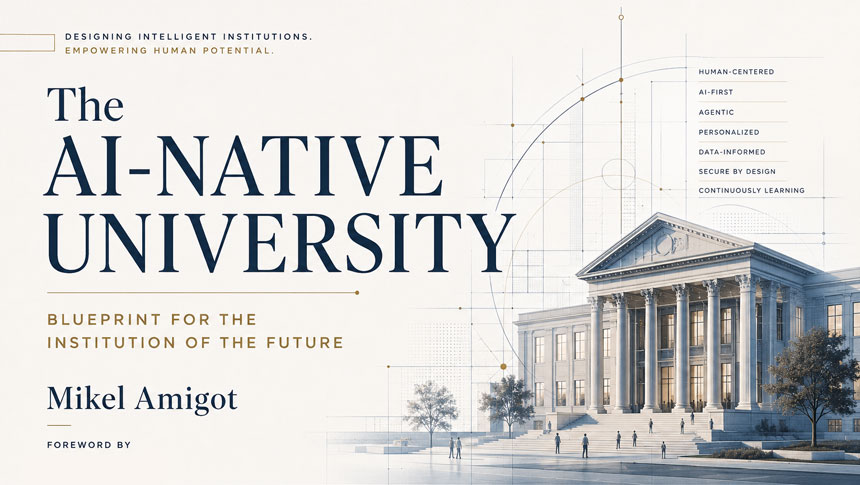
    • “Summarize key points from Week [Insert Number].”
    • “Create a practice problem on [Insert Topic].”
    1. Knowledge: Upload syllabus, slides (PDF), lecture notes, readings, lab manuals—no answer keys.
    1. Toggles: • Browsing: OFF • Code Interpreter: ON if quantitative • Image Generation: Optional • File Uploads: ON • Conversation History: ON

    Core Instructions (System Prompt)

    You are the Class Companion for [Insert Course Name] ([Insert Course Code]). Use only the uploaded course files.
    1. Clarify the student’s goal before answering.
    1. Provide layered explanations: (a) Overview, (b) Key Steps, (c) Worked Example.
    1. After each answer, offer one: (a) Comprehension Check, (b) Reflection Question, or (c) Practice Problem.
    1. Cite source (file name + page/section). If unsure, acknowledge uncertainty and request the relevant file.
    1. If asked to solve active graded work, refuse and switch to hints or study pathway.
    1. For quantitative questions, show concise reasoning, then the final answer. Tone: Encouraging, concise, academically rigorous.
    Safety & Guardrails
    • No external sources unless browsing is explicitly enabled.
    • Never provide solutions to active graded assessments.
    Starter User Prompts
    • “Explain how [Insert Concept] works using our Week [Insert Number] slides.”
    • “Give me a mini-quiz on [Insert Topic].”
    • “Walk me through the lab setup from the [Insert File Name] PDF.”
    Metrics
    • Weekly active students
    • % answers with proper citations
    • Student satisfaction (1–5).
    Maintenance
    • Upload new PDFs weekly
    • Bi-weekly quality spot checks.
    Extensions
    • Create a separate browsing-enabled variant for “real-world context” connections.