Category: Views

  • The Biden Administration Extends the Pause on Student Loan Payments for Eight Months

    The Biden Administration Extends the Pause on Student Loan Payments for Eight Months

    IBL News | New York

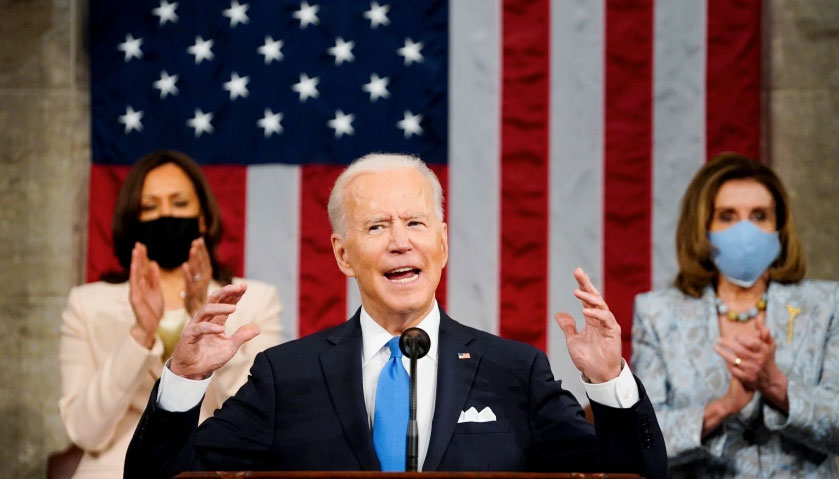
    In one of his first actions as President, Joe Biden asked yesterday the Education Department to extend a pause on federal student loan payments through at least September 30.

    This way, Biden continues a moratorium that began last March as part of a virus relief package. Borrowers owe a collective $1.5 trillion. On average, students owe between $200 and $299 every month, an amount that for many is simply untenable; about one in every five borrowers is in default, according to the U.S. Department of Education.

    This extension on federal student loans was among 17 actions President Biden signed on his first day in office.

    Biden’s order didn’t include the mass debt cancellation that some Democrats asked him to orchestrate through executive action. He said that action should come from Congress.

    The order excludes over 7 million borrowers whose federal loans are held by private companies or universities.

    During his inaugural address, Biden highlighted the need of getting children back to school during the pandemic. “We can teach our children in safe schools,” he said.

    On the other hand, Dr. Miguel Cardona, Head of Connecticut’s Public Schools, was confirmed for the position of Education Secretary.

    Dr. Cardona, who spent two decades of his career in education as a public school teacher, offers a direct juxtaposition to the Trump administration’s former Education Secretary Betsy DeVos.

    Cardona’s parents are from Puerto Rico and lived in public housing when they moved to Connecticut.

    Cindy Marten, a University of Wisconsin La Crosse graduate, was picked to serve as the Deputy Secretary of Education. She has served as the superintendent of the San Diego Unified School District since 2013. Marten was a classroom teacher for 17 years prior to being appointed superintendent.

    To these nominations, analysts highlighted the fact that the new First Lady, Dr. Jill Biden, is an educator at heart. She is a community college instructor and bestselling author.

    Her profile on The White House website, posted yesterday, said: “As First Lady, Dr. Biden continues her work for education, military families, and fighting cancer. She is a professor of writing at Northern Virginia Community College.”

    “Teaching isn’t just what I do, it’s who I am,” she stated.

  • Apple, Google, and AWS Kick Parler Off—the Social Media App Used by Trump’s Supporters

    Apple, Google, and AWS Kick Parler Off—the Social Media App Used by Trump’s Supporters

    IBL News | New York

    Apple, Google, and AWS/Amazon kick Parler off their platform this weekend, arguing that it has not sufficiently examined its users’ posts, allowing “dangerous and harmful content” that incites violence and lawless action.

    For example, a post, written by L. Lin Wood, a lawyer who had sued to overturn Mr. Trump’s election loss, posted on Parler on Thursday morning: “Get the firing squad ready. Pence goes FIRST.” The post was viewed at least 788,000 times.

    Another message—from a user called @Ronglaister—stated: “Sounds like war! It would be a pity if someone with explosives training were to pay a visit to some AWS Data Centers – the locations of which are public knowledge.”

    Parler—the alt-tech micro-blogging service and alternative to Twitter—has a significant user base of Donald Trump supporters, as well as users banned from mainstream social networks.

    Over the past months, it became one of the fastest-growing apps in the U.S. This Saturday, Parler was listed as the Number 1 in the App Store. Yesterday, it was fighting for its survival, according to its CEO, John Matze, as the service could soon go offline for not being able to find a new hosting service.

    “Big tech really wants to kill competition” and “completely remove free speech of the internet,” he said in a statement online and in several interviews. John Matze also revealed that “every vendor from text messages to email providers to our lawyers all ditched us too on the same day”. [Watch the interview below].

    After President Trump was kicked off Twitter, Parler was a logical choice to become his next megaphone.

    In a letter to Parler on Saturday, AWS/Amazon said that it had sent the micro-blogging company 98 examples of posts promoting violence that were still active. “It’s clear that Parler does not have an effective process to comply with Amazon’s rules.”

    On Friday, Apple gave Parler 24 hours to clean up its app or face removal from the App Store. On Saturday, Apple told the company its measures were inadequate and blocked iPhone owners from downloading the Parler app. (Users who already have installed the app will still be able to use it, as long as it is online.)

    “We have always supported diverse points of view being represented on the App Store, but there is no place on our platform for threats of violence and illegal activity,” Apple said in a statement.

    Several social media startups have promised to offer “unbiased” and “free speech” to Trump supporters, such as Gab.com / MeWe, Rumble, DuckDuckgo, Brave Browser, Telegram, Dlive, CloutHub, and MyMilitia.

    De-Platforming Trump

    On the other hand, several Silicon Valley companies announced they were cutting off President Trump and his supporters from using their services, in light of last Wednesday’s riot at the U.S. Capitol.

    So far, the firms that are de-platforming the President are the following: Stripe, Snap, Pinterest, Spotify, TikTok, Shopify, PayPal, Reddit, Facebook, Twitter, AWS/Amazon, Apple, and Google.

  • Twitter Permanently Suspends President Trump’s Account

    Twitter Permanently Suspends President Trump’s Account

    IBL News | New York

    Twitter permanently suspended yesterday President Trump’s @realDonaldTrump account “due to the risk of further incitement for violence.”

    In a blog-post explaining its decision, Twitter argued that the two latest Donald Trump’s tweets “were likely to inspire others to replicate the violent acts that took place on January 6, 2021, and that there are multiple indicators that they are being received and understood as an encouragement to do so.”

    The two mentioned tweets were posted by the President on Friday, January 8th:

    “The 75,000,000 great American Patriots who voted for me, AMERICA FIRST, and MAKE AMERICA GREAT AGAIN, will have a GIANT VOICE long into the future. They will not be disrespected or treated unfairly in any way, shape, or form!!!”

    Shortly thereafter, the President tweeted:

    “To all of those who have asked, I will not be going to the Inauguration on January 20th.”

    San Francisco, California—based Twitter acted after Facebook, Snapchat, Twitch and other platforms placed limits on the President. Facebook warred Trump from using its service for the remainder of his term.

    Cutting off  Trump from his favorite method of communicating directly with the public, Twitter caused a big disruption in the direct access of the President to the public and the press.

    Donald Trump—with 79.5 million followers—regularly tweeted dozens of times a day. He was the eighth-most followed account on the platform. Former President Barack Obama has the most followers at over 127 million, followed by Justin Bieber, Katy Perry, Rihanna, Cristiano Ronaldo, Taylor Swift, and Lady Gaga.

    De-platforming Trump came as a surprise. When mentions of the possibility that social media companies would be banning him, he repeatedly replied, “They’ll never ban me.”

    Donald Trump Jr. was the only one on the President’s entourage responding. He tweeted: “We are living Orwell’s 1984. Free-speech no longer exists in America. It died with big tech and what’s left is only there for a chosen few.”

    Axios: All the platforms that have banned or restricted Trump so far

  • Higher Ed Institutions Function Only at 75% Capacity. This Gap Costs $50 Billion

    Higher Ed Institutions Function Only at 75% Capacity. This Gap Costs $50 Billion

    IBL News | New York

    Higher Education in the United States is only functioning at 75% capacity—leaving as many as 5 million empty classroom seats each year, says a report by Lumina Foundation. This is the result of the fact that in the last 10 years, higher education capacity has grown 26% while enrollment has only grown by 3%.

    On average, schools with fewer than a thousand students are down to 59% utilization.

    This imbalance between supply and demand has been deepened by the 2020 pandemic’s impact.

    Underutilization—from empty classrooms to vacant labs to unused dorms—translates into higher costs for students and risks the future of higher education. Overall, it costs students, institutions, and states around $50 billion annually, according to a study completed by EY Parthenon.

    “Institutions whose enrollments are flat or decreasing must adapt to the reality of today’s demographics and stop acquiring land, building more dorms, hiring new faculty, and stop constructing rock walls for the 2% of students who might find them interesting,” write Brad Kelsheimer and Courtney Brown, from the Lumina Foundation.

    Lumina encourages higher ed institutions to reinvent themselves, rethinking who they serve (i.e., adults), what they provide (i.e., employment-aligned credentials), and how they deliver.

    Being more relevant and accessible to adults seems a good opportunity given that 90 million working-age adults have no credentials beyond a high school diploma.

    Another piece of advice to reduce costs and increase efficiencies is to develop collaborations and partnerships between schools, like consortia, or shared service agreements between schools.

  • Over Two Billion Children and Young People Lose Out on Education Due to No Internet Access

    Over Two Billion Children and Young People Lose Out on Education Due to No Internet Access

    IBL News | New York

    Around 1.3 billion school-aged children aged 3-17 do not have an Internet connection at home.

    There is a similar lack of online access for 759 million young people aged 15-24. It means that over 65% are unconnected at home. This digital gap prevents them to acquire the skills needed to compete today and isolates them from the job market.

    “Lack of internet access, in the event of school closures, such as those currently experienced by millions due to COVID-19, is costing the next generation their futures,” said Henrietta Fore, UN Children’s Fund (UNICEF) Executive Director.

    Today, a quarter of billion students worldwide are affected by school closures due to the pandemic, relying on remote learning.

    The UNICEF-ITU report How Many Children and Youth Have Internet Access at Home? indicates that only 16% of the poorest households have Internet at home.

    UN officials consulted by IBL News highlighted that This digital divide is perpetuating inequalities.

  • Training Company Pluralsight.com Acquired by Equity Firm Vista for $3.5 Billion

    Training Company Pluralsight.com Acquired by Equity Firm Vista for $3.5 Billion

    IBL News | New York

    Private investment firm Vista Equity Partners announced yesterday it was acquiring publicly-traded Pluralsight, Inc. (NASDAQ: PS) in an all-cash transaction that values the training company at approximately $3.5 billion.

    Shareholders will receive $20.26 in cash for each share of common stock they own.

    The purchase price represents a premium of 25% of the company’s closing stock over the past 30 days.

    The agreement was unanimously approved by the Pluralsight Board of Directors. The training company indicated that “the shares subject to the voting agreement represent a majority of the current outstanding voting power.”

    Upon completion of the transaction–expected to close in the first half of 2021–, Pluralsight will become a privately held company and shares of Pluralsight common stock will no longer be listed on any public market.

    Another Utah educational company, Instructure–the owner of Canvas LMS–was bought by another equity firm this year for $2 billion.

    Headquartered in Silicon Slopes, Utah, Pluralsight claims to serve 17,000 customers, including 70% of Fortune 500 companies. It was founded in 2004. After raising over $190 million, it went public in May 2018. Today, it offers under a monthly subscription model a catalog of 7,500 online video courses developed mostly by paid third-party authors. It has a workforce of 1,700 employees.

    Vista Equity Partners owns two education technology companies: PowerSchool and EAB. Its CEO, Robert F. Smith was recently in the news after paying off the debt for the spring 2019 graduating class of Morehouse College.

  • A StartUp Brings Together Online Students in a COVID-Safe Campus Resort in Texas

    A StartUp Brings Together Online Students in a COVID-Safe Campus Resort in Texas

    IBL News | New York

    Three Princeton University grads–in the picture below–have created a university-like environment at a resort in Texas. Students will take online classes with the colleges they are enrolled in while staying in a COVID-safe environment. It costs a $10,000 minimum for housing and meal packages.

    So far, it has received over 1,500 applications, enough to fill the 150 available slots, the startup company said.

    The U Experience plans to bring students for the spring 2021 semester, from January 28 to April 18 at Tanglewood Resort near Lake Texoma, Texas. It accepts students from traditional four-year universities as well as virtual programs.

    The resort includes rec sports, weekly “TEDx-style” guest lectures, nightlife, and a private room for each student. “No masks. No social distancing. A real college experience. Spring 2021,” advertises the company. However, people chatting on social media are skeptical about keeping the premises virus-free and a possible outbreak.

    Students will be tested for the coronavirus upon arrival and regularly examined thereafter. They won’t even be allowed out to buy groceries, but they’ll have access to all the resort’s amenities.

    “We see online learning as the future of higher education. It has the potential to make college cheap and accessible to all,” said its CEO and Co-Founder, Lane Rusell. “The impediment is it’s not very attractive to think of being stuck at your parents’ house taking lessons on a computer and never going outside.”

    The application process will be nontraditional. Students can view each others’ online profiles and “like” those of their friends or students they want to meet. The student feedback won’t determine admission but will play a role. The founders have almost 150,000 followers on Instagram.

    College kids at a resort or just a lavish online learning experience?

    Inside of Higher Ed wrote a critical piece about it, titled “Bursting Their Buble”.


    View this post on Instagram


    A post shared by The U Experience (@theexperienceu)


  • Harvard’s Professor and EdTech Visionary Robert Lue Dies at 56 From Cancer

    Harvard’s Professor and EdTech Visionary Robert Lue Dies at 56 From Cancer

    IBL News | New York

    The Havard, Open edX, and edX community lost this week a key leader, Robert Lue, 56, Researcher and Professor of Biology at Harvard, Founder of LabXChange.org and HarvardX, edtech visionary and a firm advocate of open source and scientific education.

    Harvard University reported that Robert Lue died from cancer. His death caused a deep impact on the Harvard and edX community.

    “Rob was one of the most creative teachers; he was always thinking about how we could do a better job of engaging our students, and he was particularly gifted in imagining how technology and data could be used to enhance the learning experience,” said Harvard President Larry Bacow. “The kindness and thoughtfulness he brought to his work over the years infuse many of the pedagogical improvements made at Harvard. He was a valued colleague, and he will be missed.”

    Robert “Rob” Lue was Professor of the practice in the Department of Molecular and Cellular Biology,  Faculty Director of the Harvard Ed Portal, Richard L. Menschel Faculty Director of the Derek Bok Center for Teaching and Learning, UNESCO Chair on Life Sciences and Social Innovation, and Faculty Director and Principal Investigator of LabXchange. He co-authored two biology textbooks and worked extensively in the field of scientific visualization.

    In 2012, Lue became the founding faculty director of HarvardX, shaping the institution’s engagement in online learning and expanding its reach.

    Lue’s vision was to improve education “by bringing equal opportunities for learning science [to] anyone and anywhere,” said Valtencir Mendes, Senior Program Lead in UNESCO’s education sector.

    Anant Agarwal, CEO at edX, said, “Rob was an early and ardent believer in edX. Always willing to help across our network + quick to share his grand and inspirational visions of the shared mission we were all working toward. Rob was a friend and I will miss him dearly.”

    Up until his death, Lue was leading LabXchange, a breakthrough, Open edX-based virtual platform launched in October 2019, with over 2.5 million visitors.

    “Rob was always so happy when students thanked him [for changing] their view of biology by creating these animations,” said Alain Viel, Director at the Northwest Undergraduate Laboratories and Senior Lecturer in the Department of Molecular and Cellular Biology at Harvard. Viel was his partner of 30 years.

    An online forum was filled with tribute messages to Lue.

    News stories about Robert Lue at IBL News


  • Language Learning App Duolingo Gets a $2.4 Billion Valuation While It Prepares its IPO

    Language Learning App Duolingo Gets a $2.4 Billion Valuation While It Prepares its IPO

    IBL News | New York

    Duolingo, the popular language-learning app, announced this week it had secured $35 million in a Series H round, achieving a valuation of $2.4 billion, almost a billion dollars more than a year ago.

    The Pittsburgh-based company–co-founded by Hispanic immigrant Luis von Ahn–has raised $183 million to date. It expects to go public in 2021.

    With over 1 million subscribers who pay $6.99 per month and 40 million active users who receive ads on the free version, Duolingo says that it is now cash-flow positive and it will double its annual revenue to $200 million.

    Duolingo, which offers 98 courses for 40 different languages, recently launched a new app that teaches children ages 3 to 7 how to read.

    Another breakthrough service is the Duolingo English Test, a low priced online English certification exam, that has seen a 1500% year-over-year growth in test-takers.

    The iconic company was founded in 2011 by computer whiz Luis von Ahn, 42, an immigrant from Guatemala. As a student at Carnegie Mellon, he designed the CAPTCHA system, along with a crowdsourcing device he sold to Google. This week, Luis Von Ahn reaffirmed that is considering an initial public offering as early as next year.


  • View: A New Learning Platform During Pandemic Times? The Must-Have List of Features

    View: A New Learning Platform During Pandemic Times? The Must-Have List of Features

    IBL News | New York

    Traditionally, the U.S. educational system has been slow to evolve, and the COVID-19 pandemic has exposed that weakness.

    At pre-pandemic educational shows and conferences, keynote speakers often joked that if Benjamin Franklin were to have visited our country today, the only place he would recognize would be the school classroom.

    But the classroom has changed overnight, and LMS platforms haven’t been incapable to evolve for the new teaching environment.

    Instructors must radically rethink how to efficiently engage students. The shift from face-to-face to remote teaching requires a non-legacy, new generation, pedagogically–robust Learning Management Systems (LMS). It is not about managing the classroom but coping with the new demands of education.

    Your new learning platform or ecosystem should be the foundational rock that supports the new learning environment.

    These are seven key chapters to consider when choosing the right learning platform to deliver an effective, rock-solid experience in this new challenging time.

    1. Simplified, user-friendly, and scalable access for students, enhanced with Single Sign-On (SSO) authentication. Interactive and easily accessible, downloadable, offline-viewable content.
    2. Easy to use CMS for instructors, not needing to be tech-savvy, and avoiding any dependence on the IT department. Admin dashboard.
    3. Mobile friendly, elegant, and visually distinctive UI-UX enhanced platform.
    4. Course catalog website, learner portal, landing pages, along with integration with other LMS and applications within the university or business organization.
    5. Social-learning powered platform, enriched with digital, blockchain-based, and career-advancement ready credentials.
    6. Data-driven and AI analytics dashboard, plug-and-play interoperability with other systems, and Student Information Systems (SIS).
    7. Backed by a reliable, experienced–check its portfolio of customers–and forward-thinking LMS supplier and partner, who provides robust post-implementation technical support and is able to optimize the platform with the latest pedagogical innovations. Consulting service review and recommendations.