IBL News | Washington, D.C.
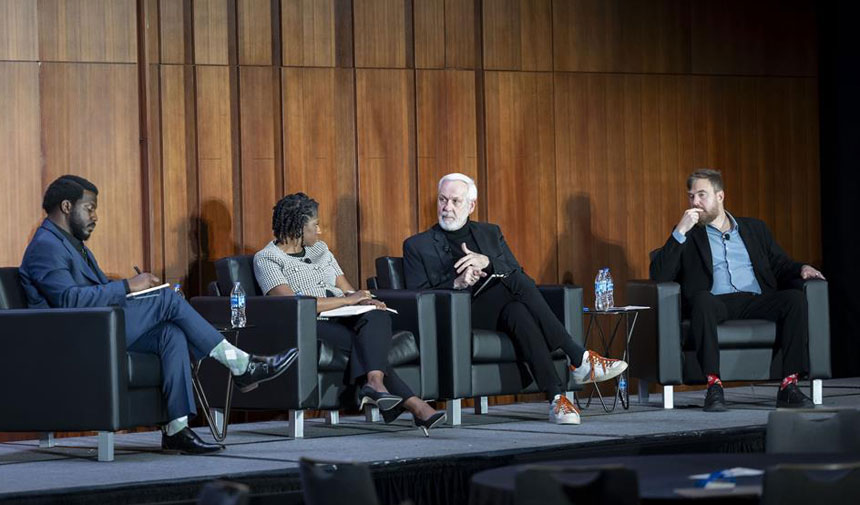
“The transition into AI is going to be really hard,” said Paul J. LeBlanc, former President of Southern New Hampshire University (SNHU), during the ACE Experience 2026 (ACEx2026) conference, which took place last week in Washington, D.C., gathering hundreds of higher education leaders.
“Have you seen the latest technology, OpenClaw, which creates a personal agent? All of the workflows are automated overnight,” he explained. “We are not prepared for AI.”
Regarding the impact of AI, John O’Brien, President of Educause, encouraged attendees during this talk on Thursday to innovate “as AI creates new opportunities.” “AI will do things for you soon,” he explained.
Bryan Alexander, a futurist author and a Georgetown University Senior Scholar, said, “We have to figure out how to compete with AI.” “Everyone is figuring out their economic model.”
During the ACEx2026 event, presidents and chancellors, senior campus leaders, policy experts, and advocates confronted higher education’s challenges and examined how the industry can lead through uncertainty.
“We will not retreat, we will not surrender independence,” ACE President Ted Mitchell told attendees in his address titled “Truth, Trust, and Leadership: Higher Education’s Inflection Point” on Feb. 26. “It has been a hard year. We’ve been assaulted, punished for doing the right thing.”
Addressing the audience, Ted Mitchell said, “You continue providing the world’s best education, helping to build America even in these trying times.”
“To do that, we must improve, we must innovate, and we must inspire the public,” he stated.
Freeman A. Hrabowski III, president emeritus of the University of Maryland, Baltimore County, also helped set the tone at the welcoming reception. “We represent the future of our society. And when we are most depressed or challenged or uncertain, when we can come together and see what people are doing and be inspired by other people, it makes all the difference.”
Arne Duncan, former Secretary of Education, and David Pressman, former Ambassador to Hungary, stressed, “The rising tide of authoritarianism and its implications for higher education, underscoring the stakes of the current moment.”
Nicholas Kent, Under Secretary of Education, offered the Trump administration’s perspective on federal priorities shaping the sector, particularly stressing the need for institutional accountability in areas such as student outcomes and campus climate. “My goal is not for us to agree on everything, but to ensure that we understand where we see challenges, what steps we are taking to address them, and how we can work together to move forward,” he said.
Throughout ACEx2026, participants discussed responses to policy challenges; exchanged strategies for building future-ready institutions capable of addressing AI, structural change, and shifting student demographics, among other factors.
ACE President Ted Mitchell unveiled a new development in the Higher Education Builds America campaign, highlighting the wide impact American colleges and universities — all featured in a new video.
Another plenary session featured a panel, sponsored by Deloitte Services, on the 2026 Higher Education Trends report, as reported by IBL News this week.
The organization of ACE honored institutions and leaders through its Annual Awards for advancing ideas and delivering results for students and communities.