Author: IBL News

  • The Ten Top Most Valuable EdTech Start-Ups: A Mix of Chinese, Indian, and American Companies

    The Ten Top Most Valuable EdTech Start-Ups: A Mix of Chinese, Indian, and American Companies

    IBL News | New York

    Five American companies are among the ten most valuable EdTech companies worldwide, while Indian and Chinese start-ups are ranked first.

    “The global EdTech is a broad and diverse field that includes not only the hardware and software programs used in remote learning but also the most effective ways of teaching people new knowledge and skills,” said Ahsan Ullah in an article written in Yahoo analyzing the rising of this industry, accelerated by the pandemic.

    Education research company HolonIQ predicted that the annual growth rate of EdTech will continue growing 2.5x until 2025, and the global expenditure will reach $404 billion in total. The education technology sector will make up 5.5% of the $7.3 trillion global education market by 2025.

    The EdTech companies’ top 10 are ranked according to their market capitalization and valuation.

    1. BYJU’S: Valuation of $16.5 billion. Based in Bangalore, India, and with 40 million users, of whom 3 million are annual paid subscribers, Byju’s provides online courses and enables students to prepare for exams such as IIT-JEE, NEET, IAS in India and international examinations such GRE and GMAT.

    2. Yuanfudao: Valuation of $15.5 billion. A Beijing-based platform that provides K12 online courses and tutoring to 400 million users.

    3. Chegg, Inc (NYSE: CHGG): Valuation of $11.56. An American company founded in 2005 by two Iowa State University students, that provides 25,000 textbooks titles for students with standardized test preparation, career preparation, and study materials on its website. It offers products like Cheap Textbooks, Chegg Coupon, Solution Manual, eTextbooks.

    4. Zuoyebang: Valuation of $10 billion. A Chinese educational platform for online courses, live lessons, and homework help for kindergarten to 12th-grade students.

    5. Bright Horizons Family Solutions Inc. (NYSE: BFAM): Valuation of $8.61 billion. An American EdTech company founded in 1986 that offers full-service center based-child care and educational advisory services. It has 26,800 employees.

    6. Duolingo, Inc (NASDAQ: DUOL). Valuation of $5.05 billion. The Pittsburgh-based language learning platform, was co-founded by Luis Von Ahn, the inventor of CAPTCHA and reCAPTCHA, and Severin Hacker in 2011.

    7. VIPKID. Valuation of $4.5 billion. A China-based start-up for English learning. Today, it connects 800,000 million paying students with 90,000 teachers in the U.S. and Canada. It uses AI in online teaching.

    8. Articulate: Valuation of $3.75 billion. A US-based firm that allows users to develop interactive courses that work on their LMS.

    9. Udemy: Valuation of $3.3 billion. A US-based marketplace that connects 40 million students seeking to improve their skills with 70,000 expert instructors that offer 155,000 online courses in 65 languages.

    10. ApplyBoard: Valuation of $3.2 billion. A Canadian start-up that connects international students, recruitment partners, and academic institutions in one platform. It has partnerships with 1,500 institutions.


     

  • Tutor.com Reaches 21 Million One-to-One Tutoring Sessions

    Tutor.com Reaches 21 Million One-to-One Tutoring Sessions

    IBL News | New York

    With 3,500 tutors providing online tutoring and homework help sessions to students, the New York City-headquartered Tutor.com announced that it reached 21 millionth one-to-one tutoring sessions served since its incorporation in 2000.

    The company reported that at peak times, it was serving 7,500 tutoring sessions a day.

    As an affiliate of The Princeton Review, Tutor.com powers tutoring and homework help programs for colleges and universities, K–12 school districts, state and local libraries, companies offering employee benefit programs, and agencies like the U.S. Department of Defense Coast Guard Mutual Assistance Program.

    It offers 250+ subject offerings, with math remaining the most popular. The next most requested subjects (in order) are English, Science, and Drop-off Writing Review.

    “As the pandemic entered its second year, demand for Tutor.com’s services remained strong; during the first six months of 2021, the number of requests for Tutor.com services that the company met was more than 30 percent greater than during the comparable period in 2020,” said the company.

  • Andrew Ng-Backed Education Company Workera.ai Raises $16 Million

    Andrew Ng-Backed Education Company Workera.ai Raises $16 Million

    IBL News | New York

    The Palo Alto-based learning platform Workera.ai announced it raised $16 million in Series A. The funding was led by New Enterprise Associates and included existing investors Owl Ventures and AI Fund, as well as luminaries in the AI field such as Richard Socher, Pieter Abbeel, Lake Dai, and Mehran Sahami.

    To date, the Californian start-up has secured a total of $21 million, including a seed round of $5 million last October.

    Since the last quarter of 2020, the company claims that it has acquired over 30 customers, including Siemens, across industries like professional services, medical devices, and energy.

    Founded in 2020, Workera.ai offers personalized learning plans through targeted resources based on the current level of a person’s proficiency to close the skills gap.

    It tests and maps out with AI and machine learning the skill sets within a company, so the client knows what they have.

    The start-up says that its library has more than 3,000 micro-skills and personalized learning plans.

    The founders of Workera, Kian Katanforoosh, and James Lee, COO, previously worked with Andrew Ng, Coursera co-founder and creator of education start-up deeplearning.ai, and now Workera’s chairman. Now, Workera features itself as a deeplearning.ai company.

    Kian Katanforoosh, CEO at Workera, says that he will use the new funding to invest in more talent and build out new products. He explained on TechCrunch that he wants the company to better understand natural language processes at a granular level to assess people more precisely.

    The spending on AI skills is expected to surpass $79 billion by 2022.

  • “With OPMs, Colleges Forfeit Their Future,” Explains Robert Ubell In His Latest Book

    “With OPMs, Colleges Forfeit Their Future,” Explains Robert Ubell In His Latest Book

    Mikel Amigot, IBL News | New York

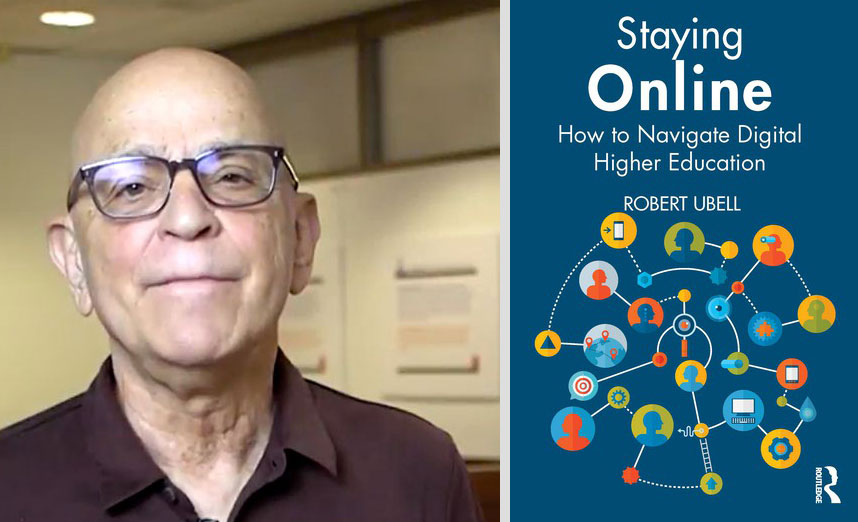
    “When colleges turn to OPMs, rather than building their own digital capacity, they forfeit their future by neglecting to strengthen their virtual infrastructure,” analyzes online learning expert Robert Ubell in his latest book “Staying Online. How to Navigate Digital Higher Education,” published by Routledge and scheduled to be released this upcoming September 7.

    “Staying Online” is one of the first books to analyze the dramatic changes in higher education since the pandemic started in March 2020. Across 180 pages, the book covers the rise of MOOCs, OPMs, and the massive digital immersion of higher education due to the COVID-19 outbreak.

    In an interview at IBL News this week, Robert Ubell, Vice Dean Emeritus of Online Learning at NYU’s Tandon School of Engineering, columnist, and author of the essay Going Online: Perspectives on Digital Learning, pointed out “the vast differences in the digital academic economy today, with online and on-campus enrolling different sorts of students, with relatively different faculty, different infrastructure, and far more expensive recruitment strategies.”

    “Despite strong opposition, digital education has triumphed,” he states.


    IBL News: Would you summarize the main findings of your book?

    Robert Ubell:
    Staying Online
    is among the first books to recognize the dramatically changed higher ed landscape since the pandemic altered secondary education in the US and around the world.

    It covers the rise of MOOCs, OPMs, and the almost total immersion of every higher ed classroom in digital education at the height of the COVID-19 invasion.

    It traces the vast differences in the digital academic economy today, with online and on-campus enrolling different sorts of students, with relatively different faculty, different infrastructure, and far more expensive recruitment strategies.

    Despite strong opposition, digital education has triumphed.


    IBL News: Where will online education be within one, five, ten years?

    Robert Ubell:
    As residential enrollment continues its steep decline–owing to falling high-school graduation rates in the US especially–online has stepped in to fill missing on-campus students with virtual ones.

    Today, about a third of college students are online, in 5 to 10 years, following the digitization of nearly every industry, it may represent nearly half, a totally unexpected climb from nowhere in just two decades.


    IBL News: What are the most important disruptive initiatives?

    Robert Ubell: Surely, MOOCs have played a decisive role in expanding the breadth of higher education. Today, with more than 180 million learners worldwide. Last year, MOOC providers launched more than 2,800 new online courses and 19 digital degrees.

    OPMs, too, have witnessed a dramatic expansion. Last year, 300 new OPM partnerships were signed, and in the first quarter of this year, 109 new ones were launched.


    IBL News: Would you share your view on the 2U-edX transaction? What does the deal mean for the industry and the learner?

    Robert Ubell: Harvard and MIT saw an exit strategy when 2U came calling, with hard cash to take the money-losing pit–edX–away.

    2U’s acquisition of edX doesn’t represent a change in the online economy, so much as a recognition of 2U’s financial power and Coursera’s continued to climb above all other MOOC providers.

    It leaves two edtech giants at the top, exactly where they’ve been for years.


    IBL News: What do you think about OPMs, and in particular, 2U?

    Robert Ubell: OPMs succeed in often generating far more enrollments than colleges on their own, but the payback is serious, handing over half of each school’s online revenue secured by their OPM partners.

    When colleges turn to OPMs, rather than building their own digital capacity, they forfeit their future by neglecting to strengthen their virtual infrastructure, a competency they will surely require as online becomes the name of the game, not just for one or two master’s degrees, but for hundreds of courses.


    IBL News: What’s best for low-income students in higher ed?

    Robert Ubell: Because online degrees allow low-income students to continue working while earning their degrees, digital education stands out as a key path for them to join the new economy.

    But they shouldn’t be misled by for-profits that do not provide the skills they need to succeed in the post-industrial economy.


  • Udemy Acquires Group Learning Platform CorpU

    Udemy Acquires Group Learning Platform CorpU

    IBL News | New York

    San Francisco – based Udemy.com reinforced its corporate learning activity by acquiring CorpU for an undisclosed amount.

    CorpU, an online development platform founded in 1997, provides cohort-based training, executive and peer coaching, and virtual environments to brands such as CVS Health, BJ’s Wholesale Club, and Rite Aid. In their group learning activities, CorpU includes instructors from Harvard, MIT, and the University of Michigan’s Ross School of Business.

    “We believe that CorpU will allow Udemy to help companies go further in upskilling initiatives and deepen collaboration and leadership capabilities through immersive learning experiences,” said Gregg Coccari, CEO of Udemy, while announcing the purchase this Monday.

    “CorpU is a powerful addition to strengthen our Udemy Business offering for organizations by elevating leadership development capabilities and helping customers achieve critical business outcomes,” added Greg Brown, President of Udemy Business.

    According to Gartner, HR leaders are finding it increasingly difficult to quickly find and develop talent with the most in-demand skills, yet 58% of the workforce needs new skills to get their jobs done. Gartner data shows the total number of skills required for a single job has been increasing by 10% year-over-year since 2017.

  • Six Hundred Students of the American University of Afghanistan Left Under the Taliban Regime

    Six Hundred Students of the American University of Afghanistan Left Under the Taliban Regime

    IBL News | New York

    As U.S. troops left Afghanistan, ending a 20-year war, but failed to defeat the Taliban, hundreds of students, their relatives, and staff of the American University of Afghanistan were turned away and couldn’t evacuate.

    According to The New York Times, the university administration sent an email on Sunday to approximately 600 students and alumni to go home, as there would be no more rescue flights.

    The group stayed seven hours in a safe house, waiting for permission to enter the airport.

    Moreover, the gathering was alarmed after learning that their names had been shared with the Taliban fighters guarding the airport checkpoints.

    When the Taliban took over Kabul on Aug. 15, one of the first sites they captured was the modern American University campus. Men in traditional Afghan outfits bearing AK-47 rifles brought down the university flag and raised the flag of the Taliban.

    The Taliban commented on social media that this University was where America had trained infidel “wolves” to corrupt the minds of Muslims.

    In 2016, the Taliban attacked the campus with explosives and guns in a terrorist assault that lasted 10 hours and killed 15 people, including seven students.

    The American University of Afghanistan opened in 2006, receiving most of its funding from the United States Agency for International Development, which gave $160 million. It was one of the U.S.A.I.D.’s largest civilian projects in Afghanistan.

  • LEGO Education Launches a Hands-On, Playful Set for Primary School Students

    LEGO Education Launches a Hands-On, Playful Set for Primary School Students

    IBL News | New York

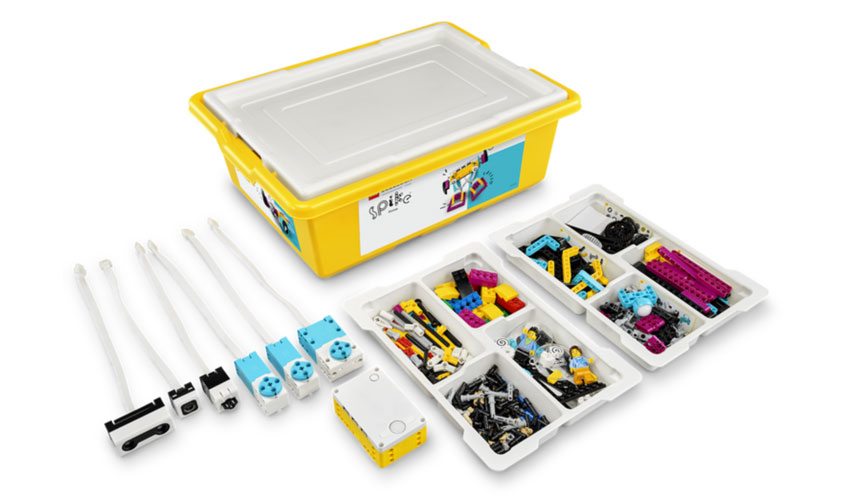
    LEGO Education announced this month a hands-on STEM program and set for primary school students in grades 1 to 5 intended to engage them through playful problem-solving and storytelling.

    SPIKE Essential is part of a suite of solutions that includes SPIKE™ Prime, Education BricQ Motion Essential, and Education BricQ Motion Prime.

    Denmark–based Lego states that “its learning system puts students on the path to become resilient and independent thinkers, while sparks joy and a love of learning in students that never stops.”

    The LEGO Learning System also claims that it allows cultivating essential skills like creativity, critical thinking, collaboration, and communication.

    SPIKE Essential costs $275, which can be shared by up to two students at a time and comes with five hardware components and 449 bricks.

    It offers 50 combined hours of educational content. Each unit includes:

    • A unit-wide theme: Great Adventures, Amazing Amusement Park, Happy Traveler, Crazy Carnival Games, and Quirky Creations
    • A learning sequence with one introductory lesson, several guided practice lessons, and one open-ended project
    • 7-8 lessons
    • Additional 30+ minute language arts and math extensions for each lesson
    • 6-10 hours of content

  • Student Debt Cancelled by the Federal Government Reaches $9.5 Billion for 563,000 borrowers

    Student Debt Cancelled by the Federal Government Reaches $9.5 Billion for 563,000 borrowers

    IBL News | New York

    The U.S. Department of Education announced Thursday that it will cancel $1.1 billion in student debt for 115,000 borrowers who attended the now-defunct ITT Technical Institute and didn’t complete their degree.

    Since January 2021, the total amount of debt canceled approved by the Federal Government reaches $9.5 billion, affecting over 563,000 borrowers.

    Still, President Joe Biden remains under pressure from Democrats, advocates, and borrowers to go further and cancel $50,000 per borrower in student debt for all.

    Under the U.S. Department of Education, borrowers who attended an institution that shut down between November 1, 2013, and July 1, 2020, will receive a discharge.

    U.S. Secretary of Education Miguel Cardona [in the picture above] addressed the wrongdoing of ITT and other predatory institutions, highlighting the need for accountability throughout the federal financial aid system.

    “For years, ITT hid its true financial state from borrowers while luring many of them into taking out private loans with misleading and unaffordable terms that may have caused borrowers to leave school,” he said.


  • Learning a New Skill Results in a Raise of $12K a Year, According to the Top Paying Certifications Research

    Learning a New Skill Results in a Raise of $12K a Year, According to the Top Paying Certifications Research

    IBL News | New York

    Cybersecurity and cloud-related courses are the top-paying certifications in the corporate world, with salaries over $150,000, according to research released last week by Global Knowledge, a Skillsoft (NYSE: SKIL) owned company.

    Corporate digital learning company Global Knowlege extracted data from over 3,700 U.S. IT professionals and decision-makers. Its 15 Top-Paying Certifications List reveals the most in-demand skills and technology areas for organizations, as well as the average salaries associated with them.

    It also points out that learning new skills or earning a certification can result in a raise upwards of $12,000 a year.

    “Certifications are an excellent way of infusing vital skills into an organization while boosting employee productivity and investing in ongoing professional development,” said Michael Yoo, General Manager at Boston-based Skillsoft.

    The research states that 76% of decision-makers struggle with the existing skills gaps, are challenged with talent recruitment and retention, and face overwhelming workloads.

    This is the list:


    [ Disclosure: IBL Education, the parent company of IBL News, works for Global Knowledge / Skillsoft ]

  • The ASU+GSV Summit Posts Videos of the Talks at the Event on Its YouTube Channel

    The ASU+GSV Summit Posts Videos of the Talks at the Event on Its YouTube Channel

    IBL News | New York

    The organizers of the 12th Annual ASU+GSV Summit – which took place August 9-11 in San Diego – released yesterday all of the videos of the recorded talks on the Global Silicon Valley’s (GSV) YouTube channel.

    A total of 346 videos capture the essential talks and conversations, “with a shared focus on scaling innovation in Pre-K to Gray learning,” as the event promoter said.

    Additionally, ASU+GSV posted a collection of almost 300 downloadable, free pictures.

    The 2022 ASU+GSV Summit — the most significant event in the EdTech industry – will take place four months before what is usually scheduled. It will take place in the same location of San Diego, California, on April 4-6, 2022.

    This 2021 annual edition attracted around 3,000 attendees, featuring 600+ speakers on a variety of subjects tackling higher-ed, K-12, workforce, and global education concerns.

    Arizona State University (ASU) President, Michael Crow [in the picture below], was once again the involuntary star due to his permanent focus on innovation. “We are at the beginning of innovation. Everything has been transformed except education,” he said.


    IBL News

    • Michael Crow Proposes a Radical Change in Higher Ed through Technology-Enabled Design [Video]

    • The ASU+GSV Summit Attracts Thousands of Attendees in San Diego