Category: Top News

  • Big Blue Button Improves Its Integration on the Open edX Platform

    Big Blue Button Improves Its Integration on the Open edX Platform

    Big Blue Button, the open-source web conferencing system, presented its latest version for the Open edX platform during the 2018 Open edX Conference in Montreal, Canada.

    Product Manager Fred Dixon demonstrated what integrated real-time collaboration looked like in OpenedX using Big Blue Button.

    This is his talk.


  • Jeb Bush Advocates at CNBC the Open edX-Based Freshman Year For Free Program

    Jeb Bush Advocates at CNBC the Open edX-Based Freshman Year For Free Program

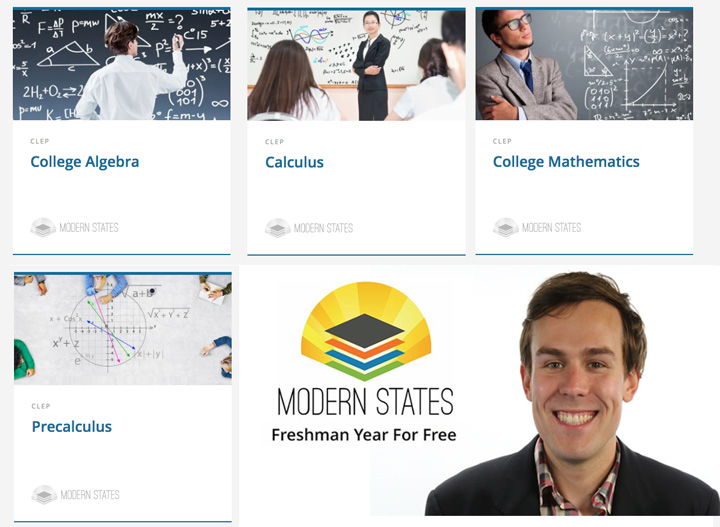
    Former Florida Governor and Chairman of the Foundation for Excellence in Education, Jeb Bush, reaffirmed in an interview with CNBC with CNBC that college is a valuable investment and primarily suggested the Open edX-based “Freshman Year for Free” program, which is a part of the New York non-profitModern States Education Alliance.[Disclosure: IBL Education developed the CLEP courses along with the Open edX platform.]

    This initiative, founded by New Mountain Capital CEO Steve Klinsky and directed by former journalist David Vise, helps learners study for CLEP exams (administered by The College Board) and access college for free.

    “The idea is to accelerate this and make freshman college for free as one step among many steps I think that governors can do,” said Mr. Bush. “This is a cheap date when you think about it. This is a really low-cost way to save millions of dollars for families that are struggling right now.”

    It costs $85 to take a CLEP test while the average cost of a college course is $594. Modern States is also paying exam fees for the first 10,000 test takers, enabling students anywhere to earn up to a full year’s worth of credit for free.

    Students can also use edX’s MicroMasters programs to take a series of series of graduate level courses with a specialized career pathway.


    60,000 Registered Users on ModernStates.org

    In addition to this appearance on CNBC, Jeb Bush wrote an article with Steve Klinsky on RealClearPolicy.com titled “How Governors Can Give All Students ‘Freshman Year for Free’”. These are some excerpts:

    • “If you’re a governor, state education leader or a parent looking at paying the high cost of college, this message is addressed to you.” (…) “For $85 per CLEP exam, far less than the cost of tuition for college credits, governors across the country can enable students to take a CLEP test for free and earn college credit. The fee for the exam is small compared to the $1,782 cost of a typical course at a public university, and can provide a path to higher education for thousands of students who face the choice between not going to college or taking on massive debt.”
    • “For perspective, helping 100,000 state residents pass 100,000 course exams would only cost a state $8.5 million — a fraction of a state’s education budget — and probably save the state far more in taxpayer-subsidized alternatives or safety net programs. States could also encourage its use in high schools by including passage of Advanced Placement or CLEP exams in their high school accountability systems and providing financial incentives to school districts when students earn college credit through these and other college credit options.”
    • “Modern States has gained more than 60,000 registered users since it launched in August 2017, and its student passing rate on CLEP exams has well exceeded the 70 percent national average. High schoolers, working parents, military personnel, and Dreamers, to name a few, are all benefitting from this innovation.”


  • Microsoft Has Developed 180+ Courses on edX.org, with 2.6M Learners

    Microsoft Has Developed 180+ Courses on edX.org, with 2.6M Learners

    Microsoft has become the largest private publisher of courses on edX.org, with 180+ courses and 2.6 million learners; all of it within a period of three years.

    Courses include a program in AI, and are mostly oriented toward professional development. This effort fits with Microsoft’s educational mission of democratizing learning and bringing it to the masses. From a business perspective, its main goal is to promote Azure cloud services.

    163 OPEN EDX SITES HOSTED ON AZURE

    Microsoft, who joined the edX consortium in 2015, claims that 10 % of the Open edX-based instances – namely, 163 – are hosted on Azure. One of its main instances is Global Knowledge, who partnered in 2017 with IBL Education to deploy its ecosystem. By the end of this year, the software corporation expects to reach 200 instances on Azure.

    Additionally, the Redmond-based giant launched in April 2017 a “Learning as a Service (LaaS)” partnering program, which was introduced by three Microsoft managers during the recent 2018 Open edX conference in Montreal. This initiative is mainly based on providing partners (100 so far) with free course content, which they use to enhance their private instances.

  • “MOOCs Are Not Addressing the Problems of Education,” Said Columbia’s Researcher Fiona Hollands

    “MOOCs Are Not Addressing the Problems of Education,” Said Columbia’s Researcher Fiona Hollands

    “MOOCs are not addressing the problems of education,”  said Columbia University’s researcher Fiona Hollands during a keynote at the 2018 Open edX Conference in Montréal last week.

    In her address, titled “MOOCS 2025”, she presented her most recent findings and suggested to move over the name “MOOCs” into another one, which reflects that these courses might neither be massive nor open. Some of them are: Non-formal digital learning experience” (NDLEs) , “Informal Digital Learning Experience” (IDLE), “Digital Learning Experiences” (DLE), “Alternative Credential” (AC or Alt-C), or “Voluntary Online Learning Experience” (VOLE). 

    According to Fiona Hollands, these types of courses, which haven’t democratized higher education nor had the expected impact in academia, will gain credibility, be recognized by employers and completely change the way learning is delivered.

    (Click on the player below to watch her talk.)

    These are the keynote’s most interesting slides:


  • A Successful 2018 Open edX Conference in Montréal – Most Interesting Tweets

    A Successful 2018 Open edX Conference in Montréal – Most Interesting Tweets

    The fifth Open edX conference, which took place this week in Montréal, Canada, attracted over three hundred developers, educators and business professionals. The number of attendants was similar to last year’s conference’s in Madrid, Spain, said edX to IBL News.

    The event was well organized, and participants’ feedback was positive.

    Next year’s Open edX conference will be at the University of California at San Diego on March 26-28, 2019. Also, during the first quarter of 2019, the next Open edX platform version, called “Ironwood”, will be released. (It will come after “Hawthorn”, expected for this June or July).

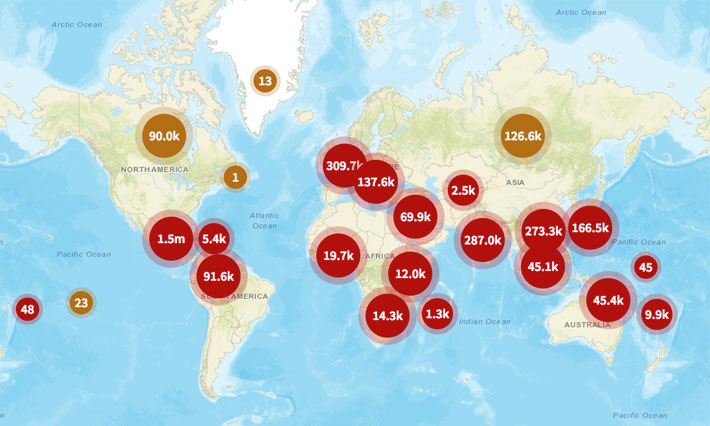
    This year’s edition in HEC Montréal University was officially opened with a keynote by Anant Agarwal, CEO at edX. He disclosed that the number of Open edX instances has grown from 800 instances in 2017 to 1,500 in 2018, with over 18,000 courses and 35 million learners.

    “Open edX is the largest educational platform in the world”, he said.

    Here is a selection of the most interesting tweets posted during the conference:


  • Agarwal: We Expect to Triple Our Global Reach to 100M Learners in 2022

    Agarwal: We Expect to Triple Our Global Reach to 100M Learners in 2022

    The edX Inc nonprofit organization, which currently handles the edx.org portal (16 million learners, 2,000+ courses, and 130 global partners) as well as the Open edX developers’ community, expects to triple its global reach to 100 million learners in 2022.

    Anant Agarwal, CEO at edX, made this prediction last Wednesday during the 2018 Open edX Conference opening keynote in Montréal, Canada.

    Mr. Agarwal also disclosed that the number of Open edX instances has grown from 800 instances in 2017 to 1,500 in 2018, with over 18,000 courses and 35 million learners.

    The keynote, titled “Reimagine Education Goals for 2022”available on YouTube, highlighted the goal of fully leveraging the power of digital technology for learning.

    According to Mr. Agarwal, it could be accomplished through AI-powered personalized learning (e.g. HarvardX Super-Earth, Quant Methods courses), leveraging the engagement of VR and AR, and harnessing the power of networks, such as crowdsourced hinting.

    Additional challenges will be based on unleashing the power of cognitive science (e.g. retrieval learning), as well as deploying deep analytics for learner engagement and platform stickiness.

    Another highlighted goal was to establish lifelong learning for all by creating a community, developing a portfolio of valued as well as relevant credentials and partnering with corporations.

    edX has plans to challenge its member partners to accelerate one year of Bachelor’s degrees with online credit, offer 20 percent of undergrad education to campus students fully online as well as offer both fully online and campus degrees and micro credentials at the Master’s level.

    Finally, Anant Agarwal presented the goal of building a fully modular model for education.

    What follows are the main slides of his presentation:


  • A Million Dollars May Be the Price Tag to Deploy and Maintain an Open edX Platform, Says a Provider

    A Million Dollars May Be the Price Tag to Deploy and Maintain an Open edX Platform, Says a Provider

    Installing, developing and maintaining Open edX is a costly effort, despite the fact that the software is free (90% of the code is open source).

    According to Nate Aune, founder of the Appsembler Open edX-cloud provider, “you’re potentially looking at spending up to $920,000 a year to host and implement Open edX yourself”. “Now for some companies, this number may be a drop in the bucket, but for many, the risk of this annual price tag is both unsustainable and unrealistic,” explains in his corporate blog. He recognizes that this projected amount is for a company headquartered in Californian Bay Area, where the engineering talent is very expensive.

    “There are two kinds of costs you will incur if you want to run Open edX yourself: people costs and hosting costs. And within each of these, there are one-time costs and recurring costs.” (…) “People roles you need are Software Engineer (with experience in Python, Django, Javascript and Docker); DevOps Engineer (with experience in Linux, Ansible, MySQL, MongoDB, RabbitMQ/Redis, Hadoop, and Cloud hosting); and Web Designer (with SASS/HTML5 experience)”.

    In terms of the infrastructure, another provider called Perpetual claims that “for a complete production, demo and testing environment set up, the cost goes to $1,829/mo or $21,932/yr.


  • Duke Encourages Its Community to Use Open edX For Internal Training

    Duke Encourages Its Community to Use Open edX For Internal Training

    Duke’s Learning Innovation department has made a recent call to university faculty or staff members who might be interested in training and creating their own edX-style courses. For this purpose, the Duke uses its own hosted Open edX platform, called Duke Extend.

    “Training opportunities include advice on how to incorporate video into your course, how to structure content in an online course, and how to create a variety of assessments to match your course topic. We can also tailor the training to best suit the needs of you and your colleagues who are producing content for the course,” encourages Justin Johnsen, who assists faculty to develop MOOCs.

    Only seven courses have been developed since Duke Extend was first deployed in November 2015. The last one, Launch with Sanyin, was released on May 4, and it was a two-hour class.

  • Prof. Lorena Barba Implements An Effective Flipped Learning Experience With Jupyter

    Prof. Lorena Barba Implements An Effective Flipped Learning Experience With Jupyter

    “The video-first approach puts students in a mode where they are primed to memorize and it gives an illusion of confidence”, explains GW’s professor Lorena Barba on a report in EdSurge about her unique approach to creating effective flipped learning experiences without videos.

    “Unfortunately what has happened with edX and Coursera, they are pretty much convinced that video is the center of everything,” she says. “The edX CEO last year said interweaving videos with quizzes are active learning, and that’s ridiculous.”

    Prof. Barba’s Practical Numerical Methods with Python” Open edX-style course, for Master’s-level students without prior coding experience, is the perfect example. This free, open-to-anyone MOOC is an extension of the on-campus course. Learners dive into programming exercises as homework using Jupyter Notebooks, an open-source web tool where users create and share live code, data visualizations, and notes about what they are working on.

    “Instead of watching videos, students individually follow instructions and experiment with Python in the Jupyter platform first, then arrive to class with questions and work through problems together. They come primed to discuss those things and learn in the classroom,” explains Barba.

    In Barba’s class, in-person active learning involves students working through examples and coding problems with peers in Jupyter. The professor also projects her own screen in the front of the class and works out a solution line-by-line so students can follow along.


    Useful Links

  • EdX Formulates Its Vision for Adaptive Learning

    EdX Formulates Its Vision for Adaptive Learning

    edX is working on a project in adaptive learning as a way to create a path to individualized education at scale. Nimisha Asthagiri, a principal software engineer at edX, has produced an interesting document that will be presented during the first Open edX Developer Summit, which will take place on June 1 after the Open edX 2018 conference.

    edX’s approach starts with the Pearson definition of Adaptive Learning –”Education technologies that can respond to a student’s interactions in real-time by automatically providing the student with individual support”–, analyzes the requirements, interoperable standards and technologies, and ends up suggesting an adaptive framework to be implemented in the edX platform.