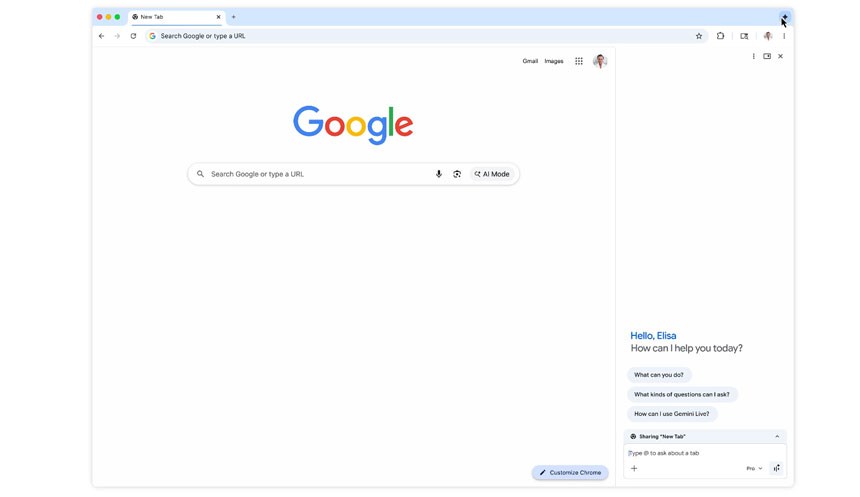
Google updated the Chrome browser on macOS, Windows, and Chromebook Plus to include Gemini 3’s agent capabilities this month.
Currently available only to AI Pro and AI Ultra subscribers, with no set date for general availability, these AI features are on display in a new side panel that lets users multitask across the web, regardless of which tab they are in.
The search giant is also adding the image generator Nano Banana directly into Chrome, allowing users to transform images on the fly without downloading and re-uploading them or opening another tab.
Additionally, Gemini in Chrome supports deeper integrations with apps, such as Gmail, Calendar, YouTube, Maps, Google Shopping, and Google Flights. These features can be enabled in the Connected Apps section of Gemini Settings.
Dario Amodei, CEO of Anthropic, warned of the imminent danger posed by superhuman intelligence to civilization. This manager is one of the most vocal moguls about AI risk.
“Humanity is about to be handed almost unimaginable power, and it is deeply unclear whether our social, political, and technological systems possess the maturity to wield it,” wrote Dario Amodei in a 38-page essay. “I believe we are entering a rite of passage, both turbulent and inevitable, which will test who we are as a species.”
Currently, AI handles 90% of the company’s computer programming.
However, he insists he’s optimistic that humans will navigate this transition, but “only if AI leaders and the government are candid with people and take the threats more seriously than they do today.”
In his essay, “The Adolescence of Technology: Confronting and Overcoming the Risks of Powerful AI”, Dario Amodei makes statements such as:
“AI will disrupt 50% of entry-level white-collar jobs over 1–5 years.”
“I think the best way to get a handle on the risks of AI is to ask the following question: suppose a literal ‘country of geniuses’ were to materialize somewhere in the world in ~2027. Imagine, say, 50 million people, all of whom are much more capable than any Nobel Prize winner, statesman, or technologist. … I think it should be clear that this is a dangerous situation — a report from a competent national security official to a head of state would probably contain words like ‘single most serious national security threat we’ve faced in a century, possibly ever.’ It seems like something the best minds of civilization should be focused on.”
“There is evidence that many terrorists are at least relatively well-educated. Biology is by far the area I’m most worried about, because of its very large potential for destruction and the difficulty of defending against it.”
“China’s government is currently autocratic and operates a high-tech surveillance state. AI-enabled authoritarianism terrifies me.”
“AI companies control large datacenters, train frontier models, have the greatest expertise on how to use those models, and in some cases have daily contact with and the possibility of influence over tens or hundreds of millions of users. They could, for example, use their AI products to brainwash their massive consumer user base, and the public should be alert to the risk this represents. I think the governance of AI companies deserves a lot of scrutiny.”
“There is so much money to be made with AI — literally trillions of dollars per year.”
“Wealthy individuals have an obligation to help solve this problem. It is sad to me that many wealthy individuals (especially in the tech industry) have recently adopted a cynical and nihilistic attitude that philanthropy is inevitably fraudulent or useless.”
“Humanity needs to wake up, and this essay is an attempt — a possibly futile one, but it’s worth trying — to jolt people awake.”
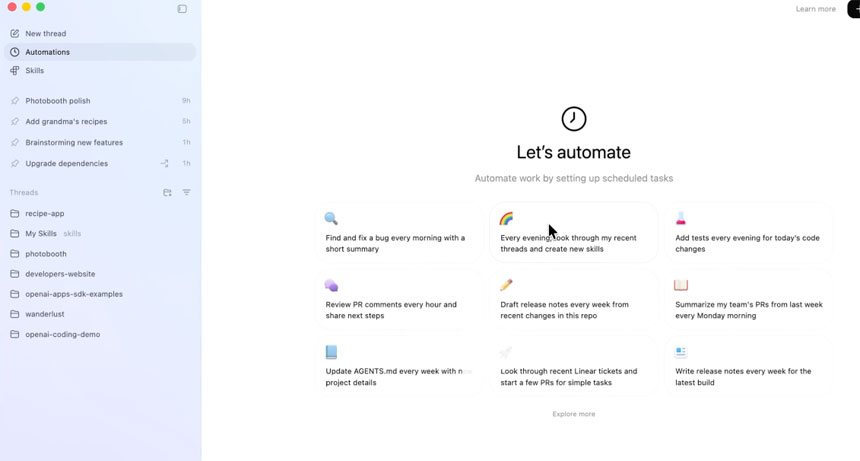
OpenAI announced the Codex app for macOS, with an interface designed to manage multiple agents at once, run them in parallel, and collaborate on long-running tasks. It’s included with ChatGPT Free and Go plans, and the company is doubling the rate limits on Plus, Pro, Business, Enterprise, and Edu plans.
Those higher limits apply everywhere you use Codex—in the app, from the CLI, in your IDE, and in the cloud.
OpenAI said, “The Codex app changes how software gets built and who can build it, from pairing with a single coding agent on targeted edits to supervising coordinated teams of agents across the full lifecycle of designing, building, shipping, and maintaining software.”
AI models can handle complex, long-running tasks end to end, and developers are now orchestrating multiple agents across projects: delegating work, running tasks in parallel, and trusting agents to take on substantial projects spanning hours, days, or weeks.
The core challenge has shifted from what agents can do to how people can direct, supervise, and collaborate with them at scale.
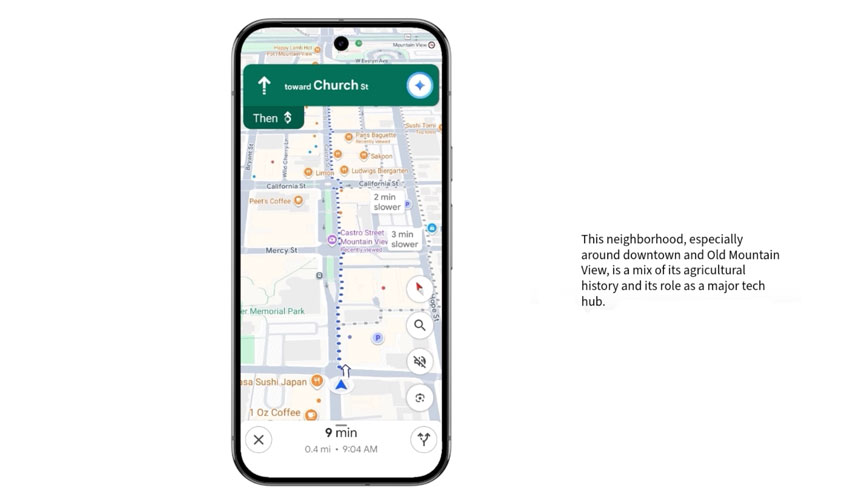
Google powered its Maps with AI, allowing users to ask the digital assistant Gemini questions while walking and cycling. The feature is available on iOS and Android.
The search giant explained that Gemini will work as a personal walking tour guide.
If the user is cycling, Gemini gives them hands-free help.
They can ask: “Is there a budget-friendly restaurant with vegan options along my route, something within a couple of miles?, or “What’s parking like there?” Followed by, “OK, let’s go there.” Users can even ask, “Oh, by the way, can you also add a calendar event for soccer practice tomorrow at 5 p.m.?”
Columbia State Community College received this month a $2.02 million, four-year federal grant from the U.S. Department of Education’s Fund for the Improvement of Postsecondary Education.
With the funding, this community college — the only one in Tennessee — will establish a new AI division and expand AI literacy across its programs, an initiative which is part of COMPASS (Community College Operational Model for Promoting AI Student Success).
This program is designed to build institutional capacity for AI while ensuring students gain practical AI skills, according to the announcement.
The grant will also help integrate AI tools across academic programs and student services, benefiting more than 1,200 first-year students each year.
“This grant establishes us as an AI cutting-edge institution, integrating AI throughout our curricula and services,” President Janet F. Smith said in the announcement.
“What we build here can serve as a model for community colleges nationwide,” Mehran Mostajir, Columbia State dean of the Business and Technology Division and assistant professor of Engineering Systems Technology,
Chinese company Qwen presented its latest flagship reasoning model, Max-Thinking, this month.
“Qwen3-Max-Thinking achieves significant performance improvements across multiple dimensions, including factual knowledge, complex reasoning, instruction following, alignment with human preferences, and agent capabilities,” said the company.
Qwen ensured that on “19 established benchmarks, Qwen3-Max-Thinking demonstrated performance comparable to leading models such as GPT-5.2-Thinking, Claude-Opus-4.5, and Gemini 3 Pro.
The new model includes two key innovations: an adaptive tool that leverages capabilities for on-demand retrieval and code interpreter invocation, and advanced test-time scaling techniques that significantly boost reasoning performance, “surpassing Gemini 3 Pro on key benchmarks.”
The adaptive tool is available at the free version of chat.qwen.ai.
Meanwhile, the API for Qwen3-Max-Thinking (model name qwen3-max-2026-01-23) is available to the public. Developers can first register an Alibaba Cloud account and activate the Alibaba Cloud Model Studio service, and then navigate to the console and create an API key.
The Qwen APIs are also compatible with the Anthropic API protocol, enabling Qwen3-Max-Thinking to work seamlessly with Claude Code.
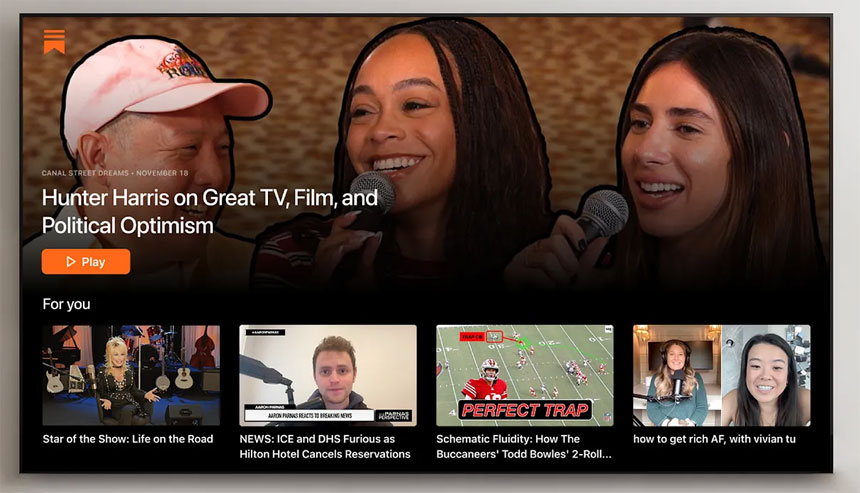
Substack, a publishing platform for podcasters and bloggers, announced this month the launch of its app for Apple TV and Google TV, which will host thought-provoking videos and livestreams for free and paid subscribers.
This content can include a variety of videos, from Dolly Parton reflecting on her showbiz journey, George Saunders reading from his book, to Tina Brown’s interviews with leading figures, and Chris Cillizza, the author of So What.
Substack creators’ videos will automatically be available for subscribers who are signed in to the TV app.
This initial version of the Substack TV app will host video posts and livestreams from the creators and publications they’re subscribed to, plus recommended videos, and an exploration area.
Veteran journalist and former CNN anchor Jim Acosta, who uses Substack’s live video feature to host a daily news show, said, “This is a game-changing moment for the rise of independent media. Substack has proven that legacy media consumers are not only searching for fresh alternatives; they are finding them.”
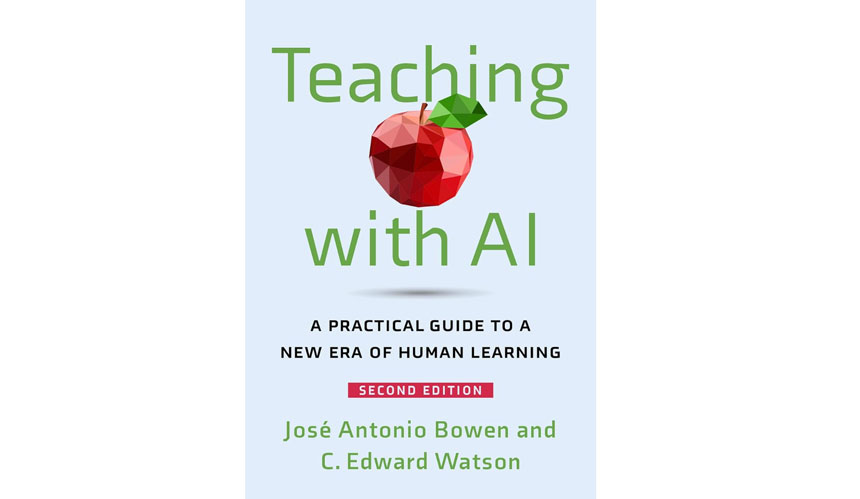
The book offers strategies for using AI to support course prep, grading, and assignment creation. It also emphasizes the need for critical thinking and AI literacy to prepare students for a changing world.
This guide for educators aims to demystify AI for faculty, providing actionable advice and exercises to help them navigate this new educational landscape.
The two authors are C. Edward Watson, Associate Vice President for Curricular and Pedagogical Innovation at the AAC&U, and José Antonio Bowen, former president of Goucher College and author of Teaching Naked.
The book comes with a useful website, weteachwithai.com, which includes an up-to-date list of AI models, practical guides to build and deploy bots, a library of practical AI prompts, and slides with updated citations for presentations.
• February 2, 2026: AI for Research, Work, and Thinking
• February 9, 2026: AI for Teaching and Learning
• February 23, 2026: Ethics, Cheating, Policy, & Writing
• March 2, 2026: Creativity, New Assignments, & Custom Bots
edX’s catalog of courses from leading universities and companies, including instructor-led executive education programs, will integrate directly into the Skillsoft Percipio Platform. The two companies announced the agreement last month.
The partnership expands the learning catalog available within the Skillsoft platform, while connecting that learning to how organizations build, apply, and track skills across the workforce.
According to Skillsoft’s 2025 Global Skills Intelligence Survey, only 10% of HR and learning leaders surveyed feel fully confident that their workforce has the skills needed to meet business goals over the next 12 to 24 months.
“The future of work will be defined by how effectively organizations connect skills to the way work actually gets done,” said Ron Hovsepian, Chief Executive Officer, Skillsoft.
Andy Morgan, Chief Partnerships Officer at 2U, said, “By joining forces with Skillsoft, we are making it easier for companies to access learning opportunities on edX through the Skillsoft platform, while opening the door for our university partners to reach more learners with world-class education.”
Leading institutions, including the University of Oxford, Saïd Business School, Harvard University, and the London School of Economics and Political Science (LSE), partner with edX / 2U to create programs.
AI video generation platforms like Colossyan, Synthesia, HeyGen, and NotebookLM are being adopted by L&D tech teams for rapid production, avatar realism, and multi-language output.
But only two platforms—Colossyan and Synthesia—support evidence-based instructional design in ways that matter most: embedded retrieval practice, learner control, and learning-relevant measurement.
However, critical gaps remain: none automate spacing, none actively prevent cognitive overload from over-signalling, and none make frequent generative retrieval practice the default.
• When researchers analysed 6.9 million MOOC video sessions, they found roughly 100% watching in the first three minutes, about 50% by six to nine minutes, and around 20% by nine to twelve minutes.
• Other studies found that well-designed interactive videos of 10–15 minutes produced learning outcomes equal to or better than those from shorter videos.
• Reports say that quizzes interpolated between video segments reduce mind-wandering and boost final test scores. Also, adding interactivity can expand learners’ effective engagement beyond the so-called “six-minute limit.”
The research is clear: segmentation reduces wasted mental effort. Retrieval practice strengthens memory. Spacing creates durable retention. Measurement enables improvement.
Dr. Philippa Hardmanhighlighted six principles for designing videos that actually produce learning, citing several research papers. These principles reduce cognitive overload, strengthen memory, activate motivation, respect autonomy, and build durable retention.
1. Intentional Segmentation
Breaking content into meaningful chunks improves learning.
Segmented videos beat continuous videos in terms of memory and transfer. Well-structured interactive videos of 10–15 minutes can perform as well as or better than shorter videos.
These segmented videos reduce cognitive load and improve retention compared to a continuous presentation
2. Embedded Retrieval Practice
Quizzes inserted between segments reduce mind-wandering and boost performance.
Retrieval within video content strengthens memory and interrupts passive viewing.
This effect is particularly pronounced in video-based learning, as research using Coursera lectures has found.
3. Strategic Signalling
Well-used visual and verbal cues in video content improve recall, but only when used selectively.
However, excessive or multi-coloured highlighting will backfire.
Effective signalling physically and temporally integrates text with visuals, using 3–4 selective cues per segment rather than cluttering screens with competing emphases.
4. Instructional Presence
Seeing a visible instructor as a presenter (human or hyper-realistic AI) increases motivation, trust, and transfer.
Gestures, facial expressions, and eye contact create a sense of social presence and interpersonal interaction, even when the instructor isn’t physically present.
5. Learner Control
People learn better when multimedia is presented in learner-paced segments rather than continuous units, allowing learners to manage cognitive load by pausing when needed.
Online learners can retain 25–60% more information than in traditional classrooms when they can learn at their own pace and revisit challenging content without time pressure.
6. Distributed Practice (Spacing)
A sequence of shorter sessions spaced days or weeks apart across multiple sessions dramatically improves long-term retention.
Treating video-based learning as a sequence with follow-up days/weeks later builds stronger memory.
To assess how well the mentioned video generation platforms support learning, Dr. Philippa Hardman turned these six evidence-based principles into a scoring rubric.
Segmentation Support: How well does the platform make it easy to chunk content into scenes or chapters?
Retrieval Practice: Can you embed quizzes directly in videos, at any point in the video?
Signalling & Guidance: Are there tools for text highlighting and emphasis that don’t overwhelm?
Learner Control: Can learners navigate by chapter, adjust playback speed, and replay sections?
Spacing Workflow: Does the platform help you create and schedule follow-up content for spaced practice?
Instructor Presence: Do avatars/presenters show realistic facial expressions and gestures?
Measurement Quality: Does the platform measure learning outcomes (quiz scores) or only engagement (completion)? Can you track results through SCORM or xAPI?
Iteration Stability: Can you edit videos without starting over while keeping instructional structure intact?
Key takeaways from the tests were:
• Only Colossyan and Synthesia scored Strong on embedded retrieval practice—what research identifies as one of the strongest predictors of retention. Both platforms offer built-in quizzes with manual designer placement, SCORM/xAPI export, pass-rate tracking, and immediate feedback.
• HeyGen and NotebookLM score very poorly: they lack native quiz support, no way to embed retrieval prompts, and no score tracking. They can scale content production efficiently, but they don’t easily support the mechanism that turns watching into durable learning.
• Colossyan and Synthesia also support learning-relevant measurement: capturing quiz performance data, pass rates, and learner-level results—the kind of feedback loop L&D teams rely on to improve instruction one of the platforms automate or optimise distributed practice workflows and spacing, which is essential for durable learning teams must manually schedule follow-up quizzes and application tasks 2–3 days and 1–2 weeks after initial video viewing—outside the video platform entirely.
• “For AI video generation to truly transform L&D—not just accelerate it—vendors need to build instructional design workflows that make bad instructional choices hard and good ones easy.”
• “The future of video-based learning isn’t faster production or more convincing avatars—it’s tools that operationalise learning science by default, so that creating effective instruction becomes the path of least resistance.”
• “The AI-video-generation platforms that will most likely win in the L&D space will be the platforms that enable and orchestrate effective learning at pace and scale.”