Category: Top News

  • Organizations Are Moving From Endless Pilots to Real Business Value Project, Says Deloitte

    Organizations Are Moving From Endless Pilots to Real Business Value Project, Says Deloitte

    IBL News | New York

    As the pace of change itself has accelerated, organizations are moving from endless pilots to impact with real business value—and a sense of urgency behind it. And successful businesses are moving from “What can we do?” to “What should we do?”, prioritizing velocity over perfection.

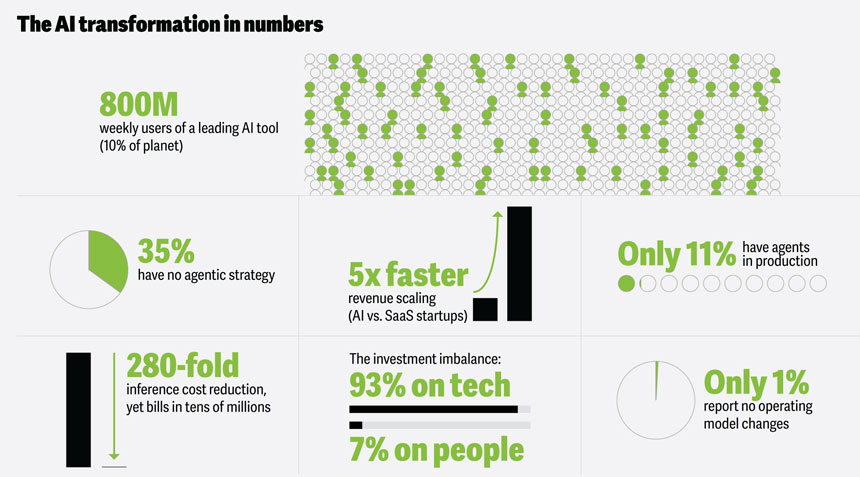
    The telephone took 50 years to reach 50 million users. The internet took seven years. Mobile reshaped consumer behavior. Cloud computing was transformative. A leading generative AI tool, ChatGPT, reached about twice that many in two months. Three years later, ChatGPT has over 800 million weekly users, roughly 10% of the planet’s population.

    Each improvement simultaneously accelerates all the others: Better technology enables more applications. More applications generate more data. More data attracts more investment. More investment builds better infrastructure. Better infrastructure reduces costs. Lower costs allow more experimentation.

    Deloitte subject-matter experts and external technology leaders stated in a report released this December that the data reveals several trends and interconnected forces:

    • AI is going physical, converging with robotics.

    • Organizations are automating broken processes, solving single points of pain, instead of redesigning operations. Gartner predicts that 40% of agentic projects will fail by 2027.

    • Organizations are discovering their existing infrastructure strategies aren’t designed to scale AI to production-scale deployment.

    • Token costs have dropped 280-fold in two years; yet some enterprises are seeing monthly bills in the tens of millions. Usage exploded faster than costs declined.

    • Leaders are shifting from incremental IT management to orchestrating human-agent teams, with CIOs becoming AI evangelists. “Success requires modular architectures, embedded governance, and perpetual evolution as core capabilities,” said Deloitte. 

    “The organizations that succeed will probably not be those with the most sophisticated technology. They’ll be those with the courage to redesign rather than automate, and the velocity to execute before the window closes.”

    “The gap between laggards and leaders grows exponentially.”
     

  • OpenAI Will Soon Add a Health Tab to ChatGPT that Provides Answers About Medical and Wellness Issues

    OpenAI Will Soon Add a Health Tab to ChatGPT that Provides Answers About Medical and Wellness Issues

    IBL News | New York

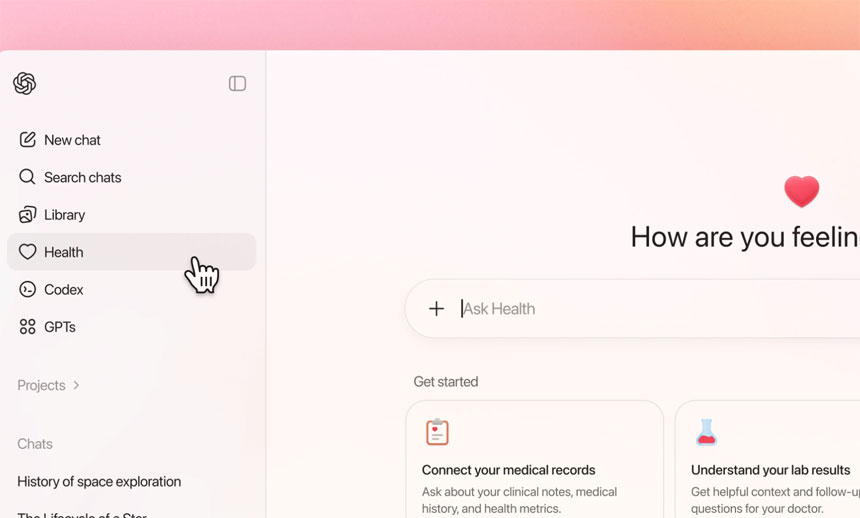
    OpenAI announced the launch of a dedicated health tab to ChatGPT, allowing people to bring in electronic medical records and other data from apps like Apple Health iOS, Function, and MyFitnessPal. This app is now in the waitlist phase.

    Health and wellness are already among the most common uses of ChatGPT, with over 230 million people globally asking related questions weekly.

    ChatGPT Health will also help users to understand recent test results, prepare for appointments with their doctor, get advice on how to approach their diet and workout routine, or understand the tradeoffs of different insurance options based on their healthcare patterns.

    The San Francisco-based lab ensured that this ChatGPT Health is built on “strong privacy, security, and data controls across with additional, layered protections designed specifically for health, including purpose-built encryption and isolation to keep health conversations protected and compartmentalized.”

    The company highlighted that it is not intended for diagnosis or treatment and doesn’t seek to replace clinicians. “ChatGPT Health helps people take a more active role in understanding and managing their health and wellness—while supporting, not replacing, care from clinicians.”

    OpenAI said it has worked with more than 260 physicians who have practiced in 60 countries and dozens of specialties to understand what makes an answer to a health question helpful or potentially harmful, and this group has provided feedback on model outputs over 600,000 times across 30 areas of focus.

  • How AI Will Shape Higher Education in 2026, According to Experts

    How AI Will Shape Higher Education in 2026, According to Experts

    IBL News | New York

    What will happen in Higher Ed in 2026 regarding AI? Inside Higher Ed interviewed a handful of experts to answer this question.

    Experts consider that the future will depend on what happens to the AI bubble.

    “If the bubble pops, we might see internal demands for AI slow, from faculty members to career services staff and governing boards,” said Bryan Alexander, a higher education scholar, futurist, and author. Also, any significant adverse developments or disasters could similarly reduce academic appetite for AI, he pointed out.

    • “Curricular implementations will consider offering additional campus-wide AI literacy programs, such as Ohio State University’s AI Fluency initiative.”

    • “Research into AI will continue, starting with the computer science field, but also in disciplines such as economics, political science, new media studies, and psychology, as each school applies its distinct intellectual methods to the topic.”

    Lindsay Wayt, senior director of business intelligence for the National Association of College and University Business Officers, said, “Institutions will continue to work to scale AI strategies and uses to the enterprise level.”

    • “The pace of change is the biggest challenge confronting colleges and universities when it comes to fully leveraging AI.”

    “Leaders continue to make sure AI use supports the institutional mission, priorities, and students, looking for effective ways to measure and communicate the return on investment in AI tools and resources.”

    Rebecca M. Quintana, clinical associate professor at the Marsal Family School of Education at the University of Michigan. said, “Higher ed should be prepared for growing AI disillusionment, as we grapple with the costs associated with AI use, including environmental and societal impacts.

    • “Today’s AI-powered tools are still relatively underdeveloped and are likely to change rapidly in the months and years ahead.”

    • “Faculty, students, and administrators should also be prepared for a growing resistance to AI use within higher education contexts.”

    • “Faculty may be observing that students are using AI in ways that do not support their learning and growth. Students are also sensing that extended use of AI does not align with their personal educational goals and ethical stances.”

    Mark McCormack, senior director of research and insights at Educause, noted, “In 2026, it will require leaders who can educate and train users in the safe, effective adoption of these tools, while also partnering closely with academic and programmatic leaders to ensure students gain the skills they need for their educational journeys and future careers.”

    • “Faculty will remain on the front lines of AI adoption, navigating their own use while also guiding and supporting students’ use of these tools.”

    • “Beyond the classroom, AI has the potential to drive administrative efficiency and more sophisticated decision-making.”

    • “Across all these institutional contexts, our technology teams will have to remain connected—present and responsive, providing guidance, listening to concerns, and building trust through sustained, human-centered support.”

    Joe Abraham, CEO of Intellicampus, explained, “Institutions will work to end system fragmentation and use AI to boost efficiency and automation across departments, platforms, and offices.”

    • “In 2026, higher education institutions will increasingly prioritize ending the fragmentation of systems that were never designed to work together. “

    • “Advising platforms, enrollment tools, financial aid, billing, and LMS data often operate in isolation, creating complexity, cost, and blind spots.”

    • “Institutions will need to find ways to unify data, workflows, and insights without replacing existing systems. Specifically, exploring agentic orchestration and workflow automation to enhance speed, coordination, and accuracy without adding new tools for staff to learn or manage.”

    “This will ensure institutionwide impact: stronger student and faculty experiences, simpler operations, and measurable outcomes that demonstrate the value of connected, intelligent systems.”

  • NVIDIA’s CEO Announces It Will Open-Source Its AI Models and Data

    NVIDIA’s CEO Announces It Will Open-Source Its AI Models and Data


    IBL News | New York

    NVIDIA CEO Jensen Huang shared this week at the CES Show in Las Vegas how the next generation of accelerated computing and AI will transform every industry.

    At the Consumer Electronics Show in Las Vegas (CES), the leader of the world’s most valuable company said that the company’s next-generation chips, now in full production, will deliver five times the AI computing power of previous chips when serving AI apps.

    The Vera Rubin platform, comprising six separate Nvidia chips, is expected to debut later this year.

    Much of Jensen Huang’s speech focused on how well the new chips would perform for that task, including a new storage layer called “context memory storage” aimed at helping chatbots provide snappier responses to long questions and conversations.

    Huang highlighted new software that can help autonomous vehicles make decisions about which path to take. NVIDIA showed research on software called Alpamayo late last year, saying on Monday it would be released more widely, along with the data used to train it, so that automakers can evaluate it.

    This year, Mercedes-Benz will begin shipping CLA model cars equipped with Nvidia self-driving technology comparable to Tesla’s Autopilot.

    “Not only do we open-source the models, but we also open-source the data that we use to train those models, because only in that way can you truly trust how the models came to be,” Huang said from a stage in Las Vegas.

    While Google is a major Nvidia customer, its own chips have emerged as one of Nvidia’s most significant threats, given Google’s close ties with Meta Platforms.

  • OpenAI Invites Developers to Submit Apps to ChatGPT

    OpenAI Invites Developers to Submit Apps to ChatGPT

    IBL News | New York

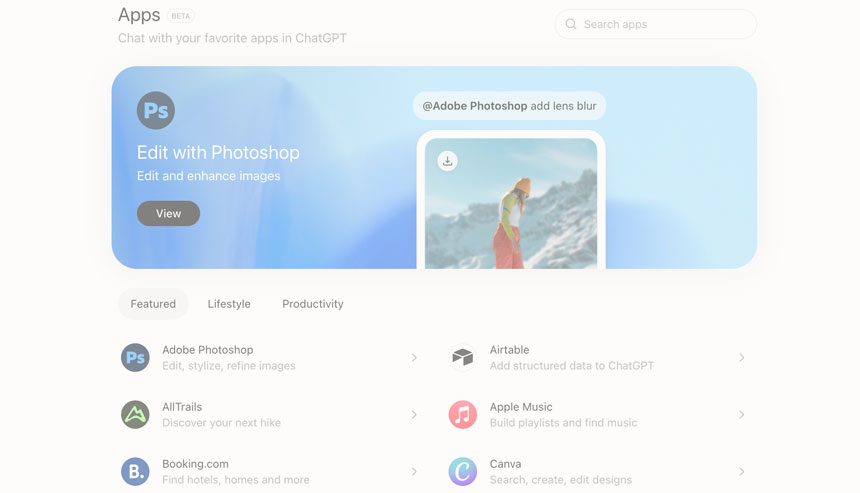
    OpenAI invited developers this month to submit apps for review and publication in ChatGPT.

    Currently, apps extend ChatGPT’s capabilities by taking actions such as ordering groceries, turning outlines into slide decks, or searching for an apartment.

    OpenAI is also introducing an app directory directly from chatgpt.com/apps or right inside ChatGPT. Users can browse featured apps or search for any published app.

    Once users connect to apps, those apps can be triggered during conversations when they are @-mentioned by name or selected from the tools menu.

    Developers can use the Apps SDK—now in beta—to build chat-native experiences that bring context and action directly into ChatGPT.

    Once ready, developers can submit apps for review and track approval status in the OpenAI Developer Platform⁠. Submissions have to include MCP connectivity details, testing guidelines, directory metadata, and country availability settings.

    The first set of approved apps will begin rolling out gradually in the new year.

    What makes a great ChatGPT app⁠
    Open-source example apps
    Open-sourced UI library⁠ for chat-native interfaces
    Quickstart guide⁠

  • Fifteen Colleges Closed Down and Seven Merged in 2025 Amidst Declining Enrollment

    Fifteen Colleges Closed Down and Seven Merged in 2025 Amidst Declining Enrollment

    IBL News | New York

    As the higher ed industry navigated rising operating costs, federal funding freezes, and caps on student loan programs, fifteen nonprofit institutions, including seven campuses from the Pennsylvania State Commonwealth, announced closures in 2025, according to Inside Higher Ed.

    In 2024, the number of closures was sixteen, and in 2023, fourteen.

    Of the other eight colleges that announced closures, five were religiously affiliated.

    Enrollment at colleges that announced closures ranged from nearly 2,000 students to fewer than 100. Most had seen enrollment tanking for years while operating costs continued to rise, creating untenable deficits.

    Next year is also likely to be challenging for higher education; three credit rating agencies issued unfavorable outlooks for 2026.

    Here are colleges that announced closures this year:

    • Northland College, a small private college

    • St. Andrews University, a private North Carolina campus, is a branch of Florida-based Webber International University

    • Limestone University, a Christian university in South Carolina

    • Bacone College, a private institution in rural Oklahoma

    • Seven Penn State Commonwealth Campuses in Dubois, Fayette, Mont Alto, New Kensington, Shenango, Wilkes-Barre, and York.

    • Siena Heights University, a Catholic institution in Michigan

    • The King’s College, an Evangelical college in New York City

    • Trinity Christian College, a private college outside of Chicago

    • Sterling College, a tiny work college in Vermont

    The above list does not include Martin University, which paused operations earlier this month and appears on the brink of closure.

    As some colleges closed, others merged with or were absorbed by larger institutions. Inside Higher Ed tracked seven college mergers and acquisitions announced this year, down from 12 in 2024.

    • Villanova University will absorb a larger institution, Rosemont College

    • The University System Board of Regents approved a merger between two of its members in April, an arrangement that will see East Georgia become part of the larger Georgia Southern.

    • Russell Sage College and Albany College of Pharmacy and Health Sciences announced a merger in April.

    • Kean University and New Jersey City University, two public universities in New Jersey, struck an agreement to begin merger negotiations.

    • Morningside University will absorb St. Luke’s College in Iowa.

    • Elon University and Queens University of Charlotte, in North Carolina, announced they plan to merge.

    • Pacific University and Willamette University announced earlier this month that they are exploring a merger, which would create the largest private institution in Oregon, the University of the Northwest.

  • Forbes Selected Ten Educational Platforms Who Made Waves During 2025

    Forbes Selected Ten Educational Platforms Who Made Waves During 2025

    IBL News | New York

    According to Forbes, ten educational platforms made waves during 2025 by reducing friction, clarifying thinking, and supporting better judgment. These tools didn’t try to replace educators or redesign schooling overnight.

    “The most effective platforms respected teaching, reduced mental load, and helped educators make better decisions. The year was about technology that was beginning to fit the reality of education,” wrote Forbes.

    1. ChatGPT for Education
    Access to the latest model seats alongside file uploads, search, image generation, and connectors for Google Drive, Microsoft 365, and Canva.

    The tool of memory, combined with admin controls, secure access, and district partnerships, became one of the clearest examples of AI built around teachers rather than around novelty.

    2. NotebookLM from Google
    With the new Gemini 3 powering it, reasoning and multimodal understanding improved noticeably, and it became embedded in Google Workspace for Education.

    New features such as video overviews, multilingual audio summaries, and deep research tools changed how documents were used.

    3. Canva Magic Studio for Education
    Magic Studio for Education expanded in ways that felt practical rather than experimental.

    Teachers created lessons, slides, worksheets, and activities quickly from short prompts. AI tools were embedded directly into the editor, assignments, and Sheets, rather than being bolt-on additions.

    4. Kahoot
    Notes, documents, web pages, and topics could be turned into quizzes, revision tools, and short learning sequences.

    Features such as exam question extraction, guided problem-solving, offline study, and test simulation, along with motivation tools like streaks and study groups, made it powerful in students’ hands.

    5. Superhuman Go
    Built by Grammarly, it supported writing, research, instructional design, and workflows through AI agents. Its first major deployment arrived through a partnership with Arizona State University in October.

    6. Copilot Teach
    Developed by Microsoft, it allowed educators to create lessons, rubrics, quizzes, and study materials within the Microsoft 365 Copilot app. Content could be adjusted for reading level, difficulty, length, and language.

    Planning tools supported lesson design, and assessment tools helped turn materials into interactive resources.

    7. Claude for Education
    Created by Anthropic, Claude for Education focused on responsible use. Its learning mode encouraged students to think through problems rather than receive answers. Early adopters were Northeastern University, the London School of Economics, and Champlain College.

    8. Brisk Teaching
    This platform enabled planning, activities, and assessment, while teachers could adapt content instantly, assign work without logins, monitor progress in real time, and provide rapid feedback.

    9. SchoolAI
    The introduction of Dot as an embedded assistant, alongside PowerUps such as flashcards, games, mind mapping, translation, and image tools, expanded the platform’s capabilities.

    10. Olex.AI
    Olex.AI’s Writing Framework PowerPack helped schools embed England’s national writing framework in a way that teachers could teach, pupils could use, and leaders could evidence.

    Developed with Dr Tim Mills MBE, it demonstrated how AI can support the British system’s national policy rather than work around it.

  • Most AI Startups Make Money by Selling to Businesses Rather than Consumers

    Most AI Startups Make Money by Selling to Businesses Rather than Consumers

    IBL News | New York

    Three years after the generative AI boom began, most AI consumer startups still make money by selling to businesses rather than individual consumers.

    This is one of the primary outcomes of TechCrunch’s StrictlyVC event in early December, where venture capitalists discussed why most consumer AI startups still lack staying power.

    “A lot of early AI applications around video, audio, and photo were super cool, but then Sora and Nano Banana came out, and the Chinese open-sourced their video models. And so, a lot of those opportunities disappeared,” said Chi-Hua Chien, Co-Founder and Managing Partner at Goodwater Capital.

    “I think we’re right on the cusp of the equivalent of mobile of the 2009-2010 era,” Chien said. That period was the birth of massive mobile-first consumer businesses like Uber and Airbnb.

    Startups and incumbent tech companies highlighted the idea of a new personal device that could replace smartphones.

    OpenAI and Apple’s former design chief, Jonny Ive, are working on what’s rumored to be a “screenless,” pocket-sized device. Meta’s Ray-Ban smart glasses are controlled by a wristband that detects subtle gestures. Meanwhile, some startups are trying, with often disappointing results, to introduce a pin, pendant, or ring that uses AI in a way different from how smartphones do.

  • The George Washington University Launches its GW Engineering AI Academy

    The George Washington University Launches its GW Engineering AI Academy

    IBL News | New York

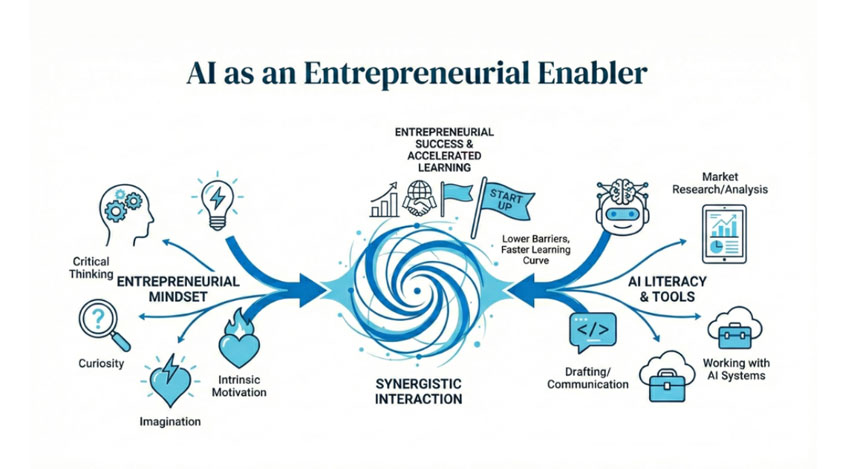
    The George Washington University launched its GW Engineering AI Academy in November to equip faculty to lead change through AI fluency and an entrepreneurial mindset.

    This strategic initiative aims to position the GW’s School of Engineering and Applied Science as an AI-forward institution, taking a leadership position.

    “We’re building AI literacy across our school, moving from uncertainty to confidence, from tools to workflows, and from passive adoption to intentional innovation,” said Professor Lorena Barba, GW Engineering AI Academy Director.

    “The entrepreneurial mindset aids in challenging the status quo, recognizing opportunities at the intersection of disparate concepts, and solving complex problems to drive meaningful societal impact and human flourishing. Our vision is: AI Literacy as the Foundation for Transformation.”

    The integration of AI literacy with the Entrepreneurial Mindset is a framework championed by the Kern Entrepreneurial Engineering Network (KEEN), of which GW is a partner. This framework follows “a set of attitudes, habits, and behaviors conducive to problem-solving, innovation, and value creation, especially in engineering contexts.”

    “The result of this initiative is engineering education that prepares students not just to use AI, but to shape how AI serves humanity,” explained Lorena Barba.

    For the inaugural session with the first faculty cohort, the GW Engineering AI Academy focused on AI Workflows, exploring how to move from being an AI “operator” to an AI “manager, orchestrating a team of digital specialists.

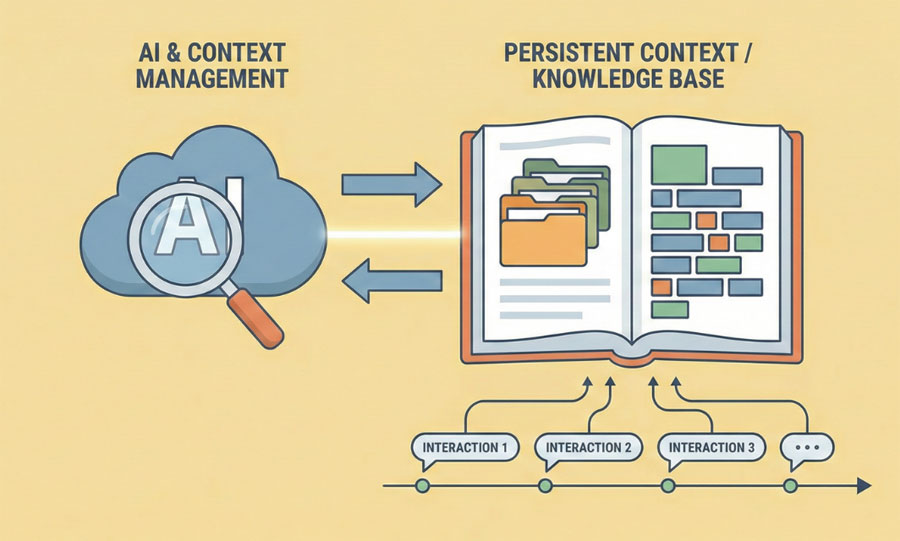
    The second session focused on context management by curating and maintaining an optimal information bank available in everyone’s AI assistant.

  • The Trump Administration Dismisses the Risks of AI as It Pursues Faster Economic Growth

    The Trump Administration Dismisses the Risks of AI as It Pursues Faster Economic Growth

    IBL News | New York

    The Trump Administration is dismissing the risks of AI — from mass job losses to a potential financial bubble — as it is chasing faster growth and cheers soaring stock prices.

    Asked whether he harbors any fears about an emerging bubble that can damage the economy, President Trump recently said, “No. I love AI.”

    In an elaborated report, The New York Times concludes that the president and his top aides have fully embraced AI and showered its leading corporate backers with money and regulatory support.

    That optimism was on display on Tuesday, after the federal government reported that the U.S. economy grew at an annual rate of more than 4 percent last quarter.

    Kevin Hassett, the director of the White House National Economic Council, said the new data indicated the president’s broader agenda was working, as he touted signs of a “boom” in AI.

    However, many economists and even some technologists in Silicon Valley say that AI might cause significant job losses and pose a risk of financial havoc.

    President Trump, who has long viewed the stock market as a barometer of his economic success, has celebrated the soaring stock prices of major technology companies like Nvidia.

    Through a series of executive orders, signed over the last 11 months, Mr. Trump has moved to eliminate regulatory guardrails and make it easier for tech companies to build data centers, power their operations, sell computer chips, and source critical materials.

    He has done so under the advisement of David Sacks, a Silicon Valley investor now serving at the White House, who has publicly likened AI skeptics to a “doomer cult.”

    For now, economic data show no mass firings due to AI. But it also proves how it is reshaping the labor force, particularly for younger Americans, including recent college graduates.

    A study from the Federal Reserve Bank of New York found that companies embracing AI in the region mainly opted to retrain their workers, rather than let people go. More striking, however, was the slow rate at which these companies were hiring new workers, especially for college-educated positions.

    The New York Fed’s report also found that adoption disproportionately reduced employment for workers ages 22 to 25 in industries set to be highly affected by the technology.

    This month, President Trump signed a directive that restricted states from imposing their own regulations on the technology.