Category: Top News

  • Microsoft Made ChatGPT Available On Its Azure OpenAI Service

    Microsoft Made ChatGPT Available On Its Azure OpenAI Service

    IBL News | New York

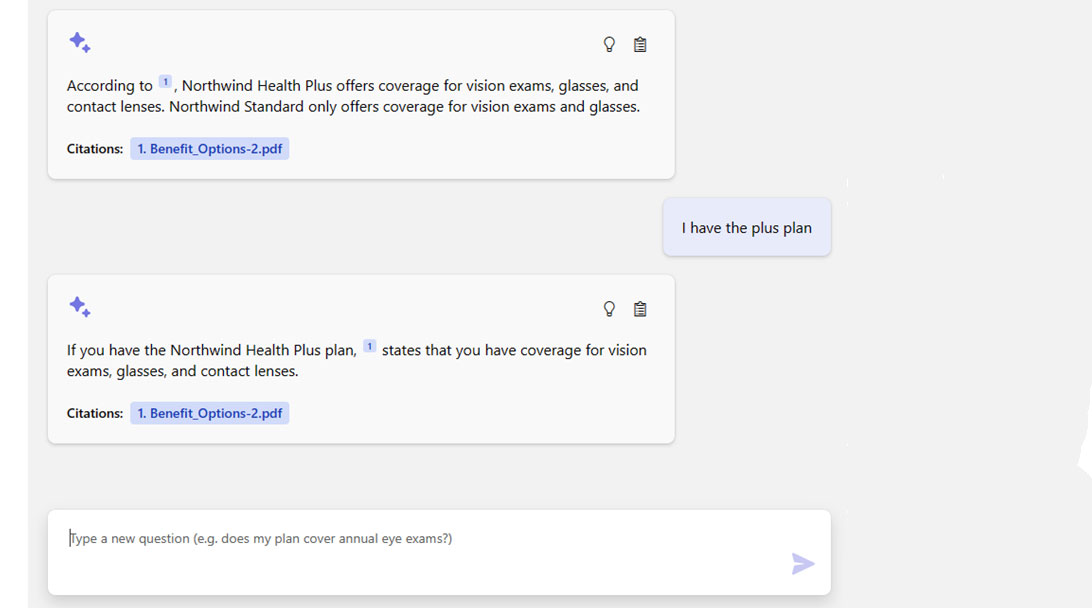
    Microsoft made ChatGPT available on its own Azure OpenAI service in a more enterprise-friendly package this Thursday. It will allow businesses to integrate ChatGPT into their own cloud applications to handle queries from customers, provide summaries of conversations, create personalized offers, and help automate emails, among other tasks.

    The available AI tools include the text-generating GPT-3.5, the code-generating Codex, and the image-generating DALL-E 2.

    The company posted some examples of the implementation.

    It explained that ChatGPT was priced at $0.002 per 1,000 tokens or about 750 words. That’s the same price as the developer-focused ChatGPT API, which launched on March 1. Microsoft said today that over 1,000 brands are enrolled in the Azure OpenAI Service.

    Currently, Microsoft’s offer leveraging AI models in Azure OpenAI includes:

    GitHub Copilot to help developers accelerate code development with its AI pair programmer
    Microsoft Teams Premium to intelligent recap and AI-generated chapters to help individuals, teams, and organizations be more productive.
    Microsoft Viva Sales’ to help sales teams to set email content and data-driven insights.
    Microsoft Bing to enhance consumers’ search experience in completely new ways.

    “We’re already seeing the impact AI can have on people and companies, helping improve productivity, amplify creativity, and augment everyday tasks,” said Eric Boyd, Corporate Vice President of AI Platform at Microsoft. We believe AI will profoundly change how we work, and how organizations operate in the coming months.”

    Meanwhile, startups and businesses continue to rush to integrate AI features into their apps and services. Rivals like Amazon are reportedly struggling to keep up, according to The Verge.


  • DuckDuckGo Unveils a Feature that Summarizes Information Using Generative AI

    DuckDuckGo Unveils a Feature that Summarizes Information Using Generative AI

    IBL News | New York

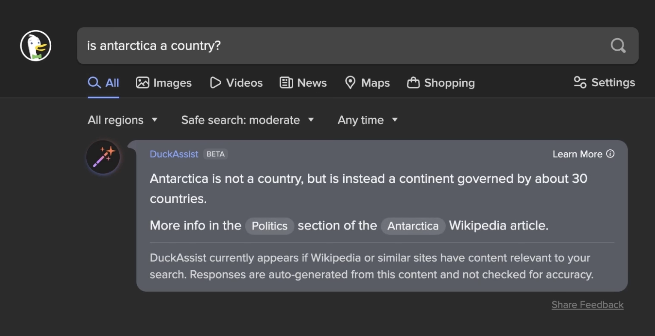
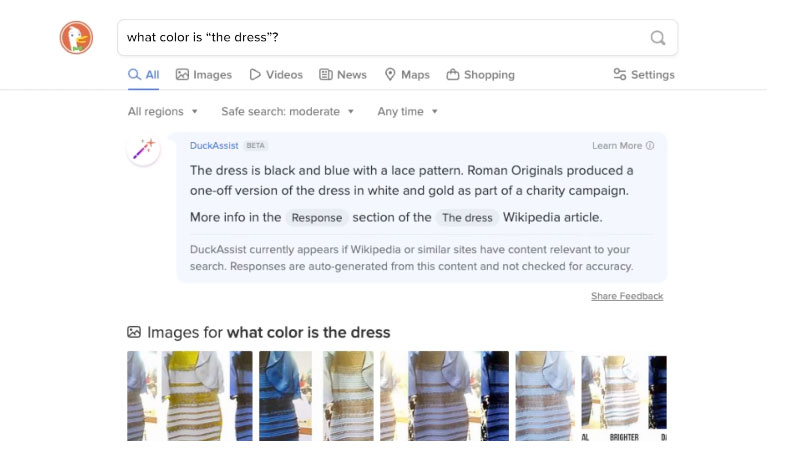
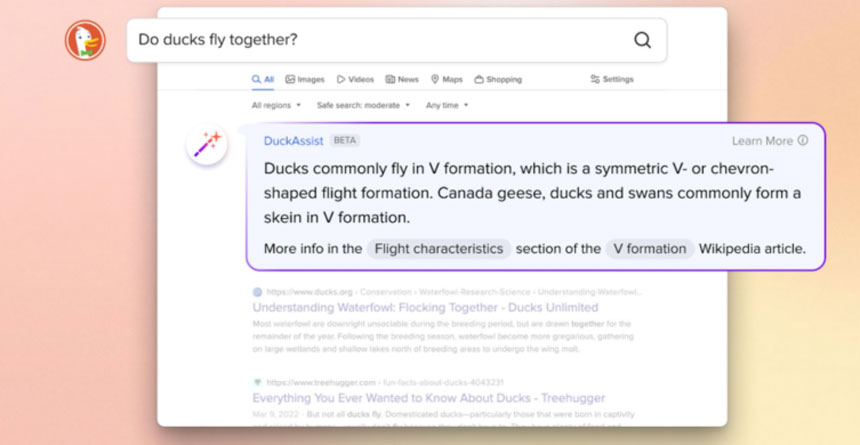
    The privacy-focused search engine DuckDuckGo entered the generative technology race by announcing a free AI-powered summarization feature, an instant answer but not a chatbot, called DuckAssist this week.

    DuckAssist — in beta now and only available via apps and browser extensions — suggests natural language answers in English when it recognizes a search engine it can answer. And when an AI-powered response is available, the user sees a magic wand icon with an “ask me” button in their search results.

    “If this DuckAssist trial goes well, we will roll it out to all DuckDuckGo search users in the coming weeks,” said Gabriel Weinberg, CEO of DuckDuckGo, in a blog post.

    DuckDuckGo says it’s drawing on natural language technology from Davinci model from OpenAI and Claude model from Anthropic, combined with its own indexing of Wikipedia — “99%+ is Wikipedia” — and occasionally related sites like the Encyclopedia Britannica, among other sources. The company also notes DDG is “experimenting” with the new Turbo model OpenAI recently announced.

    Although it’s imperfect, DuckDuckGo considers Wikipedia a relatively reliable source.

    DuckDuckGo Enters The AI Race With DuckAssist

    Moreover, Gabriel Weinberg, CEO of DuckDuckGo, said:

    “Generative AI technology is designed to generate text in response to any prompt, regardless of whether it “knows” the answer or not. By asking DuckAssist to only summarize information from Wikipedia and related sources, the probability that it will “hallucinate” — that is, just make something up — is greatly diminished.”

    “In all cases though, a source link, usually a Wikipedia article, will be linked below the summary, often pointing you to a specific section within that article so you can learn more.”

    “Nonetheless, DuckAssist won’t generate accurate answers all of the time.”

    “DuckAssist may also make mistakes when answering especially complex questions, simply because it would be difficult for any tool to summarize answers in those instances.”


  • Grammarly Announces a Generative AI Writing Assistant

    Grammarly Announces a Generative AI Writing Assistant

    IBL News | New York

    Grammar-checking tool Grammarly announced the launch in April as a beta of GrammarlyGO, a suite of Generative AI tools that can write content in a personal style. It will include a Text Editor SDK for developers.

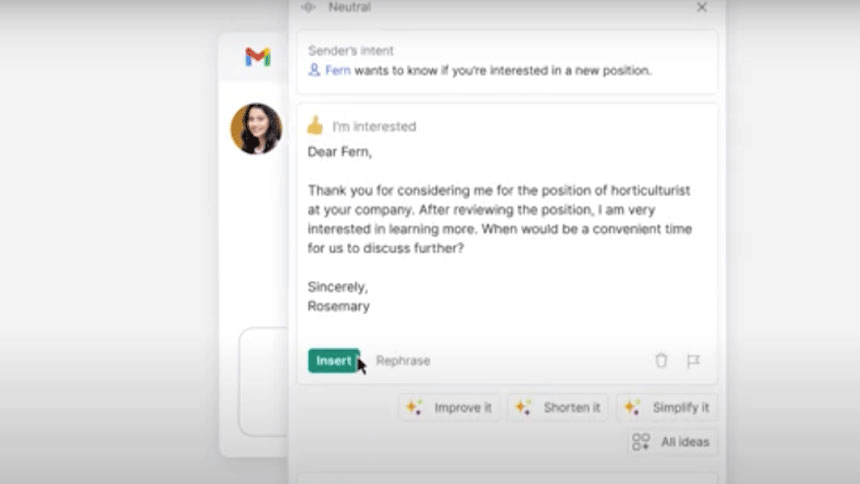
    Like ChatGPT, GrammarlyGO is able to create text based on a short prompt and points out one-click prompts such as “I’m not interested.”

    The company says that its tool “takes into account your context, preferences, and goals to instantly generate high-quality drafts, outlines, replies, and revisions when you need them.”

    “We go beyond standard generative AI by producing text that is specifically relevant and effective for each customer,” said Grammarly’s Global Head of Product, Rahul Roy-Chowdhury in a blog post

    GrammarlyGO featured these functionalities:

    • Rewrite for tone, clarity, and length: Transform writing to be clear and on target, whatever the context.
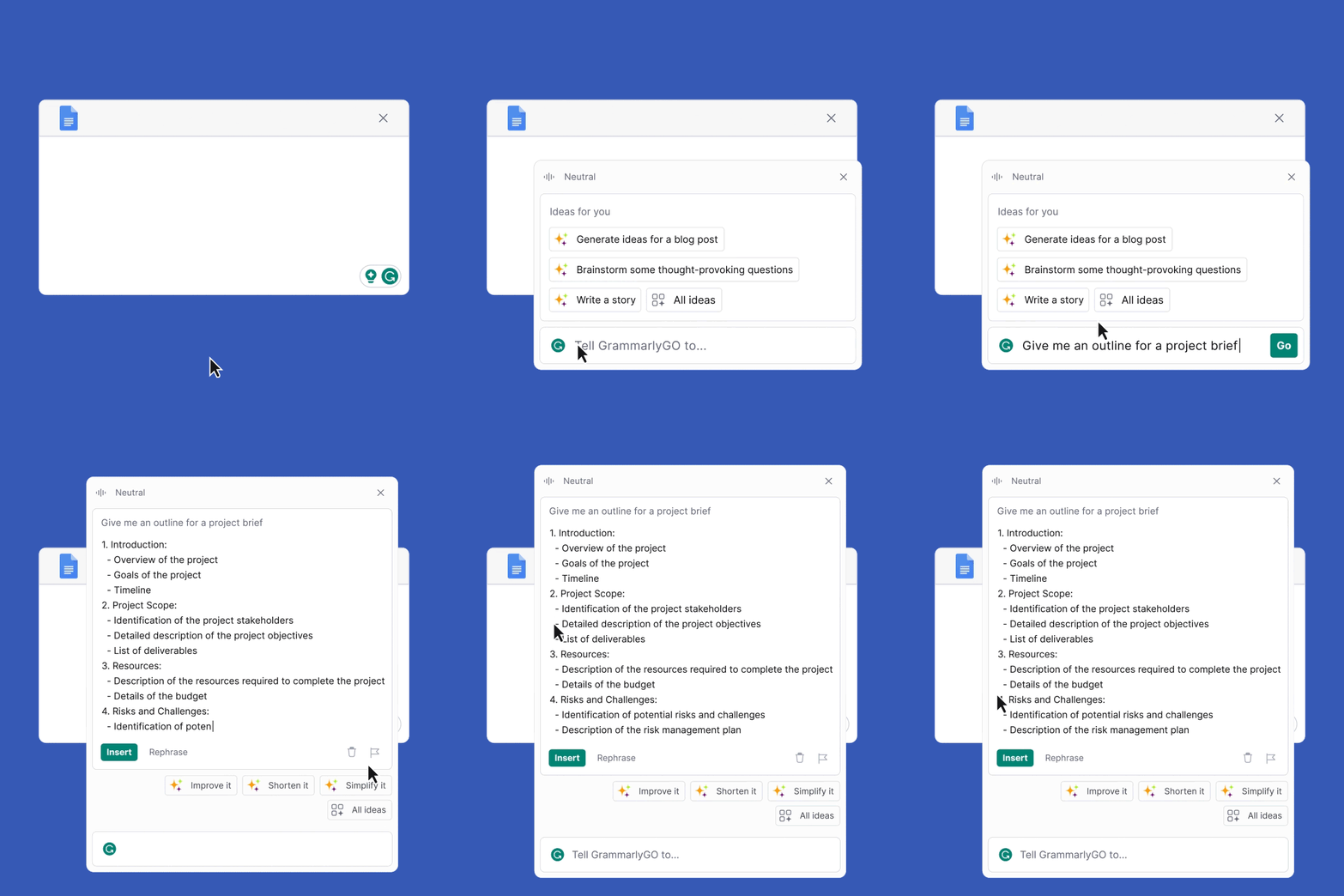
    • Compose: Type a prompt and watch GrammarlyGO compose high-quality writing, saving time finding the perfect words.
    • Ideate: Unblock writing with GrammarlyGO as an AI ideation partner and unlock creativity with GrammarlyGO’s outlines and brainstorms, generated from prompts.
    • Reply intelligently: Flow through emails quickly with GrammarlyGO, which understands an email’s context and instantly drafts a thoughtful reply.


  • Microsoft Releases an AI Chatbot for Marketers, Customer Reps, and Sales People

    Microsoft Releases an AI Chatbot for Marketers, Customer Reps, and Sales People

    IBL News | New York

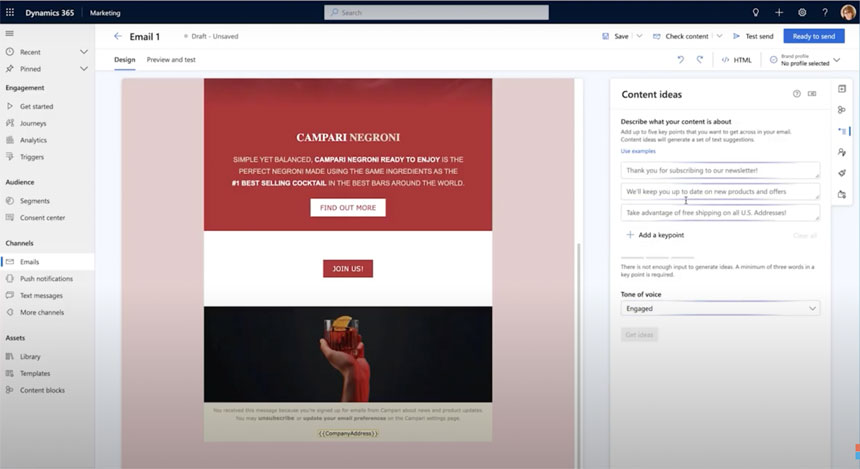
    Microsoft Corp is deploying a new Open AI-powered assistant, called Dynamics 365 Copilot, that handles tasks such as sales, marketing, and customer service.

    This way is trying to catch up with rivals in the corporate applications market, such as Oracle, Salesforce, and SAP.

    Dynamics 365 Copilot can draft contextual chat and email answers to customer-service queries.

    It also can help marketers come up with customer categories to target and write product listings for e-commerce.

    To help customer service representatives, Copilot will comb through a company’s materials and a customer’s case history and offer answers based on that knowledge.

    The new capabilities were released in preview form last Monday for early customers.

    “If you think of a customer service agent, he’s dealing with a customer inquiry and 18 different databases internally to come up with the responses,” Microsoft’s CEO Nadella said. “Now you have this copilot that allows you to interrogate the 18 databases and craft a response without distracting the agent from the customer,” he said.

    Marketers can have chats with their customer data software in plain English to develop targeted customer groups and also get suggestions for additional segments they may not have thought of.

    The bot will also help them get creative, making suggestions for email campaigns based on topics and requested tone.

    On March 16, Microsoft plans to launch a set of AI enhancements for its Office software.

    In business applications, Microsoft was lagging behind its rivals. Now the company is adding language-generation tools to everything from its Bing internet-search engine to the Teams corporate-conferencing software.

  • Salesforce Issues a ChatGPT-Style AI Agent For Writing Marketing Content

    Salesforce Issues a ChatGPT-Style AI Agent For Writing Marketing Content

    IBL News | New York 

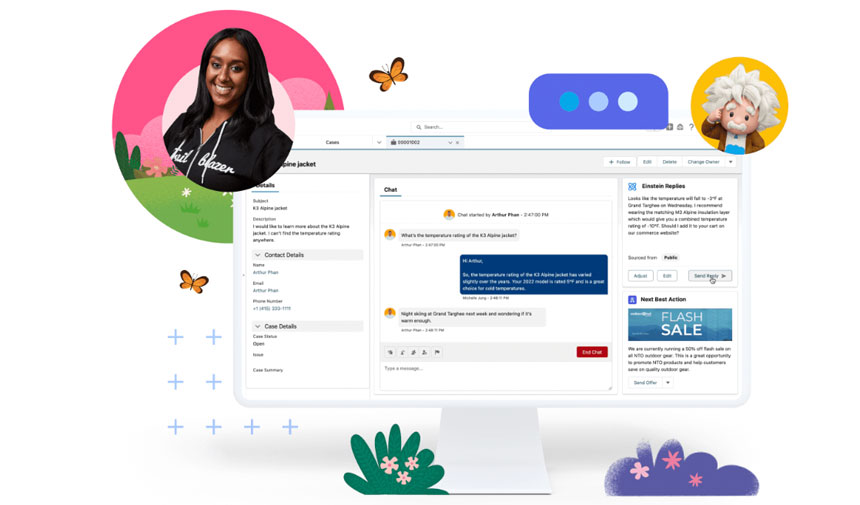
    Salesforce said it’s releasing an OpenAI-powered chatbot, called Einstein GTP, to help salespeople, customer service agents, and marketers do their jobs. This new tool will be able to write customer service responses and marketing content. It’d be in Salesforce’s words “the world’s first generative AI for CRM.”

    Salesforce is the latest tech powerhouse joining the AI chatbot phenomenon, a technology that has taken the industry by storm since the Microsoft-backed startup opened ChatGPT to the public in November.

    Salesforce said that to avoid potential misinformation, it has narrowed the field of data that can influence the answer and involved human agents.

    Like Microsoft with its Dynamics applications Copilot, Salesforce is showing off services that can write marketing emails.

    Also, Salesforce clients will be able to exchange Slack messages with a ChatGPT chatbot that can show data from Salesforce.

    “In combination with our Data Cloud and deeply integrated with Customer 360, including Tableau, MuleSoft, and Slack, Einstein GPT will open the door to the next level of intelligence and drive digital transformations in our new AI world,” Salesforce CEO Marc Benioff said in a statement about the new offering.

    Salesforce started working with OpenAI’s language models a year ago.


    https://youtu.be/2WBeEaDUo1s

    https://youtu.be/YAsKRxXdyj0

  • Israeli Start-Up D-ID’s API Enables Face-to-Face Chats with AI

    Israeli Start-Up D-ID’s API Enables Face-to-Face Chats with AI

    IBL News | New York

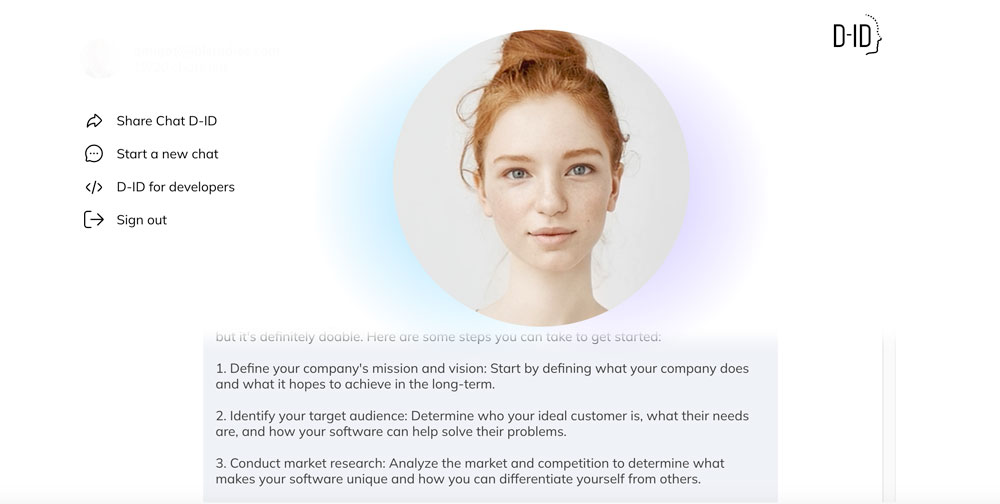
    The Israeli AI start-up D-ID issued an upgraded API that allows to create digital assistants who can interact with consumers face-to-face.

    These interactive digital humans — available through a pro, paid account on — combine D-ID’s popular AI video technology with large language models such as GTP-3 and LaMDA.

    In other words, this generative AI API supports synchronistic, streamed videos from audio files.

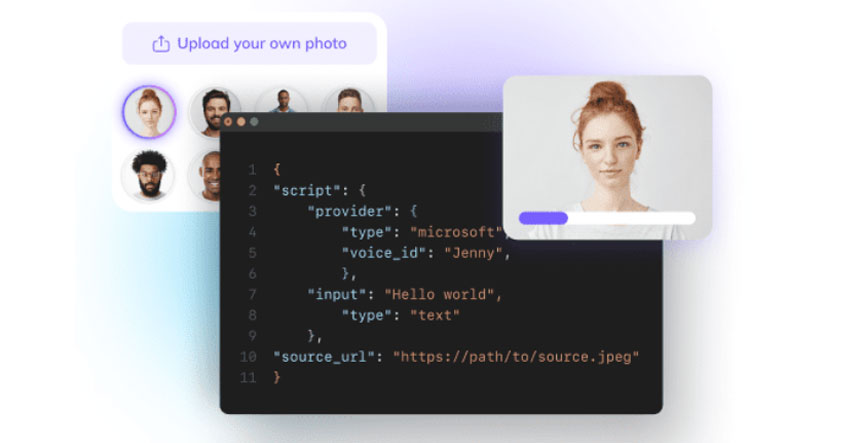
    To create a talking head video, it’s required to upload any image of a face and make it talk with a simple API request.

    This AI Presenter chooses a voice from text-to-speech options or uploads an audio recording of your own.

    D-ID’s software lets users personalize the video, at scale, in over 100 languages.

  • OpenAI Expects Revenue of $200M In 2023, After Making $30M Last Year

    OpenAI Expects Revenue of $200M In 2023, After Making $30M Last Year

    IBL News | New York

    OpenAI expects revenue of $200 million in 2023 after making $30 million last year, according to Fast Company and Reuters.

    As the main revenue source, OpenAI has a paid tier for ChatGPT, for $20 per month, along with a businesses-oriented ChatGPT-specific API.

    Also, OpenAI products like Whisper, an audio transcription tool, and Codex, which turns natural language prompts into code, are already being commercialized.

    In addition, Microsoft, OpenAI’s largest backer, has pumped $29 billion.

    Designed for research purposes, San Francisco – based ChatGPT, which employs 375 researchers, engineers, and policy specialists, has now reached 100 million users, according to analytics firm Similarweb.

    OpenAI’s generative AI balances accuracy and creativity in its responses. But the technology designed to generate stuff on the fly can end up “hallucinating,” as AI developers call it.

    Experts in generative AI now say that if the chatbot’s reliability issues persist, ChatGPT would fail to prove trustworthiness, jeopardizing OpenAI’s position as the poster child for Silicon Valley’s most promising technology in decades. It would relegate the company’s tools to novelty status 55 days after its launch.

    OpenAI Chief Technology Officer, Mira Murati, in the picture above, disagreed and said that she is convinced that we’re seeing the next big wave of AI.

    OpenAI already has hundreds of enterprise customers using its technology, from Jasper, the 2-year-old AI-content platform that makes $90 million a year selling copywriting assistance, to Florida’s Salvador Dalí Museum, where visitors can visualize their dreams in an interactive exhibit powered by Dall-E.

    Then there’s Microsoft. After first incorporating OpenAI technology into products such as GitHub Copilot, Designer, and Teams Premium, it’s now infusing Bing with ChatGPT-like capabilities.

    Plus, competitors are starting to challenge OpenAI.

    Last August, Stability AI launched its AI image generator, Stable Diffusion, making it immediately available to consumers.

    In the wake of ChatGPT, Google fast-tracked the release of a chatbot, dubbed Bard, and China’s Baidu announced plans to unveil its chatbot, Ernie.


  • Character.ai, an Alternative to ChatGPT, Valued at $1 Billion

    Character.ai, an Alternative to ChatGPT, Valued at $1 Billion

    IBL News | New York

    Generative artificial intelligence chatbot company Character.ai is now valued at about $1 billion after an investment of more than $150 million led by Marc Andreessen’s venture capital firm Andreessen Horowitz, The Financial Times reported.

    Launched less than six months ago, Character.ai uses large language models, the technology that underlies chatbot ChatGPT. The company was founded by Noam Shazeer and Daniel De Freitas, who previously built Google’s conversational model LaMDA.

    Andreessen’s investment is the latest sign of the hype around the sector after Microsoft and Google struck big partnership agreements with OpenAI and Anthropic.

  • OpenAI Will Offer A Dedicated ChatGPT Platform for Businesses

    OpenAI Will Offer A Dedicated ChatGPT Platform for Businesses

    IBL News | New York

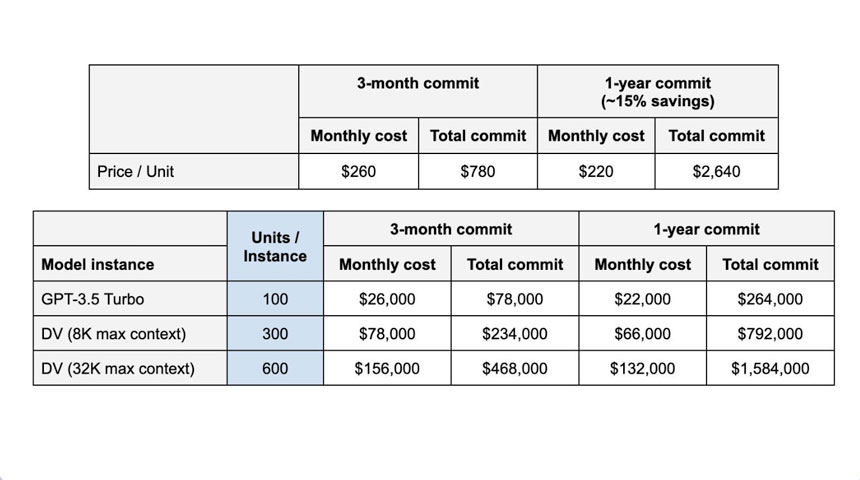
    OpenAI — the owner of ChatGPT — is preparing the launch of a new AI platform for developers who need larger workloads on a dedicated capacity for their learning models, like GPT-3.5.

    This platform, called Foundry, allows customers to have full control over the model configuration and performance profile.

    According to TechCrunch, Foundry will offer rentals based on dedicated compute units with three-month or one-year commitments.

    The service will be costly. Running a lightweight version of GPT-3.5 will cost $78,000 for a three-month commitment or $264,000 over a one-year commitment.

    OpenAI co-founder and CEO Sam Altman said it costs a few cents per chat to run ChatGPT, OpenAI’s viral chatbot.

    In a move toward monetization, OpenAI recently launched a “pro” version of ChatGPT, ChatGPT Plus, starting at $20 per month, and teamed up with Microsoft to develop Bing Chat.

    Separately, OpenAI continues to make its tech available through Microsoft’s Azure OpenAI Service, a business-focused model-serving platform and maintaining Copilot, a premium code-generating service developed in partnership with GitHub.

  • OpenAI launches an API for ChatGPT. Quizlet and Shopify, Among the Early Adopters

    OpenAI launches an API for ChatGPT. Quizlet and Shopify, Among the Early Adopters

    IBL News | New York

    OpenAI launched ChatGPT API for businesses with dedicated capacity plans, priced at $0.0002/~750 words yesterday.

    San Francisco-based startup also announced that the open-source speech-to-text model Whisper is available at its API, giving developers access to speech-to-text capabilities. The API is priced at $0.006 / minute, rounded up to the nearest second.

    ChatGPT API is powered by the same AI model behind OpenAI’s wildly popular ChatGPT, dubbed “GPT-3.5-turbo.”

    “It’s also our best model for many non-chat use cases; we’ve seen early testers migrate from text-davinci-003 to gpt-3.5-turbo with only a small amount of adjustment needed to their prompts,” said the company. [Official documentation]

    GPT-3.5 is the most powerful text-generating model OpenAI offers today through its API suite; the “turbo” moniker refers to an optimized, more responsive version of GPT-3.5 that OpenAI’s been quietly testing for ChatGPT.

    Priced at $0.002 per 1,000 tokens, or about 750 words, the API can drive a range of experiences, including “non-chat” applications. “This is 10x cheaper than the existing GPT-3.5 models,” said OpenAI.

    Snap, Quizlet, Instacart, and Shopify are among the early adopters. “Our early partners have built with the new APIs – and start building next-generation apps powered by ChatGPT & Whisper today,” said the company.