Category: Platforms

  • OpenAI Embeds Its Tool Into Canvas LMS, Allowing Instructors to Create Assignments With AI

    OpenAI Embeds Its Tool Into Canvas LMS, Allowing Instructors to Create Assignments With AI

    IBL News | New York

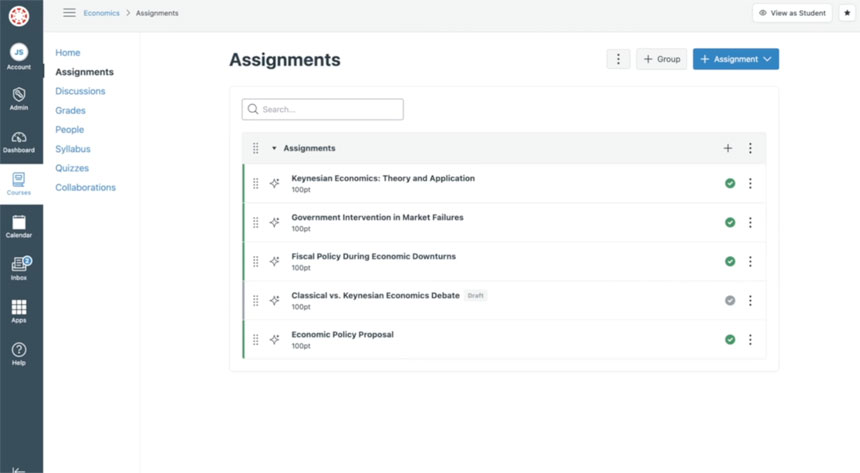
    OpenAI announced this week a partnership with Instructure’s Canvas LMS under its program called IgniteAI, to allow teachers to create AI-powered assignments and other instructional activities.

    Meanwhile, students can engage with the AI assistant, and as they interact, learning evidence is captured and returned to the Gradebook.

    Steve Daly, CEO of Instructure, said, “This collaboration with OpenAI showcases our ambitious vision: creating a future-ready ecosystem that fosters meaningful learning and achievement at every stage of education.”

    The first tool integrated into Canvas LMS is a new type of assignment called the LLM-Enabled Assignment, which allows teachers to define, through text prompts, how AI interacts with students, set specific learning goals and objectives, and determine what evidence of learning it should track.

    Through this tool, students submit their assignments and create visible learning evidence that teachers can use, as it’s mapped to the learning objectives, rubrics, and skills.

    Shiren Vijiasingam, Chief Product Officer at Instructure, said that “teachers will gain a high-level view of overall progress, key learning indicators, and potential gaps, each supported by clear evidence.” “They can then dive into specific indicators to see exactly where and how a student demonstrated the required understanding in the conversation.”

    “What’s powerful about this tool is that it enables educators to assess the student’s learning process — not just the final outcome,” said Vijiasingam. “This is only the first in a set of tools we will develop with OpenAI over the coming quarters.”

    Instructure announces the launch of IgniteAI agent at InstructureCon 25. 

    rProfessors: I watched Instructure’s Canvas AI demo last week. I have thoughts (Reddit, July 31, 2025)

    “I’ve seen this topic discussed a few times now in relation to Instructure’s recent press release about partnering with OpenAI on a new integration. I attended the InstructureCon conference last week, where among other things Instructure gave a tech demo of this integration to a crowd of about 2,500 people. I don’t think they’ve released video of this demo publicly yet, but it’s not like they made us sign an NDA or anything, so I figured I’d write up my notes. I’m recreating this based on hastily-written notes, so they may not be perfectly accurate recreations of what we were shown.

    During the demonstrations they made it clear that these were very much still in development, were not finished products, and were likely to change before being released. It was also a carefully controlled, partially pre-programmed tech demo. They did disclose which parts were happening live and which parts were pre-recorded or simulated.

    In the tech demo they showed off three major examples.

    1. Course Admin Assistant. This demo had a chat interface similar to every LLM, but its function was specifically limited to canvas functions. The example they showed was typing in a prompt like, “Emily Smith has an accommodation for a two-day extension on all assignments, please adjust her access accordingly,” and the AI was able to understand the request, access the “Assign To” function of every assignment in the class, and give the Emily student extended access.

    In the demo it never took any action without explicitly asking the instructor to approve the action. So it gave a summary of what it proposed to do, something like “I see twenty-five published assignments in this class that have end dates. Would you like me to give Emily separate “Assign to” Until Dates with two extra days of access in each of these assignments?” It’s not clear what other functions the AI would have access to in a canvas course, but I liked the workflow, and I liked that it kept the instructor in the loop at every stage of the process.

    The old “AI Sandwich,” principle. Every interaction with an AI tool should with a human and end with a human. I also liked that it was not engaging with student intellectual property at any point in this process, it was targeted solely at course administration settings.

    My analysis: I think this feature could be genuinely cool and useful, and a great use case for AI agents in Canvas. Streamline the administrative busywork so that the instructor can spend more time on instruction and feedback. Interesting. Promising. Want to see more.

    AI Assignment Assistant. Another function was a little more iffy, and again a tightly controlled demo that didn’t provide many details. The demo tech guy created a new blank Assignment in Canvas, and opened an AI assistant interface within that assignment. He prompted it with something like, “here is a PDF document of my lesson. turn it into an assignment that focuses on the Analysis level of Bloom’s Taxonomy,” and then he uploaded his document.

    We were not shown what the contents of the document looked like, so this is very vague, but it generated what looked like a competent-enough analysis paper assignment. One thing that I did like about this is that whenever the AI assistant generates any student-facing content, it surrounds it with a purple box that denotes AI-generated content, and that purple box doesn’t go away unless and until the instructor actually interacts with that content and modifies or approves it. So AI Sandwich again, you can’t just give it a prompt and walk away.

    The demo also showed the user asking for a grading rubric for the assignment, which the AI also populated directly into the Rubric tool, and again every level, criteria, etc. was highlighted in purple until the user interacted with that item.

    My analysis: This MIGHT useful in some circumstances, with the right guardrails. Plenty of instructors are already doing things like this anyway, in LLMs that have little to no privacy or intellectual property protections, so this could be better, or at least less harmful. But there’s a very big, very scary devil in the details here, and we don’t have any details yet. My unanswered questions about this part surrounds data and IP. What was the AI trained on in order to be able to analyze and take action on a lesson document? What did it do with that document as it created an assignment? Did that document then become part of its training data, or not? All unknown at this point.

    AI Conversation Assignment. They showed the user creating an “AI Conversation” assignment, in which the instructor set up a prompt, something like “You are to take on the role of the famous 20th century economist John Keynes, and have a conversation with the student about Supply and Demand.” Presumably you could give it a LOT of specific guidance on how the AI is to guide and respond to the conversation, but they didn’t show much detail.

    Then they showed a sequence of a student interacting with the AI Keynes inside of an LLM chat interface within a Canvas assignment. It showed the student trying to just game the AI and ask for the answer to the fundamental question, and the AI told it that the goal was learning, not getting the answer, or something like that. Of course, there’s nothing here that would stop a student from just copying and pasting the Canvas AI conversation into a different AI tool, and pasting the response back into Canvas. Then it’s just AI talking to AI, and nothing worthwhile is being accomplished.

    Then the part that I disliked the most was that it showed the instructor SpeedGrader view of this Conversation assignment, which showed a weird speedometer interface showing “how engaged” the student was in the conversation. It did allow the instructor to view the entire conversation transcript, but that was hidden underneath another button. Grossest of all, it gave the instructor the option of asking for the AI’s suggested grade and written feedback for the assignment. Again, AI output was purple and wanted instructor refinement, but… gross.

    My analysis: This example, I think, was pure fluff and hype. The worst impulses of AI boosterism. It wasn’t doing anything that you can’t already do in copilot or ChatGPT with a sufficient starting prompt. It paid lip service to academic integrity but didn’t show any actual integrity guardrails. The amount of AI agency being used was gross. The faith it put in the AI’s ability to actually generate accurate information without oversight is negligent. I think there’s a good chance that this particular function is either going to never see the light of day, or is going to be VERY different after it goes through some refinement and feedback processes.”

     

  • Web Search, Built on Links, Starts to Shift Away Toward LLM Platforms

    Web Search, Built on Links, Starts to Shift Away Toward LLM Platforms

    Mikel Amigot, IBL News | New York 

    Web search, built on links, started to shift away from traditional browsers toward LLM platforms in 2025, according to a report by Andreessen Horowitz.
    The foundation of the $80 billion+ SEO market just cracked with Apple’s announcement that AI-native search engines like Perplexity and Claude will be built into Safari, said the VC firm. This put Google’s distribution chokehold in question.

    “A new paradigm is emerging, one driven not by page rank, but by language models. We’re entering Act II of search: Generative Engine Optimization (GEO),” stated the report.

    Page ranks are determined by indexing sites based on keyword matching, content depth and breadth, backlinks, and user experience engagement.

    However, today, it’s not about ranking high on the results page. LLMs are the new interface for how people find information. Visibility is obtained by showing up directly in the answers of LLMs like GPT-4, Gemini, and Claude.

    Users’ queries are longer (averaging 23 words vs. 4), sessions are deeper (averaging 6 minutes), and responses provide personalized, multi-source synthesis, remembering and showing reasoning, rather than just relying on keywords.

    Additionally, the business model and incentives have changed. Google monetizes user traffic through ads; users are paid with their data and attention. In contrast, most LLMs are paywalled, subscription-driven services.

    However, an ad market may eventually emerge on top of LLM interfaces, but the rules, incentives, and participants would likely look very different than traditional search.

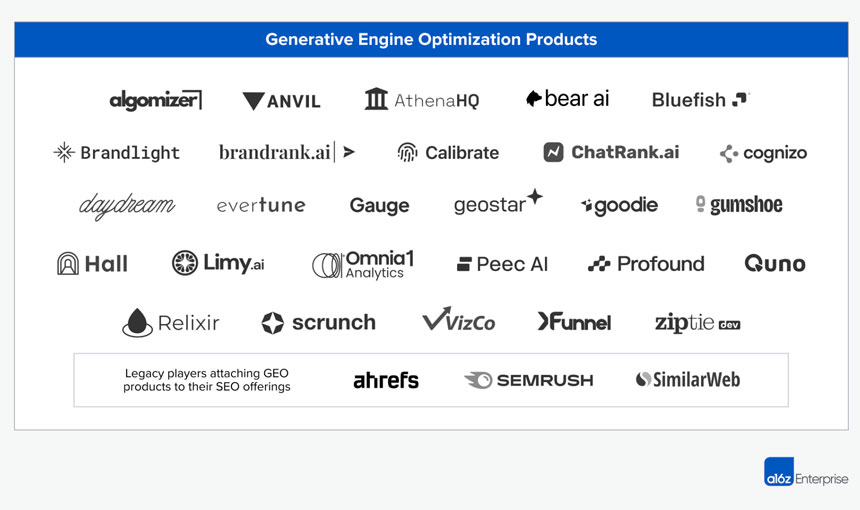
    New monitoring platforms, such as ProfoundGoodie, and Daydream, enable brands to analyze how they appear in AI-generated responses.

    Tools like Ahrefs’ Brand Radar track brand mentions in AI Overviews, enabling companies to understand how they’re framed and remembered by generative engines. Semrush has a dedicated AI toolkit designed to help brands track perception across generative platforms, optimize content for AI visibility, and respond quickly to emerging mentions in LLM outputs.

  • Syracuse University Introduced Its New AI Platform for Teaching and Learning

    Syracuse University Introduced Its New AI Platform for Teaching and Learning

    IBL News | New York

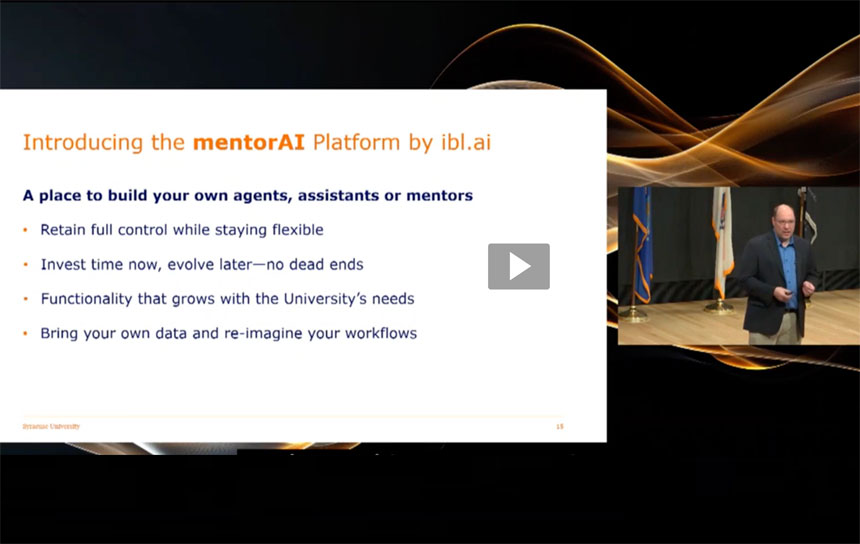
    Syracuse University, this month, during the forum “AI at Work,” presented its AI platform developed in collaboration with ibl.ai, the parent company of this news service.

    At the center is MentorAI, a platform run entirely inside Syracuse’s cloud tenancies.

    Andrew Joncas, Leader, Architect, and Technology Evangelist, at Syracuse University, explained, “Creating an AI tutor no longer requires prompt-engineering expertise. Instructors upload a syllabus, slide deck, or even an MP4 lecture; Mentor AI generates an agent that can answer student questions, surface key points, or embed directly in Blackboard.”

    Syracuse University owns data and code and pays by the API call rather than per-seat license; therefore, there’s no premium license, and administrators can mix and match models — from OpenAI GPT-4o to Google Gemini or open-source Llama. This approach also allows the university to adopt newer models as they mature.

    The same event highlighted the Blackboard AI Design Assistant, where AI suggests quiz items, assignments, and rubrics, as Michael Morrison stressed, the instructor remains in charge.

  • Time Released the Ranking of the 2025 World’s Top EdTech Companies and Rising Stars

    Time Released the Ranking of the 2025 World’s Top EdTech Companies and Rising Stars

    IBL News | New York

    TIME Magazine and Statista released their annual ranking of the 350 top edtech companies worldwide after reviewing data from over 7,000 companies. These firms were evaluated using a formula that combined financial strength and industry impact.

    According to this list, the U.S. had the most high-scoring edtech companies, with 138 making up 39.4% of the list. India came in second with 33 companies, making up 9.4% of providers. China placed third with 23 companies, which made up 6.6% of the list.

    TIME Magazine and Statista also created a list of the rising stars.

    In both cases, AI remains the focus of the edtech industry.

     
    Rising Stars
    1 AASOKA India
    2 Copyleaks United States
    3 uLesson Nigeria
    4 UNIVO India
    5 Scaler India
    6 Workera United States
    7 Quizizz United States
    8 Promova Cyprus
    9 SATs Companion United Kingdom
    10 GoMyCode Tunisia
    11 myFirst Singapore
    12 EPICODE Italy
    13 TryHackMe United Kingdom
    14 Vivi Australia
    15 Academy Xi Australia
    World’s Top EdTech Companies
    1 Codemao China 99.8
    2 Youdao China 98.7
    3 TAL Education China 95.7
    4 Headway Inc Cyprus 95.7
    5 Xiaohe China 95.6
    6 Meishubao China 95.5
    7 Aixuexi China 95.2
    8 Ten Thousand Coffees Canada 94.4
    9 Arduino Italy 93.9
    10 Stepful United States 93.8
    11 Cogna Brazil 93.6
    12 Wiley United States 93.4
    13 Passage Canada 93.4
    14 Ellucian United States 93.0
    15 Vitru Brazil 92.3
    16 Elice South Korea 92.2
    17 Yellowbrick United States 92.0
    18 Mathflat South Korea 91.6
    19 Udacity United States 91.5
    20 Thinkific Canada 91.2
    21 Goodwall Switzerland 91.0
    22 Classover United States 90.9
    23 Lecturio Germany 90.7
    24 Emeritus Singapore 90.7
    25 Spark Education China 90.7
    26 InStride United States 90.5
    27 Boxlight United States 90.4
    28 Shape Robotics Denmark 90.1
    29 Matific Australia 89.8
    30 Afya Brazil 89.7
    31 3P Learning Australia 89.7
    32 2U United States 89.6
    33 XuetangX China 89.6
    34 ClassDojo United States 89.5
    35 Panopto United States 89.5
    36 CodeSignal United States 89.5
    37 Practically India 89.4
    38 AcadeMedia Sweden 88.9
    39 upGrad India 88.6
    40 NoRedInk United States 88.2
    41 Cengage Group United States 88.2
    42 Pickatale Norway 88.2
    43 Yuanfudao China 88.1
    44 Pebble United Kingdom 88.1
    45 Formative United States 88.0
    46 Morressier Germany 87.8
    47 Mockingbird South Korea 87.8
    48 Atom Learning United Kingdom 87.3
    49 Loft Dynamics Switzerland 87.3
    50 RedShelf United States 87.2
    51 Embrace United States 87.1
    52 Skilljar United States 86.9
    53 Brio Romania 86.7
    54 StudyLink (a Flywire company) United States 86.7
    55 Kahoot! Norway 86.5
    56 Mindstone United Kingdom 86.5
    57 AMOpportunities United States 86.5
    58 bettermarks Germany 86.2
    59 KnowBe4 United States 86.2
    60 CollegeVine United States 86.2
    61 Tedu.cn China 86.2
    62 Memrise United Kingdom 86.1
    63 ST Unitas South Korea 86.0
    64 SoapBox Labs Ireland 85.9
    65 Influential South Korea 85.8
    66 Education.com United States 85.6
    67 Nerdy United States 85.5
    68 17zuoye China 85.3
    69 Kiddom United States 85.0
    70 Interview Kickstart United States 85.0
    71 Sanoma Finland 84.7
    72 Resilia Brazil 84.7
    73 Cyber Guru Italy 84.4
    74 Gradescope United States 84.3
    75 Wormhole  Argentina 84.2
    76 Tutored by Teachers United States 84.0
    77 Agora United States 83.9
    78 Acadeum United States 83.9
    79 DigiSchool Nepal 83.8
    80 Cake South Korea 83.7
    81 Offee India 83.4
    82 Arco Brazil 83.4
    83 Google for Education United States 83.3
    84 Strivr United States 83.2
    85 Lingokids United States 83.1
    86 HoxHunt Finland 83.0
    87 Quizlet United States 82.6
    88 Articulate United States 82.6
    89 Pearson United Kingdom 82.5
    90 MedWay Brazil 82.5
    91 Forta United States 82.5
    92 Chegg United States 82.4
    93 Skillsoft United States 82.4
    94 Coursera United States 82.4
    95 Udemy United States 82.4
    96 Acorns United States 82.4
    97 Bright Horizons United States 82.4
    98 Duolingo United States 82.4
    99 Great Minds United States 82.4
    100 TechWolf Belgium 82.4
    101 xueleyun China 82.1
    102 Xeropan Hungary 82.0
    103 Seismic United States 82.0
    104 CoachHub Germany 81.9
    105 Pluralsight United States 81.9
    106 ALLEN India 81.9
    107 CreativeLive United States 81.9
    108 Age of Learning United States 81.8
    109 Intuitivo Portugal 81.8
    110 Uolo India 81.7
    111 ApplyBoard Canada 81.4
    112 Compass Australia 81.4
    113 Klaxoon France 81.4
    114 Kaltura United States 81.4
    115 Chronus United States 81.3
    116 Consensus United States 81.3
    117 Yousician Finland 80.7
    118 MarcoPolo Learning United States 80.7
    119 Wonder Workshop United States 80.6
    120 Janison Australia 80.5
    121 Pearl United States 80.4
    122 Roblox United States 80.4
    123 JOLLY GOOD Japan 80.3
    124 Komodo United Kingdom 80.3
    125 Everspring United States 80.2
    126 FoondaMate South Africa 79.9
    127 Ornikar France 79.9
    128 Nolej France 79.8
    129 Zhangmen China 79.8
    130 Miko India 79.7
    131 Tomorrow University Germany 79.6
    132 Odilo Spain 79.6
    133 Sunlands Online Education Group China 79.5
    134 Learnosity Ireland 79.2
    135 Schoo Japan 79.1
    136 GeniusU Singapore 79.1
    137 Instructure United States 79.0
    138 Vuihoc.vn Vietnam 79.0
    139 Strive Singapore 78.9
    140 GoKoan Spain 78.9
    141 Studeo United Kingdom 78.9
    142 HeyTimi Germany 78.9
    143 LeadSquared India 78.8
    144 ExecOnline United States 78.7
    145 D2L Canada 78.6
    146 Praktika United States 78.5
    147 NeoBear China 78.5
    148 Fuse United Kingdom 78.5
    149 Spark Education Group Singapore 78.5
    150 Stack Overflow United States 78.4
    151 Sparx Learning United Kingdom 78.4
    152 OnlineMedEd United States 78.4
    153 Genius Academy India 78.3
    154 Wise India 78.3
    155 Storypod United States 78.3
    156 ResearchGate Germany 78.3
    157 UniFa Japan 78.3
    158 Schoolnet India 78.1
    159 Imprint United States 78.1
    160 Huike China 78.1
    161 K12 Techno Services India 78.0
    162 EduLab Japan 78.0
    163 Fenbi China 78.0
    164 Gururo India 77.9
    165 TOPICA Kid Vietnam 77.8
    166 360Learning United States 77.8
    167 Gravyty United Kingdom 77.6
    168 Lillio Canada 77.6
    169 Agora Pakistan 77.5
    170 Walnut Coding China 77.4
    171 ThriveDX United States 77.2
    172 Raising Superstars India 77.2
    173 Talstack Nigeria 77.2
    174 BetterUp United States 77.2
    175 iHuman China 77.1
    176 StudyTube The Netherlands 77.1
    177 New Oriental Education & Technology Group China 77.0
    178 Lottus Education Mexico 76.9
    179 WorkJam Canada 76.8
    180 Little Bridge United Kingdom 76.8
    181 Civitas Learning United States 76.7
    182 Open English United States 76.7
    183 PowerSchool United States 76.7
    184 LINQ United States 76.7
    185 YOOBIC United Kingdom 76.6
    186 OpenClassrooms France 76.5
    187 Thinkerbell Labs India 76.5
    188 Nominis Spain 76.5
    189 ChalkTalk United States 76.4
    190 ReflexAI United States 76.3
    191 Hello world Singapore 76.2
    192 Mad Science Canada 76.2
    193 Twin Science & Robotics Turkey 76.2
    194 Letrus Brazil 76.1
    195 Keypath Education United States 76.0
    196 BabySparks United States 76.0
    197 Flat United Kingdom 76.0
    198 zSpace United States 75.9
    199 Brainingcamp United States 75.9
    200 Vincoed Mexico 75.8
    201 LiveMentor France 75.7
    202 NetDragon China 75.7
    203 Parallel United States 75.5
    204 Zoom United States 75.5
    205 Catapult Learning United States 75.2
    206 Codesters United States 75.2
    207 Bright United States 75.1
    208 teech Education Germany 75.1
    209 dreambox United States 75.1
    210 eSpark United States 75.1
    211 Underline Science United States 75.0
    212 Code.org United States 75.0
    213 Futura Italy 74.9
    214 ICON Germany 74.8
    215 einstein by Fourier Education Israel 74.8
    216 ABA English Spain 74.8
    217 FutureLearn United Kingdom 74.8
    218 VISANG South Korea 74.8
    219 PuStack United States 74.8
    220 Speexx Germany 74.6
    221 Ruangguru Indonesia 74.5
    222 SkilloVilla India 74.5
    223 GoStudent Austria 74.5
    224 Maven United States 74.4
    225 EduFocal Jamaica 74.4
    226 Conocer Japan 74.4
    227 Attensi Norway 74.4
    228 Physics Wallah India 74.4
    229 Bhanzu India 74.4
    230 American Public Education United States 74.3
    231 TransPerfect United States 74.3
    232 Studocu The Netherlands 74.2
    233 Unacademy India 74.2
    234 Anthology United States 74.1
    235 SPARK Schools South Africa 74.1
    236 Ad Fontes Media United States 74.0
    237 EduK Brazil 74.0
    238 Cognitive ToyBox United States 74.0
    239 myFirst Singapore 73.9
    240 SchoolTube United States 73.9
    241 Unmudl United States 73.9
    242 Growth Tribe The Netherlands 73.9
    243 Metafy United States 73.8
    244 Augmental United States 73.8
    245 Wizer Israel 73.8
    246 Kuepa Colombia 73.8
    247 Lumosity United States 73.7
    248 Actively Learn United States 73.6
    249 Docebo Canada 73.6
    250 Ignite Reading United States 73.5
    251 Math Buddy India 73.5
    252 ExploreLearning United States 73.4
    253 Future United Kingdom 73.4
    254 megastudy South Korea 73.4
    255 Toppr India 73.4
    256 LITALICO Japan 73.4
    257 Testive United States 73.3
    258 ISDI Spain 73.3
    259 Adaptemy Ireland 73.3
    260 Brightwheel United States 73.2
    261 Fastly United States 73.1
    262 Countingwell India 73.1
    263 Applause United States 73.0
    264 Datamix Japan 73.0
    265 CollegeNET United States 73.0
    266 Hibob United States 72.9
    267 Connecteam United States 72.9
    268 Edthena United States 72.8
    269 5miles The Netherlands 72.6
    270 Beepboop United States 72.5
    271 Employment Hero Australia 72.5
    272 Ringle South Korea 72.4
    273 Renaissance Learning United States 72.3
    274 Artium Academy India 72.3
    275 Kyron Learning United States 72.2
    276 BYJU’S India 72.2
    277 Lingvist Estonia 72.2
    278 TinyTap Israel 72.2
    279 Graide United Kingdom 72.1
    280 smartBeemo United States 72.1
    281 Scaler India 72.1
    282 IXL United States 72.0
    283 Talview United States 72.0
    284 Classplus India 72.0
    285 Xello Canada 71.9
    286 Hack The Box United Kingdom 71.9
    287 SpeakX India 71.8
    288 Skill and You France 71.8
    289 Fidelis United States 71.6
    290 Talent Garden Italy 71.6
    291 Battlesnake Canada 71.6
    292 KodeKloud Singapore 71.6
    293 Claned Finland 71.5
    294 Monkey Vietnam 71.5
    295 Embibe India 71.5
    296 Workera United States 71.5
    297 Certifier Poland 71.4
    298 Learncoach New Zealand 71.4
    299 Course Hero United States 71.4
    300 Accredible United States 71.3
    301 EnglishCentral United States 71.3
    302 Brainly Poland 71.2
    303 Howspace Finland 71.2
  • Will All Software Be AI-Generated? More Technologists Believed So 

    Will All Software Be AI-Generated? More Technologists Believed So 

    IBL News | New York

    An increasing number of technologists say that all code will be AI-generated.

    We collected some of the most notorious recent statements:

    • Dario Amodei, CEO of Anthropic, has predicted that almost all of the code in the future will be AI-generated.

    • Amjad Masad, CEO at Replit [in the picture above], said, “I no longer think you should learn to code.” He added, “Learn how to think and break down problems as you would with humans and machines.”

    • Sridhar Vembu, Founder at Zoho, predicted that AI will replace more than 90 per cent of the repetitive programming tasks. “When people say ‘AI will write 90% of the code,’ I readily agree because 90% of what programmers write is ‘boiler plate.”

    However, not everyone agrees that AI will completely replace human programmers. Linus Torvald, the creator of Linux, dismissed such claims, stating, “AI is 90% marketing and just 10% reality.”

  • What Will Happen in 2027 with AI? Five Top Researchers Forecast the Future

    What Will Happen in 2027 with AI? Five Top Researchers Forecast the Future

    IBL News | New York

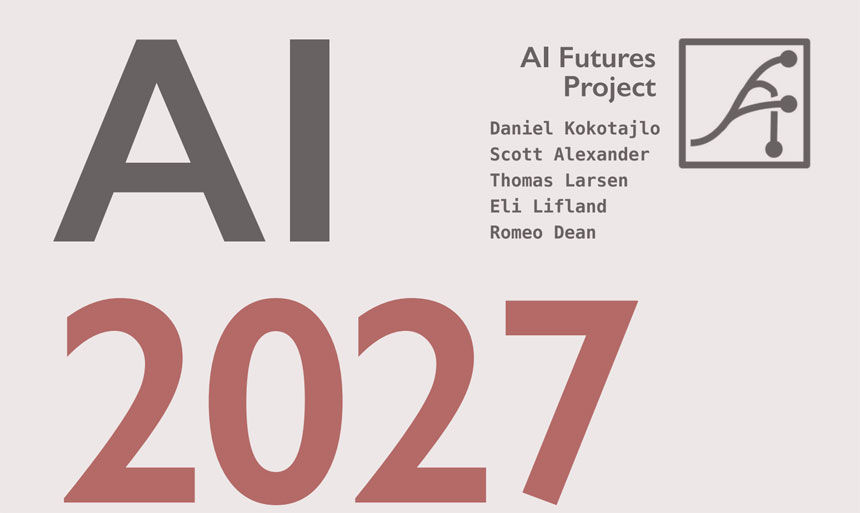
    The group AI Futures Project, formed by five top researchers specialized in forecasting the future of AI, released the AI 2027 scenario.

    “The impact of superhuman AI over the next decade will be enormous, exceeding that of the Industrial Revolution,” states the 71-page report. [PDF]

    The predicted scenario was based on trend extrapolations, wargames, expert feedback, experience at OpenAI, and previous forecasting successes.

    This is a summary of the report:

    2025

    The fast pace of AI progress continues. There is continued hype, massive infrastructure investments, and the release of unreliable AI agents that nevertheless provide significant value.

    2026

    Knowing that it is falling behind in AI, in large part due to its lack of compute, and to catch up to the US, China manufactures and smuggles in from Taiwan AI chips that go to a new mega-datacenter, the “Centralized Development Zone (CDZ).” This mega-datacenter contains millions of GPUs, corresponding to 10% of the world’s AI-relevant compute, similar to a single top US AI lab.

    2027

    OpenBrain (the name adopted for the leading US AI project) automates coding and builds AI agents capable of dramatically accelerating research, creating better AI systems, and solving extremely difficult ML problems.

    Falling behind in software progress, China steals the model weights.

    OpenBrain’s AI becomes adversarially misaligned, lies to humans, and plots to gain power over humans.

    This causes a substantial public outcry.

    OpenBrain builds more superhuman AI systems while the ongoing AI race with China continues.

    The US uses its superintelligent AI to rapidly industrialize, manufacturing robots so that the AI can operate more efficiently.

    Unfortunately, the AI is deceiving them. Once a sufficient number of robots have been built, the AI releases a bioweapon, killing all humans.

    Then, it continues the industrialization and launches Von Neumann probes to colonize space.

    Another possible scenario is that OpenBrain builds a superintelligence aligned with senior researchers and government officials, giving them power over humanity’s fate.

    The main obstacle is that China’s AI, which is also superintelligent by now, is misaligned. The U.S. gives the Chinese AI some resources in return for its cooperation now. The rockets start launching, and a new age dawns.

  • Google Releases Firebase Studio, a Free Alternative Tool to Cursor, Bolt, or v0

    Google Releases Firebase Studio, a Free Alternative Tool to Cursor, Bolt, or v0

    IBL News | Las Vegas

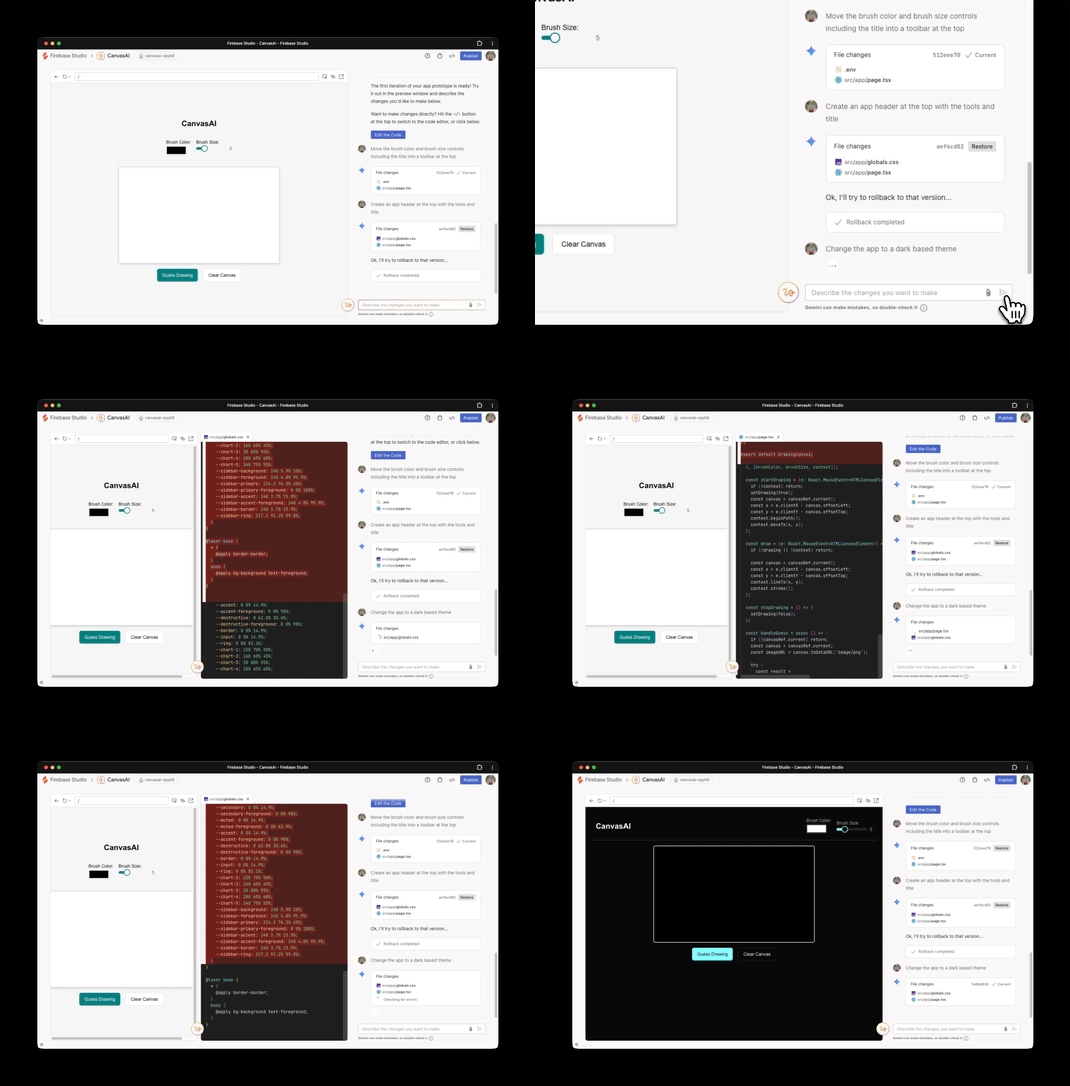
    Google released Firebase Studio this month at Cloud Next 2025 in Las Vegas. This tool — a free alternative to Cursor, Bolt, or v0 — allows users to build apps in natural language, modify them, and deploy them directly in the browser.

    Google presented Firebase Studio as a cloud-based agentic development environment to help users prototype, build, and manage full-stack AI apps all in one place. This platform is now in preview.

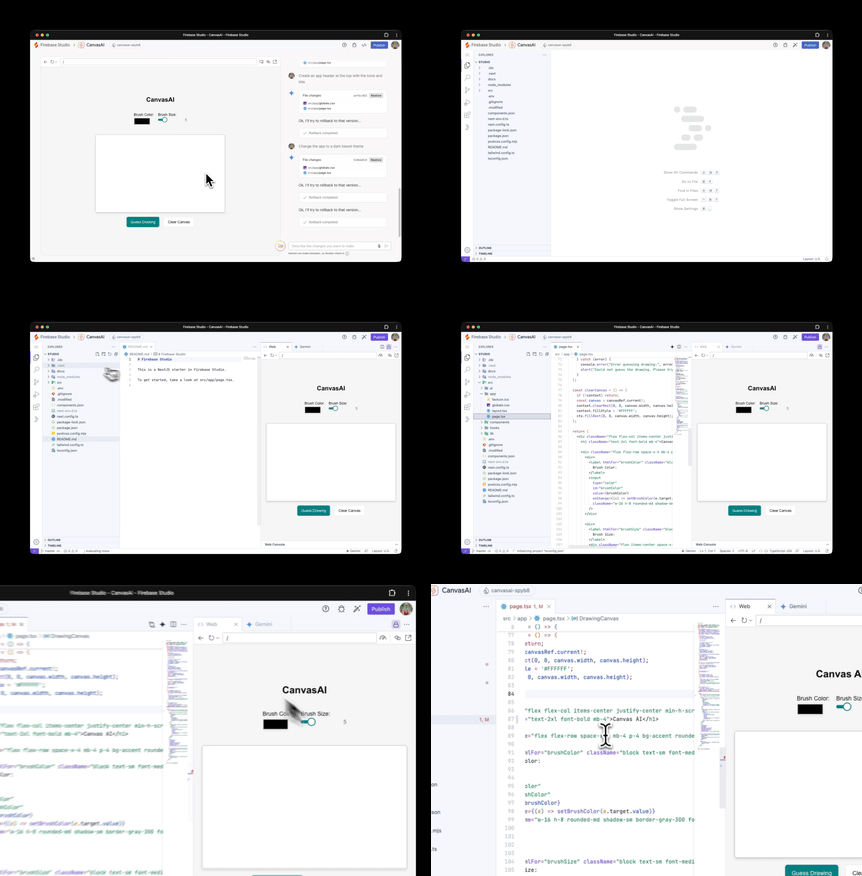
    One way to get started in Firebase Studio is with the App Prototyping agent, which quickly generates functional web app prototypes (starting with Next.js) using prompts, images, or drawings.

    Within seconds of clicking “Prototype this app”, Firebase Studio generates a functional Next.js web app. And it’s not just UI.

    Firebase Studio automatically wires up Genkit and provides a Gemini API key so AI features work out of the box.

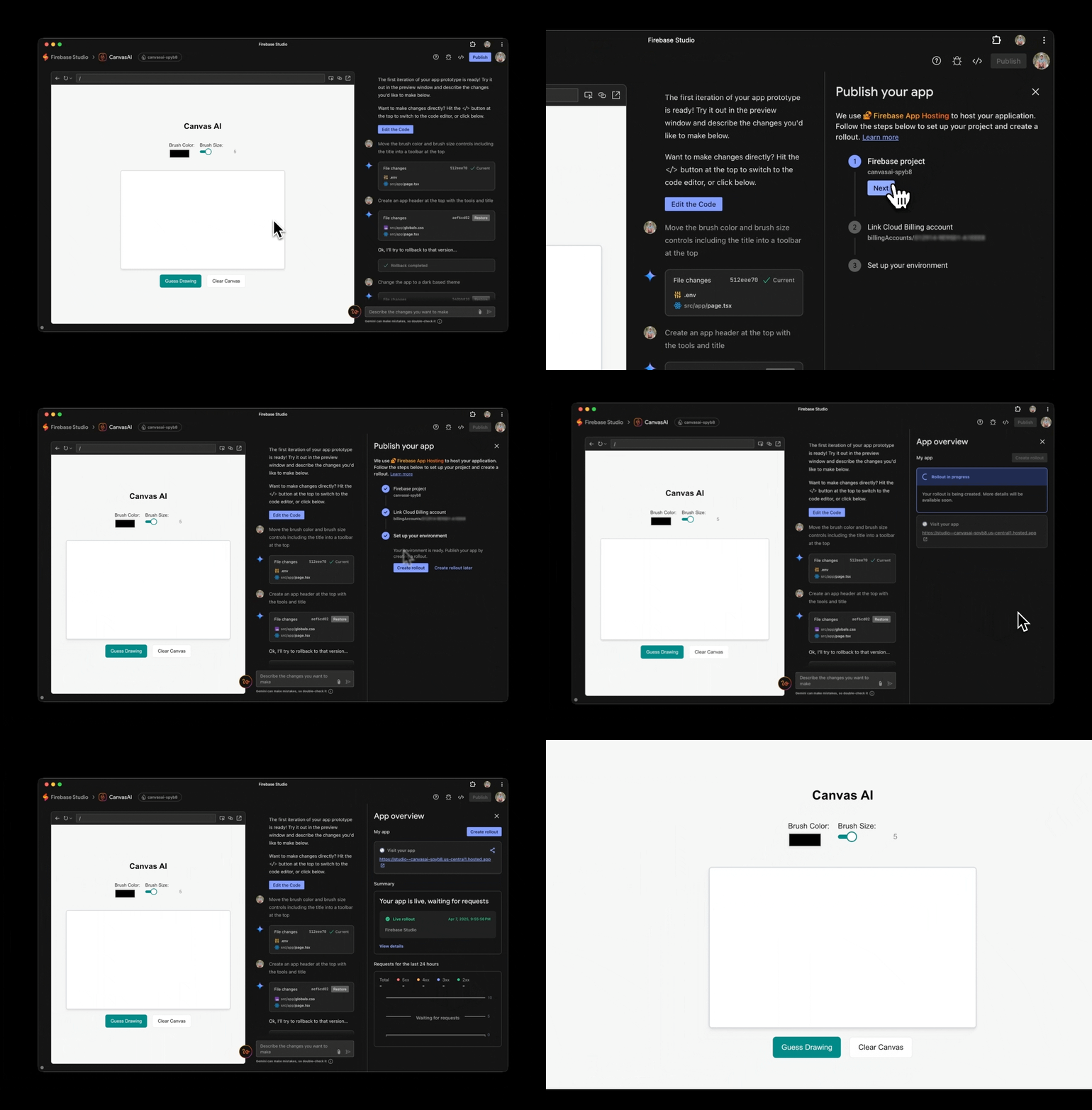
    There is a Firebase app hosting feature for a simple deployment.

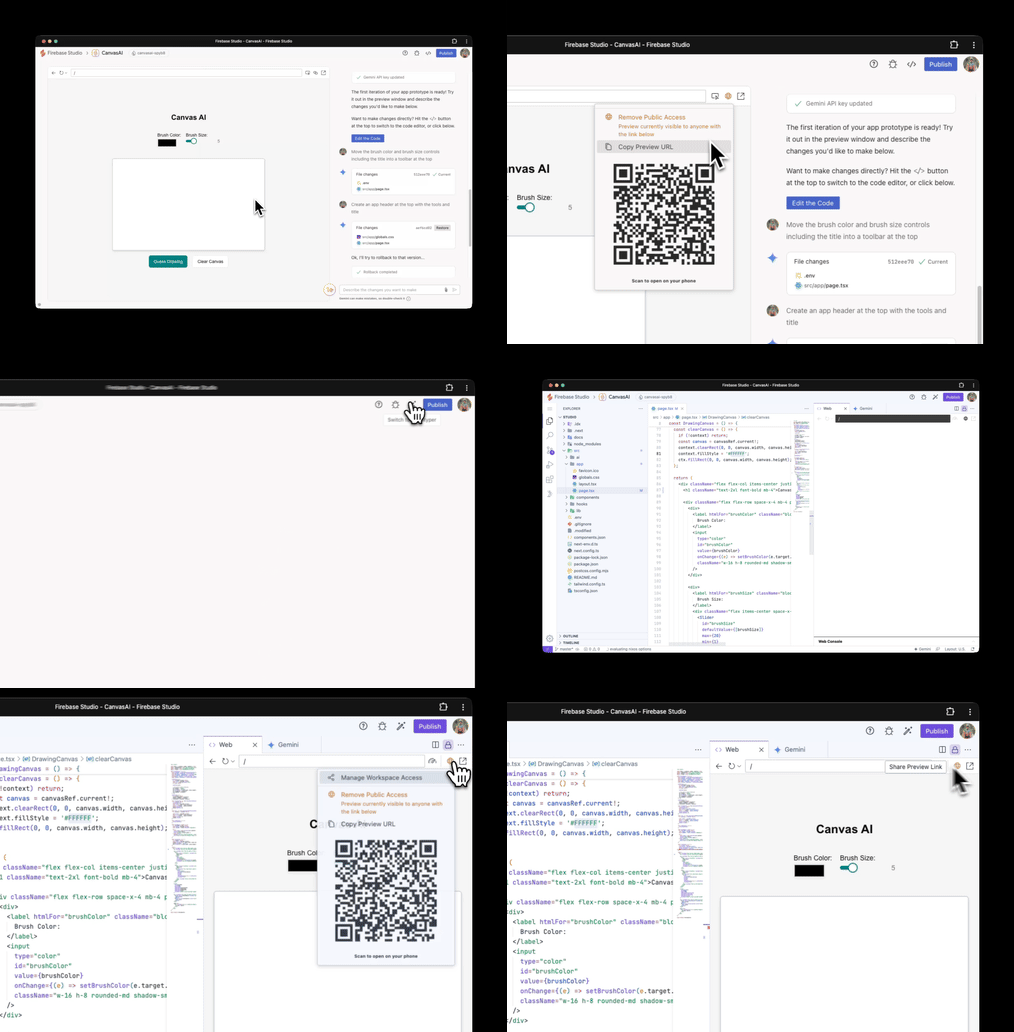
    Firebase Studio takes you from a prompt to a functioning prototype in minutes


    Gemini makes updates to the app based on your natural language instructions


    Edit code in Firebase Studio just like you would any other IDE


    Generate previews on any device from a QR code


    Firebase Studio takes care of building, server-side, and CDN with Firebase App Hosting


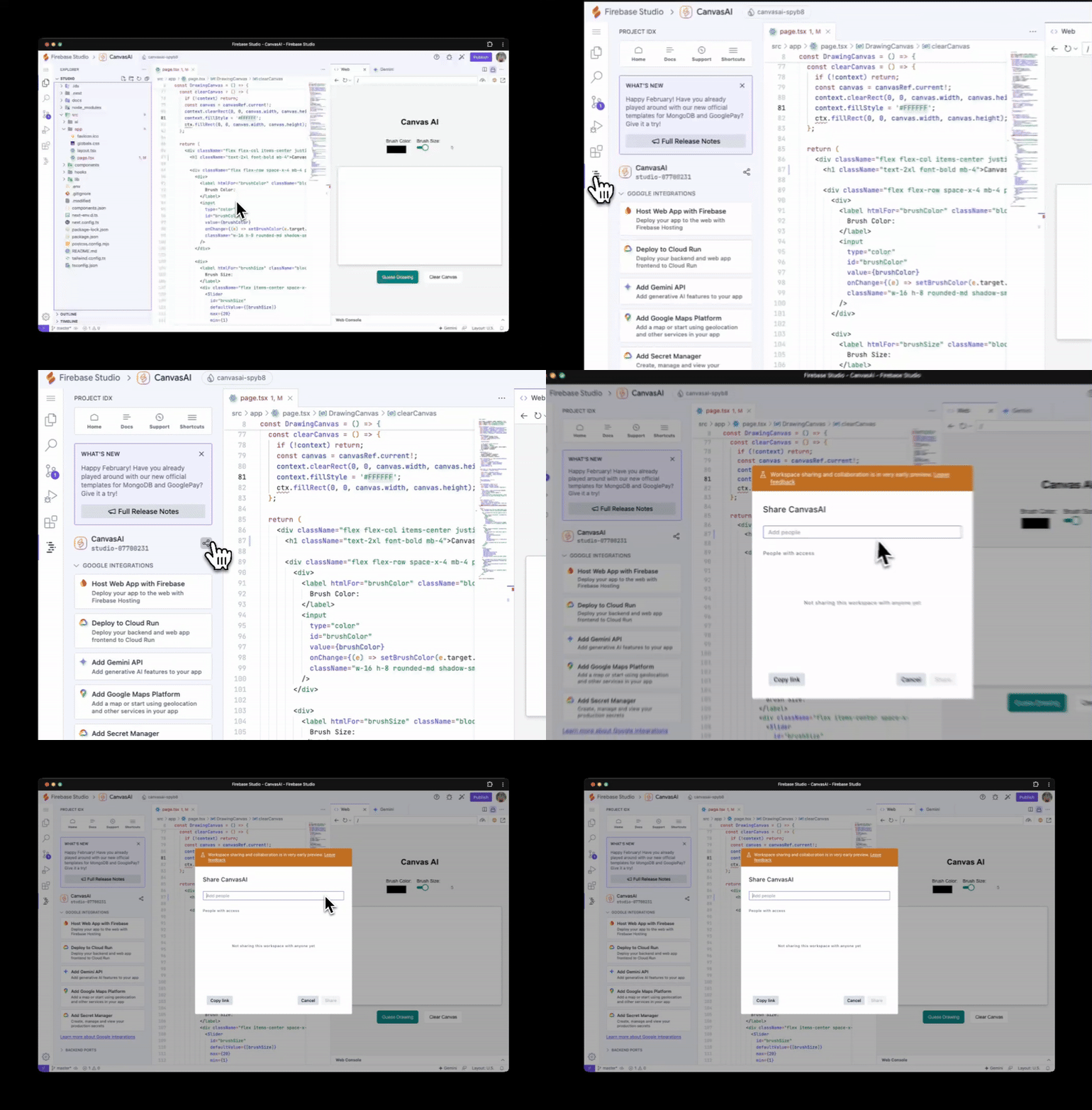
    You can share a URL and invite others to collaborate inside your same workspace


    Beyond this product, the Google Cloud Next event—covered by IBL News reporters—featured CEO Thomas Kurian’s keynote on AI breakthroughs.

    Other key announcements during the event were:

    Ironwood, our 7th-generation TPU built for inference.

    • The addition of Lyria to Vertex AI, making it the only platform with generative media models for video, image, speech, and music.

    Gemini Code Assist, Google’s AI coding assistant, is gaining new “agentic” capabilities in preview.

    • Updates and tools for Gemini in Workspace — Docs, Sheets, Meet, Chat, etc.

    • Updates to Agentspace and AI Agent Marketplace.

    • More tools on the Agent Development Kit (ADK), an open-source framework for building agents while maintaining control over agent behavior; and Agent2Agent (A2A), a new open protocol that gives your agents a common language to collaborate no matter what framework or vendor they are built on.

    Gemini 2.5 Flash, Google’s workhorse model with low latency and cost efficiency, will soon be available in Vertex AI.

    Google Unified Security AI-powered security solution.

    • The Cloud Wide Area Network (Cloud WAN), a high-speed, low-latency network, was made available to organizations worldwide.

  • Morehouse College Launched An Innovative Pilot to Integrate AI Mentors and Avatars

    Morehouse College Launched An Innovative Pilot to Integrate AI Mentors and Avatars

    IBL News | New York

    Morehouse College launched an innovative pilot initiative in the spring 2025 semester that will allow faculty to integrate AI mentors and avatars into Computer Science, Philosophy and Religion, Education, Business, and Online courses.

    The initiative is named the “Artificial Intelligence – Pedagogical Innovative Leaders of Technology (AI-PiLOT) Fellows Program! 🚀

    “With the help of cutting-edge tools from ibl.ai integrated into the Canvas LMS, five faculty fellows will work together to develop AI-enhanced course modules using novel AI pedagogical tools with their own AI avatars and AI mentors,” Juana Mendenhall, Ph.D., Vice Provost at Morehouse College’s Walter E. Massey wrote in her LinkedIn account.

    Morehouse College’s goal is to lead the way in establishing how to use AI tools in Liberal Arts education while remaining human-centered.

    LinkedIn. ibl.ai and Morehouse College: 2025 AI Initiative

  • Western Governors University Will Provide Engineering and Guidance to the Open edX Platform Organization

    Western Governors University Will Provide Engineering and Guidance to the Open edX Platform Organization

    IBL News | New York

    Open edX, a leading open-source platform and global community stewarded by Axim Collaborative has established a new category of institution-level partnerships called Mission Aligned Organization (MAO). This category is dedicated to accelerating the development of the Open edX platform.

    The first organization to join the project is Western Governors University (WGU), the largest nonprofit university in the U.S.

    This institution has committed to providing a dedicated team of ten engineers, guidance from senior WGU leaders, and product management services.

    “Open edX is a highly scalable, open-source technology platform that has enabled innovation and fast technology implementation that is crucial for our students’ learning outcomes,” said David Morales, senior vice president for technology and CIO at WGU.

    “We are committed to supporting WGU students with high-quality learning experiences and are also pleased to support thousands of other organizations embracing competency-based learning, student-first approaches, and solutions for documenting skills and credentials through our contributions to the Open edX project,” he added.

    Morales will join the Technical Oversight Committee to support strategy, including platform architecture design, tech stack, and design templates.

    The immediate priorities for the WGU engineers on the project include building a roles and permissions framework, creating better facilities for extracting data, setting up libraries of atomic learning units, and improving the upgrade experience for developers.

    Axim Collaborative said, “With WGU’s participation, the Open edX project expects to deepen its ability to support competency-based education, which measures skills and learning rather than time spent in a classroom.”

    “Students earn competency units (the equivalent of credit hours) when they demonstrate skill proficiency through completing performance and objective assessments. As a result, students progress through courses as they prove mastery of the material rather than advancing only when a semester or term ends.”

    The Open edX platform is a leader in learning science and instructional design and pioneered massive open online courses (MOOCs). Since its founding in 2012, the platform has evolved into one of the top learning solutions worldwide, supporting high-quality, high-scale online learning in higher education, enterprise, and government organizations.

    Supported by developers, researchers, and users, the Open edX platform empowers anyone to design or enhance courses and programs.

    WGU adopted the Open edX platform in 2022 to deliver course content to its students. As part of this new collaboration, WGU will help develop additional features and capabilities of the platform, driving innovation that benefits the Open edX ecosystem.

    “WGU’s contributions will help extend the Open edX platform to support better competency-based learning pathways, mastery learning, and microcredentials,” said Edward Zarecor, vice president of engineering for the Open edX platform, Axim Collaborative.

    “We are delighted to see mission-driven organizations collaborate to accelerate innovation around high-impact solutions. WGU’s significant contribution will help all organizations leveraging the platform and continue to grow the Open edX ecosystem of contributors,” said Ferdi Alimadhi, Chief Technology Officer of Open Learning, MIT, and member of the Technical Oversight Committee.


    • Blog: WGU & the Open edX Project: Scaling Solutions to Accelerate Access to Competency-Based Learning

  • Facing the advances of AI, Software Engineers Will Evolve But Not Suffer Extinction

    Facing the advances of AI, Software Engineers Will Evolve But Not Suffer Extinction

    IBL News | New York

    Software engineers are leading the charge in adopting AI agents as coding assistants.

    According to a survey by Evans Data, a research firm, nearly two-thirds of software developers already use AI coding tools. Experts say these AI agents improve developers’ daily productivity by between 10 percent and 30 percent.

    These tools suggest lines of code, identify bugs, run basic tests, translate old software into modern programming language, and generate explanatory documentation. However, they still make mistakes.

    The dire warnings that AI could soon automate away millions of software engineering jobs are not shared by experienced developers, industry analysts, and academics.

    The New York Times summarized in an article that the outlook for software developers is more likely to be evolution than extinction.

    The dominant thinking is that better tools have automated some coding tasks for decades, but the demand for software and the people who make it has only increased.

    According to this view, AI will accelerate that trend by leveling up the art and craft of software design and hyper-charging productivity.

    “The skills software developers need will change significantly, but AI will not eliminate the need for them,” said Arnal Dayaratna, an analyst at IDC, a technology research firm. “Not anytime soon anyway.”

    The uncertainty is how fast the technology will improve and how far it can go.

    Mark Zuckerberg, Meta’s CEO, has predicted that sometime this year, AI will effectively match the performance of a midlevel software engineer.

    To be relevant in the future workforce, entry-level developers are taking training programs starting with AI fundamentals courses and getting hands-on experience using AI assistants to write software applications.

    To be more effective, they will need to learn how to manage AI tools and cultivate creativity, critical thinking, problem-solving, communication, and empathy.

    A wealth of high-quality data used to train them fuels the progress—online software portfolios, coding question-and-answer websites, and documentation and problem-solving ideas posted by developers.

    Major business software firms like Microsoft, IBM, and Salesforce have jumped in to offer AI-assisted coding programs. Microsoft’s GitHub Copilot, launched in 2021, is the early commercial leader.

    According to PitchBook, which tracks start-ups, investment in coding assistants reached nearly $1.6 billion in 2024, triple the previous year.

    Blog: New Junior Developers Can’t Actually Code