WordPress.com has started this month a customer education initiative with two subscription-based courses: Blogging for Beginners and Podcasting for Beginners.
Automattic—the company behind WordPress—plans to launch additional courses in 2021.
Its learning offering revolves around the topic of how to grow a web presence by strategically using tools–its tools–for building a brand, blog, or community online.
This past Spring, WordPress.com released free daily and in-depth topical webinars. Months later, taking into account customer feedback, Automattic created WPCourses.com (or WordPress Courses).
These classes include weekly office hours with experts, a certificate of completion, access to a private community online, and virtual meetups scheduled quarterly.
“Our vision is to create a supportive community where you can meet new people, share ideas, and grow together,” said Monica Ohara, Chief Marketing Officer at WordPress.com.To create those courses, Automattic has used a combination of its own tools, such as WooCommerce, Jetpack, Sensei LMS, P2, Tumblr, and WordPress VIP
Podcasting for Beginners — “Video-driven course with over six hours of original video content. Lessons include finding a niche, choosing a podcast format, recording and editing interviews, submitting to podcast directories, growing an audience, and making revenue from a podcast. An annual subscription for access to the Podcasting for Beginners course and community is $99.”
Blogging for Beginners, — “Soft-launched in October, it provides on-demand, text-based foundational lessons to establish a successful blog. Lessons include building a blog, understanding audiences, design, writing for the internet, branding, and how to grow and make revenue from a blog. An annual subscription for access to the Blogging for Beginners course and community is $49.”
Coursera has curated a themed collection of courses that focuses on learners’ artistic and creative interests, in a promotional celebration of Disney & Pixar’s Soul streaming on Disney+ on December 25.
The course Brilliant, Passionate You includes stories from students, doctors, teachers, and professional athletes, along with imagery from Soul.
“Finding purpose and passion is fundamental to both learning and living. Soul’s characters and themes capture so much of what this new course is about,” said James DeVaney, Associate Vice Provost and the founding director of U-M’s Center for Academic Innovation, which developed the course.
“We’re honored to collaborate with Disney and Pixar and we’re excited for learners inspired by Soul and our courses to discover more ways to live a life of passion and purpose,”wrote in a blog-post Stephanie Hale, Director of Brand at Coursera.
Coursera.org signed up this month a partnership with The New York State Department of Labor in order to provide unemployed and underemployed New Yorkers with free access to 4,000 courses, programs, and professional certificates in business and technology.
The announcement–made by Governor Andrew M. Cuomo on November 17th—focuses on training on high-growth and in-demand sectors like advanced manufacturing, technology, and health care, among others.
“The war against COVID-19 is one taking place on multiple fronts, and while we are doing everything we can to protect the health of New Yorkers, we must also take the steps necessary for building back a strong economy,” Governor Cuomo said. “Whether it’s taking a refresher course or learning a new skill, I encourage all New Yorkers in need to consider taking advantage of this free program.”
This is a range of classes offered on Coursera:
How to Manage a Remote Team
Business Writing
Introduction to Mechanical Engineering Design and ManufacturingMachine Learning
Motors and Motor Control Circuits
Generative Design for Additive Manufacturing
Learning How to Learn: Powerful mental tools to help you master tough subjects
Marketing in a Digital World
Supply Chain Operations
Influencing People
The Science of Well-Being
Data Science Specialization
Project Management
Successful Negotiation: Essential Strategies and Skills
Python for Everybody
Cybersecurity
Google IT Support Professional Certificate
The Business of Health Care Specialization
Epidemiology for Public Health Specialization
Medical Neuroscience
Financial Markets
Facebook Social Media Marketing
Entrepreneurship
Introduction to Game Development
The Art of Negotiation
AI for Everyone
Programming Foundations with JavaScript, HTML and CSS
Introduction to HTML5
Understanding User Needs
Use Mailchimp to Build an E-mail Marketing Campaign
Developing An Entrepreneurial Mindset: First Step Towards Success
Introduction to iOS App Development
Principles of Game Design
During the pandemic, Coursera has reached agreements with 330 government agencies across 70 countries and 30 US states and cities to provide training to impacted workers. Coursera says that since it launched its Workforce Recovery Initiative, more than 1 million workers have enrolled in over 7 million courses to gain critical skills.
Coursera announced yesterday its Workforce Recovery Initiative will provide governments free access to 3,800 online courses and 400 Specializations until the end of the year.
The U.S. states of Illinois, Arizona, and Oklahoma, as well as the governments of Colombia, Costa Rica, Greece, Malaysia, Panama, Ukraine, and Uzbekistan, are the first to make the initiative available to their unemployed workers, according to Coursera.
The U.S. states and countries around the world can sign up until September 30, 2020, and those enrolled by then can learn until the end of the year.
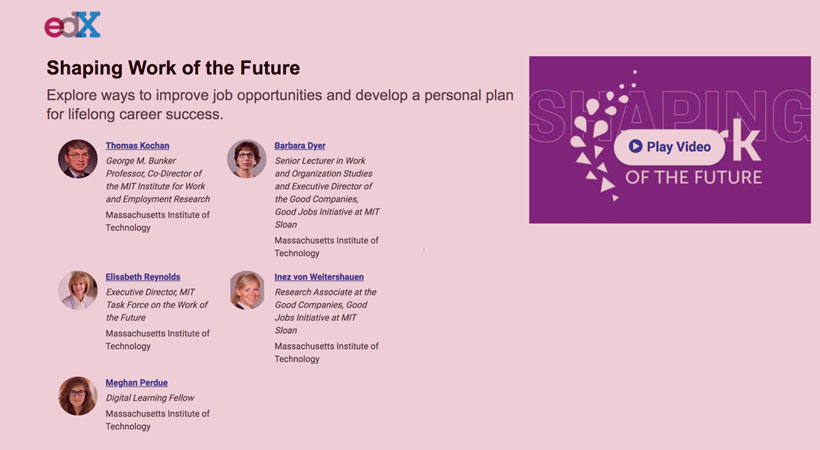
MIT released a free, practical, eight-week-long course that provides resources and tools to plan a career path in the age of increasing dominance of artificial intelligence.
The course, Shaping Work of the Future, is available through MITx on edX and may be accessed at any time of the year. So far, over 17,000 learners have enrolled in the class.
Participants are eligible to sign up and receive an MITx Certificate upon completion.
Now in its sixth year, Shaping Work of the Future, has added new content, such as case studies and lectures from MIT’s leading technology and workplace academics. This year’s partnerships include, among others, the World Economic Forum and the International Labor Organization.
“The course goes beyond the headlines and focuses instead on what steps we can actually take to impact the future of work along with future-proofing our own skillset,” said the authors.
The key to this year’s new content are findings from the initial report by the MIT Task Force on the Work of the Future with a focus on how to improve the quality of jobs, reduce income inequality and provide opportunities for long-term career success for everyone in the labor force. Additionally, featuring a case study on Optimax Systems, Inc.’s innovative management philosophy built on three key pillars, along with a a discussion on the ways participants can bring their ideas to fruition around the creation of a new social contract.
Co-designers of the course includes Thomas Kochan, George Maverick Bunker, the Professor of Management at MIT’s Sloan School of Management, and the co-director of the MIT Institute for Work and Employment Research, and Elisabeth Reynolds, executive director of the MIT Task Force on the Work of the Future and the MIT Industrial Performance Center.
Kochan has contributed two new lectures on “High Road Business Practices” and “The Role of Government” to the curriculum. Meanwhile, Dr. Reynolds’s contributed lectures on “Geography of Work” and “Policy Recommendations from the Task Force.”
David Autor, Ford Professor of Economics at MIT, added a new lecture on “Work of the Past: Work of the Future”.
“If we take the right actions, we can empower workers to build rewarding careers and shape the future of work in ways that meet the needs of individuals, families, economies, and societies,” said Prof. Kochan. “To do so, we first need to understand how work is changing, how firms can compete and prosper while still supporting good jobs, how to update the policies, institutions, and practices governing the world of work, and then outline a path for everyone to help build a new social contract. That’s what this course is all about!”
Session topics are:
Class 1: Challenges & Opportunities for Work: Today and Tomorrow
Class 2: The Past Century of Work
Class 3: How Emerging Technologies are Changing Work
Class 4: Rethinking Skills and Education
Class 5: The Role of Business in Shaping Work
Class 6: The Role of Labor in Shaping Work
Class 7: The Role of Civic Institutions and Government in Shaping Work
Class 8: Putting it all Together: Social Contract Phase 2 and Developing a Personal Impact Plan
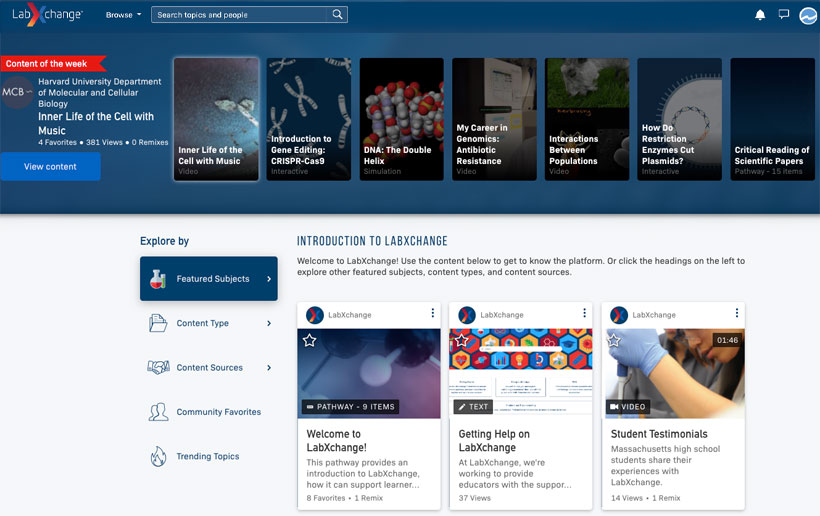
edX provided this month with an overview of some of the technical features of LabXchange.org—Harvard University’s and Amgen Foundation’s recently launched new science education platform. These include a tool called Blockstore, Content Libraries version 2, a new XBlock Runtime, anonymous access, and a new visual assessment editor.
Powered by Open edX open-source software and integrated with edX.org, the LabXchange platform uniquely allows users to freely combine assets together to create and share their own “learning pathways”, which contain videos, text, graphics, assessments, lab simulations, and other instructional assets. Much of the content focuses on the biological sciences.
“You can actually pick the ones you want, sequence them into a learning pathway, and create a much shorter experience that’s really tailored to exactly what you need to learn,”explainedProfessor Robert Lue, Harvard’s faculty director of LabXchange. “We aim to address some of the gaps with current virtual learning, such as the lack of flexibility in the course structure.”
The development of the platform and the program took two years. As a founding sponsor, the Amgen Foundation provided $11.5 million in grants. edX and European provider OpenCraft developed the code –partially available on GitHub.
Single Sign On.Users can use a single account to learn on both LabXchange.org and edX.org, as the same LMS technology powers both sites. This was implemented using the auth-backends plugin, which allows any Django-based application to share user accounts with an Open edX instance.
XBlocks.Each piece of content on the LabXchange site, such as a video or interactive simulation, is an XBlock, just like each component of an edX or Open edX course. Most of the XBlocks used for LabXchange are identical to the versions used to build courses on edX.org, although many have a stylesheet applied to match the visual style of the LabXchange site. A few unique XBlocks are used for new content types unique to LabXchange, such as case studies or interactive simulations.
Blockstore. Blockstore is the next-generation content storage system for the Open edX platform, designed to replace the previous “modulestore” and “contentstore” systems that store data in MongoDB. Blockstore is versioned, scalable, format-agnostic, and file-based. That means that it provides a consistent foundation layer that can store video assets, XBlock definitions (OLX), metadata/tags, courses, and other things we haven’t yet thought of. Blockstore is designed to be able to hold terabytes of such data without losing performance. It’s also deliberately simple, creating a platform that developers can use to build experimental Open edX features and plugins much more easily than ever before.
Content Libraries v2, built using a new XBlock Runtime v2. This XBlock introduces the concept of “Learning Context” to the Open edX platform, where a learning context can be a course, a content library, a LabXchange pathway, a blog post, an admissions test, or any other virtual place where learning can happen. Using the LabXchange site, educators can search these content libraries to find content and assemble learning assets (XBlocks) into new learning pathways.
Anonymous Access – Users can use many features of LabXchange without needing to register an account, including viewing and interacting with learning assets (XBlocks).
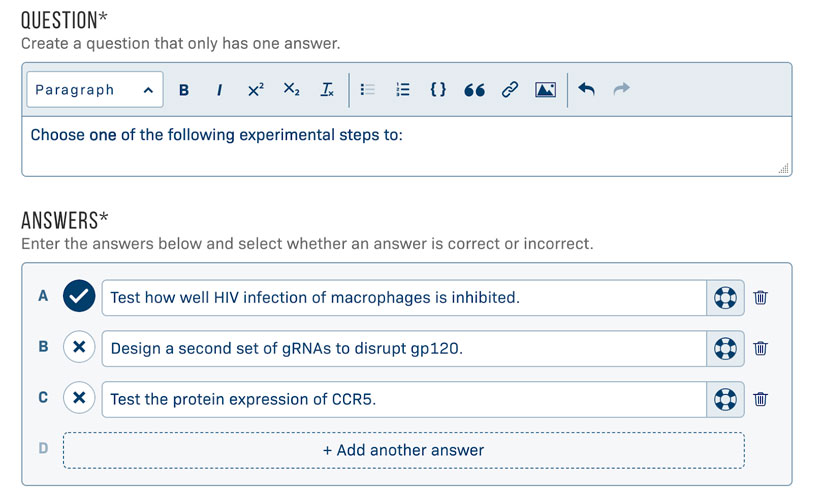
Visual Assessment Editor. LabXchange uses a new visual UI and style editor for problems designed to simplify both learning and authoring. It will be available to all in a future version of Open edX Studio. (See the graphic below).
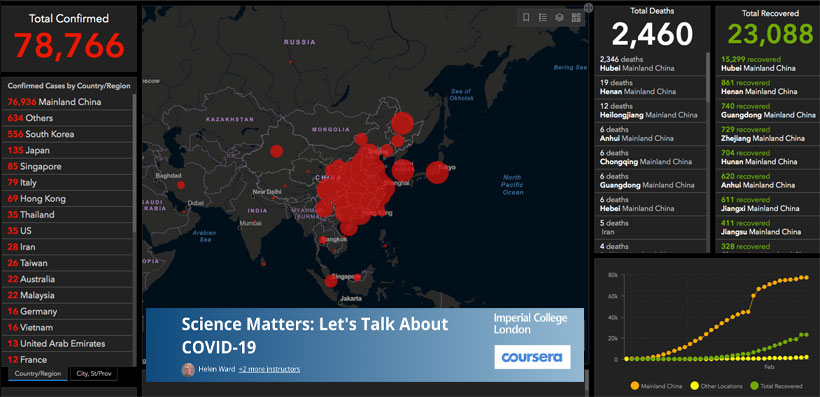
As the coronavirus (COVID19) spread goes on, with 2,460 deaths and 78,630 infected so far, online learning resources multiply.
This month, Imperial College London launched on Coursera a free online course about the science behind the response to the virus outbreak.
“Science Matters: Let’s talk about COVID19” features on video experts from the MRC Centre for Global Infectious Disease Analysis and Abdul Latif Jameel Institute for Disease and Emergency Analytics who have been working on modeling the epidemic, estimating the epidemic size, transmissibility, and severity since the first confirmed cases.
The course provides with updates on the state of the epidemic and deals with topics including:
Basic Reproduction Number (R0) of an infection
Case Fatality Rate: Why it varies and why that matters
Community participation and the role of social media
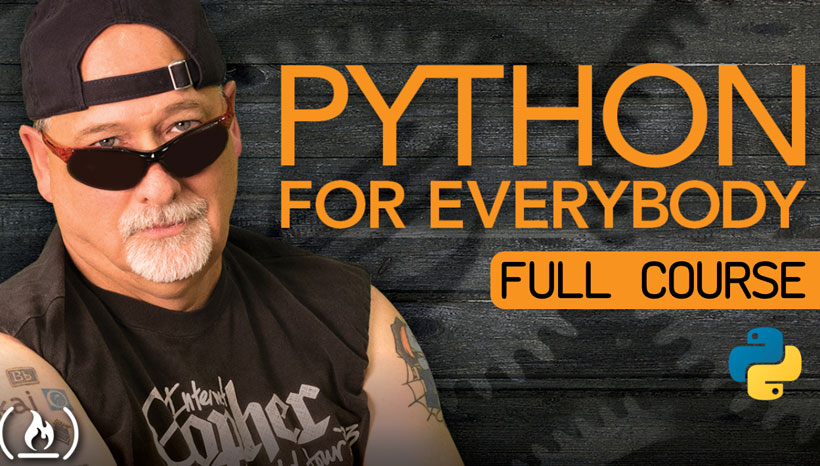
Over 40,000 users have taken FreeCodeCamp.org open courses, including Dr. Chuck’s ‘Python for Everybody’ full online class.
This course teaches the basics of programming computers using Python 3. It has no pre-requisites and is aimed at anyone with moderate computer experience.
Created by University of Michigan’s Professor Charles Severance (a.k.a. Dr. Chuck), the course is offered for free in several formats:
Microsoft has launched a video series to learn Python for beginners on YouTube.
It consists of 44 videos of three-to-four minutes taught by two developers at Microsoft: Christopher Harrison, a senior program manager at Microsoft, and Susan Ibach, a business development manager from Microsoft’s AI Gaming unit.
The course focuses on Python version 3.x, but Microsoft says the lessons should still be valuable to users on Python 2.x.
There are many reasons why Microsoft is investing in Python courses. First, it is an opportunity to expand the population of Python developers using Azure for building AI applications. Second, Microsoft’s own Python extension for Visual Studio Code (VS Code) is its most popular extension in the company’s marketplace for developers.
More Python Courses
In the newest annual ranking of popular programming language by IEEE Spectrum, Python is seating in top place, just ahead of Java, C and R.
Udacity announced yesterday its Pledge to America’s Workers job training initiative. Over the next five years, Udacity will fund 100,000 tech and analytics scholarships on its learning platform.
With this move, Udacity is joining more than 350 companies and organizations, including Google, Apple, and IBM in signing the White House’s Pledge to America’s workers –a project undertaken by the Trump administration.
“Udacity’s scholarships will equip America’s workers with the skills they need to succeed in high-paying, future-proof careers in fields such as front-end web development, mobile app development, and data analytics,”said Udacity’s new CEO, Gabe Dalporto.
The program will initially revolve around front-end web development, mobile app development, machine learning, and data analytics. (See image below)
The recipients of scholarships will be, according to Udacity, “low-income individuals looking to learn the in-demand skills needed to land higher-paying jobs and advance their careers.”
Applications will open in early 2020, although the company offered the possibility of pre-registering now through a website.