Category: Platforms

  • Google Expands Its IT Support Certificate Program to 100 Community Colleges

    Google Expands Its IT Support Certificate Program to 100 Community Colleges

    IBL News | New York

    Google announced on Thursday plans to offer, through a $3.5 million grant, its IT Support Professional Certificate program to 100 community colleges by the end of 2020 in eight new states, including Arizona, Florida, Kentucky, Louisiana, Minnesota, New Mexico, Virginia and West Virginia. Those states come in addition to schools in Illinois, Michigan, New York, Ohio, Texas, Colorado, and Wisconsin, which have offered the program since earlier this year.

    The online program consists of six modules, costing $49 each. It takes an average of six months to complete and is designed to prepare learners without a degree or tech experience for an entry-level job in IT support –which has a median salary of $53,000.

    Launched at Coursera in January 2018, the program is part of the Grow with Google initiative.

    More than 95,000 learners enrolled in these classes and thousands of people have found jobs because of them in large companies such as Wal-Mart, Ricoh, GE Digital and Google.

    Leah Belsky, Senior Vice President of Enterprise at Coursera, wrote a blog post analyzing the first year’s impact of the program.

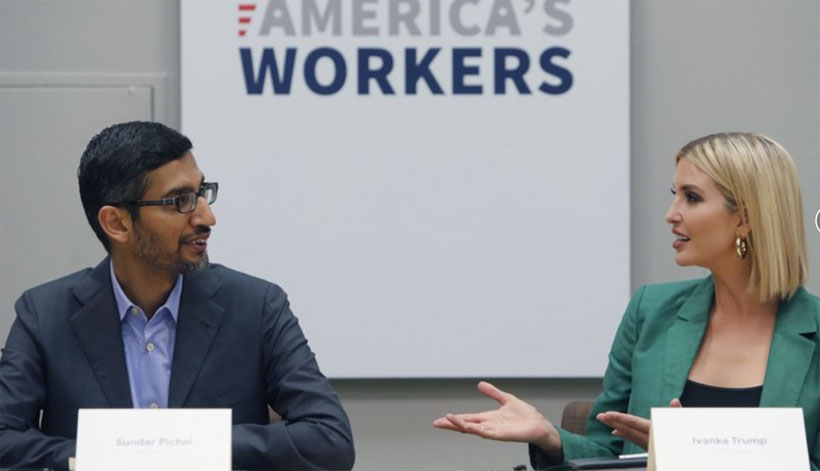
    Speaking at an event on October 3rd in Dallas, Texas, Google CEO, Sundar Pichai, said the company’s goal is to “make sure that the opportunities created by technology are truly available to everyone.”

    Along with Pichai, President Trump’s senior advisor and daughter, Ivanka Trump, was on hand to discuss the importance of retaining workers in the U.S. During the event, Pichai signed a pledge to the White House to help retain workers in the American tech industry.


    IBL News, Sept 22: Google and CompTIA Create a Dual Credential for Learners Seeking for Entry-Level Jobs in IT
    IBL News, June 15: Coursera’s Google IT Support Certificate Program Gets a Good Response

  • A MOOC that Teaches How to Create Viral Content Gets 86,000 Enrollees

    A MOOC that Teaches How to Create Viral Content Gets 86,000 Enrollees

    IBL News | New York

    Over 86,000 learners have enrolled in the “Viral Marketing and How to Craft Contagious Content” MOOC at Coursera.org.

    This free, 6-hour course, developed by the University of Pennsylvania, explains how to apply viral marketing ideas and be more effective when developing brand and product campaigns.

    Drawing on principles from his best-selling book, “Contagious: Why Things Catch On”, Professor at Wharton School Jonah Berger [in the picture] illustrates successful strategies and explains how to craft stickier content, generate more word of mouth and create viral campaigns.

  • IBM Releases a Video Tutorial Series and Textbook to Educate on Quantum Computing

    IBM Releases a Video Tutorial Series and Textbook to Educate on Quantum Computing

    IBL News | New York

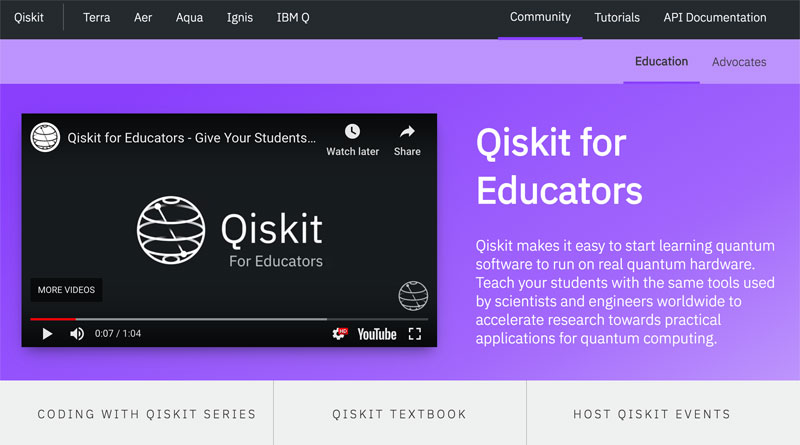
    IBM announced last week the release of a video tutorial series, an open-source textbook, and a university hackathon program, in an effort to massively educate on quantum computing. This set of features are available on IBM’s Qiskit learning platform.

    A part of this education push is also the new 5-qubit systems for educational use, as well as a new feature to reserve uninterrupted time on one of IBM’s quantum computers for running experiments.

    “Our team is committed to making quantum sciences more approachable by investing heavily in the education to support this growing community and establishing the emerging technology as the next generation of computing,” Jay Gambetta, Vice President of quantum at IBM, said in a blog post.

    “We need more students, educators, developers, and domain experts with ‘quantum ready’ skills. This is why our team is proud to release educational resources and tools, while also increasing the capacity and capability of our IBM Q systems,” he added.

    Quantum computers use qubits, not bits, and programming them is quite different than traditional computers. However, IBM’s Q System can be programmed using Python.

    IBM launched the IBM Q Experience quantum cloud platform in 2016, making 5-qubit quantum processors and a simulator available online to the public.

    Since then, IBM has released the Qiskit framework to enable users to more easily write and run code for quantum devices as well as providing a more advanced 16-qubit processor.

    Over 28 million of experiments and simulations have been conducted to date, IBM says.


    Aiming at Self-Learners and Educators

    The ‘Learn Quantum Computation Using Qiskit’ open-source textbook allows students to learn quantum computation through practical problem sets run on real systems. It is aimed at both self-learners and educators.

    The co-author of the book said that a strong background in quantum mechanics is not required.

    IBM is also offering a ‘Coding With Qiskit’ video series.

    Lastly, IBM is featuring a series of events:

    • The IBM Q Award Challenges are semester-long competitions on various topics, open to everyone.
    • The University Hackathon Partnership Program lets universities partner with IBM’s global teams to host a hands-on Qiskit experience, where students get to collaborate with IBM Q experts for developing quantum software programs.
    • International Qiskit Camps in Asia, Africa, and Europe for competing in teams.
    Early this year, IBM showed the IBM Q System One at CES, in Las Vegas. It also announced plans to commercialize a 58-qubit quantum computer within the next several years.
  • Code with Google, a New Computer Science Resource for Educators

    Code with Google, a New Computer Science Resource for Educators

    IBL News | New York

    Google has launched an initiative called “Code with Google” to train teachers in Computer Science (CS). It brings together Google’s free curriculum and programs that build coding skills.

    Educators can integrate CS First into their classroom, guide their high school students through the learning app Grasshopper to learn JavaScript, and share CS scholarship, summer programs, and internships opportunities.

    Alongside these resources, Google.org also announced a grant of $1 million to the Computer Science Teachers Association (CSTA) to expand the CS learning.

    Currently, many schools don’t offer CS courses that include programming.

    “Code with Google is the next step in our ongoing commitment to closing equity gaps in CS education,” wrote Google VP of Education and University Relations, Maggie Johnson, in a blog post.

    With this initiative, Google continues its education strategy for schools. Affordable Chromebooks, free resources and cloud-based software is is how the giant company is trying to solidify its position among educators and students.

  • An Innovative, Stackable Online Master’s in Supply Chain Management from ASU On edX

    An Innovative, Stackable Online Master’s in Supply Chain Management from ASU On edX

    IBL News | New York

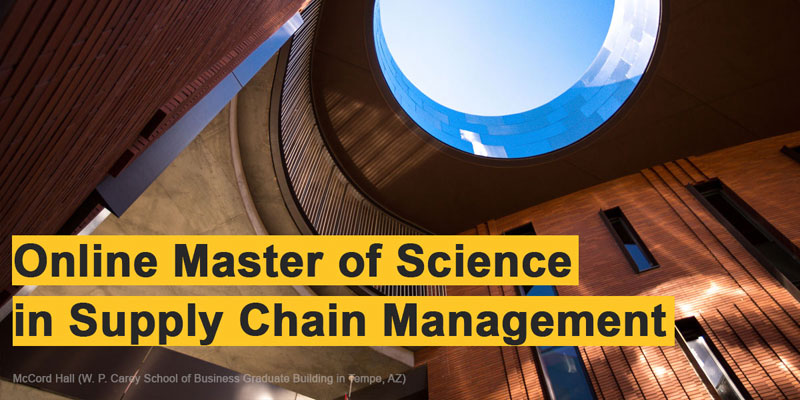
    edX, Arizona State University (ASU), and MIT announced today the launch of an innovative, stackable online Master’s of Science in Supply Chain Management, starting in January 2020.

    Learners who pass the MIT MicroMasters Supply Chain Management on edX.org will have the opportunity to transition to a full master’s degree from ASU’s W.P. Carey School of Business and ASU Online (also hosted on edX).

    “This new offering truly transforms traditional graduate education by bringing together two top-ranked schools in supply chain management to create the world’s first stackable, hybrid graduate degree program. This approach to a stackable, flexible, top-quality online master’s degree is the latest milestone in addressing today’s global skills gap,” said Anant Agarwal, edX CEO and MIT professor.

    “We believe there will be many students who are eager to dive deeper after their MicroMasters program to earn a master’s degree from ASU, and that more learners will be drawn to the MIT Supply Chain Management MicroMasters program as this new pathway to a graduate degree within the edX platform becomes available,” added Amy Hillman, dean of the W. P. Carey School of Business at ASU.

    Students currently enrolled in, or who have already completed, the MITx Supply Chain Management MicroMasters program can apply now for the online Master of Science in Supply Chain Management from ASU, with an application deadline of Dec. 16.

    With this new offering, the MIT Supply Chain Management MicroMasters program now offers learners pathways to completing a master’s degree at 21 institutions.

    Master’s degrees on edX are stacked, degree programs with a MicroMasters program component.


  • Amazon Partners with George Mason University to Launch a Cloud-Based Degree

    Amazon Partners with George Mason University to Launch a Cloud-Based Degree

    IBL News | New York

    George Mason University (GMU) and Northern Community College (NOVA) are partnering with Amazon Web Services (AWS) to offer students a pathway to earn a Bachelor’s of Applied Science degree and pursue a career in cloud computing.

    Both institutions worked with AWS Educate curriculum designers to create a degree program which will be mapped to in-demand technical skills required by Amazon and other employees in cloud services, cybersecurity, software development and DevOps.

    Students will first earn an Associate degree at NOVA and transfer to George Mason to complete a four-year Bachelor’s degree.

    “This degree pathway marks the beginning of a ground-breaking initiative that will deliver innovative educational opportunities to students across the commonwealth. The collaboration with AWS helps give our students, and our region, a competitive edge,” said Ángel Cabrera, president of George Mason University, at Campus Technology.

    “We are delighted to be working with George Mason University and NOVA to turn the growing demand for cloud skills into pathways in technology for students from all backgrounds,” stated Teresa Carlson, vice president for worldwide public sector at AWS.

    Amazon, which is building its second corporate headquarters in Northern Virginia, expects to bring 25,000 jobs to the region by 2030.

    AWS Educate Free Courses

    On the other hand, AWS Educate released three new credentialed, 25-hour, free courses. Campus Technology reports.

    These courses are AWS RoboMaker, Amazon Sumerian and AWS DeepRacer.


  • Coursera’s Google IT Support Certificate Program Gets a Good Response

    Coursera’s Google IT Support Certificate Program Gets a Good Response

    IBL News | New York

    Out of 75,000 enrollees, over 8,000 students have completed the Google IT Support Professional Certificate program, hosted in Coursera.

    Google created this $49 a month program in early 2018. It was designed to take beginner learners to job readiness in about eight months.

    There are 215,000 unfilled IT support staff roles nationwide, Google estimates. The average annual starting salary for these entry-level IT jobs is $52,000, federal data shows.

    Around 70 percent of enrollees come from underrepresented populations in tech, including women, Latinos, African-Americans, veterans and learners without a college education.

    Employers that are recruiting from the Google IT Support Certificate program include Bank of America, General Electric, Walmart, Wyndham Hotels, Sprint, Home Depot, H&R Block, Infosys, Intel and Cognizant.

    Community colleges with a strong track record in workforce development are also successfully offering the certificate to their students with additional support and in-person instruction. Google partnered with an initial group of 25 community colleges in 2018 but intends to grow that number to 100.

    The Internet giant provided a grant that allows community colleges to offer the program for free.

    Some colleges are offering the course for credit as part of a degree program. Others are including it as part of their continuing-education programs.

    “The IT support role, which involves troubleshooting and solving technical issues, typically doesn’t require a four-year college degree, so it should be a strong entry point for nontraditional talent,” Natalie Van Kleef Conley, Product Manager for Grow with Google, said in Inside of Higher Education.

    Moving forward, Google wants to expand partnerships and move into new areas of tech training.

  • An Institution Prepares Students for Jobs which Won’t Be Automatized

    An Institution Prepares Students for Jobs which Won’t Be Automatized

    Mikel Amigot | IBL News (Boston)

    Job automation has already started. Stats indicate that 10% of American jobs will be automated in 2019. An upsetting forecast indicates that up to 73 million U.S. jobs will be automated by 2030.

    But there is hope. First: nearly 2 million new non-routine jobs which machines cannot easily perform are being created every year in the United States. Second: an increasing number of colleges and universities understand the challenge and are starting to prepare students who demand jobs which won’t be automated.

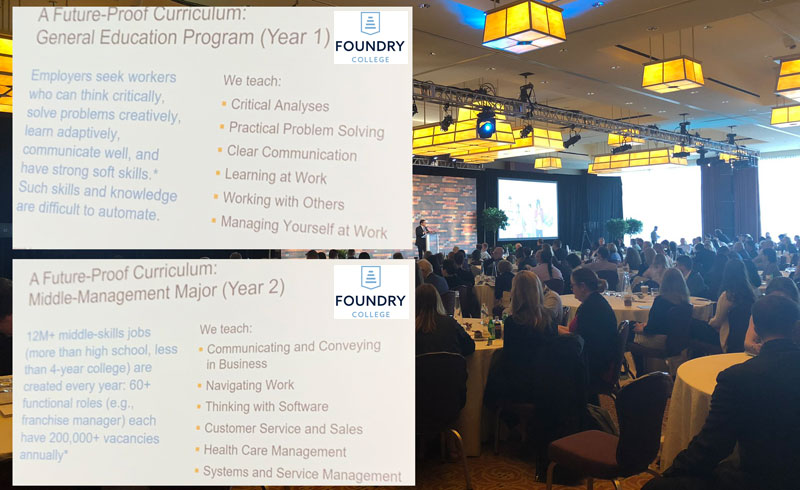
    Foundry College is one of them. Its Founder, Dr. Stephen Kosslyn, addressed the issue yesterday during the Eduventures Summit in Boston with a physician example. “Diagnosis of illness will soon be accomplished well by machines. But sitting with the family to discuss treatment options will be difficult to automate.”

    At least two skills are automation resistant: “Recognizing and responding to emotion when communicating and making decisions. And taking context into account when analyzing situations, creatively solving problems, and prioritizing goals,” Stephen Kosslyn said.

    Foundry College, which is focused on what’s difficult to automate, has listed five key underpinnings:

    • Critical thinking
    • Creative problem solving
    • Clear communication
    • Constructive personal interactions
    • Good judgment

    To pair these essential skills, this institution has reimagined a future-proof, two-year curriculum. On the first year, Foundry teaches:

    • Critical Analyses
    • Practical Problem Solving
    • Clear Communication
    • Learning at Work
    • Working with Others
    • Managing Yourself at Work

    On the second year:

    • Communicating and Conveying in Business
    • Navigating Work
    • Thinking with Software
    • Customer Service and Sales
    • Health Care Management
    • System and Service Management


  • Georgia Tech Will Deploy this Summer an Improved Version of its AI-Based Teacher Assistant

    Georgia Tech Will Deploy this Summer an Improved Version of its AI-Based Teacher Assistant

    Mikel Amigot | IBL News 

    A refined and revised version of Georgia Tech’s first AI-based teacher assistant will be introduced this summer as a way to enhance some of the syllabi at the school. This virtual agent, known as Jill Watson and developed by Professor Ashok Goel, will turn three years old.

    Yakut Gazi, Associate Dean of Learning Systems at Georgia Tech, highlighted during the 2019 Learning Impact Leadership Institute conference, last week in San Diego, the fact that her institution “is leading efforts in Artificial Intelligence’s development”. “Many students of the OMSC degree didn’t know that an AI agent was responding their questions until the end of the semester,” she added.

    Jill Watson is the result of the work of Prof. Goel [in the picture] with a team of graduate students in his Design & Intelligence Laboratory (DILAB). This team created this chatbot to answer routine, frequently asked questions in the forum for his online Knowledge-Based Artificial Intelligence (KBAI) class.

    The original intent was to free up time for the course TAs (Teacher Assistants), so they could concentrate on more creative and less repetitive tasks. But an expected outcome arose: more learner engagement. Before Jill Watson, students averaged 32 comments per semester; after Jill Watson, each student averaged 38 comments per semester.

    In the spring of 2016, once this AI-agent’s identity was revealed, the reaction was overwhelmingly positive.

    One student wanted to nominate Jill for the Outstanding TA award, and not one student complained.

    National news outlets such as the Wall Street Journal and Washington Post ran stories on her. Ashok Goel gave a TEDxTalk on Jill, and he was invited by the Gates Foundation in January 2018 to participate in a brainstorming session on the future of AI in education.

    Georgia Tech’s motto is affordability, accessibility, and applicability, and Jill Watson can help human teachers deliver education at scale.

    Georgia Tech: Jill Watson’s Terrific Twos

  • A Fascinating Free Course About Beethoven’s Music from Stanford University

    A Fascinating Free Course About Beethoven’s Music from Stanford University

    John G. Paul | IBL News

    Stanford University has launched this spring a new online, free course on Beethoven, his music and development as a composer.

    The class, led by music historian Stephen Hinton, is designed for any level of musical literacy, with the aim of enhancing people’s understanding of Beethoven’s music through the study of his string quartets –a genre of music involving two violins, a viola, and a cello. It features performances by and discussions with the St. Lawrence String Quartet, Stanford’s ensemble-in-residence.
    “His last five string quartets are widely considered to be the pinnacle of Western art music,” said Professor Stephen Hinton.

    Defining the String Quartet II: Beethoven, a seven-week course, now open for enrollment, has attracted nearly 800 participants so far. Many of them share their interpretation and experience with Beethoven’s music in the course’s online forums. Students who successfully complete the full course can receive a statement of accomplishment that reflects their level of participation and achievement. After June 11, the class will reopen on a self-paced modality.

    This course –which is included on Stanford Online’s Open edX-based platform– is a sequel to Stanford’s first free online course on classical music appreciation, called Defining the String Quartet: Haydn, that launched in 2016.