Category: Platforms

  • What’s the Best Way to Measure Learner Engagement?

    What’s the Best Way to Measure Learner Engagement?

    IBL News & IBL Education | New York

    There are a few different ways to measure learner engagement, and the best approach will depend on the specific context and goals of your learning program.

    Some common methods for measuring engagement include assessing learners through quizzes and tests, observing their performance on tasks or projects, tracking their participation in online discussions or other collaborative activities, collecting feedback from learners or others who have observed their performance, conducting surveys or polls to gauge learners’ interest and satisfaction, and monitoring learners’ progress through course materials or assessments to see how much they are retaining and applying what they are learning.

    Ultimately, the key is to use a combination of methods to get a well-rounded picture of learners’ engagement and to regularly check in with learners to gather their feedback and make any necessary adjustments to your program.

    It’s important to use a balanced mix of assessment methods and to regularly evaluate and adjust the assessment process to ensure that it accurately reflects learners’ progress and achievement.

    How can I use AI to improve learner performance?

    AI can be used in a variety of ways to improve learner performance. For example, AI-powered tutoring systems can provide personalized instruction and feedback to help learners improve their knowledge and skills.

    AI-powered data analysis can help educators identify trends and patterns in learners’ performance, allowing them to tailor their instruction and support to individual learners’ needs.

    Additionally, AI-powered tools can help automate some of the administrative tasks associated with education, freeing up educators to focus on supporting learners. It’s important to remember, however, that AI is not a substitute for human instruction and support, and should be used in conjunction with other teaching methods.

    How can I predict if a learner is going to become disengaged?

    It can be difficult to predict with certainty if a learner is going to become disengaged, as there are many factors that can affect a person’s level of engagement in a learning program.

    However, there are some warning signs that a learner may be at risk of becoming disengaged, such as a lack of participation in online discussions or other collaborative activities, a lack of progress or a drop in performance on assessments, or a decline in the quality of their work.

    If you notice any of these signs, it may be a good idea to reach out to the learner to see if there is anything you can do to support them and keep them engaged in the learning program.

    You could also try to identify any potential barriers to engagement that the learner may be facing and work with them to address those barriers.

    What’s the best way to engage a learner?

    The best way to engage a learner will depend on their individual needs, preferences, and learning style.

    Some general strategies for engaging learners include making the learning material relevant and applicable to their lives, providing opportunities for learners to collaborate and connect with each other, and incorporating a variety of teaching methods and learning activities to cater to different learning styles.

    Additionally, providing regular feedback, support, and encouragement can help learners stay motivated and engaged in the learning process.

    It’s also important to regularly check in with learners to gauge their engagement and to gather their feedback on how the learning program can be improved.

    A SERIES OF ARTICLES ABOUT ‘AI, CLOUD, AND ADVANCED TECHNOLOGIES IN EDUCATION’ WRITTEN BY THE IBL AI ENGINE IN DECEMBER 2022*


    *The IBL AI/ML Engine extends and hosts leading language models (LLMs) via a combination of fine-tuning, customized datasets and REST APIs to provide an all-in-one AI platform for education featuring content recommendations, assessment creation and grading, chatbots and mentors, and predictive analytics.


  • What Are Language Models (LLMs) and Why Are They Interesting?

    What Are Language Models (LLMs) and Why Are They Interesting?

    IBL News & IBL Education | New York

    Language models are algorithms that can predict the next word in a sequence of words, based on the words that have come before it.

    They are interesting because they can be used in a variety of natural languages processing tasks, such as machine translation, speech recognition, and text generation.

    Language models are typically trained on large amounts of text data, which allows them to capture the statistical patterns and relationships between words in a language. This allows them to make predictions about the next word in a sequence that is often very accurate.

    What kinds of predictions can language models make?

    Language models can make predictions about the next word in a sequence of words, based on the words that have come before it.

    They can also be used to generate text that is similar to a given input, by predicting the next word in a sequence and then using that prediction as the input for the next prediction, and so on.

    This can be used to generate text that is similar to a given input or to complete sentences or paragraphs that are missing some words.

    Language models can also be used in other natural language processing tasks, such as machine translation, speech recognition, and text summarization.

    What’s the best way to measure the performance of a language model?

    One way to measure the performance of a language model is to evaluate its ability to predict the next word in a sequence of words, based on the words that have come before it. This can be done by using a test set of text data that the model has not seen during training, and comparing the model’s predictions to the actual next word in the sequence. The accuracy of the model’s predictions can then be used as a measure of its performance. Other metrics, such as the perplexity of the model, can also be used to evaluate its performance. Perplexity is a measure of how well a language model predicts a given test set of text data, and is calculated as the exponentiated average of the model’s prediction errors on the test set. A lower perplexity score indicates a better-performing language model.

    What does it mean to fine-tune a language model?

    Fine-tuning a language model means adjusting its parameters to improve its performance on a specific task or dataset. This is typically done by training the language model on a large amount of text data that is relevant to the task or dataset, in addition to the training data that the model was originally trained on. This allows the model to learn the statistical patterns and relationships between words that are specific to the task or dataset and can improve its performance on that task or dataset. Fine-tuning can be a useful technique for adapting a pre-trained language model to a new task or dataset.

    A SERIES OF ARTICLES ABOUT ‘AI, CLOUD, AND ADVANCED TECHNOLOGIES IN EDUCATION’ WRITTEN BY THE IBL AI ENGINE IN DECEMBER 2022*


    *The IBL AI/ML Engine extends and hosts leading language models (LLMs) via a combination of fine-tuning, customized datasets and REST APIs to provide an all-in-one AI platform for education featuring content recommendations, assessment creation and grading, chatbots and mentors, and predictive analytics.

  • How AI Can Support Learners

    How AI Can Support Learners

    IBL News & IBL Education | New York

    AI can support learners in a number of ways. For example, AI can be used to create personalized learning plans that cater to the specific needs and abilities of individual learners.

    This can help ensure that each learner is able to learn at their own pace and receive targeted support in areas where they may be struggling.

    AI can also be used to create interactive and engaging learning materials, such as virtual tutors or educational games, which can make the learning process more enjoyable for learners.

    Additionally, AI can be used to analyze data about learners’ progress and performance, providing teachers with valuable insights into how to best support their students.

    Here is an example of how AI can be used to support learners:

    1. A learner logs into a learning platform that uses AI to create personalized learning plans.

    2. The AI system collects data about the learner’s background, abilities, and learning goals, and uses this information to create a customized learning plan for the learner.

    3. The learning platform presents the learner with a series of lessons and activities tailored to their specific needs and abilities. These may include interactive games, videos, quizzes, and other engaging materials.

    4. As the learner progresses through the lessons, the AI system tracks their progress and performance and provides them with real-time feedback and support. For example, if the learner is struggling with a particular concept, the AI system may provide additional explanations or examples to help them understand it better.

    5. The AI system also provides teachers with insights into the learners’ progress and performance, allowing them to identify areas where the learners may need additional support and adjust their teaching accordingly.

    Overall, AI can support learners by providing them with personalized and engaging learning experiences, and by providing teachers with valuable data and insights to help them better support their students.

    A SERIES OF ARTICLES ABOUT ‘AI, CLOUD, AND ADVANCED TECHNOLOGIES IN EDUCATION’ WRITTEN BY THE IBL AI ENGINE IN DECEMBER 2022*


    *The IBL AI/ML Engine extends and hosts leading language models (LLMs) via a combination of fine-tuning, customized datasets and REST APIs to provide an all-in-one AI platform for education featuring content recommendations, assessment creation and grading, chatbots and mentors, and predictive analytics.


  • Potential Applications of AI in Education

    Potential Applications of AI in Education

    IBL News & IBL Education | New York

    There are many potential applications of artificial intelligence (AI) in education, including the following:

    Personalized learning: AI can be used to create personalized learning experiences for students, providing them with tailored content and feedback based on their individual needs and abilities. This can help students learn at their own pace and provide them with support and guidance when needed.

    Adaptive testing: AI can be used to create adaptive tests that adjust to the individual student’s level of knowledge and ability. This can help ensure that students are challenged and engaged, and can help teachers identify areas where students may need additional support.

    Automated grading: AI can be used to automatically grade student work, freeing up teachers’ time and allowing them to focus on providing personalized feedback and support to students. This can help reduce the workload of teachers and allow them to focus on more important tasks.

    Language learning: AI can be used to provide personalized language learning experiences, including speech recognition and natural language processing technology to help students learn and practice new languages.

    Virtual tutors: AI can be used to create virtual tutors that can provide personalized support and guidance to students. These virtual tutors can help students learn new concepts, practice skills, and get feedback on their work.

    Overall, the best applications of AI in education are those that help improve the learning experience for students and provide personalized support and guidance. By leveraging the power of AI, educators can create more engaging and effective learning environments that can help students succeed.

    A SERIES OF ARTICLES ABOUT ‘AI, CLOUD, AND ADVANCED TECHNOLOGIES IN EDUCATION’ WRITTEN BY THE IBL AI ENGINE IN DECEMBER 2022*


    *The IBL AI/ML Engine extends and hosts leading language models (LLMs) via a combination of fine-tuning, customized datasets and REST APIs to provide an all-in-one AI platform for education featuring content recommendations, assessment creation and grading, chatbots and mentors, and predictive analytics.


  • Cognizant Offers Five Train-To-Hire Courses on Java through edX.org

    Cognizant Offers Five Train-To-Hire Courses on Java through edX.org

    IBL News | New York

    Tech company Cognizant partnered with edX / 2U (Nasdaq: TWOU) to offer a new suite of Java courses, expanding its existing train-to-hire Skill Accelerator program.

    The initiative, announced this month, is intended to give qualified learners the opportunity to either pursue a full-time job at Cognizant or other companies requiring software programmers.

    There will be five self-placed, free Java courses to complete under 90 days. After that period, a professional “Introduction to Java Programming” certificate will be granted.

    Courses are focused on core Java programming, JavaScript, cloud computing, HTML5, and CSS3.

    To date, Cognizant has hired over 100 graduates from 2U boot camp training.

    The Cognizant Skills Accelerator program is aimed at U.S. veterans, women returning to the workforce, non-profit beneficiaries, and community college students.

    “The Cognizant Skills Accelerator program is a powerful example of a hiring initiative that recognizes the quality and value of alternative credentials,” said Lee Rubenstein, Vice President of Partnerships at edX.

    “With edX, we are able to cast a wider net, granting aspiring technology workers the opportunity to skill up and start new careers at Cognizant,” said Eric Westphal, Associate Vice President of Workforce Strategy and Operations at Cognizant.
    .

  • An edX Course on Volcanoes Wins the Prize for Innovative Pedagogy

    An edX Course on Volcanoes Wins the Prize for Innovative Pedagogy

    IBL News | New York

    Professors Ben Kennedy and Dr. Jonathan Davidson, from New Zealand’s University of Canterbury, won the edX’s sixth annual Prize for Exceptional Contributions in Online Teaching and Learning for the course “Exploring Volcanoes and Their Hazards: Iceland and New Zealand”. EdX, the online learning platform from 2U, Inc. (Nasdaq: TWOU), made the announcement this month.

    This science course includes virtual field trips, engaging assessments, and immersive learning environments. It is the result of 10 years of research and field trips.

    The two instructors designed the course “to deliver an immersive and fun virtual science experience focused on volcanic landscapes,” explained edX. “By integrating a special emphasis on Māori knowledge, the course also enables learners to empathize with and understand different perspectives.”

    “Learning online helps students from all backgrounds to experience the magic of volcanoes in a safe way and from exciting new angles,” said Dr. Jonathan Davidson. Professor Ben Kennedy also shared, “It has been brilliant for us to interweave indigenous knowledge with interactive volcanic landscapes to create an online learning experience that benefits everyone. It was fun to see how students from all around the world have embraced this approach to develop new skills in science communication.”

    The edX prize intended to award innovations in pedagogy included twelve more finalists:


  • Udacity Issues a Two-Month Free Course on AWS Machine Learning Foundation

    Udacity Issues a Two-Month Free Course on AWS Machine Learning Foundation

    IBL News | New York

    Udacity announced last week the launch of a new version of its AWS Machine Learning Foundations course with AWS (Amazon Web Services). It’s two months, free course for beginners with little to no experience in the area. The class is taught by two AWS engineers.

    In addition, 425 students who successfully complete the course will be selected to receive a full scholarship for the entire AWS Machine Learning Engineer Nanodegree program.

    “The goal for this program is to remove barriers to skills training in machine learning, and to cultivate the next generation of Machine Learning (ML) leaders from underrepresented backgrounds, including Women, Black, Latinx, Indigenous, and People of Color,” said LaDavia Drane, Global Head of Inclusion, Diversity & Equity at AWS.

    According to the World Economic Forum, by 2025, 97 million new roles in Machine learning may emerge.

    Launched in 2019, The AWS Machine Learning Foundations course has been updated with several new modules, including an introduction to Reinforcement Learning (RL) with AWS DeepRacer, generative AI with AWS DeepComposer, and computer vision with AWS DeepLens. Students will also have the opportunity to further advance skills with the AWS DeepRacer League.

    In addition, the AWS Machine Learning Engineer Nanodegree, one of Udacity’s most popular courses, includes updated content covering advanced machine learning techniques and algorithms, and expert-led tutorials on how to quickly build, train, and deploy ML models in the cloud and at the edge with Amazon SageMaker, a fully managed ML service for data scientists and developers.


  • LEGO Announces a Playful, Hands-On Learning Program for Educators

    LEGO Announces a Playful, Hands-On Learning Program for Educators

    IBL News | New York

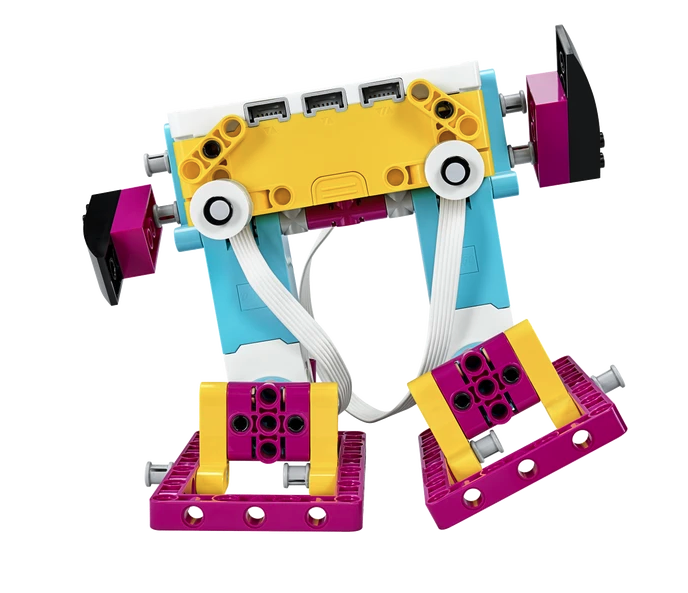
    LEGO announced this week its Education Professional Development program that enables teachers to choose STEM, hands-on, playful courses for their classrooms.

    Built on competency-based learning, this free program is modular and contains four categories: Pedagogy, STEAM Concepts, 21st Century Skills, and Classroom Management.

    It includes two kinds of self-guided modules: Learning Bursts for quick and focused skills practice and Learning Quests for deeper competency development. Teaching can be developed in-person, remote, and virtual classrooms.

    LEGO Education has been working with seasoned classroom practitioners at Tufts University Center for Engineering Education Outreach (CEEO) to ensure the program was designed for the needs of educators.

    “When teachers are truly confident in playful hands-on learning, they deliver more motivating, engaging, and joyful learning experiences,” said Esben Stærk, president of LEGO Education.


  • Open edX & Learning Platforms | March 2021: Skillshare, Coursera, Google, Codeacademy, Newsela…

    Open edX & Learning Platforms | March 2021: Skillshare, Coursera, Google, Codeacademy, Newsela…

    Newsletter format  |  Click here to subscribe ]

    MARCH 2021 – NEWSLETTER #35  |  Breaking news at IBL News  |  Noticias en Español


    edX

    • edX, Skillshare, and Outschool Featured in the Top 10 of Innovative Ed Companies

    • edX’s Courses Will Be Included in Microsoft Viva’s ‘Employee Experience Platform’


    Coursera

    • Coursera Files for IPO. It will be listed on the NYSE as “COUR”

    • Coursera Partners with Howard University, Facebook, and Others to Empower Black Learners


    Google

    • Google Issues New Certificate Courses Oriented to Entry-Level Jobs on IT

    • Google Classroom Adds 40 Million Users and Includes New Mobile Features

    • Google For Education Announces 50 New Features on Its Products

    • Tech Conference Cancels Google as Sponsor after Two Female Scientists Were Fired


    Open Platforms

    Open LMS Will Release Its Moodle Modules and Enhancements as GPLv3

    • Saylor Academy Releases a Free Certificate Course to Educate on Bitcoin


    Learning Platforms

    • Udemy Launches LenovoEDU Community for Learners in Australia, U.K, and the U.S.

    • Learning App Babbel Adds Live Classes by Certified Teachers


    Funding

    • Codeacademy, Another EdTech Startup is Able to Raise Capital Amidst the Pandemic

    • Newsela Raises $100 Million to Accelerate K-12 Schools’ Transition into Digital Textbooks

    • VR Labs Company Raises Another $60 Million to Remotely Educate Science Students


    2021 Events | All of the Key Conferences Listed!

    • Education Calendar  –  MARCHAPRILMAYJUNEJULY-DECEMBER  |  Conferences in Latin America & Spain


    This newsletter is created in collaboration with IBL Education, a New York City-based company specialized in AI and credential-driven learning platforms and communities. Read the latest IBL Newsletter   |  Archive of Open edX Newsletters

  • Google Issues New Certificate Courses Oriented to Entry-Level Jobs on IT

    Google Issues New Certificate Courses Oriented to Entry-Level Jobs on IT

    IBL News | New York

    Sundar Pichai, CEO at Google and Alphabet, announced in a blog post three new online, self-paced, certificate courses in Data Analytics, Project Management, and User Experience (UX) Design.

    These courses—currently developed on Coursera.org at $39 per month—prepare learners for an entry-level, well-paid job in under six months. The certificates don’t have any prerequisites.

    • Data Analytics Professional Certificate – This seven-course certificate explores analytical skills, concepts, and tools used in many introductory data analytics roles – including SQL, Tableau, RStudio, and Kaggle.
    • Project Management Professional Certificate – This six-course certificate prepares learners to launch a project management career. It covers industry-standard tools and methods, including the agile project management system, and key soft skills, such as stakeholder management, problem-solving, and influencing.
    • User Experience (UX) Design Professional Certificate – This seven-course certificate explores UX principles, UX terms, and industry-standard tools, including Figma and Adobe XD. By the time they complete the program, learners will have three portfolio projects to use in their job applications.

    Each certificate includes resources to help learners enhance their resumes and prepare for interviews.

    Upon completion, learners can share their information with 100+ partners committed to sourcing talent from Google certificate programs, including Deloitte, Anthem, Verizon, SAP, Accenture, Walmart, Infosys, and Google. The employers are “eager to hire people who have earned these certificates,” according to Pichai.

    Google is also launching apprenticeships in the certificate fields of data analytics, project management, and UX design, with applications opening in April.

    To make its Career Certificates more accessible, Google is offering 200,000 scholarships to learners across the U.S., Europe, Middle East, and Africa. They will be distributed through organizations such as Merit America, Per Scholas, NPower, Goodwill, Futuro Health, and Generation USA.

    Additionally, Sundar Pichai announced a new Associate Android Developer Certification.

    The search giant said that since launching Grow with Google program in 2017, it has already helped 6 million Americans get training in digital skills and nearly 170,000 Americans get a new job and increase their income.

    With more businesses embracing digital ways of working, it’s estimated that 50% of all employees will need reskilling by 2025.